Normal view

There are new articles available, click to refresh the page.
Before yesterdayMain stream

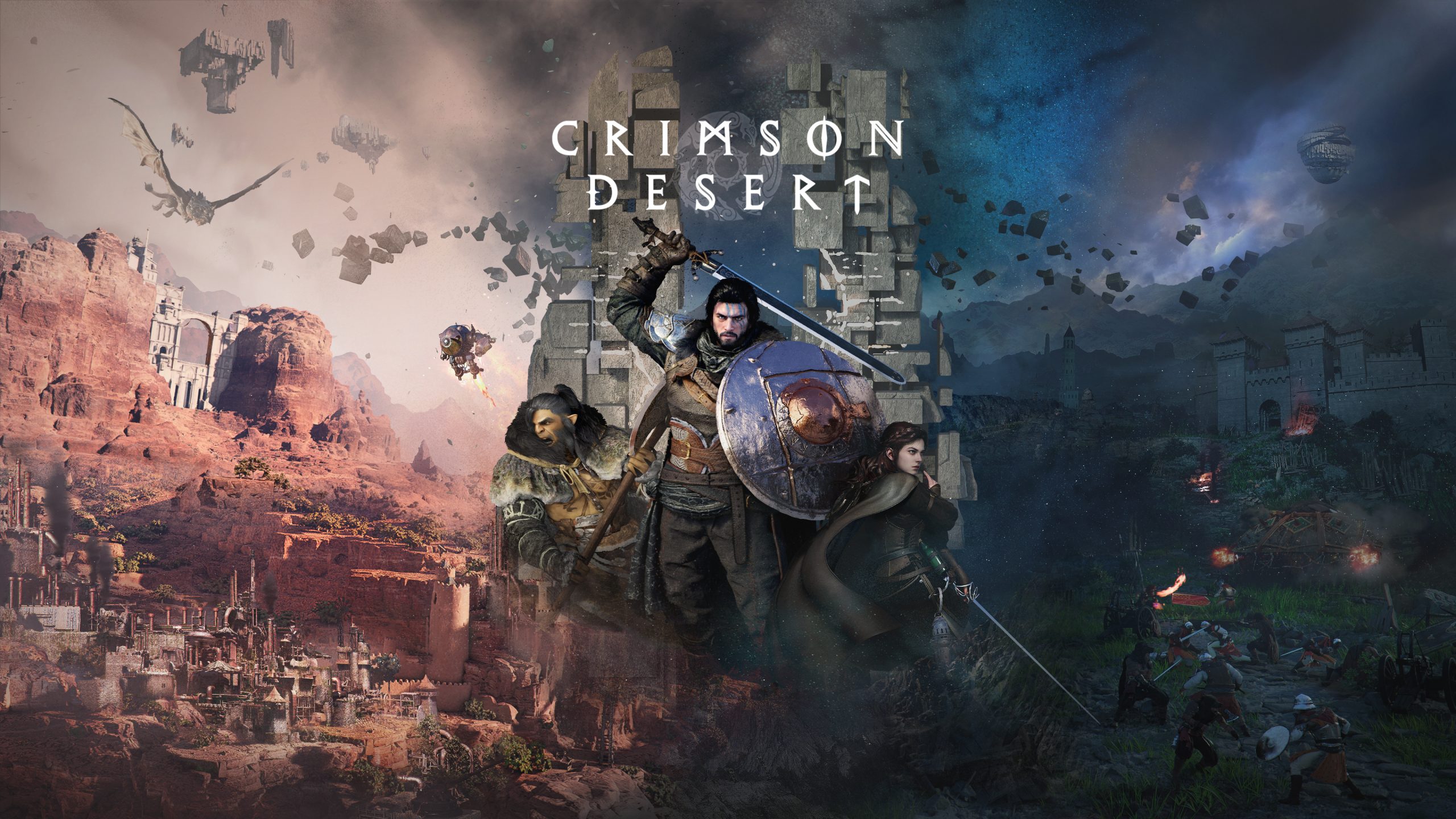
Crimson Desert launches with latest AMD FSR 4.1 tech in place

20 March 2026 at 15:00

Crimson Desert launches today with full support for AMD’s latest FidelityFX Super Resolution technologies, giving players access to FSR 4.1 Upscaling, FSR Ray Regeneration and FSR Frame Generation from day one. Pearl Abyss’ open‑world action‑adventure has been one of 2026’s most anticipated releases, and AMD is positioning the game as a showcase for its newest image‑quality and performance‑boosting features.

Crimson Desert arrives as a large‑scale, story‑driven adventure built on Pearl Abyss’ in‑house BlackSpace Engine. The game blends open‑world exploration with cinematic combat and large set‑piece encounters, all rendered with ray‑traced shadows, global illumination and reflections. Launching today across PC and consoles, it places a heavy emphasis on visual fidelity, making upscaling and frame‑generation support particularly relevant for players targeting higher resolutions or smoother performance.

AMD’s FSR 4.1 Upscaling is the centrepiece of the integration, improving image clarity and preserving fine detail such as foliage, particles and reflective surfaces even when using performance‑oriented presets. The company says the new algorithm delivers cleaner edges and more stable motion, especially at 4K. Crimson Desert also supports FSR Ray Regeneration, a neural‑network‑based denoiser designed to improve the quality of ray‑traced lighting, shadows and reflections by reducing noise and shimmering in complex scenes.

FSR Frame Generation rounds out the feature set by inserting additional frames to increase perceived smoothness and responsiveness. All three technologies are available through AMD Software: Adrenalin Edition 26.3.1, so be sure to update your drivers.

Discuss on our Facebook page, HERE.

KitGuru Says: FSR 4 support is limited at the moment, so you'll need an RX 9000 series GPU to benefit from these new features. If you do have one of those, let us know how you get on with FSR 4.

The post Crimson Desert launches with latest AMD FSR 4.1 tech in place first appeared on KitGuru.

I Tested AMD’s Ray Regeneration in Cyberpunk Thanks To Optiscaler, And It’s Surprisingly Good

5 March 2026 at 21:10

A digital illustration shows a prism refracting light with the text 'FSR 'Redstone' Ray Regeneration powered by Optiscaler'

Gentlemen, we meet yet again. It's only been a week since the last time I wrote an article about Optiscaler, but development on the mod is happening at such a rapid pace that I once again have some updates to share with you. This time, it's AMD's Ray Regeneration that's getting the Optiscaler treatment. Thanks to the work done by DarkHelmet, you can now swap Nvidia's Ray Reconstruction for AMD's legally distinct Ray Regeneration denoiser. This is huge news, since currently there's a grand total of two titles with support for Ray Regen, and one of them isn't out till […]

Read full article at https://wccftech.com/i-tested-amd-ray-regeneration-in-cyberpunk-thanks-to-optiscaler-its-surprisingly-good/

Optiscaler To The Rescue: Here’s How You Can Add AMD’s FSR 4 Upscaling To Any Vulkan Game

28 February 2026 at 18:00

A graphic displays 'FSR 4 Redstone' powered by machine learning with the Vulkan logo and the text 'via OPTISCALER' on a red

Well, it looks like the Optiscaler team has done it again. Seems like every time I finish writing an article about a new Optiscaler feature, they push out a brand new release with even more functionality. Maybe it's personal, and they want to keep me shackled to my desk for eternity, pumping out article after article about their excellent mod. Or maybe this is a form of protest against AMD's continuous refusal to meet the demands of the community and officially release INT8 FSR4? Regardless, as long as they keep on pumping out brilliant new updates, I'll be here to […]

Read full article at https://wccftech.com/how-to/how-to-add-amd-fsr-4-upscaling-to-any-vulkan-game-using-optiscaler/

FSR 4-Derived New PSSR for PS5 Pro Unveiled; Resident Evil Requiem Is the First Game to Get It

27 February 2026 at 14:00

A Sony PlayStation 5 Pro console next to text reading 'PSSR PlayStation Spectral Super Resolution' and 'AI-Driven Upscaling'.

Sony has just announced that the highly anticipated new version of the PSSR (PlayStation Spectral Super Resolution) upscaler for PlayStation 5 Pro is ready and will roll out next month, with CAPCOM's Resident Evil Requiem (out today and already doing well on Steam) as the first game to implement it. The announcement came with a statement from CAPCOM's Masaru Ijuin (Senior Manager, Engine Development Support Section, R&D Foundational Technology Department), who said: The upgraded PSSR has allowed us to elevate our expressiveness by successfully processing these details and textural particularities, which are traditionally difficult to upscale because of their intricacy. […]

Read full article at https://wccftech.com/new-pssr-ps5pro-unveiled-resident-evil-requiem-first-game/

Optiscaler Adds FSR 4 Support To Vulkan Titles Before AMD Could

23 February 2026 at 18:22

The image features the AMD logo with the text 'FSR4 Fidelity FX Super Resolution' and 'VULKAN' over a red, glowing

AMD is absent when gamers need its help, but no worries! Optiscaler is one step ahead, thanks to the contributors. Optiscaler Version 0.9.0-Pre10 Test Build Now Offers FSR 4 Support for Vulkan Games AMD isn't moving an inch when it comes to extending FSR 4.0 (FidelityFX Super Resolution) support. It has not just restricted FSR 4 to RDNA 4 GPUs; it has also made its availability limited to only DX12 titles. It has been nearly a year since the new upscaler from AMD was rolled out, but to this day, AMD just couldn't enable FSR 4 on Vulkan titles. Thanks […]

Read full article at https://wccftech.com/optiscaler-adds-fsr-4-support-to-vulkan-titles-before-amd-could/

Ryzen ‘Medusa Point’ APUs may use ‘RDNA 4m’ GPU architecture

20 February 2026 at 17:00

The technical picture for AMD's next-generation Medusa Point APUs is becoming clearer through recent Linux compiler activity. The emergence of the GFX1170 target, explicitly labelled as “RDNA 4m”, suggests AMD will finally bring FSR4 support to its APUs.

As noted by Phoronix (via TechPowerUp), while technically part of the GFX11 (RDNA 3) family, GFX1170 is receiving specific instruction-set updates that move it closer to GFX12 (RDNA 4) behaviour, effectively creating a “Pro” version of the current RDNA 3.5 architecture. Some of the changes include adding the WMMA (Wave Matrix Multiply-Accumulate) and SWMMAC instructions, along with support for FP8 and BF8 data formats. These matrix-oriented instructions are the cornerstone of modern AI and machine learning workloads.

By implementing WMMA128b variants specifically for GFX1170, AMD is providing the foundation necessary for neural-link upscaling and frame interpolation. This architectural “hybridisation” is precisely what will allow mainstream Zen 6 APUs to support FSR 4, even without a full transition to the GFX12 graphics.

The introduction of the “m” suffix (presumably standing for “Mobile”) suggests that AMD views GFX1170 as a bridge to keep its high-volume APUs from falling behind the competition. By allowing the hardware to handle 8-bit floating-point operations natively, AMD is expanding the “Redstone” ecosystem, ensuring that even a thin-and-light laptop in 2026 can run the latest AI-enhanced titles with acceptable frame rates.

Discuss on our Facebook page, HERE.

KitGuru says: With FSR 4 bringing so many improvements over previous versions, AMD should ensure that it works across as many products as possible. 

The post Ryzen ‘Medusa Point’ APUs may use ‘RDNA 4m’ GPU architecture first appeared on KitGuru.

Nvidia DLSS 4.5 beats native resolution and AMD FSR 4 in blind image quality test

18 February 2026 at 17:00

ComputerBase conducted the online blind test involving thousands of gamers to evaluate the visual quality of current video rendering technologies. The study compared Nvidia's latest Deep Learning Super Sampling (DLSS) 4.5 against AMD's machine learning-based FSR 4 and native resolution rendering with standard Temporal Anti-Aliasing (TAA).

ComputerBase's test was performed at Ultra HD (4K) resolution using the “Quality” presets for both AI upscalers across six major titles: Anno 117, ARC Raiders, Cyberpunk 2077, Horizon Forbidden West, Satisfactory, and The Last of Us Part II. To eliminate brand bias, the comparison utilised videos labelled only with numbers for the first two weeks of the survey.

The final results revealed a significant preference for Nvidia's DLSS 4.5, which emerged as the winner across all games tested. On average, approximately 48% of participants voted DLSS 4.5 as having the best image quality, while roughly 24% preferred native rendering and only 15% chose AMD's FSR 4. The margin of victory for DLSS 4.5 was particularly substantial in titles like Satisfactory and Horizon Forbidden West, where it received 60.9% and 56.3% of the total votes, respectively. Interestingly, Cyberpunk 2077 presented the closest contest, with DLSS 4.5 nearly equal to native-resolution rendering. That suggests that in some cases, DLSS 4.5 may not be the preferred option.

In contrast, AMD's latest ML-based video technologies in the “Redstone” package struggled to win over the community. While FSR 4 provides a meaningful boost in frame rates and improves upon previous iterations by reducing ghosting and better preserving particle effects, it failed to surpass native resolution during this test. The detailed results of this test can be found below:

Native + TAA Nvidia DLSS 4.5 AMD FSR Upscaling AI Equivalent Total
Anno 117 282
(22.8%)
621
(50.1%)
204
(16.5%)
132
(10.7%)
1,239
(100%)
ARC Raiders 328
(27.3%)
570
(47.4%)
166
(13.8%)
138
(11.5%)
1,202
(100%)
Cyberpunk 2077 372
(32.4%)
394
(34.4%)
122
(10.6%)
259
(22.6%)
1,147
(100%)
Horizon Forbidden West 208
(19.4%)
604
(56.3%)
125
(11.7%)
135
(12.6%)
1,072
(100%)
Satisfactory 155
(15.1%)
627
(60.9%)
128
(12.4%)
119
(11.6%)
1,029
(100%)
The Last of Us Part II 274
(25.9%)
433
(40.9%)
268
(25.3%)
83
(7.8%)
1,058
(100%)
Final result
In total 1,619 3,249 1,013 866 6,747
Average 24.0% 48.2% 15.0% 12.8% 100%

As noted by ComputerBase, the test results show only how frequently each option was rated “the best image quality”. The results, however, don't show the second- and third-best choices. Neither the wording of the question nor the surveys themselves were designed to reveal this. Therefore, stating something like “FSR Upscaling looks worse than native” based on these results is invalid.

Discuss on our Facebook page, HERE.

KitGuru says: Do these results match your own experience with native, DLSS 4.5, and FSR 4?

The post Nvidia DLSS 4.5 beats native resolution and AMD FSR 4 in blind image quality test first appeared on KitGuru.
❌
❌