Normal view

There are new articles available, click to refresh the page.
Today — 15 September 2026Main stream

Ryzen 5 7500 and Ryzen 5 5500F pricing confirmed by AMD

14 September 2026 at 15:30

AMD has confirmed official pricing for two newly introduced mainstream desktop processors, setting the AM5-based Ryzen 5 7500 at $189 and the AM4-based Ryzen 5 5500F at $99.

Built on Zen 4 architecture, the Ryzen 5 7500 (via Wccftech) features six cores and 12 threads. Base clock speeds are set at 3.7GHz, boosting up to 5.0GHz, paired with 6MB of L2 cache, 32MB of L3 cache, and a 65W TDP. Unlike the existing 7500F model, this standard version includes two integrated RDNA graphics cores running at 2.2GHz to assist with system diagnostics. AMD's $189 price tag lands slightly above current street prices for the “F” SKU, though retail adjustments are expected over time.

For budget-focused AM4 system builders, the $99 Ryzen 5 5500F brings a fresh alternative to the existing lineup. Based on Vermeer silicon rather than the Cezanne APU architecture used in the standard 5500, the chip omits integrated graphics while pushing higher clock speeds. Specifications include six Zen 3 cores, 12 threads, a 3.0GHz base clock, a 4.4GHz boost clock, 3MB of L2 cache, 16MB of L3 cache, and a 65W TDP.

Both releases aim to provide accessible entry and upgrade options for builders balancing overall build costs, which, considering the rising hardware prices, will be very welcome.

KitGuru says: Planning to build a new entry-level AMD PC soon? Will you consider either of these two?

The post Ryzen 5 7500 and Ryzen 5 5500F pricing confirmed by AMD first appeared on KitGuru.
Before yesterdayMain stream

AMD reportedly preparing standard Ryzen 5 7500 desktop processor

8 September 2026 at 15:30

It looks like AMD hasn't shelved the Ryzen 7000 series just yet. A new report suggests AMD is preparing to launch a standard Ryzen 5 7500 processor for the AM5 socket. The Zen 4 CPU will supposedly sit between the existing Ryzen 5 7500F and 7500X3D, bringing a 65W TDP, integrated graphics, and a bundled boxed cooler.

The leaked specifications shared by Roland Quandt (via VideoCardz) point to a 6‑core, 12‑thread CPU running at a 3.7GHz base clock with up to a 5.0GHz boost. Total cache measures 38MB, combining 32MB of L3 with 6MB of L2. These specifications closely mirror the 7500F, matching its peak clock speed, while the 7500X3D continues to run lower boost clocks due to 3D V‑Cache constraints.

The same report suggests a price of around €230. That would place the standard 7500 well above the tray‑only 7500F, which currently sells for £150/€120/$130, and close to the 7500X3D. The higher price is likely tied to two expected changes, integrated Radeon graphics and the inclusion of a retail boxed cooler instead of OEM‑only packaging.

AMD has not yet officially confirmed the chip or provided a release window.

KitGuru says: A standard Ryzen 5 7500 gives builders a proper boxed entry-level AM5 chip with integrated graphics, though its success will depend heavily on where retail pricing settles.

The post AMD reportedly preparing standard Ryzen 5 7500 desktop processor first appeared on KitGuru.

Watercool launches new Heatkiller V Ultra and Pro CPU blocks

31 August 2026 at 14:30

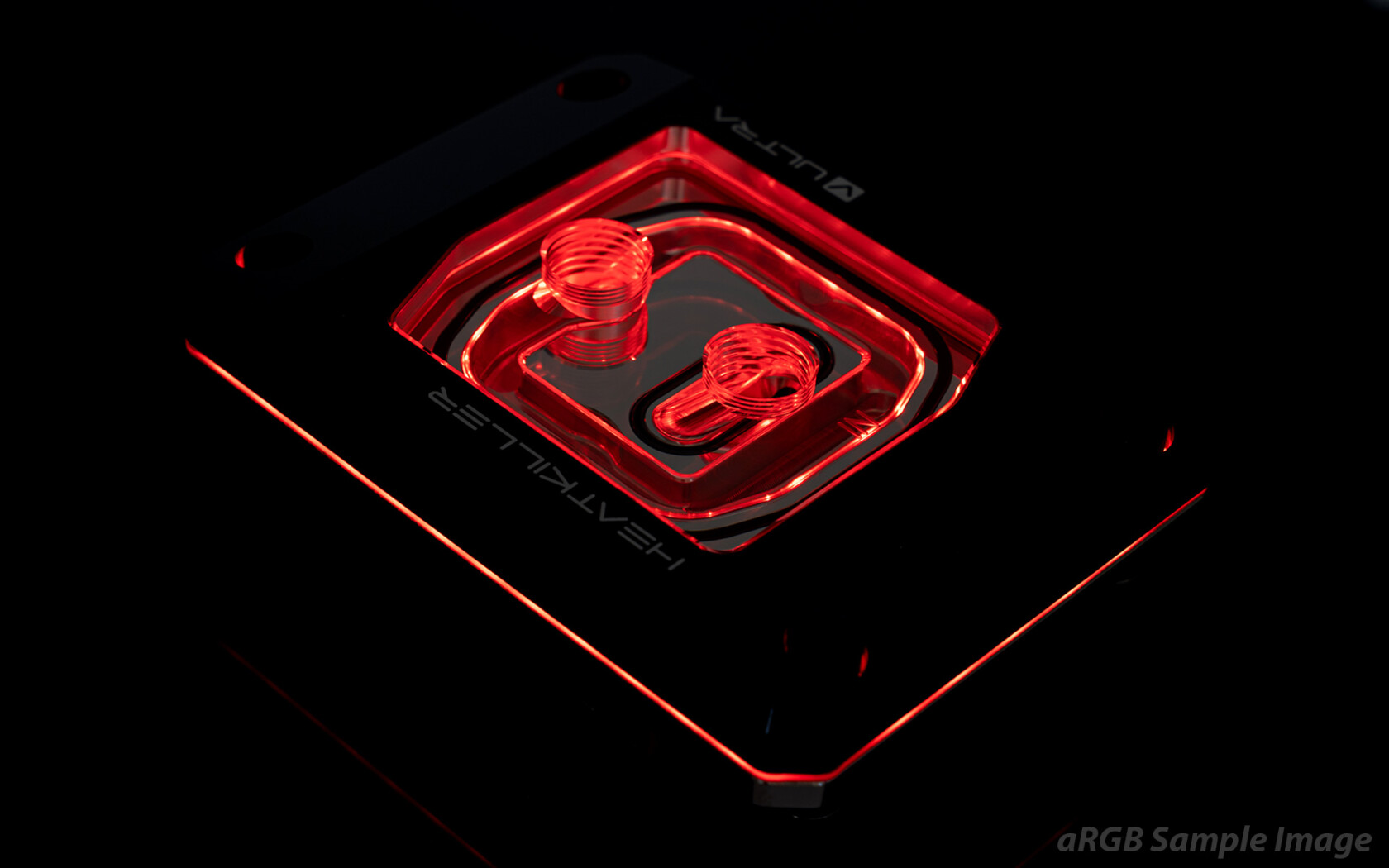
Watercool is expanding its HEATKILLER lineup with two new CPU blocks for AM4 and AM5, the HEATKILLER V Ultra and the HEATKILLER V Pro. Both models introduce a redesigned fin layout and updated baseplate structure aimed at improving contact and flow on modern Ryzen processors.

The HEATKILLER V Ultra is the flagship model. Watercool has redesigned the fin layout and baseplate for AM4 and AM5, using 0.15mm fins and a revised flow path to improve contact under Ryzen’s hotspot layout. Cross‑slots in the base allow the copper to flex slightly under mounting pressure, helping it sit flatter against the CPU. The Ultra also features a nickel‑plated copper base, a pre‑assembled mounting system and a dedicated ARGB PCB with 43 LEDs positioned for indirect illumination. The lighting cable is modular, allowing the block to be used without RGB if preferred.

The HEATKILLER V Pro follows a similar design philosophy, but with a 0.25mm fin structure paired with a bare copper base rather than a nickel‑plated one. Watercool describes the Pro variant as tuned for maximum flow while still benefiting from the updated fin geometry and cross‑slot contact improvements. Like the Ultra, it ships with the new mounting system and includes Halnziye HY‑P17 thermal paste in the box.

Both blocks are manufactured in Germany, from machining through to final assembly, and use a mix of aluminium, PMMA and copper across the frame and top. Pricing lands at €179.95 for the Ultra model and €159.95 for the Pro.

KitGuru Says: Are you planning a new loop for a Ryzen 7000 or 9000 build?

The post Watercool launches new Heatkiller V Ultra and Pro CPU blocks first appeared on KitGuru.

Intel reveals three next-gen architectures for AI workloads

27 August 2026 at 14:00

Intel is outlining three new architectures at Hot Chips 2026, aimed at Agentic AI and enterprise‑scale workloads, covering HPC, large‑model inference and client‑side AI. The trio consists of Diamond Rapids for next‑generation Xeon, the Crescent Island GPU for datacentres, and Wildcat Lake for mainstream client and edge systems.

Intel’s upcoming Xeon platform, codenamed Diamond Rapids, is built on the Intel 18A‑P process and introduces a new architecture designed for scalable Agentic AI deployments. It uses adaptable compute blocks, a unified memory fabric and flexible I/O, alongside Foveros Direct 3D packaging and UCIe‑S interconnect. Diamond Rapids also incorporates a high‑bandwidth memory subsystem, new Advanced Performance Extensions (APX) and enhanced Advanced Matrix Extensions (AMX).

  • Up to 256 new cores with 1.28GB LLC
  • 16 memory channels at 12800MT/s
  • 128 lanes of PCIe Gen6 and CXL 3.0

Crescent Island is Intel’s next‑generation datacenter GPU, designed to improve inference economics for real‑time Agentic AI workloads. The architecture focuses on sustained token throughput, larger context windows and higher model capacity, all within air‑cooled datacenter footprints. Crescent Island uses Intel’s Xe architecture and is positioned as a low‑power, easy‑to‑deploy PCIe solution.

  • 32 Xe cores and 256 XMX engines (Xe3P)
  • Up to 480GB LPDDR5X memory
  • 350‑watt air‑cooled PCIe card

For client and edge systems, Intel is introducing Wildcat Lake, launching as Intel Core Series 3 processors. Built on Intel 18A, Wildcat Lake combines new x86 cores with integrated Xe3 graphics featuring XMX acceleration and an NPU capable of up to 17 TOPS for hybrid AI workloads. It is also the first Intel processor to adopt UCIe for cost‑effective multi‑chip package designs.

  • 2 performance cores and 4 efficiency cores
  • Support for LPDDR5X‑7467
  • Wi‑Fi 7 and Bluetooth 6.0

Intel says the three architectures are designed to address different layers of Agentic AI deployment: Diamond Rapids for scalable compute, Crescent Island for inference efficiency, and Wildcat Lake for client and edge integration. All three are built on Intel Foundry technologies including Intel 18A, Foveros Direct and UCIe, forming a unified foundation for next‑generation AI systems.

KitGuru says: Intel is positioning Diamond Rapids, Crescent Island and Wildcat Lake as a full‑stack approach to Agentic AI, spanning cloud, datacenter and edge deployments.

The post Intel reveals three next-gen architectures for AI workloads first appeared on KitGuru.

Qualcomm’s Oryon Becomes The World’s First Mobile-Focused CPU To Hit A Clock Speed Of 5GHz, And Optimizes IPC By Pooling And Dynamically Assigning Cache

25 August 2026 at 18:37

Qualcomm is flexing the power of its custom Oryon CPU cores today, as the prime core now hits a whopping 5GHz in clock speed, while the instructions per clock (IPC) metric is optimized via a novel FlexCache solution. Qualcomm touts the unparalleled clock speeds and the optimized cache architecture of its new Oryon CPU cores Qualcomm has just provided details of its all-new Oryon CPU cores, disclosing that it is the world's first mobile CPU to reach clock speeds of 5GHz. According to Qualcomm, the new Oryon CPU does not just sport blazing-fast clock speeds but also backs them up […]

Read full article at https://wccftech.com/qualcomms-oryon-becomes-the-worlds-first-mobile-focused-cpu-to-hit-a-clock-speed-of-5ghz-and-optimizes-ipc-by-pooling-and-dynamically-assigning-cache/

Intel’s Market Share Of The x86 CPU Market Falls To 1995-Levels, As AMD Now Controls An Adjusted 46.4% Of The Market For Server CPUs Vs. Intel’s 53.6% Share, Claims Mercury Research

24 August 2026 at 17:59

Intel seems to have staged a decisive turnaround in the second quarter of the ongoing year, with its data center revenue up a very healthy 59 percent year-over-year. Yet, Intel's inertia is still working against it, as clearly demonstrated within a new report from Mercury Research, which has tallied that Intel's share of the CPU market has fallen to levels last seen in 1995, even as AMD remains perched on an ascendant trajectory. After accounting for the fact that AMD does not count embedded CPUs it ships for networking and storage applications in its data center segment, while Intel does, […]

Read full article at https://wccftech.com/intels-market-share-of-the-x86-cpu-market-falls-to-1995-levels-as-amd-now-controls-an-adjusted-46-4-of-the-market-for-server-cpus-vs-intels-53-6-share-claims-mercury-research/

SpaceXAI Will Use NVIDIA Vera CPUs To Power Its Next-Gen Agentic AI Workloads, Also Bringing Vera Rubin Acceleration To Grok & Starmind AI Satellite

24 August 2026 at 15:05

Two men smiling and exchanging a beige box in an indoor setting, with one man wearing a black leather jacket and the other in a black T-shirt with 'Starbase' printed on it.

NVIDIA's Vera CPUs & Vera Rubin servers will be powering multiple SpaceXAI platforms such as its next-gen Agentic AI workloads, Grok AI, & Starmind AI satellite. SpaceXAI Doubles Down on NVIDIA's Latest AI Platforms As It Leverages Vera CPUs & Vera Rubin Servers To Accelerate Agentic AI Workflows, & Take AI Beyond The Terrestrial Boundaries Today, NVIDIA and SpaceXAI are making a blockbuster announcement in which both companies will come together to accelerate next-gen Agentic AI workloads further by leveraging Vera Rubin and Vera CPU platforms. These announcements come a few weeks after Elon Musk committed exclusively to NVIDIA GPUs […]

Read full article at https://wccftech.com/spacexai-to-use-nvidia-vera-cpu-vera-rubin-servers-agentic-ai-grok-starmind-ai-sattelite/

Analysts note 20% drop in desktop CPU shipments during Q2 2026

24 August 2026 at 16:30

Desktop processor shipments fell by more than 20% year over year during Q2 2026, according to new data from Mercury Research. Despite the downturn driven by rising component costs, AMD increased its market share across desktop, mobile and server segments.

Rising DDR5, SSD, motherboard and GPU prices pushed full system costs higher, with desktop PCs seeing the steepest decline among major x86 categories. Even so, AMD’s desktop share rose to around 34.9% as its shipments fell less sharply than Intel’s, according to Mercury Research (via Tom’s Hardware). Strong demand for Ryzen X3D processors and AM5’s longer upgrade path helped AMD maintain steadier desktop volumes.

Across the broader market, Mercury Research puts AMD’s total x86 share at roughly 30.7%, rising to 34.1% when including IoT and SoC products. In notebooks, AMD reached around 28.9% share, while Intel continues to ship higher overall volumes. Server remains AMD’s strongest segment, at 34.5% overall, with EPYC‑versus‑Xeon comparisons placing AMD at 46.4%.

Below is a simplified breakdown of AMD and Intel’s Q2 2026 share across key segments:

Segment AMD Q2 2026 Intel Q2 2026
Overall x86 30.70% 69.30%
Client 30.30% 69.70%
Desktop 34.90% 65.10%
Mobile 28.90% 71.10%
Server 34.50% 65.50%
All CPUs incl. IoT/SoCs 34.10% 65.90%

KitGuru Says: It will be interesting to see if desktop CPU shipments rebound later in the year, but with current issues around supply and component pricing for the consumer market, it seems unlikely. 

The post Analysts note 20% drop in desktop CPU shipments during Q2 2026 first appeared on KitGuru.

Thermal Grizzly now offers delidded Ryzen 9 9950X3D2 CPUs, backed by warranty

18 August 2026 at 16:00

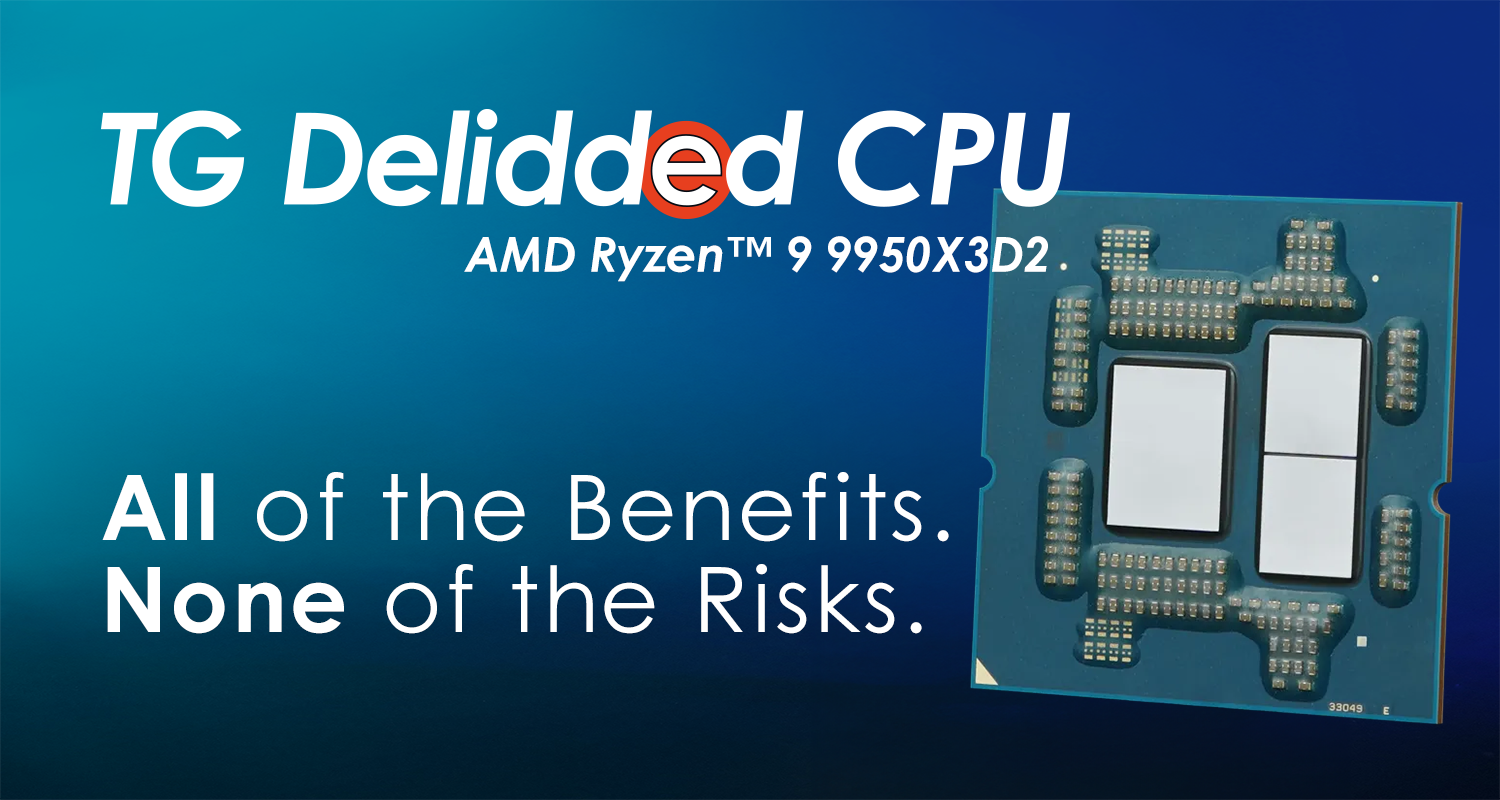
For a while now, Thermal Grizzly has been selling delidded processors, allowing direct-die cooling without undergoing the risky delidding procedure yourself. Thermal Grizzly even backs these CPUs with their own warranty in case anything goes wrong. As of this week, Thermal Grizzly is now offering delidded versions of the Ryzen 9 9950X3D2.

Thermal Grizzly is expanding its delidded processor lineup with the addition of the new AMD Ryzen™ 9 9950X3D2, expanding the line-up, which already consisted of AMD Ryzen 7 9800X3D, AMD Ryzen 9 9850X3D, AMD Ryzen 9 9950X3D, Intel Core Ultra 9 285K and Intel Core 7 270K Plus CPUs.

Each TG Delidded CPU is expertly delidded and validated by Thermal Grizzly's in-house experts. This process involves removing the heat spreader, providing direct access to the die for more direct cooling. This can significantly lower temperatures under load, which is helpful for overclocking. As delidding typically voids the manufacturer's warranty, TG protects buyers with a warranty of their own.

Each delidded CPU from Thermal Grizzly includes the CPU itself and a USB stick holding details of testing / validation for your processor.

The delidded Ryzen 9 9950X3D2 from Thermal Grizzly costs just a little bit more than the stock CPU, coming in at €1,199.

KitGuru Says: Have you ever wanted to switch to direct-die cooling?

The post Thermal Grizzly now offers delidded Ryzen 9 9950X3D2 CPUs, backed by warranty first appeared on KitGuru.

Intel confirms Nova Lake CPUs will launch on desktop before data centre

18 August 2026 at 15:30

Intel VP Robert Hallock has confirmed that the company's next-generation CPU core will debut on desktop processors before reaching data centre products. The confirmation reveals that Intel is prioritising consumer platforms over enterprise for its upcoming architecture rollout.

Hallock (via Tom's Hardware) made the comments while discussing competitor AMD's decision to launch its Zen 6 architecture on EPYC Venice enterprise chips before consumer releases. Intel is taking the opposite approach with its next CPU design, ensuring desktop users get access to the new core first.

“I have a new core. It's coming to desktop first. I mean, I hope enthusiasts do the math about that one,” stated Robert Hallock, Intel VP and general manager of the enthusiast channel business.

While Hallock didn't explicitly name the core or reveal specific architectural details, the timing aligns with Intel's client roadmap. The company has slated Nova Lake for a 2026 launch following its Panther Lake platform. Hallock's statement confirms that the primary core design tied to Nova Lake will arrive on desktop motherboards before launching on Xeon server processor series.

KitGuru says: Were you expecting to see Intel debuting its new CPU core architecture on desktop consumer platforms first?

The post Intel confirms Nova Lake CPUs will launch on desktop before data centre first appeared on KitGuru.

Intel Razor Lake-AX APU reportedly locked for overclocking and based on Nova Lake

16 August 2026 at 09:00

Intel's rumoured Razor Lake-AX processor will reportedly not be unlocked for overclocking, according to new details shared by leaker Jaykihn. The chip is set to feature Nova Lake CPU architecture on a large APU platform rather than a conventional socketed desktop processor.

Jaykihn (via VideoCardz) claims that Razor Lake-AX relies on Coyote Cove P-Cores and Arctic Wolf E-Cores. This architecture retains more Nova Lake technology than its name implies, separating it from Razor Lake-S/H, which should use a different P-Core and E-Core configuration.

Previous leaks linked Razor Lake-AX to a BGA4326 package featuring on-package memory alongside 16 or 32 Xe3p graphics cores. These physical specs indicate that AX is a large APU platform rather than a standard desktop CPU.

Official branding isn't clear yet, with questions remaining over whether it falls under the Core 400 or 500 series. Intel hasn't officially announced Razor Lake-AX, but a release is expected to occur in late 2027 or early 2028.

Discuss on our Facebook page, HERE.

KitGuru says: Do you think Intel can compete against AMD's Halo series APUs with this platform?

The post Intel Razor Lake-AX APU reportedly locked for overclocking and based on Nova Lake first appeared on KitGuru.

AMD Zen 6 CPU architecture may include new optimisations to tackle game stutter

3 August 2026 at 14:20

AMD's upcoming consumer “Zen 6” processors will reportedly improve 1% lows and reduce in-game stuttering through per-core software and hardware management features. Details shared by Hydra OC developer 1usmus indicate that the microarchitecture incorporates updated Collaborative Processors Performance Control (CPPC) mechanisms alongside memory bandwidth enforcement tools.

According to the developer (via VideoCardz), CPPC Performance Priority enables the OS and CPU firmware to manage each core's performance independently. This allows the system to assign maximum power and frequency to active gaming cores rather than spreading resources across the entire chip. CPPC also includes Performance Priority and HighestFreq settings to handle task priority and performance allocation. Furthermore, a feature called FloorPerf ensures critical tasks retain maximum frequency if the processor hits thermal or power limits, throttling secondary cores to reduce draw.

Additional tuning features include per-core EPP boost, which allows individual cores to ramp up without pushing the full CPU to maximum power. Additionally, improved frequency tuning provides dynamic scaling to keep clock speeds stable during demanding scenes.

For memory management, AMD has reportedly introduced PQOS Global Bandwidth Enforcers. These controls limit memory bandwidth available to background applications, prioritising gaming tasks and preventing performance dips when background processes run simultaneously.

KitGuru says: If these optimisations are actually true, do you think AMD can introduce them to older generations of processors, or will they be limited to the next-gen series?

The post AMD Zen 6 CPU architecture may include new optimisations to tackle game stutter first appeared on KitGuru.

Geekbench 7 arrives with redesigned multi-core testing and CUDA support

27 July 2026 at 07:00

Primate Labs has officially released Geekbench 7, introducing updated CPU and GPU workloads alongside redesigned multi-core testing. The new cross-platform benchmark suite is available today across Android, iOS, Windows, macOS, and Linux platforms.

Geekbench 7's updated CPU workloads focus on real-world media tasks, including AV1 video encoding for screen-sharing, Opus audio compression, and Whisper speech recognition for live captions. Primate Labs also added a Game Physics workload built on the Jolt Physics engine while expanding image format support in the Photo Library to include JPEG XL and DNG. Multi-core testing has been restructured so workloads only run multi-threaded if corresponding real-world applications do, excluding single-threaded tasks like the HTML5 Browser test.

GPU benchmarks now place greater emphasis on machine learning and creation tasks, adding face tracking, super-resolution upscaling, and background blurring alongside RAW processing, path tracing, and fluid simulation. In response to user demand, CUDA joins OpenCL, Vulkan, and Metal as a natively supported GPU API. Primate Labs updated the underlying datasets across tests such as File Compression and PDF Viewer to support larger, more demanding file processing.

KitGuru says: Geekbench 7 brings welcome updates to reflect modern workloads, particularly with the addition of native CUDA support and a more realistic multi-core scoring approach. Have you already tried Geekbench 7?

The post Geekbench 7 arrives with redesigned multi-core testing and CUDA support first appeared on KitGuru.

AMD Says It Now Controls Nearly Half Of The Data Center CPU Market, And Its Total Compute TAM Will Reach $2 Trillion By 2030

23 July 2026 at 18:00

A close-up view of an AMD EPYC processor installed on a motherboard.

AMD is predictably cheerful about its AI-boosted prospects, declaring in a decidedly sunny tone that it now controls nearly half of the data center CPU market, as its compute-related Total Addressable Market (TAM) scales to a whopping $2 trillion by 2030. AMD now controls 46 percent of the data center CPU market just as orchestrator CPUs start gaining traction for agentic workloads AMD has just shared some very interesting slides during its "Advancing AI 2026" event, illustrating the sheer scale of market opportunity at its disposal right now. For the benefit of those who might not be aware, CPUs act […]

Read full article at https://wccftech.com/amd-says-it-now-controls-nearly-half-of-the-data-center-cpu-market-and-its-total-compute-tam-will-reach-2-trillion-by-2030/

AMD expands AI portfolio with EPYC 9006, Instinct MI400 and new physical‑AI hardware

23 July 2026 at 18:30

AMD has announced new additions to its data‑centre portfolio at Advancing AI 2026, introducing both the 6th Gen EPYC 9006 Series server CPUs and the Instinct MI400 Series GPUs, aimed at next-generation AI infrastructure.

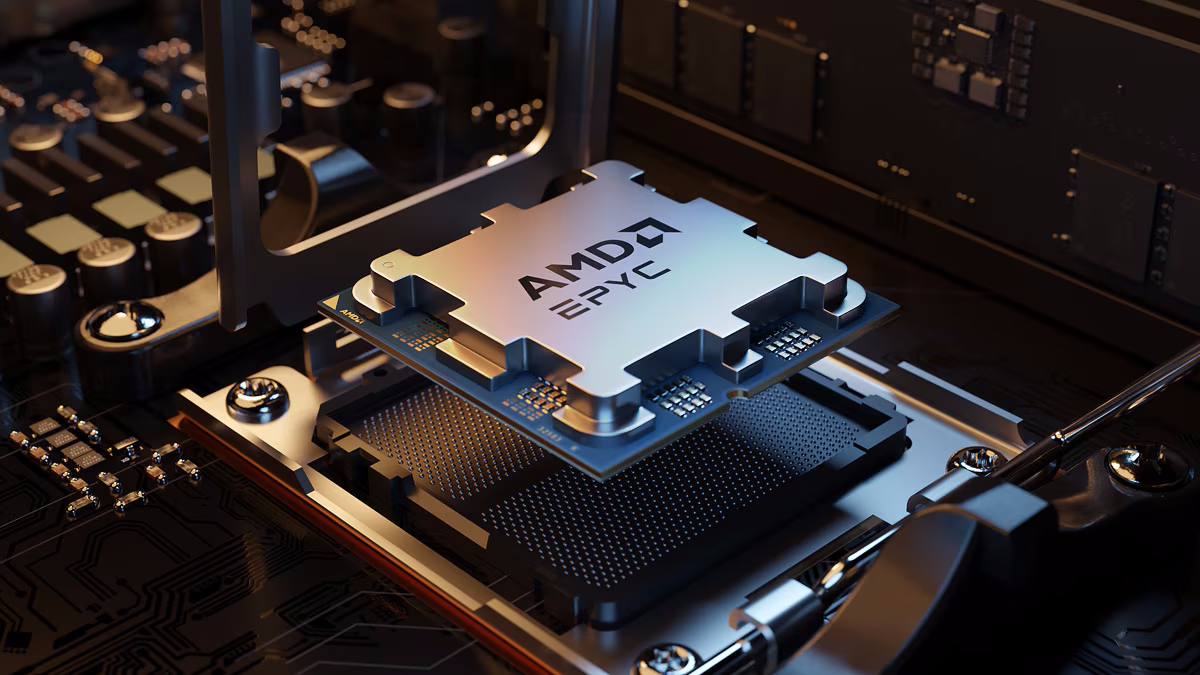
The EPYC 9006 Series is described by AMD as a workload‑optimised CPU lineup built to support agentic AI, where CPUs take on a larger share of work by running agents, coordinating tasks and managing data flows. AMD claims the new generation is designed to handle this increased load through higher core counts, expanded memory bandwidth and support for next‑generation I/O standards such as PCIe Gen 6 and MRDIMM.

The EPYC 9006 Series consists of four CPU families. The SP7 tier is the maximum‑density option, with core counts up to 256 cores and 512 threads, along with high‑frequency variants reaching up to 5GHz. SP8 models focus on efficiency, offering up to 128 core configurations designed for enterprise, edge and power‑constrained deployments. For HPC and memory‑sensitive workloads, AMD points to the SP7X variants, which it says offer triple the L3 cache per core compared to SP7. The LP tier serves as an AI host‑node CPU, using LPDDR memory and higher frequencies to keep accelerators supplied with data in multi-GPU racks.

On the GPU side, AMD introduced the Instinct MI400 Series, split between the MI455X for frontier‑scale AI deployments and the MI430X for sovereign AI and HPC. The MI455X is AMD's highest‑end accelerator for large‑model training, fine‑tuning and high‑volume inference, while the MI430X is aimed at workloads requiring numerical accuracy. AMD says the MI430X can deliver up to 288 TFLOPS of FP64 performance, alongside HBM4 memory and high‑bandwidth interconnects to support larger models.

The MI400 Series also incorporates security and system‑level features for sensitive AI and HPC environments, including SecureBoot, encrypted GPU‑to‑GPU links and hardware‑based protections. These GPUs support AMD’s ROCm software stack for AI development, which is also receiving updates this week through ROCm.ai – a new AI‑native developer environment that adds a unified CLI, AMD‑authored guidance for coding assistants and AI‑driven workload optimisation.

Finally, AMD is also expanding into physical AI and robotics, introducing new Ryzen AI Embedded X100 processors and Kria AI system‑on‑modules for autonomous machines and industrial systems. These platforms combine Zen 5 CPU cores, integrated RDNA graphics and an NPU, with shared access to memory to reduce latency in real‑time workloads.

KitGuru Says: What do you think of AMD's push into the AI space? 

The post AMD expands AI portfolio with EPYC 9006, Instinct MI400 and new physical‑AI hardware first appeared on KitGuru.

Diving Deeper on NVIDIA’s Vera CPU: New Architectural Details and SPEC CPU 2026 Benchmarks

21 July 2026 at 15:00

NVIDIA this morning has released a trove of new technical details on Vera, their upcoming server CPU, as well as the Olympus CPU core. The company is also publishing the first SPEC CPU 2026 benchmarks, giving us our best look yet at the performance of the chip

The post Diving Deeper on NVIDIA’s Vera CPU: New Architectural Details and SPEC CPU 2026 Benchmarks appeared first on ServeTheHome.

Benchmark leak points to massive Zen 6 performance gains

20 July 2026 at 14:30

An engineering sample of AMD's upcoming 10-core Medusa Point mobile processor has surfaced on Geekbench, achieving its highest benchmark scores to date. The chip reached 3,329 points in the single-core test and 16,555 points in the multi-core test, marking a notable performance jump over previous-gen chips.

The processor appeared on Geekbench (via Tom's Hardware) on an AMD Plum-MDS1 platform under the engineering sample identifier 100-000001713-33_N. Geekbench logs reveal a configuration with 10 cores and 20 threads, divided into two clusters of 4 and 6 cores. Telemetry data indicate that the chip reached a peak frequency of 5.37GHz during testing. The listing also details 10MB of L2 cache and 32MB of L3 cache.

This latest run outperforms a previous submission by 5% on single-core and 10% on multi-core. When compared with current retail models, this Zen 6 chip delivers a significant performance boost. It scores roughly 28% higher in single-core workloads and 24% higher in multi-core workloads than the 12-core Ryzen AI 9 HX 370, which averages 2,605 and 13,397 points, respectively.

While final clock speeds and power limits remain unconfirmed, the Medusa Point lineup is expected to form the foundation of AMD's upcoming mobile Ryzen 500 series.

KitGuru says: AMD's Zen 6 mobile architecture is shaping up to deliver a substantial performance uplift, if these early engineering-sample benchmarks are anything to go by.

The post Benchmark leak points to massive Zen 6 performance gains first appeared on KitGuru.

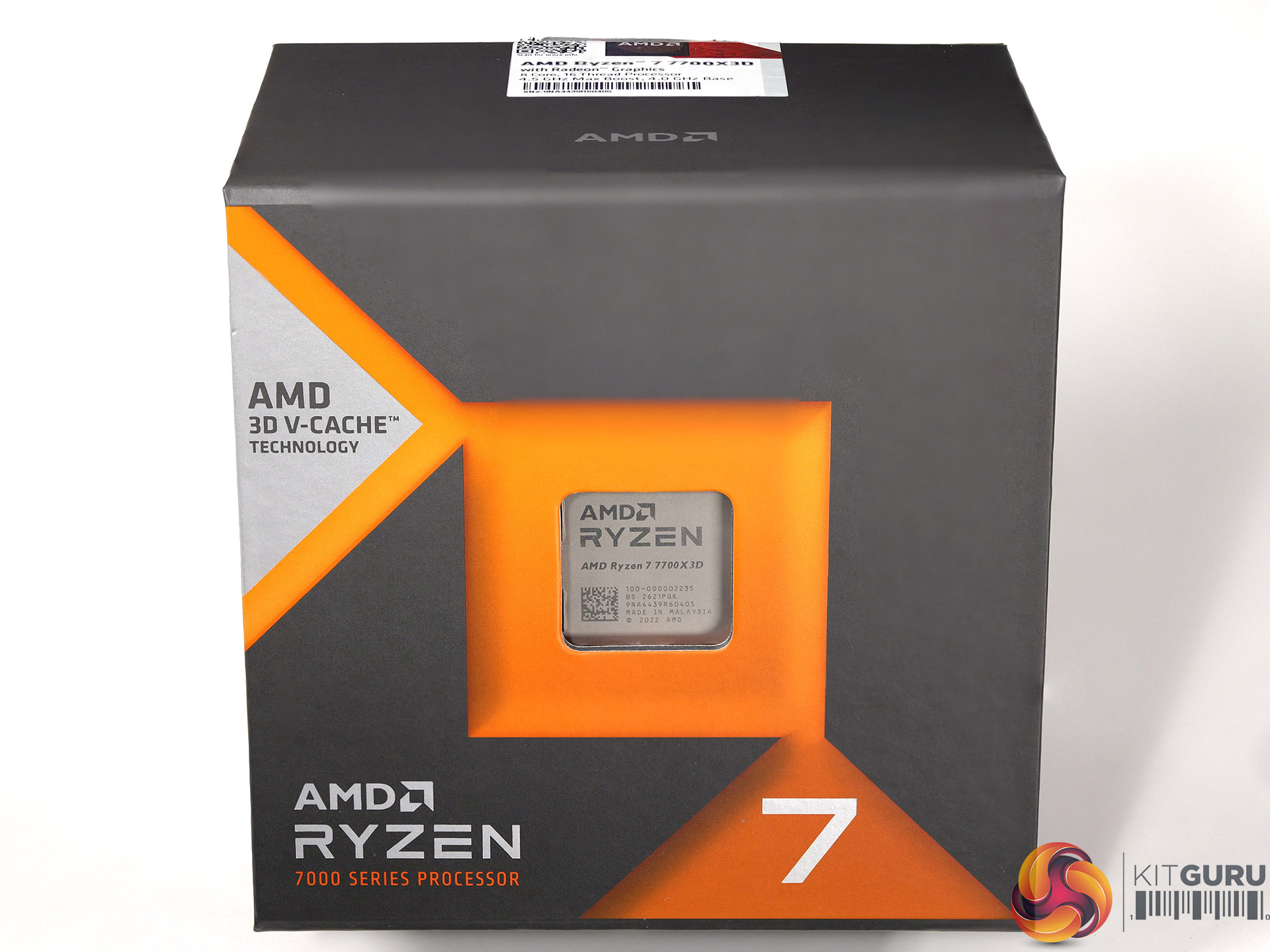
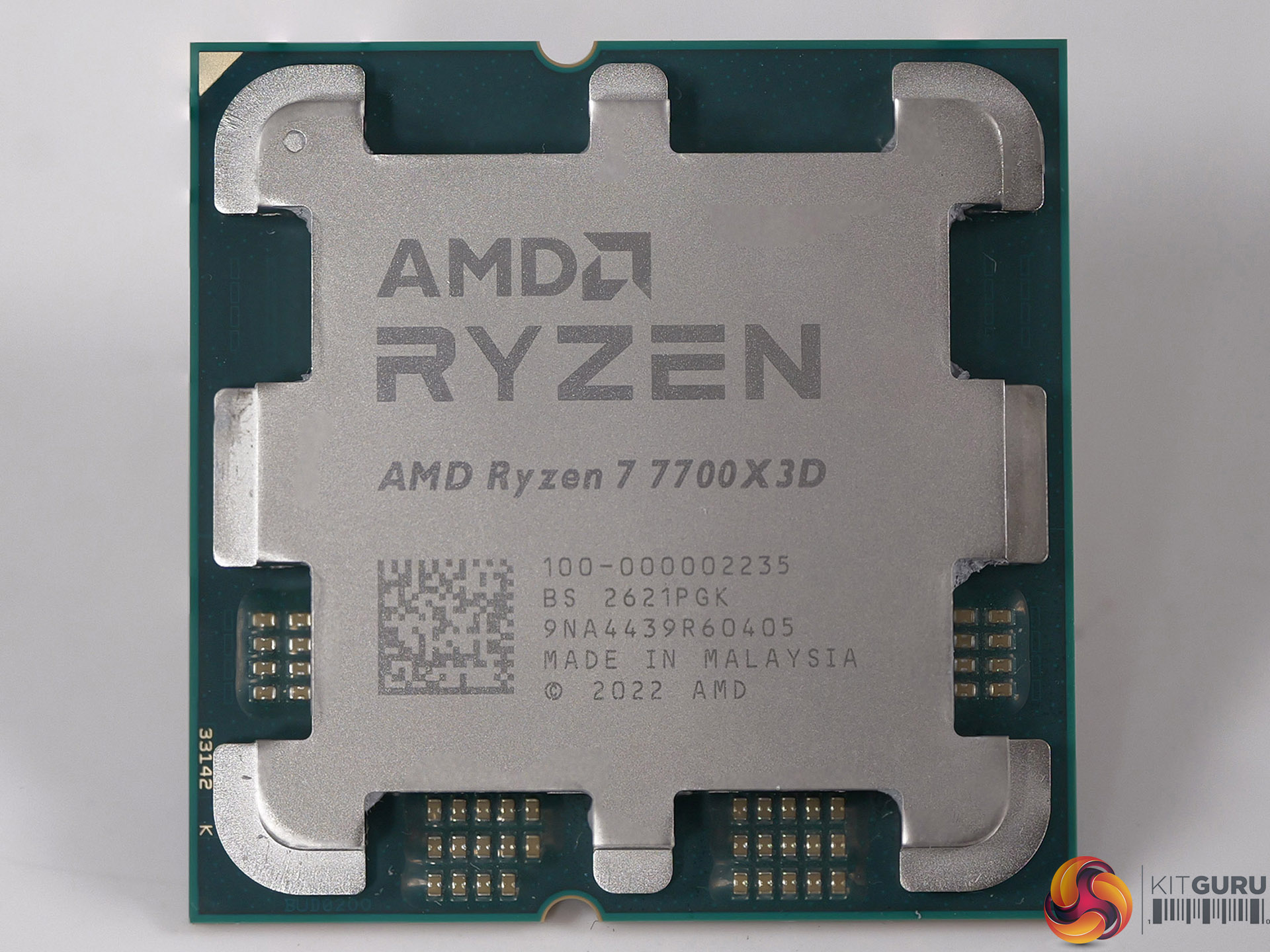
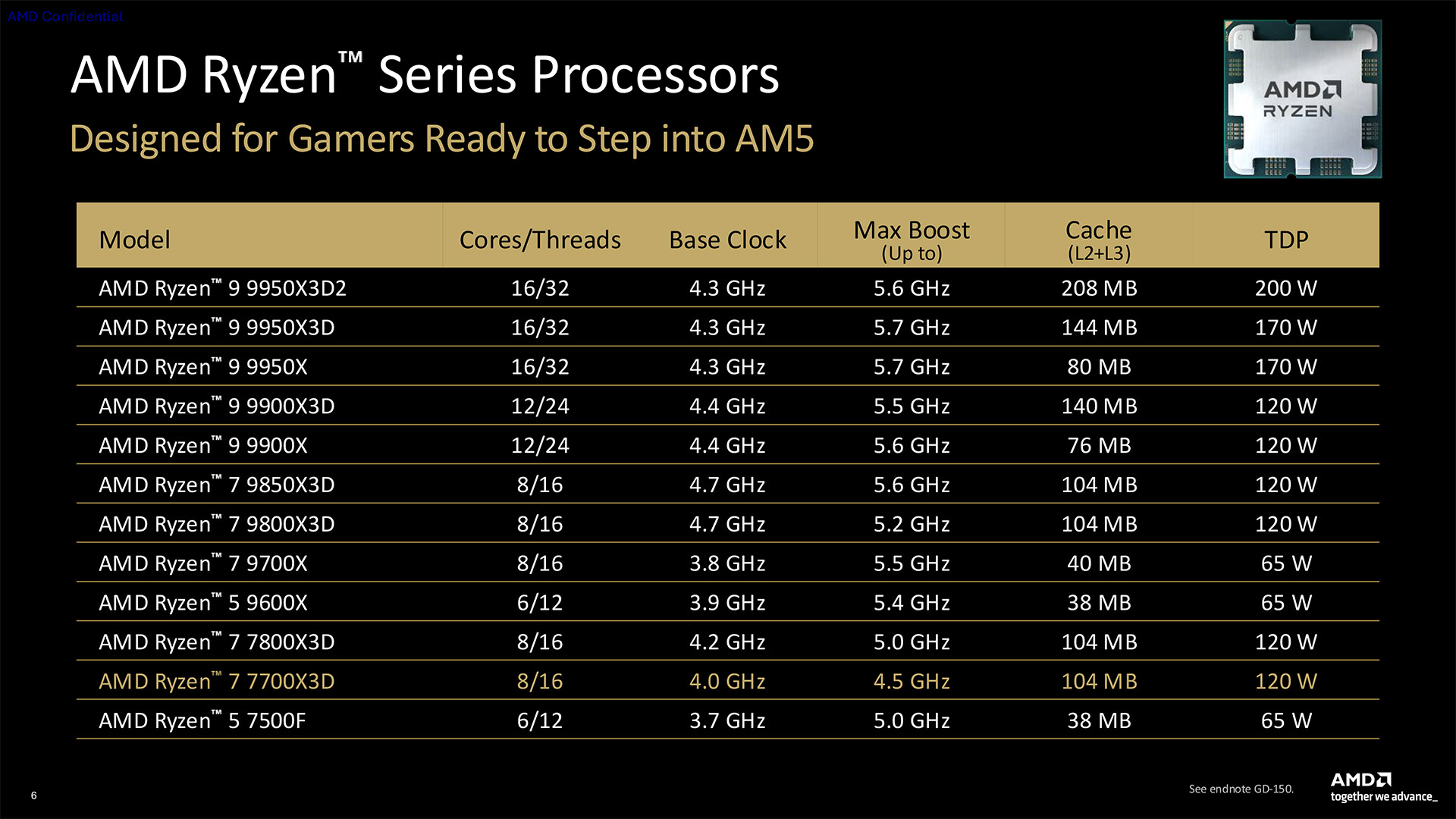
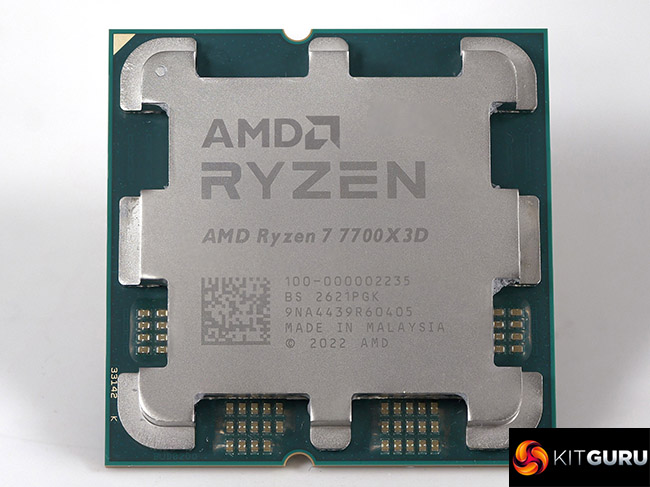
AMD Ryzen 7 7700X3D Review: Zen 4 in 2026?!

16 July 2026 at 13:00

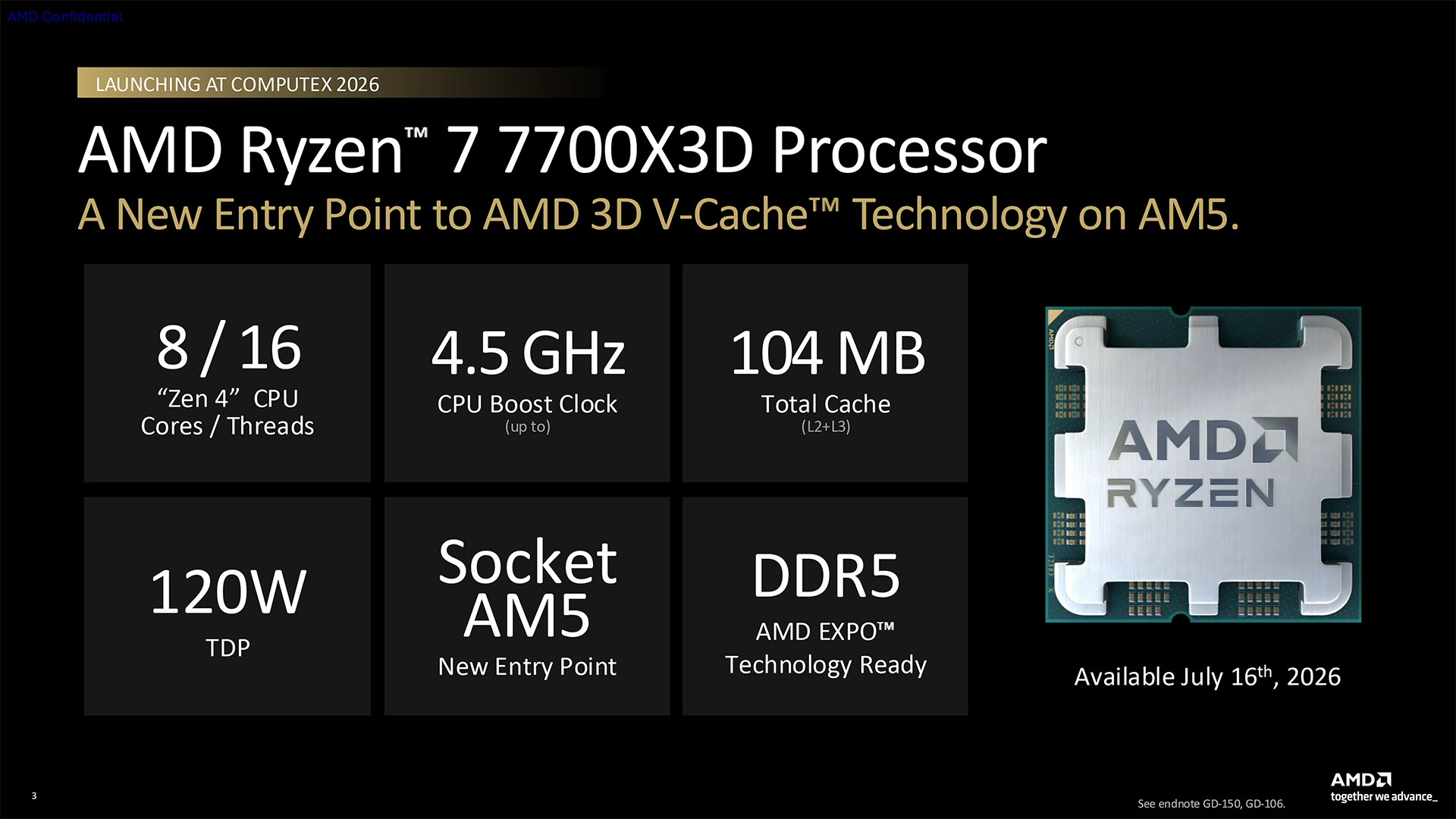
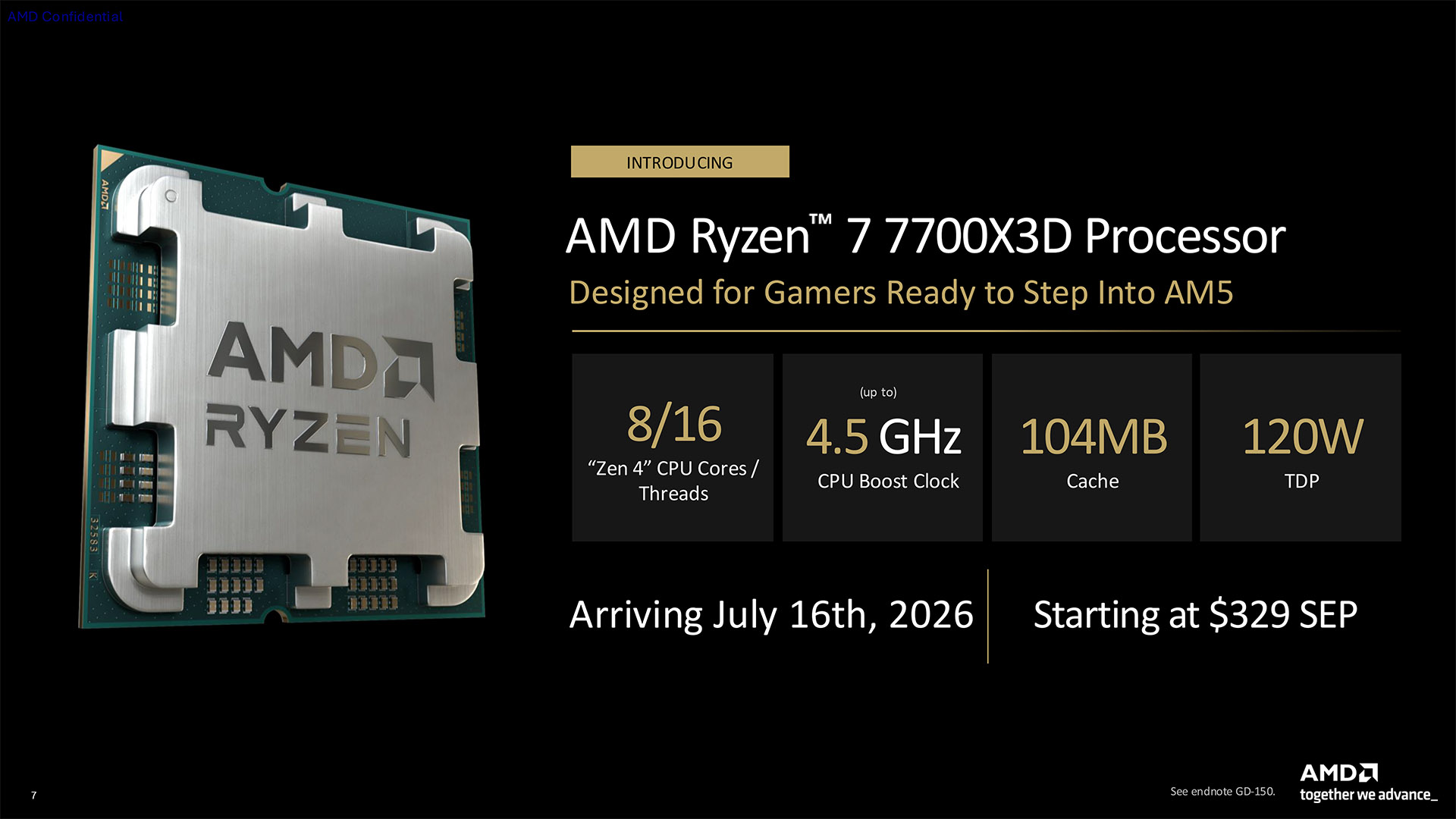
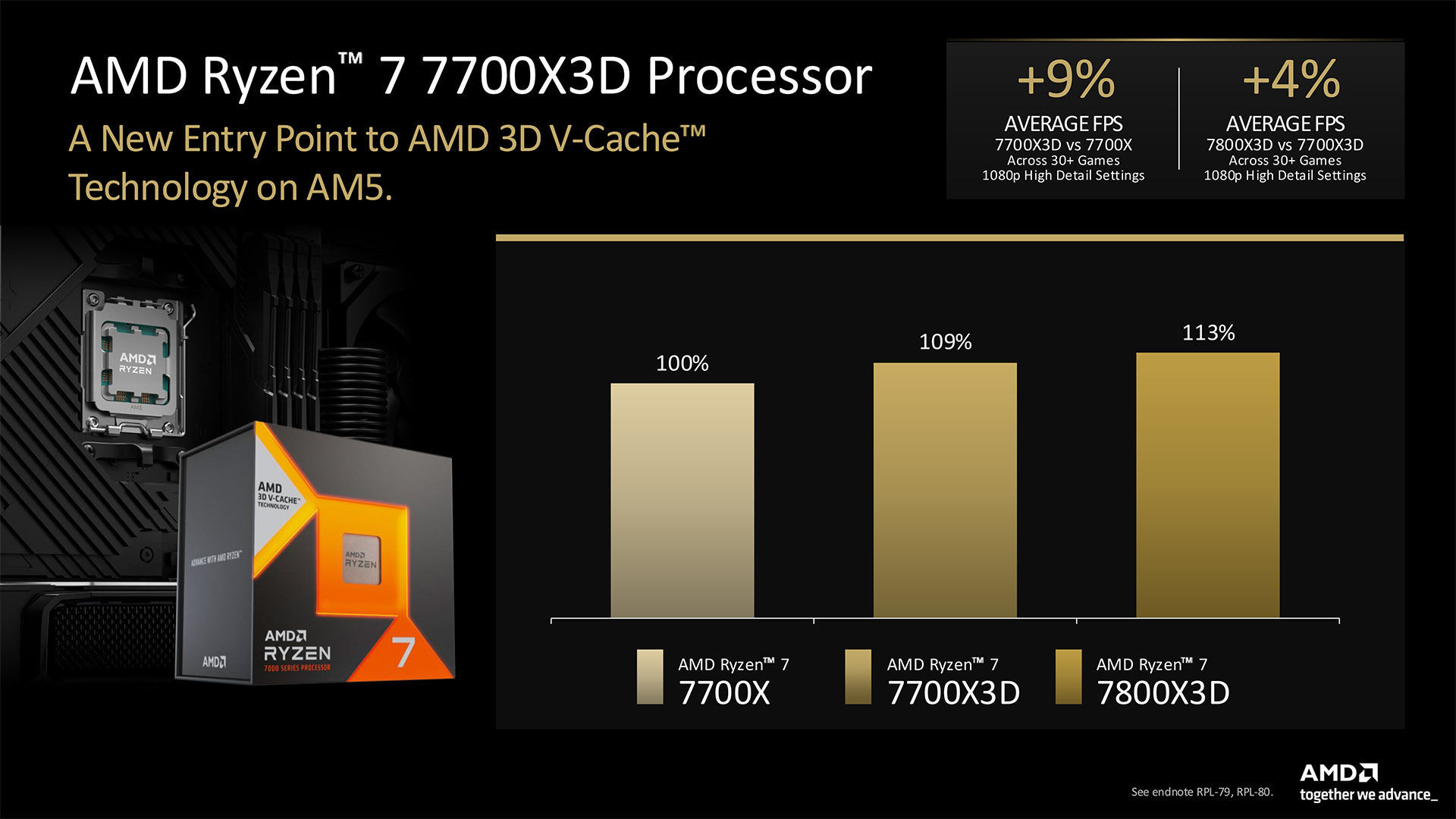
When AMD announced the Ryzen 7 7700X3D at Computex 2026 we were baffled. This CPU uses Zen 4 technology that launched early in 2022 and is slightly slower than the Ryzen 7 7800X3D that we reviewed in 2023. Furthermore it requires the use of DDR5 memory which currently sells for crazy high prices and that makes the idea of saving a small amount of money on your CPU fairly pointless. Wait until the end of the video and you will find there is a real kick in the pants.

Timestamps
00:00 Introduction
00:56 Leo's Analysis on this launch
03:29 Moving from to Ryzen 7 2700X to 5800X3D?
08:20 7700X3D Analysis
10:22 Adding the 7800X3D
11:37 Adding the 9850X3D
13:05 Speed Run
13:48 Launch Pricing Mess and Verdict

Performance and Testing

Test systems:
CPU: Ryzen 7 2700X, Ryzen 7 5800X3D
Motherboard: Asus TUF Gaming X570-Plus
Memory: 16GB G.Skill FlareX DDR4-3200
Graphics: Gigabyte RTX 2060 Super 8GB

CPU: Ryzen 7 7700X3D, Ryzen 7 7800X3D, Ryzen 7 9850X3D
Motherboard: Asus ProArt B850-Creator WiFi Neo
Memory: 32GB G.Skill Trident Z5 Neo DDR5-6000

Common parts:
CPU cooler: Phanteks Glacier One 360
Graphics card: PowerColor Red Devil Radeon RX 9070 XT 16GB
Power supply: Antec Signature 2200W

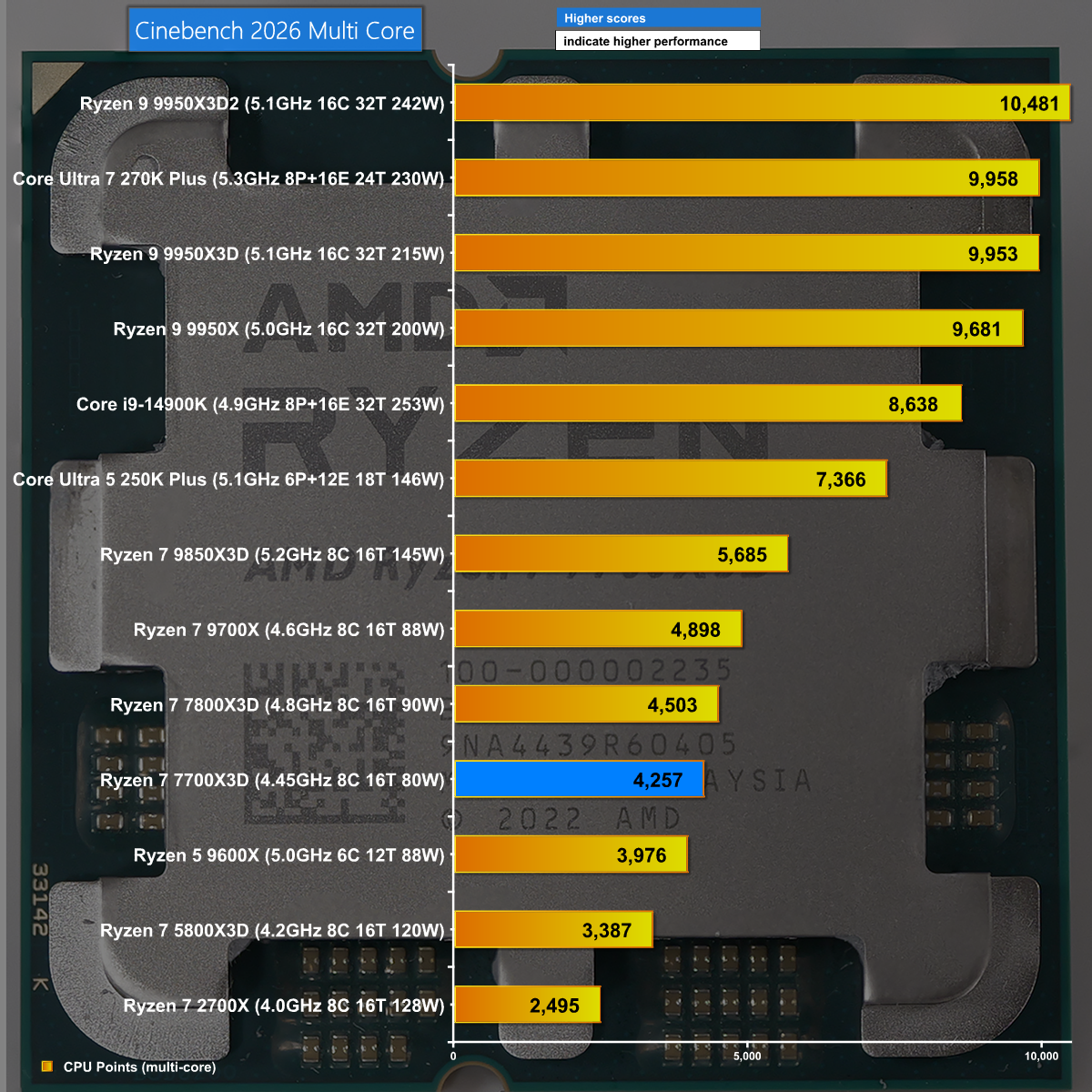
Cinebench 2026 Multi Core

In Cinebench 2026 Multi Core we see the Ryzen 7 7700X3D performs fairly poorly, exactly as we would expect. This is a relatively weak 8-core CPU that relies on 3D V-Cache to give decent gaming performance, however that technology provides no help in Cinebench.

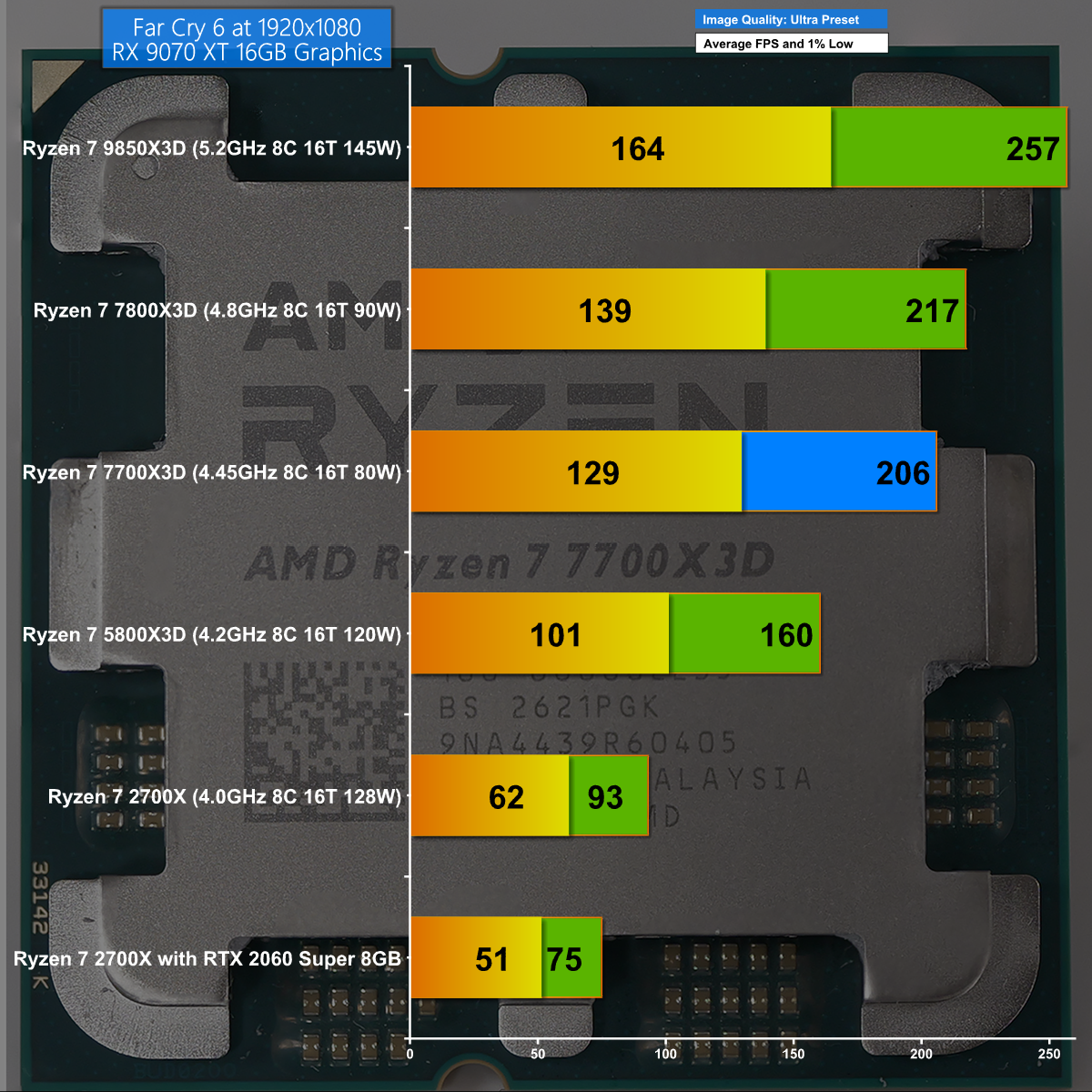
Far Cry 6 at 1080p

Far Cry 6 at 1080p is an interesting test for the Ryzen 7 7700X3D as it shows the AM5 platform has a distinct advantage over AM4 in gaming. The result is that this weak Zen 4 CPU performs well, despite its obvious limitations.

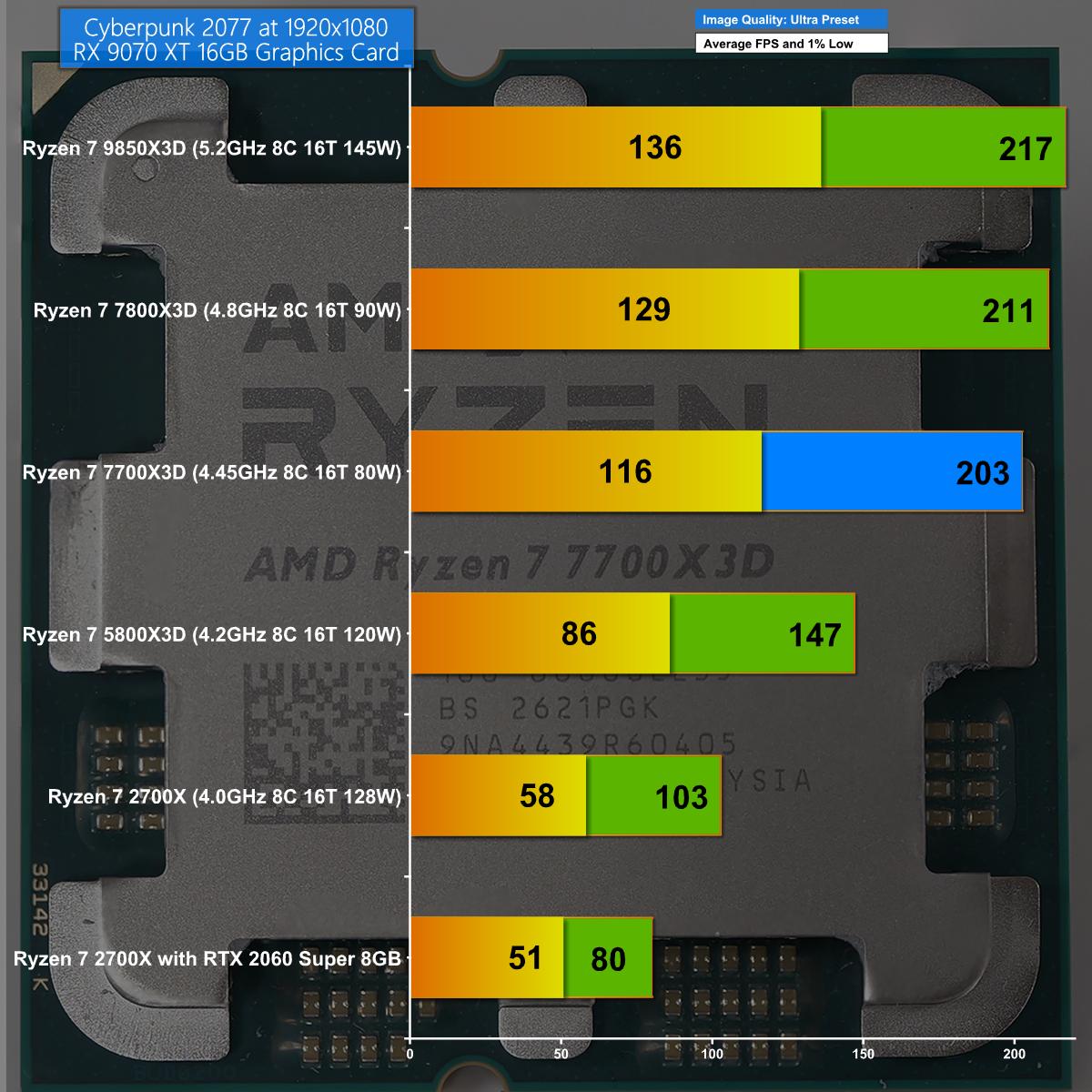
Cyberpunk 2077 at 1080p

Cyberpunk 2077 at 1080p shows a significant gap between each of the CPUs and an impressive 203fps on average for the Ryzen 7 7700X3D.

Closing Thoughts

AMD's launch in 2026 of the Ryzen 7 7700X3D with Zen 4 technology and 1st Gen 3D V-Cache makes sense, provided you come at things from a specific direction.

Imagine you are building a new gaming PC and want to keep costs to a minimum while also keeping an eye of the upgrade path to Zen 6 and possibly to Zen 7. In that context a slow Zen 4 CPU with 3D technology could fill a particular niche.

The problem is money. If you are saving £30 or £40 on the CPU while spending an extra £250 on a kit of DDR5 memory things looks a bit bleak.

The wheels completely fell off this particular vehicle when AMD announced that Ryzen 7 7700X3D will go on sale at exactly the same price (£294.99 SEP) you currently pay for Ryzen 7 7800X3D. This is madness as it immediately renders the Ryzen 7 7700X3D as a pointless product.

You will be able to buy the Ryzen 7 7700X3D for £294.99.

Pros

  • Decent gaming performance thanks to 3D V-Cache technology.
  • There are heaps of Socket AM5 motherboards that are compatible with this CPU.
  • This CPU offers an easy upgrade path to Zen 6 next year.

Cons

  • The price makes no sense.
  • DDR5 memory is horribly expensive.

KitGuru says: AMD Ryzen 7 7700X3D could be an interesting entry point to AM5 gaming, however their pricing strategy has mucked things up entirely.

The post AMD Ryzen 7 7700X3D Review: Zen 4 in 2026?! first appeared on KitGuru.

Intel reportedly preparing high-cache CPUs to combat Ryzen X3D

5 July 2026 at 12:00

Intel is reportedly preparing two mid-range 22-core “Nova Lake-S” desktop processors, each with a massive 108MB of “bLLC” cache to boost gaming performance. These upcoming models are claimed to be part of the Core Ultra 5 400S processor family.

According to Jaykhin (via VideoCardz), both configurations use a single compute die design for mid-range gaming systems. The 22-core architecture features 6 “Coyote Cove” performance cores, 12 “Arctic Wolf” efficiency cores, and 4 low-power efficiency (LPE) cores. Intel aims to combine updated core microarchitectures with its new Last Level Cache layer to mitigate latency-sensitive workloads like gaming, mimicking AMD's Ryzen X3D.

The report indicates power limits and multiplier support separate the two models, meaning they aren't completely identical. One variant lands as an unlocked 125W TDP processor under the overclockable “K” series banner, while the second model operates with a locked 65W base TDP.

Broader details regarding the supporting Z9x0 desktop platform reveal that the new LGA-1954 socket can accommodate up to 52 cores. Early rumours suggest that high-end dual-tile configurations could draw up to 474W in PL2 mode.

KitGuru says: Will these new high-cache Intel CPUs take the gaming performance crown back from AMD's Ryzen X3D CPUs? 

The post Intel reportedly preparing high-cache CPUs to combat Ryzen X3D first appeared on KitGuru.
❌
❌