Not just Arc G3-based handhelds, but the classic older-gen gaming handhelds are reaching a nearly $1000 price tag, resulting in reduced sales. Steam Deck Reportedly Lost Significant Momentum After Recent Price Hike With Sales Estimated to Have Declined By 82% Steam Deck has been Valve's most successful product in recent years, consistently ranking among Steam's best-selling products since launch. However, a new analysis by Boiling Steam suggests that the handheld's sales have been impacted significantly following its recent price hike, which has also affected almost every gaming handheld that exists in the market. According to the report, the Steam Deck […]
It's clear that the Intel Arc G3-based gaming handhelds won't be released for under $1,000 for sure. Acer UK Confirms Pricing for Arc G3 and G3 Extreme-Based Predator Atlas 8 Handheld; Up To $2,000 for the 32 GB - 1 TB Configuration Gaming handhelds are now costing an arm and a leg. With rapid improvements in hardware, newer gaming handhelds do not cost any less than a mid-range gaming PC. Since the release of the Intel Arc G3 series, many vendors have quickly transitioned from AMD chips to Panther Lake SoC variants. However, while we expected lower prices, vendors keep […]
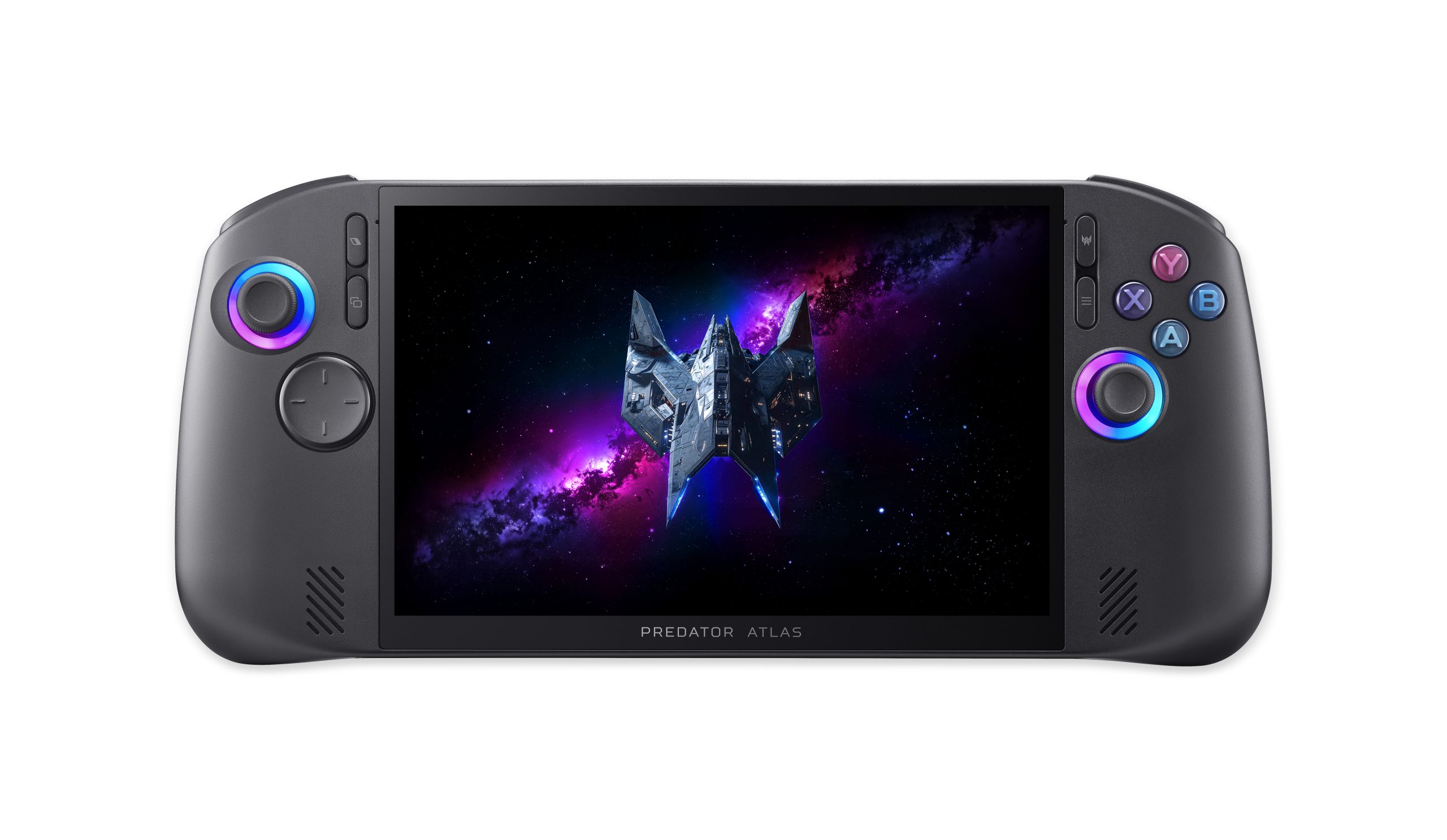
Following on from a reveal at Computex, Acer has now announced UK pre‑order details for the Predator Atlas 8 handheld, with pricing starting at £999.99. Early adopters will also receive a pre‑packed Corning Gorilla Glass screen protector and two months of Xbox Game Pass Ultimate with all units.
Acer first introduced the device during its Computex showcase, confirming that the Predator Atlas 8 is built around Intel’s new Arc G3 processors. The handheld features an 8-inch 120Hz display, hall‑effect joysticks, active cooling and full Windows support, enabling access to PC game libraries and Intel XeSS upscaling.
Acer has now outlined UK configurations and pricing ahead of launch this October. Priority pre‑order registration is available today via Acer’s Atlas 8 pre‑order page, with four tiers confirmed. The base Predator Atlas 8 ships with an Intel Arc G3 processor, 16GB RAM, 512GB SSD and a 60Whr battery for £999.99. A second configuration increases memory to 24GB, retaining the same storage and battery, priced at £1,099.99.
For those seeking more performance, the Predator Atlas 8 Extreme upgrades to the Intel Arc G3 Extreme processor, paired with 24GB RAM, a 1TB SSD and an 80Whr battery at £1,299.99. The top‑end model raises memory to 32GB, with the same GPU, storage and battery configuration, coming in at £1,499.99.
KitGuru Says: Are you a fan of handheld gaming systems? Are you considering Acer's Predator Atlas?
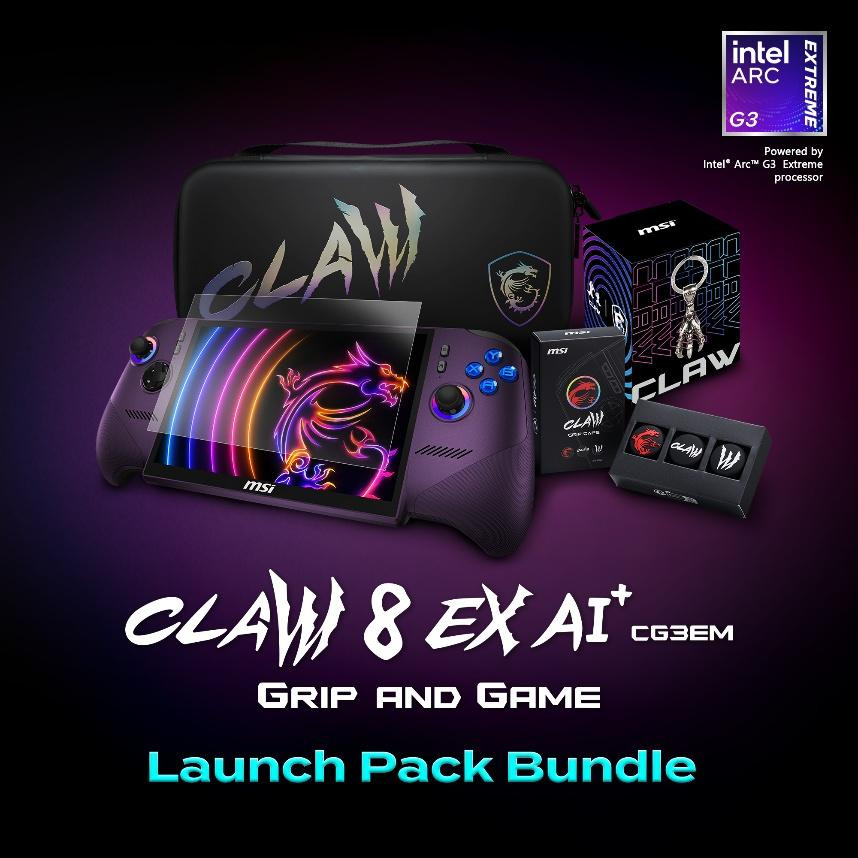
MSI’s new Claw 8 EX AI+ handheld gaming system is now available to pre‑order in the UK, following its debut at Computex earlier this month. The updated model is powered by Intel’s Arc G3 Extreme processor, offering improved performance and efficiency compared to the original Claw.
The Claw 8 EX AI+ is built around an 8‑inch Full HD+ touchscreen with up to 120Hz refresh rate. MSI has redesigned the chassis with larger ergonomic grips, Hall Effect triggers and thumbsticks, refined bumpers and a more responsive D‑pad to improve comfort and precision during longer sessions. The company has also added a new linear haptic motor for faster, more detailed feedback.
In the table below, you can see the full specs for the handheld:
2 x Thunderbolt 4 (DisplayPort / Power Delivery 3.0)
1 x microSD Card Reader
1 x Audio Combo Jack
Security
Fingerprint sensor on the power button
Battery
4‑Cell, Li‑Polymer, 80Whr
Dimension
296–321 x 130 x 25–48 mm
Weight
785 g
Color
Void Purple
Intel’s latest Arc architecture powers the handheld, with support for XeSS 3 upscaling and Multi‑Frame Generation to boost frame rates in supported games. Efficiency gains from the new chip should also deliver decent battery life improvements compared to previous models.
The handheld ships in a new Void Purple finish and includes MSI’s updated software suite, featuring Xbox Mode, redesigned quick settings and streamlined performance controls.
Alongside the standalone device, MSI is offering a Claw 8 EX AI+ Launch Pack Bundle in the UK, which includes a carry case, keychain, grip caps and a tempered glass screen protector. Pre‑orders are now live at Scan, with the handheld priced at £1,399.99 or £1,449.98 for the bundle. Additional UK retail availability will be confirmed at a later date.
KitGuru Says: It will be interesting to see how well these perform once stock lands. So far, Ryzen Z1 and Z2-based handhelds have been the most popular, but Intel's new Arc G3 processors have an opportunity to shake things up.
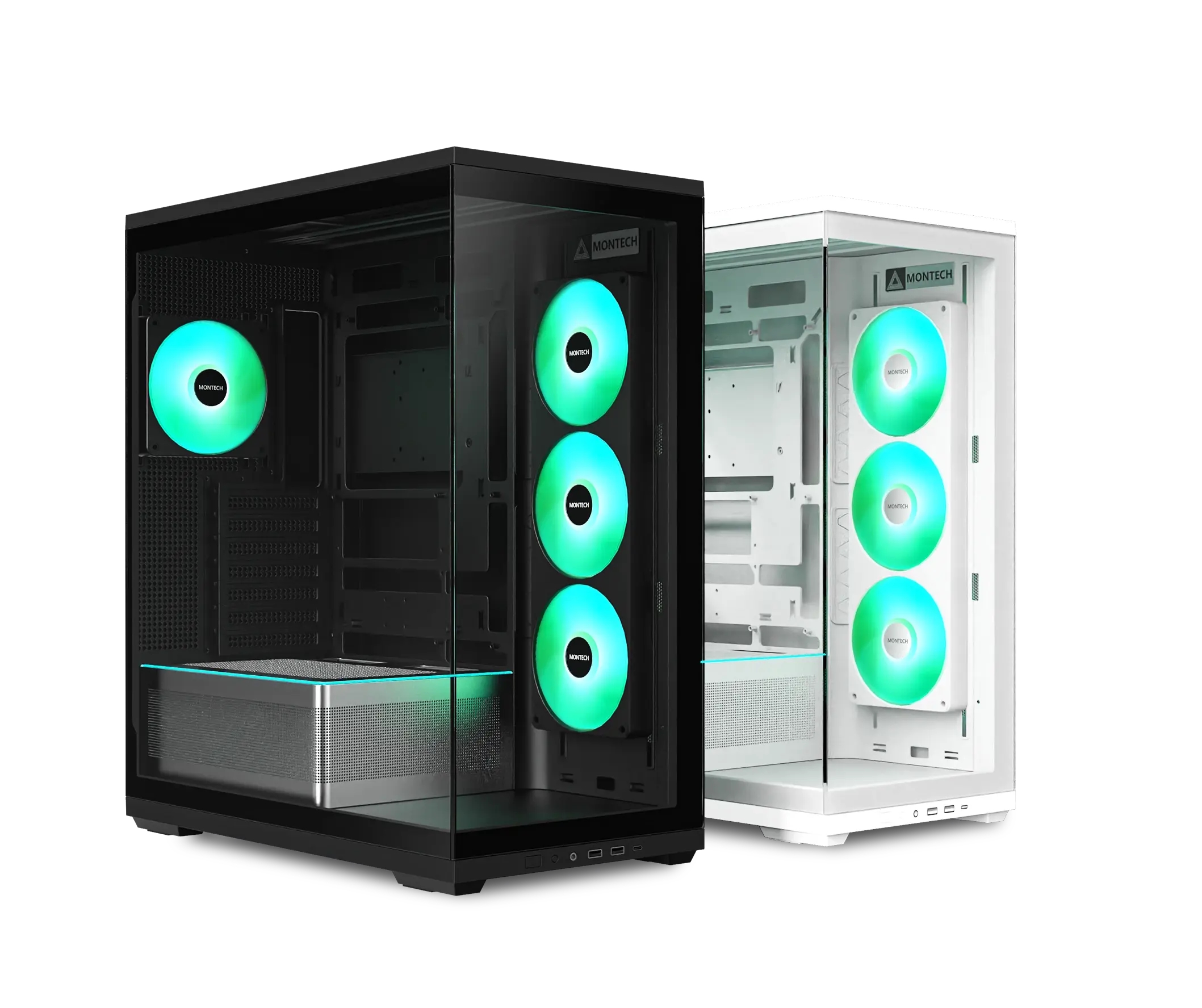
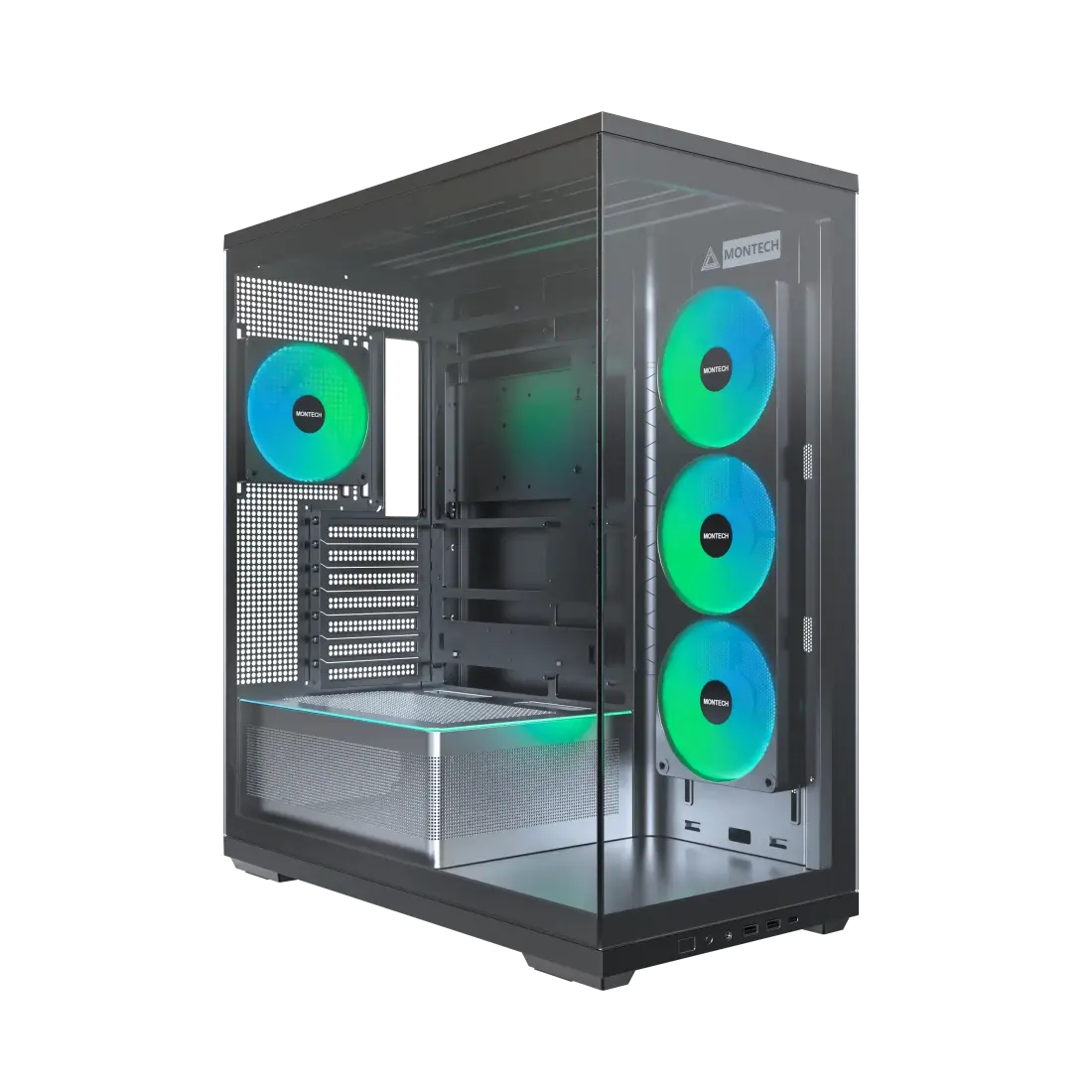
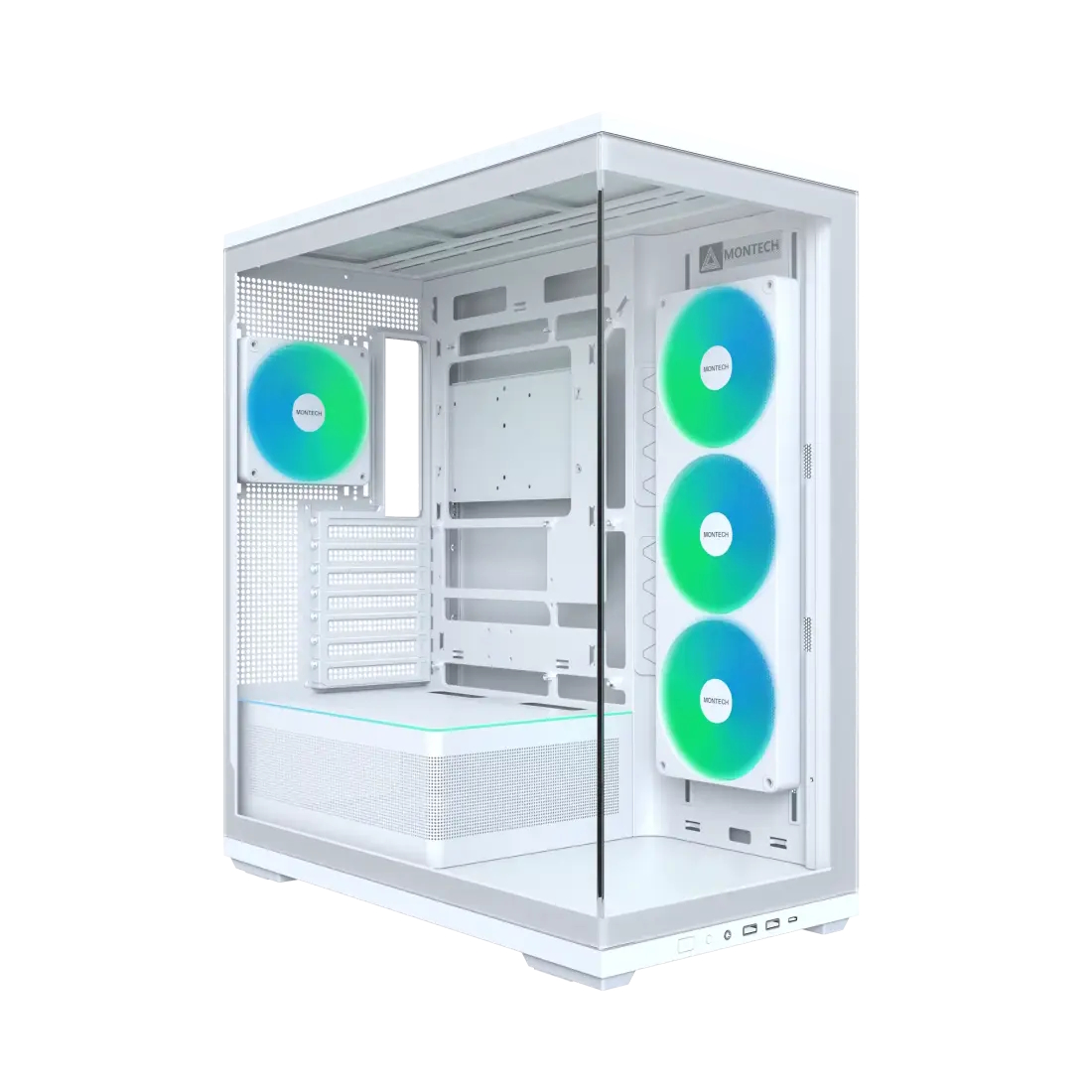
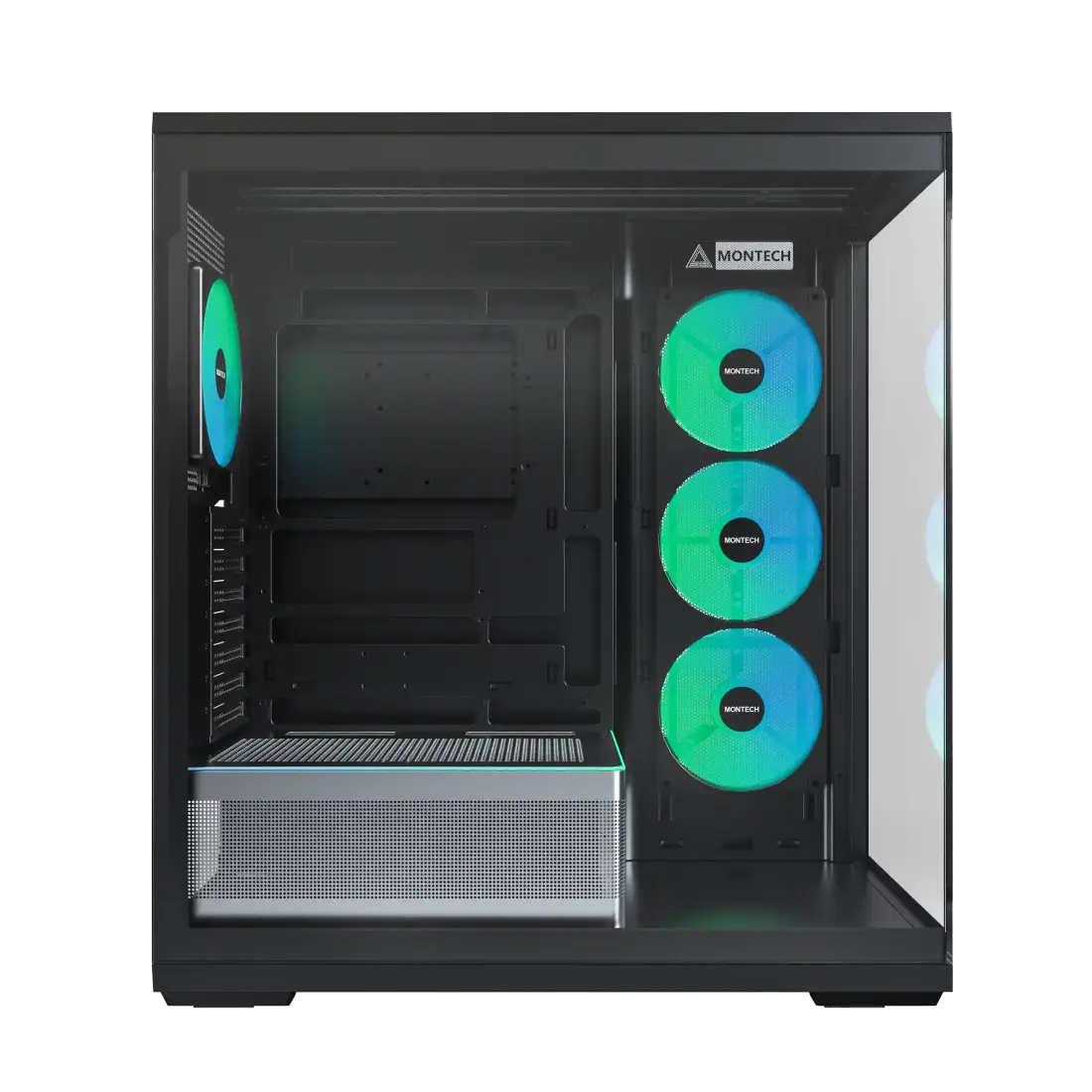
Montech has launched the TG3, a budget-friendly ATX fish-tank style case featuring a tiered bottom layout, back-connect motherboard support, and pre-installed unibody fans.
This new TG3 case comes in black or white finishes and is tailored for performance systems with a minimalist exterior design. It includes a spacious interior that offers clearance for GPUs up to 430mm long and compatibility with back-connect motherboards. Ambient ARGB lighting (28 LEDs) is also integrated directly into the PSU shroud to enhance the build's overall visual footprint.
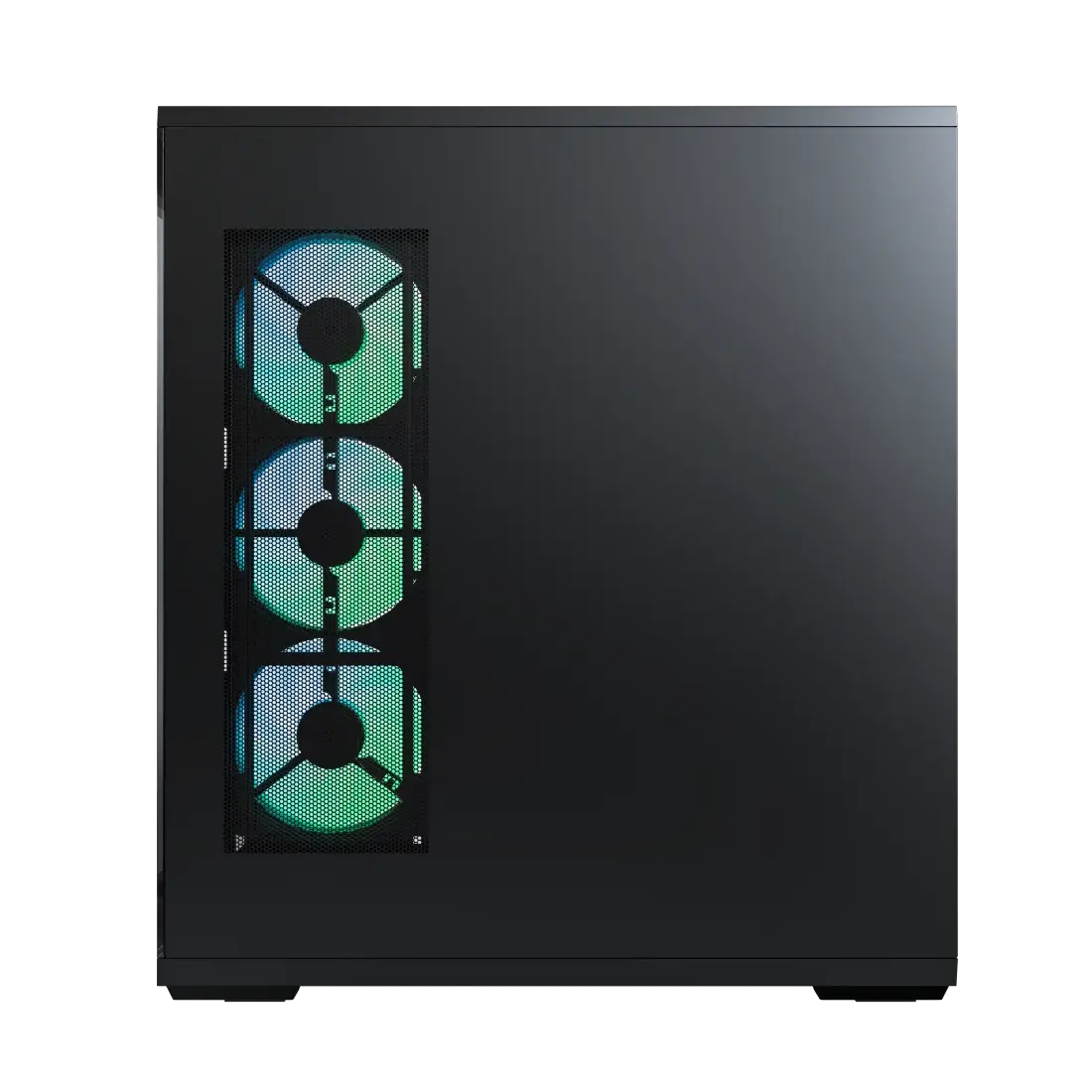
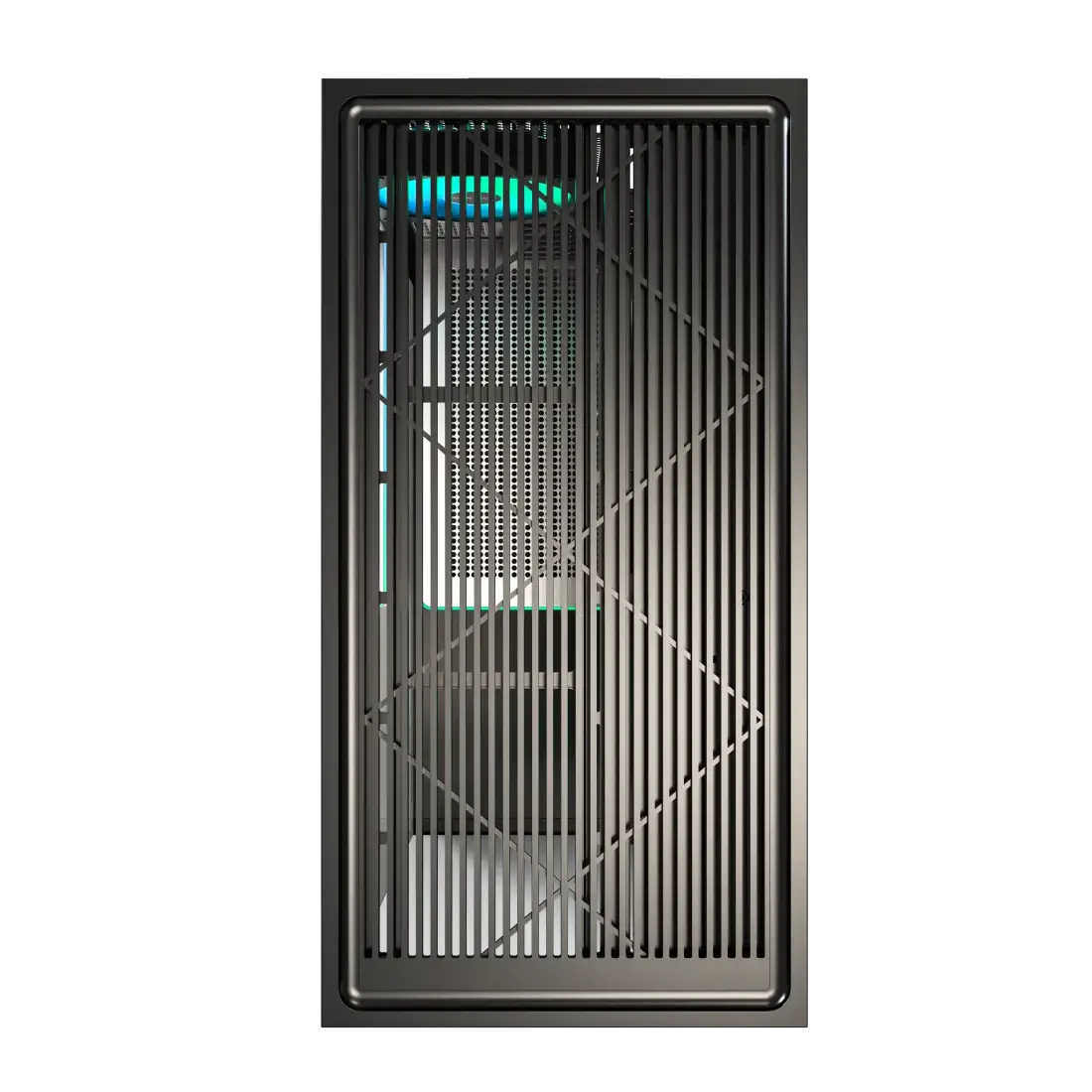
Cooling out of the box relies on a pre-installed Montech GF360 U REV side intake and a GF120 U rear exhaust (140mm fans are also compatible). The side intake uses a unibody, single-frame design that should reduce resonance and simplify cable routing. Additionally, users can mount up to 3x 120/140mm fans on top and two 120mm fans on the PSU shroud. Radiator cooling is limited to 240mm on the side intake, but the top panel supports up to 280/360mm variants.
The front I/O is quite decent for such a cheap case, offering the typical power/reset buttons, 2x USB-A 3.0 ports, a USB-C port, and a headset audio jack. The Montech TG3 is now available for $59.
KitGuru says: Offering back-connect motherboard compatibility and unibody fans at such a low price point makes the TG3 a highly competitive option.
Kioxia has announced a new 4TB model in its Exceria G3 SSD Series, expanding its range of consumer PCIe 5 drives with the very first QLC NAND-based model.
This new high-capacity option is among the first consumer-available PCIe 5.0 SSDs to use quadruple-level cell (QLC) NAND. It leverages the Kioxia's 8th Gen BiCS FLASH 3D flash memory technology to deliver higher storage density, reducing cost per terabyte while targeting mainstream desktop and laptop builds.
Performance figures from Kioxia list the drive with sequential read speeds up to 10,000MB/s and sequential write speeds up to 9,600MB/s. Other figures shared by the manufacturer include a maximum random read/write speed of 1,450,000/1,450,000 IOPS, an MTTF (Mean Time to Failure) of 1.5 million hours, and a rated endurance of 2,400TBW. SSD health and other features can be managed through Kioxia's SSD Utility software.
Retail shipments for the Exceria G3 SSD 4TB model are scheduled to begin this month. Like the other Kioxia PCIe 5.0 SSDs, the Exceria G3 4TB SSD is backed by a 5-year warranty.
KitGuru says: Looking for a big PCIe 5.0 SSD? Kioxia's new Exceria G3 4TB SDD might be a good option depending on price.
Intel shared more details and performance benchmarks of its game-changing Arc G3 Extreme chip for gaming handhelds. Intel To Lead The Gaming Handheld Segment With Its Arc G3 Extreme Chip, Over 40% Faster on Average & Twice As Efficient As AMD's Z2 Extreme Before Computex, Intel announced its Arc G3 series, which is based on the same architectures as the Core Ultra Series 3 "Panther Lake" chips but designed with gaming handhelds in mind. This means that Intel isn't just taking laptop SKUs and putting them on handhelds; instead, the Arc G3 is meticulously designed for low-power and high-performance handhelds. […]
I just can’t wrap my head around why KIOXIA hasn’t brought its consumer SSDs to North America. And, in the same vein, I still don’t fully understand why Micron retired the much-loved Crucial brand. That said, I’m convinced KIOXIA-branded SSDs would do extremely well here, potentially rivaling those top-tier bestsellers we all know. In the …
Intel will be going big on the stage, and we expect multiple product stacks being introduced at the Computex event. What to Expect From Intel Computex 2026 Presentation? While Intel Core Ultra Series 2 may not have been able to push Intel out of its current state, Intel has promising plans in the coming months. With the release of Panther Lake, aka Core Ultra Series 3 processors, the company has been on fire, releasing newer variants of the chips to deliver solid computing power for a wide range of products, especially the mobile platform. Panther Lake has been a huge […]
ACER unveils one of the first gaming handhelds featuring Intel's top-end Arc G3 Extreme chip, the Predator Atlas 8. ACER's Predator Atlas 8 Gaming Handheld Looks Impressive, Now We Wait For Its Performance & Pricing With the introduction of the Intel Arc G3 series, many handheld makers are quickly adopting the fastest Intel SoCs for their upcoming handhelds. Popular manufacturer Acer has just unveiled its latest gaming handheld based on the same chip, and it is named Predator Atlas 8. The company has been making handhelds mostly on the AMD chips up until now, but it looks like more and […]
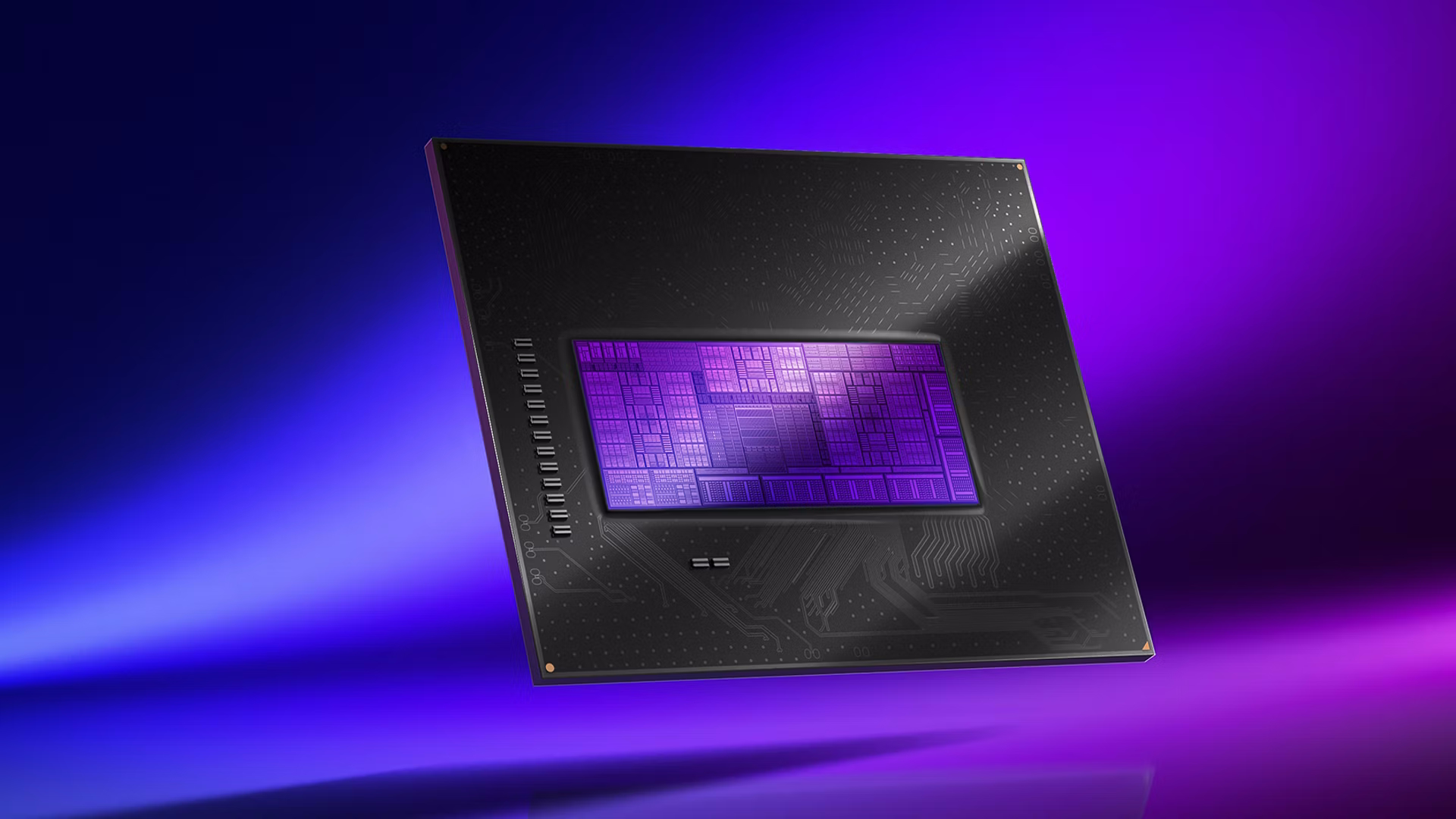
Intel has officially introduced the new Intel Arc G3 CPU family for gaming handheld PCs, bringing stronger graphics performance and modern gaming features for portable devices. The new chips are designed for future handheld gaming systems and will first appear in the upcoming Acer Predator Atlas 8, which is expected to launch in October 2026.
The new lineup includes the Intel Arc G3 Extreme and the standard Intel Arc G3. Both processors use the same 14 core design with 2 Performance cores, 8 Efficient cores, and 4 Low Power Efficient cores. Intel says these chips are built to deliver better gaming performance while also improving power efficiency for handheld devices.
The Arc G3 Extreme can boost up to 4.7 GHz, while the standard Arc G3 reaches 4.6 GHz. Both chips share the same base clock speeds with 1.9 GHz on the P-Cores and 1.5 GHz on the E-Cores and LP E-Cores.
One of the biggest highlights is the built in Intel Arc graphics. The Arc G3 Extreme comes with the stronger Arc B390 integrated GPU, while the standard Arc G3 uses the Arc B370 GPU. The Arc B370 is based on Intel’s Xe3 graphics architecture and includes 10 Xe cores running at 2.2 GHz. Intel claims the GPU can deliver up to 90 TOPs of Int8 AI performance, while the Arc G3 Extreme reaches 113 TOPs.
Earlier testing of the Arc B390 showed that it performed better than AMD’s Radeon 890M graphics found in many current gaming handhelds. This means the Arc B370 may offer similar or slightly better gaming performance compared to AMD’s popular handheld graphics solution.
Both processors feature a 25W base power rating with support for up to 80W turbo power. Intel also confirmed support for modern connectivity and gaming technologies including Thunderbolt 4, Wi Fi 7 R2, Bluetooth 6, and XeSS 3. XeSS 3 includes features such as Super Resolution, Multi Frame Generation, and Xe Low Latency for smoother gameplay and improved frame rates.
Intel Arc G3 processors availability
The new Intel Arc G3 processors will become available for OEM partners starting in June 2026, while more handheld gaming devices using the chips are expected later this year.
OneXPlayer has unveiled its first Intel Arc G3 Extreme-based gaming handheld, featuring 14 CPU cores and 12 Xe3 GPU cores. OneXPlayer Unveils World's First Intel Arc G3 Extreme-Powered Gaming Handheld, Featuring 8.8-inch OLED Display and a 3-in-1 Design With the unveiling of Intel's Arc G3 chips, handheld manufacturers have already readied their next-gen gaming handhelds powered by the new Panther Lake variants. The Arc G3 is a dedicated chip lineup for gaming handhelds, offering up to 14 CPU cores and up to 12 Xe3 GPU cores for an impressive gaming performance, as has been demonstrated by the Panther Lake counterparts. […]
Intel has finally unveiled its brand new SoCs for gaming handhelds called the Arc G3 Extreme & Arc G3, based on the Panther Lake design. Intel Plans To Disrupt AMD's Gaming Handheld Dominance With Its New Arc G3 Chips, Featuring Strong Capabilities The gaming handheld space has seen a major surge over the past few years. For the longest time, AMD has been very competitive in the market, and while Intel did have a few products that showed the kind of performance, efficiency, and features to compete well, there weren't that many options to select from, as the market was […]
Just ahead of Computex, Intel has announced the new Arc G-Series, a new line of GPUs built specifically for handheld gaming devices.
The first two Arc G Processors will be the Arc G3 and the Arc G3 Extreme. These are powered by Intel Core Ultra Series 3 (Panther Lake) CPU cores, with Xe 3 (Battlemage) graphics, complete with support for modern features like real-time raytracing, and the latest version of the XeSS upscaler.
Intel says that the Arc G-Series processors are purpose-built for handheld gaming and developed in close collaboration with hardware partners and software developers to ensure compatibility. The processors are optimised for efficiency and power management to deliver longer battery life.
While the exact differences between the G3 and the G3 Extreme aren't entirely clear in the press release, we do know that these processors will have 2 P-Cores, 8 E-Cores and 4 low power E-Cores, all manufactured on the Intel 18A node.
The chips also support the very latest connectivity standards, including WiFi 7 R2, Bluetooth 6, and Thunderbolt 4.
Intel will be revealing more at Computex next week, so we should learn which OEMs are adopting these new Arc G processors, and when we may expect to see handhelds featuring them.
KitGuru Says: It will be interesting to see how well these perform when the time comes.
Intel is making some big changes to its desktop gaming roadmap to deliver faster performance, with new hardware & software technologies. Intel Says They Want To Match AMD X3D CPUs By Changing Their Entire Gaming Desktop Strategy Over the Next Five Years In an interview with PCGameshardware, Robert Hallock has shared the plans of the client CPU team covering desktops, laptops, and handheld PC markets. Robert has been giving us some hints of their strategy over the past few weeks, and it looks like Intel is on the right path. A key change in Intel's desktop strategy came around after […]
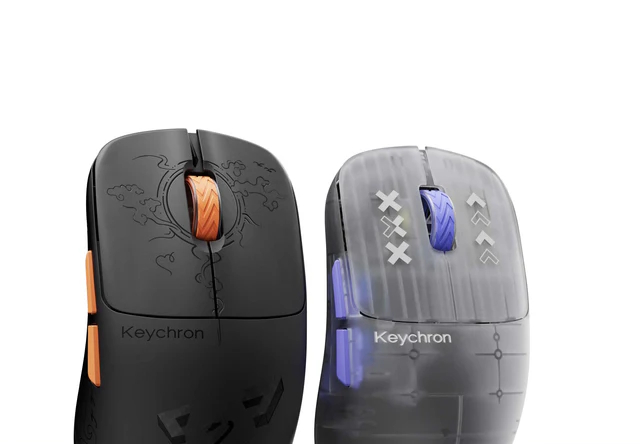
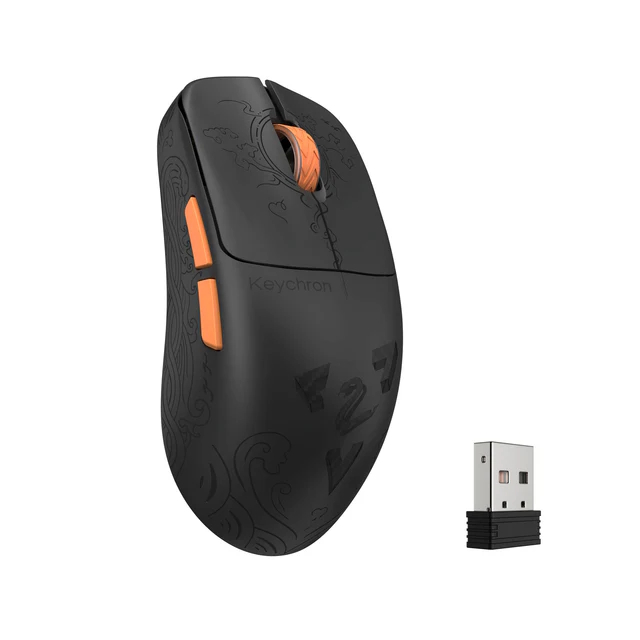
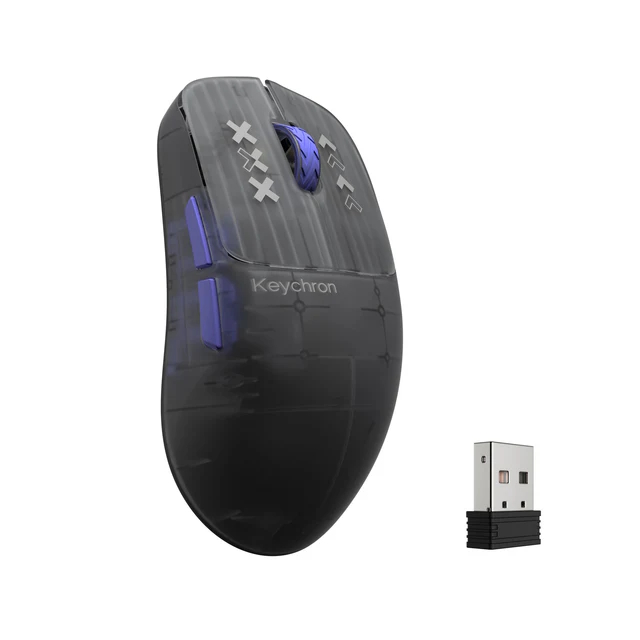
Keychron has launched the G3 wireless gaming mouse, a 44g ultra-lightweight peripheral featuring the PixArt PAW3950 sensor. The mouse is available in two material configurations: a cheaper translucent polycarbonate and a more expensive carbon fiber version. Both variants use identical internal hardware and support polling rates up to 8000Hz.
The G3 (via TechPowerUp) features a symmetrical chassis and Huano Transparent Shell White Dot mechanical switches, rated for 120 million clicks. Technical specifications for the PixArt 3950 sensor include a maximum sensitivity of 30,000 DPI, a tracking speed of 750IPS, and support for up to 50Gs of acceleration. Connectivity is provided via a tri-mode system supporting 2.4GHz wireless, Bluetooth 5.3, and USB-C wired.
Power is supplied by a 500mAh battery, which Keychron claims provides up to 160 hours of operation in Bluetooth mode at a 125Hz polling rate. When using the 2.4GHz connection, battery life is rated at 140 hours at 1000Hz and 37 hours at the maximum 8000Hz setting. The carbon fibre model features a black finish with orange accents, while the translucent version combines with pastel purple ones.
The internal hardware includes a high-speed Nordic 52840 MCU to manage the 8K polling performance. While both models weigh 44g, the carbon fibre version uses a composite top shell paired with an ABS base to maintain structural rigidity. The two mouse variants are available now: the translucent version at $84.99 and the carbon fibre version at $109.99.
Keychron has introduced its new Keychron G3 wireless gaming mouse, and it looks like a strong option for gamers who want a very light mouse with high-end features.
The Keychron G3 weighs just 44 grams, which puts it among the lightest gaming mice available right now. It comes in two versions, but both share the same performance. The only difference is the material and design. Users can choose between a carbon fibre top or a transparent polycarbonate shell, depending on their style preference.
Both versions keep the same shape, size, and internal hardware, so there is no performance loss if you go for the cheaper option. The transparent model is priced at $84.99, while the carbon fibre version costs $109.99.
The mouse uses the PixArt 3950 sensor, which is known for accurate tracking and smooth performance. It also supports up to 8,000 Hz polling rate, which means faster response during gameplay. For connectivity, the G3 offers three modes: 2.4 GHz wireless, Bluetooth 5.3, and wired USB-C.
Battery life is another strong point. The Keychron G3 includes a 500 mAh battery, and Keychron claims it can last up to 160 hours on a single charge, depending on usage settings.
For clicks, the mouse uses Huano transparent white dot switches. These switches are rated for up to 120 million clicks, which is higher than many standard gaming mice and should give long-term durability.
In terms of design, the shape is not completely new. It follows a familiar style seen in popular models like the Endgame Gear OP1, Pulsar X2 CrazyLight Medium, and VXE R1. The size is slightly longer and wider, with a hump towards the back, which may suit users who prefer palm or relaxed claw grip.
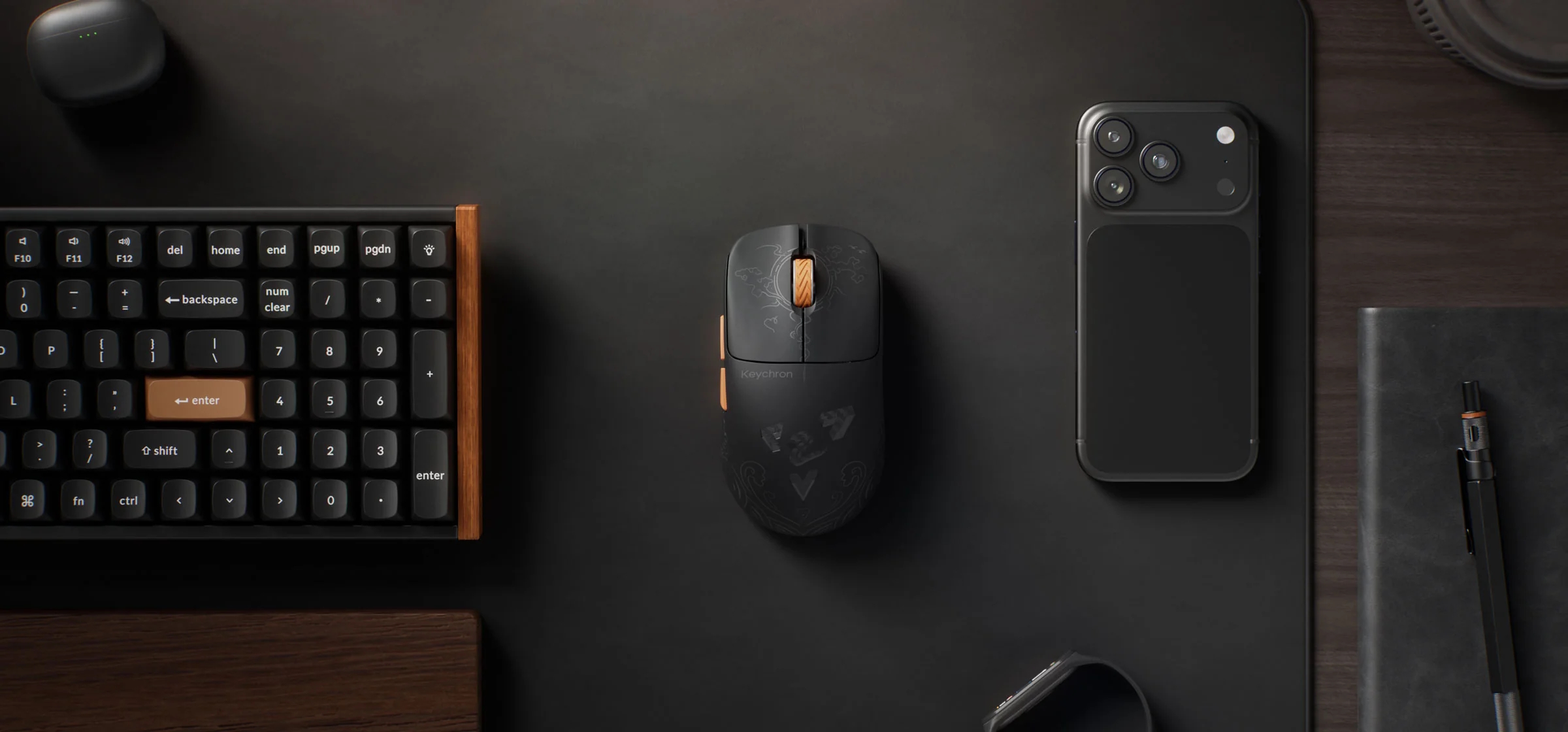
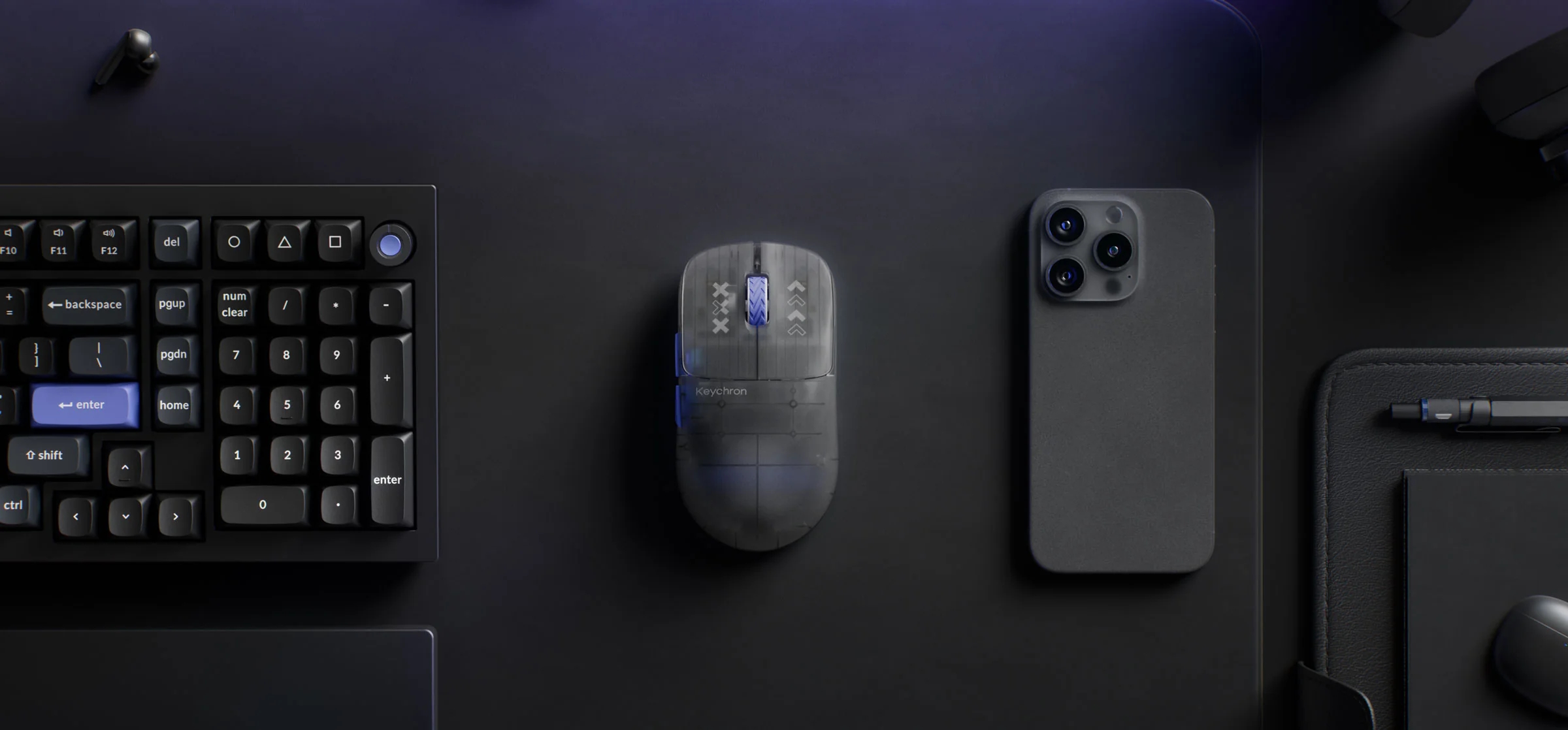
The transparent version comes with a soft purple look, including buttons and scroll wheel, while the carbon fibre model has a black finish with orange accents and a subtle pattern on top.
With its light weight, strong sensor, and long battery life, the Keychron G3 looks like a solid new release from Keychron in the gaming mouse market.
Corporate espionage is a tricky affair at the best of times. And, when your target vector involves a behemoth like Google and its prized Tensor chip, the stakes become nosebleed-high, as three Silicon Valley engineers are now finding out to their detriment. Two sisters and one of their husbands now stand accused of stealing trade secrets related to Google's Tensor chip As per a press release issued by the United States Attorney's Office, Northern District of California, three Silicon Valley engineers - Samaneh Ghandali, Mohammadjavad Khosravi, and Soroor Ghandali - have now been indicted "on charges of conspiring to commit […]

 Login
Login