It's been four years since the AMD AM5 motherboard platform and the 600-series motherboards launched. Since its launch, the platform has seen the launch of several CPUs in the Ryzen 7000, Ryzen 8000, and Ryzen 9000 families. While the 600-series motherboards provide great features & compatibility with newer Zen 5 CPUs, motherboard makers are always looking to enhance user experiences through the latest technologies, so AMD has introduced a new chipset line called the 800-series. AMD also introduced both X870 and B850 series chipsets for high-end and mainstream AM5 motherboards. Both of these chips provide brand-new designs and brand-new features […]
This time, it's the 2x 16 GB configuration that was pushed to nearly 9000 MT/s on an X870E motherboard. Colorful iGame Shadow II 32 GB Memory Kit With CXMT DDR5 Chips Achieve 8800 MT/s on X870E Vulcan W OC CXMT DDR5 is maturing fast, and we have seen how quickly the DDR5 memory modules based on CXMT DDR5 chips reached over 8000 MT/s on multiple platforms. As vendors prepare for CXMT-based DDR5 memory modules for their platforms, we see previous records being broken. If you remember, a few weeks ago, Colorful was able to achieve a solid 8600 MT/s using […]
It's been four years since the AMD AM5 motherboard platform and the 600-series motherboards launched. Since its launch, the platform has seen the launch of several CPUs in the Ryzen 7000, Ryzen 8000, and Ryzen 9000 families. While the 600-series motherboards provide great features & compatibility with newer Zen 5 CPUs, motherboard makers are always looking to enhance user experiences through the latest technologies, so AMD has introduced a new chipset line called the 800-series. AMD also introduced both X870 and B850 series chipsets for high-end and mainstream AM5 motherboards. Both of these chips provide brand-new designs and brand-new features […]
It's been three years since the AMD AM5 motherboard platform and the 600-series motherboards launched. Since its launch, the platform has seen the launch of several CPUs in the Ryzen 7000, Ryzen 8000, and Ryzen 9000 families. While the 600-series motherboards provide great features & compatibility with newer Zen 5 CPUs, motherboard makers are always looking to enhance user experiences through the latest technologies, so AMD has introduced a new chipset line called the 800-series. AMD also introduced both X870 and B850 series chipsets for high-end and mainstream AM5 motherboards. Both of these chips provide brand-new designs and brand-new features […]
While both DDR4 and DDR5 memory are selling for sky-high prices, DDR5 platforms usually cost more due to high demand. However, the latest sales stats show something interesting. Monthly Mindfactory Sales Reveal DDR4 Motherboard Sales Account For Only 9.5% of Total Motherboard Sales While DDR5 Motherboards Still Sell Like Hotcakes Despite efforts by vendors to increase the production of DDR4 platforms, it appears that consumers aren't ready to transition back to DDR4. Since October last year, prices for DDR5 memory kits have been skyrocketing, and to tackle the situation, many vendors are now aiming to make the DDR4 platform mainstream […]
AMD has started adding Ryzen Zen 6 "client" CPU support for its HSMP driver, spanning Olympic Ridge & Medusa Point families. AMD Ryzen "Zen 6" Client CPU Support Enabled on HSMP Driver: Targets Olympic Ridge & Medusa Point With the launch of the first Zen 6 CPUs in the EPYC 9006 family, AMD is now gearing up to bring the same architecture to its client-based lineups. As per the latest Linux Kernel patches, AMD has enabled support for several Zen 6 client families, which will be part of the Ryzen product portfolio. There are three families listed, which include: The […]
One of the Nova Lake SKUs with a specific configuration will operate at up to 65W to unlock full performance. Nova Lake-S APU With 16 CPU Cores and 12 Xe3P GPU Cores Will Reportedly Operate at 65W to Deliver Full Graphics Performance The Intel Nova Lake family will be quite comprehensive when it comes to the configuration. The Nova Lake S desktop processors will particularly include a wide range of SKUs, featuring models with up to 52 cores. This will reportedly lead to a massive 474W of PL2 power on the flagship SKU, but one should expect the majority of […]
AMD's Zen 7 architecture might power the last Ryzen family on the AM5 platform, while Zen 8 could be the first on AM6 platforms. AMD Ryzen "Zen 7" CPUs Likely The Last AM5 Desktop Family While Ryzen "Zen 8" Moves to AM6 The AM5 platform, first introduced in 2022, has seen three generations of Ryzen so far. The Ryzen 7000 "Raphael" series was the first, followed by Ryzen 8000G "Hawk Point", and the most recent, Ryzen 9000 "Granite Ridge" series. Next up, AMD will be introducing its Zen 6-based "Olympic Ridge" family, which is going to bring some nice upgrades […]
AMD has launched its first Zen 6 CPUs, the EPYC Venice, and we use them to analyze what we can expect from the Ryzen "Olympic Ridge" lineup. AMD Ryzen "Olympic Ridge" Desktop CPUs Analyzed Using EPYC "Venice" Specifications, Zen 6 Brings The Next Oomph To AM5 Desktops It is surprising how AMD has evolved its strategy over the years. When the first Zen architecture launched, it was released for desktop PCs. The 1st Gen EPYC family, codenamed Naples, wouldn't arrive till a few months later. This has been the case for all Zen launches so far: Ryzen launches first, followed […]
Intel Foundry might be heading into a big deal with NVIDIA, as the company is expected to offer packaging and wafer support for next-gen Feynman GPUs. NVIDIA Feynman GPUs Could Be Intel Foundry's Biggest Win To Date With Chipzilla Providing Both Packaging & Wafer Supply A deal between Intel and NVIDIA won't be a major surprise for those following our previous reports, but it is definitely a big win for Intel's Foundry business. Earlier this year, we reported that NVIDIA might be looking into Intel's upcoming process & advanced packaging technologies for its next-generation GPUs, codenamed Feynman. Well, according to […]
Phanteks has expanded its XT chassis lineup with three new compact ATX models, including the XT M5, XT V5, and XT V5-LCD. First unveiled at Computex 2026, these cases pack support for standard 360mm radiators and ATX power supplies in a small desktop footprint.
Every model in the update incorporates an integrated GPU support bracket alongside a high-speed USB 3.2 Gen2x2 Type-C port on the front I/O. Phanteks equips each case with pre-installed cooling out of the box, consisting of a single 120mm rear fan alongside a 360mm single-frame S25 ARGB fan assembly. All models support 360mm radiators on the top panel.
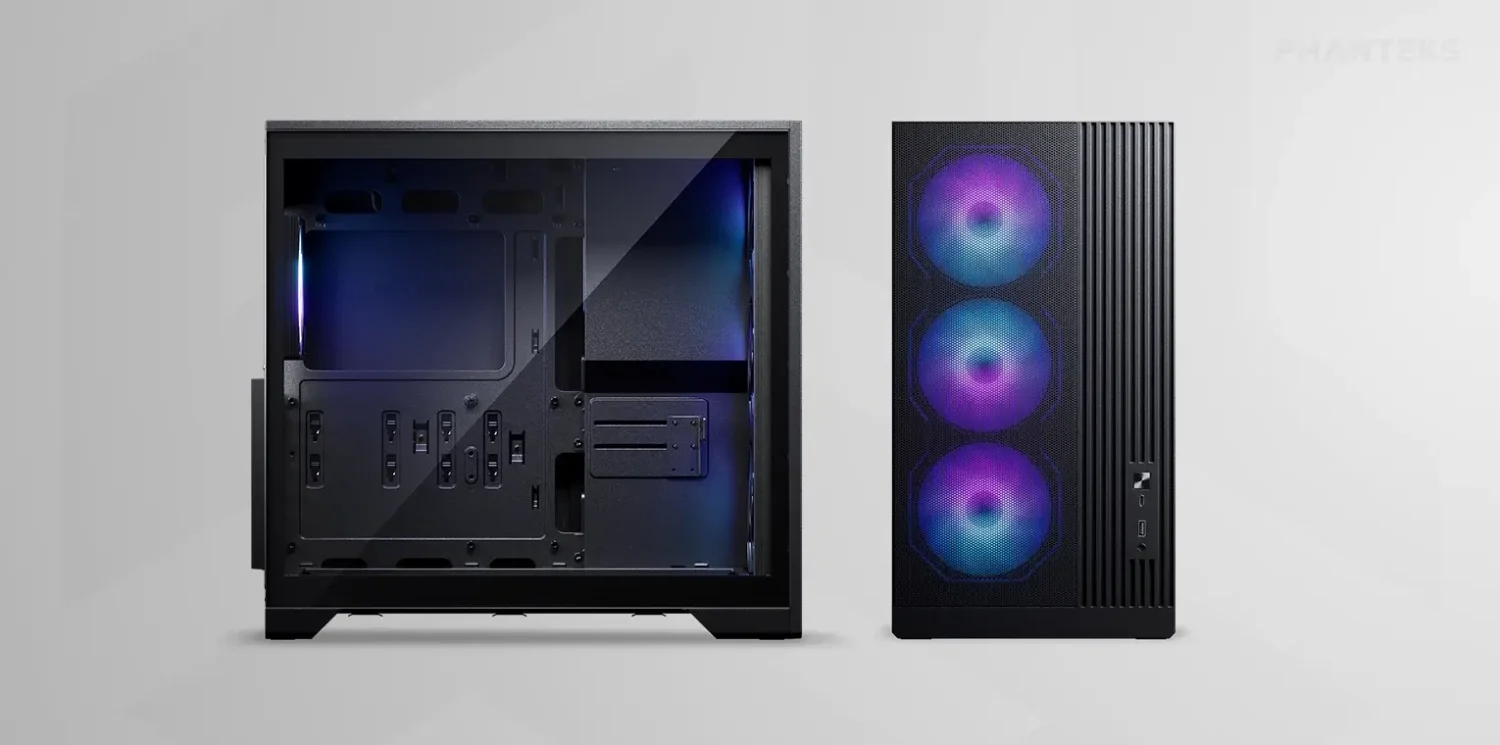
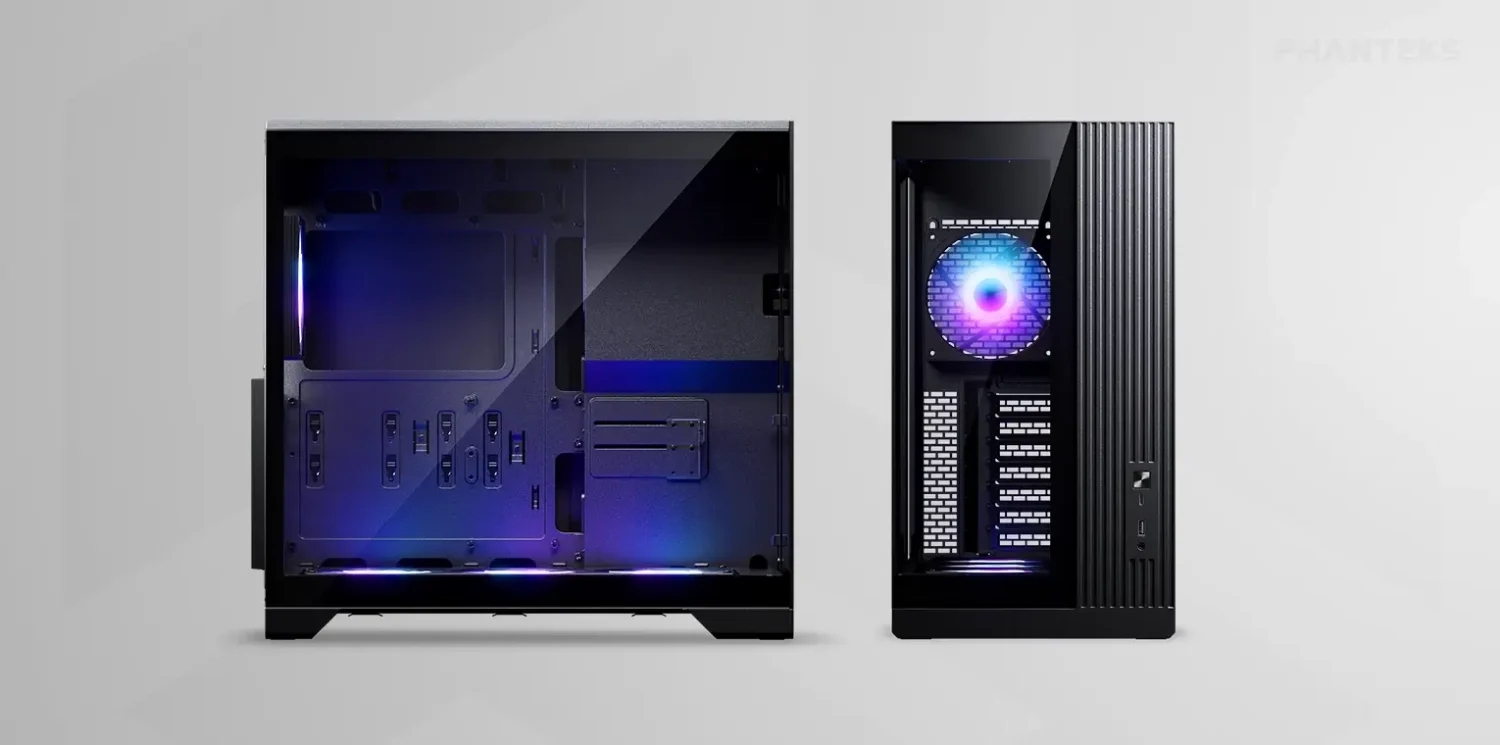
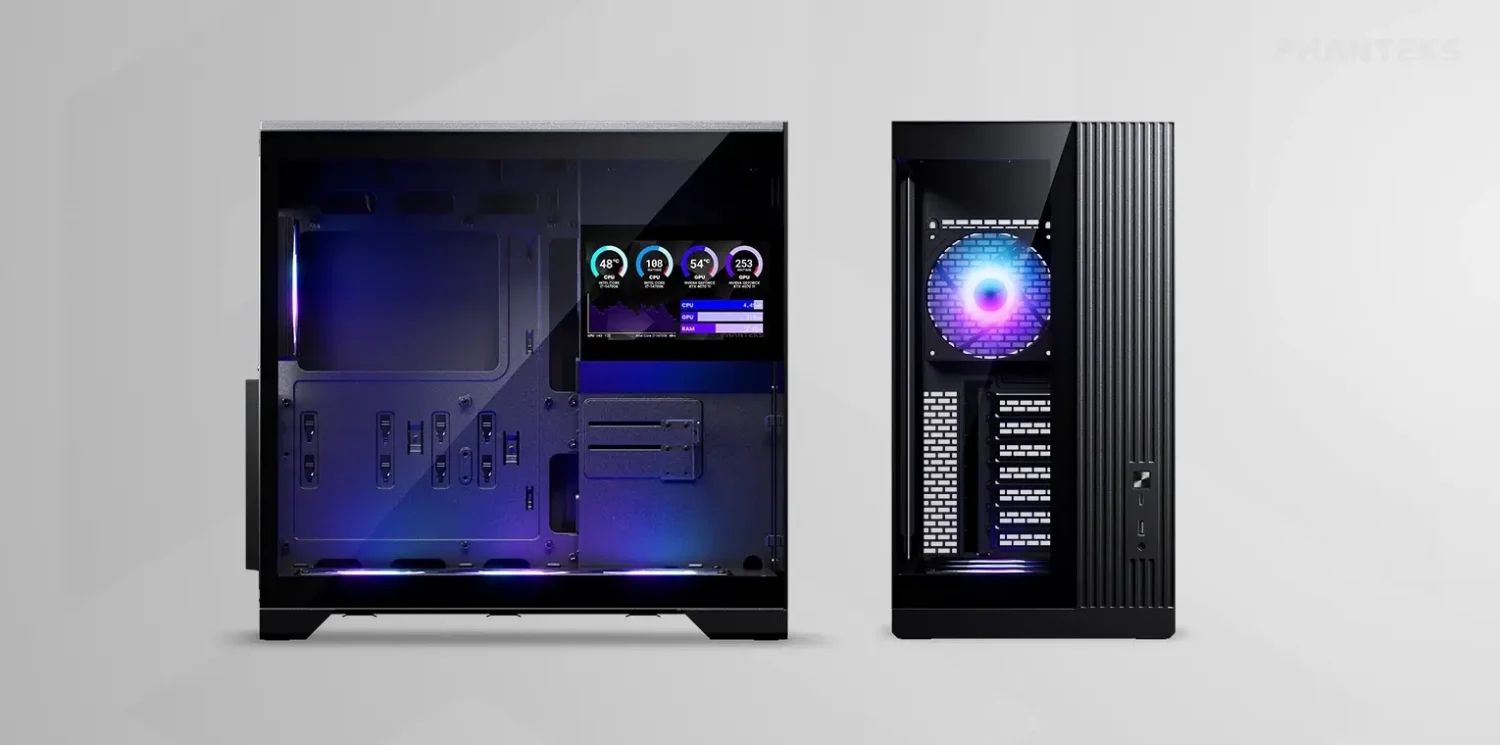
Designed specifically for airflow, the XT M5 features a mesh front panel and supports up to 10x 120mm fans. The XT V5 swaps the mesh for glass front and side panels while mounting its single-frame fan set at the bottom for direct GPU cooling. This change, however, reduces the total number of 120mm fans supported to seven. Building on the V5 layout, the XT V5-LCD adds a built-in 7-inch display that users can configure using the Nexlinq app for Windows.
Pricing for the XT M5 Black and XT V5 Black starts at $79.99, while the XT V5-LCD Black retails for $109.99.
KitGuru says: Phanteks' new XT options deliver solid versatility across mesh, glass, and display-focused builds. Out of the new XT models, which do you like the most?
Phanteks has officially expanded its Phanteks XT Series lineup with three new ATX gaming chassis: the XT M5, XT V5, and XT V5-LCD. First showcased during Computex 2026, the new cases are designed to deliver high-end hardware support in a compact footprint, making them ideal for gamers who want a clean-looking desktop build without sacrificing cooling performance.
All three models feature a redesigned internal layout that supports a standard 360 mm radiator alongside a full-size ATX power supply despite their compact size. They also include an integrated GPU support bracket for added graphics card stability and come equipped with pre-installed ARGB cooling out of the box.
Phanteks XT Series Built for powerful cooling and modern hardware
The new XT Series cases are designed to handle today’s demanding gaming components while maintaining a smaller desktop footprint. Every model includes one 120 mm rear S25 ARGB fan and a 360 mm single-frame S25 ARGB fan assembly, providing strong airflow immediately after installation.
The chassis also support high-speed front I/O with USB 3.2 Gen2x2 Type-C and USB 3.0 ports, generous cable management space, motherboard and Nexlinq ARGB lighting compatibility, and dedicated support for a 360 mm radiator mounted at the top.
XT M5 focuses on airflow
The Phanteks XT M5 is built for users who prioritize cooling performance. It features a full mesh front panel that maximizes airflow while three pre-installed 120 mm S25 ARGB fans mounted in a unified frame provide efficient intake cooling.
The case supports up to ten 120 mm fans in total, making it an excellent choice for high-performance gaming systems and overclocked hardware.
XT V5 offers a showcase design
The XT V5 replaces the mesh front with tempered glass panels on both the front and side, giving users a clear view of their internal components and RGB lighting.
Its three pre-installed 120 mm S25 ARGB fans are positioned at the bottom to deliver direct airflow to the graphics card, balancing cooling performance with an eye-catching presentation.
XT V5-LCD adds a built-in display
The XT V5-LCD includes all the features of the standard XT V5 while adding a built-in 7-inch LCD display. The screen can be customized through the Phanteks Nexlinq application for Windows, allowing users to display system information, animations, or personalized graphics directly on the case.
Key features
Compact ATX gaming chassis with a space-saving desktop footprint
Support for up to 10 (XT M5) or 7 (XT V5/XT V5-LCD) 120 mm fans
Pre-installed S25 ARGB fans with one 120 mm rear fan and one 360 mm unified-frame fan assembly
Dedicated top-mounted 360 mm radiator support
Integrated GPU support bracket
USB 3.2 Gen2x2 Type-C and USB 3.0 front I/O
Spacious cable management design
Motherboard and Nexlinq ARGB lighting compatibility
Phanteks XT Series Pricing and availability
The Phanteks XT Series is rolling out globally, with availability varying by region.
Model
US Price
Europe
UK
XT M5
$79.99
€69.90
£59.90
XT V5
$79.99
€69.90
£59.90
XT V5-LCD
$109.99
€109.90
£99.90
The XT V5 is available now in multiple regions, while availability for the XT M5 and XT V5-LCD will vary depending on the market.
AMD's AM5 platform has been a solid entry, featuring some of the best chips on the market and a wide variety of entry-level and high-end options to select from. Despite the AM5 launch, AMD was still focusing on releasing the more mainstream and budget-tier solutions for the older AM4 socket, which still holds the majority share, but the company has recently started to launch affordable CPU options in its AM5 segment. The Ryzen 5 7600X was one such example. But with recent component price hikes, it has become even more vital to support older lineups. The commitment to AM4 remains […]
If you were waiting to buy AMD Ryzen's 10th Anniversary edition Ryzen 7 5800X3D, now is the best time. AMD Ryzen 7 5800X3D is Now Available for $349 on Newegg, Coupled With a Free MSI 240mm AIO Valued at $70 Right after the launch of AMD's Ryzen 10th Anniversary Ryzen 7 5800X3D edition, they started appearing on eBay for over $500. Even though the processor was officially launched for $349, scalpers tried to take advantage of this situation and started earning hundreds of dollars on the launch by relisting the CPU on eBay. Since the launch, the availability of the […]
Building a gaming PC in 2026 has become considerably more expensive than it was only a year or so ago, and graphics cards are not solely responsible this time. The ongoing memory shortage has driven up the cost of all DRAM and NAND flash-based products, such as memory kits, SSDs, and graphics cards. For that reason, we consider approximately $1,000 to be the realistic starting point for a decent new gaming PC in July 2026. Even then, some compromises are unavoidable. Moving up to higher pricing tiers allows progressively stronger CPUs and GPUs, not to mention higher system memory and […]
It's been three years since the AMD AM5 motherboard platform and the 600-series motherboards launched. Since its launch, the platform has seen the launch of several CPUs in the Ryzen 7000, Ryzen 8000, and Ryzen 9000 families. While the 600-series motherboards provide great features & compatibility with newer Zen 5 CPUs, motherboard makers are always looking to enhance user experiences through the latest technologies, so AMD has introduced a new chipset line called the 800-series. AMD also introduced both X870 and B850 series chipsets for high-end and mainstream AM5 motherboards. Both of these chips provide brand-new designs and brand-new features […]
The Austria-based cooler manufacturing company, Noctua, is a name renowned by several enthusiasts and overclockers in the PC industry. They are behind some of the most iconic PC coolers, such as the NH-D15, the NH-U12, and many more. The company has been in action since 2005. and has become one of the most respected cooling product manufacturers in the industry with its legacy products. Since it entered the cooling segment, many competitors have come and vanished, but Noctua has endured, evolving its line to meet the latest requirements of the PC and DIY space. Cooling equipment is still as relevant […]
MSI is rolling out its latest BIOS for AM5 800 and 600 series motherboards, offering optimized support for CXMT DDR5 memory. MSI Offers Optimized Support For CXMT's DDR5 Memory On Its AM5 800 & 600 Series Boards As CXMT's DDR5 memory continues its push in China's domestic market, motherboard vendors are acting swiftly to offer optimized support for the latest modules and kits. MSI has now become the latest of the bunch to offer support. The MSI BIOS spans its entire AM5 portfolio of motherboards, including the 800 series and the 600-series products. The BIOS has three main features, the […]
MSI has enabled CXMT memory support on its China-specific AM5 motherboard driver, enabling up to DDR5-8200 speeds. MSI's China-Specific AM5 Motherboard BIOS Available For Download, Unlocks CXMT DDR5 Memory Support China is rapidly adopting its domestically produced memory to reduce reliance on offshore brands that are charging heavy prices for their DRAM solutions. As such, CXMT (ChangXin Memory Technologies) has become the go-to choice as it is the country's premier DRAM manufacturer. While there have been reports that CXMT has started supplying DRAM to global markets, those aren't true yet. CXMT is primarily supplying its memory solutions in the domestic […]

 Login
Login