❌

Normal view

There are new articles available, click to refresh the page.
Today β€” 29 July 2026Technology

MSI details MAG View Xpander 12 secondary display

28 July 2026 at 17:24

MSI has shared additional details about the MAG View Xpander 12, a 12.3-inch IPS display designed for internal hardware monitoring or as a secondary display in desktop setups.

The MAG View Xpander 12 display (via Vortez) features 1920Γ—720 resolution and is available in both black and white finishes. Designed to run in landscape or portrait orientation, the panel integrates with MSI Center software to show system metrics, clock faces, photo slideshows, and custom notifications. Users can also configure the unit as a standard secondary Windows display for chat apps, streaming tools, or reference material.

Installation options include mounting the panel to a 360mm radiator bracket, attaching it to a 120mm fan using an included L-shaped bracket, or placing it on a desk as a standalone monitor. MSI states the screen natively supports select Pano, Velox 300, and Maestro series cases. Power and video signals run over a single USB connection, with both Type-C-to-Type-A and internal USB header cables included in the box.

KitGuru says: MSI is taking on the Xeneon Edge with this new secondary mini-display. Would you like one of these for your setup?Β 

The post MSI details MAG View Xpander 12 secondary display first appeared on KitGuru.

TCL expands display lineup with 27X3B and 32X3B 4th-gen WOLED displays

28 July 2026 at 08:00

TCL has expanded its display lineup with the announcement of the 27X3B and 32X3B OLED gaming monitors. These new monitors use 4th Gen WOLED panels, improving peak brightness, text legibility and anti-reflective properties.Β 

Display specifications vary between the two sizes shown in official promotional materials. The 27X3B operates at QHD resolution with a 280Hz refresh rate. Meanwhile, the larger 32X3B supports dual-mode operation, switching between UHD at 240Hz and FHD at 480Hz. Both monitors feature circular polarisation technology designed to reduce screen reflections down to a rated panel reflectivity of 1.1%. According to TCL, the displays reach peak HDR brightness of up to 1500 nits, with a 0.03ms GTG response time and 99.5% DCI-P3 colour gamut coverage.

Image credit: ITHome

Integrated speakers co-tuned with Bang & Olufsen provide built-in audio across both models. For connectivity, the 27X3B has two HDMI 2.1 ports, one DP 1.4 port, and one 3.5mm audio jack, while the 32X3B has two HDMI 2.1 ports, one USB-C 90W port, two USB-A (KVM) ports, one DP 2.1 port, and one 3.5mm audio jack. Ergonomics are limited to a tilt-adjustable stand.

Global availability and international pricing have not yet been announced. In China, the 27-inch model debuts at 4999 yuan (Β£556), while the 32-inch edition lands at 7999 yuan (Β£890).

KitGuru says: TCL's fourth-generation WOLED panels combine impressive anti-reflection ratings with high refresh rates and Bang & Olufsen audio, though international pricing remains to be seen.

The post TCL expands display lineup with 27X3B and 32X3B 4th-gen WOLED displays first appeared on KitGuru.
Keychron unveils 46g G6 HE wireless mouse with swappable battery

28 July 2026 at 07:30

Keychron has introduced the G6 HE, a wireless gaming mouse equipped with hybrid MagOptic switches and an 8000Hz polling rate. Weighing approximately 46g with its detachable battery module, the peripheral uses a PixArt 3955 sensor alongside tri-mode connectivity for PC and mobile devices.

Keychron (via Mediagene) states that the mouse uses proprietary MagOptic switches that blend optical and magnetic technologies and provide a 100-million-click lifespan. Users can configure settings via the web-based Keychron Launcher tool, which offers 12-step actuation point adjustment and 11-step rapid-trigger tuning directly in the device's onboard memory.

Powering the peripheral is a removable 350mAh battery module designed to minimise downtime during extended sessions, with Keychron also offering a fixed-battery variant in black that reduces the total weight to 42g. The company quotes battery life at up to 35 hours when operating at an 8000Hz polling rate over 2.4GHz, expanding to 340 hours in Bluetooth 5.3 mode. Internal hardware relies on a Nordic 54LM20A MCU paired with a PixArt 3955 sensor that supports up to 40000 DPI, 750 IPS tracking, and 60 G acceleration.

The 123.7x63x41mm casing is constructed from ABS and PC materials and features an anti-slip nanofine coating and PTFE feet. Keychron plans to release the mouse in seven colorways, including standard black and white and five frosted translucent options. A global release is scheduled for September, with pricing around $90.

KitGuru says: The swappable battery is a nice touch to reduce wireless downtime, but it's likely to drive up the price. Fortunately, the fixed-battery variant should be cheaper for those who don't care about the swappable batteries.

The post Keychron unveils 46g G6 HE wireless mouse with swappable battery first appeared on KitGuru.
Yesterday β€” 28 July 2026Technology

ASRock launches 240Hz PGO27QSA QD-OLED gaming displays

27 July 2026 at 12:00

ASRock has announced the launch of the Phantom Gaming PGO27QSA and PGO27QSA-W OLED gaming monitors. Both models pack a 27-inch QD-OLED panel with QHD resolution and an ultra-smooth 240Hz refresh rate.

As you would expect from an OLED display, colour performance is strong here, covering 99% of the DCI-P3 colour gamut, with factory calibratedΒ Delta E < 2 colour accuracy. Support for AMD FreeSync Premium is also included to reduce screen tearing and stuttering, along with a 0.03ms G2G response time.

Typical brightness is rated at 200nits in SDR, increasing to 400nits in HDR mode at peak. The 10-bit colour panel is coated in a glossy finish with an anti-reflection treatment and features a low blue light mode to reduce eye strain.

Ergonomic adjustments include height, swivel, tilt, and pivot functionality. Connectivity options include two HDMI 2.1 ports, two DisplayPort 1.4 inputs, and a headphone output for multi-device setups. While the standard PGO27QSA sports ASRock's signature Phantom Gaming black chassis, the PGO27QSA-W offers identical hardware, but in white instead of black.

KitGuru says: Are you thinking of making the jump to an OLED gaming monitor this year?Β 

The post ASRock launches 240Hz PGO27QSA QD-OLED gaming displays first appeared on KitGuru.
Geekbench 7 arrives with redesigned multi-core testing and CUDA support

27 July 2026 at 07:00

Primate Labs has officially released Geekbench 7, introducing updated CPU and GPU workloads alongside redesigned multi-core testing. The new cross-platform benchmark suite is available today across Android, iOS, Windows, macOS, and Linux platforms.

Geekbench 7's updated CPU workloads focus on real-world media tasks, including AV1 video encoding for screen-sharing, Opus audio compression, and Whisper speech recognition for live captions. Primate Labs also added a Game Physics workload built on the Jolt Physics engine while expanding image format support in the Photo Library to include JPEG XL and DNG. Multi-core testing has been restructured so workloads only run multi-threaded if corresponding real-world applications do, excluding single-threaded tasks like the HTML5 Browser test.

GPU benchmarks now place greater emphasis on machine learning and creation tasks, adding face tracking, super-resolution upscaling, and background blurring alongside RAW processing, path tracing, and fluid simulation. In response to user demand, CUDA joins OpenCL, Vulkan, and Metal as a natively supported GPU API. Primate Labs updated the underlying datasets across tests such as File Compression and PDF Viewer to support larger, more demanding file processing.

KitGuru says: Geekbench 7 brings welcome updates to reflect modern workloads, particularly with the addition of native CUDA support and a more realistic multi-core scoring approach. Have you already tried Geekbench 7?

The post Geekbench 7 arrives with redesigned multi-core testing and CUDA support first appeared on KitGuru.
Thermaltake introduces AX 3200W PSU with four 12V-2Γ—6 connectors

27 July 2026 at 06:30

Thermaltake has introduced the AX 3200W Platinum Power Supply, an ATX 3.1-compliant unit built for AI workstations and multi-GPU systems. It features native PCIe Gen 5.1 support and four 12V-2Γ—6 connectors to deliver 3200W of continuous power at 45Β°C.

According to Thermaltake, the new PSU achieves 80 Plus 230 V EU Internal Platinum certification with up to 94% efficiency. Fully compliant with ATX 3.1 specifications, it handles power excursions up to 200% while meeting Intel power-timing requirements. Thermaltake equips the unit with four native 12V-2Γ—6 connectors that feature a dual-colour design, allowing users to confirm secure cable seating.

Internally, the power supply utilises a single +12V rail, LLC and DC-to-DC circuits, and 100% Japanese 105Β°C electrolytic capacitors. Built on a modular Zero Cable Platform, the unit pairs with low-profile etched black cables to simplify routing. Built-in industrial protections cover OCP, OVP, UVP, OPP, OTP, and SCP.

Thermaltake notes compliance with Energy Star 5.0, WEEE, and RoHS standards, alongside support for Intel C6/C7 low-power states. The company backs the unit with a 10-year warranty.

KitGuru says: Delivering 3200W with four native 12V-2Γ—6 connectors makes Thermaltake’s latest PSU a serious option for high-end multi-GPU workstations. How would you max out its power output capacity?

The post Thermaltake introduces AX 3200W PSU with four 12V-2Γ—6 connectors first appeared on KitGuru.
Before yesterdayTechnology

Xeron unveils Nex C53 and C33 cases with BTF motherboard support

24 July 2026 at 15:50

Xeron, a relatively new PC component brand, has announced the launch of its Nex C53 and NEX C33 PC cases. Featuring dual tempered glass panels and BTF motherboard support for compact form factors, both models are available in black and white.

Both models feature seamless front and side tempered glass panels alongside a front-mounted PSU layout. Xeron ships each case with four pre-installed daisy-chained ARGB fans, including three bottom intake fans and a single rear exhaust fan. Hardware clearance across both cases accommodates graphics cards up to 425mm in length, CPU air coolers up to 180mm tall, and top-mounted 360mm radiators. Front I/O connectivity includes a USB-C Gen 2Γ—2 20Gbps port and two USB 3.0 ports.

Designed for ATX and mATX BTF motherboards, the Nex C53 measures 435x235x435mm and supports up to seven 120mm fans. It also incorporates an adjustable bottom fan bracket featuring a 12Β° tilt to direct airflow toward the GPU. Meanwhile, the smaller Nex C33 measures 435x235x355mm and focuses strictly on mATX BTF systems while offering identical GPU, CPU cooler, and radiator clearances. Additional shared hardware includes an integrated GPU support bracket and a hidden side-panel handle.

Xeron sets suggested retail pricing for the Nex C33 at $59.99 in black and $64.99 in white. The larger Nex C53 retails for $64.99 in black and $69.99 in white.

KitGuru says: Xeron's new Nex cases offer budget-friendly entry points for builders looking to make the jump to a BTF motherboard.Β 

The post Xeron unveils Nex C53 and C33 cases with BTF motherboard support first appeared on KitGuru.
Glorious unveils GHS Wireless InfinitePlay headset with dual-battery system

24 July 2026 at 15:00

Glorious is expanding its presence in the headset market with the newly announced GHS Wireless InfinitePlay, a wireless gaming headset designed for continuous use via two hot-swappable 85+ hour battery packs and an internal backup battery.

To prevent the GHS Wireless InfinitePlay from disconnecting during swaps, the company incorporates its internal Guardian Battery System. This built-in battery keeps the headset powered for over 3 hours on its own, even when swapping the main packs. Audio performance is driven by custom-tuned 40mm angled drivers, which Glorious claims align with human ear positioning to improve spatial awareness and sound separation.

For communication, the headset features a detachable boom microphone with environmental noise cancelling, alongside an integrated earcup microphone for mobile calls. Connectivity covers 2.4GHz wireless for PC, PS5, PS4, and Nintendo Switch, while Bluetooth handles mobile audio. Users can switch between wireless modes using dedicated on-ear controls.

There are dials under the ear cup for master volume and game/chat balance control.Β Customisation is managed through the Glorious Core software, allowing users to adjust EQ settings, create personalised profiles, and save them directly to the onboard headset memory.

KitGuru says: The addition of a backup battery to avoid losing connection when swapping out the main battery is interesting. SteelSeries may want to consider something similar for their next Arctis wireless headset.Β 

The post Glorious unveils GHS Wireless InfinitePlay headset with dual-battery system first appeared on KitGuru.
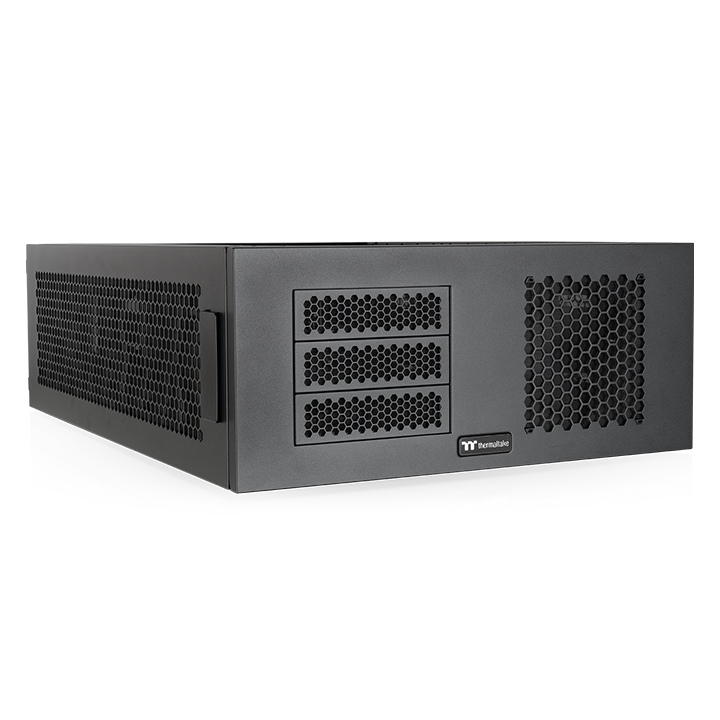
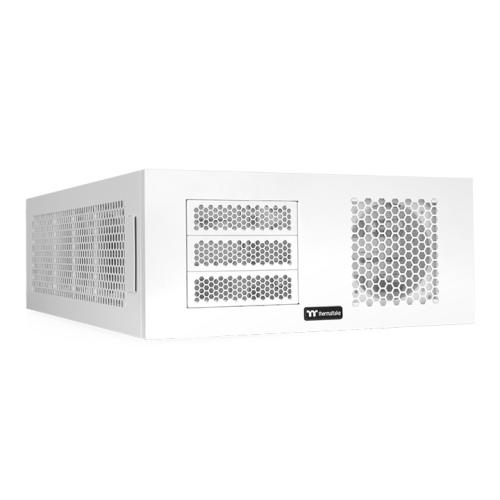
SilverStone launches CS240 NAS case with four 2.5-inch U.2 drive bays

24 July 2026 at 14:00

SilverStone has listed the CS240, a compact 21.65-liter Mini-ITX NAS case first showcased at Computex 2026. Built around four hot-swappable 2.5-inch U.2 drive bays, the enclosure supports high-speed storage configurations alongside full-sized hardware compatibility.

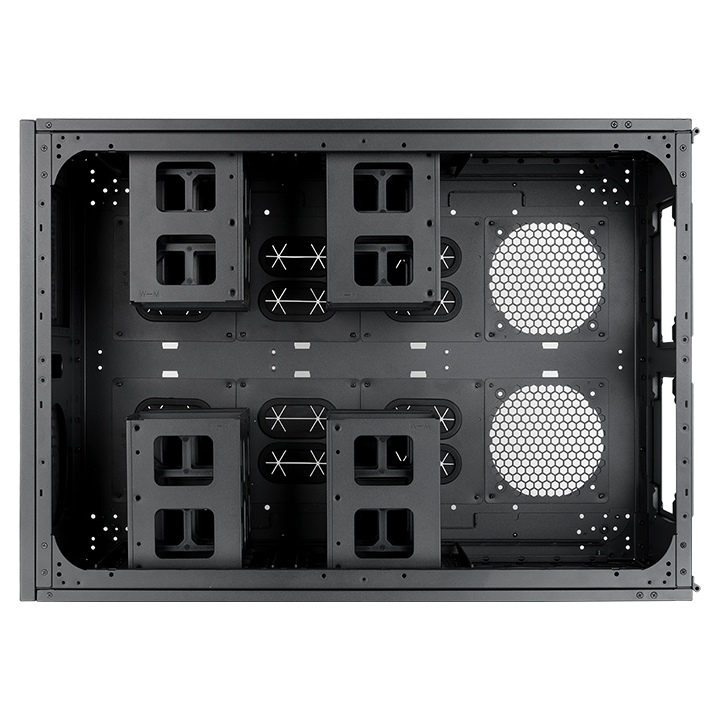
According to TechPowerUP, the case is mostly made of steel with an aluminium front door and a plastic front panel. The CS240 measures 211x285x360mm and features four external hot-swap bays operate in tri-mode, supporting NVMe U.2 (SFF-8639), SAS, and SATA drives up to 15mm thick. These bays connect via a backplane using dual SlimSAS 8i (SFF-8654) connectors, running PCIe 4.0 x4. Inside, an extra drive bay accommodates either one 3.5-inch drive or two 2.5-inch drives. Moreover, the case has 2x expansion slots.

Motherboard support includes Deep Mini-ITX and Mini-DTX form factors. As for graphics cards, there's space for one up to 300mm in length and 168mm in width, with an integrated support bracket to help it fit. CPU cooler clearance reaches 182mm tall, while power supply support covers SFX and SFX-L units up to 140mm long.

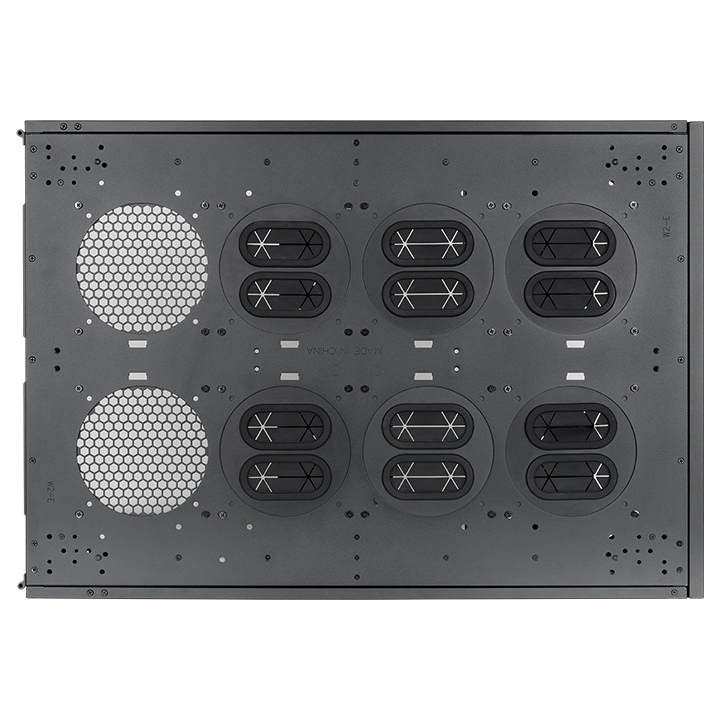
Three 120mm fans come pre-installed (one at the rear and two on the side), with the side panel also accommodating three 80mm fans instead. Liquid cooling builders can fit a single 120mm radiator at the back. Front panel I/O includes one USB-C port, two USB-A 3.0 ports, and a combo audio jack. While official pricing remains unannounced, Alternate lists the chassis for €349.

KitGuru says: Are you considering building your own NAS? How much would you be willing to spend on the chassis for it?Β 

The post SilverStone launches CS240 NAS case with four 2.5-inch U.2 drive bays first appeared on KitGuru.
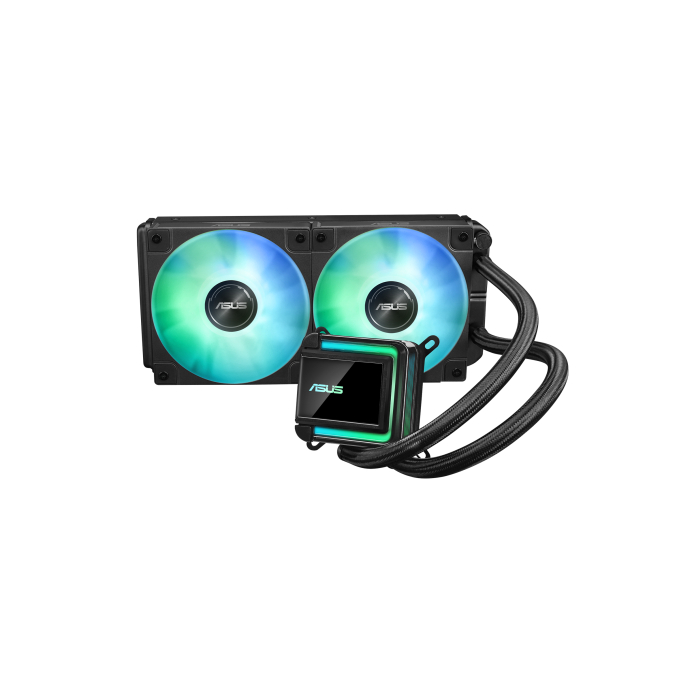
Thermalright expands Royal Pretor lineup with display-equipped air coolers

23 July 2026 at 17:00

Thermalright has expanded its CPU cooling lineup with the introduction of the Royal Pretor 130 Vision and Royal Pretor 130 Digital dual-tower air coolers. Both models build upon the existing Royal Pretor 130 design by adding integrated top-mounted displays for real-time hardware monitoring and customisation.

The flagship Royal Pretor 130 Vision features a 3.95-inch, 480Γ—480 LCD screen mounted on top of the heatsink. Connected through an internal USB 2.0 header, the display works with Thermalright's software to show system metrics, custom images, wallpapers, GIFs, and animations. In contrast, the Royal Pretor 130 Digital uses a dedicated monitoring display that shows only real-time data, including CPU temperature, package power consumption (W), clock frequency (MHz), and memory usage percentage.

Both coolers share the same physical hardware, featuring a 130x140x165mm dual-tower heatsink with six 6mm nickel-plated copper heatpipes and a nickel-plated C1100 copper base. Airflow is handled by a 120mm TL-H12W-X28-R9 PWM fan rated up to 2400RPM and 98.2CFM, paired with a central 130mm TL-HD13W-X28 PWM fan rated up to 1750RPM and 81.88CFM. S-FDB V2 bearings are used on both fans.

Compatibility spans Intel LGA115X, 1200, 1700, 1851, 2011, and 2066 sockets, as well as AMD AM4 and AM5 platforms. Thermalright will offer both variants in black and white finishes, though official pricing and release dates remain unconfirmed.

KitGuru says: At this point, most AIO coolers have a display attached to them. The same trend is now taking over the air cooler market too.Β 

The post Thermalright expands Royal Pretor lineup with display-equipped air coolers first appeared on KitGuru.

Epomaker introduces Nex Lite budget wireless mouse with tri-mode connectivity and charging dock

23 July 2026 at 08:00

Epomaker has announced the launch of its Nex Lite mouse, bringing tri-mode connectivity and integrated status displays to an affordable price point.Β 

The new Nex Lite mouse relies on a PixArt PAW3311 optical sensor designed for low power consumption. Epomaker equips the device with six adjustable DPI levels, customisable through an onboard button or an online driver. It also includes a dedicated rapid-fire button and adjustable debounce settings to prevent accidental double clicks.

For connectivity, the device supports wired, 2.4GHz wireless, and Bluetooth modes. It comes bundled with a 2.4GHz receiver dock that serves as a magnetic charging base. Both the mouse and the receiver dock feature integrated displays to show real-time status updates, including active DPI settings, battery life, polling rate, and the current connection mode.

Ergonomically, the shell features an extended design with sculpted side grips. The base of the mouse and the charging dock both feature customizable RGB lighting. Users can choose between four color options: white, black, blue, and pink. The mouse is now available for $32.39 on the official website and starts at Β£22.19/€25.79 on AliExpress.

KitGuru says: At such a low price, the Epomaker Nex Lite offers an interesting combination of budget-friendly pricing and high-end features.

The post Epomaker introduces Nex Lite budget wireless mouse with tri-mode connectivity and charging dock first appeared on KitGuru.

Phanteks expands XT chassis lineup with XT M5, XT V5, and XT V5-LCD

23 July 2026 at 07:00

Phanteks has expanded its XT chassis lineup with three new compact ATX models, including the XT M5, XT V5, and XT V5-LCD. First unveiled at Computex 2026, these cases pack support for standard 360mm radiators and ATX power supplies in a small desktop footprint.

Every model in the update incorporates an integrated GPU support bracket alongside a high-speed USB 3.2 Gen2x2 Type-C port on the front I/O. Phanteks equips each case with pre-installed cooling out of the box, consisting of a single 120mm rear fan alongside a 360mm single-frame S25 ARGB fan assembly. All models support 360mm radiators on the top panel.

Designed specifically for airflow, the XT M5 features a mesh front panel and supports up to 10x 120mm fans. The XT V5 swaps the mesh for glass front and side panels while mounting its single-frame fan set at the bottom for direct GPU cooling. This change, however, reduces the total number of 120mm fans supported to seven. Building on the V5 layout, the XT V5-LCD adds a built-in 7-inch display that users can configure using the Nexlinq app for Windows.

Pricing for the XT M5 Black and XT V5 Black starts at $79.99, while the XT V5-LCD Black retails for $109.99.

KitGuru says: Phanteks' new XT options deliver solid versatility across mesh, glass, and display-focused builds. Out of the new XT models, which do you like the most?

The post Phanteks expands XT chassis lineup with XT M5, XT V5, and XT V5-LCD first appeared on KitGuru.

SilverStone details massive Hela 3000Rz power supply

22 July 2026 at 07:45

Following on from a reveal at Computex earlier this year, SilverStone has detailed the Hela 3000Rz. This new high-end power supply is built in a 200mm form factor, featuring an 80 Plus Platinum efficiency rating, designed for heavy-duty systems and continuous 24/7 operation.

To cool the Hela 3000Rz, SilverStone (via ITHome) equipped the unit with a 140mm twelve-pole fan using double ball bearings. Operating at around 400rpm below 30% load, fan speeds scale up to nearly 3000rpm at maximum output. Rather than focusing on silent operation, SilverStone prioritises 24/7 stability and incorporates OCP, OVP, OPP, SCP, and OTP hardware protections.

The massive power supply weighs 4.57kg and is built for powerful multi-GPU setups through its four included 12V-2Γ—6 connectors, accompanied by eight PCIe 6+2 connectors, four EPS 4+4 cables, and a single ATX 20+4-pin main lead. For storage like HDDs and older SSDs, there are eight SATA connectors, as well as four Molex plugs – that last one is a true blast from the past.

SilverStone notes that the included 13A cable for the UK market will limit maximum output to 2600W. However, users can use a higher-current-rated power cord to achieve the full 3000W output.

KitGuru says: SilverStone's HELA 3000Rz delivers extreme capacity, though its massive 200mm physical footprint limits its use to larger cases.

The post SilverStone details massive Hela 3000Rz power supply first appeared on KitGuru.

AOC Q27G4SM gaming monitor features 1152 Mini-LED zones and 340Hz refresh rate

22 July 2026 at 07:10

AOC has listed a new 27-inch gaming monitor, the Q27G4SM, on its Chinese website. Built around a Fast IPS panel and an 1152-zone Quantum Dot Mini-LED backlight, the display delivers a 2560Γ—1440 resolution, a 340Hz refresh rate, and VESA DisplayHDR 1000 certification.

According to the official datasheet (via Prad), the monitor achieves a peak brightness of 1200nits with a 10-bit colour depth and a 1 ms G2G response time. Colour coverage reaches 100% sRGB and 99% DCI-P3 with a Delta-E accuracy rating under 2, while typical power consumption is rated at 35W. FreeSync is on board to prevent screen tearing, backed by a selectable motion blur reduction mode.

Display features include picture-in-picture and picture-by-picture viewing, an FPS counter, and a crosshair overlay. Physical connectivity options consist of two HDMI 2.1 inputs, one DisplayPort 1.4 connection, and a headphone output. The included stand supports tilt, swivel, and pivot, along with 130mm height adjustment and 100x100mm VESA mounting support. Release timing and pricing outside of China remain unconfirmed.

KitGuru says: Pairing 1152 Mini-LED dimming zones to a 340Hz 1440p Fast IPS panel makes the Q27G4SM a compelling display option if AOC brings it to Western markets.

The post AOC Q27G4SM gaming monitor features 1152 Mini-LED zones and 340Hz refresh rate first appeared on KitGuru.

Nvidia RTX 50 Super GPUs reportedly delayed due to GDDR7 pricing

21 July 2026 at 16:30

There have been rumours about an RTX 50 Super launch for months now, but continued price rises across memory products have apparently derailed the planned launch. According to reports, a shortage of 3GB GDDR7 modules and increased pricing has forced Nvidia to delay RTX 50 Super.Β 

VideoCardz reports that while partners possess the chips for RTX 50 Super graphics cards, they can't proceed with manufacturing due to a lack of available memory, coupled with high pricing for the GDDR7 chips available. To put it in perspective, a 3GB GDDR7 chip is currently estimated to cost between $60 and $70. On the other hand, a 2GB GDDR7 chip reportedly costs about $20.Β 

The rumoured RTX 50 Super refresh was apparently planned with 3GB GDDR7 modules in mind, up from the standard 2GB chips found on regular RTX 50 cards. This upgrade shifts the RTX 5070 Super to 18GB of VRAM, while both the RTX 5070 Ti Super and RTX 5080 Super should feature 24GB. However, Nvidia is allegedly redirecting these specific 3GB components to its more profitable AI graphics cards, including RTX Pro 6000 Blackwell and Rubin CPX, where it's easier to mask the increased price of the 3GB GDDR7 modules.

According to the Seasonic Power Supply calculator, the RTX 50 Super GPUs may also have higher TGP targets than their non-Super counterparts. Apparently an RTX 5080 Super will draw as much as 415W, a 55W increase over the RTX 5080. The RTX 5070 Ti Super has been seen listed at 350W and the RTX 5070 Super is listed at 275W. The theory is that the increased power draw is tied to the denser memory configuration, as well as potential clock speed bumps.

KitGuru Says: Do you think we will eventually get an RTX 50 Super refresh, or will Nvidia jump right to RTX 60?Β 

The post Nvidia RTX 50 Super GPUs reportedly delayed due to GDDR7 pricing first appeared on KitGuru.

Samsung’s latest Tandem OLED panels upgrade to DisplayHDR True Black 1400

21 July 2026 at 12:30

Samsung Display has started supplying tandem OLED laptop panels that meet VESA's new DisplayHDR True Black 1400 certification, a significant upgrade over the previous generation. These new ultra-bright OLED panels are now shipping to laptop OEMs around the world, so we should see them in new laptop designs very soon.Β 

To qualify for VESA's DisplayHDR True Black 1400 standard, displays must reproduce black levels of 0.0005nits or lower while reaching a peak brightness of 1400nits at a 10% On Pixel Ratio (OPR). This increases the peak brightness requirement by 40% compared to the previous DisplayHDR True Black 1000 benchmark.

Samsung Display states that its new tandem OLED panel achieves up to 1600nits of peak brightness at the panel level. That represents a 40% improvement over conventional single-stack OLED panels capped at 1100nits. Stacking two organic emissive layers reduces stress on each layer, doubling the panel's lifespan under standard laptop operating conditions. Newly developed materials also optimise light efficiency and operational stability.

The Lenovo Yoga Pro 9i Aura Edition (16β€³, 11) earned True Black 1400 certification on July 8th using this panel. Additional products from Asus, Dell, and MSI are expected to feature the display from the second half of this year through next year. Samsung Display will also showcase the technology at K-Display 2026 in Seoul from July 22nd to 24th.

KitGuru says: If you were to buy a laptop now, would you consider one with an OLED panel?

The post Samsung’s latest Tandem OLED panels upgrade to DisplayHDR True Black 1400 first appeared on KitGuru.

Pulsar’s latest mouse has a Noctua fan under the hood

21 July 2026 at 11:30

Pulsar Gaming Gears has officially launched the Feinmann F01 Noctua Edition gaming mouse, pairing a light 73g gaming mouse, styled after Noctua's usual brown and beige colour scheme, along with an integrated 40mm fan to deliver active cooling to your palm.

Built using a perforated exoskeleton, the Feinmann F01 Noctua Edition houses an integrated Noctua NF-A4x10 40mm PWM fan with an SSO2 bearing design. This active ventilation system targets hand sweat during use, giving players four adjustable speed levels that can be toggled via button combinations or a web-based driver. Users can also turn off the fan completely if active cooling isn't required.

Underneath the shell, Pulsar equips the mouse with its XS-2 optical sensor. It supports an 8000Hz polling rate, up to 42000DPI resolution, 70G acceleration, and 800IPS tracking speed. Paired with the sensor, the Feinmann F01 Noctua Edition uses 100M-click rated proprietary optical switches and a premium alloy mouse wheel. Lastly, the mouse features 11-step LOD settings from 0.7mm to 1.7mm.

The mouse comes with a Link 8K receiver that provides hardware-level control through a dual-button interface: the DPI button offers instant sensitivity cycling, while the Function button can be remapped to manage polling rate, profiles, LOD, turbo mode, or debounce time. Pulsar lists the suggested retail price at $179.95/€179.90, with stock now available at official web stores and authorised resellers.

KitGuru says: An actively cooled mouse in Noctua's iconic colour scheme is certainly unique, though it'll be interesting to see how gamers respond to a fan inside a $180 mouse.

The post Pulsar’s latest mouse has a Noctua fan under the hood first appeared on KitGuru.

DeepCool introduces CG590 Mesh 2F case with dual 160mm ARGB fans

21 July 2026 at 07:00

DeepCool has introduced the CG590 Mesh 2F, a new mid-tower chassis featuring a mesh front panel, a dual-chamber interior, and two pre-installed 160mm ARGB intake fans. The case is scheduled to launch in Japan soon, but a wider global release is expected.Β 

Designed for gaming and enthusiast systems, according to Guru3D, this enclosure uses a dual-chamber construction that separates the PSU and storage devices from the primary motherboard compartment. This layout creates a direct airflow path toward the graphics card and CPU cooler while reducing cable congestion. Fresh air is supplied by the two pre-installed 160mm front intake fans through the mesh panel.

Hardware supported includes ATX, mATX, and Mini-ITX motherboards, graphics cards up to 410mm in length, CPU air coolers up to 160mm tall, and PSUs up to 210mm long. DeepCool provides 45mm of cable-routing clearance behind the motherboard tray and includes native support for rear-connector motherboard designs. Cooling flexibility extends to various fan configurations, allowing up to three 120mm or two 140mm fans on top, three 120mm side fans, two 120mm rear fans, and three 120mm bottom fans. Liquid cooling setups can house radiators up to 360mm on the top, side, or bottom, with the top section also supporting 280mm options.

The front I/O panel integrates one USB-C 3.2 Gen 2 port, two USB-A 3.0 ports, and a combined audio jack. Deepcool will launch the CG590 Mesh 2F in Japan on July 24th, with an estimated retail price of $89.Β 

KitGuru Says: DeepCool's CG590 MESH 2F may offer a competitive feature set for its price bracket, particularly with its support for massive 160mm intake fans and rear-connector motherboards.

The post DeepCool introduces CG590 Mesh 2F case with dual 160mm ARGB fans first appeared on KitGuru.

MSI details MPG Vixta 300R PZ series with floating base design

20 July 2026 at 17:00

MSI has introduced the MPG Vixta 300R PZ and MPG Vixta 300R Airflow PZ, two new mid-tower cases featuring back-connect motherboard compatibility and a floating base design.

MSI builds the MPG Vixta 300R PZ (via ITHome) with a seamless L-shaped, fully tempered glass panel. This chassis features a floating base design providing 75mm of intake space to optimise airflow from the bottom. Three pre-installed fans are included – two 140mm ARGB side fans and one 120mm rear ARGB fan. Hardware support covers standard ATX, Micro-ATX, and Mini-ITX motherboards, as well as back-connect ATX and Micro-ATX form factors. Components can measure up to 420mm long for the GPU, 165mm tall for the CPU cooler, and 190mm long for the PSU.

Taking an alternative approach, the MPG Vixta 300R Airflow PZ trades the curved glass for an unrestricted mesh front panel. The case relies on an EZ-Snap front panel design that powers its two pre-installed 160mm front ARGB fans via wireless pogo pins. A single 120mm rear ARGB fan is also included. Because of the front fan layout, the maximum supported GPU length drops to 390mm, while CPU cooler and PSU clearance remain at 165mm and 190mm, respectively. Liquid cooling support on both models allows for radiators up to 360mm on top and up to 240mm on the side.

Both models provide 35mm of cable routing space behind the motherboard tray and feature tool-free panels alongside a magnetic PSU shroud. An adjustable GPU holder and a 1-to-4 ARGB and PWM control board are pre-installed in each chassis. Front panel I/O connectivity includes one USB 20Gbps Type-C port, two USB 5Gbps Type-A ports, and a combined audio jack. Dimensions for the cases measure 455x235x497mm.

KitGuru Says: Which of MSI's MPG Vixta 300R series cases do you prefer?

The post MSI details MPG Vixta 300R PZ series with floating base design first appeared on KitGuru.
❌
❌