Another memory maker has launched an EXPO ULL certified DDR5-6000 memory kit, running at CL28. BIWIN Unveils DW100 DDR5-6000 CL28 48 GB Memory Kit With AMD EXPO Ultra Low Latency; Company Claims Better Gaming Performance vs Standard EXPO Memory Popular memory maker, BIWIN, has been expanding its memory catalog by launching highly optimized DDR5 memory kits this year. The company has now introduced its first ever AMD EXPO ULL-based DDR5 memory kit for enthusiasts, who are looking to maximize the gaming performance through tighter sub-timings. BIWIN has launched what it calls DW100 DDR5 memory kit, featuring two sticks of 24 […]
BIWIN has introduced a new high speed DDR5 memory kit aimed at AMD Ryzen gamers. The BIWIN DW100 24GB×2 6000CL28 memory comes with AMD EXPO ULL certification and is designed to improve gaming performance by reducing memory latency.
The new kit was announced on September 11 and combines two 24GB memory modules for a total capacity of 48GB. It runs at DDR5 6000 with a tight CL28 timing, making it an interesting option for users building a modern AMD gaming PC.
BIWIN says its EXPO ULL technology can deliver up to a 10% improvement in low frame rates in games, although the actual gain will depend on the game and the rest of the PC hardware.
BIWIN DW100 Uses AMD EXPO ULL Technology
The main feature of the new memory is AMD EXPO ULL support.
EXPO is AMD’s memory overclocking technology that allows compatible systems to use tested memory settings more easily. BIWIN’s ULL version goes a step further by optimizing several secondary memory timings.
These settings are often left untouched when users manually overclock their RAM. BIWIN says its technology adjusts parameters such as tREFI, tRRDS and tWRWRSCL to reach a verified range that can help reduce memory latency.
In simple terms, the company is not only focusing on the headline DDR5 6000 speed. It is also tuning the smaller timing settings that can affect how quickly the memory responds.
The BIWIN DW100 kit includes two 24GB modules, giving users 48GB of total memory.
The modules are rated for DDR5 6000 operation with CL28 latency. This combination is particularly interesting for AMD Ryzen systems because DDR5 6000 has become a popular target for gaming-focused AM5 builds.
The larger 48GB capacity also gives users more room for modern games, background applications and other demanding workloads without immediately needing to move to a 64GB kit.
BIWIN Claims Better Gaming Performance
BIWIN tested the DW100 memory using an AMD Ryzen 5 9600X processor paired with an NVIDIA GeForce RTX 5070 graphics card.
The tests were performed at 1080p with low graphics settings. This type of setup puts more pressure on the CPU and memory subsystem, making memory performance easier to measure.
According to BIWIN’s first-party testing, the system saw the following results:
CS2: 8% higher average frame rate
CS2: 11.91% better low frame rate
Black Myth: Wukong: 18.18% higher minimum frame rate
The results are worth noting, but they should not be treated as a guaranteed performance boost for every PC. BIWIN conducted the testing in its own laboratory, and real-world results can vary depending on the processor, graphics card, game settings and memory configuration.
Why Low Frame Rates Matter for Gaming
Average FPS is usually the number gamers look at first, but low frame rates can be just as important.
A higher average FPS does not always mean a game feels smoother. Sudden drops in frame rate can cause noticeable stutter, especially during busy scenes.
This is where BIWIN’s focus on memory timings becomes interesting. By tightening secondary timings alongside the DDR5 6000 speed, the company is targeting better memory responsiveness rather than simply increasing the advertised frequency.
That could help reduce performance dips in CPU-limited games, although independent testing will be needed to see how much of the claimed improvement carries over to a wider range of systems.
A Promising DDR5 Kit for AMD Ryzen PCs
With 48GB capacity, DDR5 6000 speed, CL28 timings and AMD EXPO ULL support, the BIWIN DW100 24GB×2 6000CL28 memory is clearly aimed at users who want more than basic DDR5 performance.
The most interesting part is BIWIN’s detailed timing optimization. While memory speed gets most of the attention, secondary timings can also play a role in overall memory latency and performance.
BIWIN’s numbers look promising, particularly the reported low frame rate gains. However, independent reviews will ultimately show whether these improvements remain consistent outside the company’s own test environment.
For AMD Ryzen users looking for a high capacity DDR5 kit with aggressive timings, the DW100 is certainly a memory kit worth keeping an eye on.
Exceleram’s VP of Product, Steffen Eisenstein, has shared a detailed breakdown of the ongoing RAM shortage, warning that the industry is still only at the beginning of the crisis. According to Eisenstein, the AI boom has pushed memory inventories to their limits, and securing DRAM has become harder than ever.
Eisenstein says the situation began far earlier than many realised. “For us as a RAM manufacturer, the crisis began as early as the fourth quarter of 2025,” he explains. “In October last year, we saw DRAM prices rise sharply for the first time, the price jumps at the time were already extreme.” As partners recognised the looming shortage, Exceleram saw larger orders and depleted inventories while new DRAM became increasingly expensive.
Even for long‑standing manufacturers, the current environment is unusual. “It has never been this difficult to secure DRAM,” Eisenstein says. Major suppliers saw record stock‑market gains, and in December 2025, Micron officially withdrew from the consumer RAM and SSD market. Meanwhile, medium‑sized companies struggled to keep PC assembly profitable. “High RAM prices are making cost calculations difficult,” he notes, with some partners abandoning the segment entirely.
By early 2026, analysts and media outlets were openly referring to a “memory crisis”. Exceleram’s inventories were empty, production costs were high, and demand collapsed. “We even canceled our Computex booth because under these circumstances, it did not make sense to find new resellers,” Eisenstein says. Supply delays followed, and while production continued for existing partners, sales dropped sharply.
Demand began to recover slightly in Q2 and Q3, but the underlying issues remained. Eisenstein recalls a conversation with a journalist who told him: “People have accepted that RAM has become more expensive and is not going to get cheaper again.” Even so, he warns that high prices have led to lower demand and tighter competition, with margins far smaller than they appear.
The most concerning development, according to Eisenstein, is that the crisis is still escalating. “In some cases, we have not received any offers for the chips we need for weeks,” he writes, adding that supply security is deteriorating to the point where it is slowing down the development of new consumer hardware. “That is the uncomfortable truth: The RAM crisis is far from over. It may have only just begun.”
KitGuru Says: Anyone who was hoping for the PC hardware market to bounce back in 2027 may end up being disappointed. If Exceleram are right on this, then things could continue to get worse until new production lines open up to increase capacity, but this is a process that takes a lot of time and money.
DeepSeek's engineers are a marvel, excelling in extracting every ounce of efficiency from the architectural constraints that characterize contemporary LLMs, as they appear to have done with the just-released V4.1 Flash, which is phenomenally competitive with the likes of OpenAI's GPT-5.6 Sol and Anthropic's Claude Opus 5 on coding and cybersecurity, while entailing just a fraction of their costs! The novel architecture of DeepSeek's V4.1 Flash model DeepSeek's V4.1 Flash model sports a fairly novel architecture. Given the inherent complexity, we'll try to explain the model's main architectural elements using easy-to-understand analogies. The V4.1 Flash is a multimodal Mixture of […]
The company has brought AMD's EXPO ULL to its Royal NeoX DDR5 family, bringing tighter sub-timings for better performance. G.Skill Debuts AMD EXPO ULL-Equipped Trident Z5 Royal NeoX DDR5 Memory, Ranging From CL26-CL36 Timings Popular memory maker, G.Skill, has launched another EXPO ULL memory kit for enthusiasts after unveiling its Flare X5X Series DDR5 AMD EXPO ULL memory kit a few days ago. The company already has multiple Trident Z5 NeoX AMD EXPO ULL memory kits, but now the ULL (Ultra Low Latency) feature has been extended to its Royal DDR5 family. AMD EXPO ULL brings tighter sub-timings for improved […]
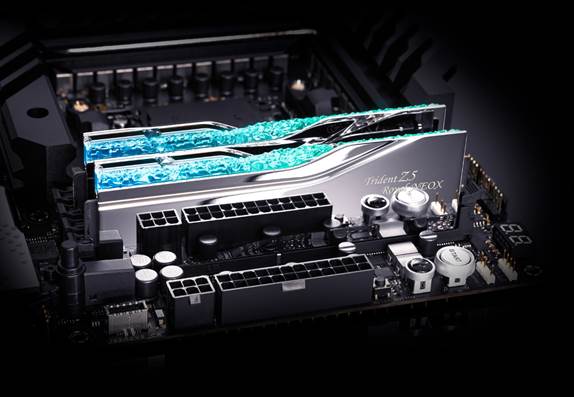
G.SKILL has introduced its new Trident Z5 Royal NeoX DDR5 memory series, bringing AMD’s new EXPO Ultra Low Latency technology to its high-end memory lineup. The new series combines tuned memory performance with a premium design and is available with specifications ranging from DDR5-6000 CL36 to DDR5-6000 CL26.
The main highlight of the new memory is support for AMD EXPO Technology: Featuring Ultra Low Latency, also known as AMD EXPO-ULL. The technology is designed to improve memory latency through additional tuning of the memory sub-timings included in the overclocking profile.
AMD EXPO-ULL Adds More Tuned Sub-Timings
G.SKILL says the Trident Z5 Royal NeoX kits go beyond its existing DDR5 memory products with AMD EXPO support by including extra-tuned memory sub-timing settings.
These settings are built into the AMD EXPO-ULL profile and are intended to deliver better latency performance while maintaining the same memory speed.
To use the feature, users will need a compatible AMD CPU, motherboard, and supported BIOS version. Once supported, the AMD EXPO-ULL memory profile can be enabled to apply the tuned settings.
DDR5-6000 Speeds From CL36 to CL26
The Trident Z5 Royal NeoX series offers multiple specifications, starting at DDR5-6000 CL36 and going up to DDR5-6000 CL26.
This gives PC enthusiasts different options within the same DDR5-6000 range, with the higher-end configurations offering tighter memory timings.
G.SKILL is positioning the series as a flagship memory solution for users who want to combine memory overclocking performance with its latest AMD EXPO-ULL technology.
Premium Silver and Gold Finishes
The new memory modules also feature a distinct design aimed at high-end PC builds.
G.SKILL is offering the Trident Z5 Royal NeoX with either a mirrored silver or gold finish. The modules are topped with a crystalline light bar that provides RGB lighting, adding a more premium look to systems with visible internal components.
The design continues the Royal series’ focus on combining performance hardware with a more luxurious appearance.
Worldwide Availability Coming in Phases
G.SKILL says the Trident Z5 Royal NeoX series will be available worldwide in phases. The company has not announced a single global availability date or pricing for all markets.
For specific product availability and purchasing information, G.SKILL recommends contacting local distributors and retail partners.
G.SKILL has introduced a new Trident Z5 Royal NeoX DDR5 series, built for AMD systems and offering EXPO Ultra Low Latency profiles with specifications ranging from DDR5‑6000 CL36 down to DDR5‑6000 CL26.
The new kits use AMD’s recently launched EXPO Ultra Low Latency (ULL) profile, which adds additional sub‑timing adjustments beyond standard EXPO settings. G.SKILL says these tighter timings are designed to improve latency at the same memory speed when paired with a compatible AMD CPU, motherboard and BIOS.
The Trident Z5 Royal NeoX modules follow the company’s existing Royal aesthetic, using a mirrored silver or gold heatspreader and a crystalline RGB light bar. These new modules will roll out in phases over the coming weeks, with availability varying by region.
KitGuru Says: Are you considering making the jump to an EXPO ULL kit soon?
The latest Adrenalin software fixes a major bug that caused crashing in Apex Legends and adds two games for full support. AMD Adrenalin Edition 26.9.1 Adds Support for Onimush: Way of the Sword and The Blood of Dawnwalker; Fixes Various Bugs Previous Version Had A week ago, we reported that AMD's latest Adrenalin Edition 26.8.1 software was causing issues with RX 9000 series in some games. As per several reports, the driver caused crashes in games like Apex Legends and Starfield, mostly on the Radeon RX 9000 systems. While AMD didn't confirm the issue, Apex Legends did, and said it […]
G.Skill has introduced its new Flare X5X DDR5 memory series, bringing AMD’s latest EXPO Ultra Low Latency technology to its memory lineup.
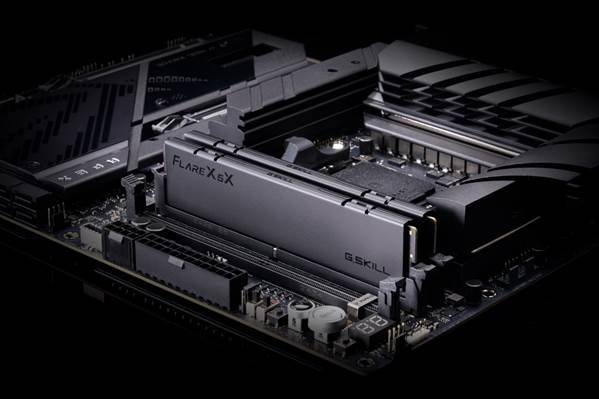
The new RAM is aimed at AMD users who want strong memory performance without adding RGB lighting or a flashy design to their PC. The first Flare X5X kit comes with a DDR5-6000 speed and CL36 timings.
More importantly, the memory supports AMD EXPO ULL, which can improve latency by using additional memory timing adjustments in the EXPO profile.
DDR5-6000 With AMD EXPO ULL
The first Flare X5X configuration is available as a 32GB kit with two 16GB modules. It is rated at:
Capacity: 32GB (2x16GB)
Speed: DDR5-6000
Timings: CL36-36-36-76
Profile: AMD EXPO ULL
Design: Non-RGB
The main difference from regular AMD EXPO memory is the way G.Skill has tuned the additional memory sub-timings.
When enabled on supported hardware, AMD EXPO ULL is designed to deliver better latency at the same memory speed. That could make the new kit interesting for AMD Ryzen users who care about memory performance but do not necessarily want to manually tune every setting in the BIOS.
A Clean Design Without RGB
G.Skill is also keeping things simple with the Flare X5X design.
The new memory does not use RGB lighting. Instead, it has a minimalist look aimed at users who prefer a cleaner PC build.
That makes the Flare X5X a potentially good match for compact systems, understated gaming PCs, and builds where the memory does not need to be the visual centerpiece.
What AMD EXPO ULL Actually Does
AMD EXPO is already widely used for memory overclocking on compatible AMD platforms. The new EXPO ULL approach adds more carefully tuned sub-timings to the memory profile.
In simple terms, the goal is to reduce memory latency without requiring users to manually adjust a long list of RAM settings.
However, the feature is not guaranteed to work on every AMD system. Users will need a compatible AMD CPU, motherboard, and BIOS version.
You Still Need to Enable EXPO
The Flare X5X memory will not automatically run at its advertised DDR5-6000 speed under default BIOS settings.
Like other EXPO memory kits, it initially boots using its standard SPD settings. To reach the rated speed and timings, users need to enable the appropriate EXPO profile in the BIOS.
Actual performance can also vary depending on the processor, motherboard and overall system configuration.
Availability
G.Skill says the Flare X5X DDR5 series will roll out in markets around the world in phases.
The company has not provided detailed pricing in the announcement. Buyers will need to check with local G.Skill distributors and retail partners for pricing and availability.
G.Skill Flare X5X Could Be a Solid AMD Upgrade
The Flare X5X is not trying to reinvent DDR5 memory. Instead, G.Skill is focusing on a useful combination of DDR5-6000 speed, tuned timings, AMD EXPO ULL support and a clean design.
For AMD users who want lower memory latency without spending time on manual RAM tuning, the new EXPO ULL profile could be the biggest reason to consider the Flare X5X. The lack of RGB also makes it a straightforward option for clean-looking PC builds.
Pricing and wider availability will ultimately determine how attractive the new kit is, but on paper, the G.Skill Flare X5X DDR5 looks like a promising addition to the company’s AMD-focused memory lineup.
G.SKILL has introduced a new Flare X5X DDR5 memory series, launching initially with a DDR5‑6000 CL36 32GB (2x16GB) kit designed for AMD systems. The Flare X5X line adds support for AMD’s new EXPO Ultra Low Latency (ULL) profile, which uses additional sub‑timing adjustments to improve latency at the same memory speed.
The Flare X5X series builds on G.SKILL’s existing AMD‑focused DDR5 lineup, offering a DDR5‑6000 specification with primary timings of CL36‑36‑36‑76. According to G.SKILL, the new EXPO ULL profile includes extra‑tuned sub‑timings intended to reduce latency when paired with a compatible AMD CPU, motherboard and BIOS version.
The modules use a minimalist, low‑profile heatspreader design without RGB lighting, following the same aesthetic direction as the standard Flare X5 series. G.SKILL states that each kit undergoes internal validation testing to ensure stability at its rated EXPO settings.
As with other EXPO memory kits, the Flare X5X will boot at standard SPD speeds before EXPO is enabled, and reaching the rated DDR5‑6000 EXPO ULL profile requires overclocking support from the motherboard and CPU.
The Flare X5X series will roll out globally in phases over the next few weeks. Pricing will naturally vary, as the whole memory market is in flux right now due to shortages.
KitGuru Says: Are you considering making the jump to an EXPO ULL kit?
We haven't been complaining about RAM prices quite as much on the podcast lately as we had been, but our negativity remains strong. It's just human nature to accept our fate as…
NVIDIA has just announced its custom HBM solution called NVHBM, which will be used in future GPUs, offering higher bandwidth & lower power. NVHBM Is A Custom HBM Solution Designed By NVIDIA & Amazon's Annapurna Labs To Speed Up DRAM Capabilities For Future Agentic & Physical AI Workloads The NVIDIA NVHBM DRAM solution is an extension of NVLink Fusion, offering higher memory performance and efficiency to XPUs at a time when memory bandwidth is becoming critical as model sizes increase tremendously into the trillion-parameter era. NVIDIA says that its NVHBM solution offers better bandwidth and efficiency than standard HBM solutions […]
d-Matrix proposes 3D DRAM as a solution to the rising AI data problem using stacked memory to deliver SRAM-Like bandwidth with magnitudes higher efficiency than HBM. The Time For 3D DRAM Is Now, Says d-Matrix, As It Unveils its "Raptor" 3D DRAM Solution With SRAM-Class Bandwidth As AI model sizes and KV cache continue to expand, capacity and bandwidth constraints become more visible. So far, all major DRAM manufacturers are working toward next-gen solutions that stack logic with DRAM, but d-Matrix says "The Time For 3D DRAM" is now. Today, there are two leading memory technologies for AI workloads: SRAM […]
SK Hynix is leveraging advanced packaging technologies such as Intel's EMIB for its next-gen HBM solutions, which will eventually enter the 3D packaging stage. Scaling HBM Comes With Big Challenges & SK Hynix Is Leveraging Advanced Packaging Solutions To Address Them As It Ventures Into The 3D Era At Hot Chips 2026, Jaesik Lee (VP Package Engineering at SK Hynix) presented the "Advanced Packaging for High-Bandwidth Memory" brief, which talks about how the company plans to leverage advanced packaging tech to accelerate its HBM roadmap. The company started by presenting how HBM is currently built. The HBM structure consists of […]
Samsung presents a bold vision for evolving the HBM base die with advanced logic processes that reviews the architecture’s bandwidth and power challenges, then outlines a three-phase roadmap, from area reclamation and functional expansion to full 3D ZHBM integration, that transforms the base die into an intelligent partner for next-generation AI systems. Samsung Charts Three-Phase HBM Roadmap Toward True 3D ZHBM That Stacks DRAM Directly On Compute For AI In the presentation by Sangwook Han, who is part of Samsung's DRAM Design Team, the main discussion revolves around the evolution of HBM using advanced logic processes, with the HBM base […]
Micron explores what High Bandwidth Memory (HBM) is, why it is essential, how it compares to traditional DDR, and the key challenges that demand further innovation to sustain AI’s growing demands. Micron Reveals HBM Failures Caused 17% of Meta's Llama 3 Training Interruptions as the Memory Wall Deepens As AI LLMs continue to evolve, the need for advanced memory technologies has become vital for the continuous scaling and improvement of these models. But memory is now becoming a major bottleneck that is limiting the performance of AI systems. HBM is currently the leading DRAM type used in leading AI accelerators. […]
With the ongoing memory shortage continuing to create questions regarding the scale of the AI infrastructure buildout, NVIDIA might have signed new agreements with SK hynix and Micron to procure the memory chips for its products. This report comes courtesy of Edgewater Research, with the firm adding that the agreements come after NVIDIA had trimmed its DRAM memory forecast earlier to indicate that the Rubin AI chips might use less memory than initially expected. NVIDIA Might Have Signed Multi-Year Memory Supply Agreements With SK hynix & Micron, Says Research Firm Not only have the ongoing memory shortages significantly affected product […]
The ongoing supply squeeze in mature DRAM and NAND chips is about to get a lot worse, as per the latest projections from Morgan Stanley. Meanwhile, the retail prices for newer DDR5 chips are also showing no sign of cooling down, with spot prices for DDR5-5600/6400 24GB rising by another 8 percent in August alone. Morgan Stanley says the oncoming supply squeeze in DDR4 and SLC NAND is mostly supply-driven, as memory makers continue to shift capacity toward HBM, DDR5 and higher-layer NAND Morgan Stanley's latest note does not bring glad tidings for the consumer electronics sphere. The Wall Street […]
Intel will keep on offering older Raptor Lake CPUs to allow PC builders an alternative to higher DDR5 prices. DDR5 Prices Are Not Coming Down Anytime Soon, So Intel Has Decided To Keep Its Raptor Lake CPUs On Shelves For Years To Come As the memory supply crunch continues, PC builders are being forced out of upgrades. We've covered on many occasions just how bad things are for consumers at the moment, as prices across all components continue to rise. Given this situation, Intel's client division seems to be reviving existing lineups while working on newer ones. We have seen […]

 Login
Login