AMD has officially launched its Ryzen AI Halo AI PC, which offers super-fast token throughput at a $3999 price point. AMD Challenges DGX Spark With Its Strix Halo-Equipped Ryzen AI Halo "AI PC" That Costs $679 US Lower The first AMD Ryzen AI Halo platforms are now available on retail, and are listed at the official MSRP of $3999. These systems pack the Ryzen AI MAX+ 395 SoC, 128 GB of memory, and lots of AI horsepower within a compact form factor that challenges NVIDIA's DGX Spark at a much lower price point. You can head over to the following […]
Bungie had initially developed Halo 1 with a fully working third-person camera, but it was never enabled for players except when driving vehicles. That will be changing in the remake, with a full third-person camera option for the entire campaign.
The third-person campaign gameplay has been showcased in a new video uploaded today. It is a playthrough of The Silent Cartographer, one of the most popular missions from the original game.
The first thing that immediately stood out to me was the sense of scale. Some of this gets lost in first-person, but Master Chief is massive, and I can really appreciate more of the level / character design overall in this third-person mode.
We still don't know if the developers will be able to truly match the feel of a Halo game in Unreal Engine 5 but so far, it seems to have nailed the art direction, UI and even menus for this remake.
KitGuru Says: Will you be picking up Halo Campaign Evolved when it drops? Will you be playing it in third-person or sticking to classic first-person?
One of the biggest talking points surrounding Microsoft’s Xbox Games Showcase was the fact that the publisher would be returning to console exclusives – sort of. While Gears of War E-Day and Clockwork Revolution are now set to be limited to the Xbox Series X/S (on consoles at least), the former was seemingly initially planned to also arrive on PlayStation 5. Additionally, insiders have claimed that Halo Campaign Evolved was initially going to be featured at Sony’s State of Play…until Microsoft changed their minds.
In the immediacy following Microsoft’s Xbox Games Showcase, it was discovered that Gears of War E-Day appeared to have been initially planned to be a multi-platform release, with a (now delisted) Xbox Podcast video featuring the PlayStation 5 logo at the end of the trailer.
Adding to this, according to known insider Chris Dring (and seeming partially corroborated by other known-insider Tom Warren) Microsoft had originally planned to show off Halo Campaign Evolved during PlayStation’s recent State of Play – though later “decided against it, which has angered Sony.”
As mentioned by Dring, the Halo reports are simply “gossip” and so should be taken with a pinch of salt. That said, there is no denying that there appears to be some weirdness going on at Xbox currently. Hopefully a clearer plan is made evident as time goes on.
KitGuru says: What do you think of Xbox going back partially to exclusives? Is there any rhyme or reason for the titles selected? Let us know your thoughts down below.
Over the weekend, Xbox revealed more footage of Halo: Campaign Evolved, showing that the move to Unreal Engine has brought the biggest visual fidelity boost in the series' long history. Now, Halo Studios has announced the game's PC system requirements, showing a fairly accessible 1080p/60FPS experience.
While we always expected Unreal Engine to be a great change for Halo visually, there was some concern on the impact the engine change could have on performance and optimisation. However, it does look like Halo Studios has got the PC system requirements as low as possible while still targeting 60FPS at all tiers.
The minimum PC system requirements for Halo: Campaign Evolved call for an AMD Ryzen 5 3600 or Intel Core i7-10700K CPU, 16GB of RAM and an RTX 2060, RX 6600 or Arc A580 graphics card. The medium requirements bump this up to a Ryzen 7 5700X or Core i5-12600K CPU and an RTX 3070 or RX 7600 GPU for 1440p/60FPS gameplay.
The High and Ultra tiers both target 4K/60FPS, presumably at the equivalent graphics preset setting. For High, you'll want at least a Ryzen 7 7700 or Core i7-12700K, 32GB of RAM, and an RTX 3080 Ti or RX 9070 graphics card. For Ultra, this is bumped up to a Ryzen 9 7900X or Core i9-13900K CPU and an RTX 4080.
As always, the system requirements are more of a guideline than a hard rule. For instance, if you have a Ryzen 5 5600X instead of a Ryzen 7 5700X, that isn't going to stop you from being able to get 1440p/60FPS if you have a strong enough graphics card.
However, it is worth noting that Nvidia no longer brings game-specific optimisations to its drivers for older GTX 10 series graphics cards, so you will want to be on an RTX 2060 or newer to avoid potential issues like crashes.
KitGuru Says: Are you planning on picking up Halo: Campaign Evolved?
Frank Azor, CVP of Client and Graphics Marketing at AMD, took to X to dispel rumors surrounding FSR 4.1 being restricted from RDNA 3.5 iGPU solutions. Frank Azor Denies Rumors AMD Cancelled FSR 4.1 For RDNA 3.5 iGPUs The rumor that FSR 4.1 wouldn't be coming to RDNA 3.5 iGPUs started from a conversation Hardware Luxx had with David McAfee, CVP and GM of Client at AMD. Hardware Luxx reported that according to David, FSR 4.1 is not planned for RDNA 3.5 graphics for the time being. However, after the news was circulated over the internet, Frank Azor stepped in […]
Computex is underway, we've already seen Nvidia's announcements, now it is time to focus on AMD. At this year's event, AMD is focusing on new Ryzen X3D processors, as well as wider availability of RDNA 4 graphics cards, including the global rollout for the RX 9070 GRE.
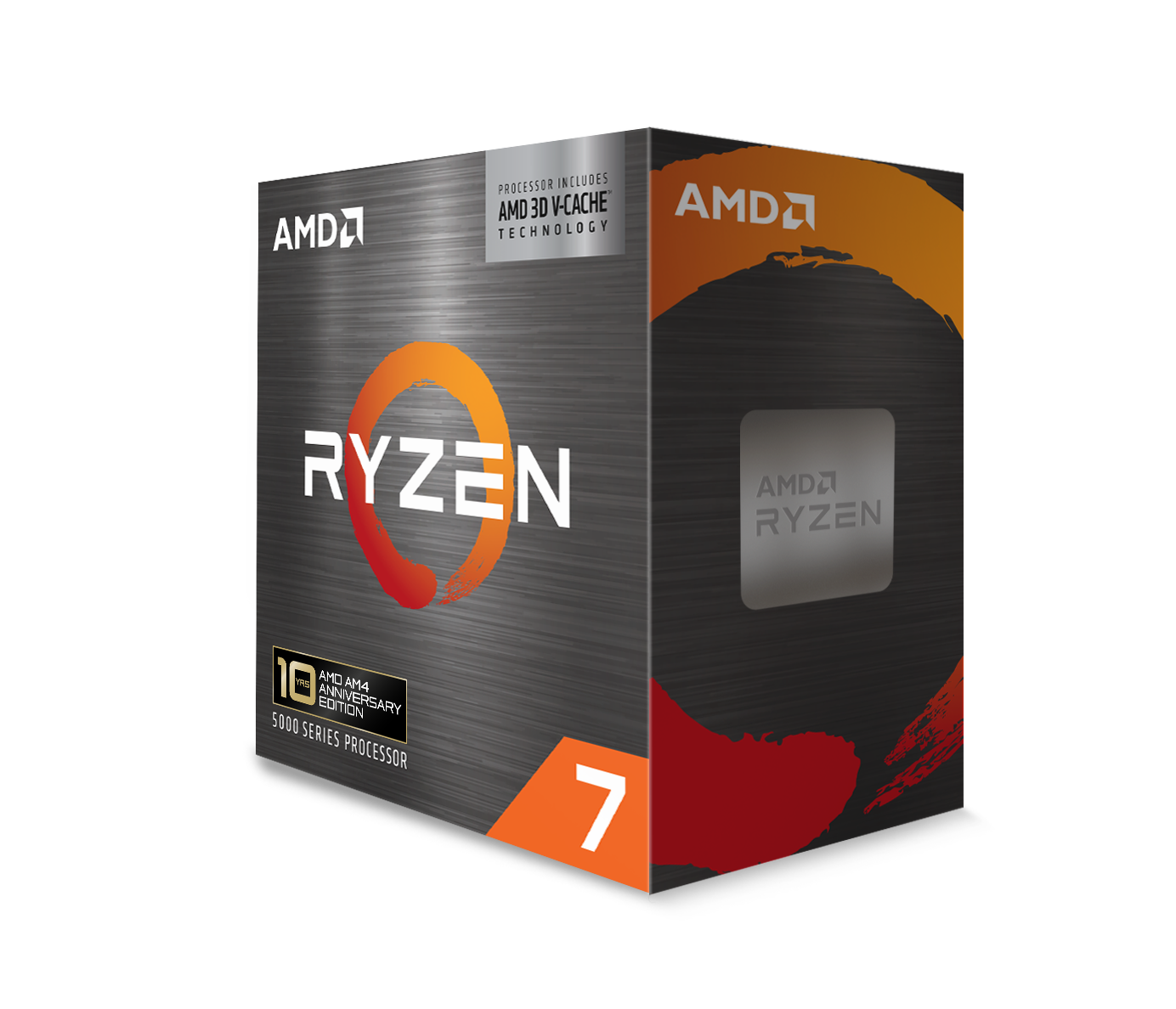
To mark 10 years of the AM4 platform, AMD is re‑releasing the Ryzen 7 5800X3D 10th Anniversary Edition. The chip retains its Zen 3 architecture and 96MB of 3D V‑Cache, offering a drop‑in upgrade for AMD 400‑ and 500‑series motherboard users. The chip will be re-released on June 25th, with a price tag of $349.
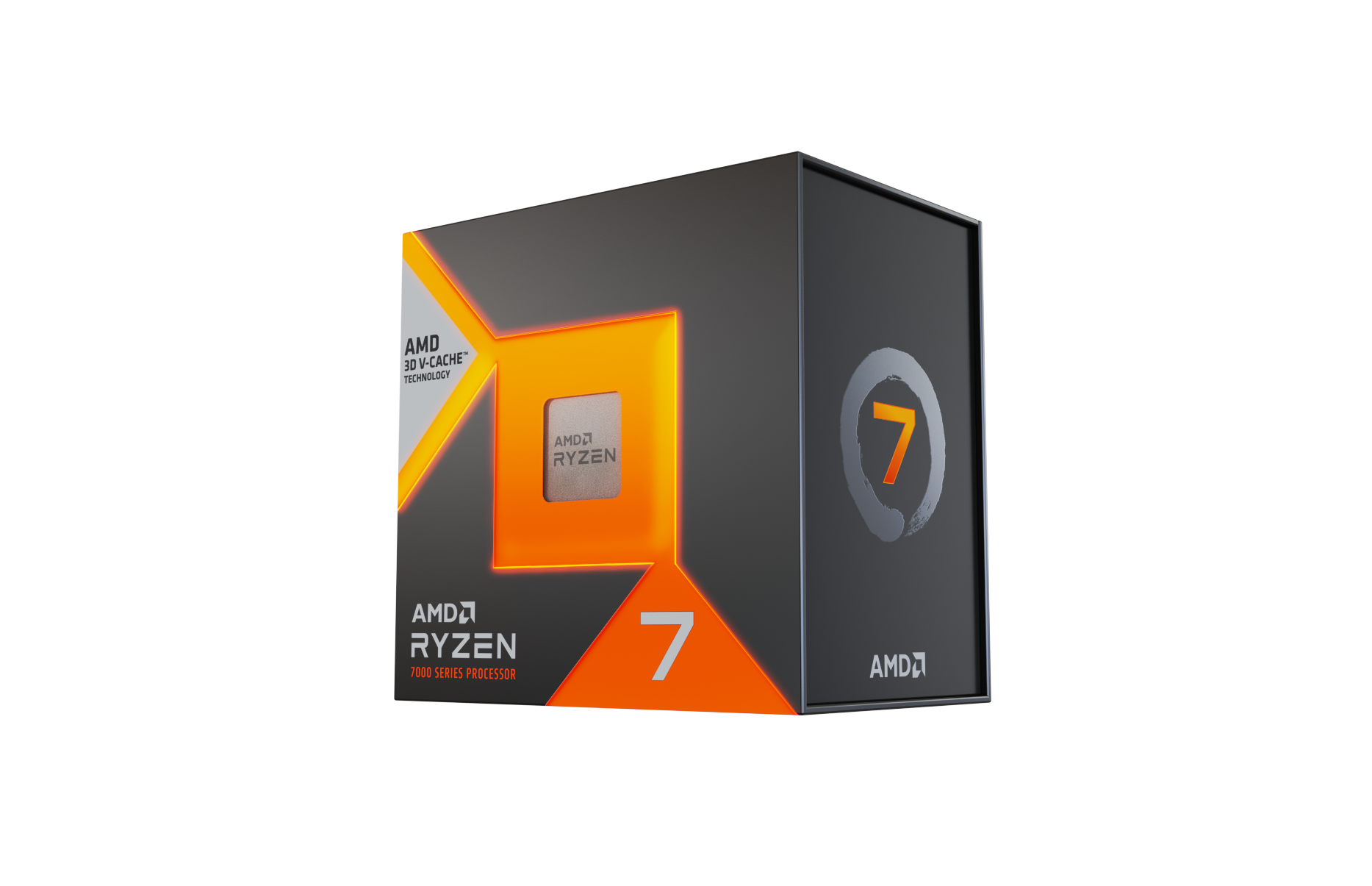
AMD is also introducing the Ryzen 7 7700X3D, bringing 3D V‑Cache to a wider audience on AM5. The processor features 8 cores, 16 threads, 104MB of total cache and boost speeds up to 4.5GHz, with a 120W TDP. It arrives on July 16th for $329, a pretty significant price reduction on the 7800X3D, which launched at $449.
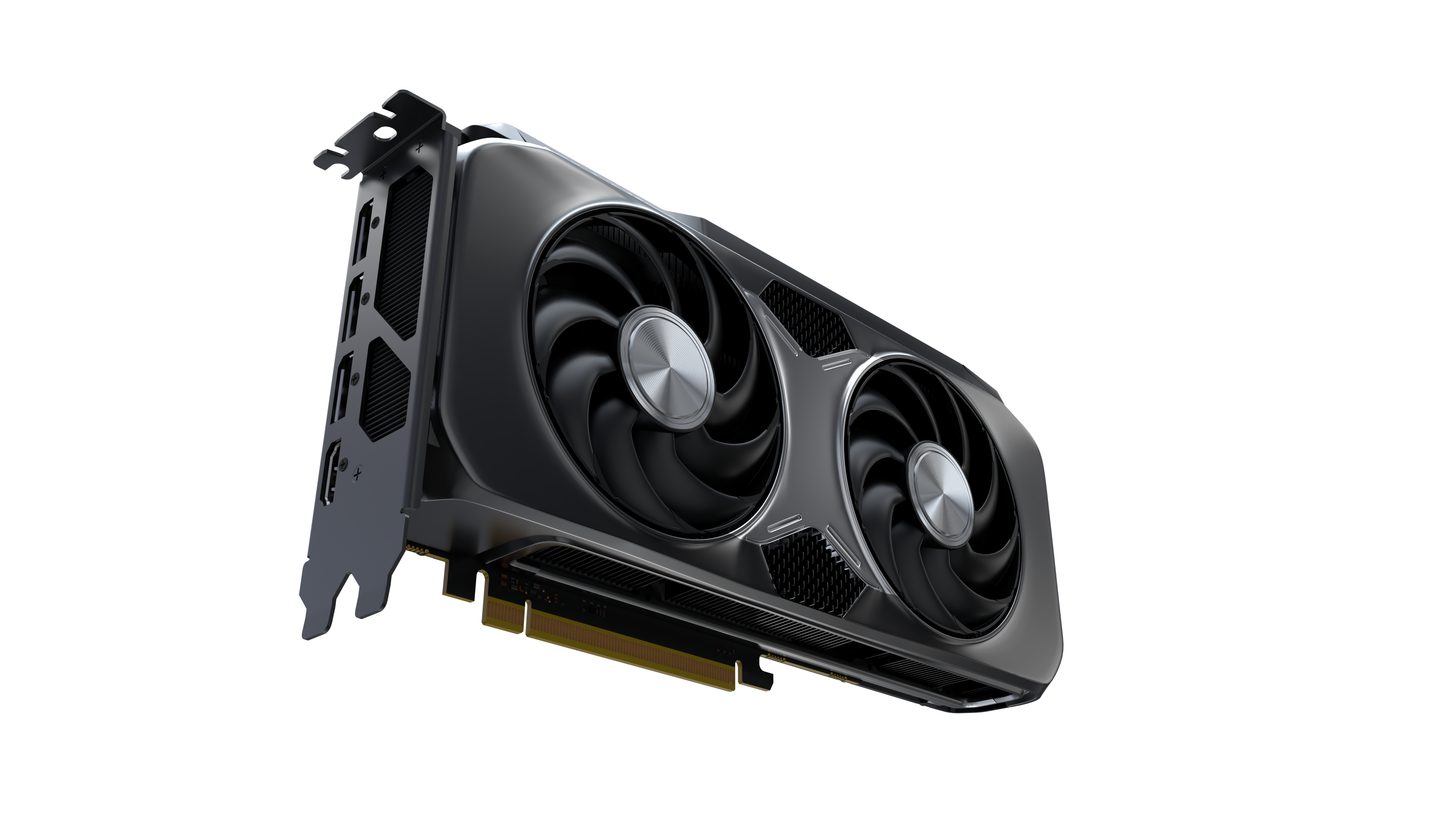
On the graphics side, AMD is taking the Radeon RX 9070 GRE to global markets. The RDNA 4‑based card targets QHD gaming with 12GB of memory, next‑generation Ray Accelerators and support for AMD’s latest FSR technologies. It becomes available worldwide on June 1st for $549.
While having access to the latest FSR technology is an important selling point, it is also worth noting that AMD recently announced plans to bring FSR 4.1 support to older GPUs, including RDNA 3 this summer and RDNA 2 in early 2027.
For professional workloads, AMD highlighted the Radeon AI PRO R9000 series, which now supports more than 50 certified applications across Windows and Linux, with additional certifications arriving in the next major Pro driver revision.
AMD also announced EXPO Ultra Low Latency memory profiles, offering an average 4% uplift over previous EXPO kits and up to 13% higher FPS compared to standard JEDEC speeds on Ryzen 7 9700X systems. Certified modules will be available from partners starting in June. We will be visiting a lot of companies at Computex this week, so we expect to see a few of these new EXPO Ultra Low Latency memory kits over the next few days.
KitGuru Says: What do you think of AMD's Computex announcements this year?
Although CES 2026 was a massive disappointment for consumers, Computex 2026 looks to inject some much-needed excitement back into the beleaguered tech space. In what is arguably the biggest consumer hardware launch of the year, Nvidia and ARM have already started teasing their highly anticipated N1X laptop chip, an APU based on the same GB10 chip used in the DGX Spark. Now, as Jensen prepares to take the stage at Computex next week, let's take a look at what Nvidia has planned for the show. Nvidia's Laptop Chip Finally Launches, Packing 20 CPU Cores With An RTX 5070 Equivalent GPU […]
AMD's upcoming product stack is a complete mystery, but here are a few things we can expect at Computex. Zen 5-Based Desktop/Mobile Chips, Zen 6-Based Medusa Point, and More; Here's Everything We Know About AMD's New Product Stack The Computex 2026 event is scheduled for next week in Taipei, Taiwan, and major vendors have already prepared for their presentations. After CES, this event is the most anticipated one throughout the year, as almost every hardware maker presents their new and upcoming product stacks. The three major hardware players are also expected to reveal the latest hardware at the event, including […]
AMD has introduced the Ryzen AI Max 400 series of processors for local AI development platforms. Serving as an architecture refresh to the previous Ryzen AI Max (PRO) 300 series Strix Halo hardware, the new silicon combines Zen 5 CPU cores, RDNA 3.5 integrated graphics, a dedicated NPU, and AMD PRO enterprise management features. Consumer-targeted iterations of these processors are scheduled to debut later this year.
The primary update centres on the integrated memory controllers, which have been modified to support up to 192GB of LPDDR5X unified memory via a 4-channel, 256-bit interface. Users can manually partition this pool to allocate up to 160GB directly to the integrated graphics subsystem, providing the capacity needed to run LLMs with more than 300 billion parameters. Performance modifications include a maximum GPU boost frequency increase to 3.00GHz, a maximum CPU boost clock increase to 5.20GHz, and a 10% performance uplift for the built-in NPU to reach 55 TOPS.
The product stack consists of three distinct processor designs. The top-tier Ryzen AI Max+ PRO 495 features 16 cores and 32 threads, boosting up to 5.20GHz, a fully enabled 40-compute-unit iGPU (Radeon 8065S), 80MB of cache, and a 55 TOPS NPU. The mid-range Ryzen AI Max PRO 490 scales back to a 12-core, 24-thread configuration, clocking up to 5.00GHz, paired with a 32-compute-unit iGPU (Radeon 8050S), 76MB of cache, and a 50 TOPS NPU. The entry-level Ryzen AI Max PRO 485 maintains the 32-compute-unit iGPU (Radeon 8050S) and 50 TOPS NPU, but uses an 8-core, 16-thread CPU layout, boosting up to 5.00GHz and accompanied by 40MB of cache.
KitGuru says: These aren't for the general consumer yet, but consumer versions of these chips are expected at a later date.
One of the most promising introductions at Google’s I/O developer conference on Tuesday was a new way for consumers to use the web: AI agents. Unfortunately, it was also the most confusing.
AMD has officially introduced the new Ryzen AI Max 400 series processors, bringing an upgraded version of the “Strix Halo” platform focused on AI workloads and high-end performance. The new chips improve memory support, AI power, and graphics speeds while keeping the same powerful hybrid design introduced with the Ryzen AI Max 300 series.
The biggest change in the Ryzen AI Max 400 lineup is memory support. AMD has upgraded the memory controller to handle up to 192GB of LPDDR5X memory, which is a major jump from the previous 128GB limit. This improvement is especially important for AI developers and users working with large language models and heavy AI tasks.
AMD also allows users to manually divide memory between the system and the integrated graphics. The iGPU can now use up to 160GB of video memory, which could help with demanding AI and graphics workloads.
The Ryzen AI Max 400 series combines up to 16 Zen 5 CPU cores with a large integrated GPU based on the RDNA 3.5 graphics architecture. The built-in graphics feature up to 40 compute units, making these processors powerful enough for gaming, creative work, and AI processing without needing a separate graphics card.
The updated chips also receive small but useful speed improvements. GPU boost clocks now reach up to 3.00 GHz compared to 2.90 GHz on the previous generation. CPU boost clocks now go as high as 5.20 GHz, while the upgraded NPU delivers up to 55 TOPS of AI performance, offering around 10% better AI processing power than before.
AMD introduced three models in the new series. The Ryzen AI Max+ PRO 495 sits at the top with 16 cores, 32 threads, boost speeds up to 5.20 GHz, a full 40 CU GPU, and 55 TOPS AI performance.
The Ryzen AI Max PRO 490 comes with 12 cores and 24 threads, boost speeds up to 5.00 GHz, a 32 CU integrated GPU, and up to 50 TOPS AI performance.
Meanwhile, the Ryzen AI Max PRO 485 features 8 cores and 16 threads with the same 32 CU graphics and 50 TOPS AI engine.
AMD says the new processors are designed for advanced AI development platforms and professional systems with AMD PRO features that compete directly with Intel vPro technology. Consumer versions are also expected later this year.
One of the most important benefits of the new 192GB memory support is the ability to run massive 300B+ parameter AI models directly on supported systems. This could make the Ryzen AI Max 400 series attractive for AI developers, researchers, and workstation users looking for strong local AI performance without relying entirely on cloud hardware.
AMD's Ryzen AI Halo developer platform offers strong Agentic AI capabilities & "leadership" token/$ value with its Halo chips, and will be available for pre-order this June. AMD Ryzen AI Halo Pre-Orders Open Up In June For $3999, $680 Lower Than NVIDIA's Spark Today, AMD is finally lifting the pricing and availability details of its Ryzen AI Halo developer platform, which was first announced at CES 2026, followed by a recent tease at its AI Dev Day. But before that, let's talk a little bit about the platform itself and its major highlights, which are listed below: Ryzen AI Halo […]
AMD has officially unveiled its Ryzen AI MAX 400 SoCs, which feature support for up to 192 GB of memory to tackle 300B+ AI LLMs. AMD's Biggest Upgrade With Its New Ryzen AI MAX 400 Halo SoCs Is The Massive 192 GB Unified Memory Which Supports Over 300B AI LLMs The AMD Ryzen AI MAX PRO 400 & Ryzen AI MAX 400 SoCs are part of the new Gorgon Halo family. These SoCs feature the Zen 5 core architecture, RDNA 3.5 graphics architecture, and XDNA 2 AI NPU. While the architecture remains the same as the Ryzen AI MAX 300 […]
Ahead of June pre-orders, AMD is releasing more information about their forthcoming AI dev box, the Ryzen AI Halo. The AI mini-PC will come pre-loaded with a comprehensive AMD software stack and carry a $3999 price tag
AMD is adding a trio of new chips to its Ryzen AI Max portfolio. The 400 series chips will bring support for up to 192GB of memory to AI systems, allowing for larger local models than ever before
Several newly released and upcoming hardware are now added to the CPU-Z database, allowing better reporting in the software. CPUID Brings AMD Gorgon Halo, Ryzen PRO 9000 Series, Gorgon Point 2/3, Intel Bartlett Lake and Wildcat Lake Support to CPU-Z Software After dealing with the malware, CPUID is back to adding support for more hardware to its popular monitoring software, CPU-Z. Being one of the most popular tools for hardware reporting, the software gets continuous updates whenever new hardware is launched. CPUID keeps it updated for future launches as well, which we can see in the latest CPU-Z v2.20 release […]
Intel's next-generation Razor Lake-AX chips will compete directly against AMD's Medusa Halo while featuring on-package memory. Intel Is Bringing Back On-Package Memory With Its Next-Gen Razor Lake-AX Chips That Fight Against AMD's Medusa Halo On-Package Memory was last used by Intel for its Lunar Lake SoCs. These SoCs were aimed at low-power mobile platforms, and while the chips themselves offered solid performance in a 30W budget, Intel's next on-package memory solution will be a big one. As per Haze2K1 on X, Intel Razor Lake-AX SoCs will feature on-package memory. This is a big deal as moving the DRAM closer to […]
Looking at the role of compilers in SPEC CPU 2026 performance, we have tested the benchmark suite on LLVM 22. The newest compiler provides a meaningful improvement to benchmark scores for multiple architectures

 Login
Login