❌

Normal view

There are new articles available, click to refresh the page.
Before yesterdayMain stream

How to Properly Use Frame Generation Technologies ft. NVIDIA DLSS, AMD FSR, Intel XeSS

25 July 2026 at 18:35

The image shows the logos and graphics of Intel XeSS, AMD FSR, and NVIDIA DLSS 4.5, each described as Frame Generation, with visual representations of their technology in action.

Frame generation (oftentimes abbreviated as β€œFG”) has quickly solidified itself as one of the most vital and hotly debated innovations in modern PC gaming. When implemented correctly and used properly, it can greatly enhance the smoothness of modern, demanding PC games, particularly on high-refresh-rate monitors. Unfortunately, it’s also very easy to misuse under many circumstances, by game developers and gamers alike. As such, we decided to write this guide to illustrate the most optimal ways of using frame generation in modern PC games. Let's clear something up right away: Frame generation isn't a panacea meant to fix low gaming performance […]

Read full article at https://wccftech.com/how-to/how-to-use-nvidia-dlss-amd-fsr-intel-xess-frame-generation-technologies/

RadeonTuner leak points to AMD FSR multi-frame generation with up to 8x multiplier

13 July 2026 at 13:30

AMD seems to be testing its upcoming FSR multi-frame generation (MFG) technology within its Radeon drivers. Discoveries in the third-party software RadeonTuner show that the company has added placeholders for the feature, offering options ranging from 1x to 8x frame generation.

RadeonTuner allows users to modify Radeon driver settings without using the standard AMD Software: Adrenalin Edition application. According to the utility's developer, AMD frequently implements placeholders well ahead of a feature's official launch. The multi-frame generation within AMD's ecosystem was the latest one to be found.

Image credit: Chiphell

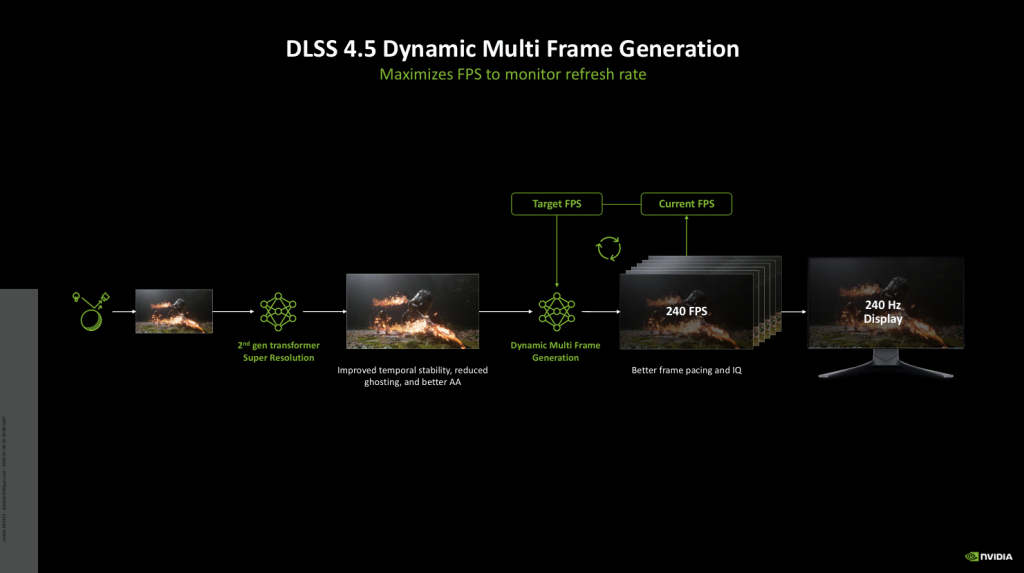
A Chiphell user (via Wccftech) attempted to force the technology on using a Radeon RX 9070 XT graphics card but found it entirely non-functional. AMD has not yet shipped the underlying model required to make the frame generation operational. This upcoming technology puts AMD against competitors like Nvidia, which offers DLSS Dynamic MFG with up to 6x generation, and Intel, which provides 4x XeSS MFG through its XeSS 3 release.

Other options available in the RadeonTuner tool include overrides for FSR Ray Regeneration and FSR Neural Radiance Caching. These are already available, but they require native support to be enabled. However, according to this third-party tool, AMD appears to be working on a manual override to extend these benefits to more games.

KitGuru says: Are you a fan of multi-frame generation? What MFG multiplier do you usually choose?Β 

The post RadeonTuner leak points to AMD FSR multi-frame generation with up to 8x multiplier first appeared on KitGuru.

NVIDIA DLSS 4.5 SDK Now Available, Enabling Devs To Integrate Ray Reconstruction, Dynamic Frame Gen, & More In Their Games

21 April 2026 at 13:00

NVIDIA DLSS 4.5 SDK Now Available, Enabling Devs To Integrate Ray Reconstruction, Dynamic Frame Gen, & More In Their Games 1

NVIDIA has just released its latest DLSS 4.5 SDK, which allows developers to integrate the latest tech, such as Dynamic Frame Gen & More, into their latest games. NVIDIA DLSS 4.5 Dynamic Frame-Generation, Updated Ray Reconstruction, & Enhanced Upscaling Tech Is Now Available To Devs With The Latest Streamline SDK Release Today, NVIDIA is finally releasing the highly anticipated DLSS 4.5 Streamline SDK. With this release, devs have the ability to easily integrate all the DLSS 4.5 goodies that come with the 2nd Gen transformer AI models, such as enhanced upscaling, frame-gen, Ray Reconstruction, and dynamic frame-generation support to their […]

Read full article at https://wccftech.com/nvidia-dlss-4-5-sdk-now-available-enabling-devs-to-integrate-dynamic-frame-gen-in-games/

Intel launches XeSS 3.0 SDK

10 March 2026 at 14:30

Intel has officially released the XeSS 3.0 Software Development Kit, providing game developers with the latest binaries to integrate its AI-driven upscaling and frame generation technology. This new version arrives as a pre-compiled binary rather than the open-source release many enthusiasts have been waiting for since Intel first discussed the project four years ago.Β 

The definitive feature of XeSS 3.0 (via Phoronix) is Multi-Frame Generation. This technology allows the engine to insert up to three generated frames between every two rendered frames, effectively increasing the total frame count by a factor of 4 on Intel Arc GPU-powered systems. This resembles the aggressive frame-generation strategies seen in Nvidia's latest DLSS versions, marking a significant step for Intel as it attempts to maintain parity in the AI-generated frame-insertion race.

Moreover, Intel has introduced a change that allows XeSS 3.0 to use external memory heaps. This means the XeSS SDK can now tap into GPU memory already allocated by the game engine. By operating on the same VRAM blocks rather than reserving separate, dedicated memory pools, developers can significantly reduce fragmentation and eliminate duplicate buffers. This gives creators direct control over memory residency and allows for a much cleaner integration into modern rendering pipelines. In an era where VRAM management is becoming increasingly critical for high-resolution 4K gaming, this optimisation helps ensure that the performance overhead of AI upscaling remains as low as possible.

Because the SDK is provided as a DLL file for Windows, Linux users will continue to rely on translation layers to utilise the technology. For gamers looking to test the new version, older XeSS 2.x versions can often be upgraded by simply replacing the existing library files with the newer ones from the XeSS 3.0 package.

KitGuru says: While the technical improvements to memory management and frame insertion are promising, the decision to remain closed-source is a departure from the β€œopen-source” marketing narrative Intel initially used to differentiate itself from Nvidia.Β 

The post Intel launches XeSS 3.0 SDK first appeared on KitGuru.
❌
❌