Valve highlights the importance of NVIDIA GPU support for SteamOS as certain GPU generations now become compatible, but performance optimizations are still going on. Valve Enables NVIDIA's Driver in the Main SteamOS Tree, but Performance Remains Behind the Current Linux Driver Stack Valve is making some significant progress in bringing NVIDIA GPU support to SteamOS, which has been one of the biggest hardware compatibility barriers. Speaking to IGN ahead of the Steam Frame launch, Valve software developer Pierre-Loup Griffais said that the company is working heavily on NVIDIA support and described it as a top priority. Yeah, we're working on […]
The Steam Frame pricing starts at $1,059 for the 256 GB model, while the 1 TB version costs $1,299. While memory prices have been a major concern for hardware makers, Valve says the problem goes well beyond RAM and storage.
Valve Explains the Steam Frame Pricing
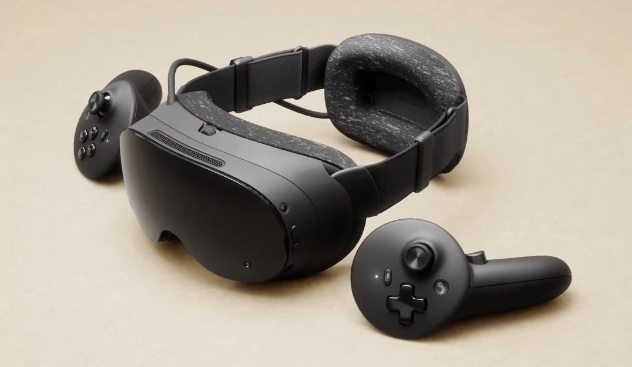
Valve engineer Pierre-Loup Griffais discussed the Steam Frame pricing in a recent interview with Tom’s Hardware. According to Griffais, Valve is facing higher costs for many of the components and services needed to build and ship the headset.
He explained that memory prices are only one part of the problem. Costs for components such as motherboards and copper have also increased, while shipping products around the world has become more expensive.
Valve says it is still trying to keep the Steam Frame as affordable as possible despite these pressures.
Memory Is Not the Only Problem
The rising cost of memory has received a lot of attention this year, especially with growing demand from AI systems putting pressure on the DRAM and LPDDR5X markets.
However, Valve’s comments suggest that manufacturers are dealing with a much wider increase in costs.
Higher prices for copper, PCBs, motherboards and other hardware can all add to the final cost of a device. Even shipping, which is often a smaller part of the discussion, is now costing more than it did a year or two ago.
This means the Steam Frame pricing cannot simply be blamed on expensive memory.
Why the Steam Frame Costs $1,059
Valve has not positioned the Steam Frame as a low-cost VR headset. The company is instead offering a standalone device built around PC gaming and SteamOS.
The starting price of $1,059 reflects the cost of the hardware as well as the current market conditions. The 1 TB model adds another $240, bringing the price to $1,299.
For buyers, that makes the Steam Frame a significant investment. Valve’s explanation, however, gives more context about why the company has not been able to push the price lower.
Hardware Prices Could Stay High
The bigger concern is that these higher costs may not disappear quickly.
If memory prices eventually settle down, other components and logistics could still remain expensive. The same cost pressure could therefore affect other gaming products in the coming months.
Valve could have absorbed some of these increases to keep the Steam Frame cheaper, similar to how some console makers use hardware subsidies. Instead, the company appears to be passing much of the current manufacturing cost on to customers.
For now, the Steam Frame pricing shows just how difficult it has become to keep new gaming hardware affordable while component and logistics costs continue to rise.
Valve hasn’t talked much about its next‑gen Steam Deck plans over the past year, but that is slowly starting to change. The Steam Deck 2 is in development, and despite the ongoing RAM and SSD shortages driving up hardware prices across the industry, Valve says its roadmap for the device hasn’t changed.
In a recent interview with IGN, Valve reiterated that it is still aiming for a true generational leap with Steam Deck 2. The company has been consistent on this point for years, saying it won’t ship new hardware until it can deliver a clear, meaningful jump in performance at a price that makes sense. While other handheld PCs have surpassed the Steam Deck in raw power, they’ve done so at significantly higher prices, which is exactly the trap Valve wants to avoid.
The current RAM crisis has raised concerns about whether component shortages and price spikes might force Valve to rethink its plans. According to Valve’s Pierre‑Loup Griffais, that hasn’t happened. “Not really,” he said when asked if the RAM shortage had impacted Steam Deck 2. Griffais explained that Valve is still targeting the same goals for the next‑gen model, emphasising that the team wants a clearly defined performance improvement and is continuing to work toward that target. “It’s just a matter of looking at the current conditions and seeing how and when we can deliver something like that,” he added.
Valve’s stance suggests that Steam Deck 2 is still on track internally, even if the company isn’t ready to talk timelines or specs. The focus remains on hitting the right balance between performance, efficiency and cost, the same formula that made the original Steam Deck successful.
KitGuru Says: I wouldn't expect a Steam Deck 2 within the next year, but perhaps by late 2028 / 2029, handheld-grade gaming hardware will have matured enough for an upgrade that makes sense.
After months of leaks, Valve has finally announced launch pricing for its new Steam Frame VR headset. As expected, the ongoing RAM and SSD crisis has pushed prices higher than expected, putting the Steam Frame roughly in line with the Steam Machine’s pricing.
Just like the Steam Deck and Steam Machine, the Steam Frame’s price in 2026 is significantly higher than originally expected. The 256GB model will cost £889, while the 1TB version comes in at £1089. These prices place the headset firmly in high‑end territory.
For the price, you get a standalone wireless VR system built around a 4nm Snapdragon 8 Gen 3 SoC, paired with 16GB of LPDDR5X RAM and either 256GB or 1TB of UFS storage, with a microSD slot for expansion. The headset uses dual 2160×2160 LCD panels with a 72–144Hz refresh rate (144Hz experimental), inside‑out tracking, Wi‑Fi 7, Bluetooth 5.4 and a 21.6Wh battery. SteamOS 3 is pre-installed, and Valve includes full 6‑DOF Steam Frame controllers in the box, along with a copy of Half‑Life: Alyx.
Valve is also offering several accessories at launch. A dedicated charger will cost £29, although the Steam Frame does not require one, as any 45W USB‑C charger, including a Steam Deck charger, will work. The Ergonomic Accessories Kit costs £59 and includes upgraded straps, an extended light blocker and replacement controller battery doors. The Accessory Replacement Kit costs £49 and includes a fresh face gasket, head cushion and standard light blocker.
As with the Steam Machine, buying a Steam Frame requires entering Valve’s reservation queue. Your place in line, combined with stock availability and overall demand, will determine how quickly you can actually purchase one. VR remains a niche market, so the Steam Frame may not face the same overwhelming demand the Steam Machine saw at launch, but with Valve hardware, nothing is guaranteed.
KitGuru Says: The prices are finally in. Are you going to be buying a Steam Frame when you get the chance?
Valve has released a new Steam Client beta update that introduces a “Big Art Mode” layout and a dedicated screensaver feature for Big Picture Mode. The update aims to refresh the handheld- and TV-focused interface while adding extra UI customisation options.
Big Art Mode adjusts the standard side-by-side interface layout, making it more similar to the PS5 Home screen. It allocates most of the screen to artwork for the selected game while displaying other titles in smaller windows near the bottom.
Alongside this visual refresh, the new screensaver function triggers when Steam remains idle for a set period. Users can choose to display full-screen game art, show recent screenshots, or load custom screensavers from a designated directory.
To access these features, users must opt into the beta channel through Steam's system settings menu. Once updated, players can toggle the layout under Settings > Home, while screensaver options are in Settings > Customisation. Beyond visual tweaks, this beta version delivers faster startup performance, optimised game recording in select DX12 titles, and fixes for frame-rate hitches when capturing screenshots during DX11 and DX12 gameplay on Windows.
KitGuru says: Customisable screensavers and a larger art layout in Big Picture Mode make Steam feel much more tailored to handhelds and living room setups. Do you like the looks of the new Big Art Mode?
Valve is dealing with another leak this week. Just days after a decade‑old 12TB Steam depot surfaced online, a separate issue briefly exposed private achievement lists for a wide range of in‑development games, including both unannounced titles and projects still months away from release.
According to the owner of achievement‑tracking site Exophase, a recent Steam update appears to have temporarily made private achievement data accessible through the Steam API. As a result, the site automatically scraped and published achievement lists for several upcoming games. This included already‑announced titles like Persona 6, Judas, Kingdom Hearts 4 and Tomb Raider: Legacy of Atlantis, as well as multiple unnamed projects that appeared only by AppID.
Speaking on ResetEra, the site owner explained: “Seems like a possible screw up on Valve's end, a bunch of games with achievements that should be private are accessible through the API right now and that's why they got scanned into the site. I usually never see games without an actual name pop up with achievements, yet over the past hour or so a bunch have.”
This marks the second significant leak Valve has suffered in a short span. While the earlier 12TB depot leak involved data from 13+ years ago, this latest leak has potentially revealed spoilers for games not yet out or announced. With that said, in the case of unannounced games, or titles still a long way from release like Persona 6, there is a good chance that you'll find placeholder achievements or incomplete lists, rather than an accurate representation of all planned achievements.
KitGuru Says: Achievement data leaking is unusual, and the timing makes this even more awkward for Valve. With many of these games still deep in development, any achievements seen today are almost certainly subject to change.
Valve appears to be gearing up for the Steam Frame’s launch. After months of leaks pointing to final SteamOS updates and wireless‑linking features being prepared behind the scenes, Valve has now added a reservation system to the Steam Frame’s store page, though you can't reserve one just yet.
The reservation system is the same one previously used for the Steam Deck and the Steam Machine. It isn’t live yet, but the back‑end is already in place, as spotted by Valve‑focused dataminer Brad Lynch. Considering the timing, the reservation announcement should go live later this week, or next week, followed by reviews and the first unit shipments towards the end of September or early October.
Like the Steam Machine, Valve may once again run a lottery before opening general orders. Due to low supply for the Steam Machine, Valve first asked interested customers to sign up, then ran a one‑time randomisation process to determine who could place an order first. Valve then worked through the reservation list month‑by‑month as new stock arrived. We expect a similar process for the Steam Frame.
We still don’t know how much the Steam Frame will cost, but expectations remain high that it will be on the expensive side. It is a fully self‑contained headset with its own internal hardware capable of running games natively, so it isn't immune to the ongoing RAM and SSD price surge.
KitGuru Says: Are you planning to reserve a Steam Frame once the system goes live?
Steam continues to make absurd amounts of money each year, and 2026 is shaping up to be one of its strongest years yet. As the biggest PC gaming platform, Steam has long been a revenue giant, but the pace of growth is still surprising, with the platform reportedly generating over $15 billion this year alone.
This week, Rhys Elliot, head of market analysis at Alinea Analytics, shared new data highlighting Steam’s highest‑grossing new releases of 2026 so far. According to their estimates, six titles, including two brand‑new IP, have already generated just under $1 billion in gross revenue. These games alone account for around 6.6 percent of Steam’s roughly $15 billion in revenue for the year so far.
The top earners include major franchise releases like Forza Horizon 6 and Resident Evil Requiem, both of which have performed exceptionally well on PC. However, new IP is also making an impact. Crimson Desert has generated an estimated $203 million on Steam alone, accounting for roughly 18 percent of all new‑IP revenue in the top 100 new releases this year.
Indie titles are also contributing meaningfully. Slay the Spire II has continued the success of its predecessor, pulling in an estimated $148 million, while Meccha Chameleon, a brand-new breakout indie hit, has generated around $90M in revenue.
Across the top 100 new releases of 2026, Alinea estimates around $2.4 billion in combined revenue. Interestingly, while 63 percent of those games are new IP, established franchises still account for over half of the revenue.
KitGuru Says: Steam’s revenue growth shows no signs of slowing down, and established franchises continue to dominate the charts. With several major PC releases still to come this year, Steam’s 2026 totals could end up being record‑breaking.
Four years on from launch, Valve's Steam Deck Verified and Playable library has surpassed 30,000 titles, according to tracking data from SteamDB.
Tracking data from SteamDB (via Gaming on Linux) confirms 30,026 titles (at the time of writing) hold official compatibility badges. A breakdown of the figures shows 21,076 games carrying “Verified” status, while 8,950 titles hold “Playable” ratings. Despite these considerable figures, 6,845 titles remain rated as “Unsupported”.
Compatibility testing continues to show occasional rating adjustments across the catalogue. Certain titles have experienced status updates following initial verification. One such example is Crimson Desert, which was initially rated “Playable” but was later changed to “Unsupported”. On the other hand, there are also “Unsupported” titles that run perfectly ok in the console, proving that there's still room for improvement in this system.
KitGuru says: While there are still thousands of unsupported titles, many of them likely run fine on the Steam Deck and just haven't been tested yet.
A major Valve leak has surfaced this week, exposing around 12TB of Steam depot data from 2003 to 2013. The archive reportedly includes unreleased prototypes, early builds of Valve titles and even third‑party content uploaded to Steam during that era.
The leak was first highlighted by Valve dataminer GabeFollower, who shared screenshots of the depot’s contents. According to Scolcer, the database wasn’t accessed through hacking, it was simply left publicly reachable, with no password or protections in place. Valve had changed its storage systems for Steam in 2013, so it is likely that this old depot was simply overlooked for a long time and not brought in line with updated security procedures.
Early findings point to a wide range of material, including prototype builds for Portal and Left 4 Dead, early versions of Counter‑Strike: Global Offensive, Valve’s cancelled experimental puzzle project F‑STOP and potentially remnants of the original Half‑Life 2: Episode 3. It isn't just Valve projects contained in the leak though. A lengthy list of file names doing the rounds online include references to games like Call of Duty, Dragon Age, Vampire: The Masquerade – Bloodlines and more.
Valve has not publicly acknowledged the leak yet, but it is no doubt having some uncomfortable conversations behind the scenes today.
KitGuru Says: At this point, the files contained in this leak are so old that this leak is unlikely to have much impact. It will be interesting to historians looking for evidence of cut content or scrapped ideas in a subset of old titles, but not much beyond that.
Valve just can’t help itself, can it? While updating the Steam Client for Arm, the company accidentally uploaded a batch of Steam Frame videos, including a full unboxing and a setup guide, and the internet noticed before anyone at Valve could hit delete.
The videos were spotted by the Steam Hardware Updates account on X, and honestly, a setup guide makes sense here. The Steam Frame isn’t a simple slap-it-on-and-go headset, it’s covered in buttons and features, so new users are going to need the hand-holding.
STEAM FRAME UPDATE:
The ARM Steam Client had an update this morning that contained these videos. It was quickly pulled after that, but of course people managed to grab them. These are videos that detail the unboxing, sign-in, and setup of the Steam Frame. pic.twitter.com/AAFk5D69eJ
This is the last piece of Valve’s hardware trio. The Steam Machine and Steam Controller are already out, leaving the Steam Frame as the one everyone’s still waiting on. We’ve heard rumblings before that launch was close, including from a developer whose studio is reportedly holding back an action shooter until the headset ships. Add an accidental unboxing video to the pile of evidence, and a launch within a few weeks to a month starts to look pretty reasonable.
As for the headset itself, it’s built to be light: 185g on its own, 440g with the headstrap, which packs in the facial interface, audio, and battery. It streams PC VR games over Wi-Fi 7 using a low-latency adapter, and leans on eye-tracking to sharpen resolution exactly where you’re looking rather than wasting power on the edges of your vision. You’re getting dual 2160×2160 pancake displays at 144Hz across a 110-degree field of view, plus four outward cameras and an IR illuminator to keep tracking solid wherever you’re playing.
Valve leaking its own hardware before announcing it properly is becoming a bit of a pattern at this point. Not that I’m complaining, I’ll take the info however it lands.
Valve's long-rumored Steam Frame VR headset will be launching soon, according to a VR game developer. The studio and its publisher, 2080 Games, are reportedly waiting on Valve to officially release the headset before launching their title, with an announcement expected soon.
According to Notebookcheck, in the FAQ posted on Gunman Contracts' Discord server, the developer stated that Valve's VR headset release is “just around the corner”. However, as Valve hasn't announced the public date yet, the team can't do it themselves.
The Steam Frame represents the final piece of Valve's latest three-part hardware initiative, following previous releases for the Steam Machine and Steam Controller. The specifications for the VR headset include a Qualcomm Snapdragon 8 Gen 3 processor, 16GB of unified LPDDR5X RAM, and up to 1TB of internal storage. Each of the LCDs (one per eye) has a resolution of 2160×2160 and a refresh rate up to 144Hz.
However, recent reports indicate component costs have risen. Main chip supplier Qualcomm is reportedly raiding its processor prices by over 10%, which could force an unexpected cost adjustment for the headset.
KitGuru says: Much like the build-up to the Steam Machine, the biggest question mark around the Steam Frame is price. Hardware has only gotten more expensive in the months since the headset's announcement, and some now believe that the Frame will actually cost more than a Steam Machine.
Valve is thankfully continuing to expand the hardware that SteamOS supports instead of locking their OS to the Steam Machine; a hard to get and rather expensive system. SteamOS 3.8.25 will now…
Valve’s long‑awaited Steam Frame VR headset appears to be getting closer to launch, as recent SteamOS Beta notes reference “preliminary support” for the device’s wireless adapter. It is the clearest sign yet that the headset is nearing release.
As reported by PCGamer, the latest SteamOS Beta and Preview updates now include early support for the Steam Frame Wireless Adapter, a key accessory designed to improve high fidelity PC to headset streaming. Valve first outlined its trio of upcoming hardware launches in late 2025, and the Steam Frame, a standalone VR headset capable of running games natively, is the final device yet to ship.
This is in addition to other recent movements behind the scenes at Valve, including rolling out the ‘Steam Frame Verified' programme. Fans have even gone as far as to track Valve's imports to get a clearer idea of when the Steam Frame may launch.
The Steam Frame is built to operate both as a standalone VR system and as a wireless PC VR headset. Internally, it uses a Qualcomm chip paired with a compatibility layer similar to Proton, allowing traditionally Windows only VR titles to run on ARM. When streaming from a PC, the dedicated wireless adapter aims to reduce interference from household WiFi devices, improving latency and stability for demanding VR games.
Valve had previously indicated a summer 2026 launch window, and growing evidence suggests the headset is now in the final stretch before release. However, we are also anticipating a higher-than-expected price tag when the Steam Frame does arrive, as recent reports indicate that it could cost more than the Steam Machine.
KitGuru Says: The Steam Frame has been a long time coming. At this point, I would expect a late August or September launch window. There is still one big question that remains though – how much will it cost?
If you've recently ordered a Steam Machine or Steam Controller, and are based in Europe, then you may soon become the target of scam attempts. Valve has confirmed that its EU distribution partner was recently hit by a cyberattack, leading to customer information being stolen.
Valve confirmed that the breach at its European hardware distribution partner, CEVA Logistics, was hit by a cyberattack recently. The end result is that EU customers who ordered a Steam Machine or Steam Controller will have had their personal information leaked, including customer name, address, phone number and email address.
Due to this information now being out, it is likely that those impacted will see an uptick in attempted scam calls, emails and text messages. Anyone who ordered a Steam Machine or Steam Controller will now have to be more vigilant when answering calls or texts from unknown numbers, and you'll need to be extra safe when opening any emails, so avoid clicking links and be sure to double check that an email address is legitimate and not spoofed, particularly if the email asks for money or additional personal information.
While customers will need to be aware of all of this, Valve does say that user Steam accounts are safe, as CEVA “does not have access to your payment information, passwords, Steam Guard codes or other information”.
KitGuru Says: There is a good chance that things like your phone number and name were already leaked elsewhere. At this point, I don't think there is a phone number on earth that is truly safe from scam call or text attempts.
While it initially sounded like the Steam Frame VR headset could avoid some of the component price challenges of the Steam Machine and the Steam Deck, that no longer appears to be true. Valve's wireless VR device may also face issues due to Qualcomm chips also becoming more expensive and harder to come by.
In a recent stream, Valve leaker Tyler McVicker, estimated that the base unit price for the Steam Frame headset would now by higher than $1100, perhaps hundreds of dollars higher due to increased costs over the course of development.
The Steam Frame isn't a device that relies heavily on RAM, but it does use Qualcomm chips and NAND for its storage, both of which are getting more expensive, in line with rising GPU, CPU and RAM costs, and higher prices at the source – fabricators like TSMC, Samsung, SK Hynix, Micron, and others.
Valve hasn't officially announced its launch plans for the Steam Frame yet, but it is expected to launch before the end of the year. The Steam Frame is a standalone VR platform intended to allow Steam users to play their entire library of games on a giant cinema screen, or to run VR titles directly on the device using an Arm compatibility layer similar to the Proton technology used for Linux. The Steam Frame itself will also be running its own version of SteamOS to enable it to be a completely standalone, wireless VR device.
KitGuru Says: The Valve Index was also expensive for its time and hasn't gotten any cheaper since launch either. VR enthusiasts are kind've already used to the premium, so I'm not sure the price tag will make as much of a difference in the long run.
Valve has shared new details on the reservation and waitlist system for the Steam Machine. The company now expects to clear the entire reservation queue by the end of 2026, meaning anyone who signed up before today should get their chance to purchase the system sometime between now and late December.
Valve began shipping the Steam Machine at the end of June and has been fulfilling orders daily. Reservation holders are being contacted in the order they were placed following the initial randomisation process. According to Valve, every existing reservation will be served before the end of the year, with purchase emails continuing to roll out steadily. The company also noted that each product and region has its own queue, which can move at different speeds depending on demand.
In some cases, Valve has already reached the end of a regional reservation queue and begun pulling names from the waitlist. A small number of users were mistakenly sent purchase emails immediately, skipping the step where Valve confirms that they have been moved into the reservation queue. Going forward, anyone transitioning from the waitlist will first receive a confirmation message, followed by a purchase email once their position in the queue comes up. Valve emphasised that waitlisted users are not being moved ahead of existing reservations.
For those currently holding a reservation, the expectation is clear. Everyone will receive a purchase email before the end of the year, and once that email arrives, buyers will have 72 hours to complete the order before their slot is passed to the next person. Waitlisted users may still be moved into reservations depending on the product they selected, and Valve will notify them if that happens.
KitGuru Says: Valve appears confident in its production ramp for the Steam Machine, with both reservation and waitlist movement accelerating. If you signed up before today, you should be in line to receive stock before the end of 2026.
The Steam Machine has received FSR 4.1 support through Proton Experimental, as Valve shares more updates. AMD FSR 4.1 Gets Introduced to Steam Machine; Valve Details Steam Machine Order Progress, and CAD File Availability AMD's latest upscaling technology has finally arrived on the Steam Machine. Valve has shared some updates on its newest gaming console on the official website, including the availability of FSR (FidelityFX Super Resolution) 4.1 upscaling technology for supported games. In the quick Steam Machine updates, the company has stated that FSR 4.1 will now be available through Proton Experimental for supporting FSR games. FSR 4.1 remains […]
Qualcomm, one of the largest suppliers of chips for consumer electronics, ranging from smartphones and laptops, to standalone VR headsets and more, is set to raise the prices of its processors in yet another blow to the consumer electronics market.
According to a new report from Bloomberg, Qualcomm is set to raise its chip prices by “double digit” percentages. Unfortunately for Valve, the Steam Frame standalone VR device is built around a Qualcomm chip.
It is not just Valve that would be impacted by a significant increase in Qualcomm chip prices. Qualcomm chips are used in all kinds of devices, from ARM-based laptops to smartphones, TVs, and more, so such a move would impact most major tech companies. Aside from increased prices, there is also likely going to be a chip shortage in the coming year too, as most companies rely on TSMC for manufacturing their processors, and TSMC can't keep up with the increasing demand from customers like Apple, Qualcomm, Nvidia and others. The end result will be less chip supply for consumer electronics, as well as increased prices.
The good news for Steam Frame buyers is that Valve already has units produced and ready to go, which won't be impacted by any component cost increases. However, future supply could be impacted, so if you don't get one during the first wave, you could be left paying more later. The same goes for the Steam Machine if RAM and SSD prices continue to climb.
KitGuru Says: The Steam Machine and Steam Frame were both incredibly promising looking products when they were announced last year. Unfortunately, the hardware market has continued to get worse since then.

 Login
Login