Normal view

There are new articles available, click to refresh the page.
Before yesterdayKitGuru

Noctua updates product roadmap with low-profile AM5 cooler and Seasonic PSUs

3 July 2026 at 13:30

Noctua has released an updated product roadmap outlining launch windows for hardware teased at Computex 2026. The updated roadmap shows that Noctua's new low-profile AM5 CPU cooler will be arriving next year, alongside new ‘Noctua Edition' power supplies from Seasonic. 

According to VideoCardz, the upcoming low-profile AM5 cooler features a 70mm height design based on the NH-L12 series. Noctua utilises six 6mm copper heat pipes, dense aluminium fins, and a 120mm NF-A12x25 G2 fan to dissipate heat. Additionally, the configuration preserves 35mm of RAM height clearance for Mini-ITX motherboard compatibility. According to the company, this cooler is officially slated for a Q2 2027 release window.

Closer releases based on the roadmap include the NT-CP1 carbon nanotube thermal pad for AM4 and AM5 sockets, launching in Q3 of this year alongside the Pulsar Feinmann F01 Noctua Edition mouse. A Noctua Edition of Thermal Grizzly's WireView Pro II monitoring tool is also scheduled for Q3 2026.

Lastly, the roadmap shows a 140mm desk fan and a USB fan controller for Q1 2027 and slots the Seasonic Prime PX Noctua Edition and the next-generation Seasonic Prime TX Noctua Edition power supplies into Q2 2027. Next-generation workstation CPU coolers share the same Q2 2027 timeline.

Discuss on our Facebook page, HERE.

KitGuru says: What upcoming Noctua product are you the most excited about?

The post Noctua updates product roadmap with low-profile AM5 cooler and Seasonic PSUs first appeared on KitGuru.

AMD EXPO Ultra Low Latency support expands to older AM5 motherboards

12 June 2026 at 16:00

Asus and MSI have released new BIOS updates based on AGESA ComboAM5 1.3.0.1b, bringing AMD EXPO Ultra Low Latency (ULL) support to older 600-series AM5 motherboards.

As noted by VideoCardz, the feature is currently available on selected Asus X670E motherboards, including the ROG Crosshair X670E Hero, Gene, and Extreme. Download links for BIOS 3803 are also live for the ROG Strix X670E-A, X670E-E, X670E-F, and ProArt X670E Creator WiFi. Other models like the ROG Strix X670E-I Gaming WiFi, TUF Gaming X670E-Plus, and TUF Gaming X670E-Plus WiFi currently show placeholder “38XX” names, indicating their builds are not yet available.

This update introduces three new DRAM timing controls to Ai Tweaker and DRAM Timing Control: “TccdL”, “TccdL_WR”, and “TccdL_WR2”. These releases are still in beta, meaning users with stable configurations might want to wait for the final versions.

MSI is also rolling out AGESA PI-1.3.0.1b updates with an “Optimized with AMD EXPO Technology: Featuring Ultra Low Latency” note for its own AM5 lineup. AMD states that its EXPO Ultra Low Latency feature targets tighter DDR5 sub-timings to reduce latency. The chipmaker claims this offers up to 4% higher average FPS than standard EXPO and up to 13% higher than JEDEC DDR5 when tested on a Ryzen 7 9700X system.

KitGuru says: It is nice to see motherboard vendors backward-porting features like EXPO ULL to older AM5 boards, saving users from needing an immediate upgrade.

The post AMD EXPO Ultra Low Latency support expands to older AM5 motherboards first appeared on KitGuru.

Colorful launches iGame B850M Ultra micro-ATX motherboards

21 May 2026 at 16:30

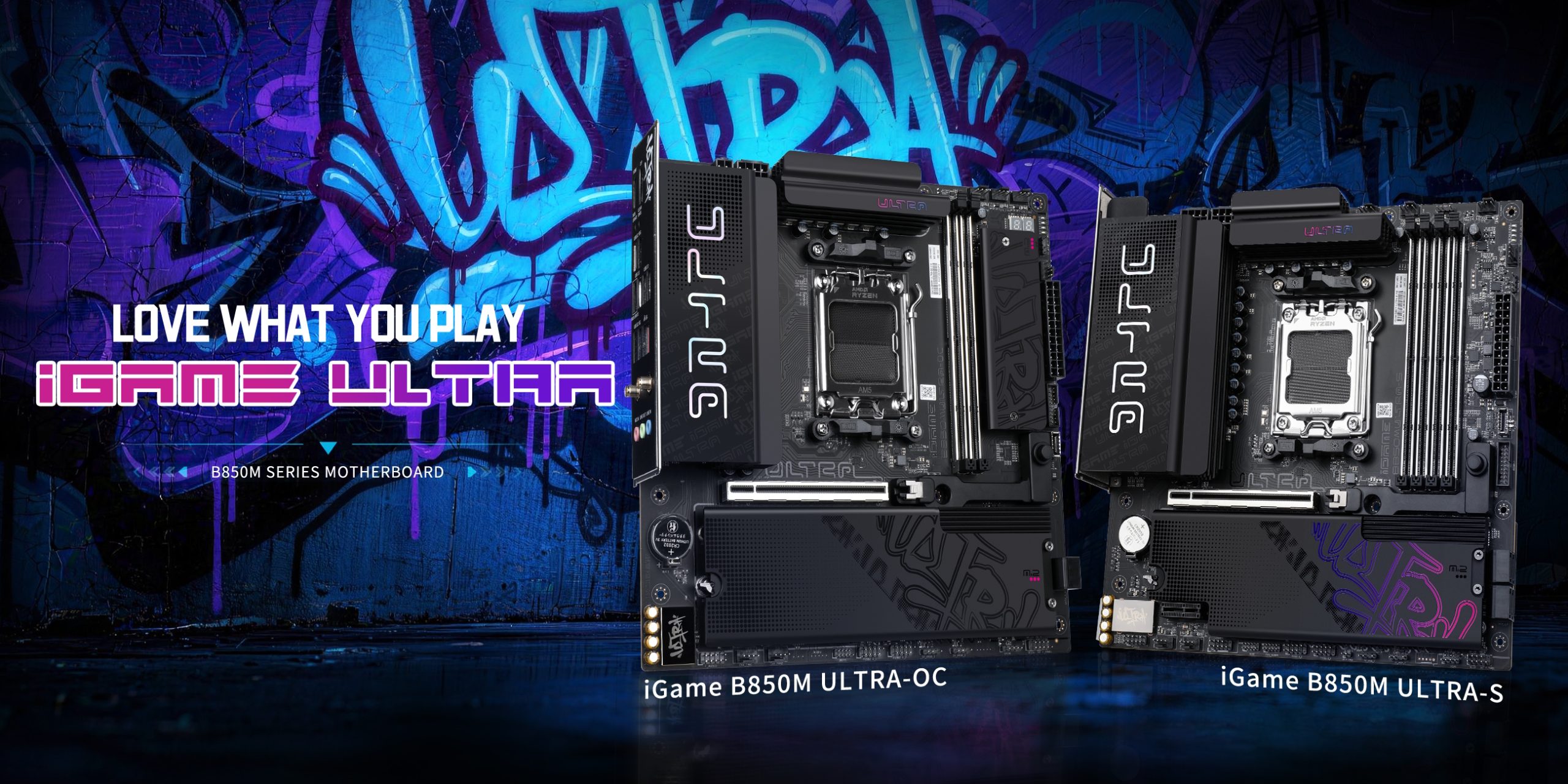
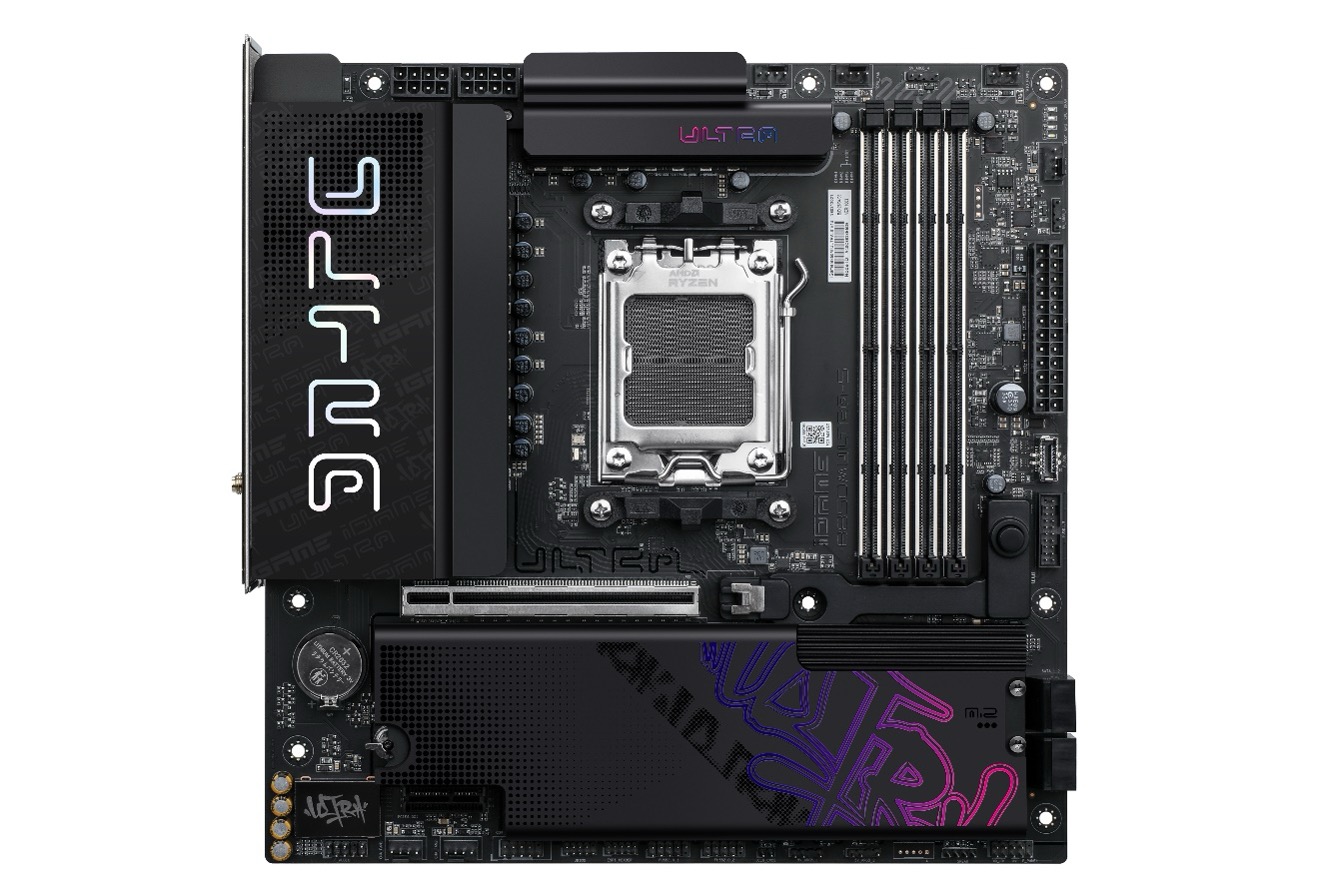
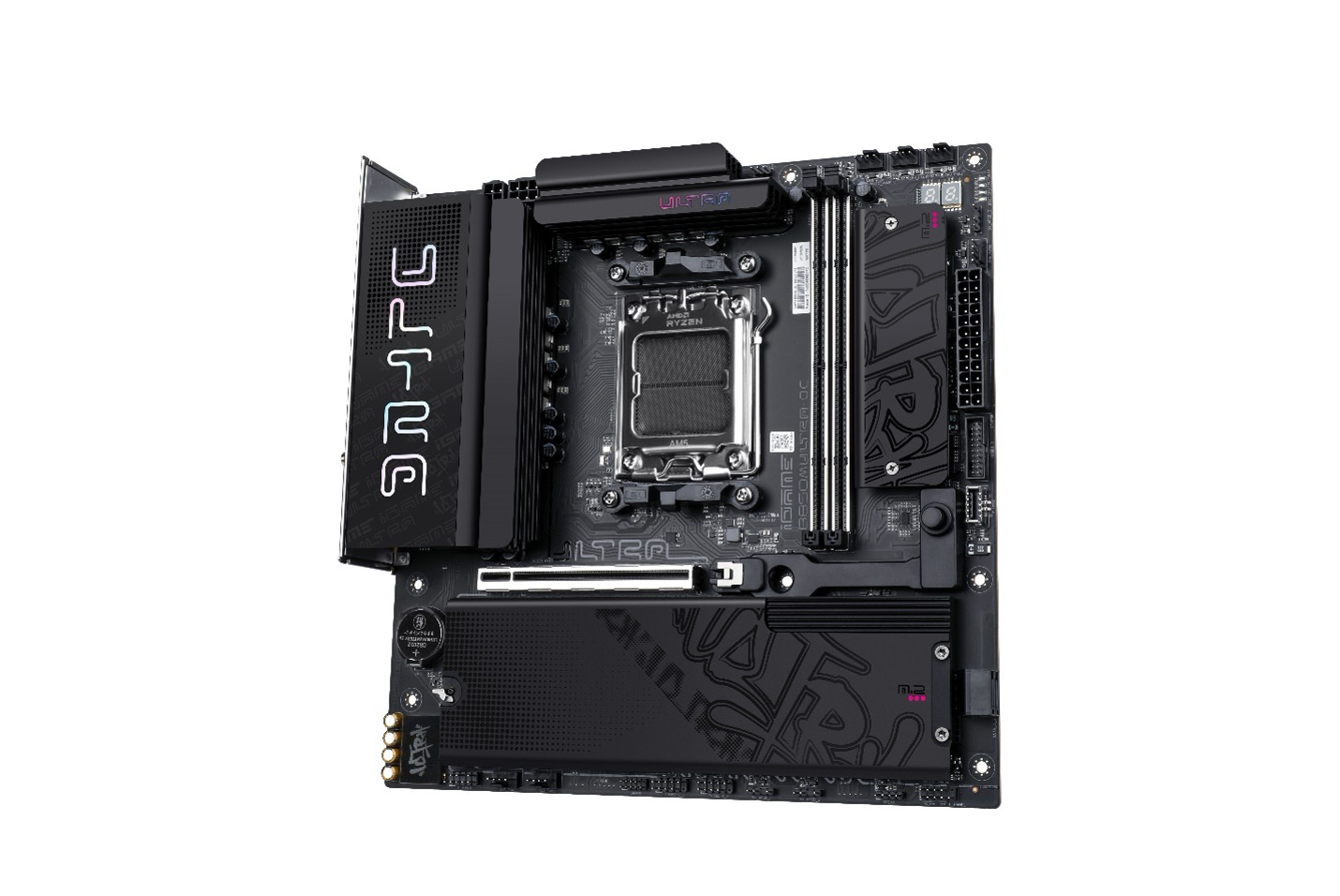
Colorful has introduced the iGame B850M Ultra series of motherboards for AMD Ryzen platforms, including two models – the iGame B850M Ultra-S and iGame B850M Ultra-OC. The new microATX motherboards feature an all-black design with matte-finish cooling plates, matching the company's iGame GeForce RTX 50 Series Ultra graphics cards.

Both models support AMD Ryzen 9000 Series X3D processors and include Wi-Fi 7, Bluetooth 5.4, PCIe 5.0 expansion, and support for AMD EXPO DDR5 memory. The expansion layout provides a PCIe 5.0 x16 slot equipped with a VGA snap-fit quick release, alongside PCIe 5.0 M.2 storage slots utilising an M.2 Quick Latch mechanism. Rear connectivity across the series features high-speed USB Type-C interfaces.

The iGame B850M Ultra-S targets overclocking applications, featuring a 14+2+1-phase 80A DrMOS power delivery system with dual 8-pin CPU connectors. It houses four reinforced DDR5 DIMM slots supporting a total memory capacity of up to 256GB and overclocked speeds up to DDR5-8400. Storage configurations include three M.2 slots (two PCIe 5.0 x4 and one PCIe 4.0 x4) paired with quick-release heatsinks, while a 2.5Gb Ethernet controller and Wi-Fi 7 handle networking.

The iGame B850M Ultra-OC is configured for mainstream setups, with a 10+2+1-phase 60A DrMOS power design. It features a dual-DIMM memory layout to optimise signal integrity, supporting AMD EXPO profiles at DDR5-8400 and manual memory tuning up to DDR5-8800. Storage is expanded to four high-speed M.2 slots across PCIe 5.0 and PCIe 4.0 interfaces, while the wired network controller is upgraded to 5Gb Ethernet.

Discuss on our Facebook page, HERE.

KitGuru says: Of these two new Colorful iGame B850M Ultra series boards, which one would you choose for yourself?

The post Colorful launches iGame B850M Ultra micro-ATX motherboards first appeared on KitGuru.

AMD expands Ryzen PRO 9000 lineup with first 3D V-Cache workstation CPUs

14 May 2026 at 17:00

AMD has announced six new additions to its Ryzen PRO 9000 Series processor lineup, introducing 3D V-Cache technology to the professional segment for the first time. The new AM5 processors target managed business deployments and high-performance workstations, expanding the Zen 5-based family with higher 120W and 170W TDP options.

The flagship Ryzen 9 PRO 9965X3D features 16 cores, 32 threads, and a boost clock of up to 5.5GHz. It includes 128MB of L3 cache, serving as the professional-grade equivalent of the consumer Ryzen 9 9950X3D. A non-X3D variant, the Ryzen 9 PRO 9965, shares the same core count and 170W TDP but utilises a standard 64MB L3 cache pool.

AMD has also extended 3D V-Cache to the 8-core tier with the Ryzen 7 PRO 9755X3D, which offers a 5.2GHz boost clock, 96MB of L3 cache, and a 120W TDP. The lineup is rounded out by three additional 120W processors: the 12-core Ryzen 9 PRO 9955, the 8-core Ryzen 7 PRO 9755, and the 6-core Ryzen 5 PRO 9655. This marks a shift for the PRO series, which was previously restricted to 65W power envelopes to prioritise efficiency. The full Ryzen PRO 9000 lineup with the latest additions can be found below:

Name Graphics Model Number of CPU Cores Number of Threads Max. Boost Clock Base Clock Graphics Core Count Default TDP
AMD Ryzen 9 PRO 9945 AMD Radeon Graphics 12 24 Up to 5.4 GHz 3.4 GHz 2 65W
AMD Ryzen 7 PRO 9745 AMD Radeon Graphics 8 16 Up to 5.4 GHz 3.8 GHz 2 65W
AMD Ryzen 5 PRO 9645 AMD Radeon Graphics 6 12 Up to 5.4 GHz 3.9 GHz 2 65W
AMD Ryzen 7 PRO 9755 AMD Radeon Graphics 8 16 Up to 5.4 GHz 3.8 GHz 2 120W
AMD Ryzen 9 PRO 9965 AMD Radeon Graphics 16 32 Up to 5.5 GHz 4.3 GHz 2 170W
AMD Ryzen 9 PRO 9965X3D AMD Radeon Graphics 16 32 Up to 5.5 GHz 4.3 GHz 2 170W
AMD Ryzen 5 PRO 9655 AMD Radeon Graphics 6 12 Up to 5.4 GHz 3.9 GHz 2 120W
AMD Ryzen 7 PRO 9755X3D AMD Radeon Graphics 8 16 Up to 5.2 GHz 4.7 GHz 2 120W
AMD Ryzen 9 PRO 9955 AMD Radeon Graphics 12 24 Up to 5.4 GHz 3.4 GHz 2 120W

The processors are scheduled to launch in the second half of 2026.

KitGuru says: Most workstation users won't benefit much from the 3D V-Cache, but those who do will be pleased to learn they now have a Ryzen PRO alternative that meets their demands.

The post AMD expands Ryzen PRO 9000 lineup with first 3D V-Cache workstation CPUs first appeared on KitGuru.

MSI AMD AM5 MAX Motherboard Showcase [2026]

6 May 2026 at 10:38

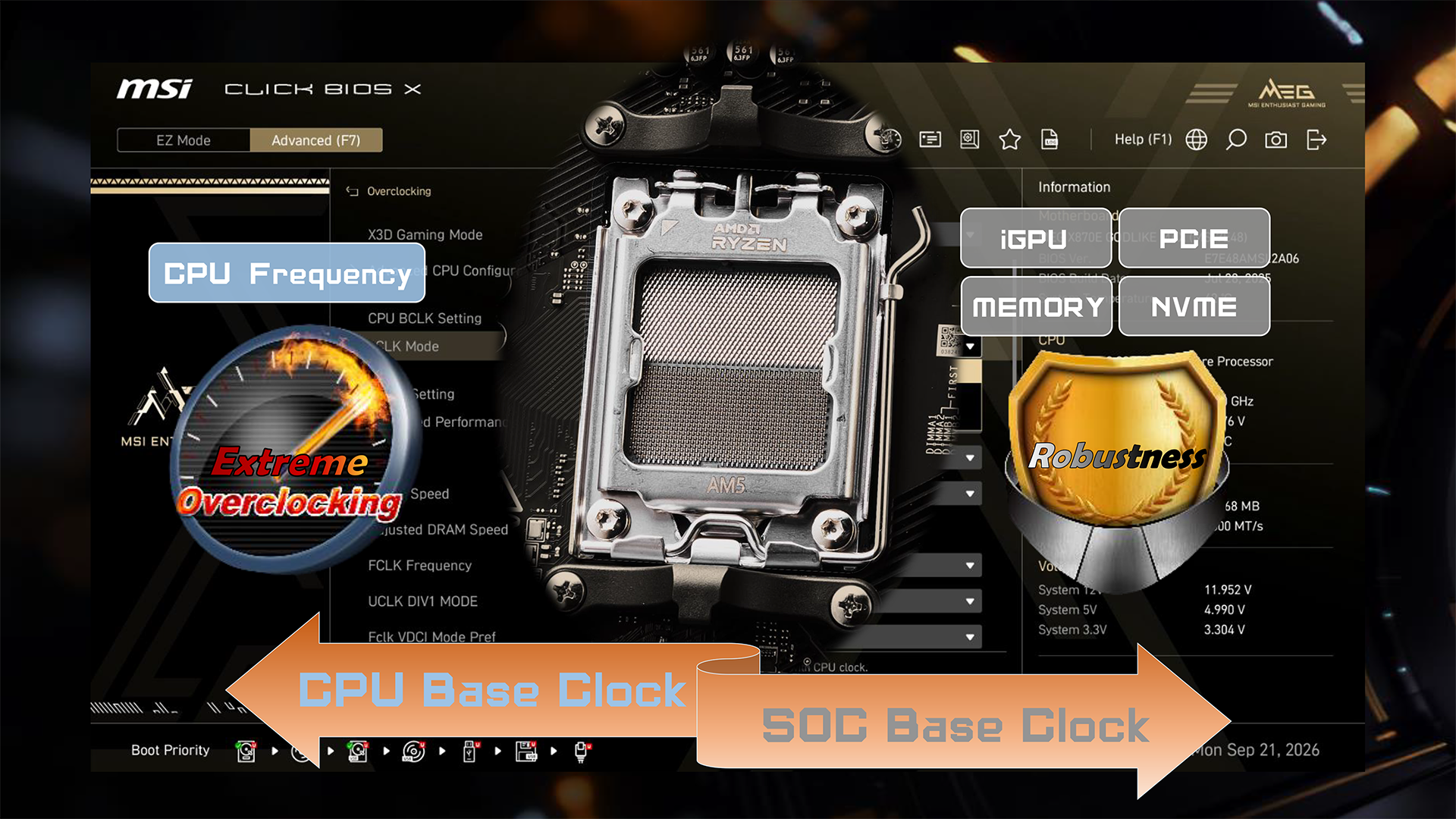
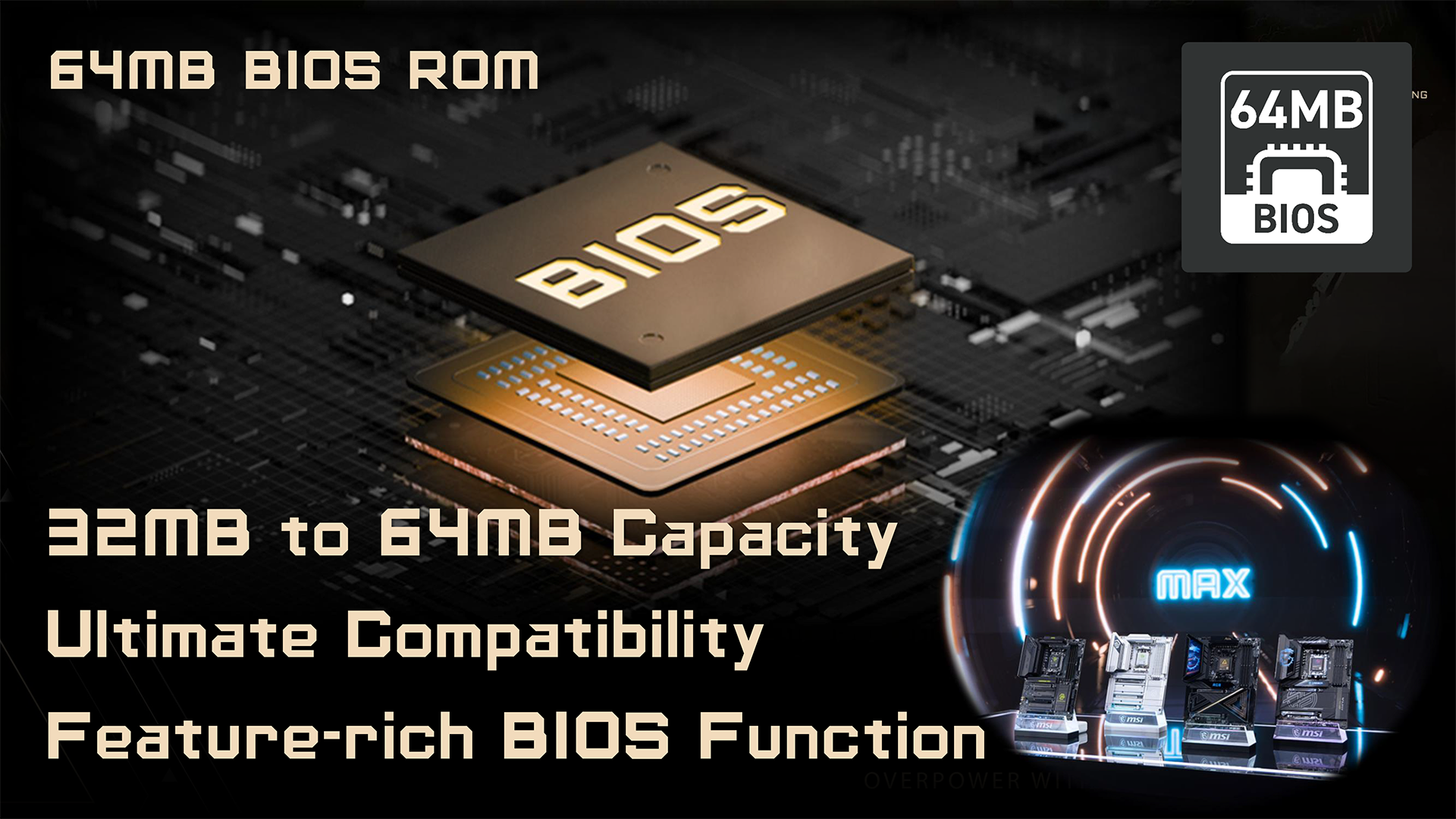
MSI has given its family of AMD 800-series motherboards an overhaul with a series of feature changes, named MAX. Some of these changes are cosmetic while others, such as the upgrade to the BIOS chip, offer support for future generations of AMD CPUs through Zen 6 and onwards to Zen 7.

Timestamps
00:00 Start
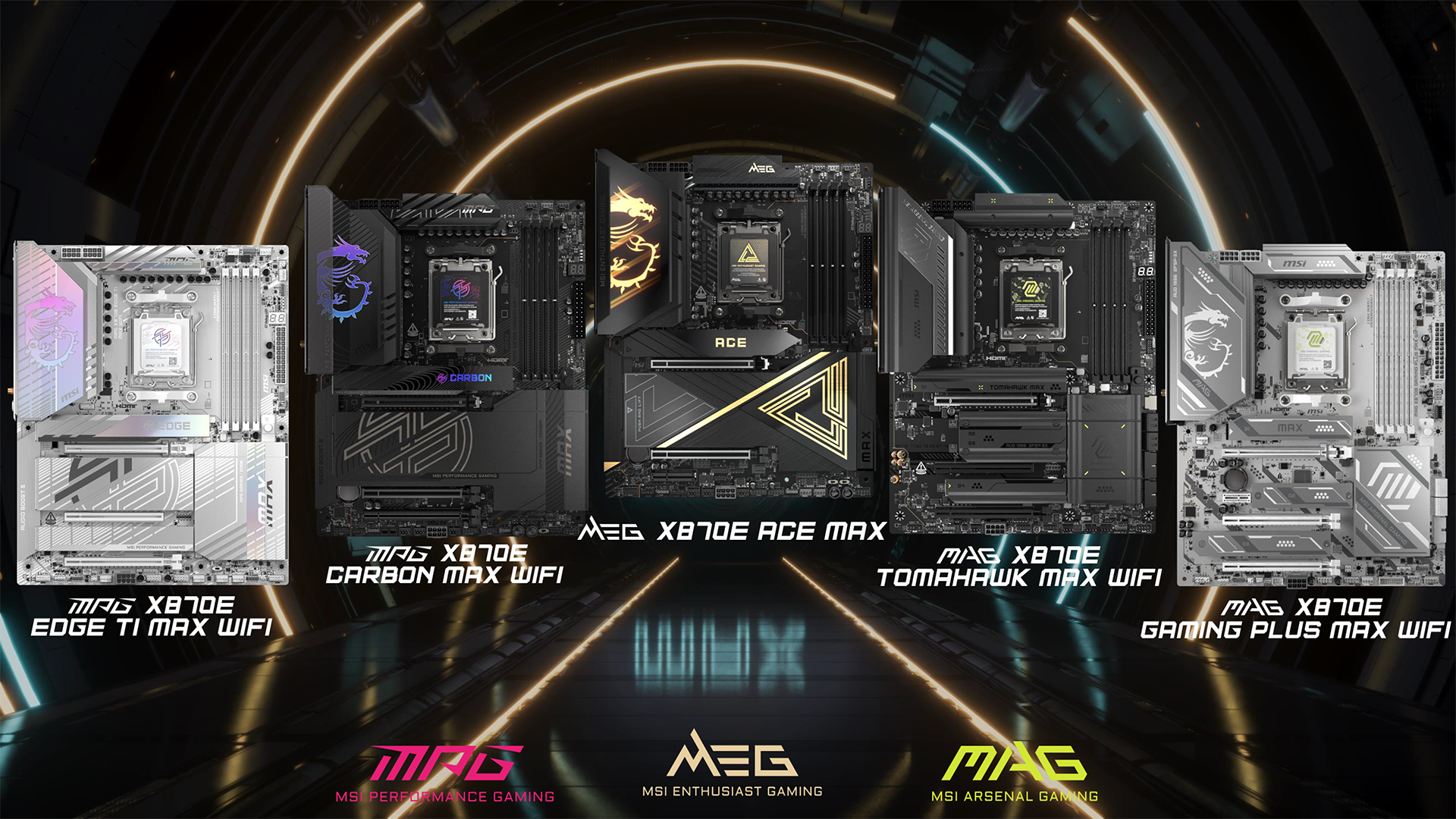
00:59 Max Series Overview
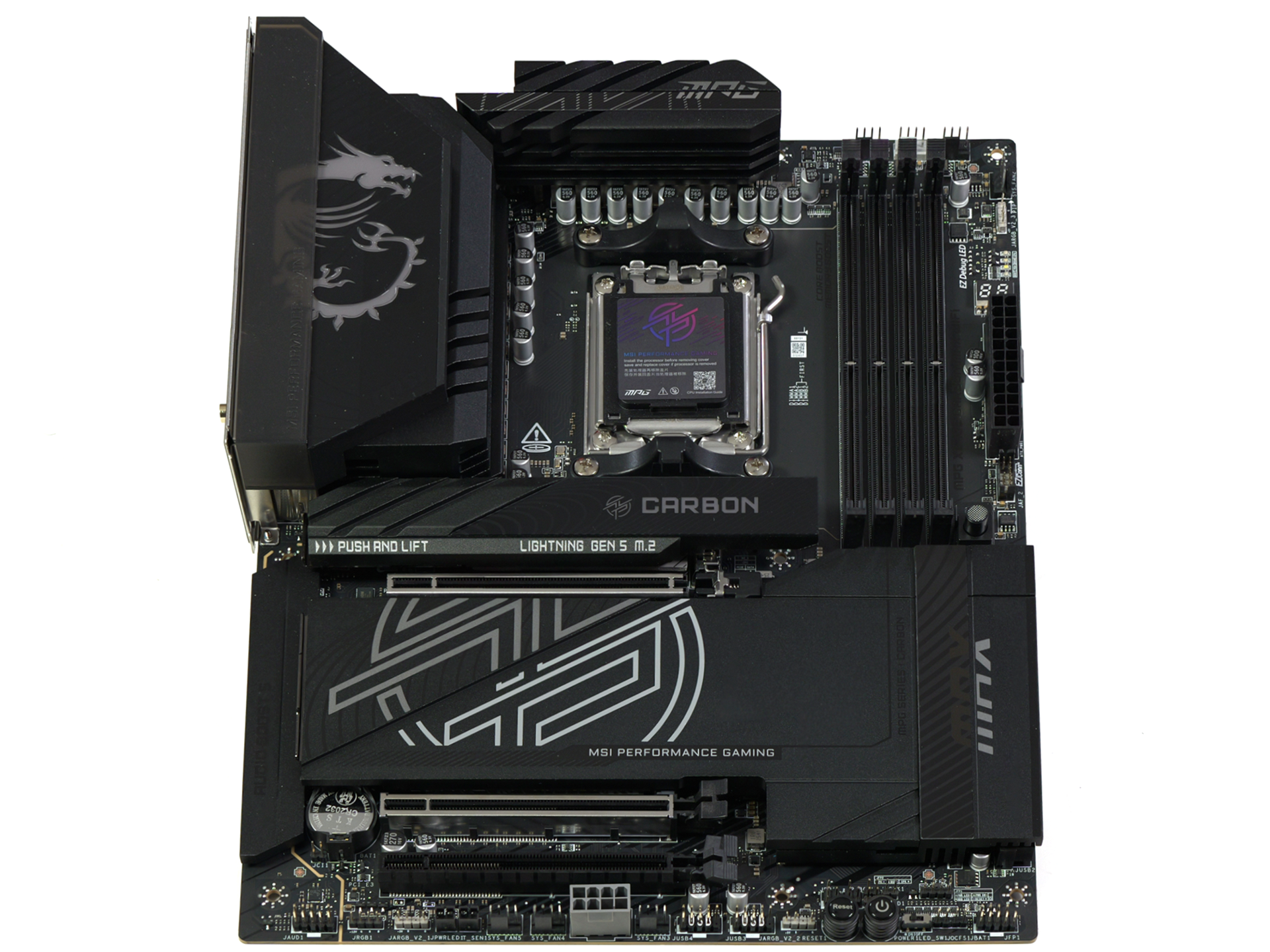
03:22 MPG X870E Carbon MAX WiFi
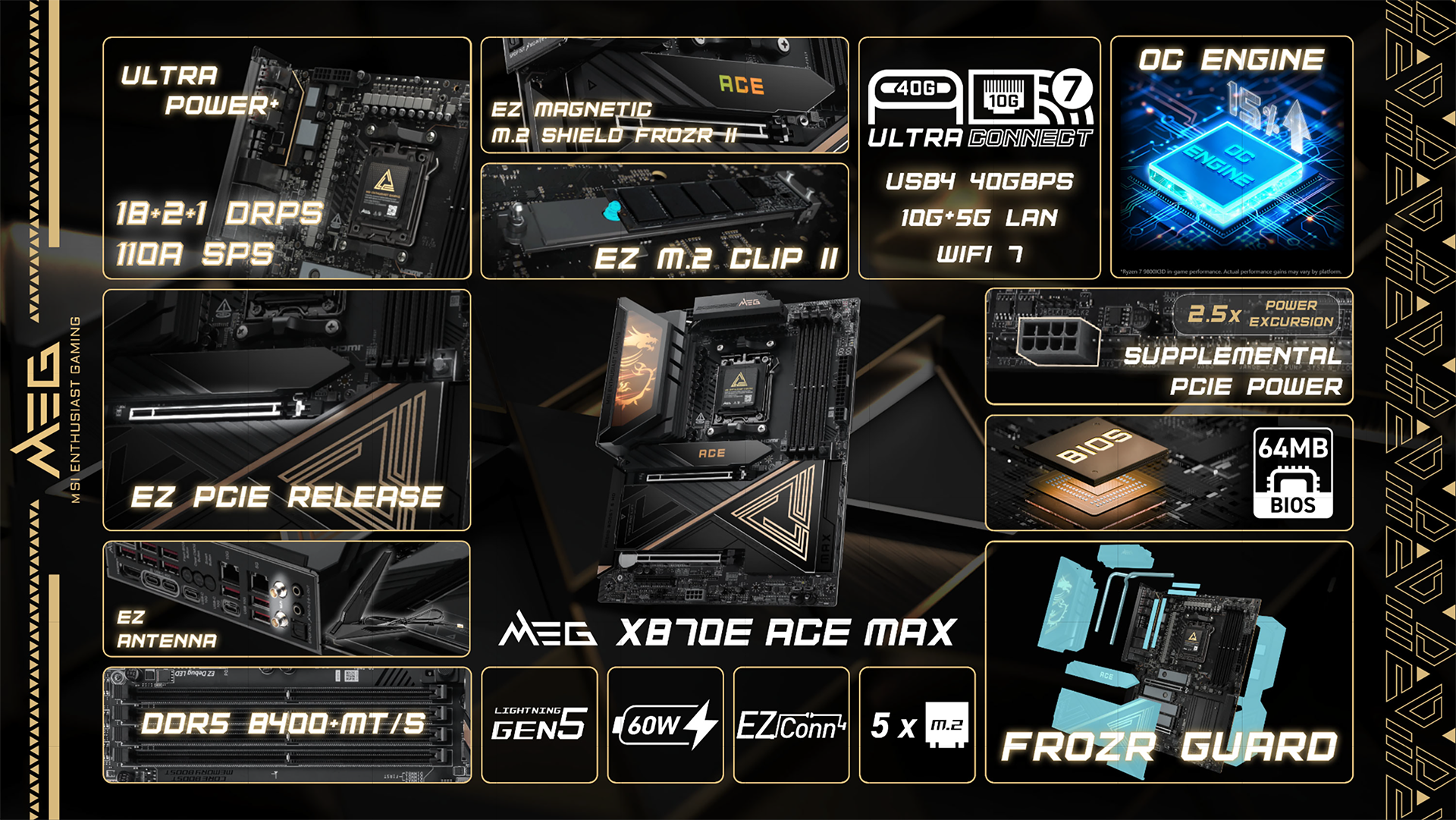
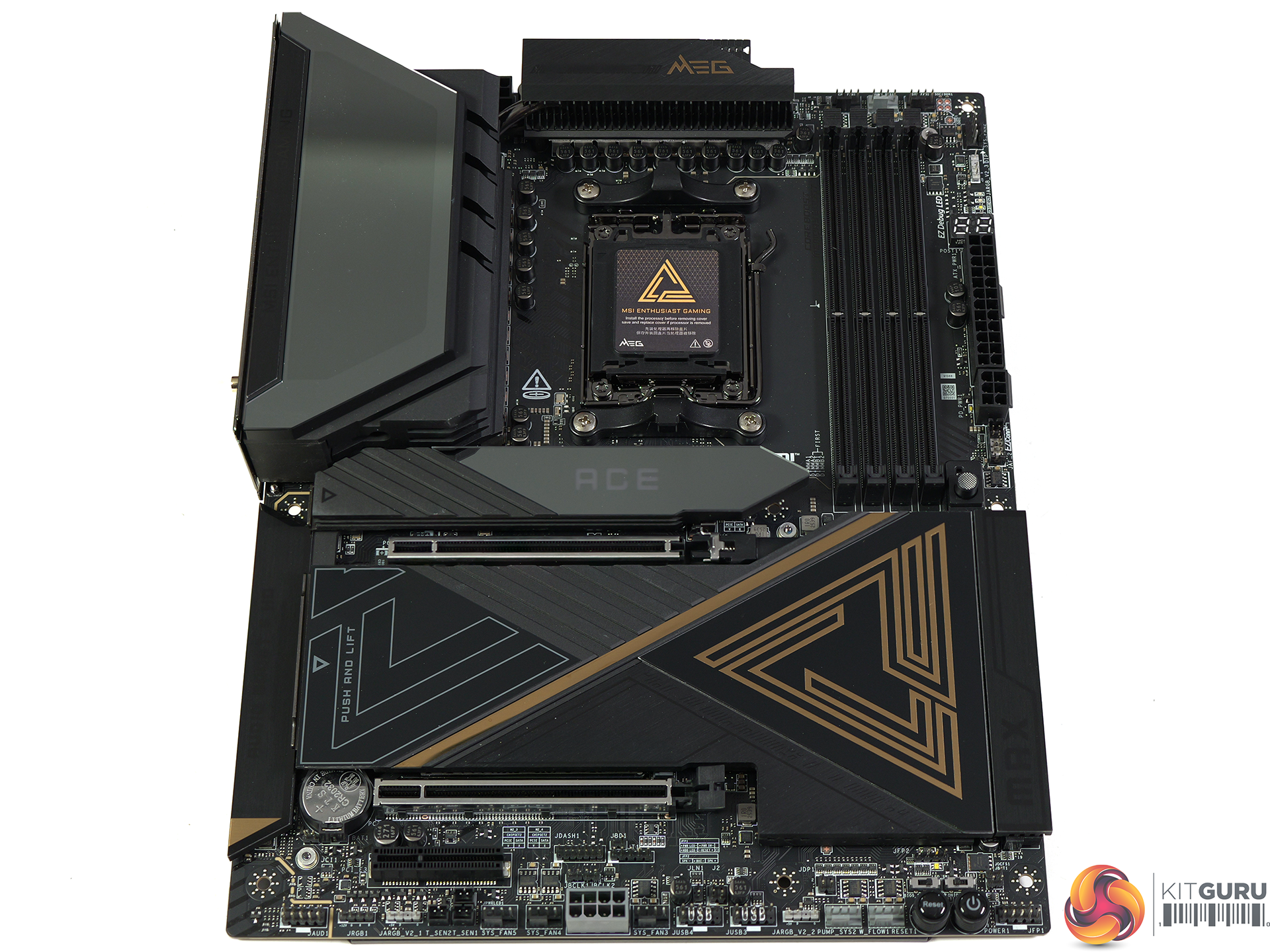
04:22 MEG X870E Ace MAX
06:00 MSI MAG X870E Tomahawk MAX WiFi PZ
07:06 MAG B850 Tomahawk MAX WiFi / II / MAG B850 Tomahawk WiFi
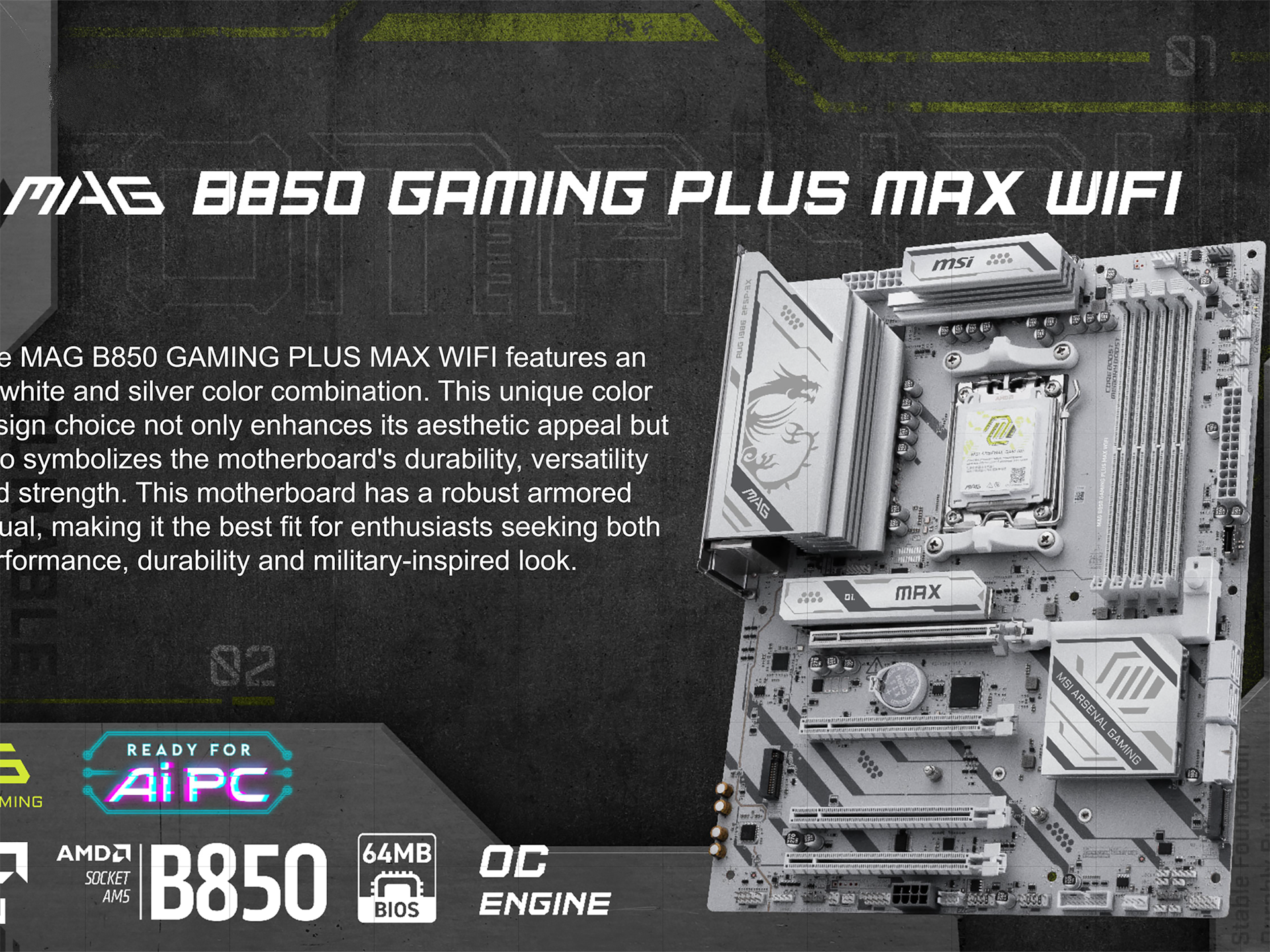
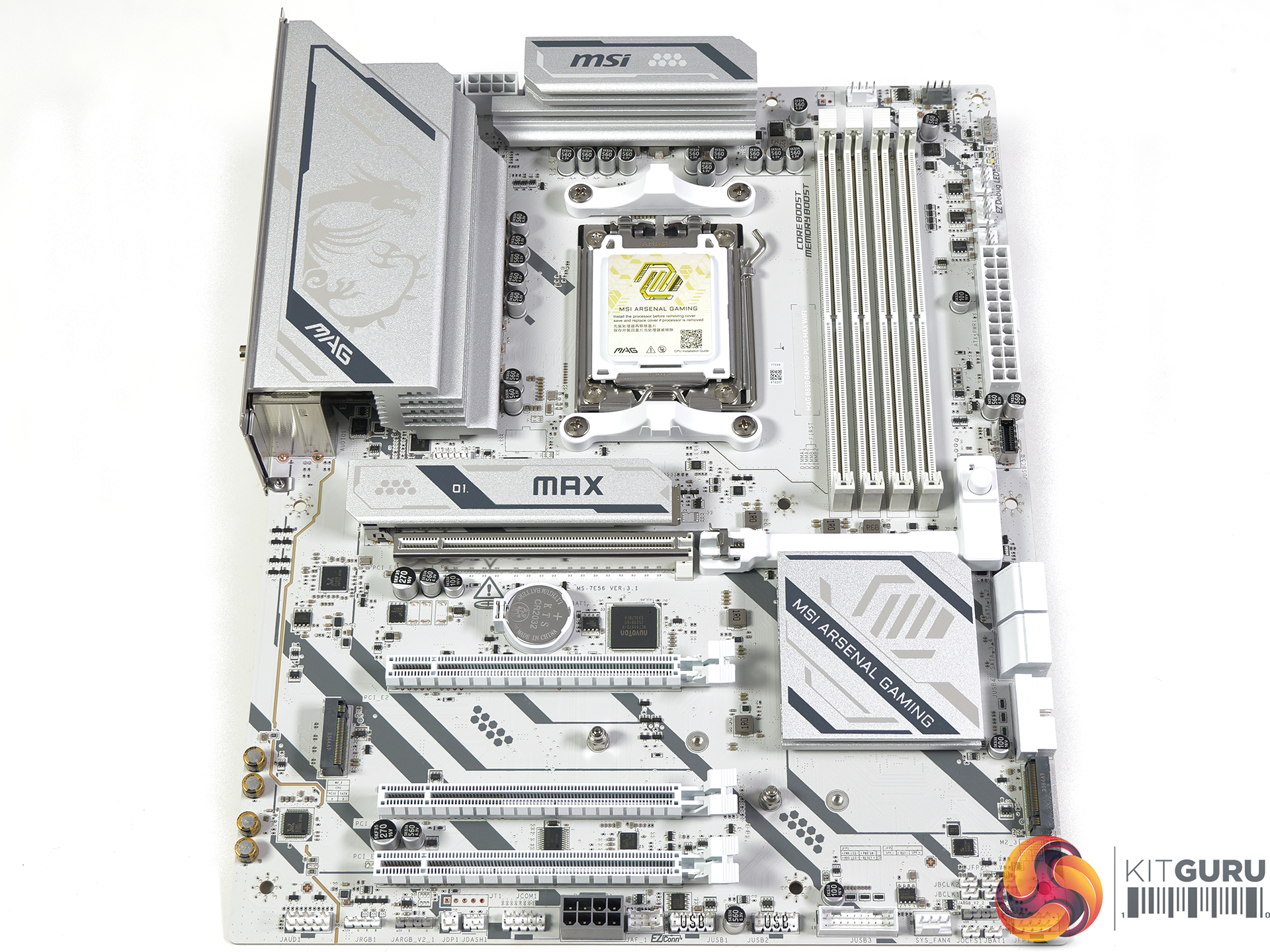
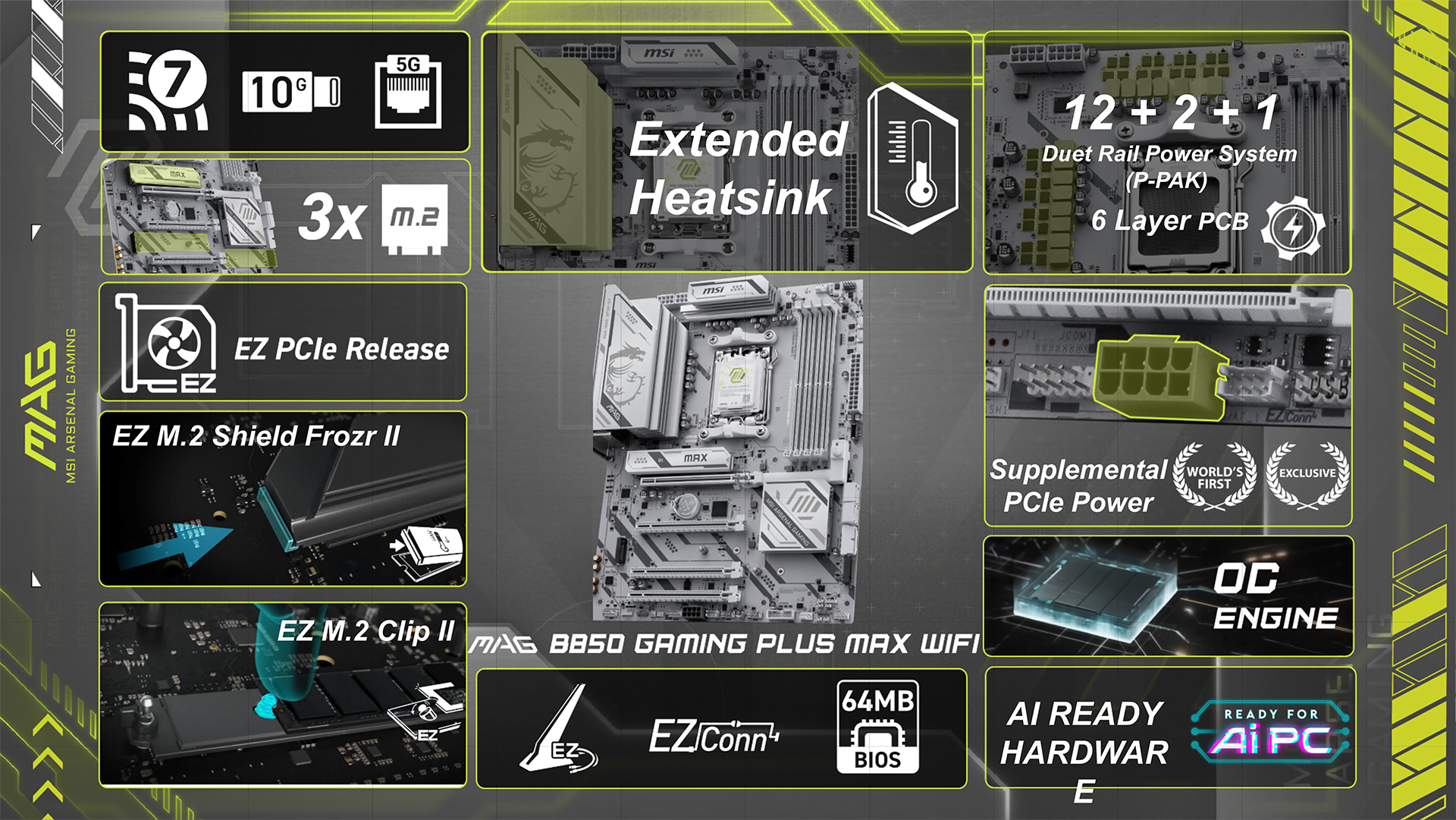
08:56 MAG B850 Gaming Plus MAX WiFi
10:40 Leo’s Thoughts

In our video we walk you through the changes that MSI has made with its MAX updates and in some instances, such as the MPG Carbon MAX WiFi, the updates are small but welcome. Other boards are entirely new models and this means the MEG X870E Ace MAX has arrived with the MAX features in place from day one.

The most impressive showcase for MSI MAX is the budget MAG B850 Gaming Plus MAX WiFi which gains the hardware updates and also receives a visual overhaul. The original B850 Gaming Plus looked a bit messy while the new MAX is clean and smart.

Closing Thoughts

MSI could have chosen to quietly update existing 800-series motherboards with new features such as a larger BIOS chip and the addition of an Overclocking engine, without any need for a series named MAX. In practice we doubt that would have worked well as AMD continues to bring out new CPUs for Socket AM5 which inevitably brings updates to BIOS files.

We are confident that certain models such as the original MPG X870E Carbon WiFi and MAG B850 Tomahawk WiFi will quietly disappear when stocks are sold. Other models – we're looking at you MAG X870E Tomahawk MAX WiFi PZ and MEG X870E Ace MAX – will doubtless have a long future through 2027 and perhaps into 2028.

KitGuru says: AMD's long term support for Socket AM5 is very welcome but it clearly gives motherboard manufacturers a significant headache, and MAX is the solution to that particular problem.

The post MSI AMD AM5 MAX Motherboard Showcase [2026] first appeared on KitGuru.

First benchmarks emerge for AMD Ryzen AI 5 435G AM5 desktop APU

4 May 2026 at 10:30

A benchmark entry for AMD's Ryzen AI 5 435G has appeared in the Geekbench database, marking the first public performance data for the upcoming Ryzen AI 400 desktop series.

The Ryzen AI 5 435G is a 6-core, 12-thread APU designed for the AM5 socket. AMD specifications list the chip with a 2.0GHz base clock, a boost frequency up to 4.5GHz, and a 65W TDP. The unit features Radeon 840M integrated graphics based on the RDNA 3.5 architecture with 4 compute units, alongside an XDNA 2 NPU rated for up to 50 TOPS.

According to the Geekbench entry shared by @Olrak29_ (via VideoCardz), the processor achieved a single-core score of 2620 and a multi-core score of 10594. The log indicates the CPU reached a maximum frequency of 4094MHz during the test, which sits below the official 4.5GHz boost specification. The entry also confirms a hybrid-style core configuration featuring two CPU clusters: one with 2 cores and another with 4 cores. The processor was tested on a JGINYUE B850M Snow Dream WIFI motherboard equipped with 32GB of memory and running Windows 11.

Compared to public performance averages, the Ryzen AI 5 435G single-core score of 2620 slightly exceeds the Ryzen 5 8600G average of 2493. Multi-core performance is comparable to the 8600 G's 10857 points, though it trails the 8-core Ryzen 7 8700G, which averages 13478 points. AMD previously confirmed that Ryzen AI 400 series desktop systems are expected to be available from OEMs starting in Q2 2026.

Discuss on our Facebook page, HERE.

KitGuru says: Considering the maximum frequency was slightly below its specifications, we assume the chip will probably score higher once it hits retail.

The post First benchmarks emerge for AMD Ryzen AI 5 435G AM5 desktop APU first appeared on KitGuru.

Sapphire Nitro+ X870EA PhantomLink Review

1 May 2026 at 09:30

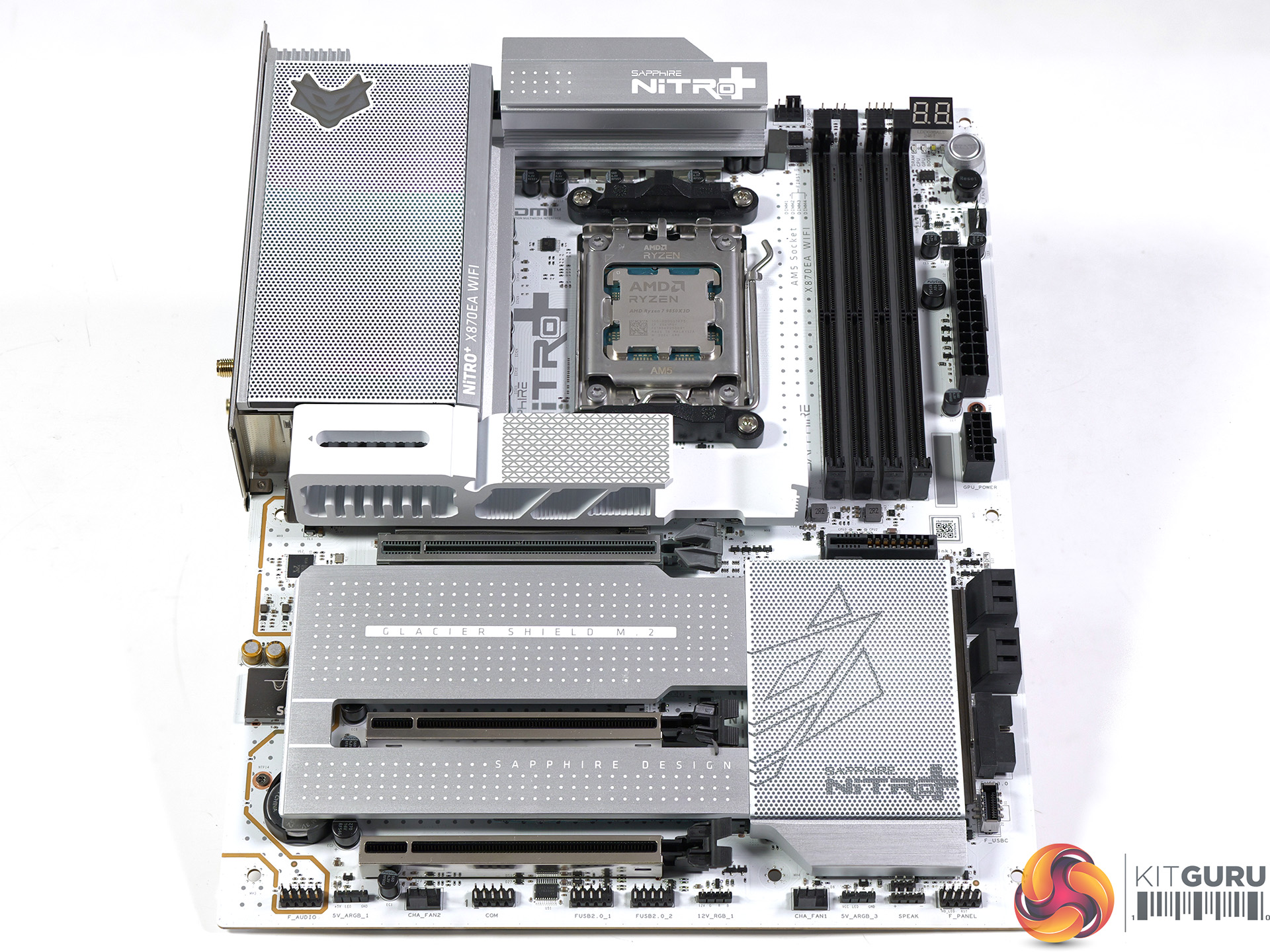
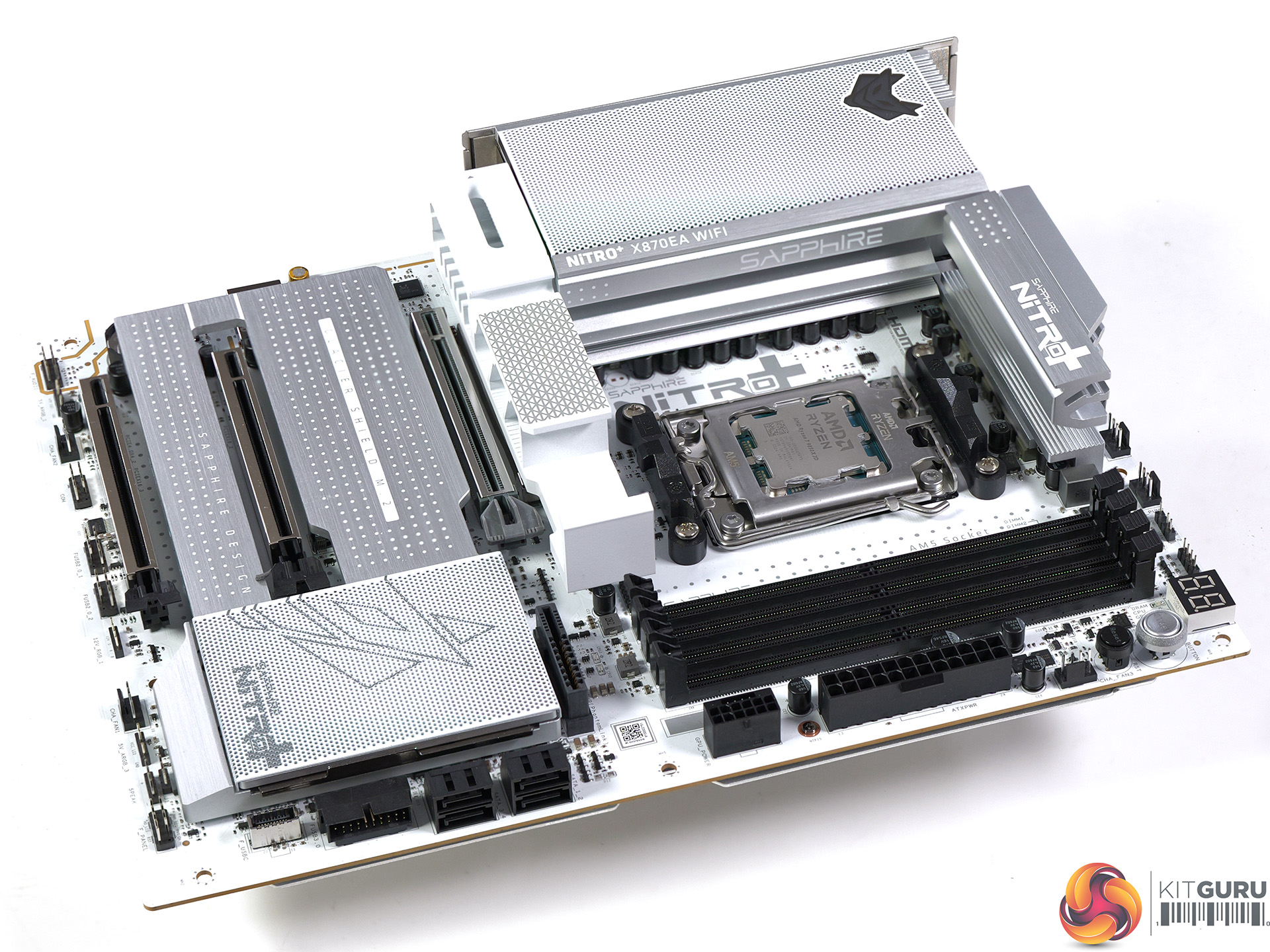
We saw the Sapphire Nitro+ X870EA PhantomLink motherboard along with its matching graphics card at Computex 2025, and it has taken almost a full year for review hardware to arrive. This is an implementation of the power system used in Asus BTF hidden connector graphics cards, except that here we have a Radeon 9070 XT rather than an RTX 5090. It might seem a bit odd but we have plenty to discuss…

Timestamps

00:00 Intro
00:44 Setting the scene – GPU power connectors
02:40 What is PhantomLink?
04:01 The motherboard package + specs
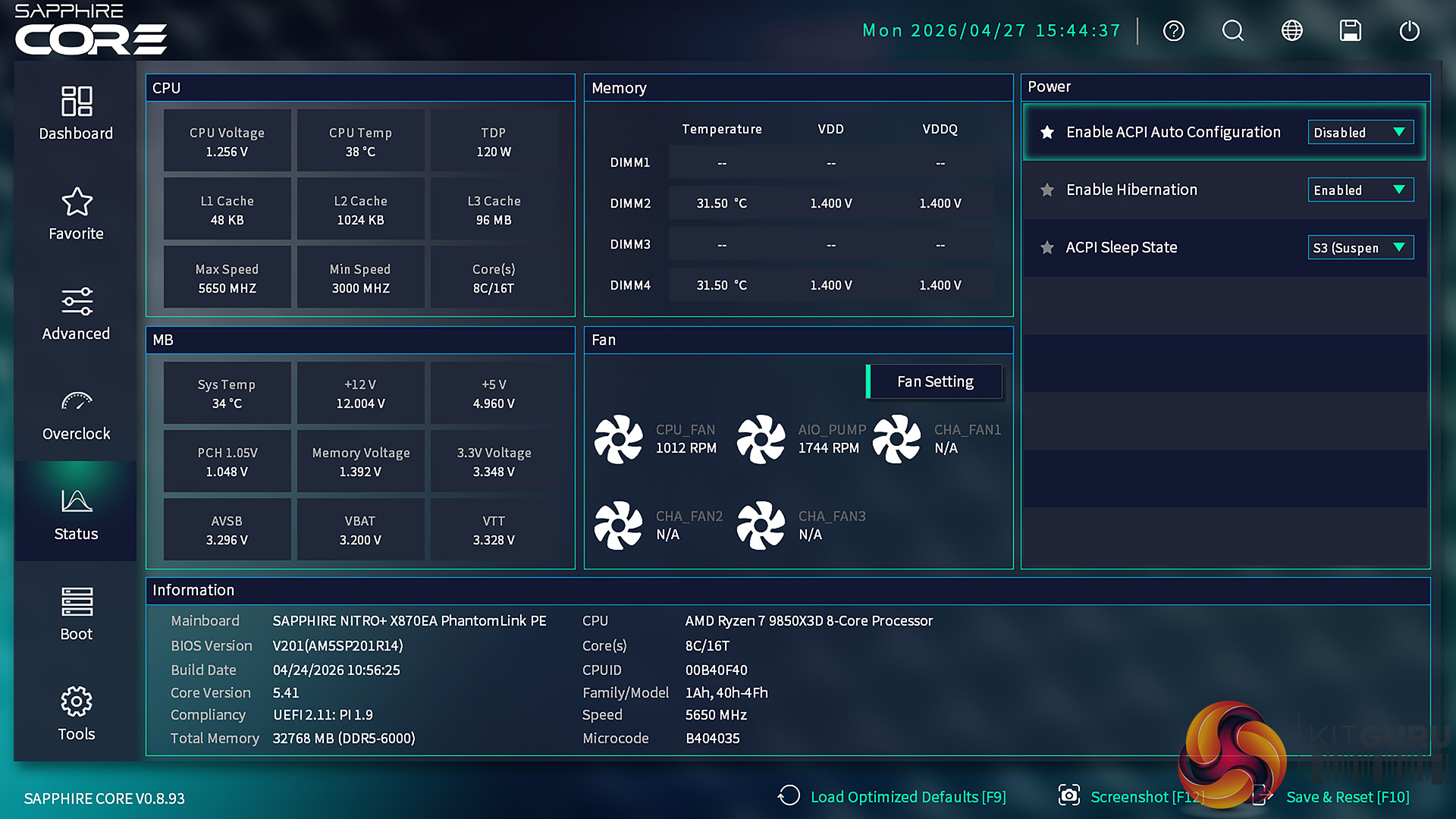
06:58 BIOS updates…
09:09 BIOS setup and options
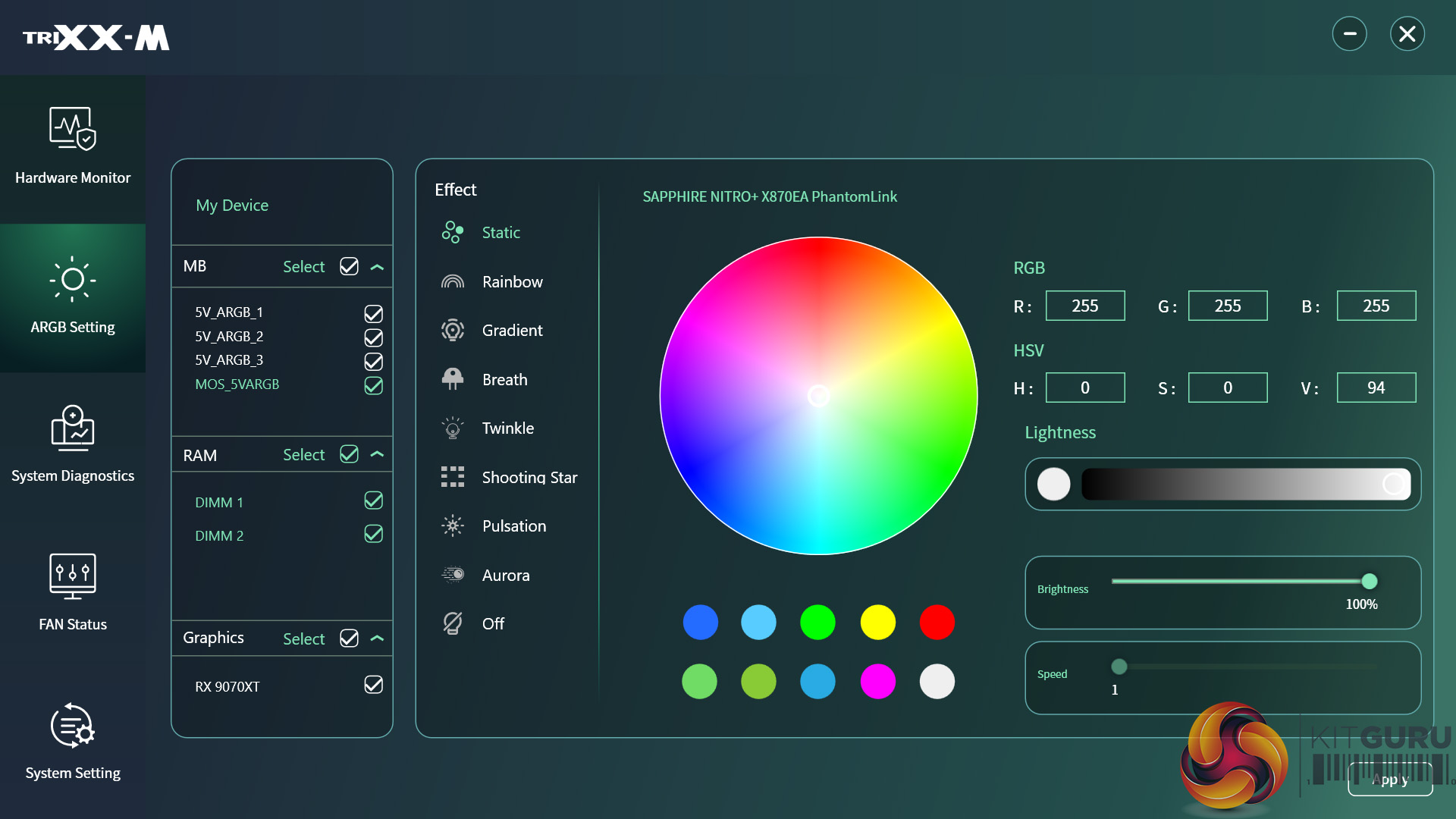
10:08 RGB control in TriXX-M
11:00 Performance testing
11:53 Leo’s closing thoughts
14:29 Pros and cons

Specification:

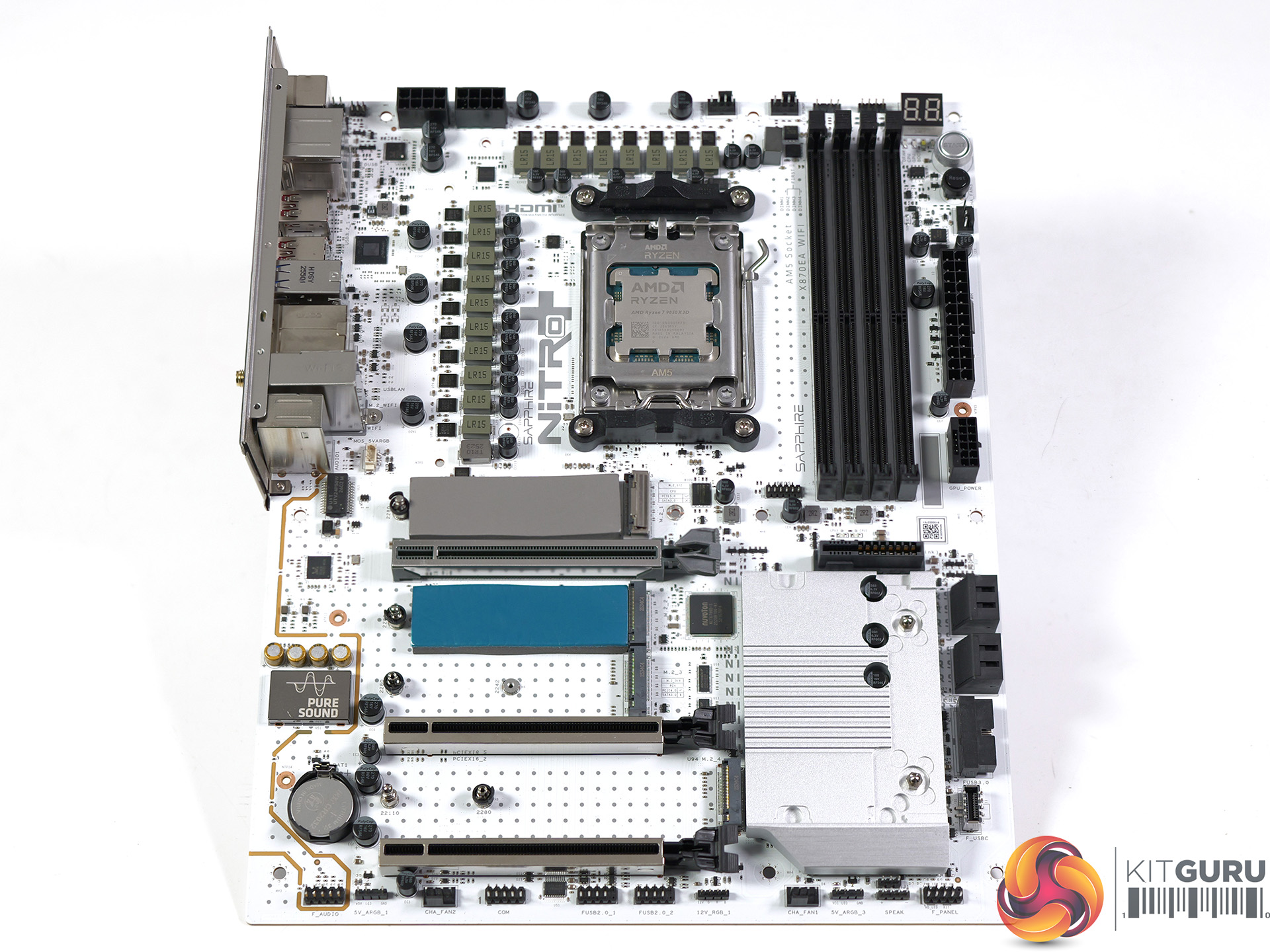
  • CPU support: AMD Socket AM5 for AMD Ryzen 9000 / 8000 / 7000 Series processors
  • Chipset: AMD X870E
  • VRMs: 16+2+1 phases, 90A Monolithic Power MPS2432; controller: Monolithic Power MPS2515
  • Memory: DDR5 up to 8400 (O.C.), 4x DIMM slots up to 256GB; dual-channel, non-ECC unbuffered DIMMs
  • Expansion slots: 1x PCIe 5.0 x16 (PhantomLink), 2x PCIe 4.0 x16 (x4 mode)
  • Storage: 2x M.2 PCIe 5.0 x4, 2x M.2 PCIe 4.0 x4, 4x SATA 6Gb/s
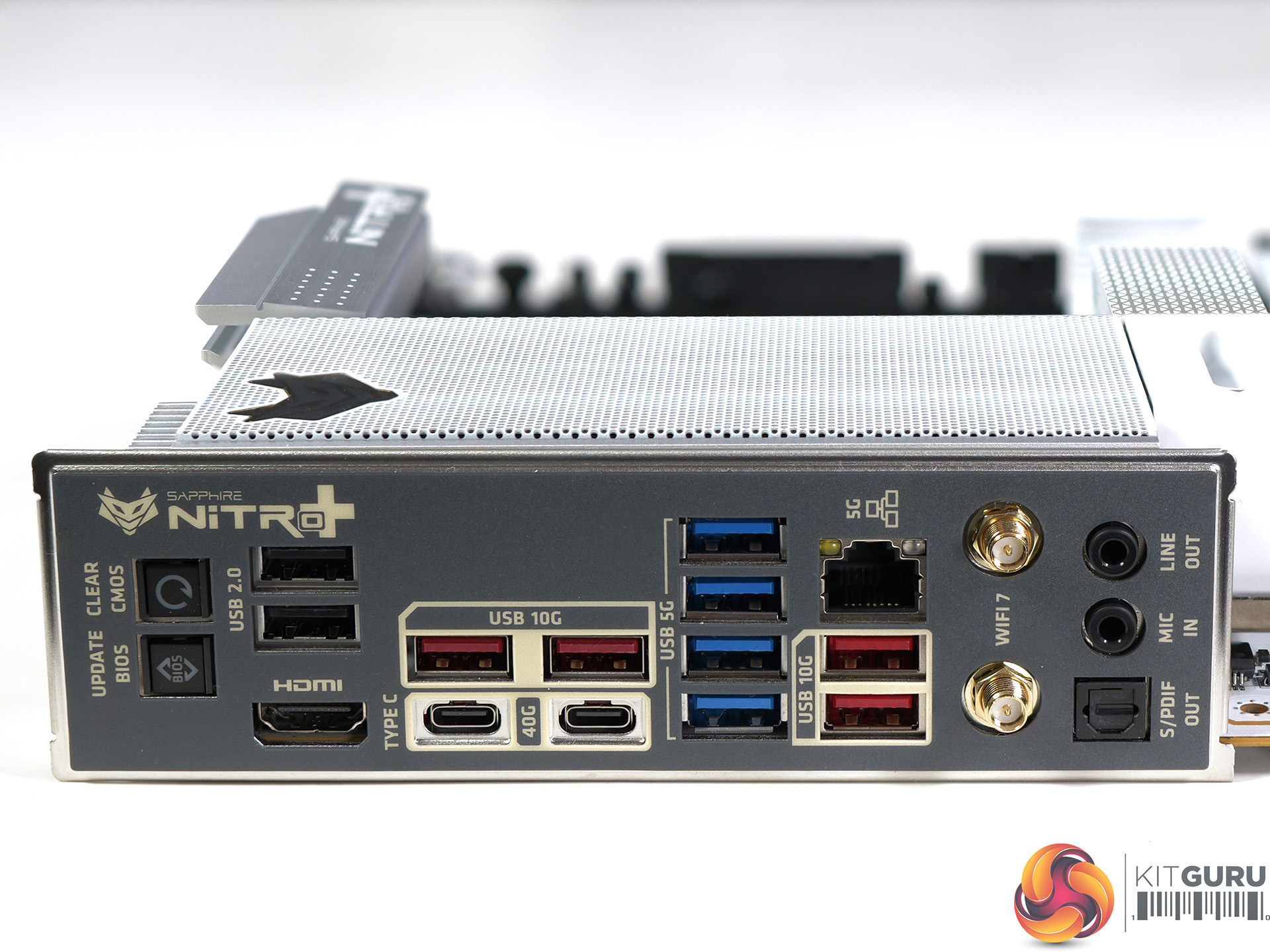
  • USB (rear): 2x USB4 Type-C (40Gbps), 4x USB 3.2 Gen2 Type-A (10Gbps), 4x USB 3.2 Gen1 Type-A (5Gbps), 2x USB 2.0 Type-A
  • USB (front): 1x USB 3.2 Gen2x2 Type-C (20Gbps, up to 30W PD), 2x USB 3.2 Gen1 Type-A (5Gbps), 4x USB 2.0 Type-A
  • Audio: Realtek ALC897 codec
  • Ethernet: Realtek RTL8126 5GbE
  • Wireless: Wi-Fi 7 and Bluetooth 5.4
  • Fan headers: 5x PWM fan headers
  • RGB headers: 3x ARGB headers, 2x RGB headers
  • BIOS: 64MB flash BIOS
  • PCB: 8-layer design
  • Form factor: ATX, 305 x 244 mm

Testing and Performance

Test system:

Processor: AMD Ryzen 7 9800X3D
Memory: 32GB G.Skill Trident Z5 Royal Neo DDR5-6000
CPU Cooler: Phanteks Glacier One 360MPH
Graphics card: MSI GeForce 4090 Ventus 3X 24GB
Power supply: Antec Signature 2200
SSD: 1TB Samsung 9100 Pro M.2 NVMe
OS: Windows 11

Geekbench 6 Multi Core

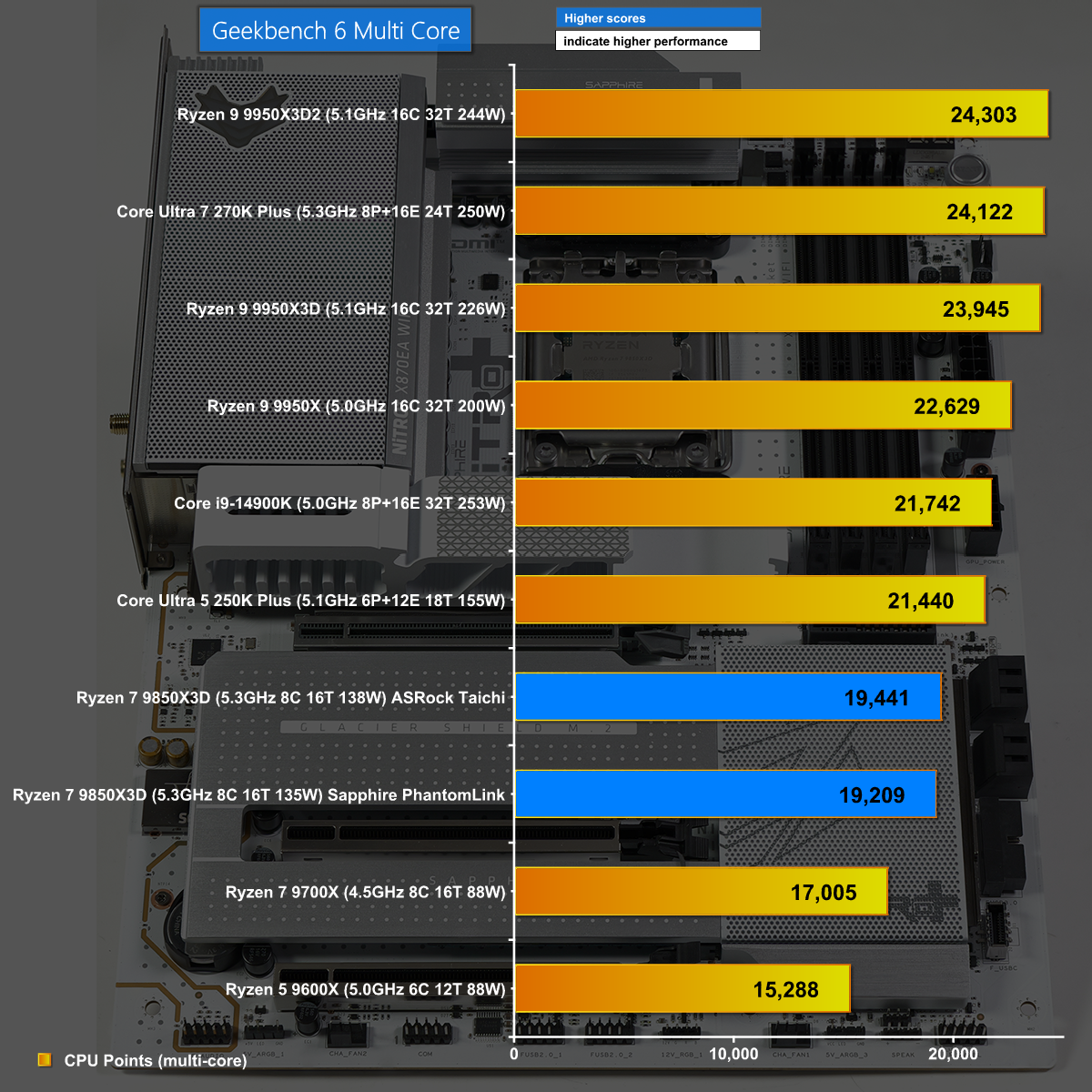
In Geekbench 6 Multi Core the Sapphire Nitro+ X870EA PhantomLink does a decent job and closely tracks the ASRock X870E Taichi.

Geekbench 6 Single Core

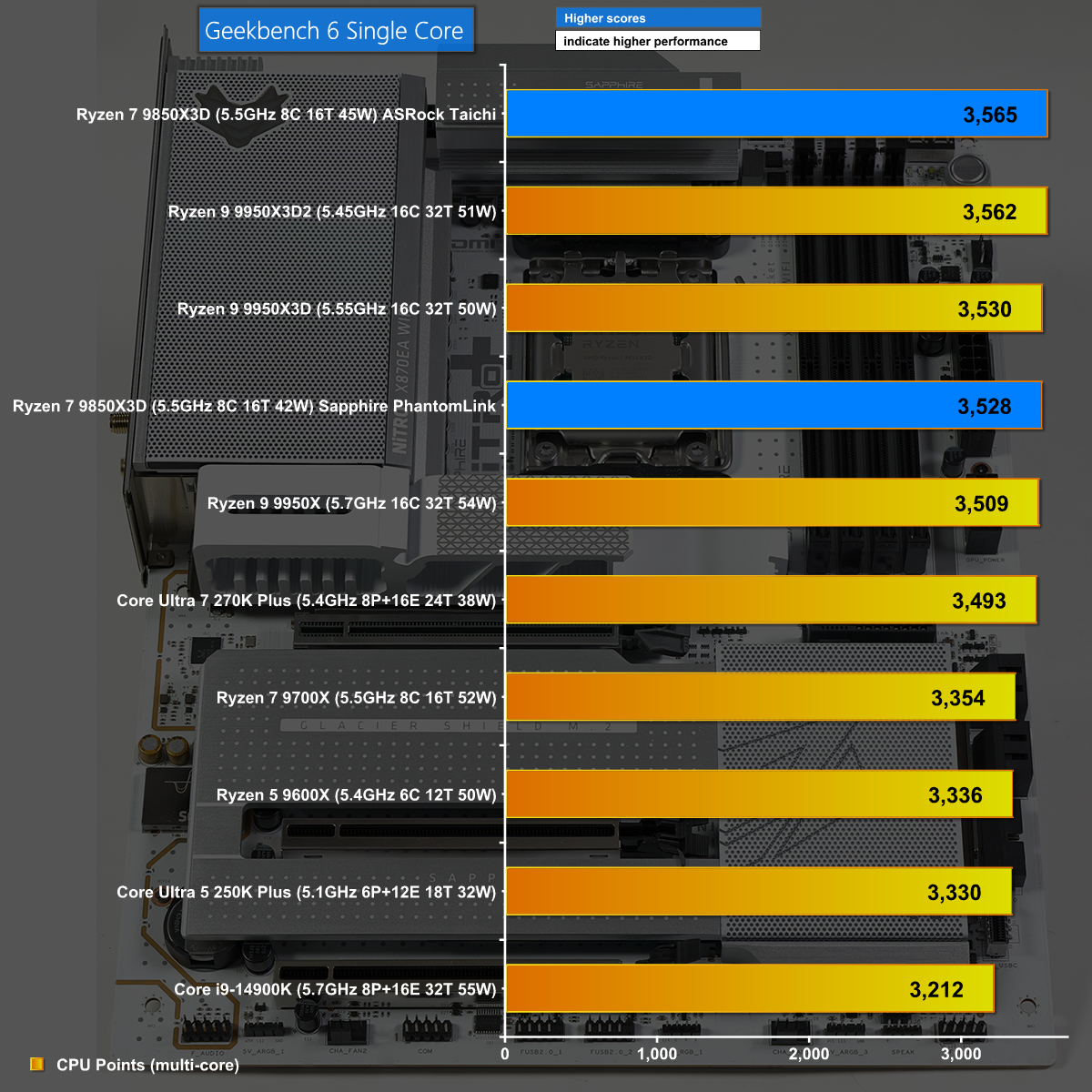
It is a similar story in Geekbench 6 Single Core where the Sapphire again does well and again lags behind by one percent.

Cinebench 2026 Multi Core

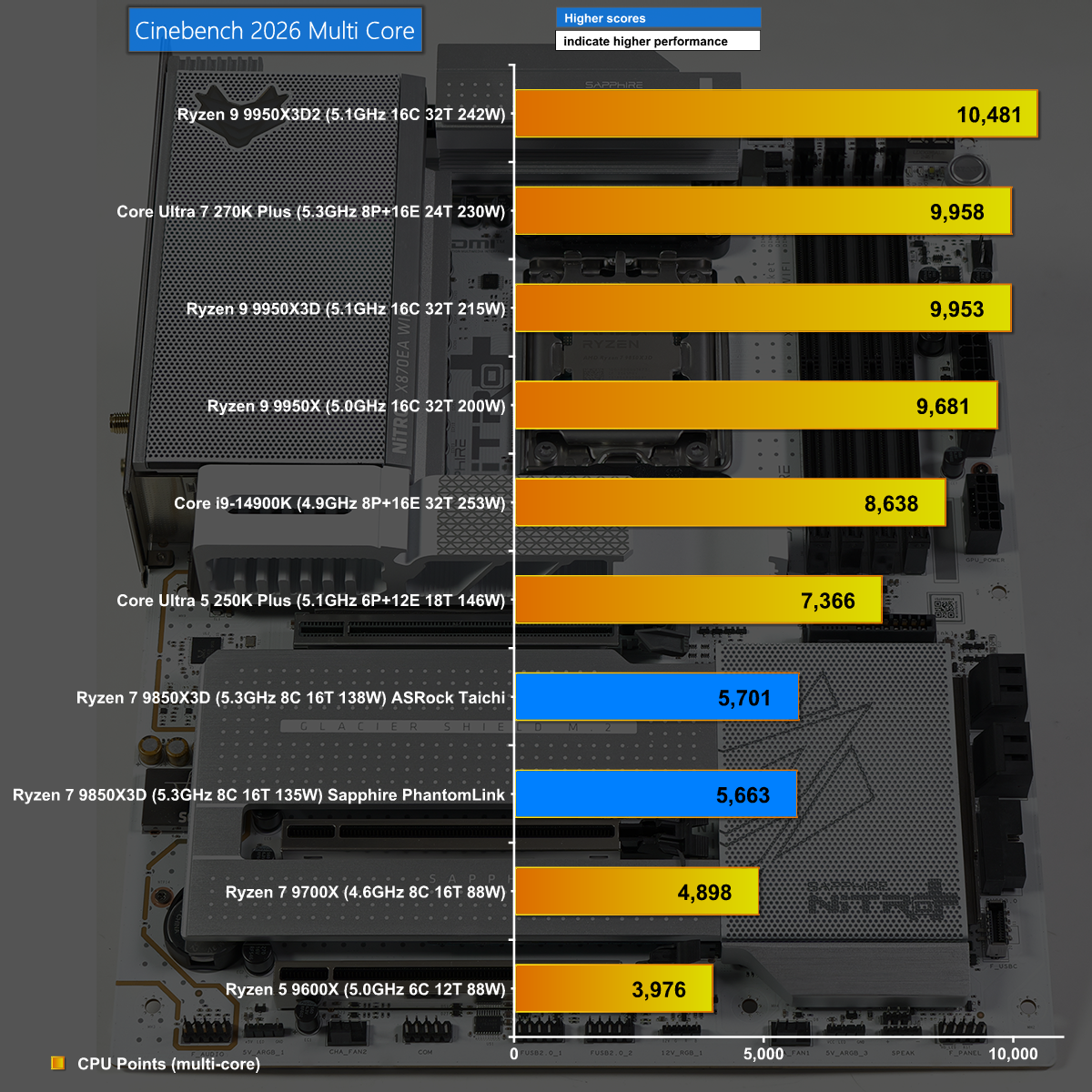
The results are very close in Cinebench 2026 Multi Core, confirming that Sapphire has done a good job with this motherboard.

Closing Thoughts

This is a review of the Sapphire Nitro+ X870EA PhantomLink Polar Edition motherboard, however it is impossible to separate the motherboard from its matching PhantomLink graphics card. One without the other makes no sense, and when you put the two together you have a very satisfying package.

Sapphire has used a combination of technologies to offer the cleanest power connection for an RX 9070 XT graphics card that we can possibly imagine. Asus used the same hidden power approach with its BTF 2.5 ROG Astral RTX 5090 BTF and ROG Crosshair X870E Hero BTF and they cost plenty. By contrast these Sapphire products are very much the budget option, however the extra technology still adds a premium to the price.

Sapphire sent us the following MSRPs:

Sapphire Nitro+ X870EA PhantomLink Polar Edition for £319.99 inc VAT.
Sapphire Nitro+ RX 9070 XT PhantomLink Polar Edition £879.99 inc VAT.

Pros:

  • The quality of the motherboard hardware is very sound.
  • PhantomLink is clever (but somewhat pointless)
  • Very user-friendly BIOS setup screen
  • 5Gbit Ethernet and WiFi 7 networking

Cons:

  • PhantomLink adds a hefty premium to both the motherboard and the graphics card
  • Logically the connectors should be on the back of the board
  • The accessory package is almost non-existent

KitGuru says: Sapphire PhantomLink is a clever idea that will likely appeal to a niche audience.

The post Sapphire Nitro+ X870EA PhantomLink Review first appeared on KitGuru.

Sapphire launches Pure X870A motherboard with WiFi 7

24 February 2026 at 14:01

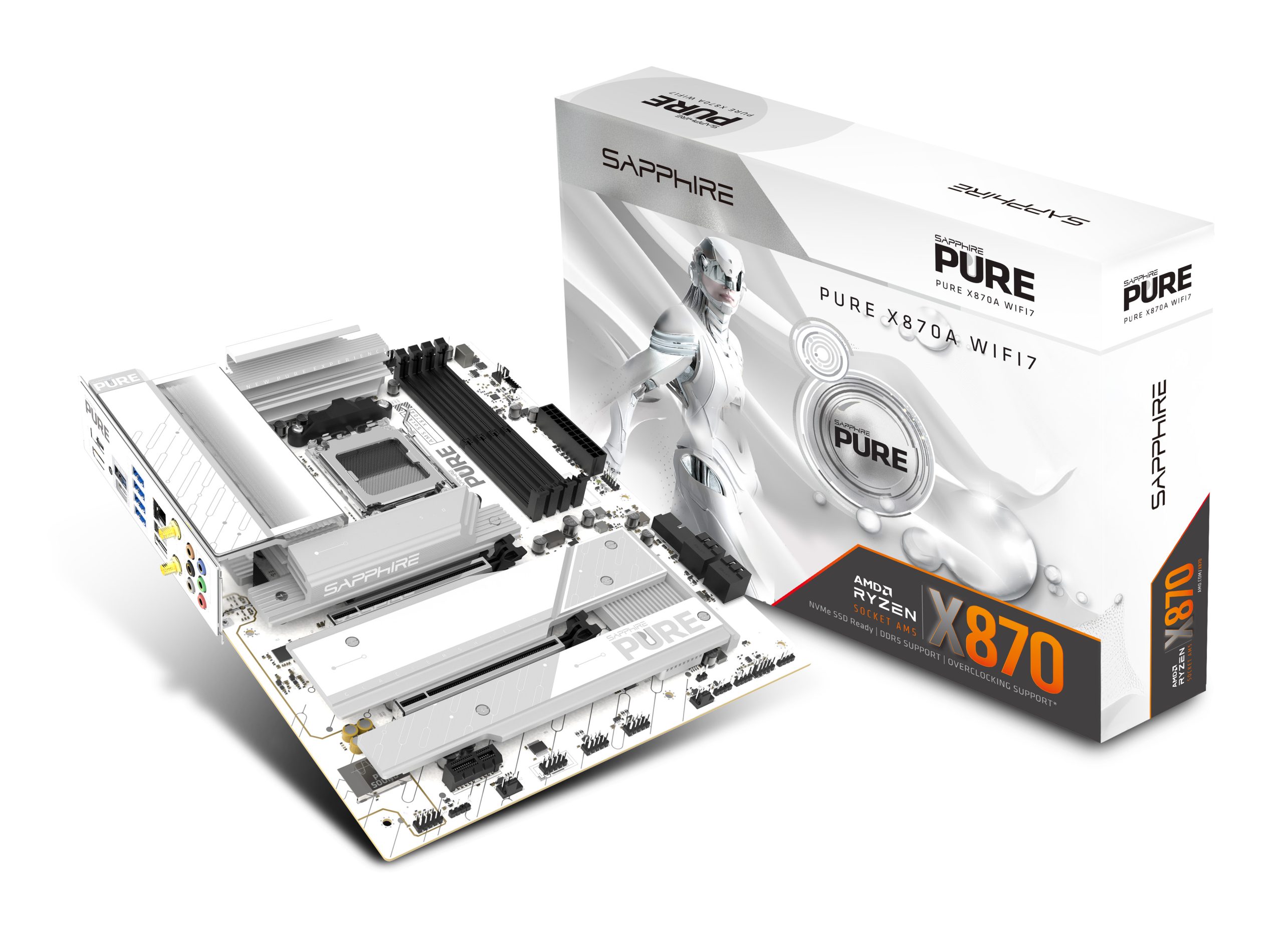
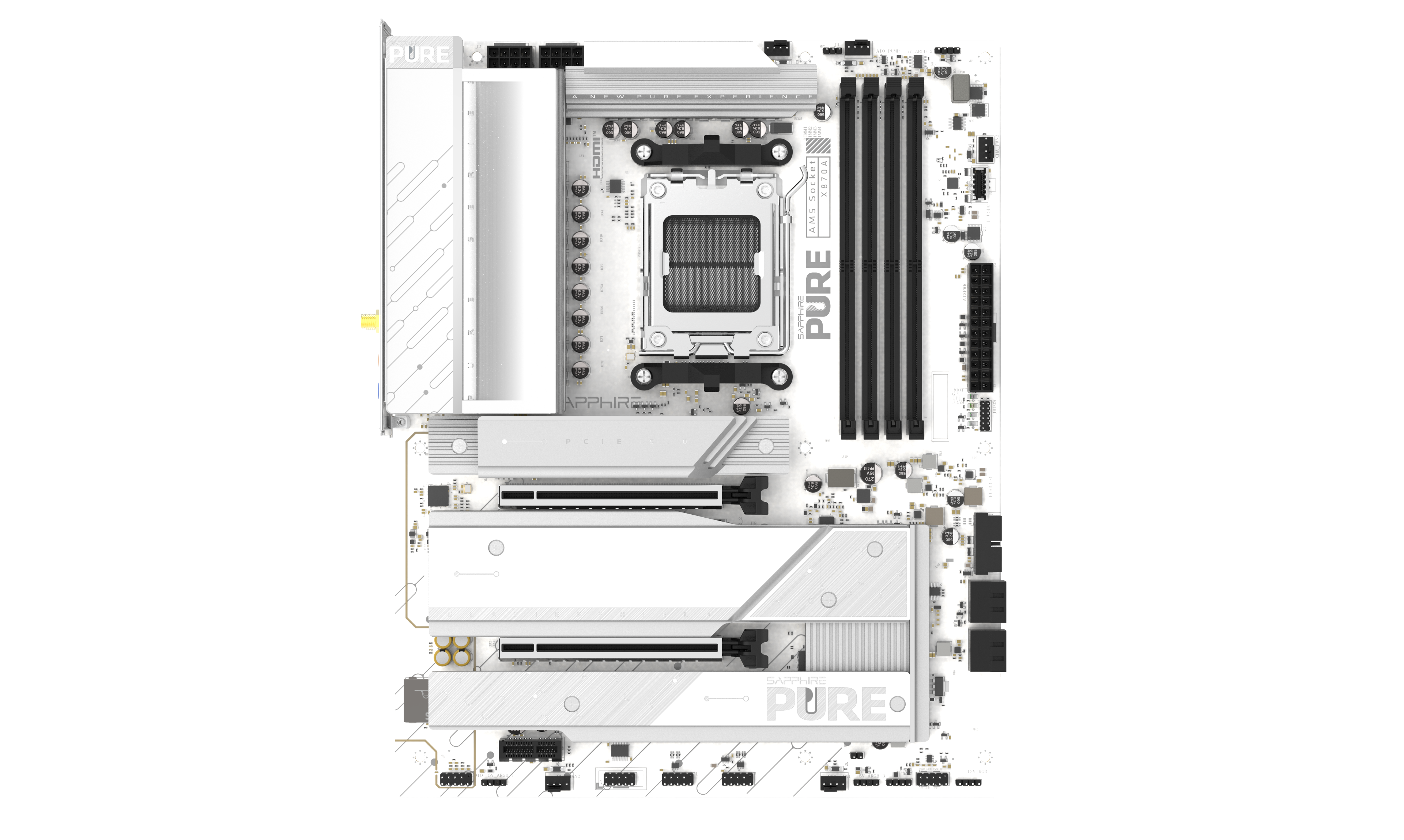
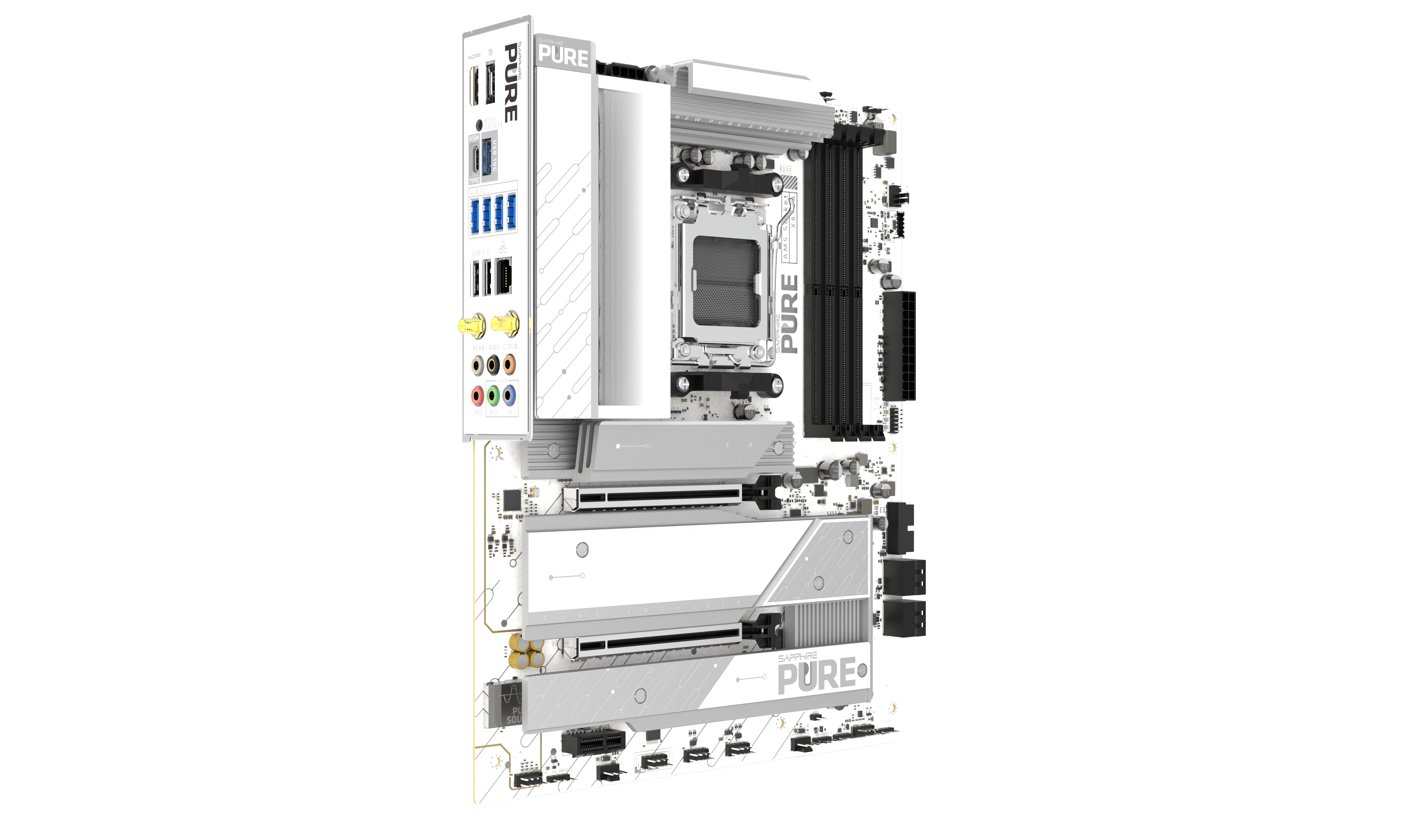
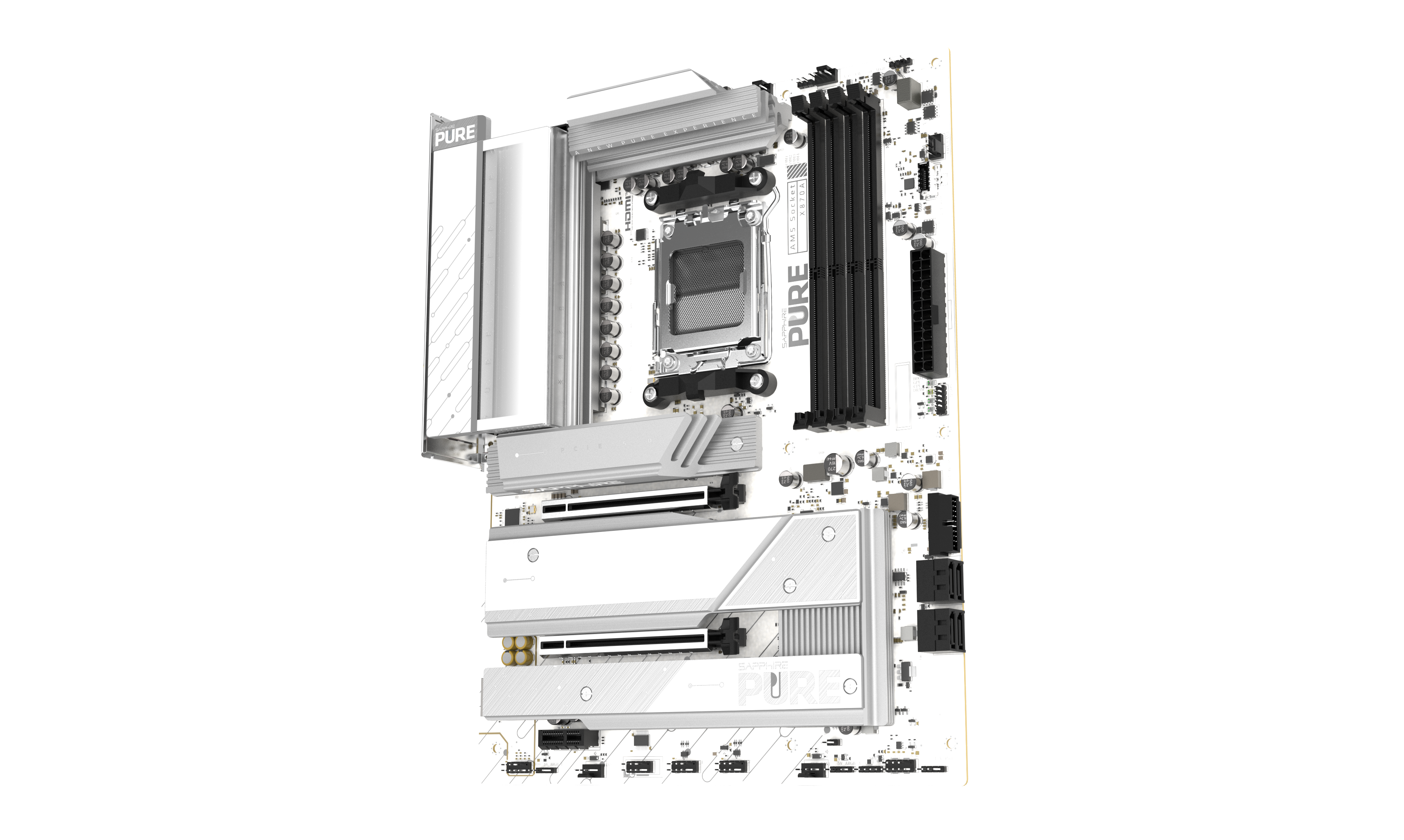
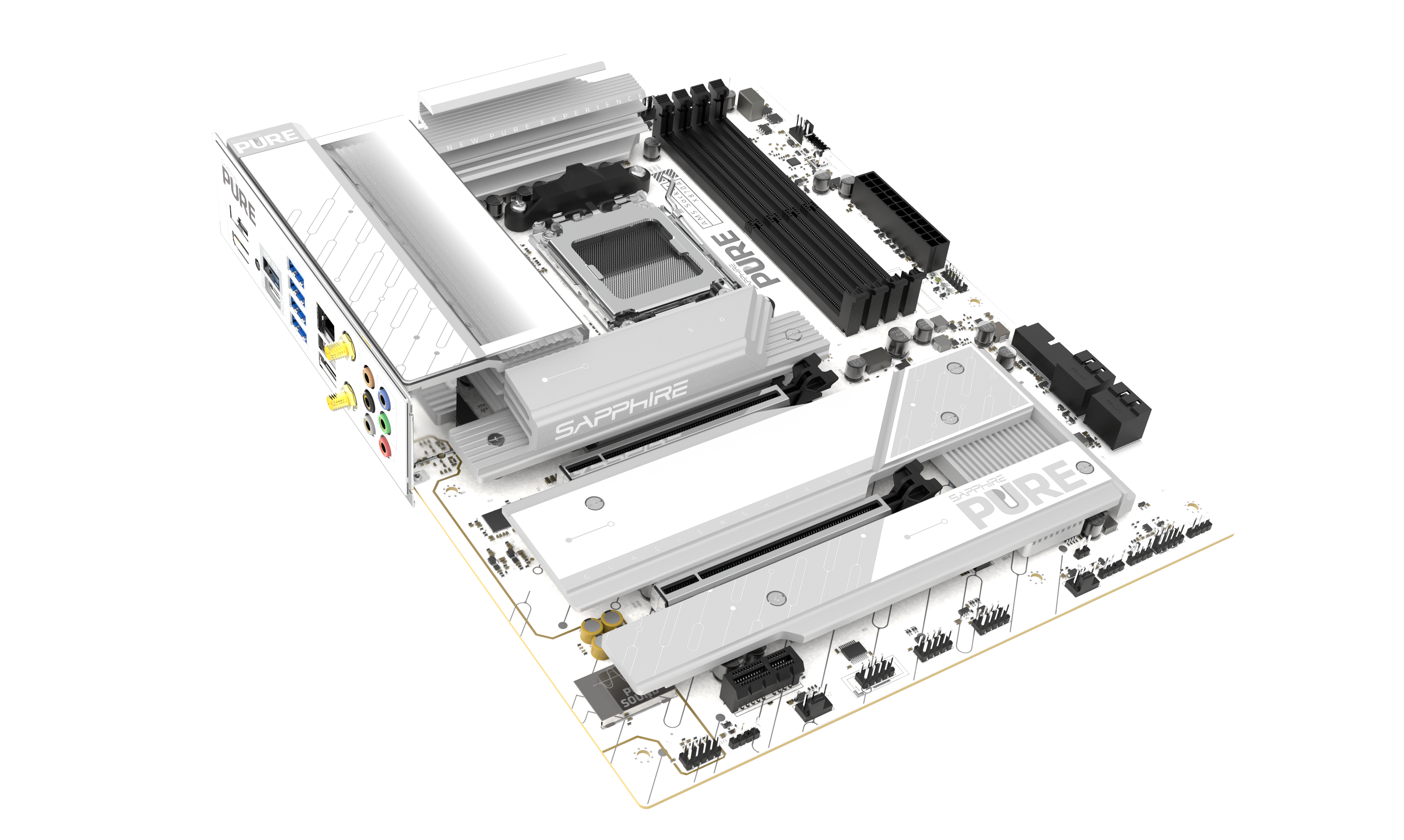
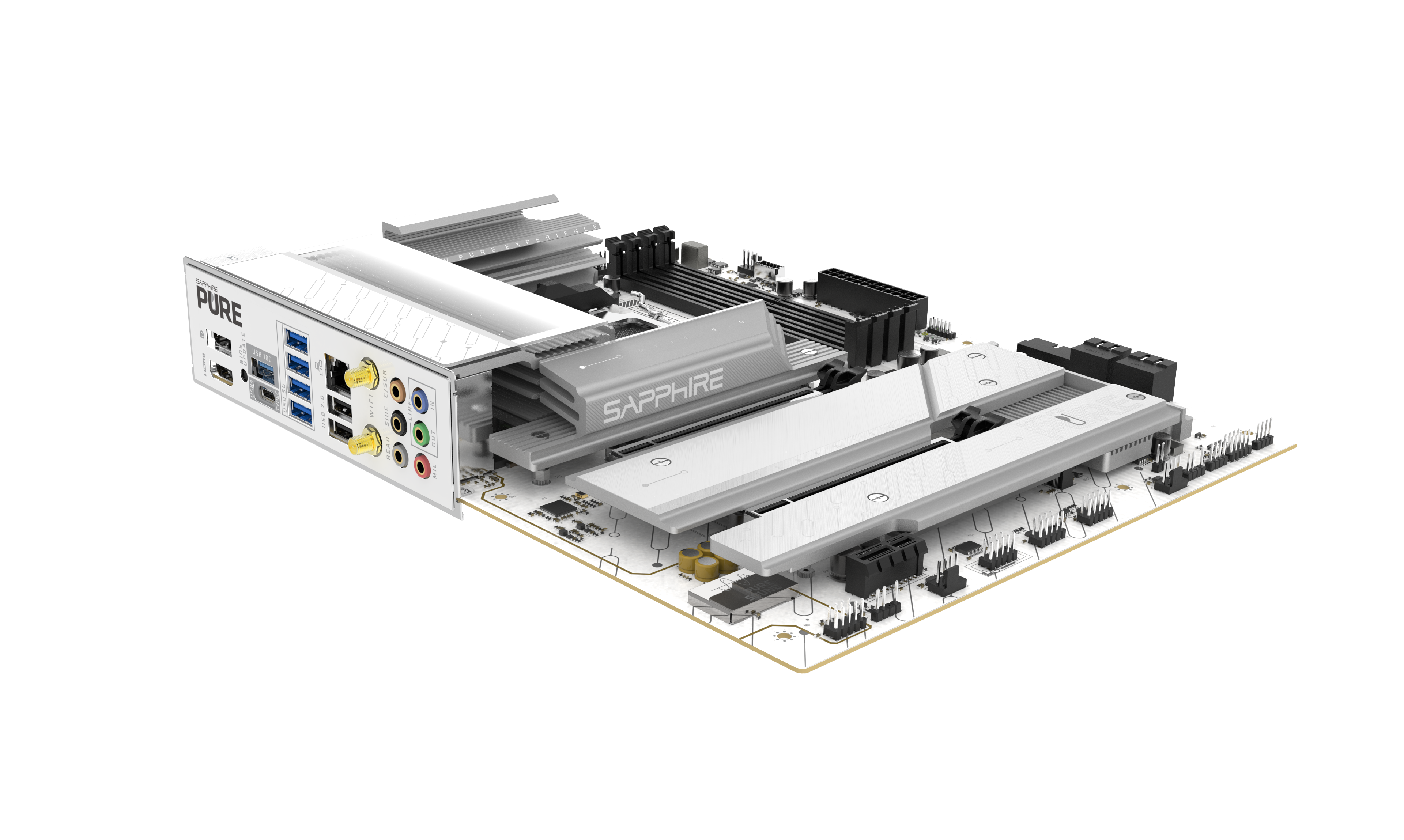
Today Sapphire is launching its latest all-white AM5 motherboard, the Pure X870A WiFi 7. Sporting a minimalist design and the full X870 chipset, the motherboard is poised as a high-end option for custom gaming PCs with the latest Ryzen CPUs.

The Pure X870A WiFi 7 supports DDR5 memory up to 8400MHz (OC) and uses a 16+2+1 phase VRM to maintain stable power delivery under heavy workloads or overclocking. Dedicated heatsinks for the VRM, M.2 slots, and chipset help sustain performance during extended gaming sessions.

Connectivity is built around PCIe 5.0 for both graphics cards and NVMe storage, alongside WiFi 7, Bluetooth 5.4, and Realtek 5Gb Ethernet for high‑speed networking. USB4 Type‑C provides 40Gbps bandwidth, DisplayPort Alt Mode, and 15W Power Delivery, giving the board flexibility for modern peripherals and multi‑display setups.

Sapphire’s BIOS offers an updated interface for monitoring and fine‑tuning system behaviour, while the TriXX‑M software extends those controls into Windows for cooling adjustments, lighting customisation, performance monitoring, and diagnostics.

The SAPPHIRE PURE X870A WIFI 7 will be available soon for around $249. We have one in-house to feature in an upcoming build, so stay tuned for that.

Discuss on our Facebook page, HERE.

KitGuru Says: What do you think of Sapphire's latest motherboard?

The post Sapphire launches Pure X870A motherboard with WiFi 7 first appeared on KitGuru.
❌
❌