Normal view

There are new articles available, click to refresh the page.
Before yesterdayMain stream

MSI Afterburner is adding a GPU voltage and frequency heat map

13 July 2026 at 14:30

MSI Afterburner developer “Unwinder” has revealed an upcoming beta release featuring a voltage and frequency curve editor heat map. This new tool allows users to record and visualize how Nvidia GeForce RTX graphics cards scale their clock speeds and voltage levels in real time.

Brought to our attention by Uniko's Hardware and VideoCardz, the developer of MSI Afterburner launched beta 4 of v4.6.7 of its overclocking tool. To access the heat map, users must press “M” within the editor to show the Nvidia GPU Boost algorithm navigating its predefined frequency-scaling points. The utility uses yellow gradients to highlight the most frequently hit voltage and frequency targets. Below, you can see the data captured for both the GeForce RTX 5090 and GeForce RTX 4090, highlighting clear generational differences in V/F scaling:
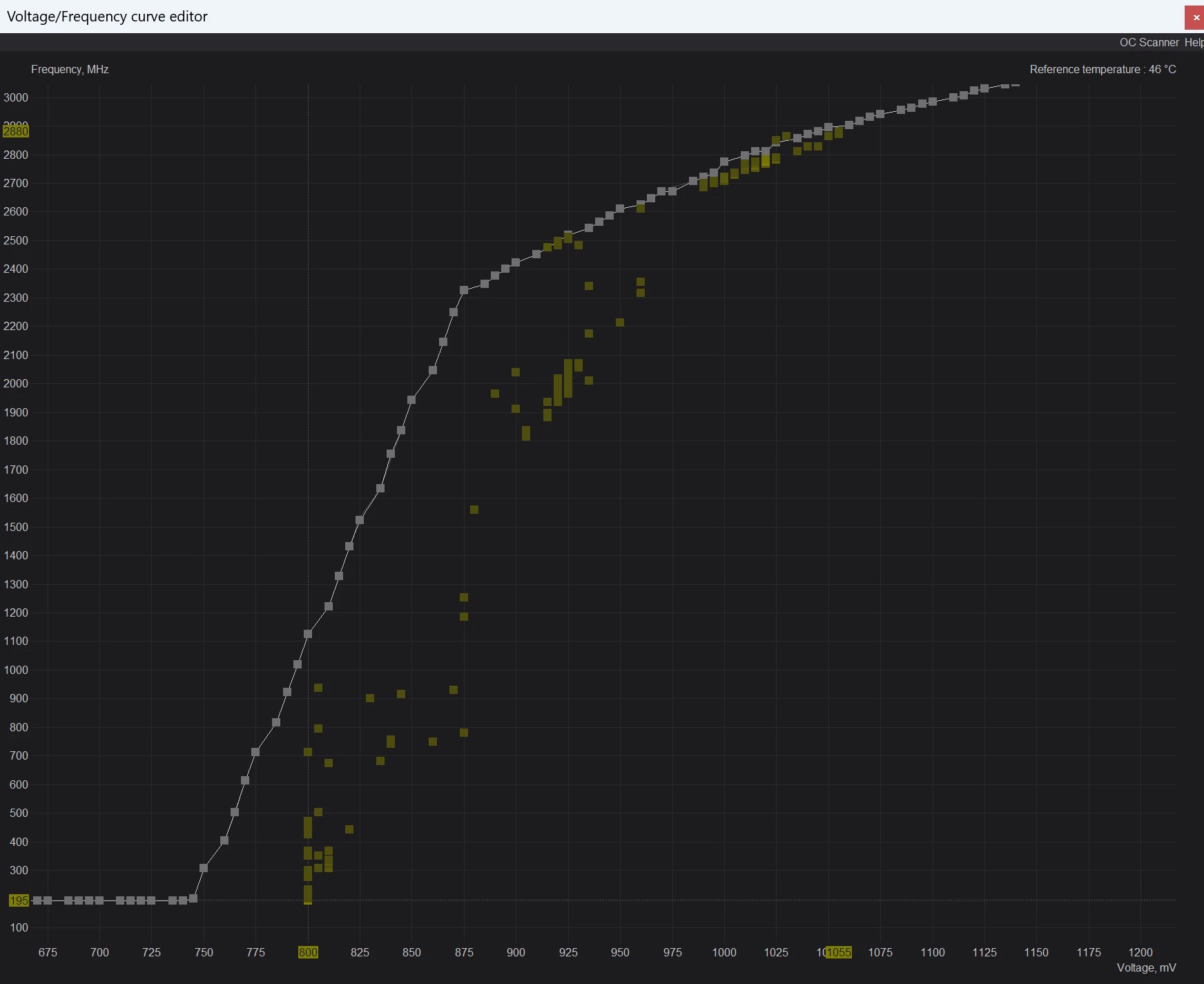
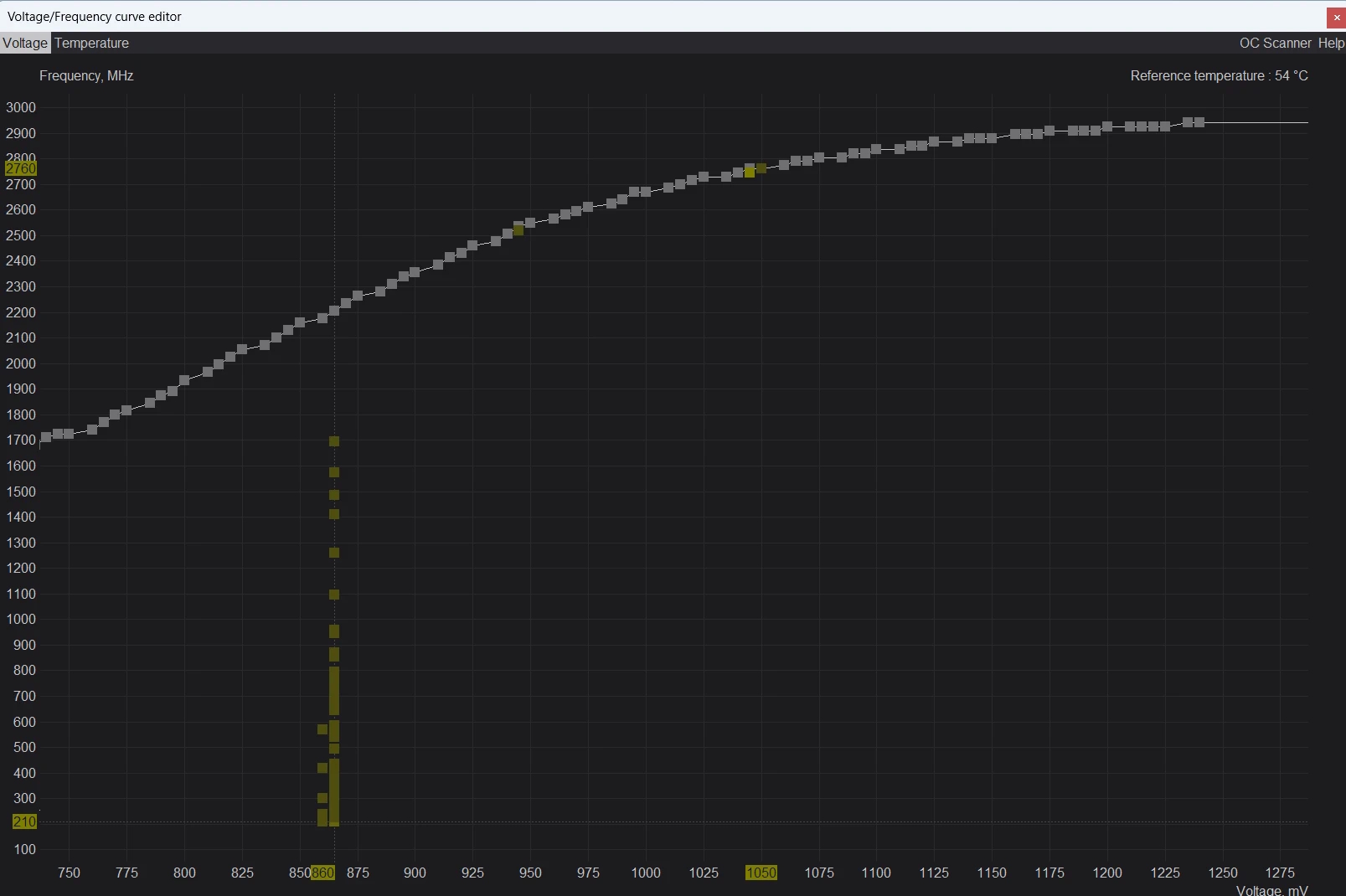
Image credit: Unwinder (Guru3D)

Unwinder noted that Nvidia introduced significant changes to dynamic voltage and frequency scaling (DVFS) starting with its Blackwell architecture. While older architectures jumped directly between target V/F points without using intermediate values, Blackwell handles transitions along a more gradual curve, switching its V/F targets considerably faster.

KitGuru says: This update should provide overclockers with much finer insights into how different GPU architectures behave. Will you download the new beta version of Afterburner, or wait for the new feature to reach the stable branch?

The post MSI Afterburner is adding a GPU voltage and frequency heat map first appeared on KitGuru.
Microsoft rolls out Windows 11 update with CPU-boosting low-latency profile

12 June 2026 at 14:00

Microsoft has started rolling out its June 2026 update for Windows 11, introducing the new low-latency profile, Shared Audio, and improved search functionality. Security update KB5094126 updates the OS to build 26200.8655 or 26100.8655, bringing performance enhancements designed to make the core user interface feel more responsive.

According to Windows Latest, the new low-latency profile accelerates app launches and core shell experiences like the Start menu, Search, and Action Center. Microsoft achieves this by forcing CPUs to enter a brief boost state lasting between 1 and 3 seconds. This temporary spike improves UI responsiveness quickly without significantly impacting battery life for most users.

By default, this profile is disabled, but those who wish to test right away can use a CPU monitoring tool such as HWiNFO (the task manager is too slow to capture the usage spikes consistently). To enable the mode, download ViveTool, and use it to enable the profile via the feature ID (58989092). After that, restart your system and test whether the profile is enabled by opening the Start menu and checking the CPU frequency in the CPU monitoring tool to look for a spike.

The update also packages the new Shared Audio feature and general search improvements. Since Microsoft is rolling these features out gradually, they may not appear immediately after installing the package.

KitGuru says: In recent years, every major update has also had its share of issues, so let us know if you encounter anything. 

The post Microsoft rolls out Windows 11 update with CPU-boosting low-latency profile first appeared on KitGuru.

Nintendo brings ‘Handheld Mode Boost’ to Switch 2

17 March 2026 at 14:30

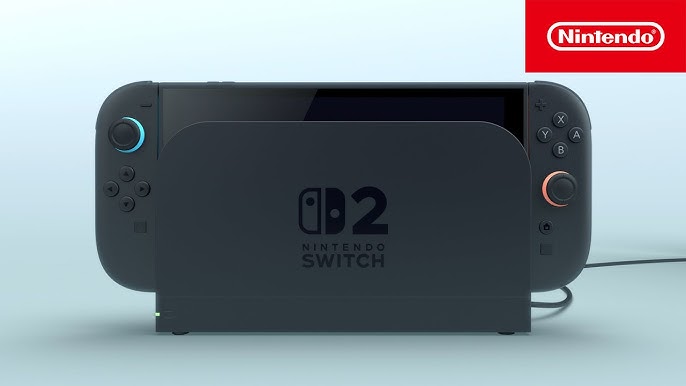
Nintendo just put out a rather major software update for the Switch 2. For the first time since launch, Switch 2 players can now force Switch 1 games to operate in their ‘docked' mode while using the Switch 2 in handheld mode, greatly improving the resolution and performance of hundreds of games. 

The latest Switch 2 firmware update adds a new ‘Handheld Mode Boost' feature to the settings menu. When this option is enabled, games released for the Switch 1 being played in handheld or tabletop mode on the newer console will run at the game's ‘docked' settings. The exact results of this toggle will vary from game to game but for the most part, it should allow many sub-HD games on the Switch to actually run at close to 1080p resolution on the Switch 2.

A number of older games will immediately benefit from this. When I first saw this update, I immediately booted up Xenoblade Chronicles 2 and was pleased to find that the game no longer runs at sub-540p resolutions and looks much sharper than before, even without a specific Switch 2 patch.

Unfortunately, Nintendo has not gone as far as Microsoft with an ‘FPS Boost' option, so 30FPS titles still run at their original frame rate targets, but at the very least, many games will now look sharper in handheld mode on the Switch 2.

Discuss on our Facebook page, HERE.

KitGuru Says: This is one of those features that I really wanted to see at launch, but at least it still arrived within the console's first year on the market. 

The post Nintendo brings ‘Handheld Mode Boost’ to Switch 2 first appeared on KitGuru.

Intel’s new Xeon 600 processors confirmed to clock up to 4.9GHz

2 March 2026 at 14:00

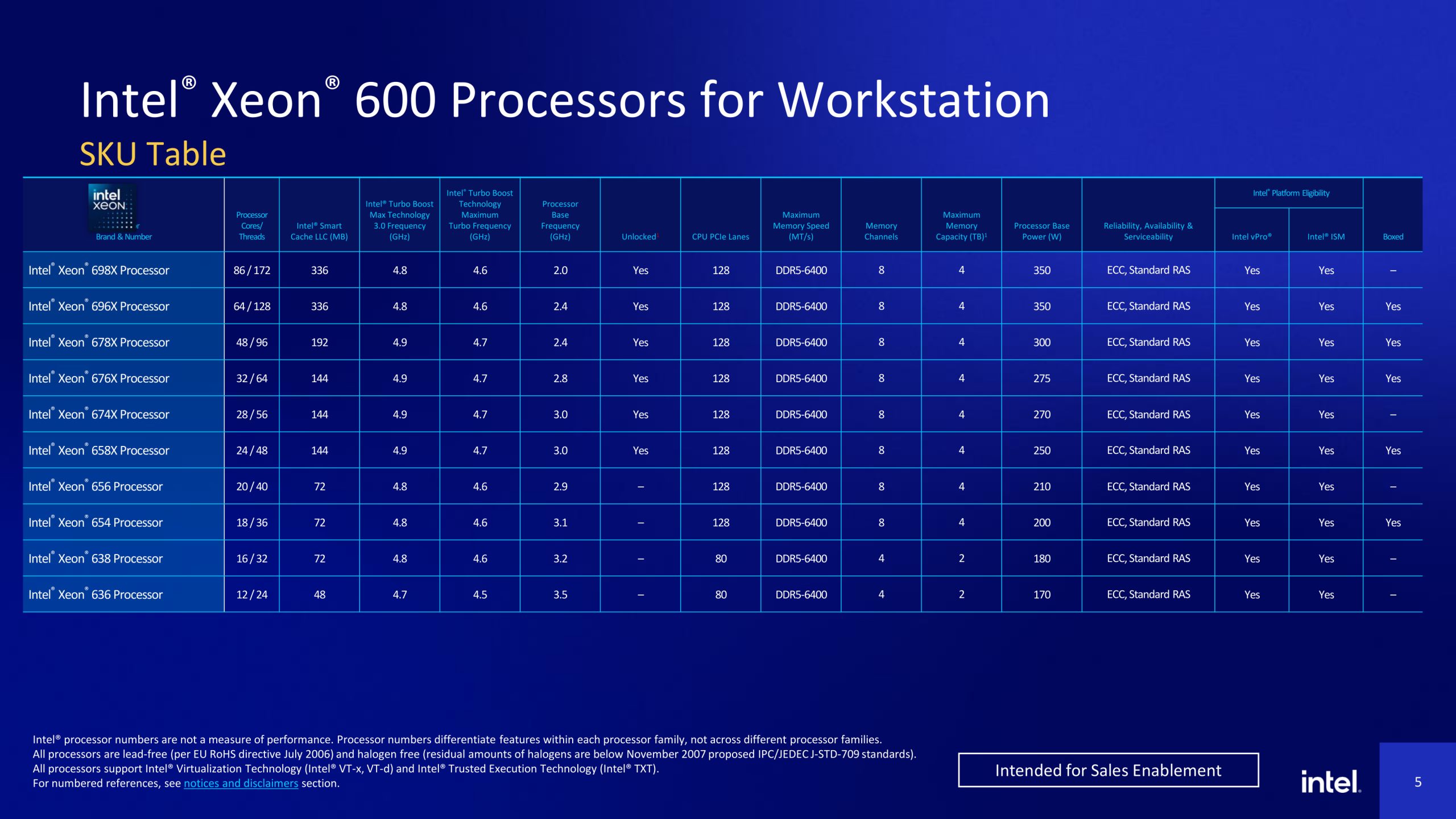
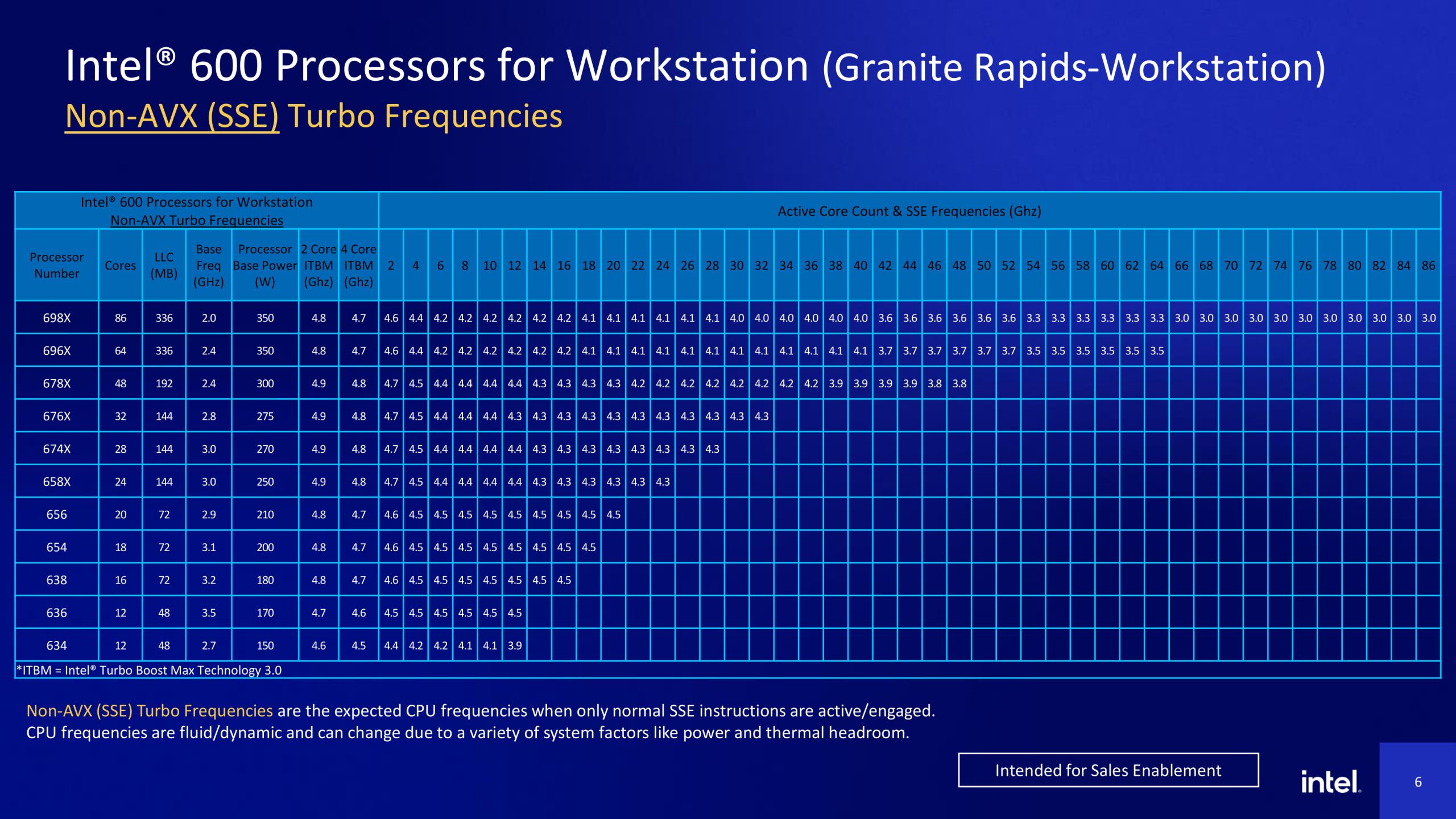
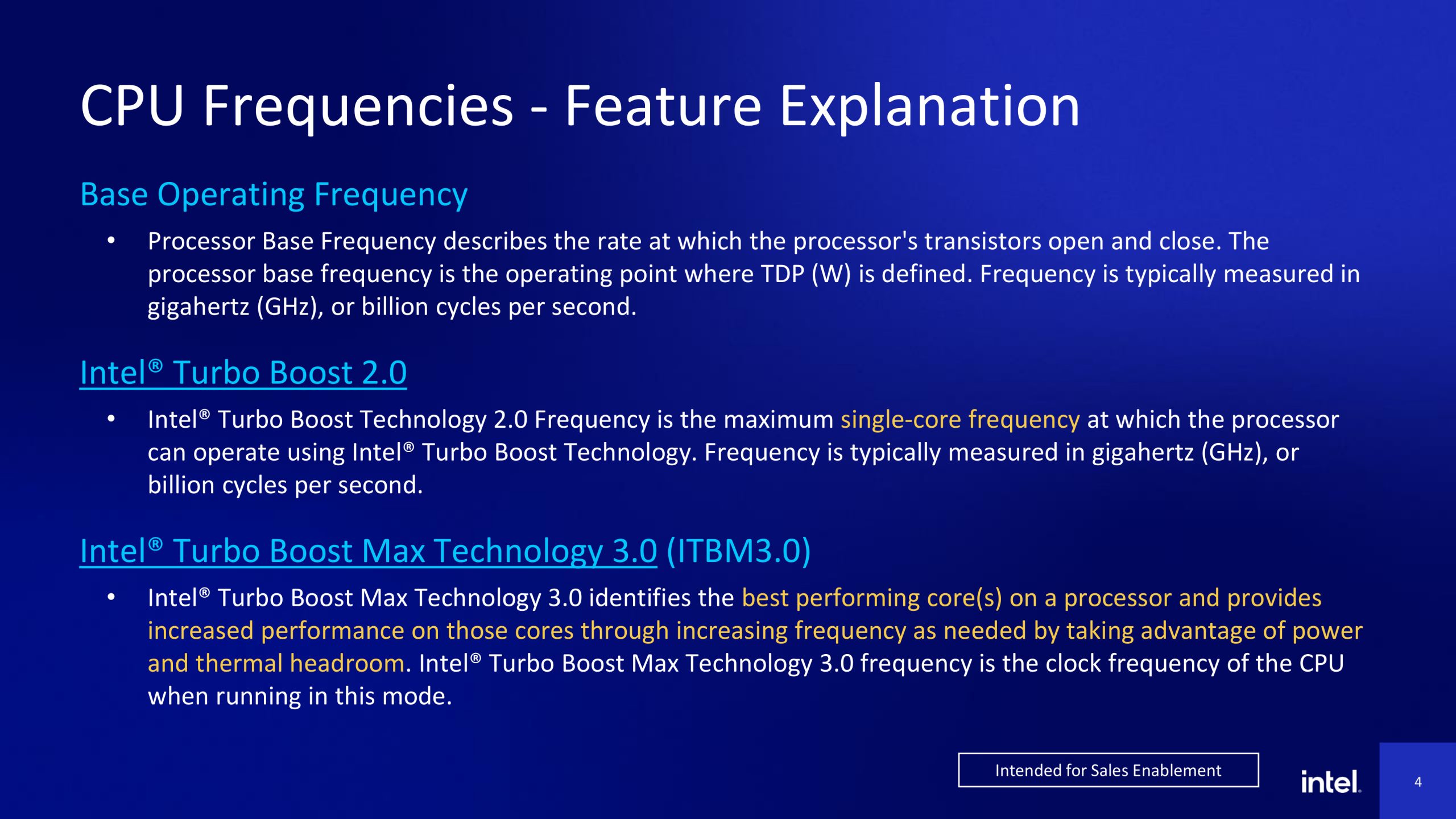
Intel has pulled back the curtain on the frequency behaviour of its new Granite Rapids-WS Xeon 600 workstation series. While marketing materials highlight a peak of 4.9 GHz via Turbo Boost Max 3.0, newly published documentation confirms that sustained speeds are heavily dependent on the instruction set being utilised.

As shared by InstLatX64 (via TechPowerUP), the top-tier SKU in the Xeon 600 Series, the 698X, features 86 cores and 172 threads paired with a massive 336 MB of L3 cache, making it a powerhouse for multi-threaded professional applications. The frequency scaling across different workloads reveals the thermal and power trade-offs required to keep the 86-core silicon stable. In non-AVX workloads, the CPU maintains its peak of 4.8 GHz in single-core mode, but as the active core count increases, the boost frequency can drop to as low as 3.0 GHz. In such workloads, the base frequency is set at 2.0 GHz.


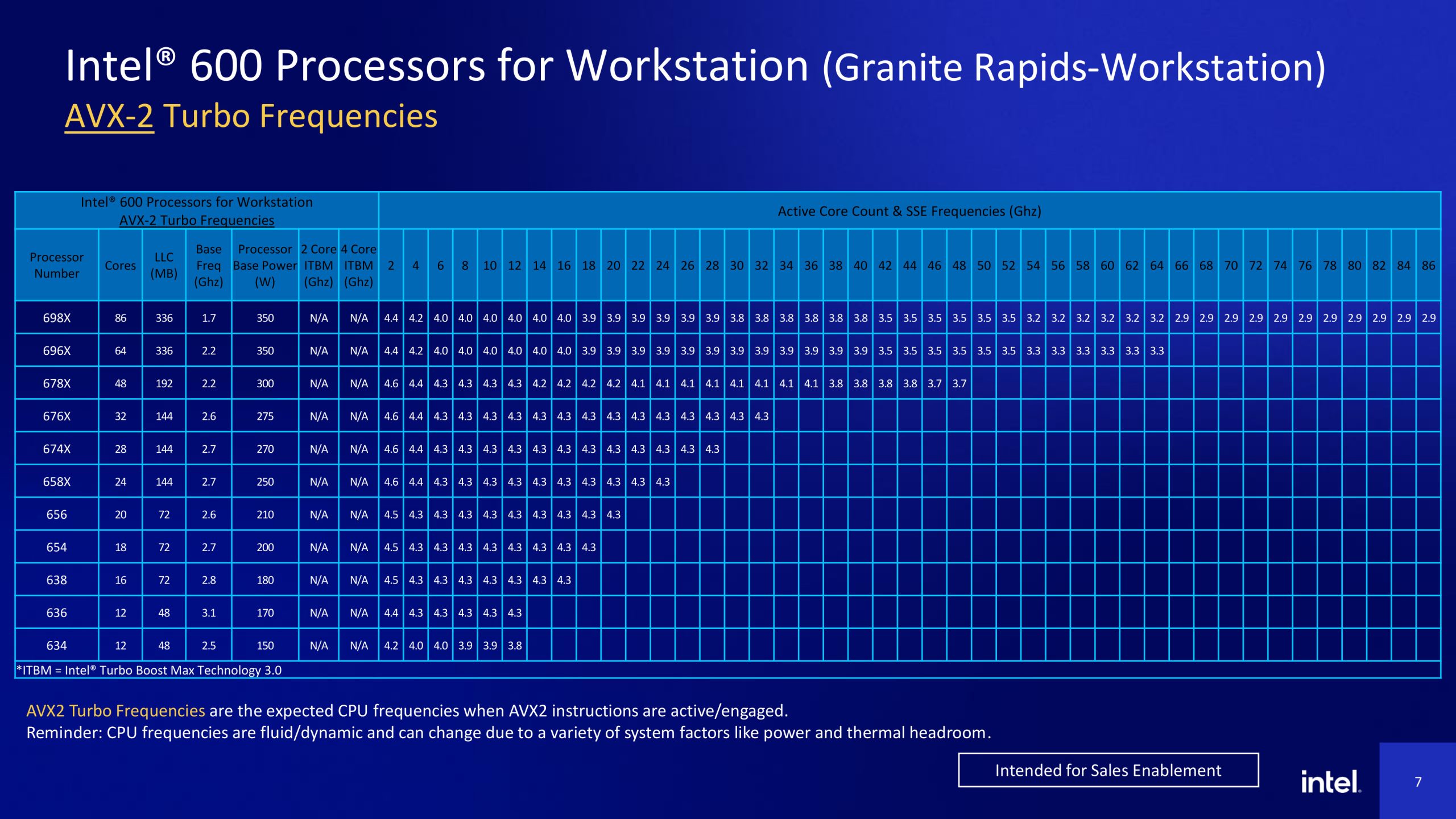
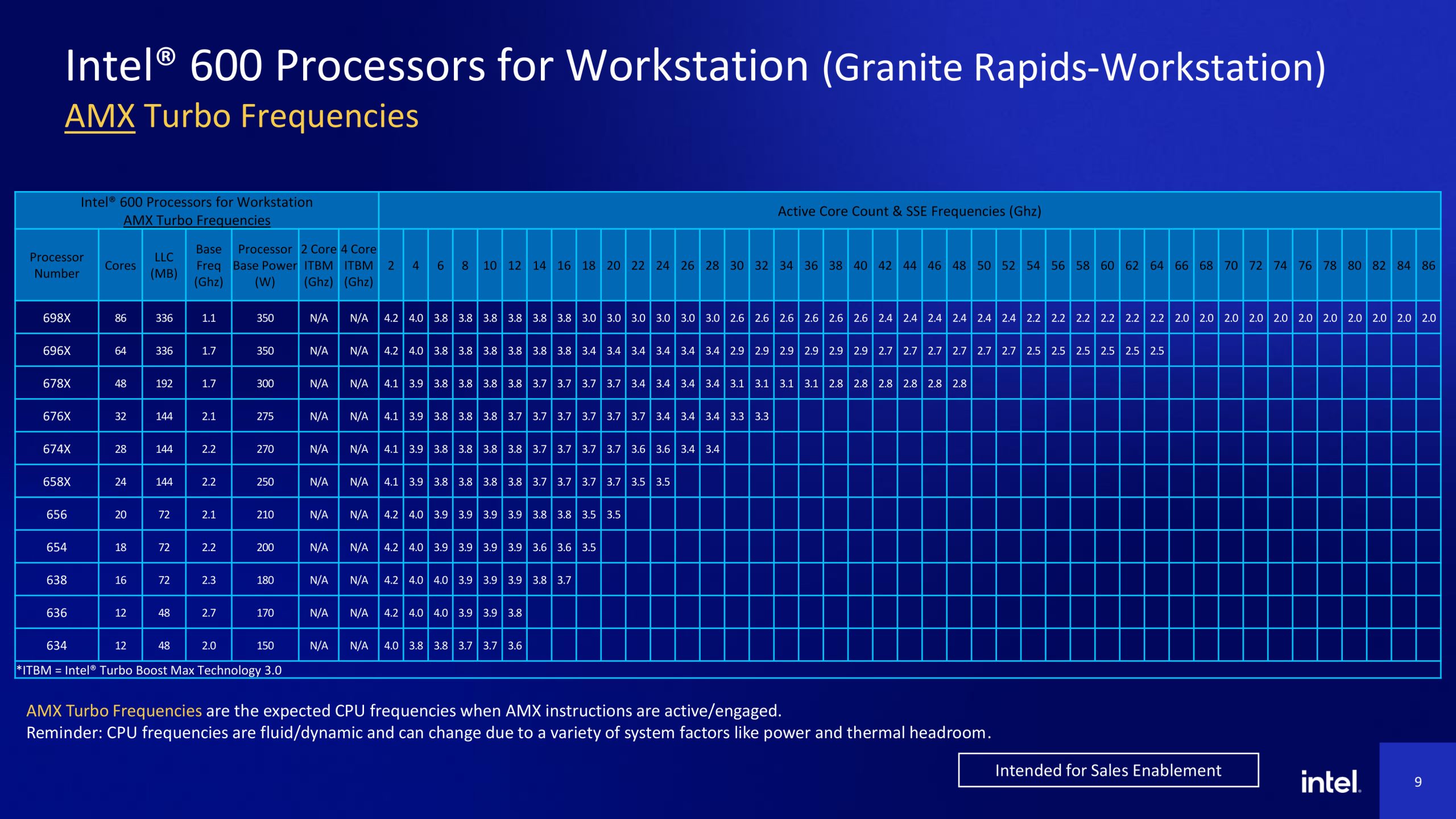
Moving on to the AVX-2 instruction set, the CPU can't boost as high, capping at 4.4 GHz in single-core and dropping to 2.9 GHz as the core count increases. In this case, the base frequency is set at 1.7 GHz. In AVX-512, clock frequencies are even lower, with the maximum turbo frequency ranging from 4.2 GHz to 2.5 GHz and the base frequency dropping to 1.3 GHz. Lastly, we have AMX, where the maximum boost frequency drops even further at the lower end, ranging from 4.2 GHz to 2.0 GHz, and the base frequency goes as low as 1.1 GHz.

KitGuru says: Seeing the Xeon 698X drop to nearly 1.1 GHz under heavy AMX workloads might look alarming, but it is standard for chips of this density. Fortunately, this CPU is unlocked, meaning overclocking is a possibility if you want to bump the clock frequencies.

The post Intel’s new Xeon 600 processors confirmed to clock up to 4.9GHz first appeared on KitGuru.
❌
❌