❌

Normal view

There are new articles available, click to refresh the page.
Before yesterdayMain stream

Asus warns of PC price hikes due to memory shortages

25 March 2026 at 16:30

The cost of building or buying a PC is set to skyrocket in the coming months, as Asus joins MSI in becoming another major manufacturer to signal incoming price increases. Yi-Hsiang Liao, GM of the Asus Joint Technology Systems Division, confirmed during a recent Zenbook A16 launch event that the company plans to raise prices by up to 30% across its PC lineup starting next quarter.Β 

As reported by UDN (via Wccftech), the primary driver behind this adjustment is the volatile memory market. Liao provided an example of current inflation, noting that a standard 32GB memory module that cost approximately 3,000 NTD last year is now approaching 20,000 NTD. This is further compounded by a shortage of CPUs from both Intel and AMD, with vendors reportedly struggling to secure enough mainstream and entry-level chips.

The price hike mentioned by Asus's GM is only for the Taiwanese market. However, while Asus has not officially confirmed if these specific price points will translate directly to overseas markets, it is highly unlikely that Western regions will remain insulated, as component costs are rising globally.

Discuss on our Facebook page, HERE.

KitGuru says: Consumers are going to have to wrestle with an AI tax on components over the next year and possibly beyond. Eventually, new production lines will be built to satiate the consumer electronics segment, but this is not a quick or easy process, as it can take years to set up suitable chip fabrication facilities.Β 

The post Asus warns of PC price hikes due to memory shortages first appeared on KitGuru.
MSI warns of Nvidia GPU demand outstripping supply

17 March 2026 at 09:00

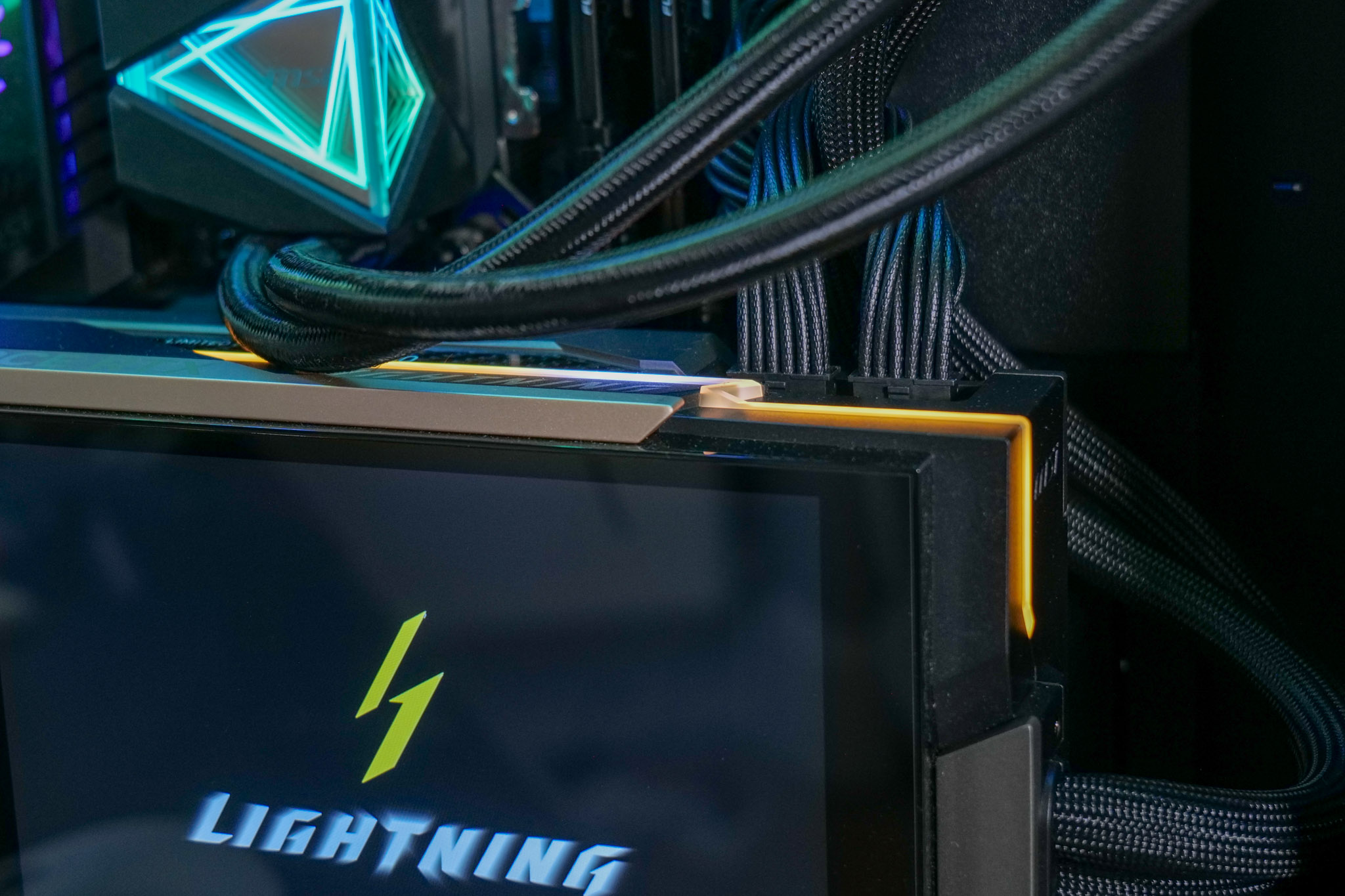
MSI is preparing to increase prices across its gaming product portfolio by 15% to 30%. In a recent investor briefing, General Manager Huang Jinqing described 2026 as one of the most challenging years the company has faced, citing supply chain instability and component shortages.

According to Money UDN (via VideoCardz), MSI now expects the global PC market to contract by 10% to 20% this year. The company’s outlook is influenced by a reported 20% shortfall in Nvidia GPU supply and a worldwide memory shortage that has raised component costs significantly.

Due to the AI boom and ongoing memory and storage shortages, prices have gone through the roof for both OEMs and consumers. As a result, MSI will have to adjust its pricing. MSI may also adjust its motherboard roadmap to offer consumers new DDR4 options, so consumers can still upgrade and get hold of the cheaper, older memory standard. While a 16GB stick of DDR5 memory can now cost as much as $180, a DDR4 stick is considerably cheaper at approximately $110 to $120.

MSI may also scale back on its low-end offerings to focus more on midrange and high-end products, like the RTX 5060, RTX 5070 and RTX 5080. On top of all of this, MSI also plans to bolster its enterprise sale efforts, with expectations to grow its server business considerably over the next three to five years.

Discuss on our Facebook page, HERE.

KitGuru says: MSI isn't the first to make all of this known, and it won't be the last to make pricing adjustments in 2026 either, as the current shortages impact the entire hardware market.Β 

The post MSI warns of Nvidia GPU demand outstripping supply first appeared on KitGuru.

ASML machines could yield 50% more chips by 2030

24 February 2026 at 08:00

ASML has reportedly achieved a critical breakthrough in its EUV lithography technology, boosting the power of its light source to 1000W. This leap from the current 600W standard is projected to increase per-machine chip output by 50% by the end of the decade, enabling foundries to process approximately 330 wafers per hour, up from the 220-wafer limit of today's systems.

Generating EUV light remains one of the most complex engineering feats in modern manufacturing. In ASML's laser-produced plasma (LPP) system, microscopic droplets of molten tin are fired through a vacuum and struck by a COβ‚‚ laser. According to Reuters, to achieve the 1,000W threshold, ASML implemented two significant architectural changes: droplet acceleration, which enables the system to fire roughly 100,000 droplets per second (twice the current rate), and two-pulse laser shaping, which usesΒ two smaller laser bursts instead of the single pulse currently in use.

ASML's roadmap suggests this is just the beginning, with internal targets already set for 1500W and, eventually, 2000W. Assuming the same ratio, that would triple the current production rate.

By scaling the power of the 13.5 nm light beam, ASML aims to directly lower the cost-per-chip for advanced AI and logic processors while extending the economic viability of the sub-2 nm era.

KitGuru says: The β€œphoton bottleneck” has long been the primary limiter for EUV economics. By hitting the 1000W mark, ASML is effectively telling the world that it can keep Moore's Law alive through raw power scaling. For companies like TSMC, a 50% increase in wafer production without expanding their footprint is certainly welcome news.

The post ASML machines could yield 50% more chips by 2030 first appeared on KitGuru.
❌
❌