Five AI datacenter customers have reportedly established 5-year DRAM supply agreements with Samsung, guaranteeing timely shipments for the Korean giant’s customers while also maintaining a legally-binding relationship that enables the manufacturer to comfortably rake in profits without worrying about excess production. DRAM and NAND volume covered in the 5-year agreements will reportedly account for 60-70 percent of Samsung’s total production capacity A report from DigiTimes states that five additional AI customers are in their final talks with Samsung, with contracts being given flexibility to be extended by one year through annual negotiations. By receiving guaranteed payments, Samsung will have a […]
It seems hell hath no fury like a commodity DRAM chip spurned. As HBM continues to hog DDR wafers, the supply of DRAM might plummet as much as 70 percent in 2027, according to the CEO of Apacer, which echoes recent pronouncements from the CEO of SK hynix. The CEO of Apacer expects the supply of commodity DRAM to fall off the proverbial roof in 2027, echoing pronouncements from the CEO of SK hynix, who thinks "next year will be the worst year in the industry's history from the supply perspective" According to the CEO of Apacer, C.K. Chang, DRAM […]
Memory supply from major DRAM manufacturers to independent module makers could drop to just 30% of the amount supplied in 2026 next year, according to C.K. Chang, CEO of Taiwanese memory vendor Apacer, further tightening an already squeezed supply chain.
Chang made the comments during the company's 1H 2026 investor conference on July 24, and in subsequent media interviews after the conference. Although memory price increases are expected to slow during the second half of 2026 — reportedly due to consumers deciding that RAM is too expensive — he believes severe shortages will persist into at least the middle of 2027, and that DRAM will remain the most constrained segment.
According to Chang, the greatest risk facing Apacer, which buys memory wafers from manufacturers such as SK Hynix and Samsung and turns them into finished memory products, is no longer overpaying for the chips, but failing to obtain any supply at all.
In preparation for growing shortages and to prevent a wider shortfall next year, the company says it grew its inventory to NT$12.4 billion ($383.2 million USD) at the end of June, up from NT$8.38 billion ($259 million USD) one quarter earlier, representing an increase of approximately 48%. The company is also arranging a five-year syndicated loan of up to NT$4 billion ($123.6 million USD) to purchase additional chips whenever manufacturers make them available, among other needs.
Chang’s projection does not mean worldwide DRAM production will fall by more than 70%. His statement specifically refers to the volume major chip manufacturers may allocate to downstream module companies such as Apacer, which purchases memory chips and packages them into DIMMs, SSDs and embedded storage products. DRAM manufacturers are increasingly reserving their output for high-bandwidth memory (HBM), server memory, and other products purchased directly by large AI and cloud customers.
Samsung, SK Hynix and Micron — the world's biggest memory chip makers — are prioritizing higher-margin HBM and advanced server memory as AI infrastructure spending consumes an increasing share of available manufacturing capacity. Chang estimates that approximately 60% of DRAM capacity is now directed toward server-related applications, leaving conventional DDR4 and DDR5 products competing for a shrinking portion of the market.
DDR5 RDIMM server modules have received some of the most aggressive price increases and retain the greatest potential for future mark-ups, according to Chang. Demand from AI servers, enterprise storage, industrial computers and edge AI systems remains strong, while consumer PC and smartphone demand is considerably weaker and more sensitive to rising component costs. That weaker demand is, of course, mostly in comparison to the AI industry. Consumer demand remains strong enough to mop up the shrinking supply. The RAM shortage is now reportedly affecting the price of cars, far beyond consumer electronics.
NAND flash is also being pulled into the AI boom. High-capacity enterprise SSDs are increasingly being used for model storage, data staging and key-value cache offloading, allowing colder portions of AI workloads to spill out of expensive DRAM. Flash cannot replace DRAM outright because it offers considerably lower bandwidth, but it can still serve as a tier within AI memory systems, increasing demand for enterprise SSDs and NAND alongside server memory.
Chang expects DRAM contract prices to rise by approximately 30% during the third quarter of 2026 and NAND flash to increase by more than 20%. He expects price growth to moderate again during the fourth quarter.
Chinese manufacturers are not expected to provide immediate relief. Chang said Chinese memory maker CXMT’s DDR5 products had become competitive and that both CXMT and Chinese NAND producer YMTC had narrowed their pricing gaps with established international suppliers. However, domestic demand in China already exceeds available supply, while capacity expansion, manufacturing yields, product validation and platform compatibility continue to limit their ability to change the global balance. Furthermore, the prices of new DRAM modules from CXMT are reportedly similar to those of the big three.
Stockpiling memory inventory at historically high prices carries the risk of substantial losses if the market suddenly reverses. Apacer, however, says it has seen no evidence of an approaching collapse. For now, the company is betting that possessing expensive memory in 2027 will be considerably better than having no memory to sell at all.
Apple seems to have found a very clever way to counter the ongoing malaise in the consumer electronics sphere, partnering with Klarna to launch a new device leasing program that is now offering unbelievably attractive deals. You can now borrow a 256GB iPhone 17 Pro for $45.99 per month for 12 months, saving $547 off the original $1,099 list price The Cupertino-based tech giant has just launched Apple Upgrade, a new device leasing program for "iPhone, Apple Watch, Mac, and iPad available on the Apple Store online, in the Apple Store app, and at Apple Store locations in the United […]
On the eve of August, 2026, the DIY PC building market looks bleaker than ever. Over the last 12 months, enthusiasts have endured spiralling prices on DDR4 and DDR5, as well as hard drives and SSDs, driven by shortages induced by massive AI buildouts. But just how bad is the RAM market in 2026, and is it at all possible to buy cheap RAM these days? The short answers are “bad” and “not really, no.” In this brief 2026 ‘State of the Union’ on the RAM market, we observe just how much prices have changed in the last 12 months, and examine whether there really is any hope for PC builders at all.
It was around July last year that the alarm bells really started ringing when it came to RAM pricing, with TrendForce warning of 45% increases in the second half of the year. Until then, both RAM and SSDs had been something of an afterthought when it came to PC building. Not that those components weren’t important, but rather that you knew you could always find a cheap 32GB DDR5 kit and a decent SSD for whichever build you were planning. The tough decisions were choosing between AMD and Intel’s respective platforms, and trying to find a decent graphics card.
So what has happened since?
What a difference a year makes
(Image credit: Future)
To see the impact of the AI crunch on RAM pricing, I had a bit of a dig through the Tom’s Hardware archives, but I should warn you: It’s not pleasant reading. This time last year, we had just come through the throes of Amazon’s 2025 Prime Day event, held in July as opposed to this year’s June offering. As is customary, we offered our thoughts on a great PC build using Prime Day discount parts featuring a Crucial Pro 32GB DDR5 6000 memory kit, reduced from $119 to just $90. One year later, that very same kit now costs $459. That’s if you can even buy one, of course, as there was only one left in stock when I wrote this. Oh, also, Crucial no longer exists. Feeding the AI machine is proving so lucrative that Micron literally wound up its consumer memory and SSD offering so that it could put all of its efforts into HBM and enterprise.
The story is similar wherever you look. Our pick for the best RAM for gaming in 2026 remains G.Skill’s Trident Z5 Neo RGB DDR5-6000. When we reviewed this kit back in 2023, we bemoaned that users were paying the early adopter DDR5 tax. The price? A paltry $179. You now can’t buy 32GB of DDR5 for less than $379. G.SKill’s kit subsequently sank in price to an even $100; in August 2026 it’ll cost you $599.99. I guess you could call that a late adopter tax.
Even 16GB of DDR5 6000 will set you back more than $200 these days, which is double the price for half the capacity you could buy a year ago. Large kits, like Corsair’s Vengeance 192GB (4x48GB) offering, now cost upwards of $2,600, more than most pre-built PCs.
The death of Crucial
(Image credit: Tom's Hardware)
As mentioned, one of the most pertinent death knells of the RAM market in the last 12 months was the end of Crucial. In December, Micron announced that it was winding up its entire consumer offering, reallocating all of its resources to enterprise DRAM and SSDs. Crucial products have slowly died off since, and the very few kits and drives that remain are extremely expensive to buy. The company is continuing to honor warranty and technical support obligations, at least, but that will be of little comfort to PC builders left out in the cold. “Micron has made the difficult decision to exit the Crucial consumer business in order to improve supply and support for our larger, strategic customers in faster-growing segments,” Micron admitted bluntly at the time.
The return of DDR4
(Image credit: Future)
Not totally oblivious to the plight of gamers, a few vendors are at least trying to assuage gamers and the DIY market, notably with the return of DDR4. Admittedly, this isn’t super comforting — I can’t imagine many console gamers would be thrilled about Sony solving PlayStation 5 shortages by bringing back the PS4 — but the gulf between DDR4 and DDR5 isn’t so bad that it’s not a viable option for some in 2026. We’ve heard rumblings that Intel is preparing a surprise Raptor Lake Next return for 2027, and AMD recently rolled out its 10th anniversary edition of its 5800X3D gaming CPU. Still, the best gaming CPU for DDR4 that money can buy still costs $350, and the gulf between DDR4 and DDR5 is widening, in our testing. As our resident CPU analyst Jake Roach noted at the time, buying a Ryzen 5 7600X3D and 16GB of DDR5-6000 is only $80 more expensive than buying a DDR4-based 5800X3D.
The problem lies therein: DDR4 memory prices have also skyrocketed. A 32GB Corsair Vengeance DDR4 3200 kit from 2019 would have set you back 48 bucks last year. Now, you’ll be lucky to find it on sale for $200.
Prebuilt your way out of this mess
(Image credit: Future)
Pre-built PCs from OEM vendors like HP, as well as bespoke offerings from CyberPower and the like, are not immune to rising prices, nor are gaming laptops. To return to our one-year flashback, an Intel Core 7 Alienware Aurora 16 we recommended to users at $1,099 during July 2025 will now set you back $1,999, and we’ve seen price increases on Alienware desktops of up to $2,000 in recent months. In fact, Maingear started offering “Bring Your Own RAM” builds late last year, rather than absorbing the cost of price rises.
With that being said, if you have given up hope of getting RAM and doing a DIY build in 2026, there are still pre-built gaming PCs on sale that get you a lot of PC for your money. Perhaps more money than you might have paid last year, but in reality it's a simple math problem. RAM prices have risen by 400, 500, or even 600% in some cases in recent months, while PC builds as a whole have increased, but not by nearly as much. When you factor in the increased cost of SSDs and GPUs, pre-builts in 2026 tend to represent much better value than they generally would have a year ago.
If you’re set on buying RAM?
(Image credit: Future)
If you are set on building a PC right now and buying RAM to put inside it, what’s the state of play? The going rate for 16GB of DDR5 RAM is $209, the lowest amount of money you can expect to pay for a 16GB kit. For 32GB, the going rate is $379. Per GB, 32GB remains better value, at around $12 rather than $13. 64GB of DDR5 from Corsair is $699, ironically the best price per GB, but ludicrously expensive.
We’ve been touting Newegg RAM bundles at Tom’s Hardware for months, and they remain a stalwart way to save at least something on RAM if you’re building a PC. Generally, you can expect to find a bundle that will get you the RAM for around $200 if you buy it alongside a motherboard and a CPU. Remember, the value in a RAM bundle is pairing RAM with other parts, the prices of which are not inflated in the current market. With CPU, motherboard, and cooling prices holding steady or falling, buying components together gives you a clear picture of the actual value proposition. The RAM in this Newegg bundle, for instance, costs $236, thanks to the price of the 9800X3D and the X870E.
The future of the RAM market
Sadly, if you’re in the market for RAM, even at these exorbitant prices, we’re still firmly in the bite-the-bullet phase. Manufacturers like SK hynix are working to add capacity to their roster, and the advent of China’s CXMT could provide some relief. But industry figures warn that 2027 could actually be even worse for memory shortages than 2026. By extension, that presumably means pricing will also get worse. In truth, the best solution right now is probably not to buy RAM, but if you’re in desperate need, you’re going to have to pay high prices in some way, shape, or form.
Waiting it out is always an option if you can do so, but Adata’s chairman recently said you might be waiting a decade or more. The latter prognostication sounds a little extreme, but one year into the RAMapocalypse, more than a few indications point to things getting worse rather than better.
Unless you already have a kit of DDR5, or deep pockets for PC hardware, you’re stuck right now. Despite seeing some of the best CPUs for gaming released just in the past year, the DDR5 tax represents a major hurdle to building or upgrading your PC. Intel’s LGA 1700 CPUs hold an unintended solution, offering support for both DDR4 and DDR5. We wanted to see if this on-ramp to a next-gen platform was really as smooth as it looks at first glance.
The idea is simple. If you already have a DDR4 kit, you can upgrade to a relatively new CPU while keeping the door open for a transition to DDR5 without buying a new chip. It’s inexpensive, and a bit more of a practical solution than upgrading to DDR5 with a single DIMM and worrying about pairing it with another later.
Our testing shows how much of a performance difference there is with DDR4 in games. We’re focused on games here for a few reasons. First, in non-gaming applications, memory speed is highly dependent on the specific workload you’re running. Games, despite using different engines, are largely similar workloads that stress the hardware in similar ways. Further, those workloads are continually evolving as new games, new technologies, and new hardware targets are released.
We kept our testing focused on Intel’s LGA 1700 CPUs because they’re the only options that give us a true apples-to-apples comparison between DDR4 and DDR5. We don’t have any AMD CPUs in our test pool because there aren’t any chips that support both DDR4 and DDR5. This isn’t intended to be a competitive analysis between AMD and Intel. That conversation opens up a much broader conversation about total platform cost.
Testing DDR4 vs. DDR5 on Intel’s LGA 1700 CPUs
To test DDR4 and DDR5’s gaming performance, we ran Intel’s main LGA 1700 stack through a 15-game gauntlet of benchmarks. Notably, we don’t have results for the Core i9-12900K, as our sample has a janky memory controller that won’t boot on DDR5 systems. You can read a full breakdown of how (and why) we tested in the way we did in the section below.
We ran all of the games through our 16-game benchmark suite, though we cut Doom: The Dark Ages from the results here. An update for the game rolled out mid-way through testing and skewed our results, so we’re omitting it. The 15 remaining games still paint a clear picture of the performance difference between DDR4 and DDR5.
As usual, we tested with the RTX 5090 Founder’s Edition at 1080p with a mixture of High and Ultra settings. We test at 1080p to maximize the differences between CPUs, and it remains the most widely-used resolution for gaming. Deltas between CPUs will decrease as the resolution climbs and the GPU becomes a larger influence in performance.
Below is our geomean from testing across the suite. Given that we’re looking to compare a single CPU’s performance with DDR4 and DDR5, we’ve highlighted some CPUs with the same color (13700K is always dark red, for instance, while 14700K is always dark blue).
(Image credit: Tom's Hardware)
The chart above is a bit difficult to parse, mainly because we’re often jumping several entries to get to a comparison point. For the stack of chips we tested, here’s a clearer overview of the performance difference with DDR4:
CPU
DDR4 % Difference
Core i9-14900K
-14%
Core i7-14700K
-13.2%
Core i5-14600K
-13.1%
Core i9-13900K
-11.3%
Core i7-13700K
-13.5%
Core i5-13600K
-11.4%
Core i7-12700K
-9.3%
Core i5-12600K
-9.5%
As we’ll get into with the individual game tests below, the drop in performance between DDR4 and DDR5 can be much larger than the comparison in our geomean (and, in turn, smaller in other games). What’s important for the overall performance drop is the trend as we move to newer chips. You can see a 9% drop grow to 14%, as DDR4 becomes a more significant bottleneck when the processor it’s feeding becomes more powerful.
That trend is one of the main driving forces behind our look at DDR4 and DDR5 gaming performance today. We looked at DDR4 and DDR5 performance extensively near the Alder Lake launch, and even more recently last year, evaluating performance across a wide range of applications. The testing here is focused solely on gaming to answer a critical question of building a PC today: Are you really giving up that much gaming performance with DDR4?
The answer is, yes, you’re giving up around 11% to 14% of your gaming performance overall when the memory is the only variable that changes. That’s a consistent drop, as well. Older titles care see less of a benefit from DDR5 generally, but we saw a steady decrease of around 11-14% across the games we tested, with some titles pushing above a 20% drop.
(Image credit: Tom's Hardware)
007 First Light is the newest game we tested, and it outpaces our averages. The 14900K sees a 16.5% drop with DDR4, while the 13600K drops 12.7% of its performance. Especially among the most powerful CPUs here, you can see DDR4 level off performance in a way that’s undesirable. The 14900K, for instance, is just 1.7% faster than the 13900K with DDR4, but it’s 4.6% faster with DDR5.
(Image credit: Tom's Hardware)
Similarly, in Crimson Desert, you can see the 13700K lose 13.7% of its performance with DDR4, and the 14600K drop 13.2% of its performance. It’s worth noting that neither of these games are particularly sensitive to memory speed. You can see in our recent Ryzen 7 5800X3D re-review that even a boost from 3D V-Cache doesn’t give CPUs with a robust memory chain an automatic advantage.
(Image credit: Tom's Hardware)
Perhaps the most consequential of the newer games we tested is Marvel Rivals, not only because it shows a much larger gap between DDR4 and DDR5, but also because it’s the most-played game in our test suite by a long shot (short of Counter-Strike 2). For weaker chips like the 12600K, the gap is 13.9%, just slightly above our geomean. For the more powerful 14700K, however, it shows a gap of 25.3%. Even the 14600K drops 17.4% of its performance with DDR4.
(Image credit: Tom's Hardware)
Counter-Strike 2 is less extreme, perhaps as a consequence of having such a high floor for average frame rates. You can see that the Alder Lake chips don’t care much about DDR4, with the Core i7-12700K performing identically across both memory standards. That gap grows with more powerful CPUs, however, with the 14700K creeping up toward a 10% delta.
(Image credit: Tom's Hardware)
In Spider-Man 2, we can see more consistent drops across the stack of chips we tested, with most CPUs dropping around 18% of their average performance with DDR4. That’s true even on the weaker 12700K, which lost 15% of its performance. The 14900K, meanwhile, was 18.7% slower with DDR4.
(Image credit: Tom's Hardware)
Even in an older, GPU-heavy title like Cyberpunk 2077, we can see a consistent drop. You can see in this game that we become completely bound by the GPU at the top of the rankings, but that’s a level these chips can’t hit when paired with DDR4. The 14700K drops about 14% of its performance, and the 13600K, about 13% of its performance.
You can browse through our remaining benchmarks using the gallery above, but most games tell a similar story. The gap between DDR4 and DDR5 persists, of course, but there’s another angle to look at the data. DDR4 flattens off performance, creating a bottleneck with faster CPUs. That could be justification for buying a weaker chip if you can only afford DDR4 memory right now.
(Image credit: Tom's Hardware)
Outside of performance, one important aspect of using a DDR4 system compared to DDR5 is power consumption. With DDR4, power consumption of the CPU increases, as you can see in the chart above. The jump is generally only a few watts, but it’s worth noting nonetheless. In games, we’re well below the operating temperature of all the chips in our test pool, but when pushing toward maximum power draw, DDR4 will post yet another limitation.
How (and why) we tested DDR4 vs. DDR5 now
DDR5 is way too expensive, and Intel’s LGA 1700 CPUs represent a unique value proposition given the unprecedented increases in memory prices over the past several months. The idea is that you can upgrade to a newer platform while sticking with DDR4, giving you a stopgap for an eventual DDR5 upgrade. It seems Intel recognizes this value proposition, as well, as it’s reportedly slated to launch Raptor Lake Next CPUs on the LGA 1700 socket.
We tested the main stack of chips, short of the Core i9-12900K, as described above. We didn’t test variants like KS releases to keep our testing focused, as well as lower-end SKUs like the 12100F or 14400. The memory controllers in these lower-end chips are weaker, sustaining lower DDR5 speeds, so expect less of a difference in performance with them.
Below, you can see the test benches we used. In addition to keeping hardware consistent, we use a frozen OS image with an identical software stack. We’re running the same version of the same apps on the same OS update, with identical drivers.
In the BIOS, we enabled XMP for both kits of memory. We also tested with Resizeable BAR turned on, and Virtualization-Based Security (VBS) turned off. Most motherboard vendors off a profile with the power limits removed on Intel CPUs, which can push the processor outside of warrantied specifications. We stuck with the default “Performance” profile for our testing here.
It makes sense that we’ve seen a shift back toward DDR4. Although DDR4 prices have risen in lockstep with DDR5 prices, they started from a much lower base. A kit of DDR4 today is not much more expensive than a DDR5 kit of similar capacity a year ago. And, with estimates that the memory shortage could persist through 2030, there’s a strong argument for going with a DDR4 system if you’re in need of an upgrade.
The performance trade-off alone isn’t as big of a problem as it appears at first glance. You’re going to lose about 15% of your average gaming performance with Intel’s LGA 1700 CPUs (particularly Raptor Lake chips). You’ll spend more than twice as much on a 32GB kit of DDR5-6000 as you will on a 32GB kit of DDR4-3200, as you can see in our RAM price tracker. And, you might already have a DDR4 kit, cutting that cost completely out of an upgrade. Dollars spent for performance gained, DDR4 makes complete sense.
However, performance isn’t the only factor at play, and that’s the unfortunate reality of using a DDR4 platform right now. It’s a dead end, both for performance and upgrade potential. As we saw in our recent testing of the Ryzen 7 5800X3D, there’s a performance wall in games with DDR4, one which the 5800X3D often runs up against. The memory is a bottleneck, and it doesn’t seem like there’s a way around that problem without upgrading to DDR5.
We also aren’t seeing any new DDR4 CPUs, at least right now. AMD re-released the Ryzen 7 5800X3D, and there are murmurs of Raptor Lake Next. But given the current landscape, we don’t expect a CPU that will radically change the performance you can get out of a DDR4 platform.
Instead of sticking with DDR4 for a better CPU, the best course of action right now is to bite the bullet on DDR5 and buy a weaker CPU, particularly if gaming performance is your main concern. Given that memory prices are out of control, there are excellent deals on DDR5 CPUs right now, allowing you to offset the cost of an upgrade and giving you a kit of DDR5 to carry forward in future builds.
As an example, AMD’s recently-released Ryzen 7 7700X3D is $80 cheaper than the re-released Ryzen 7 5800X3D, despite coming in nearly 20% faster in average gaming performance. The $230 Ryzen 5 7600X3D shows similar gains, and it’s even more affordable.
In Intel’s camp, the Core Ultra 7 270K Plus and Core Ultra 5 250K Plus represent some of the best all-around value in the CPU world right now, with compelling gaming performance and chart-topping application performance, all for around $300.
You will spend more on a cheaper CPU and a kit of DDR5. There’s no indication that the memory shortage is ending soon, however. We’ve actually seen prices continue to increase despite the surge leveling off. Opting for DDR5 today buys you better gaming performance, but more importantly, it gives you a kit of memory that you can continue to use as new CPUs and platforms are released.
As Chinese smartphone brands cut smartphone shipments in the wake of the DRAM shortage, Samsung reportedly targets an opportunity to raise its tally in a market that it has struggled to penetrate for years. To achieve this, a new report states that the Korean giant will resort to using CXMT’s DRAM chips, which are said to be cheaper, but that’s where the misconception should end. CXMT’s DRAM chips are anything but cheap; Samsung still has a chance to enter China’s smartphone market A report from Asia Times claims that Samsung is considering the use of “low-cost” Chinese DRAM as the […]
One of the common misconceptions in today's memory market is that once memory modules based on chips from CXMT enter the consumer market, there will be cheaper alternatives to memory sticks running DRAM from the Big Three. While availability of CXMT-powered modules certainly impacts average selling prices, these products are not cheaper than those based on ICs from Micron, Samsung, and SK hynix even in China, as noticed by @harukaze5719.
A 64GB DDR5-5600 RDIMM based on memory from Samsung or SK hynix costs 18,595 CNY ($2,745) at JD.com, whereas a module featuring the same capacity and specification, but using DRAMs from CXMT is priced at 18,999 CNY ($2,805), according to observations by @harukaze5719. It is noteworthy that a Samsung 64GB DDR5-5600 RDIMM made by Samsung and sold by Samsung costs $2,425 at Amazon.com in the U.S.
While the $60 difference seems significant, it is really just 2.2%, which can be considered negligible at these sky-high prices. Nonetheless, many expect CXMT-based memory modules to be cheaper than those carrying chips from Micron, Samsung, or SK hynix, so observing that they are even a bit more expensive than offerings with ICs from renowned manufacturers may be a bit surprising.
Indeed, because CXMT produces memory chips using an outdated fabrication technology, its DRAM ICs consume more power than those made using the latest manufacturing processes, have lower performance potential, and mediocre overclockability. Furthermore, the Chinese government heavily subsidizes both ChangXin Memory Technologies and Yangtze Memory Technologies (YMTC), which enables both to sell their memory at lower prices although their actual costs may be higher compared to those of the Big Three.
As a result, it is reasonable to expect CXMT to charge less for its chips compared to chips from renowned producers. Truth to be told, we do not know CXMT's quotes, they may be as high as those from other manufacturers and the only reason why module producers buy them is that they are the only chips available. Furthermore, companies tend to price products based on what the market will bear, not strictly on production cost or their characteristics. In fact, as everyone is capacity constrained these days, there is little incentive for CXMT to price its DRAMs significantly below those from renowned makers. However, while CXMT may indeed charge less for chips (e.g., because the Chinese government issues an appropriate directive), this lowers costs for module makers, but has a limited effect on retail prices of actual DIMMs or RDIMMs.
Whether potential savings reach end customers depends on market competition, supply-demand conditions, and the pricing strategies of module makers, distributors, and retailers. Furthermore, when prominent companies like Apple, Dell, or Corsair use a memory chip SKU, this one must pass rigorous validation processes and is usually tested in-house, or by contract manufacturers, which adds to costs and somewhat erases the price difference between suppliers.
As a result, CXMT memory chips may make the lives of hardware makers easier, but are not expected to impact the retail prices you pay.
A man by the name of Li and his partner by the name of Cheng have been arrested for a string of RAM stick thefts from various hotels in China where gaming PCs are standard room equipment. This was a pretty small-time operation, with a total of ~ 13,200 yuan (about $1,950) raised by selling 16 stolen RAM sticks on the second-hand goods market. However, the source describes the accused thieves as purveyors of "frenzied hotel room-dismantling" (machine translation).
According to the report, Li began his tech treasure crime spree in May, in Shihezi City, Northern Xinjiang. After checking into an eSports hotel, the light-fingered Li couldn’t resist plucking a pair of RAM sticks from the in-room computer. The solo RAM thief’s initial success spurred him to recruit a partner, and in the second two weeks of May, the dynamic RAM duo of Li and Cheng swept through multiple hotels in the aforementioned “frenzied” fashion.
The crime spree might be one of the first of its kind we’ve read about, but it wouldn’t make the thieves filthy rich. The source notes that 16 RAM sticks in total were taken from eSports hotels during the two-week criminal spree. They would sell the slyly stolen sticks of silicon for a total of ~ 13,200 yuan (about $1,950) in profit via a mix of online marketplaces and brick-and-mortar stores.
In the Chinese language report, it is noted that subsequent guests at the eSport hotels complained about systems with black screens, unable to boot. Customer complaints led to investigations by hotel staff, and the police were called out once the DRAM dirty deeds were definitive. Perhaps the duo would have been more successful if they had decided to just halve the RAM in the raided PCs. Guests who followed them would be less likely to loudly complain about RAM-deficient PCs than completely dead ones.
The Chinese media report ends by saying Li and Cheng are both in custody, with further investigations into the pair’s RAM piracy ongoing.
CXMT is now charging more for memory than the big three DRAM makers as demand swells in China's domestic AI markets. CXMT Benefits Big Time From DRAM Crisis By Charging Hefty Premium For Its Memory Products Most global media outlets were under the impression that CXMT was going to be the "Cheaper Alternative" to Samsung, SK Hynix, and Micron, who are asking big sums of cash for their DRAM products, but that wasn't the case. In our exclusive, we reported that CXMT's advantage was not in its price, but in its supply, and that remained true; demand skyrocketed 10-fold, and […]
CXMT's ideology is fast becoming wholly mercantile as it appears to have adopted the same price gouging tactics that are now the bread and butter of its 'Big Three' counterparts - Samsung, SK hynix, and Micron. CXMT's 64GB server DDR5 module now costs more than Samsung's $1,240 comparable offering According to Reuters, Chinese memory makers are now being picky about clients and dictating their own prices, which indicates their strengthened negotiation position. In what is a striking anecdote, CXMT abruptly evicted engineers affiliated with SiCarrier - a Huawei-linked equipment vendor - from its fabrication facility in Hefei. The engineers were […]
You're probably already well aware of the three largest memory vendors: South Korea's SK hynix and Samsung, and the United States' Micron. There's a fourth player up and coming in the market, though, and that's China's ChangXin Memory Technologies, more commonly known as CXMT. CXMT is pumping out RAM as fast as it can to soften the effects of the RAMpocalypse on domestic (to China) consumers, and it's also expanding capacity quickly. Given these factors and the size of the Chinese market, it should come as no surprise that motherboard vendors, including Gigabyte, are advertising fresh support for the chip.
MSI appears to have been the first major motherboard vendor to publicly promote BIOS optimizations specifically for CXMT DDR5 memory, initially through China-market BIOS releases and later with global announcements. What Gigabyte is saying is a little different: not only is CXMT RAM supported on Gigabyte motherboards for both AMD's Socket AM5 and Intel's LGA 1851, but it's supported at impressive speeds of up to 8200 MT/s on select boards.
Click to zoom in if you want a hope of reading this screenshot. (Image credit: Gigabyte)
As proof, Gigabyte offers up a CPU-Z screenshot showing a pair of 16GB Lexar modules equipped with CXMT chips achieving a speed of 8200 MT/s with a CAS latency of just 40 cycles on one of its B850M FORCE motherboards. We have to remark that Gigabyte doesn't show the voltage required to hit these speeds, likely for good reason, but the firm did it without disabling the chip's integrated graphics. That doesn't prevent the chips from posting an excellent AIDA64 latency of just 65.4 nanoseconds on the monolithic Ryzen 5 8600G used for the test. For context, typical EXPO kits usually run around 80ns, JEDEC timings are more like 100ns, and LPDDR-based systems rarely come below 110-120ns.
As Gigabyte says, "CXSH (CXMT) chip-based memory offers a welcome additional source of supply for consumers." (CXSH is the JEDEC manufacturer ID code for CXMT) Gigabyte specifically notes that it is modules with 16-gigabit and 24-gigabit ICs that are supported; that means 16GB and 24GB single-rank modules, or 32GB and 48GB dual-rank modules.
This Corsair module has CXMT chips inside, but it's also exclusive to China. (Image credit: @wxnod on X)
While CXMT memory is certainly a welcome additional source of supply, it's also not really clear how much of that memory is actually making its way outside of China, particularly to the US and Europe. CXMT isn't on the US Commerce Department's "Entity List" yet, so the firm's parts aren't actually banned, but the company is once again considered a Chinese military company by the Department of Defense after being briefly removed from the 1260H list in February. Lawmakers here in the states, likely laden with donations from the big three memory firms, want to see CXMT banned, while US tech companies like Corsair, HP, and Dell are already integrating ChangXin RAM into their products, and Apple wants in, too.
The reality is that, as a DIY builder, you are fairly unlikely to know or care if your memory is manufactured by CXMT. You don't usually buy RAM directly from SK hynix, Samsung, or Micron (certainly not since Micron unceremoniously executed Crucial); you buy your RAM from Silicon Power, G.SKILL, Patriot, Corsair, or one of the many other vendors who assemble DIMMs. If the RAM runs at its rated specifications, there's not a lot of reason for the individual consumer to care where it came from. It's nice to hear that the new chips are officially supported by familiar mainboards, though.
The PC market continues to struggle due to memory shortages, with the latest stats reporting a 4% decline in Q2 2026 as prices continued to climb. ASUS & Apple Were The Only PC Makers Who Saw Share Growth In Q2 2026 But Continue To Struggle Due To Memory Shortages The latest market statistics from Counterpoint Research for Q2 2026 are in, and show that the PC market declined 4% in Q2 2026 versus the prior year. PC shipments reached 65 million units, which broke the growth trend that started in Q1 2025, but have since been on a decline as […]
Another substantial price hike is incoming as the green team has supposedly raised prices for its memory kits. NVIDIA RTX GPUs to See Another Price Hike as the Company Reportedly Passes Increased Memory Kit Costs to its Board Partners The GPUs continue to suffer from the instability caused by DRAM availability and pricing. NVIDIA and AMD have adjusted the prices of their current-gen GPUs multiple times already, and it looks like there is another price hike incoming in the coming days. Since both manufacturers source memory from major suppliers, they have no option but to pass the increased costs to […]
As hyperscalers continue to increase their massive investments to boost capacity, there’s a growing realization that risks their lofty ambitions: power consumption, physical space constraints, and rising prices of HBM and DRAM memory that’ll only creep up due to stagnant capacity. Fortunately, a new report dives into a new component that’ll help accelerate hyperscalers’ goals, and with the ever-expanding capacity, this part will become a key player in this particular industry. Samsung & SK hynix are leading the high-capacity QLC eSSD market, helping to lift the burden from AI data centers as HBM and DRAM become the inference bottleneck We’ve […]
While PC builders, enthusiasts, and gamers are some of the most heavily affected by the AI-driven memory chip shortage, experts have also been warning that this will eventually hit the automotive sector. It seems that their fears have come true, as Nikkei Asia reports that two major automakers are increasing their prices precisely for this reason. General Motors said that it expects new vehicle prices to increase by 0.3% this year, changing its previous projection of vehicle costs to remain the same or even slightly more affordable. On the other side of the world, Chinese automotive giant BYD has also raised the prices of the driver assistance features by 20%, which it sells separately from its models. South Korea’s Hyundai also called on domestic chip manufacturers to strengthen the local supply chain.
GM Chief Financial Officer Paul Jacobson said during the carmaker’s earnings call that GM expects its costs to increase by $1.5 to $2 billion, which is mostly driven by increasing prices of vehicle components, especially DRAM. While most people wouldn’t equate cars with memory chips, the increasing number of features and technologies that buyers expect from new models means that engineers and designers must add more memory compared to models from the past.
Micron said in 2023 that the average vehicle used 90GB of DRAM and NAND, and it’s expecting this combined requirement to jump to 278GB by 2026, with high-end models requiring up to 2TB. A British OEM broke down the memory requirements of vehicles released this year — infotainment systems require between 4GB and 16GB, ADAS and safety systems need 8GB to 32GB, while centralized systems often have a minimum requirement of 16GB and could go as high as 64GB or more. And as AI assistants start becoming available on cars, these systems will require at least 256GB of memory. In fact, Micron predicts that cars with level 4 autonomy will need at least 300GB of RAM, as they’re essentially supercomputers on wheels.
Note that automotive memory isn’t just any high-end chip that you can get from wafer production lines. Instead, these are specialized parts that take months or years to be validated for vehicle use. That’s because they must withstand various environmental factors that cars go through, from weather and constant road vibrations to extreme heat and cold.
All this means that the current memory chip shortage will have an outsize effect on the automotive industry and push prices even higher. This is bad news for the average car buyer, who is already facing record-high prices for new vehicles. And if the chip shortages continue, we might experience delays in vehicle deliveries and a lack of availability worse than what we experienced in 2021 during the height of port closures due to the pandemic.
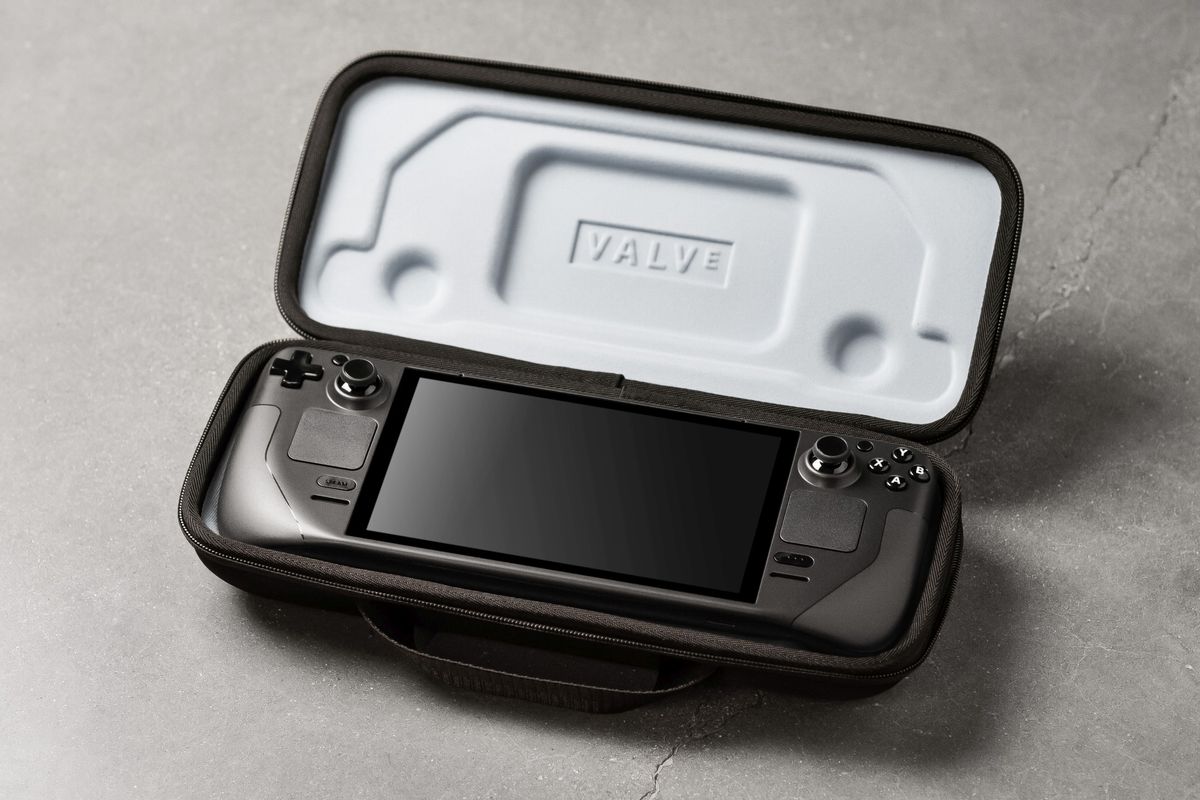
While Valve doesn't share specific sales numbers for any of its products, it would seem that the recent Steam Deck price hikes have had a meaningful impact on sales. According to a new report, sales may have dropped by as much as 80%.
Valve raised the price for its Steam Deck OLED models a couple of months ago due to massively inflated costs for components like RAM and SSDs. As a result, the 512GB and 1TB models both rose in price by more than 40%, with a 1TB Steam Deck OLED now costing over $900.
As spotted by TechPowerUp, estimates from Boiling Steam show that the Steam Deck may have dropped from selling up to 18,000 units per week to up to 3000 units per week in July. Revenue generated by Steam Deck sales may have dropped by as much as 80%, as the system has continued to drop in the Steam Sale charts, after being a consistent top ten seller since launch.
Unfortunately, the likelihood of Steam Deck prices coming back down to normal levels is low. Valve has warned that memory prices are still getting worse and the prices consumers are seeing are lagging behind what OEMs like Valve are seeing by up to six months. If RAM and SSD prices continue to rise like Valve expects, then there is a chance that the Steam Deck and the Steam Machine end up becoming even more expensive over time rather than getting cheaper. This is something we have seen impacting the console market as well, with PS5 and Xbox Series X/S systems now costing hundreds of dollars more compared to their launch day prices six years ago.
KitGuru Says: The consumer tech market is in a very rough spot right now. Have your upgrade plans been put on hold due to current prices?
With the new "Replace Audio" tool, users can update the music on their post at any time while keeping the post's existing likes, comments, shares, and reach intact.
If you think the ongoing memory chipflation-led mayhem in the consumer electronics sphere is the worst it gets, the CEO of SK hynix wants you to think again, especially amid consistent reports that the memory sphere will not enter into a supply-demand equilibrium for many years to come. The year 2027 will see wafer supply grow by 12%, but half of this growth will be consumed by HBM, limiting ex-HBM DRAM bit growth to 15% against a surge in demand of 22% To wit, SK hynix CEO, Kwak Noh-jung, has just projected that tougher times lie ahead even after the […]

 Login
Login