Normal view

There are new articles available, click to refresh the page.
Before yesterdayKitGuru

Valve explains why the original Steam Machine failed

19 July 2026 at 09:00

The Steam Machine officially launched late last month, but this wasn't Valve's first attempt at bringing PC gaming to the living room. The Steam Machine project first began all the way back in 2015 but failed to gain any traction at the time. For the first time, Valve has spoken openly about why that first iteration of the Steam Machine failed. 

In an interview with Bloomberg's Jason Schreier, Valve's Pierre-Loup Griffais explained that while “working with partners is great”, Valve's first Steam Machine failed because they failed to release a good ‘reference' product. Something that would act as a “good example” of what a Steam Machine should offer.
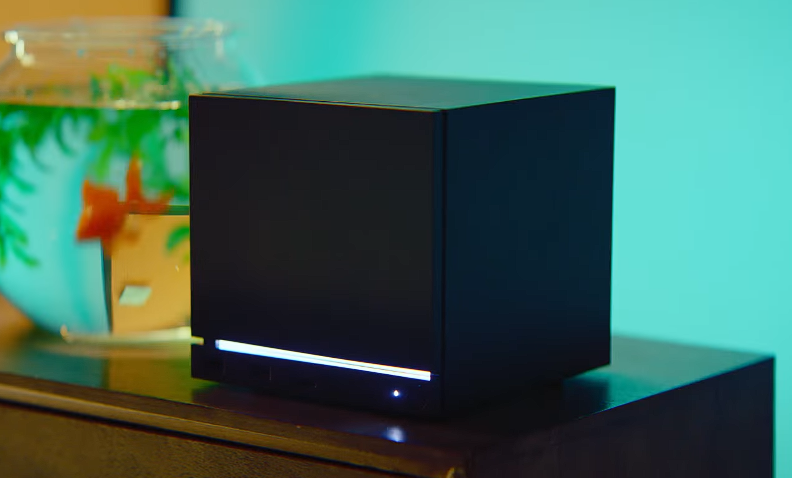
Griffais also added that after the failure of the first Steam Machine, Valve learned that “people just need all their games to be able to have a good experience, you can't just have a subset of the catalog and say this is good”.

While Valve did have a prototype Steam Machine 1.0 back in 2015, it was never put up for sale. Instead, Valve relied on OEMs like Alienware, Zotac and others to make their own Steam Machine hardware, often with worse specs than what Valve had in mind. On top of that, the original SteamOS did not have Proton, the compatibility layer that now enables almost all Windows-based PC games to run on Linux. Steam Machine 1.0 barely had any game support as a result.

“We found out that the only way that this is going to work is if you don't have to do any porting”, Griffais explained. Nowadays thanks to Proton, game developers don't have to do much, if anything, to get a game running on SteamOS, although a bespoke graphics mode can be very helpful for getting newer titles running well on Steam Deck and Steam Machine. Some AAA games have chosen to offer this, including the likes of Cyberpunk 2077 and Spider-Man Remastered.

Valve has fixed those issues with the latest iteration of the Steam Machine, which offers a new base-line performance target, and a much more robust version of SteamOS with greater compatibility for your library of games. At this point, most titles, even unverified ones, will work on SteamOS, but there are some exceptions for certain multiplayer titles that require kernel-level anti-cheat, like GTA Online and Call of Duty.

Unfortunately, the new Steam Machine is in short supply and the waiting list for new stock is backed up to 2027. Due to ongoing issues sourcing memory and SSDs, it is unclear how often Valve will be able to replenish stock, or if it will be able to keep the price point consistent in the long-term.

KitGuru Says: Valve has finally turned SteamOS into a viable gaming platform. Are you considering switching to SteamOS for your next gaming system? 

The post Valve explains why the original Steam Machine failed first appeared on KitGuru.
Valve rolls out SteamOS and Steam Machine verification system

13 July 2026 at 07:53

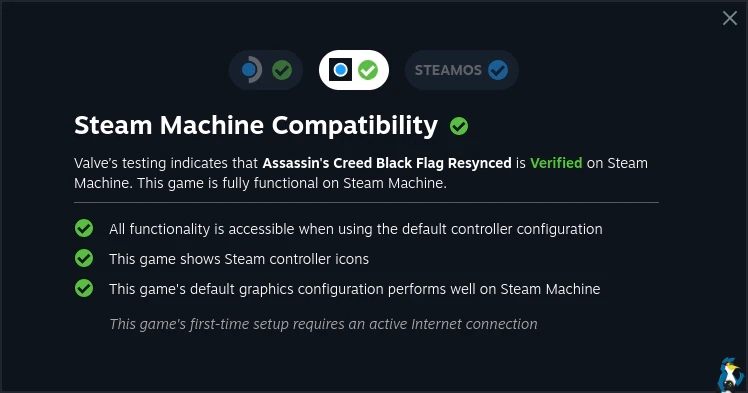
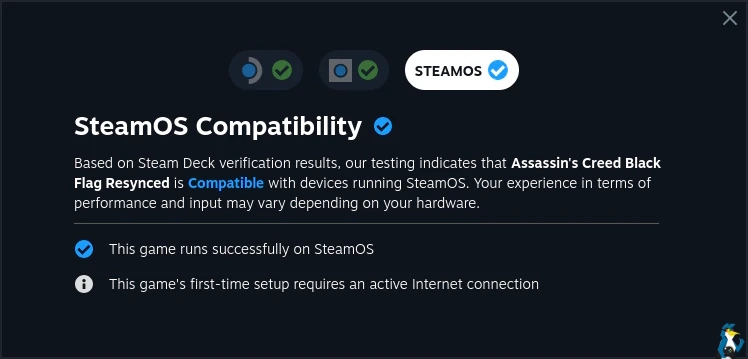
Valve has rolled out its official compatibility rating system for the Steam Machine and SteamOS, introducing a new user interface element within the Steam store.

Spotted by GamingOnLinux, this update is currently viewable on the Steam store and mobile app. Users can find the new ratings by visiting a game's Steam page, scrolling down to the “Steam Deck Compatibility” section, and clicking the “Learn more” button.

Image credit: GamingOnLinux

After pressing the button, an interface will pop up with three distinct tabs outlining specific requirements for the Steam Deck, Steam Machine, and SteamOS. The Steam Machine tab handles metrics for the Steam Machine Verified program, tracking performance and controller compatibility with default settings. Furthermore, the general SteamOS section indicates whether a game functions through the Proton compatibility layer or requires an active internet connection for initial setup and gameplay.

Hints of an upcoming “Steam Frame Verified” rating system have also appeared for certain titles, though Valve has not yet deployed a final store UI for it.

KItGuru says: Expanding the verification ecosystem to cover the Steam Machine ensures players know exactly how a game will perform before launching it.

The post Valve rolls out SteamOS and Steam Machine verification system first appeared on KitGuru.

Valve confirms its working with both Intel and Nvidia on future SteamOS support

23 June 2026 at 16:30

Valve already alluded to ‘expanding support' for hardware beyond AMD on SteamOS in a blog post earlier this week, but now the company has also confirmed to The Verge that it is working directly with both Intel and Nvidia.

Speaking with The Verge, Valve's Pierre-Loup Griffais confirmed that Intel has “been doing a lot of hard work” getting its graphics stack up and running on SteamOS. However, an Intel spokesperson added that it didn't have “anything to share timeline-wise on SteamOS support”.

While it sounds like Intel is the closest to getting SteamOS support, Griffais also told the outlet that it is collaborating with Nvidia “very closely”, which is interesting, as for many years Nvidia has avoided the Linux gaming space. Valve itself also has a growing team working on Nvidia hardware to bring support to SteamOS.

While Valve is working with both Intel and Nvidia at this point, it does not expect to expand SteamOS support to their hardware this year, so we will have to wait and see.

KitGuru Says: Intel itself just got into the gaming handheld space, though so far, the first handhelds to use the new Arc G3 processor are Windows-based. That could change in the not-too-distant future. 

The post Valve confirms its working with both Intel and Nvidia on future SteamOS support first appeared on KitGuru.

AMD submits HDMI 2.1 FRL patches for open-source Linux driver

4 May 2026 at 12:00

AMD has submitted a series of Linux kernel patches to the AMDGPU driver that introduce support for the HDMI 2.1 Fixed Rate Link (FRL) feature. The move follows years of rejection from the HDMI Forum regarding open-source implementations of the standard. This initial support enables higher bandwidth for Radeon GPUs on Linux, supporting resolutions such as 4K at 120Hz and 5K at 240Hz.

As noted by AMD Linux engineer Harry Wentland (via Phoronix), AMD had developed the code in 2024. Still, the HDMI Forum previously blocked its release, citing concerns about exposing proprietary intellectual property in open-source stacks. 

HDMI-2.1.jpg

The current patch set submitted by Wentland implements FRL signalling, replacing the legacy TMDS mechanism used in HDMI 2.0. While FRL support has passed representative compliance testing, other HDMI 2.1 features such as Display Stream Compression (DSC) and Variable Refresh Rate (VRR) are currently in testing and will be submitted in future updates.

The patches are now under review on the Linux kernel mailing list. If approved, the code is expected to be integrated into the Linux v7.2 kernel release. This implementation would allow Linux users to access the full 48Gbps bandwidth of the HDMI 2.1 standard without relying on closed-source firmware or third-party workarounds.

Discuss on our Facebook page, HERE.

KitGuru says: With the Steam Machine supposedly right around the corner, this update comes right on time, allowing the console to be on par with equivalent Windows systems.

The post AMD submits HDMI 2.1 FRL patches for open-source Linux driver first appeared on KitGuru.

Microsoft reportedly wants to make Windows 11 as good as SteamOS

30 April 2026 at 08:45

Over time we have seen an increasing amount of frustration towards Windows 11, with the ubiquitous PC OS suffering from all sorts of issues, including a substantial lack of optimisation. While Microsoft have promised previously that they are working on a solution, details surrounding the company’s ‘Project K2’ have now been unveiled.

As reported by the publication WindowsCentral, Microsoft is currently working on a project which is intended to address “the biggest complaints that people have about Windows 11 today.”

Alongside changes to the OS as a whole, benefiting both casual and power users, Project K2 is said to also be impacting the gaming side of Windows.

According to the report, Microsoft is looking to Valve for inspiration, with the Windows maker said to be viewing SteamOS “as the benchmark, and is working to optimize the platform so that steamOS and Windows gaming performance are comparable.”

Microsoft Windows 11

Full details on what they are planning has not been shared, but per the insider, Microsoft is hoping to bring Windows up to the level of SteamOS “within the next year or two” thanks to “foundational changes that are being made to the platform in the coming months.”

Of course, all of this work is likely to also be in service of Microsoft’s next-gen Xbox, with the console said to be closer to a Windows PC than ever before.

Either way, Windows 11 is in serious need of a ton of work, and so hopefully this Project K2 proves to be the solution Windows users have been waiting for.

KitGuru says: What’s your experience been with Windows 11? Is it a notable downgrade compared to Windows 10? Will project K2 be the miracle cure we’ve been waiting for? Let us know your thoughts down below.

The post Microsoft reportedly wants to make Windows 11 as good as SteamOS first appeared on KitGuru.
❌
❌