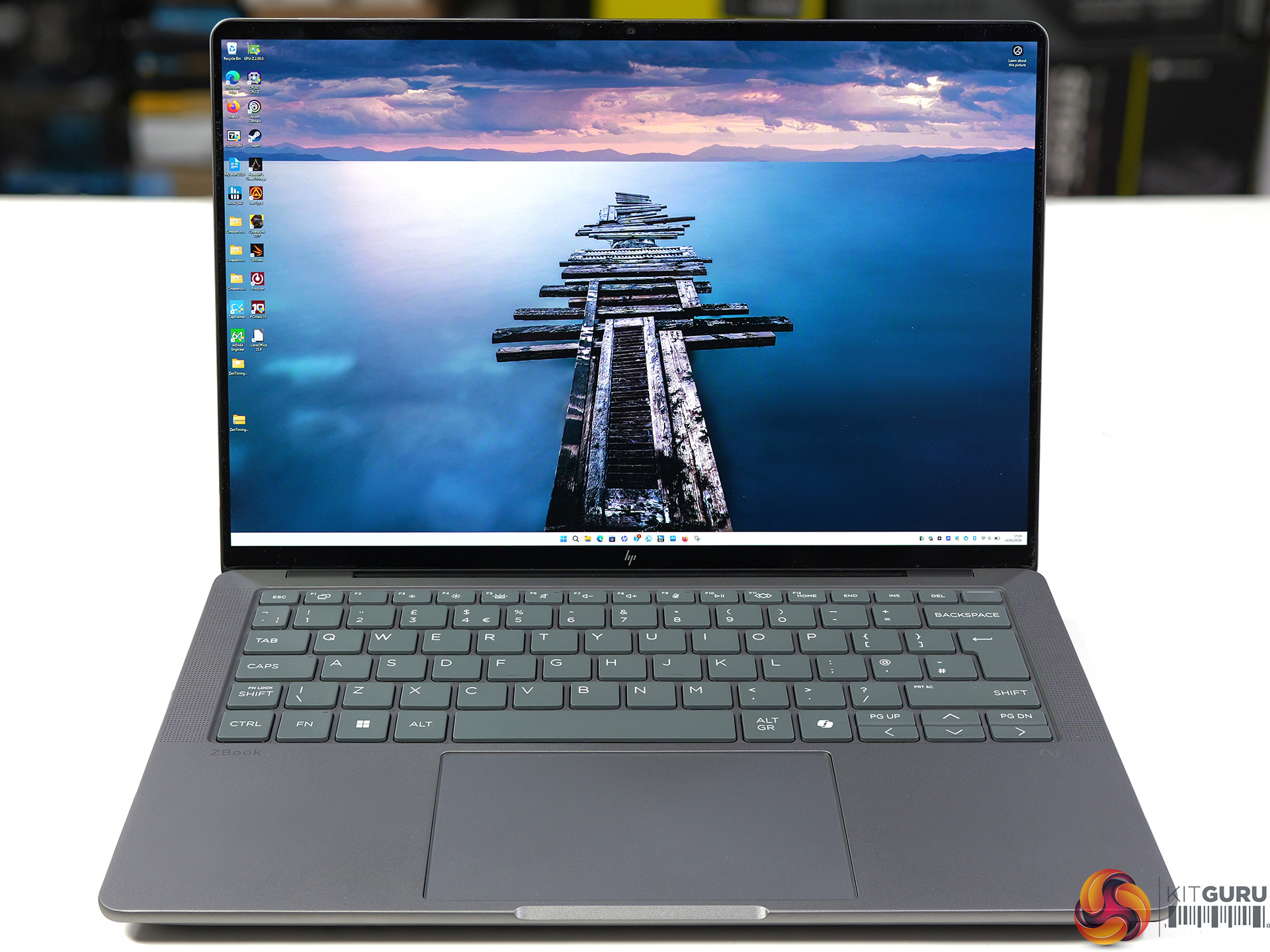
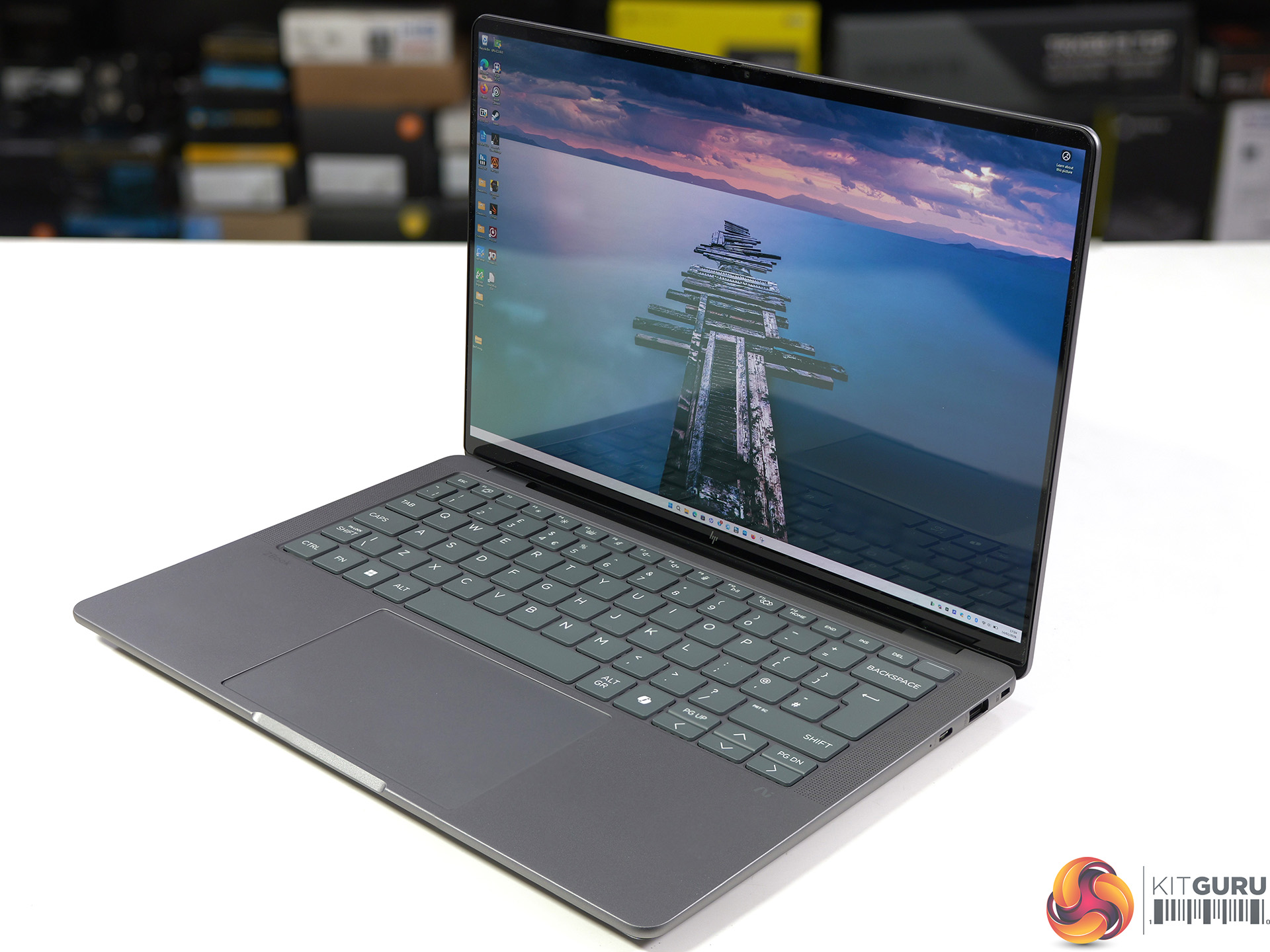
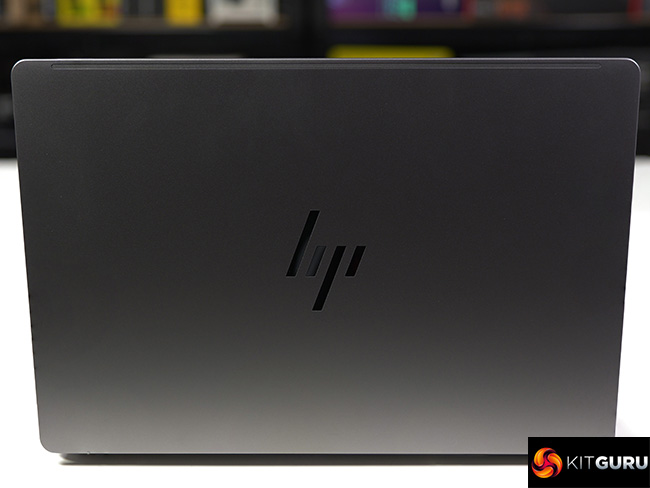
Our review of this HP Zbook Ultra G1a features the AMD Strix Halo APU which was announced at CES 2025. Despite its age this is the most powerful APU that money can buy, and both the CPU and graphics are truly impressive. To make things interesting we put the HP laptop head-to-head with Intel’s brand new Panther Lake Core Ultra X9 388H so we could see the best integrated graphics in action.
Timestamps
00:00 Start
00:52 AMD Ryzen AI Max+ Series
03:36 Intel Core Ultra Series 3 thoughts
04:19 A quick test or 2
06:32 Physical Size / Battery
07:37 Connectors / Keyboard / Looks
08:33 Hardware
09:17 Comparisons and Performance Hardware
11:13 GeekBench 6 Multi Core
13:20 Geekbench 6 Single Core
13:53 Cinebench 2026 Multi Core / Points Per watt
14:44 Cinebench 2026 Single Core
15:24 Cinebench 2024 Multi Core
15:54 Cinebench 2024 Single Core
16:15 Cinebench R23 Multi Core
16:34 Cinebench R23 Single Core
16:44 7-Zip V25 Benchmark
16:56 Aida64 Memory Bandwidth
17:09 3DMark Fire Strike
17:52 Assassins Creed Mirage
19:57 FarCry 6
21:48 Cyberpunk 2077
24:21 PCMark 10 Battery Test
25:05 Closing Thoughts

Main Features
- PRO Processor: Take charge of your work with the latest AMD Ryzen AI MAX processors, delivering cutting-edge CPU capabilities.
- Integrated graphics: Experience ultra-powered performance, power through AI demanding workflows with AMD Radeon graphics and dedicated AI accelerators.
- LPDDR5X-8533 MT/s Memory: Up to 128GB of memory. The unified memory architecture allows you to allocate up to 96GB of memory exclusively to the GPU.
- Impressive expandability: Blitz through multiple tasks and ditch external drives with slots for up to 4TB local storage.
- Up to 50 TOPS: Ensure smooth and responsive operation, tackle more and more demanding tasks, with the power to run AI locally.
- All day battery life: Maximise your productivity with a long-lasting battery life, with HP Fast Charge reaching up to 50% in only 30 mins.
- HP Smart Sense: Optimise your comfort and performance with an AI tool that adapts to your use. Adjust fan noise, conserve energy, and regulate CPU temperature for an optimal PC experience.
- HP AI Companion: Enhance your productivity with a range of AI tools and solutions designed to simplify your daily tasks and keep you efficient throughout the day.
Specification
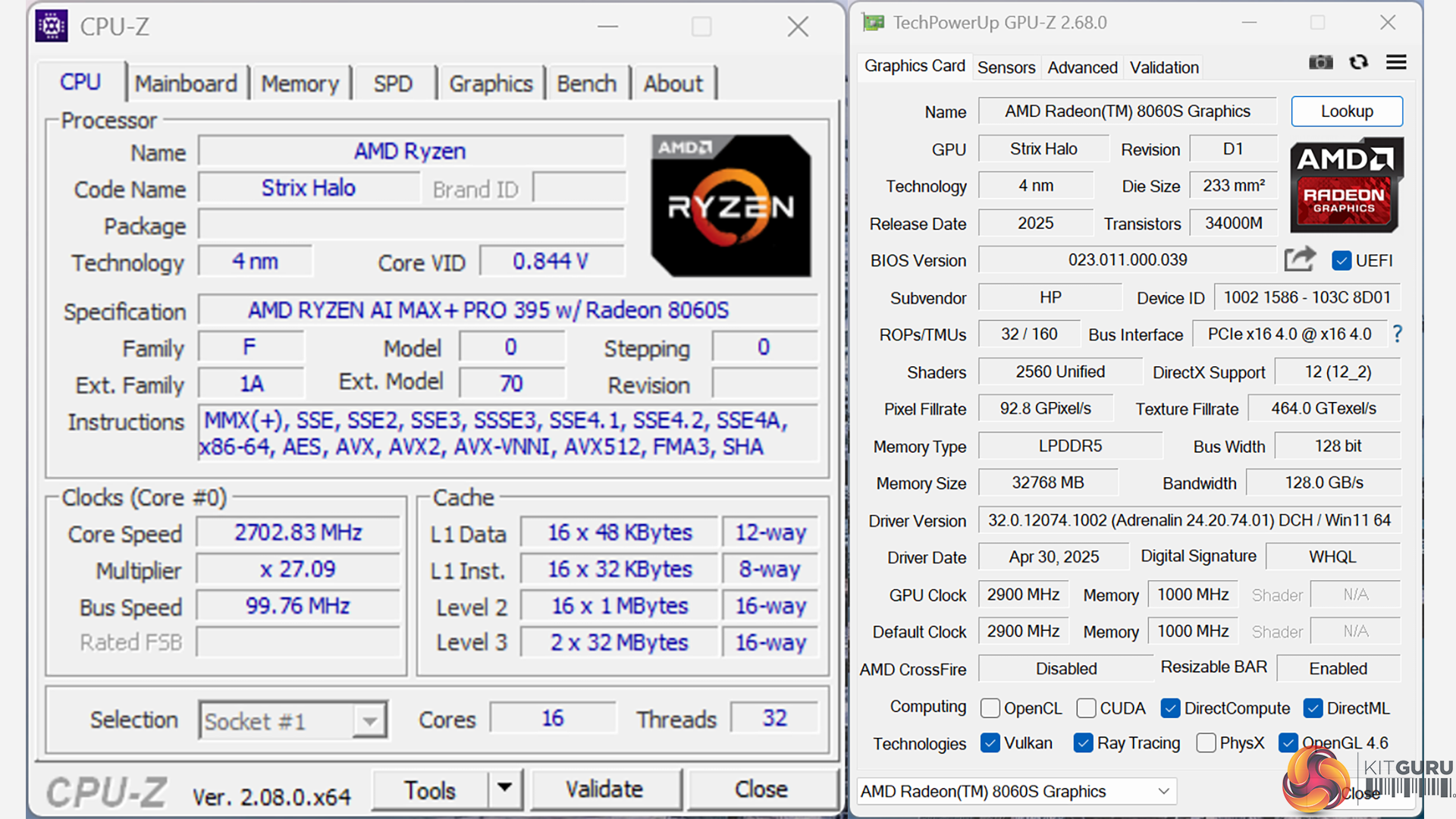
- Processor: AMD Ryzen AI Max+ PRO 395 (up to 5.1 GHz max boost clock, 64 MB L3 cache, 16 cores, 32 threads)
- Integrated graphics: AMD Radeon 8060S (40 cores, 32GB memory)
- Neural processing unit: AMD Ryzen AI (50 NPU TOPS)
- Memory: 128GB LPDDR5x-8533 MT/s (onboard)
- Display: 14-inch touchscreen, 2.8K (2880 x 1800), OLED, 120Hz, 400 nits, 100% DCI-P3
- Internal storage: 2TB PCIe Gen4 NVMe TLC SSD
- Wireless: MediaTek Wi-Fi 7 MT7925 (2×2) and Bluetooth 5.4
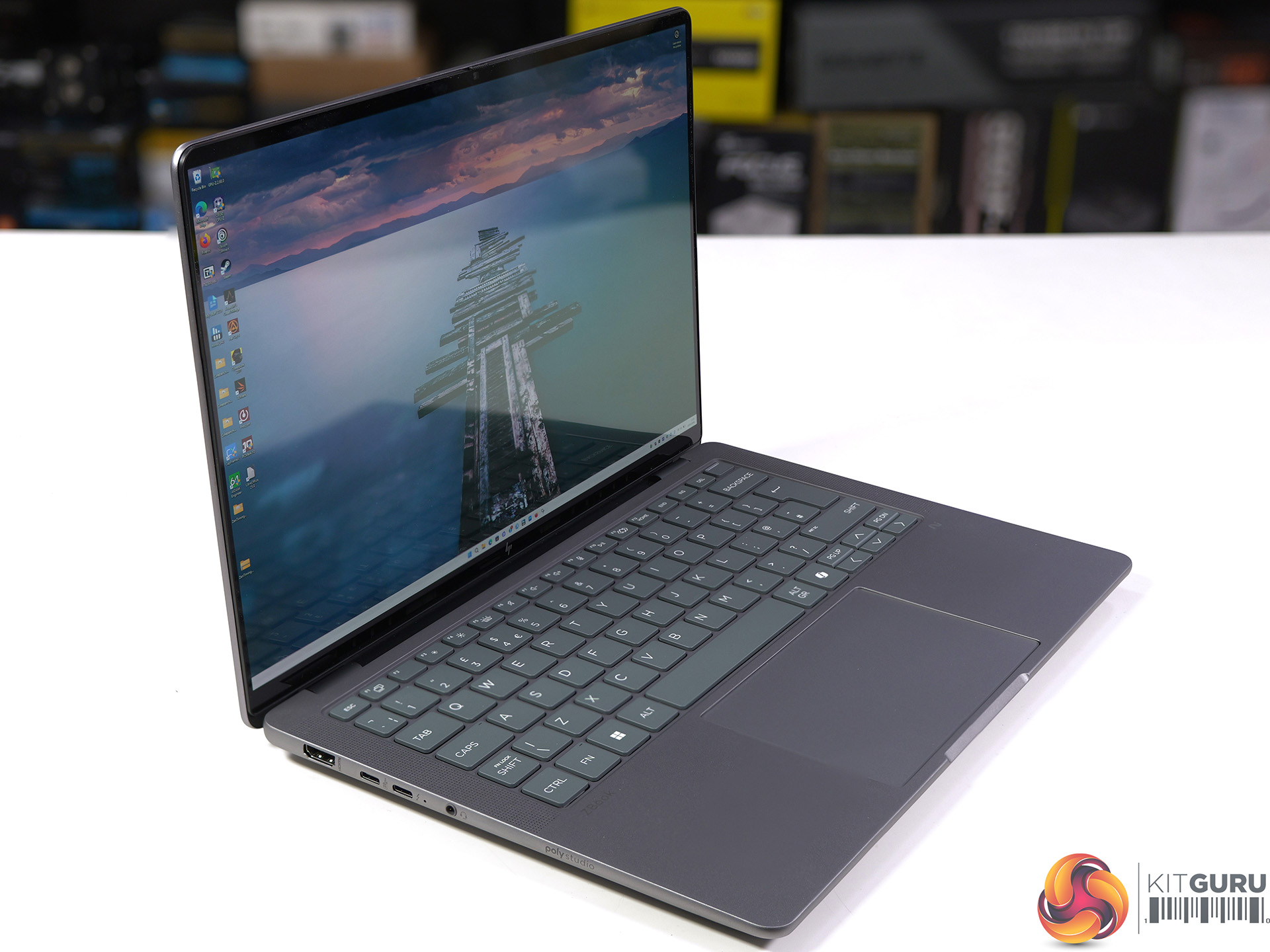
- Ports (left side):
- 1x USB Type-C 10Gbps (USB Power Delivery, DisplayPort 2.1)
- 1x HDMI 2.1
- 1x Headphone/microphone combo
- 1x Thunderbolt 4 (USB Type-C 40Gbps, DisplayPort 2.1)
- Ports (right side):
- 1x USB Type-A 10Gbps
- 1x Thunderbolt 4 (USB Type-C 40Gbps, DisplayPort 2.1)
- Kensington lock slot
- Camera: 5MP IR
- Audio: Poly Studio; 4 integrated stereo speakers (1W / 8 ohm per speaker) with discrete amplifiers; 2 integrated dual-array digital microphones
- Dimensions: 31.2 cm (W) x 21.5 cm (D) x 1.8 cm (H)
- Weight: 1.58 kg (plus 0.53 kg charger)
- Power adapter: 140W USB Type-C
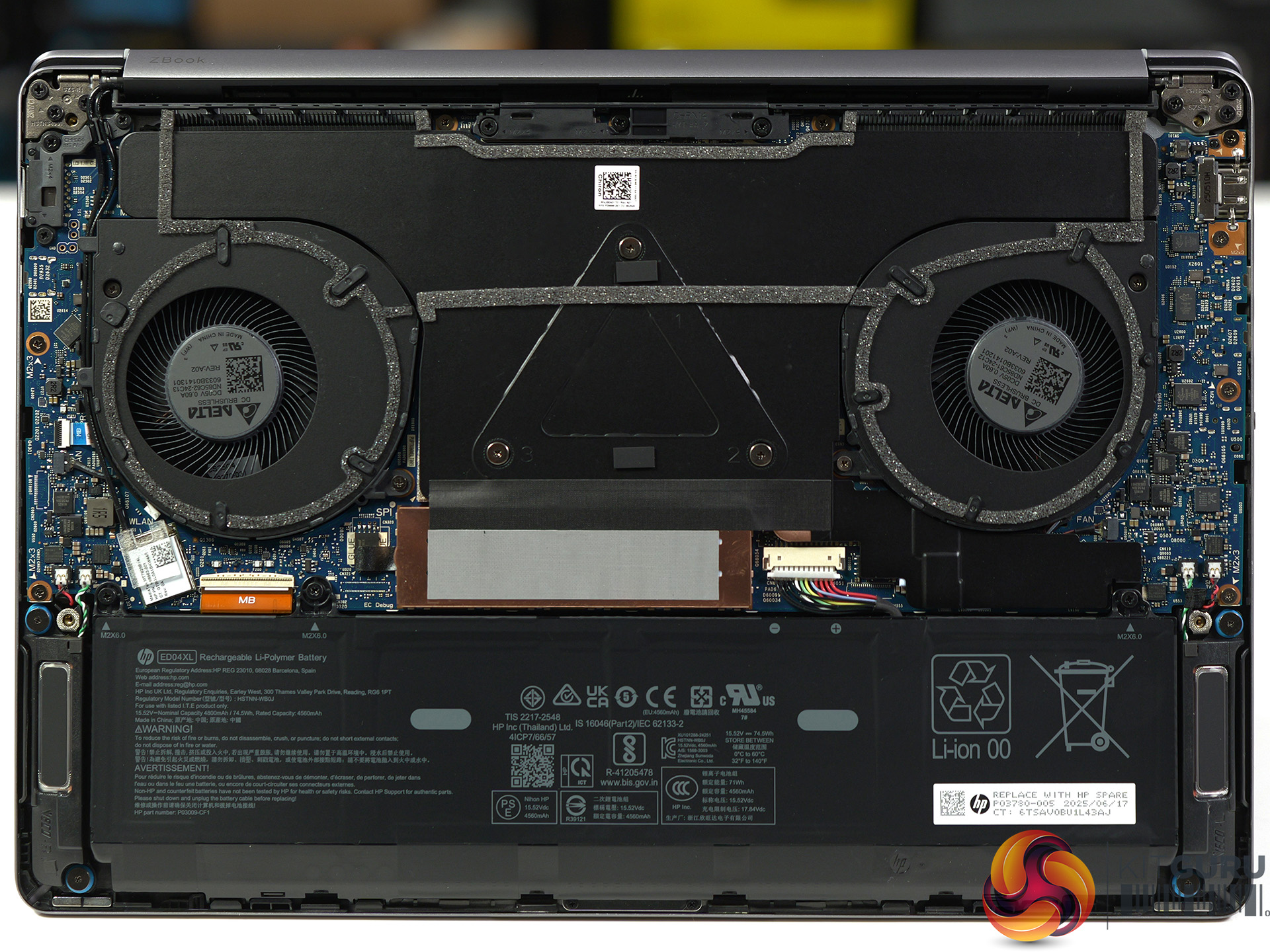
- Battery: HP XL-Long Life 4-cell, 74.5Wh polymer
- Operating system: Windows 11 Pro
Testing and Performance
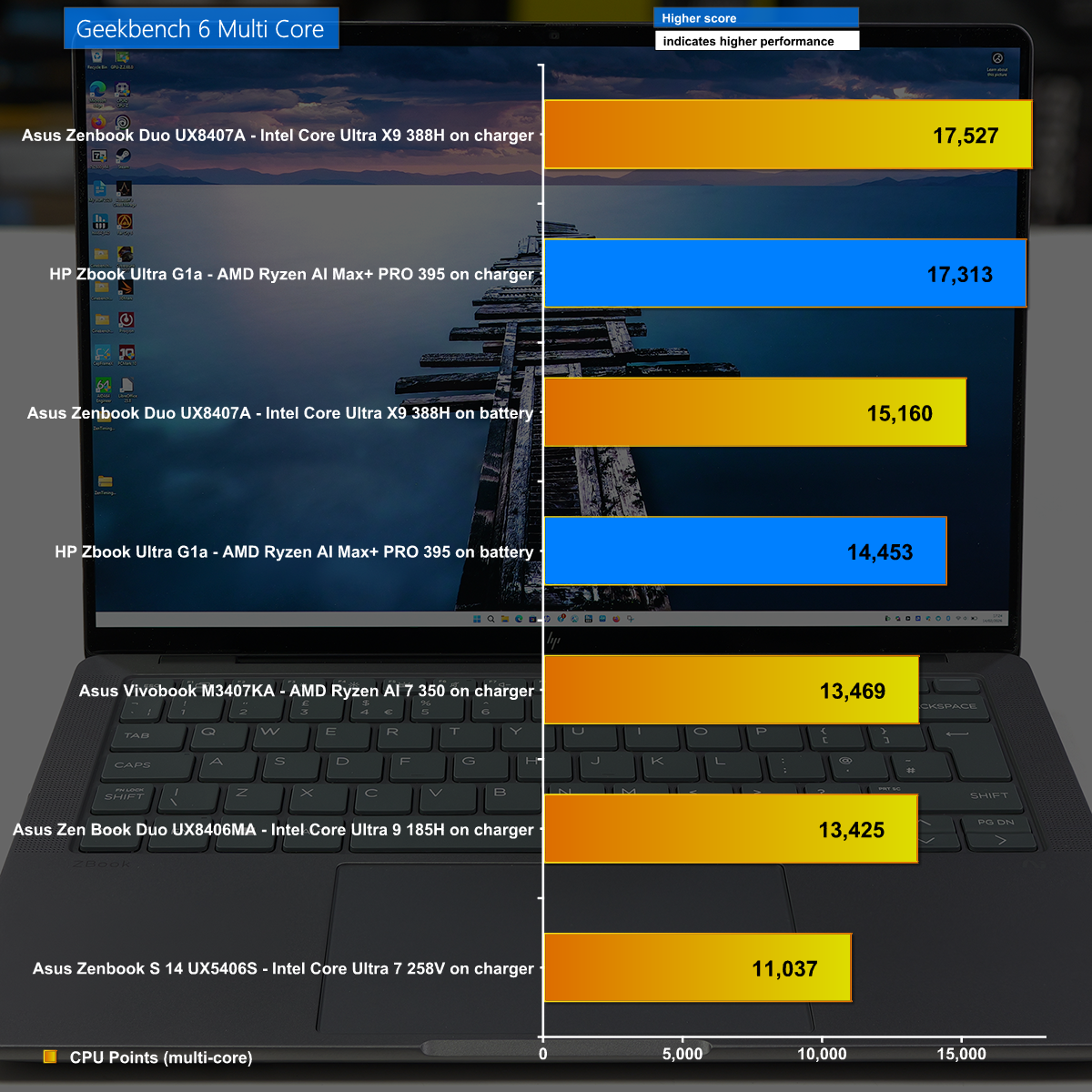
Geekbench 6 Multi Core
In Geekbench 6 Multi Core we see the HP Zbook in an effective tie with the Asus Zenbook Duo and Intel Panther Lake. This indicates that Core Ultra X9 388H has something extra that makes up for the lack of pure CPU grunt.
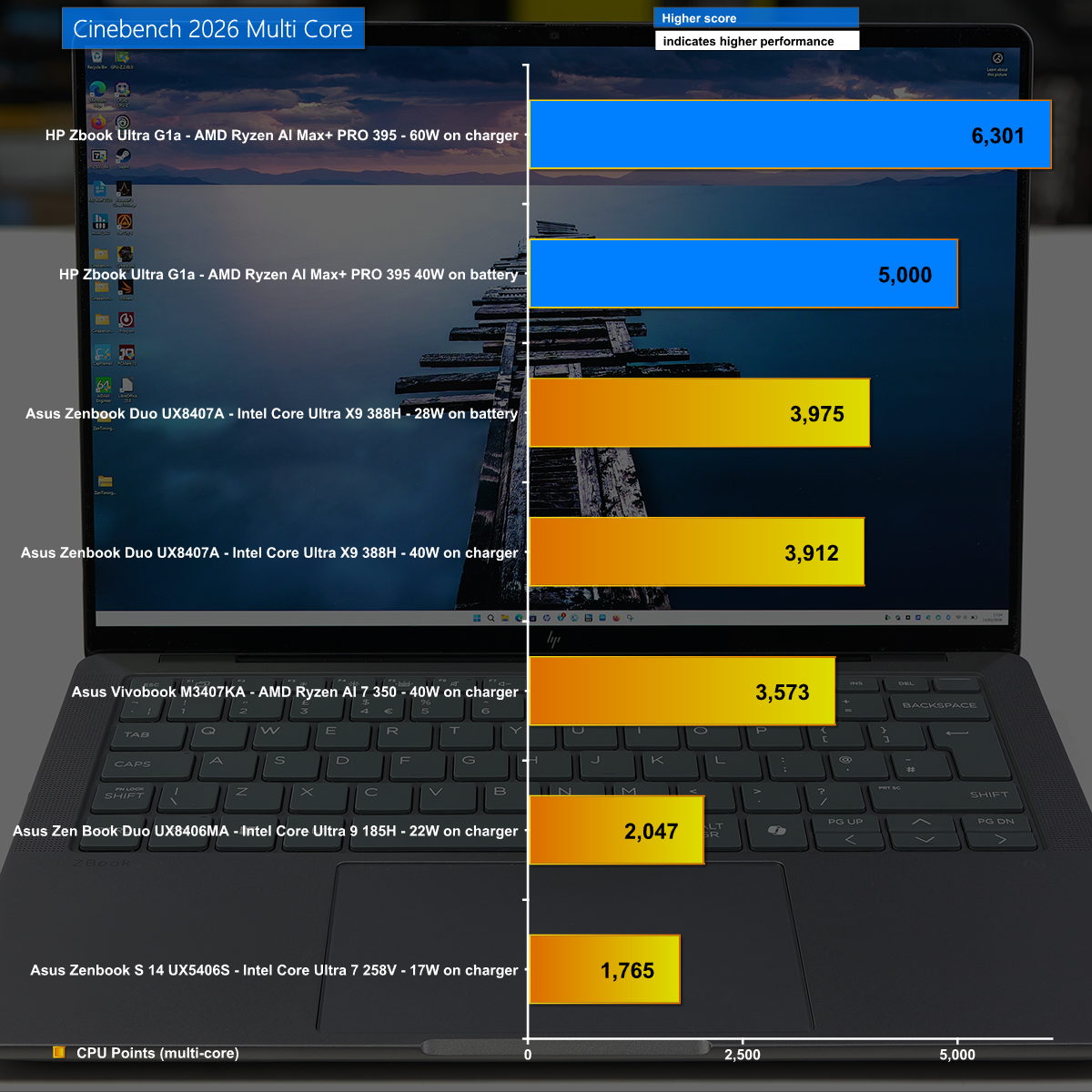
Cinebench 2026 Multi Core
This is the result we expected in Cinebench 2026 Multi Core with the AMD Strix Halo powering the HP Zbook to a clear victory by a massive margin.
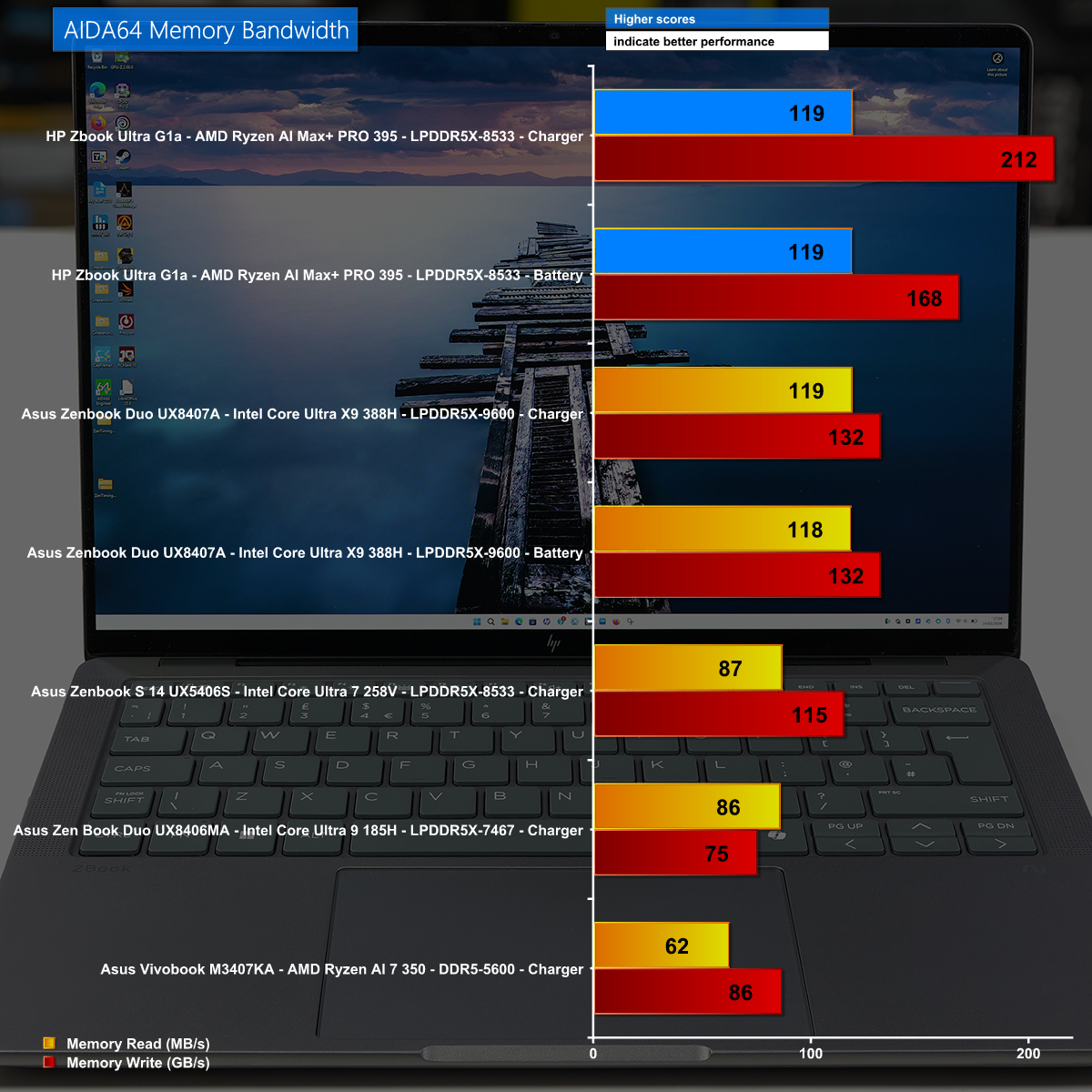
AIDA64 Memory Bandwidth
The HP Zbook is loaded with a massive 128GB of LPDDR5x-8533 and the Strix Halo has a quad channnel memory controller which combine in AIDA64 Memory Bandwidth to deliver a decisive victory.
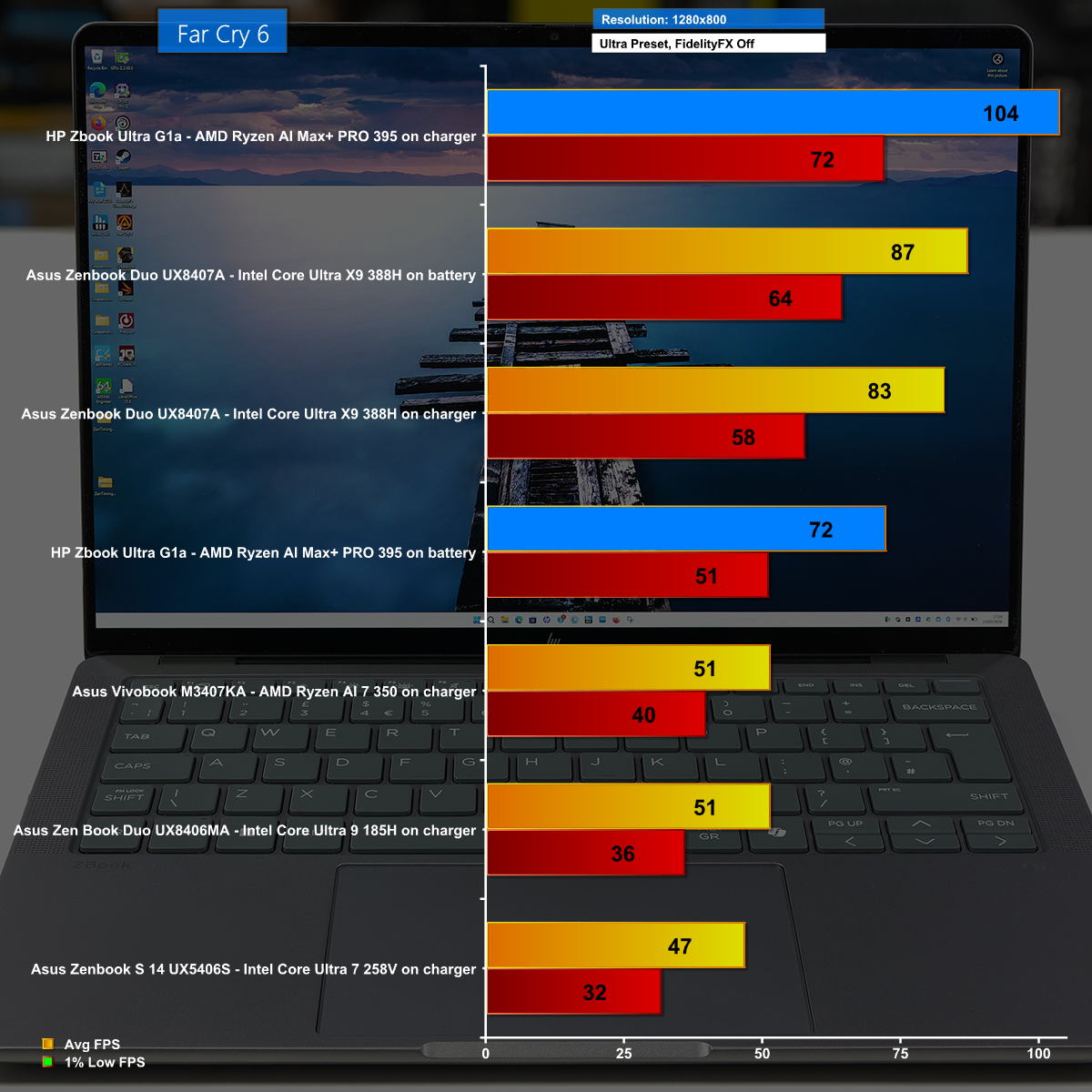
Far Cry 6 at 1,280×800 on Ultra Preset
We show a number of gaming tests in our video. This particular test shows a low resolution with the clever image enhancements disabled, and the result is the HP Zbook runs at over 100fps on average which is impressive.
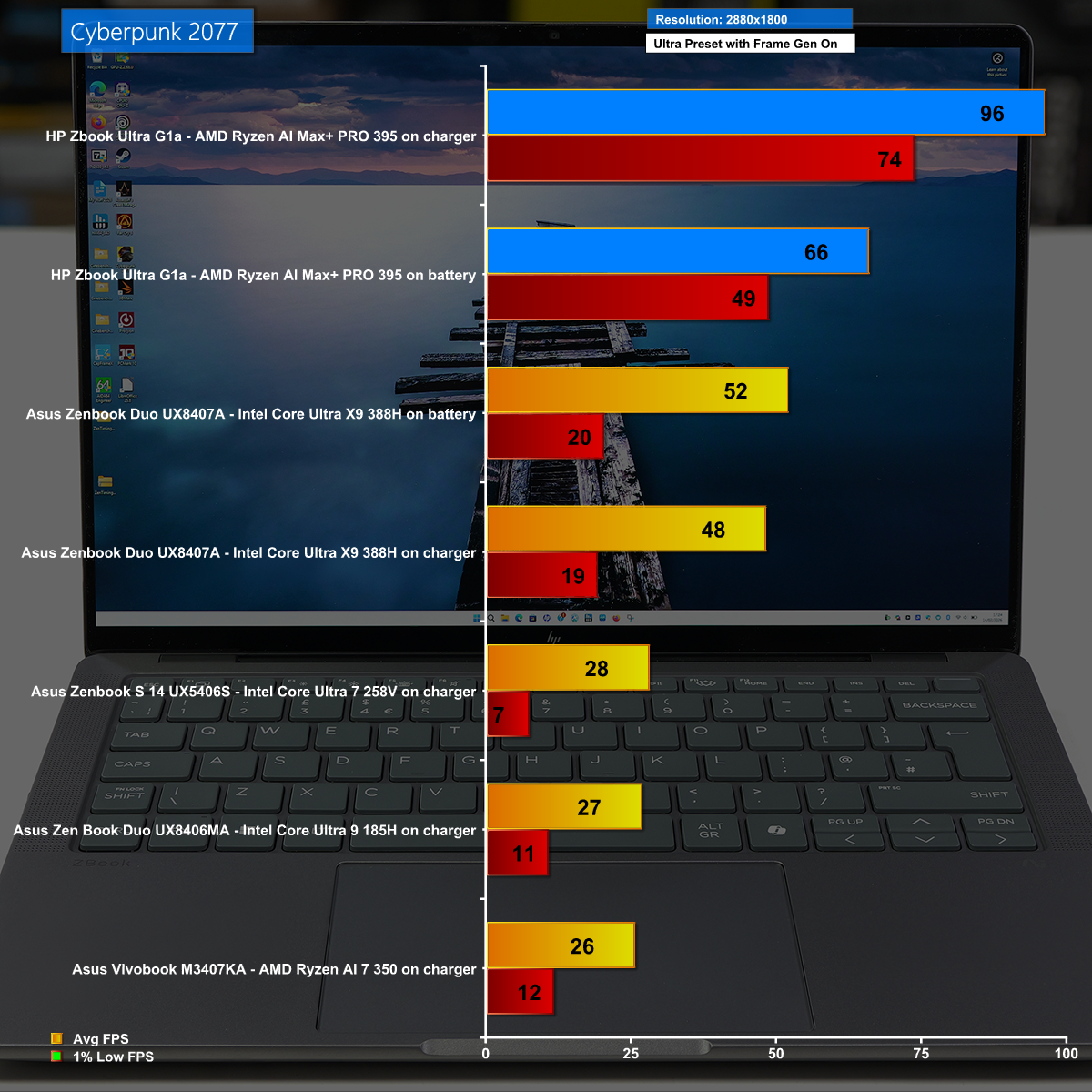
Cyberpunk 2077 at 2,880×1,800 with Frame Generation Enabled
Cyberpunk 2077 is a stiff test for any laptop and 2,880×1,800 is a huge resolution so it comes as quite a surprise to see the HP Zbook using Frame Generation to play at nearly 100fps.
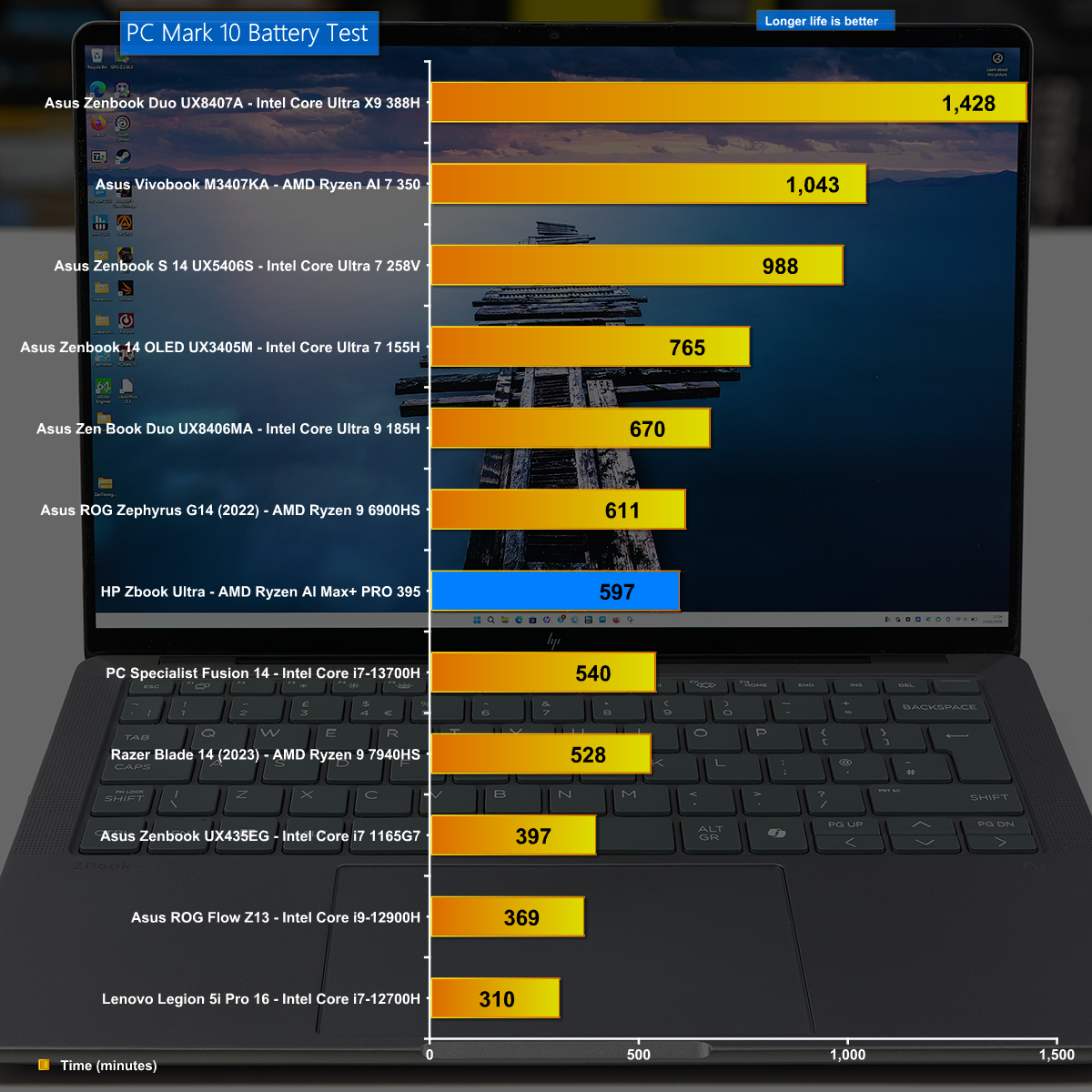
Battery Life
The HP Zbook does well in our battery test and shows that you can work all day on a single battery charge. Having said that, you will want to take the charger with you to guarantee you get maximum performance.
Closing Thoughts
If KitGuru were to invent an award for Most Stealthy and Under Stated Product Ever, the HP Zbook Ultra G1a would make the list and would likely win the award. It looks like a dull, grey 14-inch laptop that is thin and light yet it packs the most amazing punch and delivers epic performance from the AMD Strix Halo APU without any need for add-in graphics.
You may have noticed in our video that we barely discuss operating temperatures and don't mention noise levels at all, and that is for good reason. The innards typically run at 60 degrees C on battery and 70 degrees C on charger, and the cooling system wasn't the least bit intrusive. It is a remarkable laptop that is mainly held back by its hefty £3k+ price tag and slightly affected by the annoying amount of HP software.
You can buy the HP Zbook Ultra G1a for £3,204 HERE.
Pros:
- Epic CPU and GPU performance from AMD AI Max+ PRO 395.
- Impressive battery life for a mobile workstation.
- Compact form factor that is highly portable.
- Huge memory bandwidth from quad channel DDR5.
Cons:
- Very expensive.
- 3rd party monitoring utilities continue to be confused by AMD APUs.
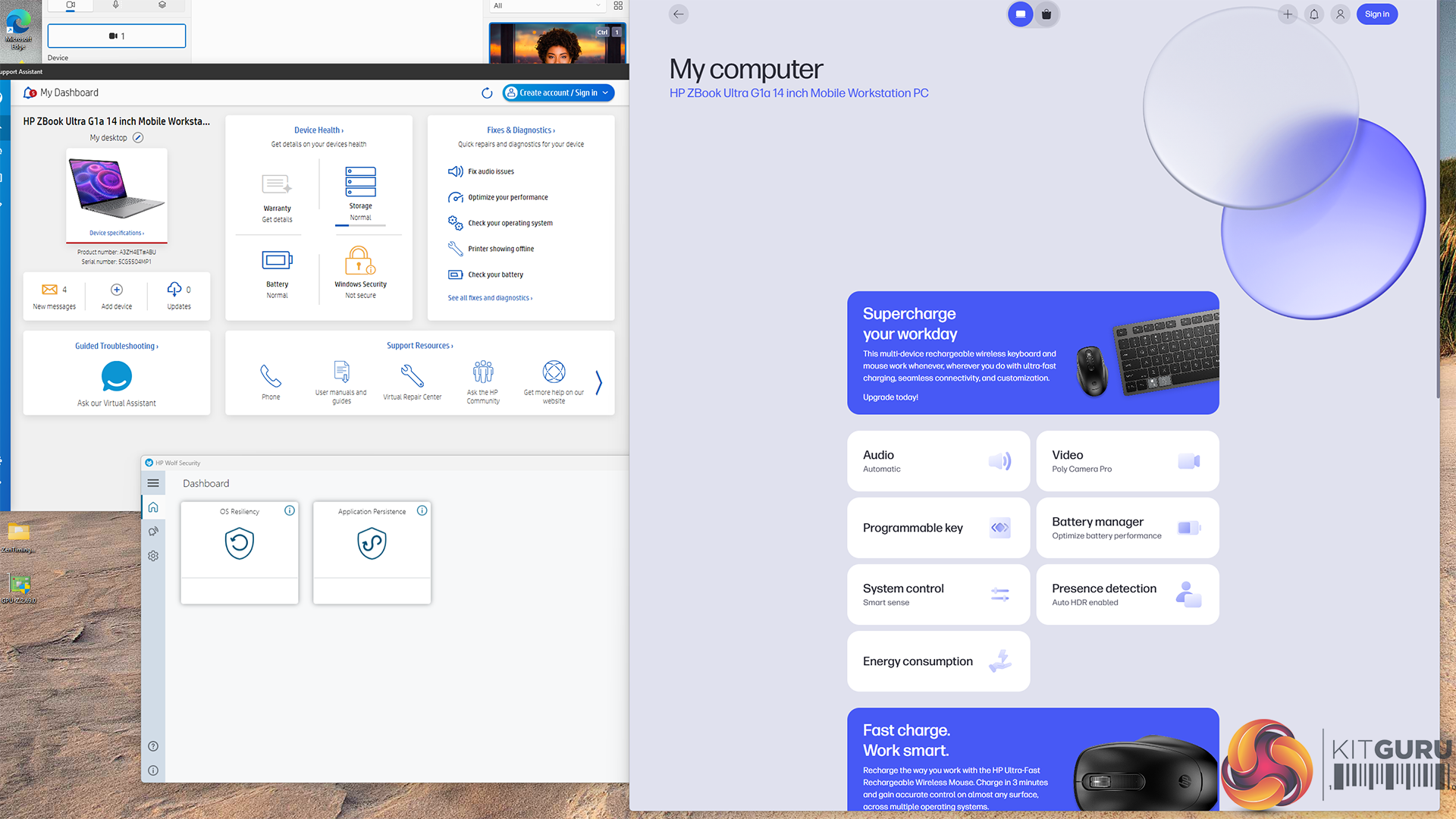
- HP includes a number of pieces of software instead of a single utility.
KitGuru says: The HP Zbook Ultra G1a is deeply impressive and shows we can live without Nvidia graphics.
The post
HP Zbook Ultra G1a Review (Strix Halo) first appeared on
KitGuru.

 Login
Login