Reading view

There are new articles available, click to refresh the page.

New York State recommends demanding AI data centers pay $1 million in community investment per megawatt — framework advises towns to plan for maintenance costs, site abandonment, and other contingencies

New York State Governor Kathy Hochul has just announced the Community Investment Framework (CIF), which serves as a negotiation guide for towns and municipalities in the state when they’re dealing with data center developers, recommending that communities demand $1 million per megawatt for the privilege of housing data centers. According to Empire State Development [PDF], the state’s economic development agency, the CIF offers “a structured approach to identifying, negotiating, and documenting investments from data center developers/operators/owners that address local priorities and create lasting community benefits.”
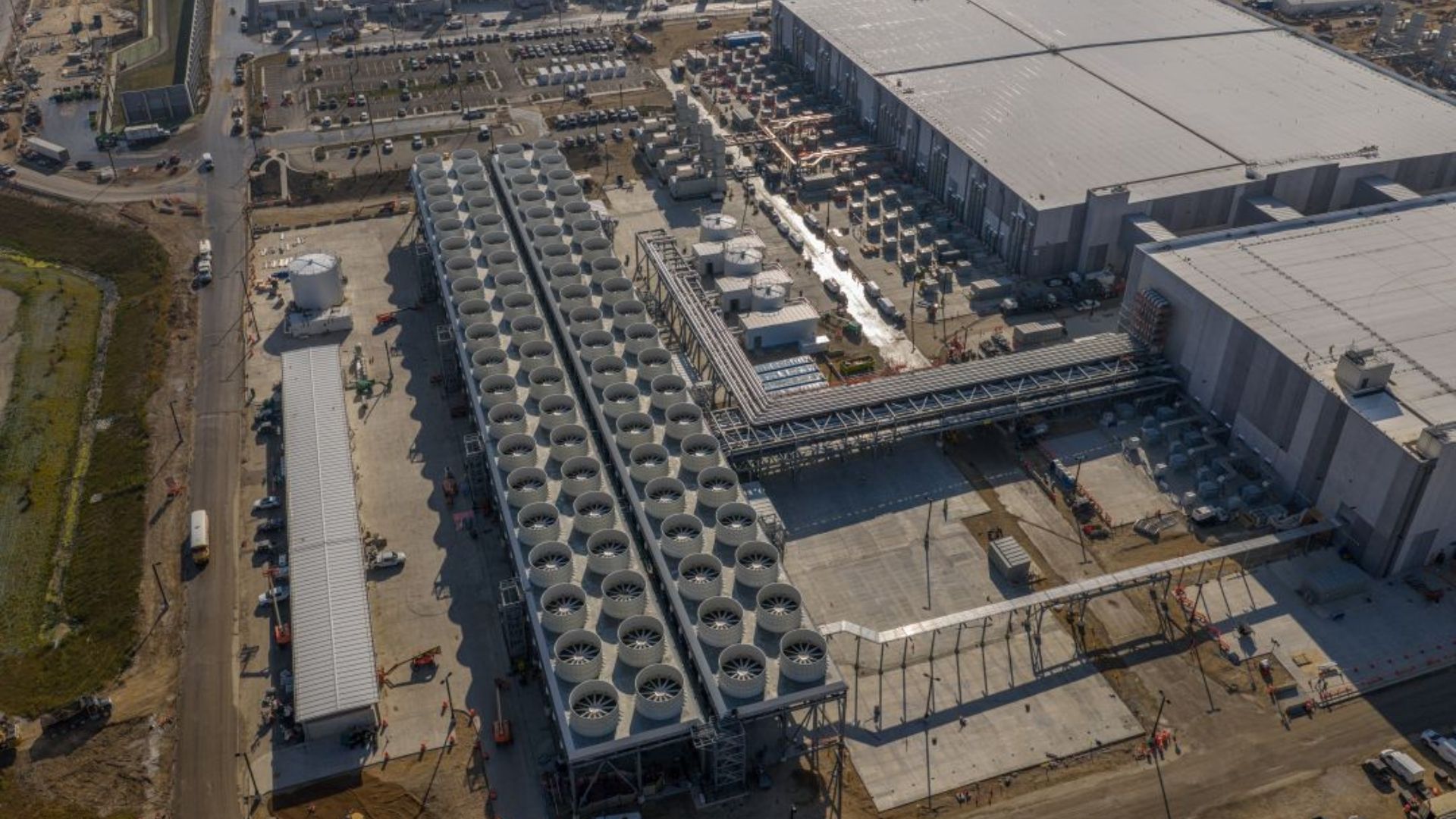
The document recommends six principles during data center negotiations: an investment benchmark of $1 million per megawatt of utility demand; long-term planning, including plans for when the data center leaves the facility; a roadmap to manage ongoing costs for projects funded through the CIF; a list of local priority investment areas to address the needs of the community; local ownership confirmation of projects receiving funding from data centers; and clear timelines for any program, especially those that require phased, multi-year investments. Aside from these, it also gave several recommendations, such as focusing on community engagement, engaging decision-makers and counsel, incentivizing good faith and timely negotiations, and maintaining flexibility, among others.

While data centers have been around for decades now, AI data centers are relatively new and are putting more pressure on electricity and water supplies. They also offer limited job creation and community value compared to other industries, which is why Loudoun County, Virginia, which hosts 250 data centers, has started reining in these facilities as well. More than 500 states, counties, and localities across the nation have already passed a moratorium or temporary ban against data centers, including states like New York and Texas. However, these have an expiration date, meaning government units only have a limited time before they would have to start processing data center applications once more.

This framework is a useful guide for when municipalities have to start negotiating with data center developers again, helping ensure that these projects would bring more benefit to the community while limiting their negative effects. One Pennsylvania town actually created a similar comprehensive document, outlining 43 specific demands before approving a proposed data center in Plymouth Township. Unfortunately, the said developer decided to cancel the application and file a new one instead, with the town accusing it of demanding approval “by tantrum.”

Reports suggest that various data center developers have requested up to 9,000 MW from the state grid. However, this does not include operators that are opting to bring their own power sources or build their own power plants on site. So, if New York towns and municipalities adopt the CIF in their negotiations with data center developers, this could potentially add $9 billion or more towards their coffers. This may seem like a lot of money, but it’s a drop in the bucket compared to the expected $32 trillion that some experts suggest will be invested in data centers by 2050.


Hackers find encryption keys stored on stolen Flock camera despite company's denials — group extracts more than 27,000 clips, 1.6 million images captured in a span of 21 days from the device

Flock says that its cameras are protected by on-device encryption, and even though a security researcher noted some flaws in its system, the company said that physical access is still required to exploit them and that the images are only briefly retained on the device before they’re forwarded to the cloud. However, 404 Media says that a hacking group called stegan0gram found out that this wasn’t the case after they took down a Flock camera positioned over a roadway and analyzed the data stored inside it.

While the hacking group failed to access the most sensitive data stored on the Flock camera, they were still able to access its Android operating system and found two storage partitions, labeled “vendor” and “media.” The latter was found to contain an encryption key that unlocked another partition containing all the media files from the camera. 404 Media said that that particular Flock camera captured about 1.6 million images across 21 days, detecting around 50,200 vehicles and, more concerningly, 11 people. There were also 27,321 video clips saved on the device — MP4 files with a 1024 x 768 resolution that lasted about a second or two.

Abilities like reading license plates and describing vehicle characteristics like color, make, and model are done on Flock’s servers, but these cameras still retain some edge AI capabilities. This includes detecting people, vehicles, bicycles, and plate-like shapes, which it then crops and sends to the company servers, alongside the original images. Although the software was found to have some facial detection capabilities, the publication said that this was the stock capabilities included in the operating system and wasn’t used by the camera.

This discovery by the hacking group raises another issue with Flock’s system, which is facing a lot of controversies when it comes to privacy and misuse. For example, several police officers have been arrested for using it to stalk romantic partners, while another incident over a mistyped license plate resulted in the unnecessary “ambush” of a car reviewer. Because of this, some towns and cities have ended their contracts with the company, while other people are taking things into their own hands to blind the controversial cameras.

Nevertheless, some critics say that those who are against the deployment of these systems should refrain from damaging or sabotaging these devices, as doing so will only make the authorities feel that these systems are needed. “I think that type of vigilantism will only crystallize the police and the state at large in their belief that this tool is necessary,” former Pawtucket, Rhode Island, police officer Noel Pichardo told the news website. “The longer the state continues to ignore the groanings of their constituents who are against this type of surveillance, the more this will happen.”

UK research agency backs drone-based internet service experiment with lasers, microwaves, and gravity waves used for wireless power — Britain invests $94 million into Starlink alternative

While China and Russia rush to build a SpaceX competitor, the UK is taking another route by developing an alternative to satellite internet that relies mostly on aircraft. Its Advanced Research and Invention Agency (ARIA) is funding 18 projects aimed at building aircraft that will deliver wireless communications to areas in the UK and the rest of the world that are not served by terrestrial networks. According to The Register, the program, called Enduring Atmospheric Platforms, aims to have a unit with a 300-watt communications payload aloft and holding station for a week.

These units are called high-altitude pseudo-satellites (HAPS), with ARIA allocating $94 million over three and a half years for these projects. There are three technical areas in focus at the moment: TA1, which aims to develop the underlying technologies; TA2, which looks into the integration and testing of the developed systems; and TA3, which will concentrate on actual deployment.

Two startups have proposed multiple drone systems that will cover the entire United Kingdom — Carousel, by Menapia, wants to build a constellation that can hover at altitudes of up to 12 miles, while Enduring Drone Networks, by VFP Aerospace, proposes a relay of units that automatically fly back to their ground station for charging and servicing, with a cost of about $67,000 per drone.

Two other proposals suggest wireless power — one is Scalable Laser Ltd, which is working on a laser-based technology that pairs high-power laser diodes on the ground with advanced photovoltaic receivers in the air. On the other hand, Space Solar Engineering Ltd wants to use radio frequencies, like microwave, to deliver power to airborne units. There’s also a more novel approach from the University of Bath, which plans to use atmospheric gravity waves — using the upward movement of air caused by weather fronts and geographical features and the subsequent pull of gravity that brings it back down — to extend the range and endurance of HAPS aircraft.

"This research expands the UK's leadership in high-altitude platforms to become the place where this industry is designed, built, and scaled," says ARIA program director Rico Chandra. "Getting there means backing bold ideas, from fixed-wing solar aircraft to designs nobody predicted, including aircraft that fly on spinning wings instead of propellers."

Chinese state media counters Anthropic's call to put brakes on AI development — paper says move is ‘a response to Chinese competition’

China's state-run newspaper has downplayed the call of Anthropic founder Dario Amodei to “pace the frontier.” China Daily, the official English mouthpiece of the Communist Party of China, questioned the move, which was supported by OpenAI CEO Sam Altman and SpaceXAI’s Elon Musk, asking if they were doing it out of concern for humanity or if they’re afraid of competition from China.

“The report, and the corporate ‘alliance’ that followed it, amounted in essence to a coordinated play — a response to Chinese competition and to the regulatory pressure coming from Washington. Its aims were threefold: to blunt China's AI advance, to win a favorable policy environment at home and to keep investors' enthusiasm for US AI alight,” the publication wrote. It further criticized the move thusly: “The proposed coordination among the three companies sounds rather like a club whose membership rules have been drafted before the guest list is announced. A global AI-safety framework that excludes China is not quite global.”

The paper also called out the U.S. efforts in blocking Chinese AI advancement, both through hardware, by blocking Beijing’s access to the latest Nvidia chips, and software, with Amodei’s multiple accusations of illegal distillation of Claude by Chinese AI labs. China Daily said that these efforts have apparently failed, and cited the success of the DeepSeek and Kimi K3 models, which turned out to perform well enough but at a much lower cost.

The availability of those models has resulted in many AI users shifting demand to cheaper tokens, like Kimi K3 (low) and DeepSeek V4 Pro, over the expensive frontier models like Fable 5.1, GPT 5.6 Sol, Grok 4.6, and Kimi K3 (max).

China Daily also took issue with Amodei’s focus on excluding China from his proposal. It suggests that the move is meant to widen the technological gap between the two rivals when it comes to AI technology and give American AI labs breathing room to “pace the frontier,” and that it reveals how Washington sees Chinese AI as an existential threat.

Nevertheless, Chinese policy acknowledges some of the risks that Amodei raised. The Standardization Administration of China, in cooperation with the Cyberspace Administration of China, says that the development of AI technology must be monitored as it may go beyond human control.

“Treating the AI race as a zero-sum game makes the cooperation needed to manage those risks more difficult. China and the US should cooperate where neither can manage the consequences alone,” says the state media outfit. “The planned AI-safety dialogue between the two sides and future high-level exchanges offer opportunities for practical engagement. The promise of AI lies in serving humanity's common good, not in being weaponized for geopolitical gain or instrumentalized for personal profit.”

SK hynix reportedly discussing US memory chip manufacturing with Intel — options include leasing Ohio plant or forming joint venture with other AI hyperscalers

South Korean memory chip manufacturer SK hynix is in talks with Intel to start manufacturing inside the U.S., according to Reuters. The company is reportedly considering multiple options, including leasing space at the under-construction Intel Ohio One site and forming a joint venture with Intel and other AI hyperscalers desperate for HBM.

This move could help alleviate the memory shortage. It would also complement the company’s expansion in Indiana, where it recently broke ground on an HBM packaging plant a few weeks after its historic $26.5-billion Nasdaq listing. It’s unclear yet if these talks are part of the results of the South Korean president’s visit to Silicon Valley in an effort to expedite negotiations between its top tech companies and their U.S. counterparts, but SK Group chairperson Chey Tae-won told reporters in July, “I think we need to build a factory in the United States. If possible, I believe we should build it.”

However, there are also concerns that Seoul might object to such investment. The South Korean government just unveiled a $520 billion investment plan to increase chipmaking capacity within its shores and keep the country competitive in the AI race; at the same time, it’s also in talks with the U.S. to finalize its $350 billion investment commitment to Washington to reduce tariffs on South Korean goods, $200 billion of which is still undecided on which projects it will be deployed on. Meanwhile, the Commerce Department has threatened to impose more tariffs on South Korean and Taiwanese tech companies if they fail to invest in U.S. manufacturing. This potentially puts SK hynix at a precarious position, especially as it balances the demands from the White House and the Blue House.

Neither company has confirmed these rumors, though. SK hynix told Reuters that it’s “reviewing various measures, including establishing additional production bases, to strengthen the competitiveness of its memory business,” but “no matters have been determined at this stage.” On the other hand, Intel called them speculation and declined to comment on the matter, only saying that it was continuing to invest in the Ohio project, which is expected to come online between 2030 and 2031.

US AI data centers projected to become the fifth-largest natural gas consumer in the world by 2035 — consumption to grow by 15 billion cubic feet per day as demand for compute increases

The estimated natural gas consumption of data centers in the U.S. is expected to massively increase as these facilities increasingly rely on gas turbine generators for their power. According to Bloomberg, data centers are projected to use up to 15 billion cubic feet per day by 2035, a 117% increase from the previous forecast of 6.9 billion cubic feet. This number tracks with other data center forecasts, which suggest that data centers will use 20% of U.S. power by 2035, amounting to about 194 gigawatts.

Many data center projects have already been delayed by the lack of available power infrastructure, with power plants expected to take so much longer before they come online. It’s for this reason that many developments have turned towards onsite generators, so much so that AI demand is now compounding the jet engine shortage already plaguing the aviation industry.

Elon Musk was among the first to use gas turbines to power a data center when he deployed them at the Memphis Supercluster in 2024, even though he didn’t have permits for some of them. Now, it seems that the world’s richest man has seen this trend and has invested a billion dollars to buy a portable gas and diesel turbine leasing company. He even announced that SpaceX will start in-house turbine blade manufacturing to help cut down on the manufacturing bottleneck plaguing the jet engine industry.

New technologies like small modular reactors are currently being developed as an answer to AI data centers’ insatiable demand for power, like Ampera’s 3D-printed modular thorium nuclear reactor or Valar Atomics’ Ward 250 nuclear microreactor. Many AI hyperscalers, including Amazon, Google, Microsoft, Nvidia, and Oracle, have even invested in projects like these in a bid to generate massive amounts of clean energy for AI. However, they’re expected to take a few more years before they could become commercially viable — time that tech giants do not have. Because of this, Musk said that “natural gas will still be needed to supplement and bootstrap solar for several years.”

The deployment of natural gas turbines in data centers isn’t good news for the communities living around them, though. The NAACP said in its lawsuit against SpaceXAI that the use of these turbines at Colossus 2 increased nitrogen oxide exhaust by 111%, PM2.5 particles by 83%, and formaldehyde emissions by 88%. While the company has already pledged to remove all its unpermitted generators, the process will take at least a year as the portable turbines are slowly being replaced by a 1.2-gigawatt on-site power plant.

Aside from this, the massive demand for natural gas could potentially put a strain on the supply, causing prices to rise and hit the average consumer. Domestic natural gas producers are projected to raise their output by 35 billion cubic feet per day in the next decade, but this still falls short of the forecasted demand by around 11 billion cubic feet per day. So, unless output manages to catch up with the demand, prices are expected to shoot up and cause a scramble for available supply. Still, some experts suggest that there are still more than enough undeveloped gas fields within the U.S. to allow the industry to increase natural gas supplies and reduce costs.

Bill Gates compares AI to alien intelligence in movies where ‘magically the US and China’ solve the problem together — warns world governments that they’re not ready for AI

Microsoft founder Bill Gates has said in an interview that the world’s governments are not ready for artificial intelligence. The billionaire philanthropist made the warning in an interview with Reuters, saying that nations must prepare for the various risks that the technology poses to the workforce and society as a whole.

“I don’t think any government is nearly as deep on this as they have to be. Governments are way behind on this one,” Gates told the publication. He also added, “There’s all sorts of movies where some aliens are coming, and magically, the U.S. and China and everybody comes together to solve the problem. AI is kind of like this alien intelligence. It’s here, and we better do like it shows in those movies.” In line with this, he said that he has been in talks with world leaders like U.S. President Donald Trump to share his concerns, and that he’s also trying to meet with Chinese President Xi Jinping.

While concerns AI’s impact on jobs and human society may seem small compared to the news about runaway AI taking over the world and ending all human life, governments still cannot ignore these seemingly lesser issues. This is especially true if businesses stop hiring people in favor of AI tools, with the CEO of Microsoft AI predicting that they could replace every white-collar job in 18 months. This is why Gates argues that authorities across the world must have plans in place when this begins to happen, even going as far as saying that some jobs should be “Human Reserved.”

It’s unclear what steps Bill Gates believes governments should take to prepare and protect its citizens from the predicted turmoil that AI technologies will bring on humanity, but U.S. Senator Bernie Sanders has already proposed an AI sovereign wealth fund that would have direct ownership stakes on American AI firms. He even went as far as introducing the Ban Artificial Superintelligence Act, which puts the penalty of developing powerful AI tools at par with building rogue nuclear weapons. However, the current administration has downplayed all these concerns about AI, with President Trump calling them a hoax.

Despite his warnings, Gates still believes that AI has great potential for good. The Gates Foundation is planning to spend at least a billion dollars in the next two years to give more people access to AI, saying that it could help the world’s poorest people “if managed properly and accessed equally.” This amount of money will go towards supporting the use of AI in education, healthcare, and agriculture, and even the expansion of large language models so that they would work across all the languages on earth.

Former Old School RuneScape dev gets jail time for stealing $400,000 from players — virtual gold stolen and sold on the black market before Jagex caught the culprit using hidden firewall tweaks

A former Jagex employee who used to work on Old School RuneScape (OSRS) was sentenced to a three-year prison term and suspended for two years after he was found guilty of stealing over $400,000 worth of virtual gold and selling it on the black market. According to Dexerto, 32-year-old Andrew Lakeman, also known as Jed Sanderson, worked on the game starting in 2015 and is known to the community as “Mod Jed.” By 2018, Jagex noticed a pattern: accounts would get recovered under suspicious circumstances, and then valuable in-game items and gold would disappear from them.

OSRS’s in-game economy is similar to that of the real world, where players can trade items with each other or sell them directly on the Grand Exchange, which functions much like a stock exchange. While we don’t know if OSRS players have built collections worth $100,000 or more like in other titles such as Team Fortress 2, these missing virtual items still hold real monetary value and could have a direct financial impact on its players.

Jagex initially thought it was a glitch, but a deeper investigation led the company to suspect that it was an inside job. The event wasn’t that catastrophic for Jagex, unlike the Rainbow Six Siege X hack that shut down the game and forced Ubisoft to take all its servers offline. However, it’s still a major breach for the developer, especially given that the hack was done by its own employee. Failing to act on the issue would break player trust — a crucial metric for a game that averages more than 100,000 players at any given time.

So, it changed how account recoveries work and also modified its firewall without telling its people, allowing its IT team to track the illegal activity back to Mod Jed. Lakeman denied the accusations and claimed that somebody hacked his account to conduct the thefts, but Jagex fired him anyway and reported the incident to the police. Investigators later discovered that the virtual gold and other in-game items Lakeman stole were eventually sold on the black market for over $400,000. He even held $493,000 in cash in various bank accounts, allegedly as proceeds of cryptocurrency sales, although it’s unclear whether this amount came from his illicit sales.

He was finally arrested in July 2019 but was only given a three-year sentence, suspended for two years, on September 3. The Cambridge Crown Court also gave him a 150-hour unpaid work sentence, plus 25 days of rehabilitation. “Lakeman was well aware that what he was doing was wrong, and the hundreds of thousands of pounds he gained from selling the in-game items is no different from any other theft,” Detective Constable Andrew McKeane said in a statement by the Cambridgeshire Constabulary. “Just because it’s virtual, doesn’t mean he shouldn’t face the full force of the law.”

Stripped-down Windows 11 for AI developers demands 64GB RAM and insane 250 GB/s bandwidth — Project Zenith will debut on AMD's flagship Ryzen AI Halo platform

Microsoft just released another version of Windows 11 designed for developers, dubbed Project Zenith. According to the Windows Blogs, this operating system is optimized for developer workflows and will first become available on the AMD Ryzen AI Halo, Team Red’s direct answer to the Nvidia DGX Spark, although it will also arrive on more devices from Microsoft’s OEM and other silicon partners soon. Redmond calls Project Zenith “a ready-to-code distraction-free Windows experience on developer-class devices with 64 GB+ unified memory and 250+ GB/s memory bandwidth,” claiming that “developers can jump right in.”

It comes with pre-installed tools like Visual Studio Code, GitHub Copilot, PowerToys, WinAppCLI, Windows Dev Skills, Intelligent Terminal, PowerShell 7, Git, GitHub CLI, AzureCLI, Core Utils, Oh My Posh, Python 3.14+, uv, NVM, Node 24+, WSL 2+ Ubuntu, and .NET 10. Aside from that, Microsoft said it pre-configures Windows 11 so developers don’t have to dig through the settings menus of various apps to configure them for their needs.

It’s primarily designed for AI developers, especially since the devices it’s installed on are designed to run 30B+ parameter models locally and without meters. The company also made it more secure for developing and running agents, deploying features such as OS-enforced identity, containment through Microsoft Execution Containers (MXC), and enterprise-grade manageability for agents.

Project Zenith is Microsoft’s response to the AI token crisis, which has caused costs to spiral out of control, especially as agents use 1000x more tokens compared to standard AI. While frontier models would still be available on the cloud, AI developers could run everything else locally through devices like this, powered by this version of Windows 11. This should help AI developers keep using their agents without feeling the bite of tokenized billing, which is especially crucial for those working in smaller organizations or experimenting at home.

One big tradeoff with Project Zenith, though, is that it’s only available on expensive devices, at least for the moment. The AMD Ryzen AI Halo, with its AMD Ryzen AI Max+ 395 processor, 128GB LPDDR5x-8000 RAM, 2TB SSD, and integrated Radeon 8060S graphics, costs $3,999.99 on Micro Center. Even if Microsoft eventually makes Project Zenith available for separate purchase and installable on other mini-PCs, the 64 GB+ unified memory requirement will be a major roadblock, especially with skyrocketing RAM prices driven by the AI boom.

Gamescom apologizes after backlash over callous response to indie dev hardware thefts — pledges security overhaul and invites devs to the roundtable

Gamescom organizers issued an apology after facing backlash over their initial response to a report that some indie exhibitors had their equipment stolen from their booths. The company said in an X post that it accepts the criticism it received and recognizes the gravity of the developers’ losses.

“Over the past few days, we have received a great deal of criticism for the way we communicated about the theft of hardware belonging to several indie developers. That criticism is justified. Our first response did not strike the right tone, and it did not show the people affected the empathy they deserved. We are sorry,” Gamescom wrote in its statement.

“A theft like this is far more than a material loss. It can ruin an entire gamescom for the people it happens to, and it can destroy work that took months or years to build — work that, for a small studio, can be almost everything. To everyone affected: we understand what this has cost you, and we should have so from the very first moment.”

Aside from apologizing for its initial remarks, the company also laid out the steps it has been taking to address the issue. It said that it has already been in contact with the affected parties to learn about the consequences of the incident. Alongside that, it’s also conducting its regular post-event review and exhibitor feedback evaluation, plus an additional security review for indie exhibitors. As part of the latter, it’s inviting shared indie booth organizers to a roundtable “so that we can develop concrete measures together.”

So far, only three exhibitors have reported having their laptops and consoles stolen — Mimic developer Ryan Laley, iam8bit, and Tessera Studios. The latter two were situated close together in Hall 4.1, next to the west entrance gate, making them easy targets, but Tessera Studios was in Hall 10.2, on the second floor and quite distant from the other two victims. Laley lost a brand-new Alienware gaming laptop, while iam8bit reported two missing laptops. Tessera Studios also lost two laptops, plus a Steam Deck.

This is a considerable sum, especially since these devices are likely gaming laptops that cost far more than your average entry-level model. But beyond the monetary cost, the bigger blow to these developers is the missing intellectual property. While they may have backed up their projects on some of the best external SSDs, the fact that their unfinished work is now out in the wild will be “heartbreaking” for any game developer.

The gaming industry has since stepped up and offered to help the affected studios and developers. “We have also been moved by how this industry responded. Within hours, people offered help — unconditionally, and without being asked. That says a great deal about this community, and we are grateful for it,” the organizers said. “What it does not do is relieve us, as the organizers, of our own responsibility to work together with our exhibitors and partners to create the best possible environment for everyone.”

Taiwan cracks down on tech businesses with illegal Chinese ownership — 166 investigations and at least 36 convictions since 2020

Taiwan is cracking down on Chinese businesses illegally operating on the island, often by concealing their ownership through shell companies registered in other nations or by hiring non-Chinese nationals to put up the company for them. According to the Rest of World, Taiwan’s Cross-Strait Act and other related investment rules and regulations require Chinese businesses to apply for a permit from the government before they can began operating. However, not all can get this coveted approval, especially as political tensions between the island nation and its bigger neighbor has flared up in recent years.

China has been trying to build self-sufficiency when it comes to semiconductors and advanced chips — an endeavor that began in 2015 and was supercharged in recent years by the White House’s efforts to keep Western technologies away from Beijing through trade bans and export controls. Many Chinese companies are trying to stay competitive and build their own technologies by hiring experts and engineers from across the Taiwan Strait, especially those who have experience working in Taiwan’s vibrant semiconductor industry. They’re even trying to attract talent by offering lucrative salaries that are five to ten times higher than average.

However, Taipei considers this a threat to its national security, especially as its “silicon shield” strategy relies on its technological advantage over China to ensure that its allies help defend it in case of an invasion. Taiwan accounts for more than 60% of global semiconductor production and produces about 90% of the most advanced processors — so any disruption would plunge the modern world into chaos. And by building a semiconductor industry that can rival Taiwan's, China hopes to erode Taiwan’s advantage while also ensuring that it can have all the chips it needs without relying on external sources.

The Ministry of Justice Investigation Bureau (MJIB), the Taiwanese equivalent to the FBI, has investigated 166 cases involving illegal Chinese ownership since 2020. Court records reveal that at least 36 of these have resulted in convictions, in which punishment can include prison time of up to three years and fines ranging from NTD 120,000 (USD $3,800) to nearly NTD 25,000,000 (USD $800,000).

Of the 36 companies that been found guilty of violating the Cross-Strait Act, 33 of them were focused on semiconductor research, development, and design. Aside from this, the agency also investigated 67 cases of Chinese companies allegedly stealing trade secrets from Taiwanese companies.

The Chinese companies accused of breaking Taiwan’s ownership law aren’t small entities, either. Some of the businesses that were investigated and raided were said to have connections with tech giant Xiaomi, smartphone brand OnePlus and mother company Oppo, and Semiconductor Manufacturing International Corporation (SMIC), which is China’s most advanced foundry and a direct competitor to Taiwan Semiconductor Manufacturing Corporation (TSMC).

Despite the fear that Beijing is using this technique for economic espionage, Omdia research director Hui He said that “These moves were largely driven by business needs.” Still, former U.S. Department of Defense official Nichol Eftimiades warned, “Is it espionage if I sit there poaching talents? Well, in some places it is. We are dealing with different definitions depending on the country, and it’s a problem.”

Minisforum launches local AI solutions at IFA 2026 — AI Agent NAS N5 and AI Mini Workstation MS-S1 use AMD Ryzen AI Max+ Pro 495 processors designed to run models locally

Mini-PC maker Minisforum just launched the latest upgrades to its flagship products at IFA 2026 in Berlin, Germany. The first is the AI Agent NAS N5 Max-P495, an upgrade to the brand’s flagship NAS with pre-installed OpenClaw that was launched earlier this year, and it’s followed by the MS-S1 Max-P495, a mini-PC designed for AI computing. Both devices feature AMD’s latest Ryzen AI Max+ Pro 495 processor with an integrated Radeon 8065S GPU, delivering up to 131 TOPS of AI performance, and can be configured with up to 192GB of unified memory, of which 160GB could be allocated as graphics memory.

The AI Agent NAS N5 Max-P495 can accommodate up to 200TB of local storage, making it useful for storing large amounts of data locally. When paired with the Ryzen AI Max+ Pro 495, you can use this to run your AI agents like OpenClaw or Hermes Agent directly on your storage solution. This gives you privacy, ensuring that all your data stays on your machines, while the local storage cuts latency and helps you (and your AI) get things done speedily. Minisforum says that the N5 MAX-P495 is designed “as a centralized backed for data, models, knowledge, and long-running AI workloads.” It would also help cut or keep your AI inference costs in control, especially as agentic AI is known to use up 1000x more tokens compared to standard AI.

Minisforum NAS N5 Max-P945
Minisforum
Minisforum NAS N5 Max-P945
Minisforum
Minisforum NAS N5 Max-P945
Minisforum
Minisforum NAS N5 Max-P945
Minisforum

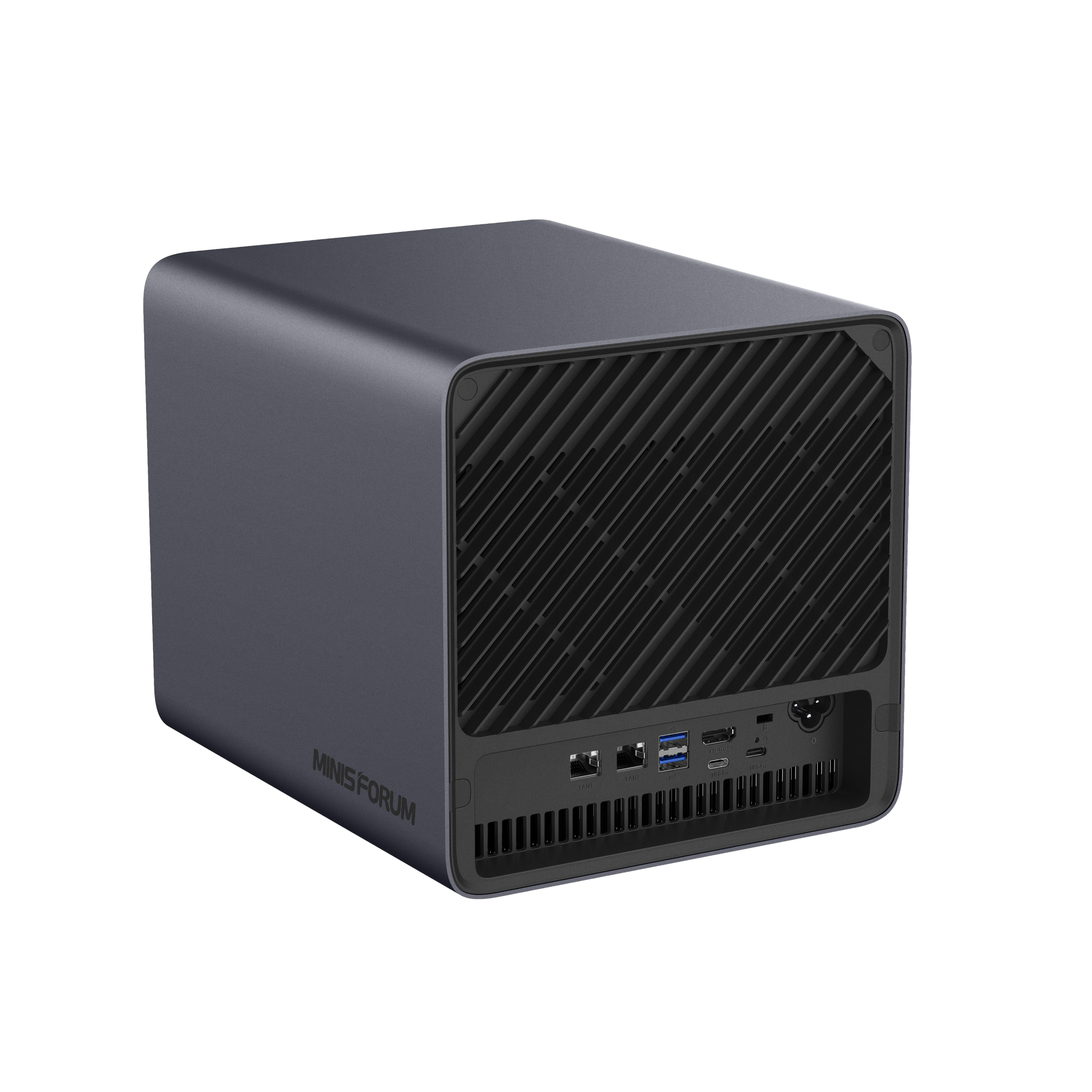
Now, if you need something powerful for your professional or creative workflow, Minisforum has the MS-S1 Max-P495 for you. Just like the NAS, this is an update of the company’s top-of-the-line MS-S1 mini-PC, which previously featured an AMD Ryzen AI Max 395+ APU. This device, which now uses the Ryzen AI Max+ Pro 495, is optimized for AI compute, with its processor delivering 55 TOPS from a dedicated NPU for a total AI performance of 131 TOPS, and support for various models from labs like Gemma, OpenAI, and Qwen. More importantly, it’s easily scalable, with four units easily deployable in a 2U rack.

This makes it an excellent alternative to the Mac mini and Mac Studio, which are in short supply because of the local AI boom. But even if you’re not into AI but just need something small that doesn’t compromise on performance, the MS-S1 Max-P495 can still deliver. You can order it with as much as 192GB of unified memory to ensure that you do not run out of RAM for 3D rendering, video editing, and even computational fluid dynamics. The 8060S on the older Ryzen AI Max 395+ is also quite capable for 1080p gaming, so we wouldn’t be surprised if you can comfortably play on this new mini-PC, too.

Minisforum MS-S1 Max-P495
Minisforum
Minisforum MS-S1 Max-P495
Minisforum
Minisforum MS-S1 Max-P495
Minisforum

If you’re experimenting with AI and want something powerful to help run your models, the N5 Max-P495 and the MS-S1 Max-P495 are great devices to consider for your upgrade. Just make sure that your agents have proper safeguards so that it doesn’t end up accidentally deleting your entire home directory. Unfortunately, we don’t have pricing and availability for these two AI devices at the moment, but if you want to see them for yourself and you happen to be in Berlin, drop by IFA from September 4 to 8, 2026.

Denver data center continuously waters its lawn even after city announced drought restrictions, enraging residents — it’s unclear if site is breaking the law or using its own recycled water

Denver Water, which supplies the city and its surrounding areas, has imposed Stage 1 drought restrictions in its service area starting August 2026 as water supplies continue to drop. According to Gadget Review, commercial properties like data centers can only water grass twice a week — on Tuesdays and Fridays — until September 30. Starting October 1, lawn sprinklers will be banned for use until the Board of Water Commissioners declares otherwise. However, one resident who was out walking their dog saw that the new AI data center built close to their home was watering its lawn and using so much water that some areas have started to puddle.

This is OUTRAGEOUS 🚨 Denver, Colorado resident shows a brand new data center was built next to her neighborhood. Democrats put residents on a water restriction, they can’t water their yards until next summerMeanwhile the Data Center’s sprinklers are on watering their lawn… pic.twitter.com/SDTbSn5eIFSeptember 2, 2026

“We can’t water our lawns until next summer, at the earliest, but you better believe that they are watering their entire green with so many sprinklers that it’s already making a giant pond, but I can’t water my f****ng tomatoes. I hate it here,” one resident claimed in the video.

This has understandably raised a lot of outrage, especially with all the widespread, bipartisan resistance that these data centers have been facing. However, there are still a lot of unknowns when it comes to the video. Firstly, we do not know when the video was shot; there’s a possibility that it was recorded on either a Tuesday or a Friday, meaning the site was well within its rights to water its lawns, at least until September 30.

The publication also noted several other possibilities: it could be using recycled, non-potable water, which Denver Water explicitly states, “are approved to irrigate any day of the week”; it could hold a variance from the utility provider, granting them permission to water their grass under “special circumstances,” or it was just plainly violating the law. Without further information, there’s just no way we can determine what is going on based on a single video. Nevertheless, this compounds the negative perception that data centers are already facing. Although closed-loop cooling technologies like those from Microsoft and Nvidia have essentially cut data center water consumption for cooling to zero, we still cannot get around the fact that several sites have already caused water issues for their neighbors.

Many people are raising issues about data centers’ massive resource consumption and the other negative effects like noise and air pollution that they could potentially bring to their surroundings. It’s for these reasons that Denver, and hundreds of other jurisdictions, have passed temporary bans and moratoriums on data center development.

SpaceXAI offers 50% Starlink discount to placate data center's residential neighbors; 2,000 have signed up — goodwill gesture comes amid vociferous community backlash

Amid growing community backlash, SpaceXAI offered a 50% discount to anyone living near its two data centers in Memphis, Tennessee, and claimed that thousands have already taken advantage of the promotion. Aside from the discounts offered to residents of the city and neighboring Southaven, Mississippi, SpaceXAI Memphis said in its X post that it’s also waiving the upfront hardware cost for the recently launched Starlink V5 rental kit across all plans, saving users up to $349 in one-time costs.

Critics say that Elon Musk is simply making this move to buy goodwill with his neighbors, especially as his data centers have been in hot water over the deployment of unpermitted turbines to deliver much-needed power. "Communities in Memphis and North Mississippi aren’t asking for discounted internet service,” SELC Senior Attorney Amanda Garcia told PCMag. “They're asking xAI to shut down its illegal, unpermitted power plant that continues to pump out staggering amounts of harmful (sic) pollution, including smog-forming nitrogen oxides, fine particulate matter, and hazardous chemicals like formaldehyde.” While SpaceXAI has since promised to remove all 69 of its unpermitted generators, it says it will do so only over a span of one year as its 1.2 GW power plant comes online to replace them.

Since late June, ~2,000 members of the greater Memphis and Southaven area have signed up for @Starlink high-speed, reliable internet at half the price.SpaceX is continuing the offer, providing a 50% discount on Starlink Residential service plans to new and existing customers.… pic.twitter.com/du7CZ8mCI8September 2, 2026

Starlink residential plans are available in three tiers: 100 Mbps for $55 a month, 200 Mbps for $85 a month, and Max for $130 a month. Residents who subscribe to any of these plans could get them for just $27.50, $42.50, or $65, respectively, resulting in massive savings. This makes the cheapest Starlink plan more affordable than other internet service providers like AT&T and Xfinity, whose plans often start at $35 to $40 per month.

However, those competitors offer fiber-based connections with speeds up to 300 Mbps, meaning users would be getting a downgrade if they switch over. However, some users in the r/memphis subreddit commented that this is a great option for areas of Memphis and Southaven that still lack fiber access, and it could also be a useful backup for those who need reliable internet service. There were also several complaints about outrageous fees from other options, which drive their internet costs well above $40, making the $27.50 monthly fee for the 100 Mbps Starlink plan a tempting option. Interestingly, the company is also offering the same discount in Vermilion Parish, Louisiana, where SpaceX plans to build its new spaceport.

While the company’s social media post makes it seem like 2,000 is an achievement, it’s still a small number relative to the city's total population. The latest U.S. Census Bureau estimates that Memphis alone has a population of over 600,000 people and more than 250,000 households. That means the new subscribers account for less than 1% of the total homes in the city. Aside from that, SpaceXAI’s latest earnings report says that it has more than 12 million subscribers, so the 2,000 new subscribers from the city are just a drop in the company’s massive bucket of Starlink users.

Almost 70% of voters in Missouri city vote to recall council member who said yes to AI data center tax breaks — councilor said disagreement over an issue shouldn’t be enough to unseat him

Independence City Council member John Perkins lost his position after 68.05% of voters opted to oust him in a special election because he supported data centers. According to NBC News, Perkins was one of the five councilors who said yes to the tax breaks amounting to more than $6 billion for the Nebius data center being built in the area.

Many members of the community have been campaigning against this development ahead of the March City Council meeting when these tax breaks were approved, but the council ended up voting 5-2 anyway in favor of the data center. Perkins is the third to have lost their seat after this vote, with Jared Fears, who was running for re-election in the city council, and Bridget McCandless, who was running for mayor, losing their respective bids.

“Politicians aren’t entitled to elected positions. They’re elected by the people to serve those people. When they stop serving the people they were elected to represent, they’re voted out of office,” a member of the Stop the AI Data Center in Independence Facebook group said. “This is democracy in action.” While Perkins hasn’t released a statement yet after the release of the unofficial results of the Special Recall Election, he previously said in an Op-Ed on The Kansas City Star that he stands by his decision to support the Nebius tax breaks and that recalling him would be a setback for the city.

“You can disagree with that call, and I respect that. However, disagreement isn’t a crime, and I don’t believe it is grounds to attempt to overturn an election that happened two years ago,” Perkins wrote. “One vote is not a reason to erase the previous hard work I’ve done for my district.”

Despite the massive support for ousting Perkins, we should also note that the voter turnout for this issue has been abysmally small. Out of the 14,250 registered voters in Jackson County, only 1,643, or 11.5%, went to the polls to vote for or against the councilor.

Another Missouri town has voted out half of its city council, which approved a data center project within its jurisdiction. The people of Festus, Missouri, ousted four of the eight members of its council in a regular election in April 2026 after they approved a 360-acre data center project in the area. Another petition was raised to have the remaining four members recalled, but the measure was shot down by the council.

The popularity of data centers has fallen across the country, with the number of bans and moratoriums over these developments exceeding 500, spread across towns, cities, counties, and even states. Interestingly, the pushback against these developments straddles beliefs and political affiliation, making it harder for hyperscalers to get new projects off the ground.

OpenAI CEO Sam Altman says 38,000 ChatGPT queries use as much water as the production of one almond — says data centers use no more water than an office building

OpenAI CEO Sam Altman has downplayed the water consumption issue that AI data centers are facing, saying that it has been blown out of proportion over time and does not keep up with the latest developments in data center cooling technology. Altman said this in an episode of the Sources Podcast with Alex Heath, where the two talk about the backlash against AI development. He claimed that producing a single almond in California is equivalent to 38,000 ChatGPT queries.

“You know, I saw this thing going around about the water usage of ChatGPT. And it was like every time you run a single ChatGPT query, it’s like, you know, you run your shower for like six hours. And the water never comes back, and it’s just done. I don’t have the exact calculation in front of me, but I think the real number is something like — doing this from memory, it might be wrong, but it’s close — for every 38,000 ChatGPT queries, that is the same amount of water that is used in the production of a single almond in California… This is like the full-on, you know, total true water accounting, not just what’s running in one data center,” Altman told the host.

SAM ALTMAN: “For every 38,000 ChatGPT queries, that is the same amount of water that is used in the production of a single almond in California.” pic.twitter.com/vRCCPneJSmSeptember 2, 2026

“There’s a question of like where this came from because the people that are scarfing down 12 almonds at a time don’t feel like they’re doing something horrible from a water perspective, for the most part. It is true that data centers at one point used evaporative cooling, but they have not done that in a long time. Like if you look at a modern very large data center, it uses the equivalent amount of water as an office building in terms of, you know, people like running the sinks and the toilets and whatever. So, that has been a robust meme and difficult to disprove, but I don’t think it holds up to any scrutiny.”

It’s true that almonds are some of the most water-intensive crops being grown in the U.S. Researchers say that it takes about 1.1 gallons of water to grow a single almond. By comparison, Altman's own statements in the past indicate that one ChatGPT response uses somewhere between 1 to 50mL of water, ostensibly using older evaporative cooling techniques, or about 0.0002 to 0.013 gallons per query. While this is nowhere near Altman’s 38,000 estimate, it’s still about 85 to 5,500 ChatGPT queries per almond using an unspecified cooling method. Nevertheless, training AI models in older facilities can use far more water, with estimates suggesting that GPT-3 used up almost 185,000 gallons of water with older systems, while the increasing popularity of AI, especially AI agents which use up a lot more tokens than just chatbots, means that data centers could still use more water compared to almond farming.

In fact, multiple data centers across the United States have faced issues with their water consumption, with one site in Fayette County, Georgia, using up 29 million gallons over a span of 15 months and another development in Morgan County, Georgia, allegedly causing the water of its neighbors to turn muddy. Altman admitted that data centers that used older technologies like evaporative cooling used a lot of water, but he also mentioned that new techniques and technologies have been developed that cut down data center water use. Some examples of this include Nvidia’s liquid cooling system that runs “hotter than a hot tub,” which cuts water use by 100%, and Microsoft’s closed-loop cooling systems, which use the same amount of water as a restaurant. Amazon even claimed that its data centers consume only 0.075% of the water that Americans use for their lawns and gardens.

You can watch the complete podcast episode below.

GoPro to expand into AI data centers after $285 million merger with optical-photonics company — move to solve camera maker’s financial woes, move manufacturing back into the US

GoPro just announced a merger with Starman Optical, Inc., an optical-photonics company, saying that the deal would allow the combined entity to produce U.S.-made optical transceivers for use in AI data centers. According to the press release, Starman will pay shareholders $285 million in cash for the action camera company, amounting to $1.14 per share, and will also pay off its outstanding debt of $92 million. Despite that, current GoPro investors will retain 10% ownership of the post-merger company.

Starman said that the move will give it access to GoPro’s intellectual property, which amounts to more than 2,500 patents, as well as its imaging solutions, advanced optics, and other technologies that it has developed. This deal is crucial in keeping the camera company afloat, especially as it has recently faced declining sales and increasing costs, leading the camera maker to warn investors that there is “substantial doubt about the company’s ability to continue.”

On the other hand, the merger would expand GoPro’s portfolio to include optical transceivers, which are getting increased demand as AI data centers transition to fiber optics for their networking needs. Aside from data centers, the deal would also allow GoPro to expand into defense, government, robotics, and the aerospace industries, where it “intends to leverage its IP, optics, and imaging capabilities” to supply the increasing demand for solutions made within the U.S.

While GoPro has successfully moved its manufacturing out of China to protect its supply chain from U.S. tariffs, it still has no local manufacturing. So, this merger would allow it to have production within American borders and help isolate it from further economic instability brought about by surprise tariff announcements.

This could help it secure its future, especially as the FCC has recently been making moves to keep foreign-made tech like routers, LiDAR-equipped drones, and robots. It also makes sense for the two companies to partner — even though consumer action cameras and optical transceivers for data centers sound like they have nothing in common, they share a lot of technologies between them, like imaging sensors and advanced lenses or optics.

This isn’t the first company with seemingly no relation to data centers to expand or pivot towards it. Struggling shoemaker and apparel brand Allbirds pivoted towards it earlier this year, resulting in a 580% jump in its stock price after the announcement, although it has since settled back down to its pre-announcement prices. AI data centers are indeed a tempting investment, with consultancy firm PricewaterhouseCoopers saying that investment on the technology could hit $32 trillion by 2050.

FBI investigating 153 million US and Canadian driver’s licenses leaked on Russian cybercrime forum, including that of US SecDef Pete Hegseth — data is suspected to have come from an ID-authentication service provider

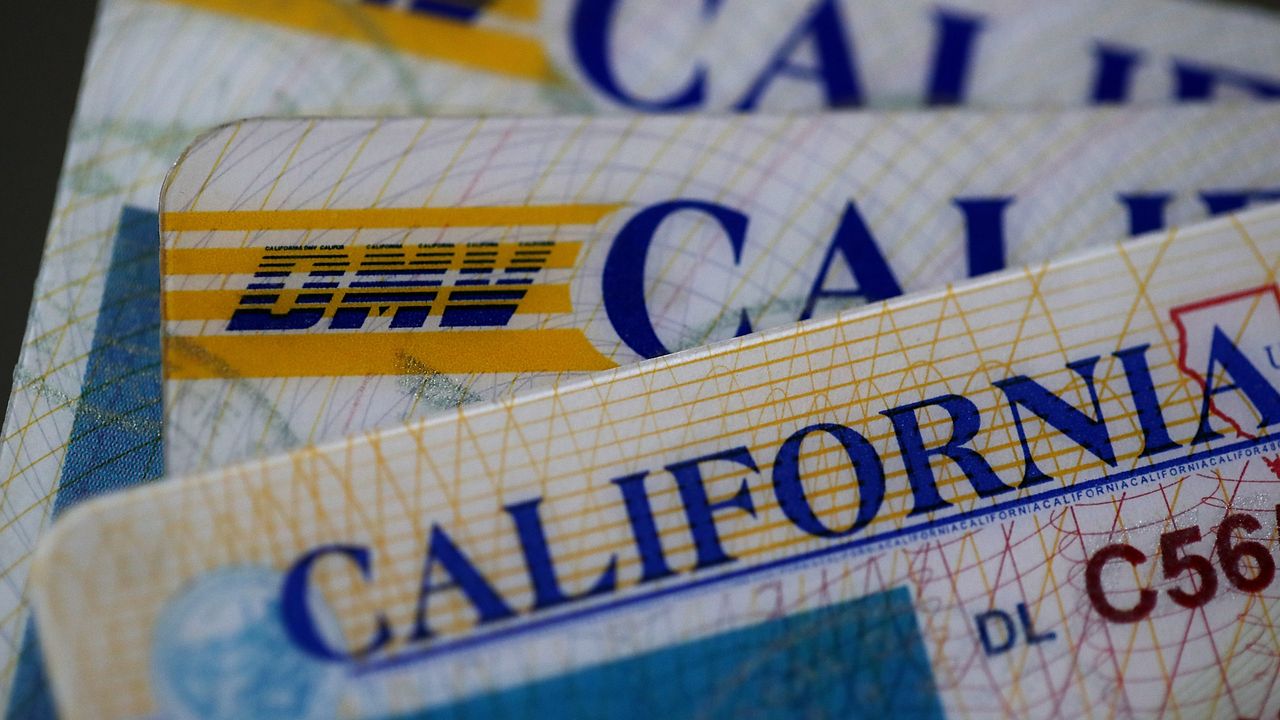
More than 153 million US and Canadian driver’s licenses, as well as other identity documents, have reportedly become available for purchase on the dark web for a limited time. According to cybersecurity journalist Brian Krebs, the service was called Nexus, and although it’s no longer available at the time of writing, it claimed to have possessed 153 million driver’s licenses, 10 million ID cards, 1.9 million travel documents, 1.3 million international driver’s licenses, 579k medical cards, 429k common access cards, 91k residence cards, 77k employment authorization records, and 5 million other documents, allegedly sourced from an ID-authentication service based in Louisiana.

The service was advertised on the Russian cybercrime forum Exploit, where whoever was promoting it posted the driver’s license of Krebs as a free sample, which caught the journalist’s attention. He was also able to see a preview of U.S. Secretary of Defense Pete Hegseth’s information on the database — a concerning breach of security for someone with such a sensitive position in the government. After further investigation, they concluded that the service seemed to have possessed legitimate data, especially after searching for the data of several of his friends and family members with their consent. One thing that all the people he found in the database had in common was that they all used Hertz to rent a vehicle.

Krebs also talked with security and privacy researcher Zach Edwards, who said that their information was also found on Nexus. Edwards said that they did not rent a car recently but used their ID at a Planet13 marijuana dispensary. The time stamps found on the scanned images of the driver’s licenses and other identity documents coincide with the time that the victims used their IDs at the said companies, confirming that they were the sources of the leaks. However, Planet13 and Hertz do not do their own authentication; instead, they contract a service provider for the service. Now, it turns out that both Planet13 and Hertz used the company for identity verification and ID-authentication — IDScan.

Based on the evidence gathered by Krebs, it seems that the leak is centered around the company. He has already contacted the company about the issue, and they said they were investigating the matter. “At this point I’m not able to share any additional information, but the updates you have provided have been welcome, and helpful to our team’s investigation,” Jillian Kossman, a marketing and operations leader at idscan.net, told the journalist. The FBI has also started looking into the leak, with its New Orleans field office opening an official investigation into the breach.

The massive amount of data that was briefly available on the dark web is certainly concerning. A similar data breach hit Discord after its third-party service provider was hit and resulted in the exposure of 70,000 government IDs. Incidents like these have got privacy experts concerned with the push for online age verification requirements, which is why the EFF is asking the California governor to veto the law requiring this.

Aside from privacy-invasive checks and stepping on First Amendment rights, the leakage of sensitive data like this could increase incidents of stolen identity and more. Driver’s licenses are often widely accepted for opening credit lines and bank accounts, with both photographic, UV, and IR scans available on many of the leaked licenses. Aside from that, it could also potentially compromise the privacy and security of vulnerable people, like those fleeing domestic violence and those who are under the witness protection program.

Researchers build a $7 smartphone clip-on that spots hidden cameras — AI and dynamic LED grid deliver 94% accuracy

Researchers from KAIST, formerly known as the Korea Advanced Institute of Science and Technology, who collaborated with the National University of Singapore (NUS) and Singapore Management University (SMU), have developed a clip-on LED light that works in tandem with an AI app to detect hidden cameras. According to The Chosun Daily, the team, led by Professor Han Jun of KAIST’s School of Computing, called the technology SweepLED [PDF], and it used an LED light grid that magnetically snaps to your power and an AI-powered app to analyze the image taken.

There are many ways to detect hidden cameras using your smartphone — this includes shining a flashlight around the room to spot tiny reflections coming from tiny lenses, using your phone’s camera to detect infrared emissions from hidden cameras, or using camera apps with reflection analysis. However, the first two methods require manual scanning, meaning you’re likely to miss something small and unnoticeable, while the last method is prone to false positives. Because of this, the research team decided to make their own solution using artificial intelligence.

First, they built a $7 (around KRW 10,000) LED grid that snaps to the back of your camera phone. These lights change direction continuously, allowing the reflections on different surfaces to move or disappear altogether as they move around. Since most cameras, including hidden ones, have a unique structure with their lenses, aperture, and sensor, they often exhibit a distinctive reflection pattern which SweepLED can reliably detect. The team tested the gadget in real-world settings, running it across 30 items, some of which have embedded hidden cameras, and it was able to achieve a 93.9% detection accuracy. This makes it a huge improvement over manual methods, which are tedious and prone to false positives.

Hidden cameras placed in private areas like restrooms, changing rooms, and even some rental properties and hotel rooms are slowly becoming a problem across the world, especially in East Asia. In fact, the issue has become so bad in South Korea that women started protesting it in 2018. So, one way anyone could protect themselves against voyeurs is to use this gadget, which is faster, more reliable, and easier to use compared to checking the area manually yourself. Unfortunately, this will not protect you against the over 40,000 security cameras all over the world that are streaming footage without any security, and the proliferation of smart glasses that are recording video and taking photos without the knowledge of people around them. Aside from privacy concerns, this also raises security issues, which is why the U.S. Air Force has banned the use of the gadgets in all its bases.

❌