Reading view

There are new articles available, click to refresh the page.

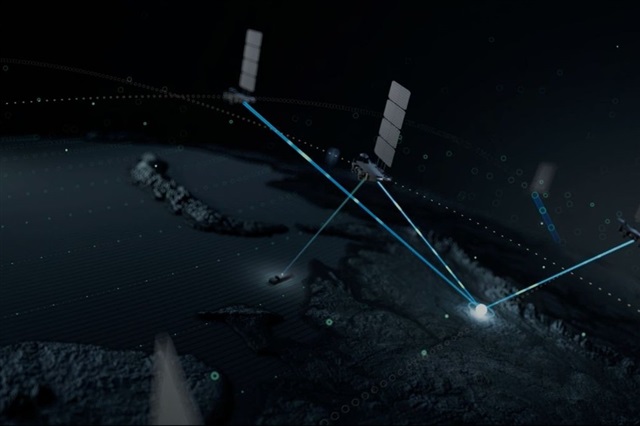
Foxconn Research Institute maps four-stage LEO roadmap from relay satellites to AI-native networks

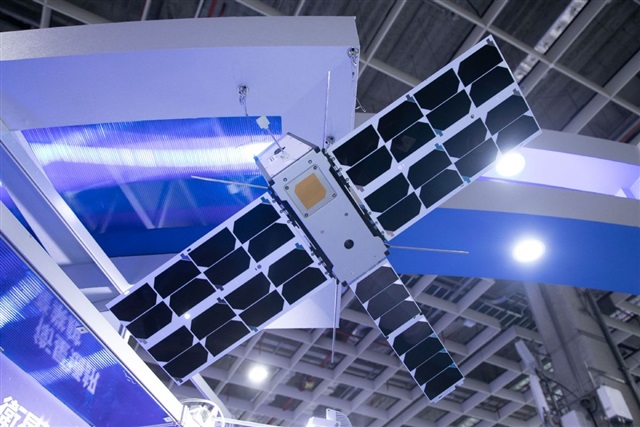
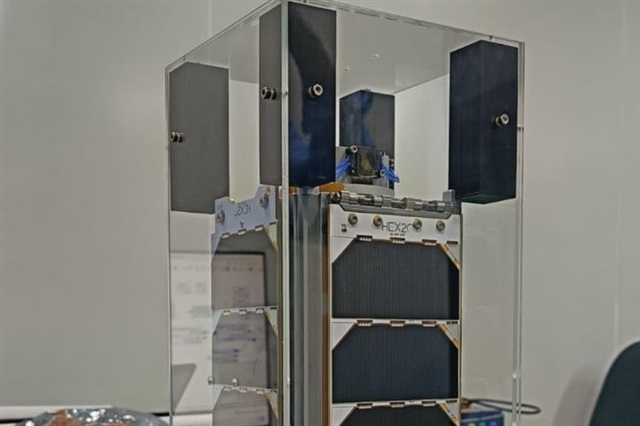
Foxconn is extending decades of expertise in electronics manufacturing, system integration, and assembly, integration and testing (AIT) into the space industry. Through its Pearl satellite missions, the Foxconn Research Institute (FRI) is collecting first-hand data on communications links, orbital operations, and the space environment while giving group-developed hardware an opportunity to establish flight heritage.

Credit: Michael Lee

Europe expands its Starlink rival to 348 satellites as IRIS² moves into implementation — €15.6 billion network will boost EU government capacity by 60%, with launches starting in 2029

The European Commission and the SpaceRISE consortium signed an implementation agreement on Friday, August 7, to roll out Europe’s IRIS² satellite constellation, moving the project from the planning and negotiation stage into full-scale deployment. According to an official press release, the agreement adds 66 satellites to the planned constellation, bringing the total to 348 — 330 satellites in low Earth orbit and 18 in medium Earth orbit — with first launches targeted for 2029.

The expansion is intended to substantially increase the network’s government and defense capacity. According to the Commission, the revised architecture will provide 60% more secure governmental communications capacity within the EU and 54% more globally. The existing satellites in the baseline constellation will also receive additional functionality and stronger security features, while the 66 new spacecraft will operate in higher low Earth orbit.

IRIS² — short for Infrastructure for Resilience, Interconnectivity, and Security by Satellite — is the European Union's flagship secure-connectivity constellation, intended to give European governments an autonomous alternative to foreign networks such as SpaceX's Starlink and Amazon's Leo. The Commission signed a 12-year concession contract for the program in December 2024 with the SpaceRISE consortium — a grouping of European satellite operators SES, Eutelsat, and Hispasat — which is building and operating the system under a public-private partnership alongside manufacturers including Airbus Defense and Space, Thales Alenia Space, OHB, and Aerospacelab.

Once operational, the multi-orbit network will deliver sovereign, encrypted connectivity to authorized governmental users across EU member states and participating non-EU countries, currently Norway and Iceland, for use in emergency response, critical infrastructure protection, and security missions, with capacity also earmarked for citizens in areas with poor coverage.

When the concession contract was signed in December 2024, IRIS² carried a price tag of €10.55 billion ($12.19 billion), funded by the European Union, the European Space Agency, and the SpaceRISE consortium. The accelerated timeline and larger constellation have pushed that figure higher, with the consortium's partners now putting total planned investment above €15.6 billion ($18.03 billion), drawn from the EU budget for 2028–2034, ESA, the consortium partners, and member states. Several countries have already committed, with Poland and Hungary pledging €656 million ($758 million) and €500 million ($578 million), respectively, while Spain has announced between €1.6 and €2 billion ($1.85–2.31 billion).

IRIS² is frequently framed as Europe's answer to Starlink, as they are both satellite constellations aimed at providing connectivity to dead zones. However, the primary purpose of the 348-satellite-strong constellation is more niche. The EU wants an independently controlled communications system — mainly for government and emergency use, but also for civilian applications — that can remain available when terrestrial networks fail, or when access to foreign-operated satellite systems becomes politically or strategically uncertain. On the other hand, Starlink’s growing 10,000-satellite constellation is a mainly commercial, privately owned company selling broadband to consumers worldwide. It is now also running satellite-to-phone internet services through Starlink Mobile.

Hanwha Aerospace turns trillion-won profit into AI, unmanned warfare push

South Korea's Hanwha Aerospace posted a second-quarter 2026 operating profit of more than KRW1 trillion (approx. US$704.9 million), highlighting its ability to expand military exports and aerospace operations simultaneously. With earnings momentum strengthening, the company is now positioning unmanned warfare and AI-enabled combat systems as its next major growth drivers.

Mae-hun Park. Credit: DIGITIMES

Intel's proposed orbital data centers would manage thousands of simple LEO satellites —two-tier network puts the brains of satellite constellations in higher orbit

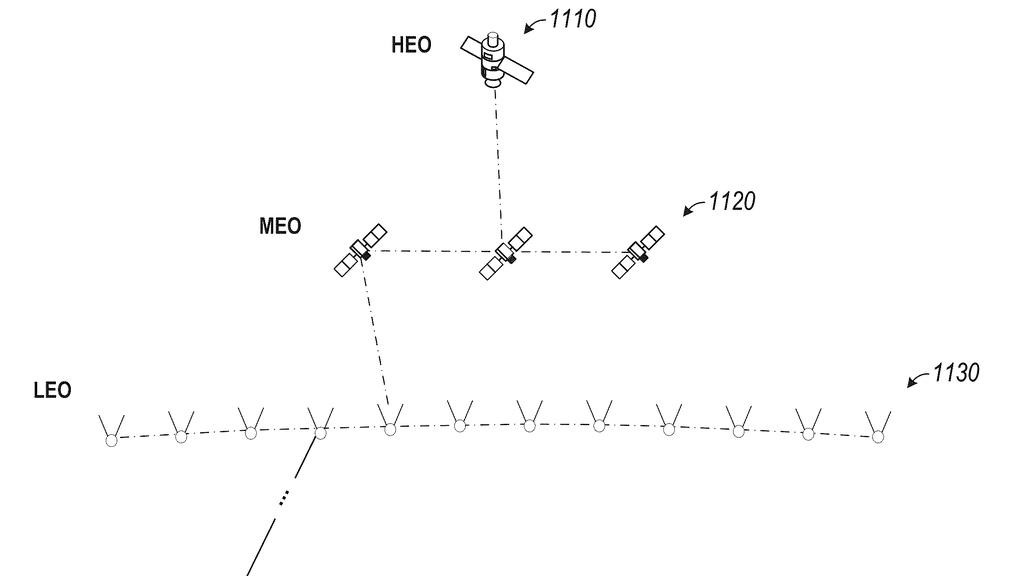
An Intel patent application published on August 6, spotted by Patentlyze, describes an orbital data center architecture that moves some of the computing used to operate massive satellite constellations off the ground and into space. The architecture proposes a two-tier satellite network in which a small number of more powerful satellites in higher orbits manage large constellations of relatively simple satellites in low-Earth orbit, handling much of the computing and constellation coordination normally performed by data centers and network operations centers on the ground.

The application, US 2026/0230175 A1, is a continuation of an earlier Intel filing that was granted as US 12,542,604 B2 in February.

Intel’s proposed architecture is a different proposition from the orbital AI data centers now being pursued by companies such as SpaceX and Google, which aim to move AI compute itself into low-Earth orbit. SpaceX’s planned AI1 satellite and Google’s Project Suncatcher both envision running large-scale computing workloads in space, with the resulting data beamed back to Earth over high-bandwidth optical links. Intel’s orbital data centers, on the other hand, are designed primarily to serve the satellite network itself, acting as higher-orbit compute and control hubs for the much larger constellations operating below them.

In large LEO constellations such as Starlink, Telesat Lightspeed, and Amazon’s Project Kuiper, thousands of satellites are constantly moving relative to one another and the Earth. While the satellites perform their individual tasks, the network itself still has to determine how traffic is routed, which satellites and links should communicate, how spectrum is allocated, and how the constellation responds to failures, interference, weather, and other changing conditions. Much of that network planning and control processing is traditionally handled by computers on the ground, with routing and operational instructions calculated at terrestrial network operations centers and then transmitted back up to the satellites.

intel patent orbital data center

(Image credit: Intel)

Intel says that this constant dependency on terrestrial infrastructure delays time-sensitive decisions, increases reliance on ground stations, and makes management harder as constellations grow into the thousands of satellites. Intel’s solution is to move part of that control and compute layer into orbit. Its architecture places more powerful satellites — which contain much more compute and storage capability than the individual LEO satellites — in Medium Earth Orbit (MEO), Geosynchronous Earth Orbit (GEO), or highly elliptical orbits, where they can maintain a broader and more persistent view of the LEO constellation below and take over tasks such as routing, mission planning, scheduling and network coordination without continually sending those workloads back to Earth.

The proposed setup does not eliminate the need for ground stations. It just keeps satellite network control processing in space. Intel specifically describes moving mission planning and scheduling operations into orbit. The company also argues that offloading heavier network-management tasks to a smaller number of powerful satellites could allow operators to build simpler, cheaper LEO spacecraft. Under current architectures, individual satellites still have to actively participate in network-control functions, requiring additional onboard compute and communications hardware. There’s currently no indication that Intel is actively building the satellites.

NASA modded space station's laptops so everyone could use the same charger — standardizing ISS chargers eliminated useless weight and reduced failure points

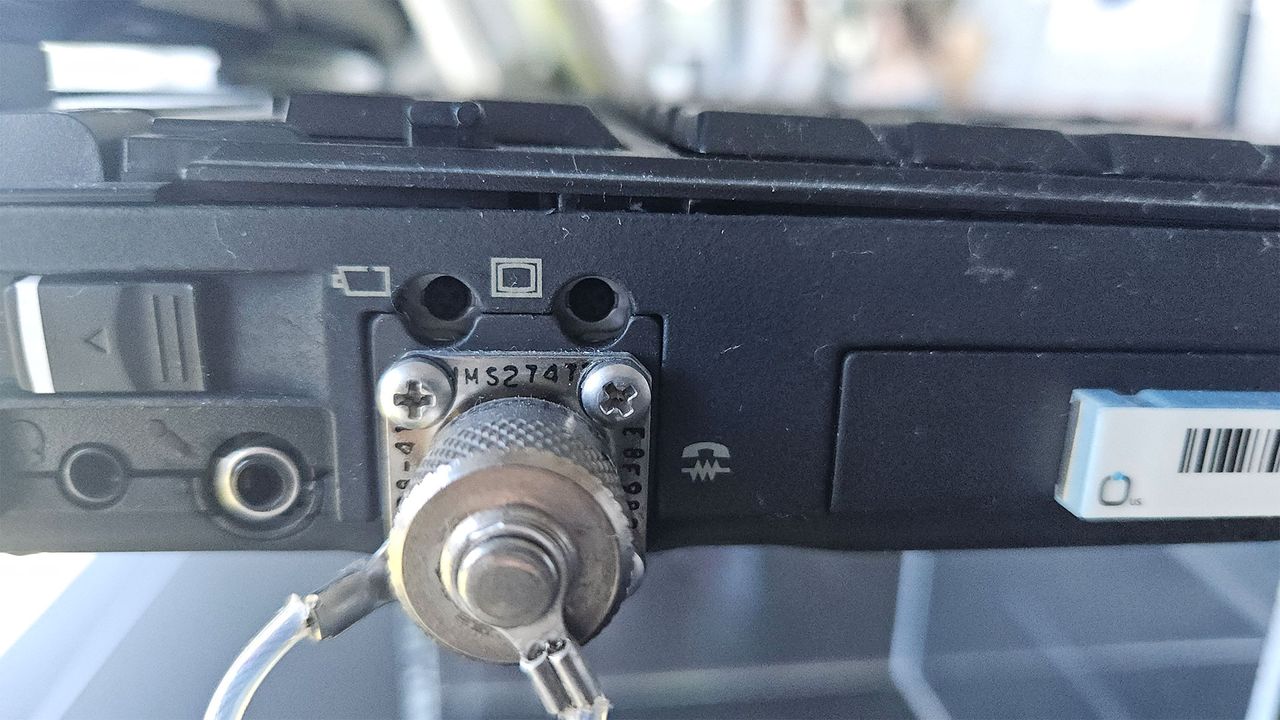
NASA ensured that all laptops destined for use in the International Space Station (ISS) had the same power connector. Engineer George Roush, who has a certain fondness for space tech, recalled details of this laptop modification earlier this week. Standardizing on a single ‘cannon plug’ meant that instead of requiring a multitude of different chargers, ISS visitors could plug into the onboard DC power outlets in a standard fashion. Roush took the photos shared below during a visit to the NASA Stennis visitor center.

Since you all care (thank you for that, by the way) here's the answer: That's not an ethernet port at all! It's a modem port! Modem ports are useless on the ISS. So, NASA replaced this useless port with a new power port. Taking 9 different laptop chargers into space sounds… pic.twitter.com/ZLcqcEOHVfAugust 2, 2026

Laptops destined to be used on the ISS would have their modem ports removed and replaced by the cannon plug you can see in the engineer’s photos. Of course, modem ports would be useless on the ISS, so that’s why they would be replaced with this modification. In space, every gram, every connector, and every failure mode matters, which makes this power standardization a smart move.

Sources indicate that Lockheed Martin was contracted to make these modifications to the ThinkPads and other machines that ended up being taken to space. Roush also discusses networking/comms on the ISS, which relied on the MIL-STD-1553 system, rather than Ethernet.

Laptops with built-in telephony modem ports certainly date this story. However, we must remember that the ISS was constructed in the late 1990s when modems were still essential for PCs. The first crews docked in 2000.

Original web sources are vanishing

When refreshing his knowledge about this laptops-in-space mod, the space enthusiast and engineer was struck by another realization, which he found troubling. The NASA Stennis visitor center had barely any information about the laptops or the cannon plug modification that was on display.

Turning to some online resources he remembers referring to previously, Roush noticed a lot of them had disappeared. “The old internet is dying, and with it, we risk losing a lot of useful history,” said the engineer. “I fear that the false belief of the 'eternal' internet will cause otherwise recorded history to be lost when the servers shut down.”

Though some resources may still be able to be unearthed via the Wayback Machine, it seems perilous that so much web history is archived by a charity (The Internet Archive). In May, we reported that the internet is getting harder to archive because the AI boom has caused a storage crisis, with both NAND and mechanical drives facing shortages. This means skyrocketing storage bills to support the activities of the Wayback Machine.

HP replaced all the ISS laptops in April 2026

The astronauts in the ISS aren’t still using old modded laptops like the one showcased in the NASA Stennis visitor center. The latest updates came in April this year, with over 100 HP Z Workstations packing a mix of Core Ultra 9 processors and RTX Pro Blackwell graphics sent into orbit.

HP talks about putting these PCs through two years of rigorous testing ahead of deployment. We don’t get much in the way of technical info from its release, but again, it was recognized that a single power standard was important. The computer maker supplies universal AC/DC power adapters with its latest crop of space laptops that are specially designed to function on both the ISS and Earth.

NCSIST and Shield AI complete autonomous drone mission

Shield AI and Taiwan's National Chung-Shan Institute of Science and Technology (NCSIST) said on August 6, 2026, that they have successfully completed a live demonstration of a multi-drone cooperative autonomous search mission, using three Mighty Hornet III drones developed by NCSIST. The two sides said they will continue working together to expand the use of Shield AI's Hivemind autonomous system across NCSIST research and development programs.

Credit: Shield AI

Taiwan advances efforts to become global drone hub with non-China supply chain edge

Amid the escalation of geopolitical tensions and extreme weather events, Taiwan has stepped up efforts to become a global hub for drone manufacturing as countries around the world accelerate buildouts of non-red supply chains. Drones have now evolved from tools for aerial photography into crucial elements of national defense, disaster response, and the rising low-altitude economy.

Credit: DIGITIMES

Syncmold boosts LEO satellite parts push as 2026 revenue slips

Syncmold Enterprise reported second-quarter 2026 results on the 3rd, saying low-Earth-orbit (LEO) satellite products accounted for a larger share of sales even as consolidated revenue fell to NT$2.006 billion (US$61.9 million), down 5.2% from the first quarter and 6.9% from a year earlier. The Taiwanese precision parts maker said cautious end-market demand and customer shipment timing changes weighed on quarterly performance.

Credit: DIGITIMES

National Aerospace Fasteners posts record first-half revenue on strong engine demand

National Aerospace Fasteners Corp. reported a surge in July 2026 revenue and record first-half results as demand for aircraft engine parts stayed strong. The Taiwan-based fastener maker said July revenue reached NT$494 million, up 53.03% from a year earlier and its second-highest monthly level on record, even though sales slipped 0.65% from June.

Credit: DIGITIMES
❌