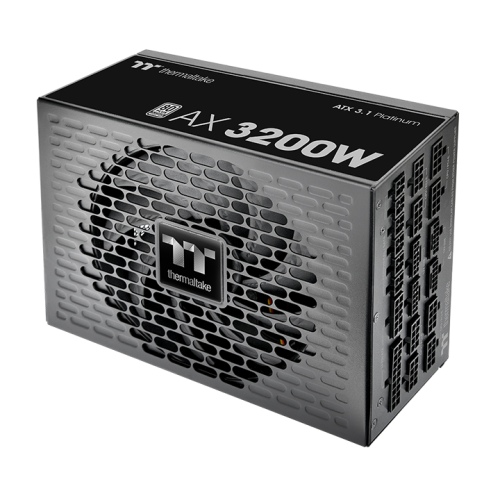
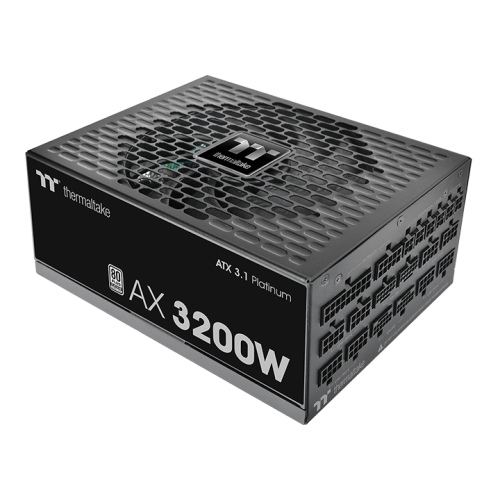
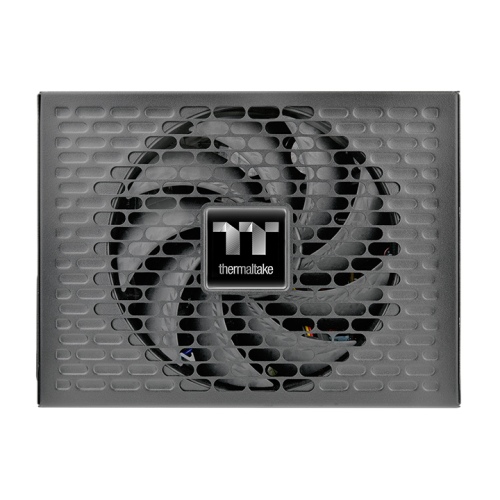
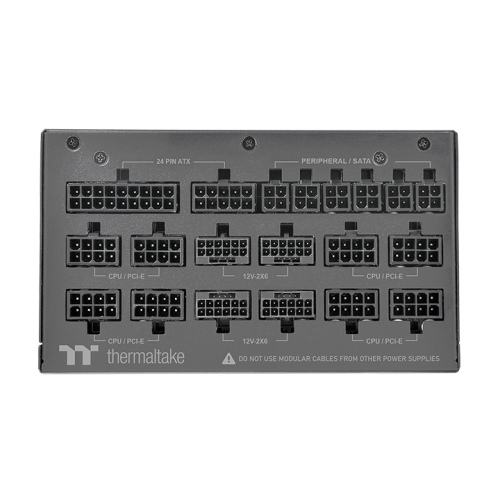
Thermaltake has introduced the AX 3200W Platinum Power Supply, an ATX 3.1-compliant unit built for AI workstations and multi-GPU systems. It features native PCIe Gen 5.1 support and four 12V-2×6 connectors to deliver 3200W of continuous power at 45°C.
According to Thermaltake, the new PSU achieves 80 Plus 230 V EU Internal Platinum certification with up to 94% efficiency. Fully compliant with ATX 3.1 specifications, it handles power excursions up to 200% while meeting Intel power-timing requirements. Thermaltake equips the unit with four native 12V-2×6 connectors that feature a dual-colour design, allowing users to confirm secure cable seating.
Internally, the power supply utilises a single +12V rail, LLC and DC-to-DC circuits, and 100% Japanese 105°C electrolytic capacitors. Built on a modular Zero Cable Platform, the unit pairs with low-profile etched black cables to simplify routing. Built-in industrial protections cover OCP, OVP, UVP, OPP, OTP, and SCP.
Thermaltake notes compliance with Energy Star 5.0, WEEE, and RoHS standards, alongside support for Intel C6/C7 low-power states. The company backs the unit with a 10-year warranty.
KitGuru says: Delivering 3200W with four native 12V-2×6 connectors makes Thermaltake’s latest PSU a serious option for high-end multi-GPU workstations. How would you max out its power output capacity?
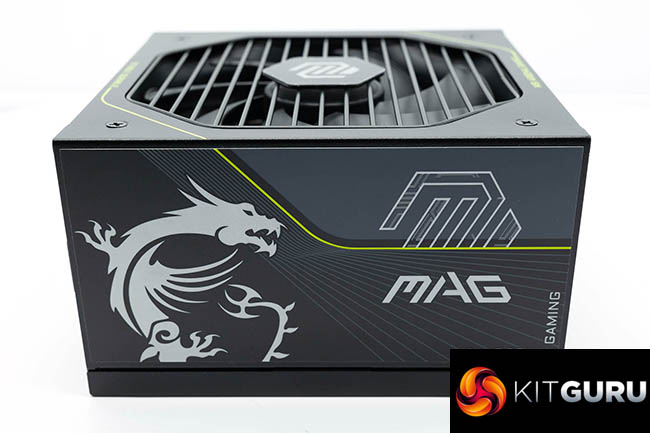
Today we are taking a look at one of the latest power supplies to join MSI's PLS range, the MAG A1200PLS, a 1200W Platinum-rated unit. To address ongoing concerns surrounding the 12V-2×6 power connector, MSI has incorporated its new GPU Safeguard technology, which monitors the connector for abnormal current conditions and provides an immediate audible warning if an issue is detected. The same buzzer system also monitors the cooling fan and will alert the user should a fan failure occur.
The MAG A1200PLS is a fully modular unit and is currently on sale in the UK for around £180 inc vat.
MSI MAG A1200PLS Features:
GPU SAFEGUARD
Featuring built-in overcurrent protection for the 12V-2×6 interface, the buzzer provides real-time warnings to alert users of any abnormalities.
FAN SAFEGUARD
The integrated fan failure protection immediately detects when the fan stops spinning. A buzzer will then sound, alerting you to the problem and preventing the power supply from overheating.
DUAL COLOR 12V-2×6 CONNECTOR
With its vibrant yellow connector, you can easily see if the cable is fully plugged in, which helps guarantee a secure connection.
OPTIMIZED SOUND LEVEL
This power supply is designed for quiet operation, delivering low noise levels like in the midnight, ensuring a serene computing experience free from disturbances.
EMBOSSED JACKET CABLE
The embossed cables are exceptionally flexible for easy routing and cable management, while also offering superior durability and a premium look.
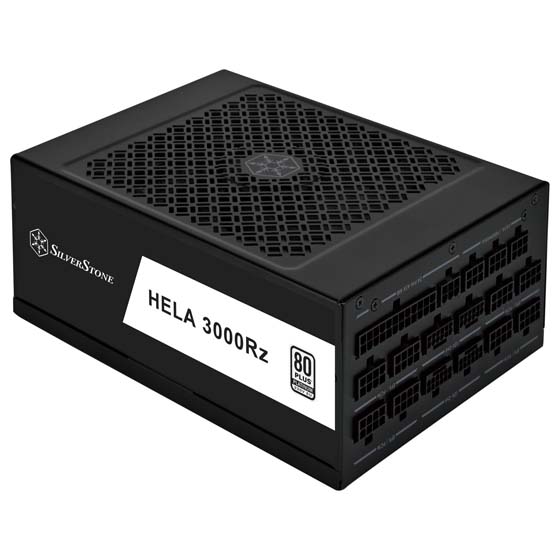
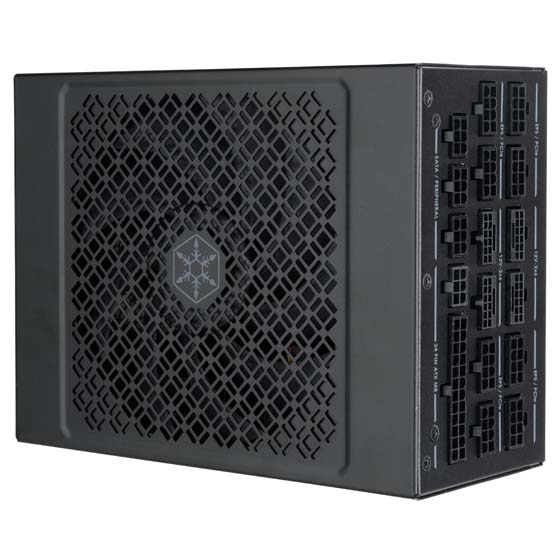
Following on from a reveal at Computex earlier this year, SilverStone has detailed the Hela 3000Rz. This new high-end power supply is built in a 200mm form factor, featuring an 80 Plus Platinum efficiency rating, designed for heavy-duty systems and continuous 24/7 operation.
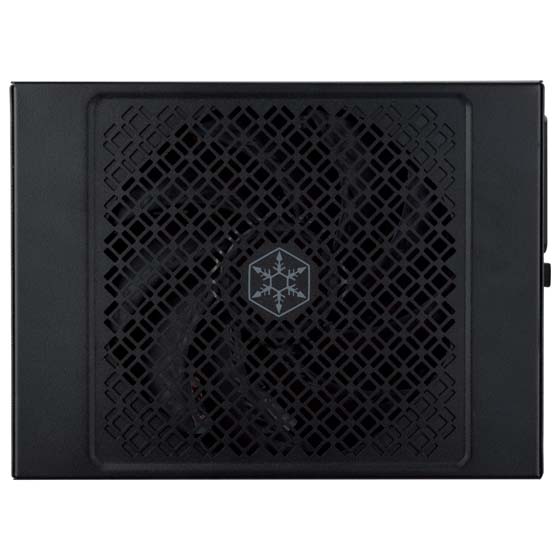
To cool the Hela 3000Rz, SilverStone (via ITHome) equipped the unit with a 140mm twelve-pole fan using double ball bearings. Operating at around 400rpm below 30% load, fan speeds scale up to nearly 3000rpm at maximum output. Rather than focusing on silent operation, SilverStone prioritises 24/7 stability and incorporates OCP, OVP, OPP, SCP, and OTP hardware protections.
The massive power supply weighs 4.57kg and is built for powerful multi-GPU setups through its four included 12V-2×6 connectors, accompanied by eight PCIe 6+2 connectors, four EPS 4+4 cables, and a single ATX 20+4-pin main lead. For storage like HDDs and older SSDs, there are eight SATA connectors, as well as four Molex plugs – that last one is a true blast from the past.
SilverStone notes that the included 13A cable for the UK market will limit maximum output to 2600W. However, users can use a higher-current-rated power cord to achieve the full 3000W output.
KitGuru says: SilverStone's HELA 3000Rz delivers extreme capacity, though its massive 200mm physical footprint limits its use to larger cases.
Cooler Master occupies an unusual position in the power supply market. Founded in Taiwan in 1992 and best known for the cases and coolers that made its name, the company has spent more than two decades selling PSUs without ever being a PSU manufacturer in the strict sense. Like most brands in this space, it commissions platforms from numerous OEMs, and the quality of a given Cooler Master unit has historically tracked the quality of whoever built it. The MWE line sits at the volume end of the company's catalog: sensible, mainstream units aimed at builders who want a dependable supply without paying for a flagship badge. We take a closer look at the Cooler Master MWE Gold 750 V4 to see if it belongs among our list of the best power supplies in the market today.
The MWE Gold V4 series is the latest iteration of that formula, and it arrives with more substance than the mid-range positioning suggests. The platform was developed by Gospower in collaboration with Cooler Master, and it is currently dedicated to them - you will not find this design wearing another brand's sticker for the time being. The series is fully compliant with ATX 3.1 and PCIe 5.1, carries a native 12V-2x6 connector, and introduces Cooler Master's patent-pending GPU Shield current-monitoring feature alongside a digital control scheme for the PFC and LLC stages. The 750W model reviewed here targets the heart of the mainstream gaming market, backed by a ten-year warranty and a $119 MSRP.
Specifications and Design
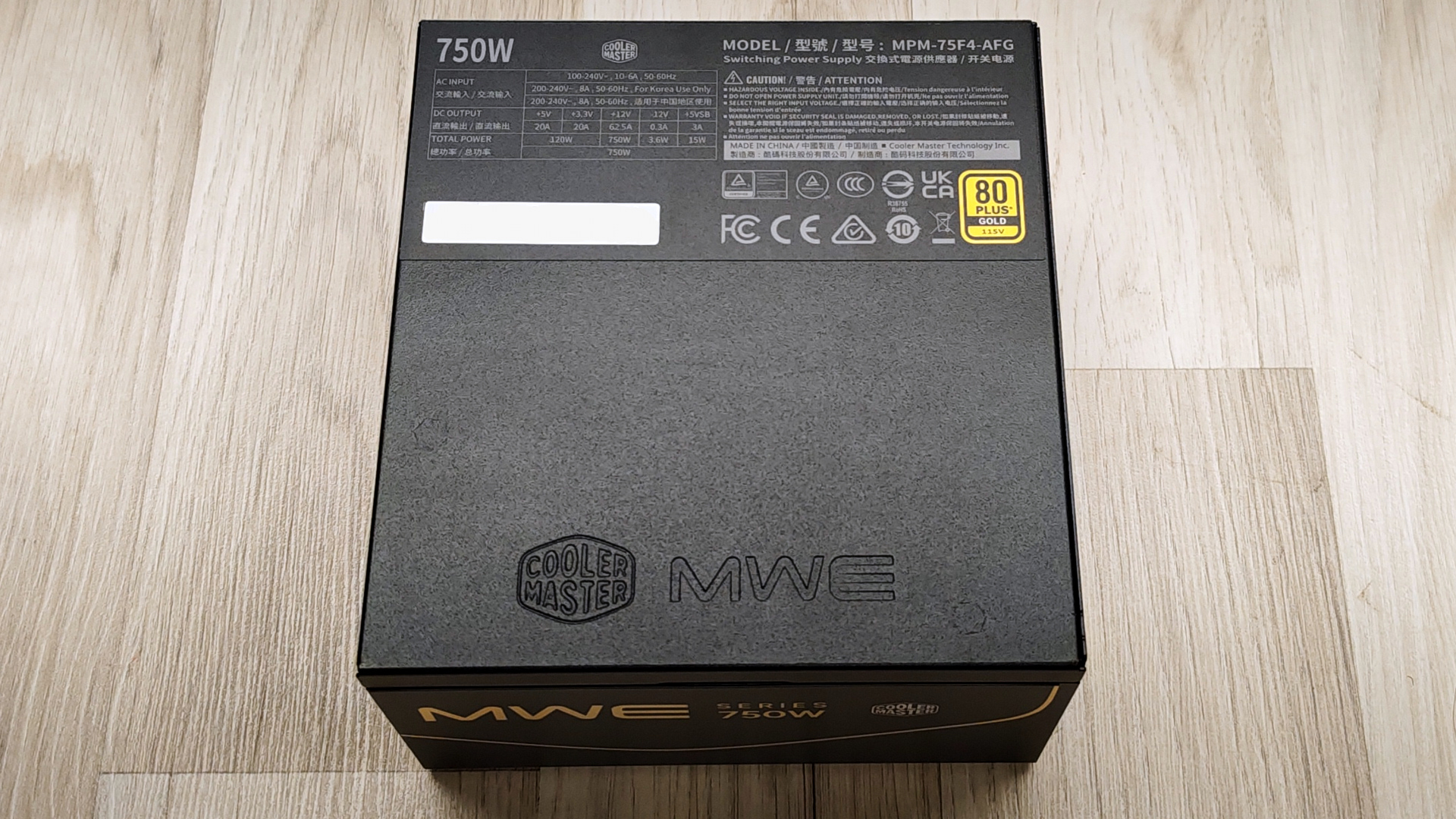
Cooler Master MWE Gold V4 750W Power specifications ( Rated @ 40 °C )
RAIL
+3.3V
+5V
+12V
+5Vsb
-12V
MAX OUTPUT
20A
20A
62.5A
3A
0.3A
120W
120W
750W
15W
3.6W
TOTAL
750W
AC INPUT
100 - 240 VAC, 50 - 60 Hz
MSRP
$119
In the Box
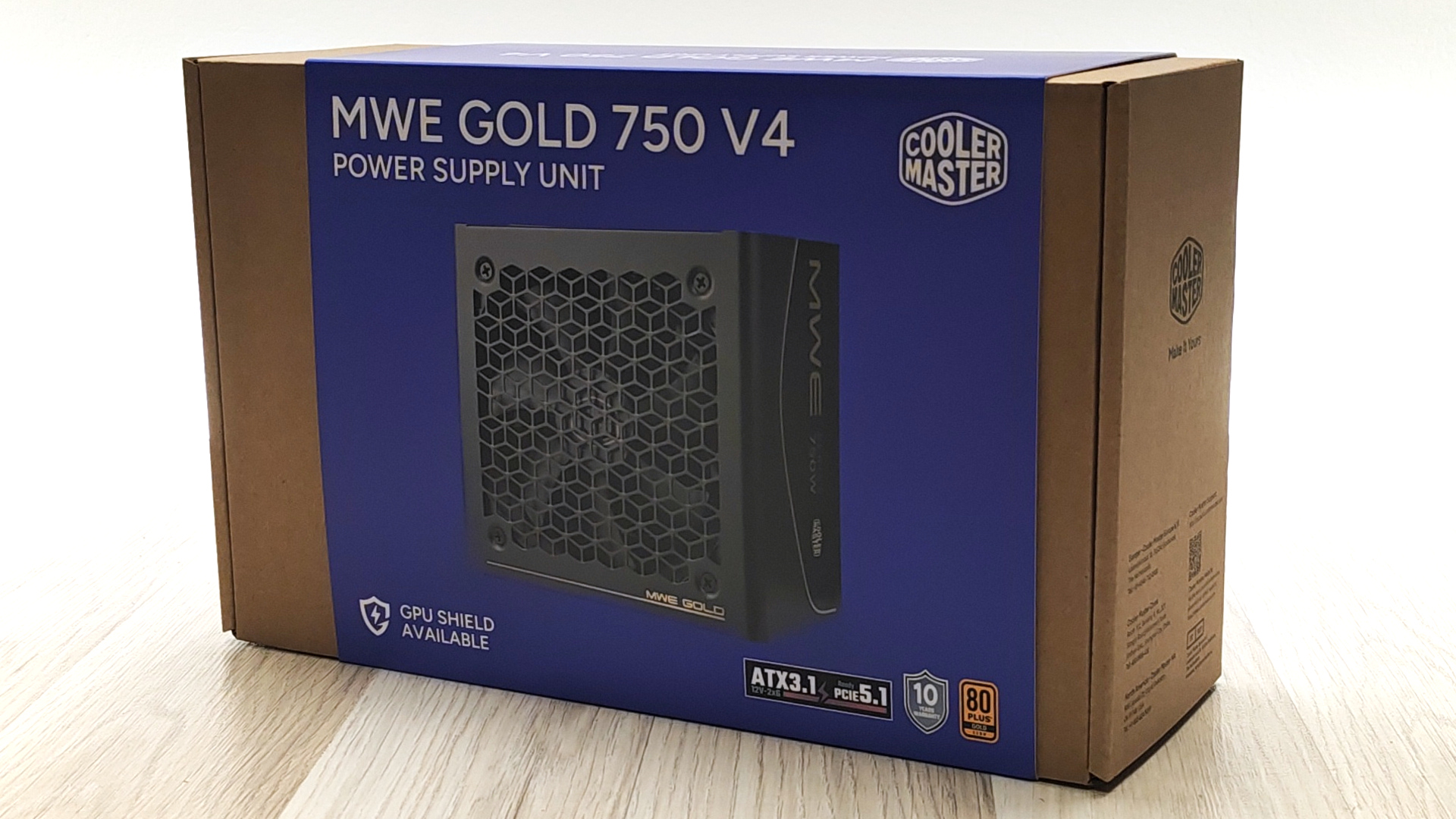
The MWE Gold 750 V4 ships in a cardboard box with a purple-blue sleeve wrapped around plain kraft board, a render of the unit on the front, and the important badges - ATX 3.1 with 12V-2x6, PCIe 5.1 readiness, the 80 PLUS Gold logo, and the ten-year warranty shield - laid out along the bottom edge. It is a clean, honest presentation for the class, with the GPU Shield feature called out in its own corner.
(Image credit: Tom's Hardware)
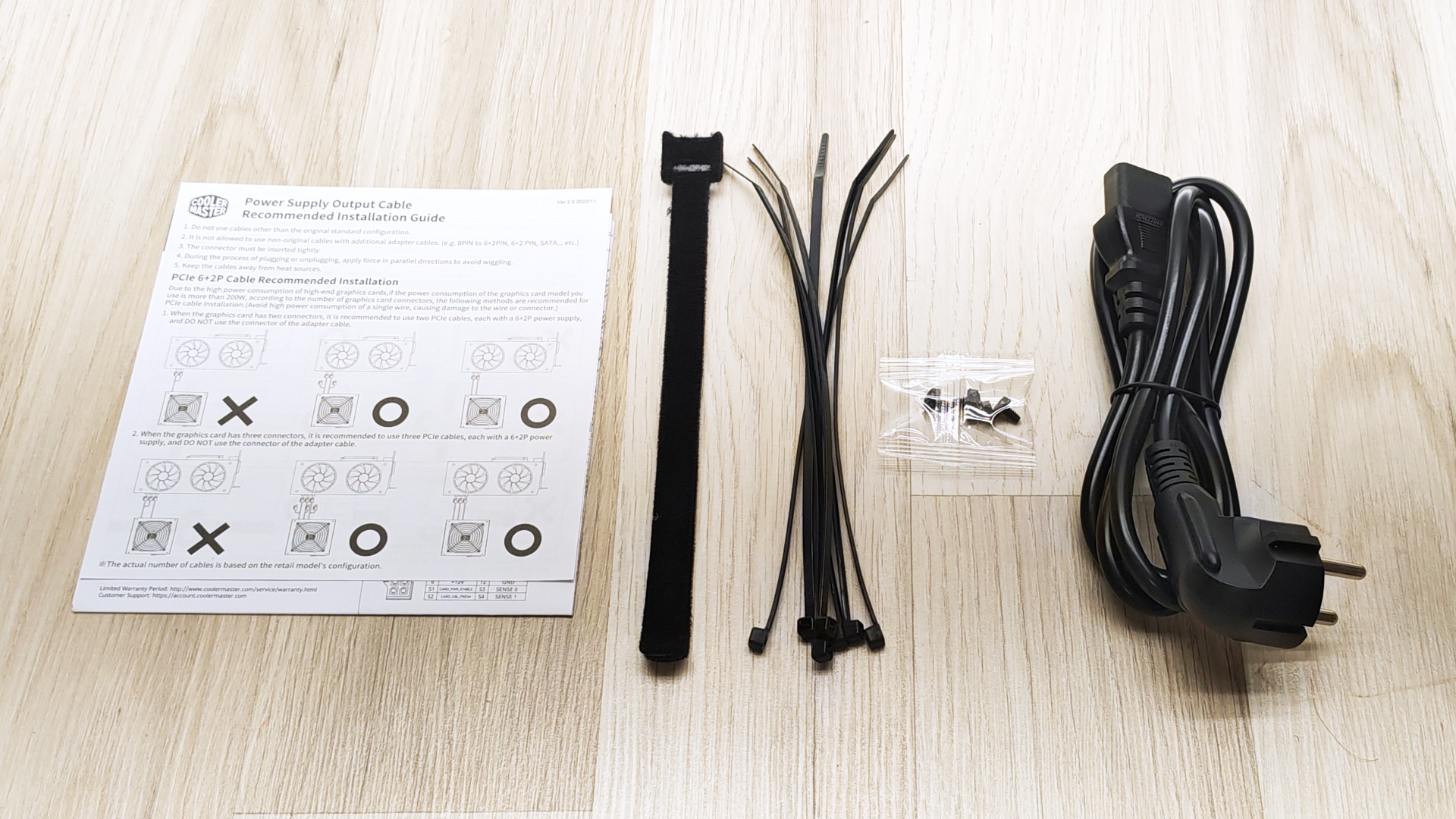
Inside, the supply is sandwiched between protective packaging. The bundle is basic: the AC power cord, a set of mounting screws, a handful of zip ties, and a few reusable Velcro straps, plus a leaflet explaining Cooler Master's recommended PCIe cable installation practices. There are no cable combs, no tester, and no storage pouch, which is a defensible economy at this price point, even if competitors occasionally throw in more.
(Image credit: Tom's Hardware)
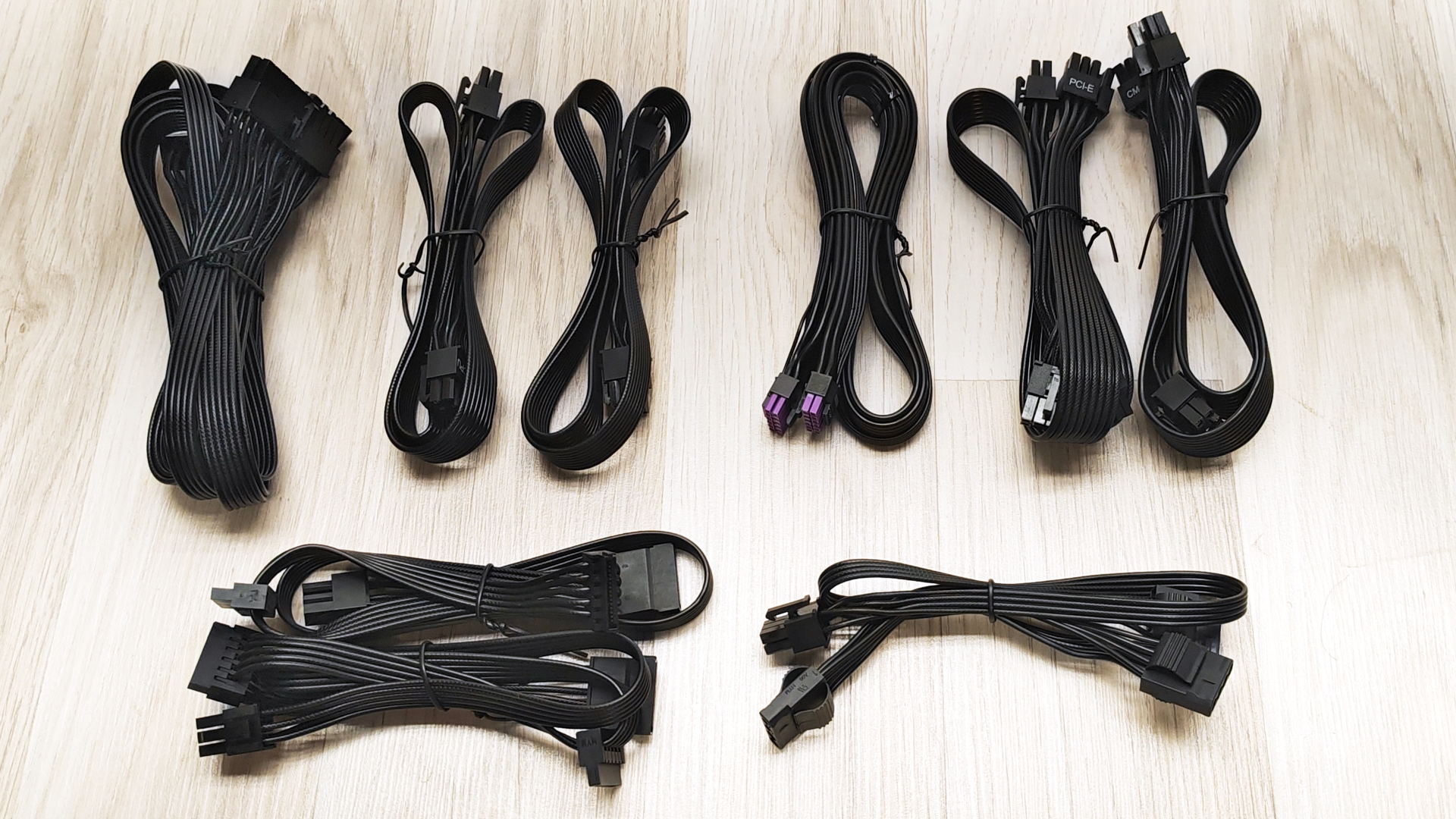
The modular cables themselves are all-black, flat ribbon types. The 12V-2x6 cable uses the two-color connector design that the ATX 3.1 spec encourages, making an incompletely seated plug easy to spot, but we would argue that dark purple was not the best choice for this application. Wire gauges are appropriate throughout, and the flat design makes routing behind a motherboard tray painless.
(Image credit: Tom's Hardware)
Cooler Master MWE Gold V4 750W
Connector type
Hardwired
Modular
ATX 24 Pin
-
1
EPS 4+4 Pin
-
1
EPS 8 Pin
-
1
PCI-E 5.0
-
1
PCI-E 8 Pin
-
4
SATA
-
6
Molex
-
3
Floppy
-
-
External Appearance
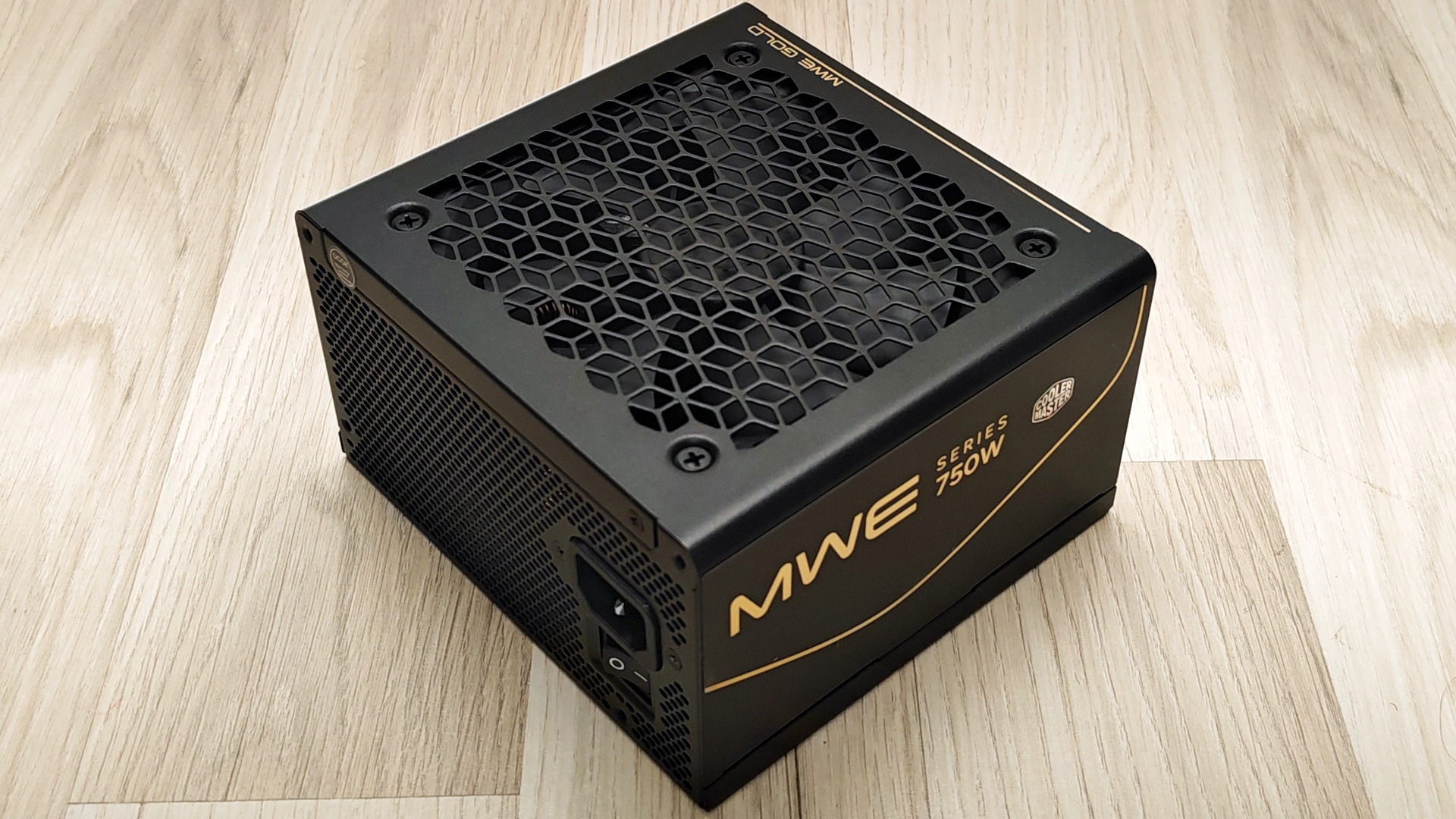
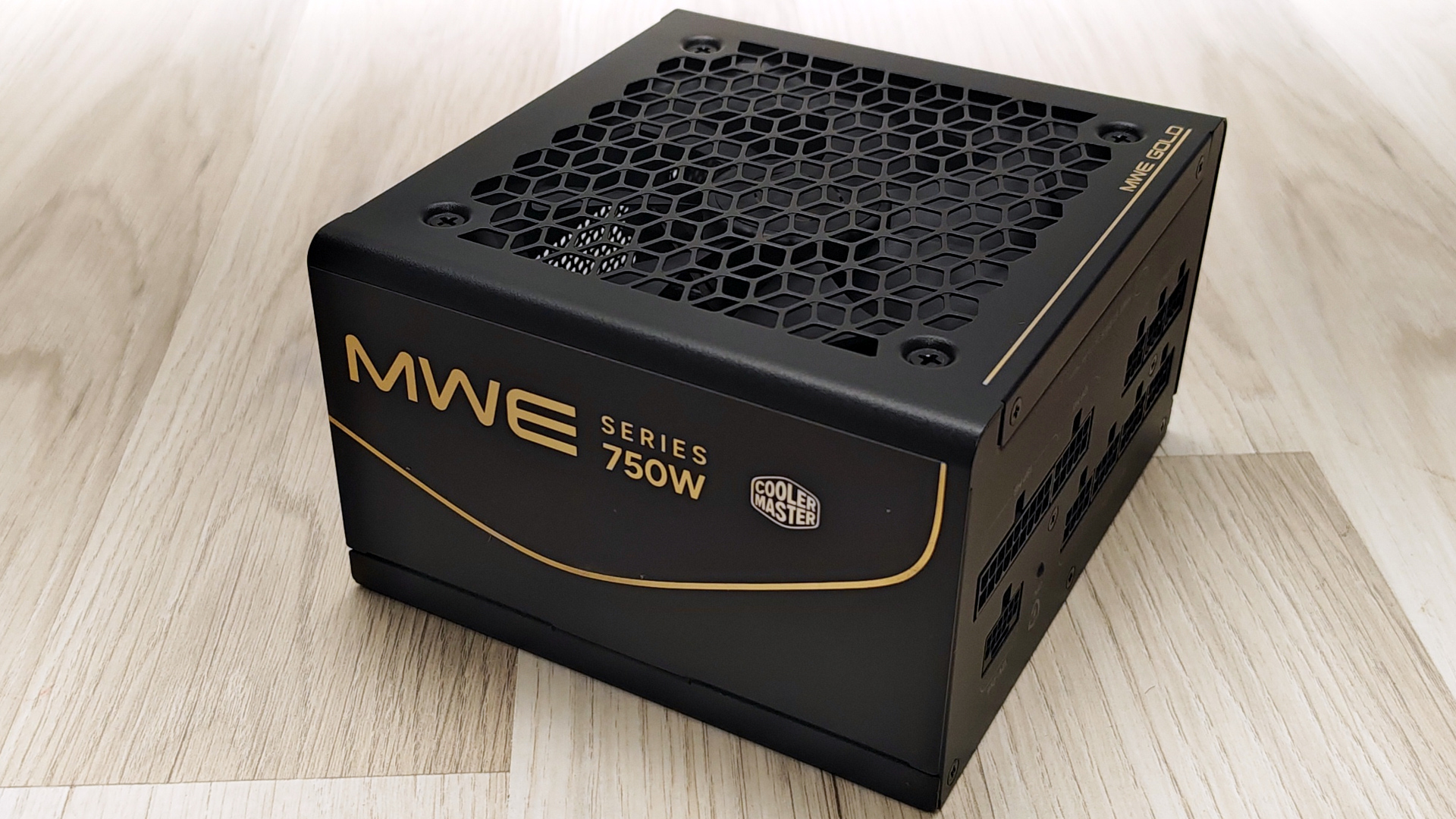
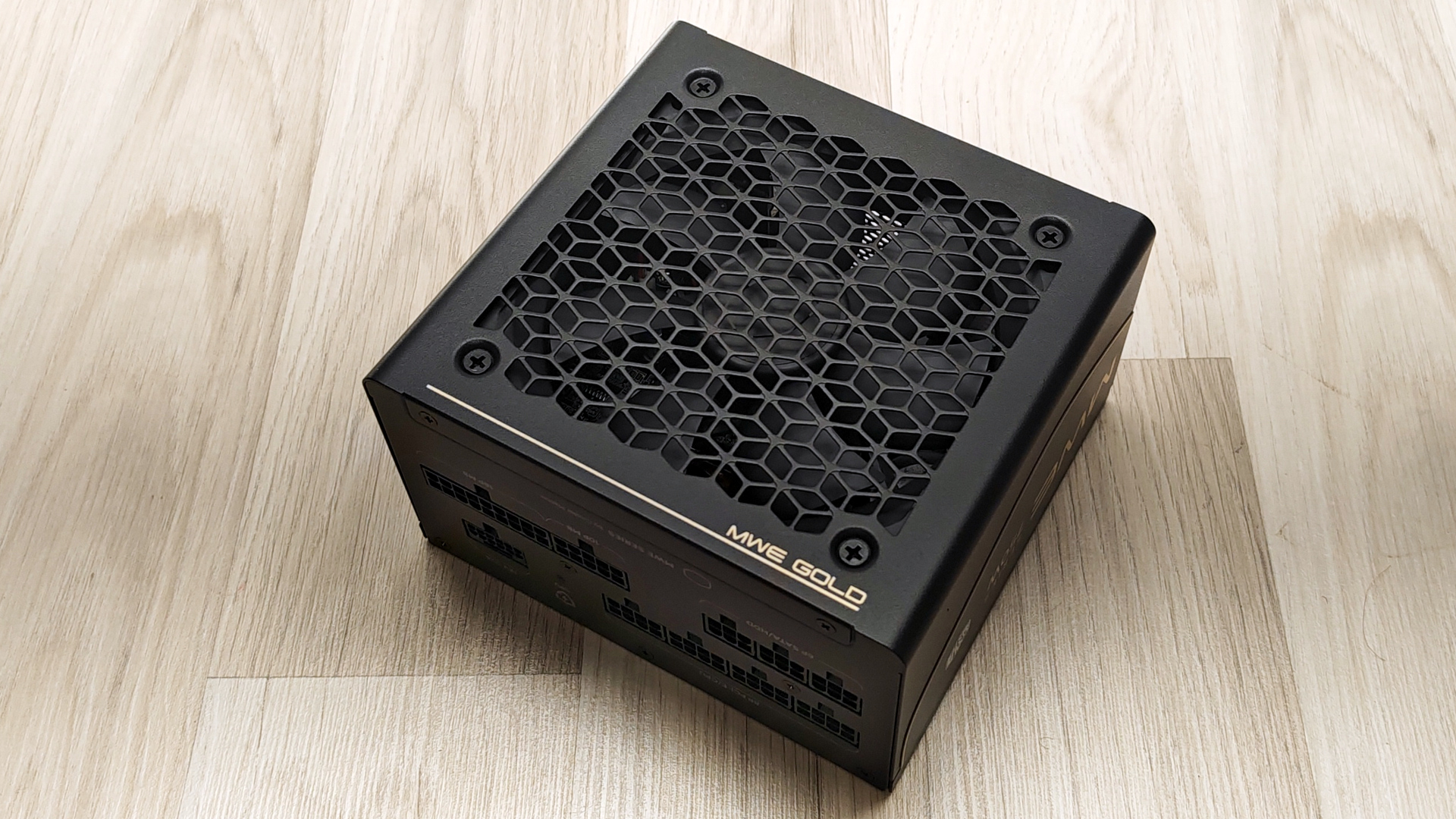
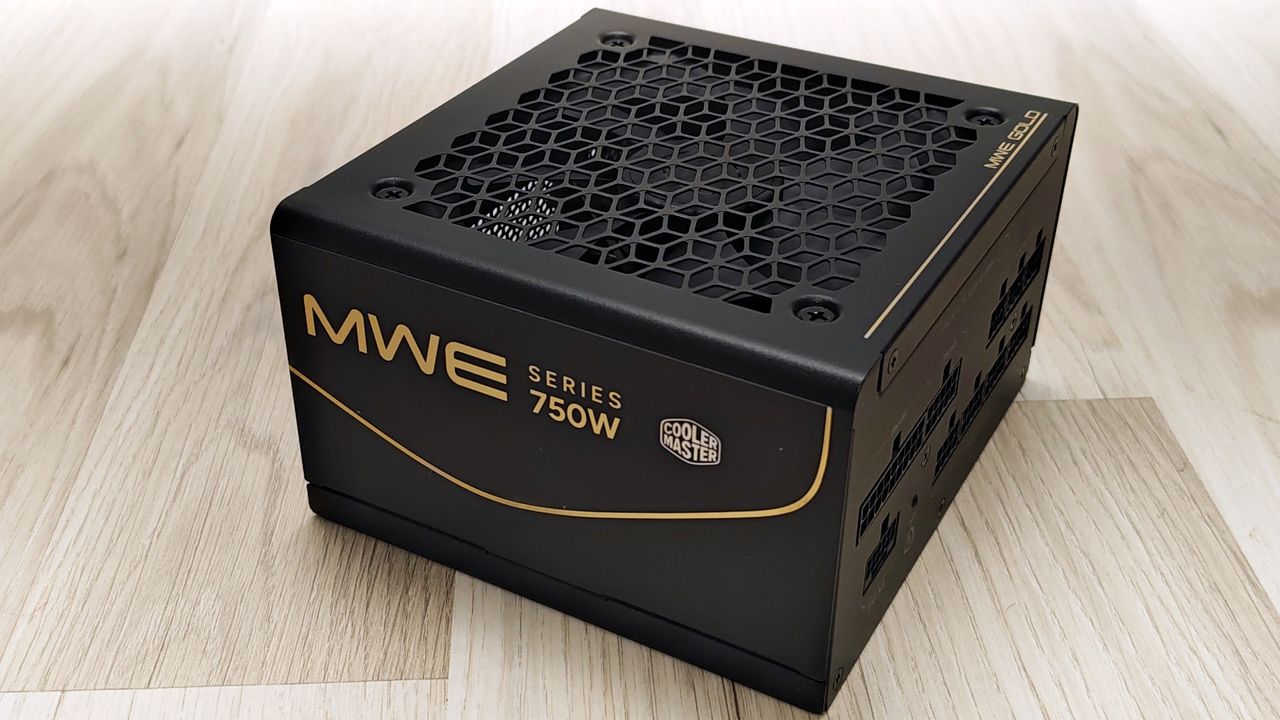
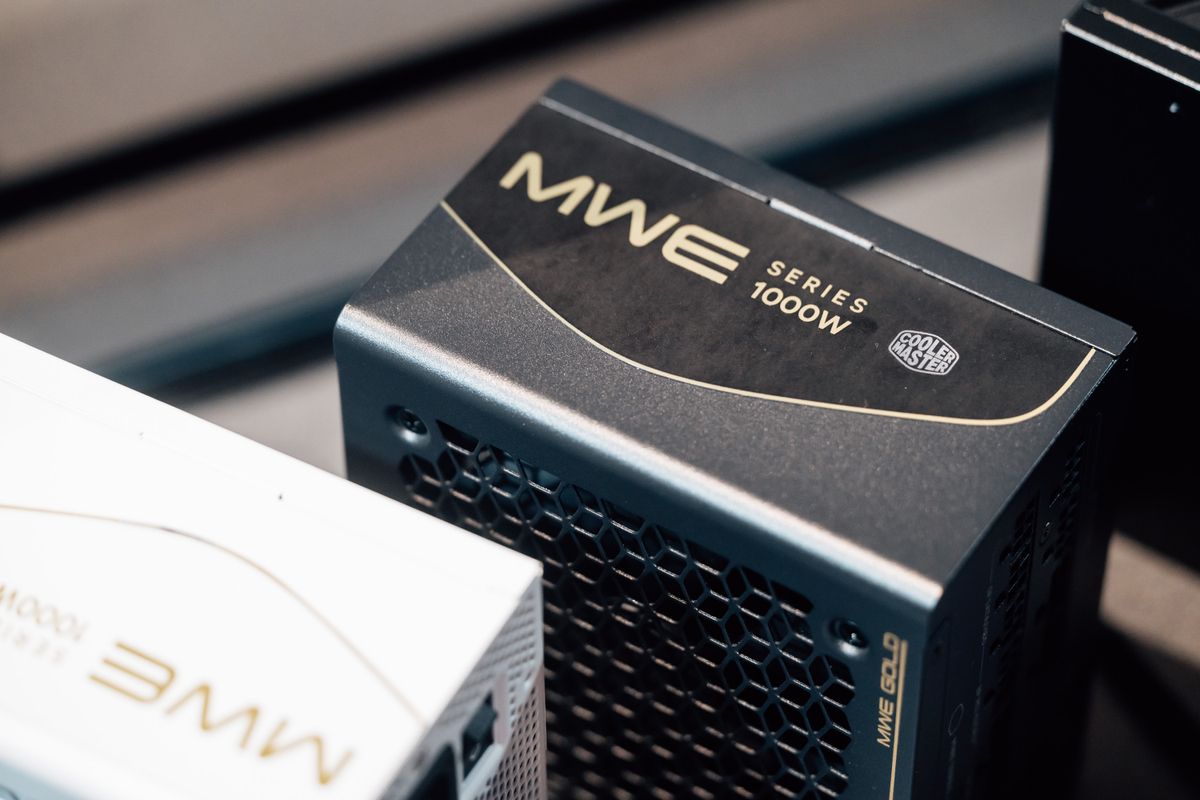
At 140 x 150 x 86 mm, the MWE Gold 750 V4 is a compact ATX unit - 140 mm of depth is as short as modern PSUs practically get, and it will drop into any case that accepts an ATX supply at all, with room to spare for cable slack. The rhombille tiling fan grille stands out, framed by four exposed screws, with a thin gold pinstripe and gold MWE branding on the side panels, providing the only decoration on an otherwise all-black chassis. The finish deserves a mildly critical word. It is smooth and appealing - not a bad paint job by any means - it simply is not as special as the rest of the unit's feature sheet might lead you to expect.
Tom's HardwareTom's Hardware
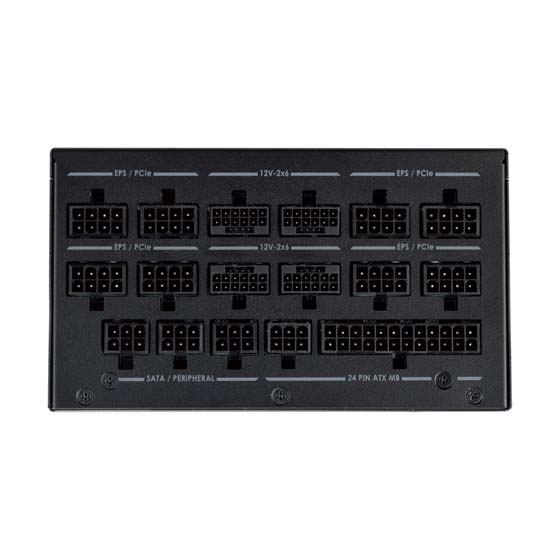
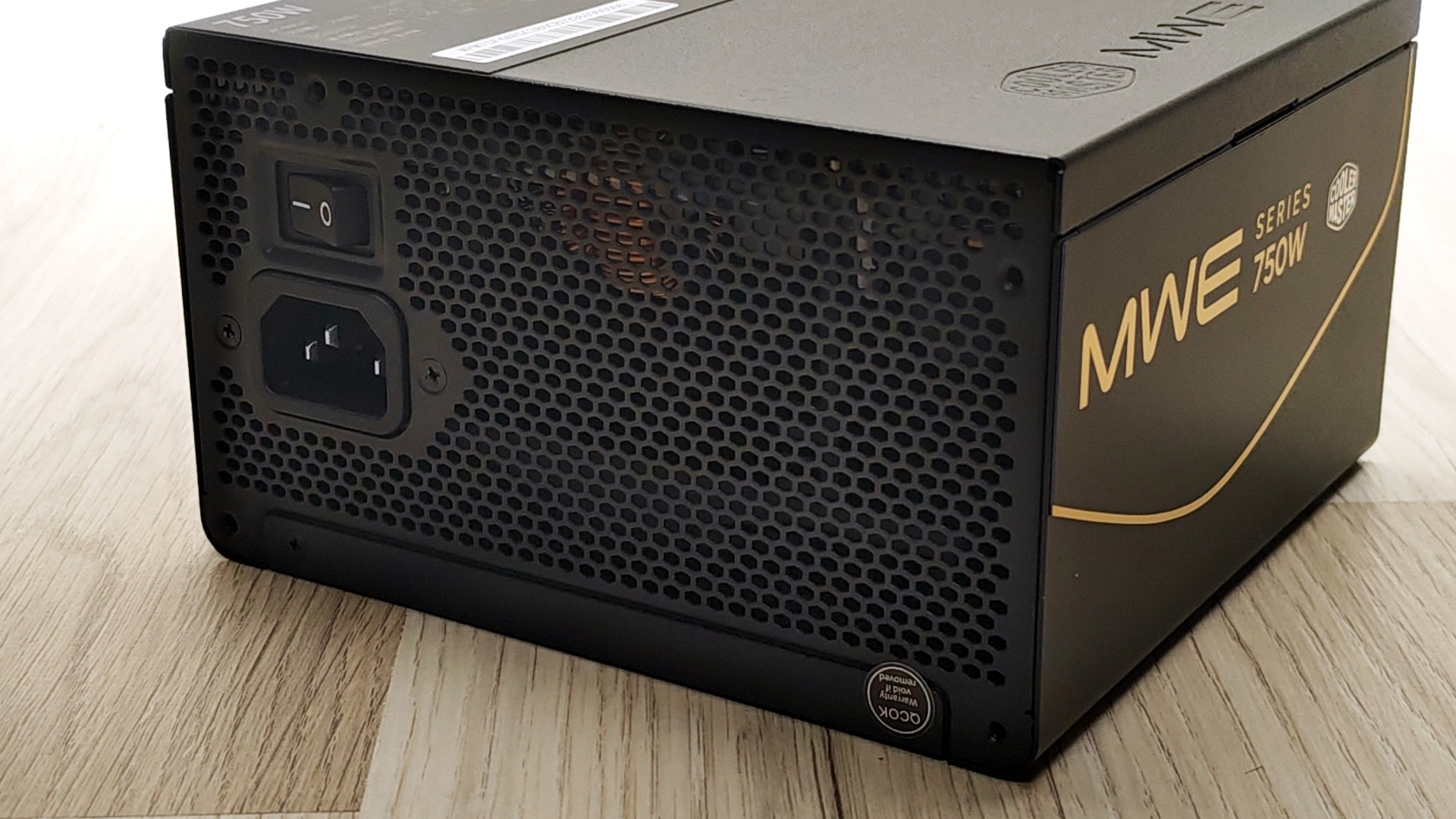
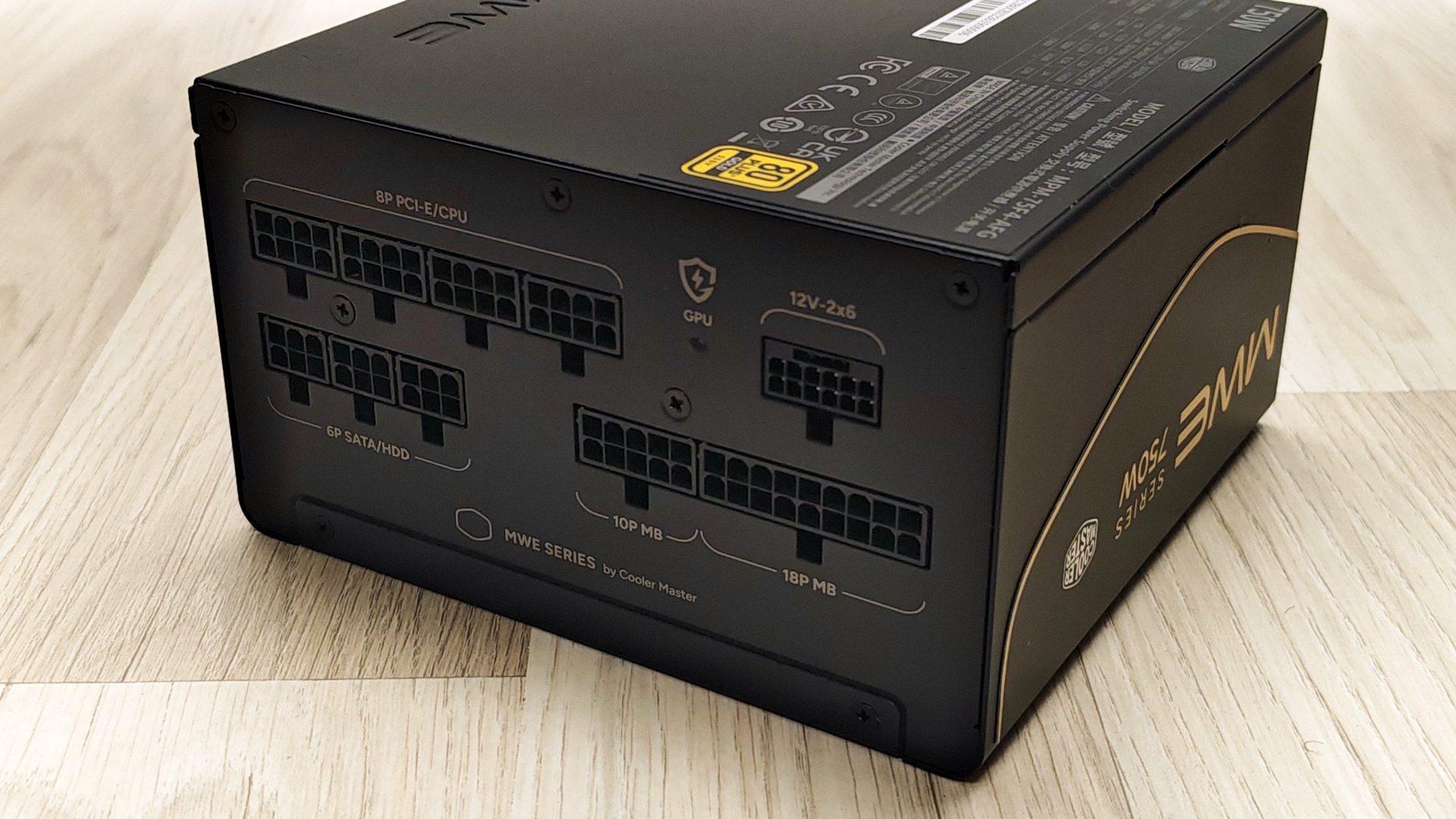
The rear face carries the AC receptacle and a receded main rocker switch surrounded by a generous perforated exhaust area. There is no switch for the semi-passive fan mode - the Zero RPM behavior is automatic and not user-selectable, which some builders will not appreciate. The front face hosts the fully modular connector bay, clearly silkscreened, with a shared 8-pin socket group for the PCIe and CPU cables, the native 12V-2x6 socket, and a small indicator LED between them. The specifications sticker lies on the top face.
(Image credit: Tom's Hardware)
That small LED is the visible face of GPU Shield, Cooler Master's patent-pending current-management feature, and the marketing centerpiece of the V4 series. The circuit monitors the current flowing through the individual pins of the 12V-2x6 connector in real time, and if it detects an abnormal draw on any of them - the classic signature of a poorly seated or damaged connector - it intervenes and flags the fault through the LED. Given how much grief melting connectors have caused over the past few years, a per-pin watchdog on a $119 unit is a genuinely useful inclusion rather than a gimmick, even if we hope most owners never see the LED do anything at all.
Tom's HardwareTom's Hardware
Internal Design
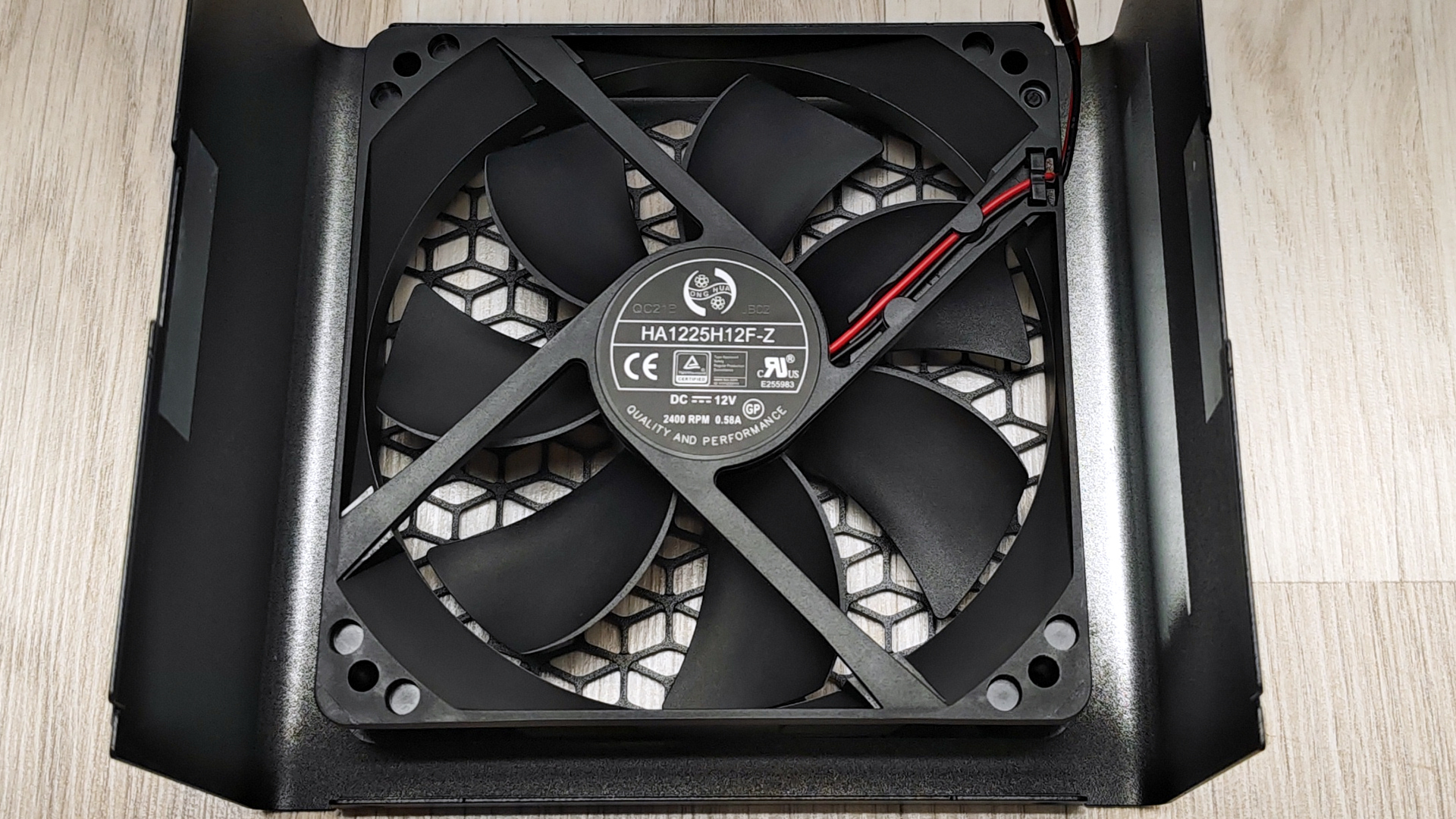
Cooling is handled by a 120 mm Hong Hua HA1225H12F-Z fan, a hydrodynamic bearing (HDB) model rated for 2400 RPM at 0.58A. Hong Hua is a familiar name inside value-oriented and mid-range PSUs, and while it lacks the cachet of a premium Japanese fan, the HDB variant is a reasonable, durable choice at this tier, and its ceiling speed gives the platform plenty of thermal headroom to call on.
(Image credit: Tom's Hardware)
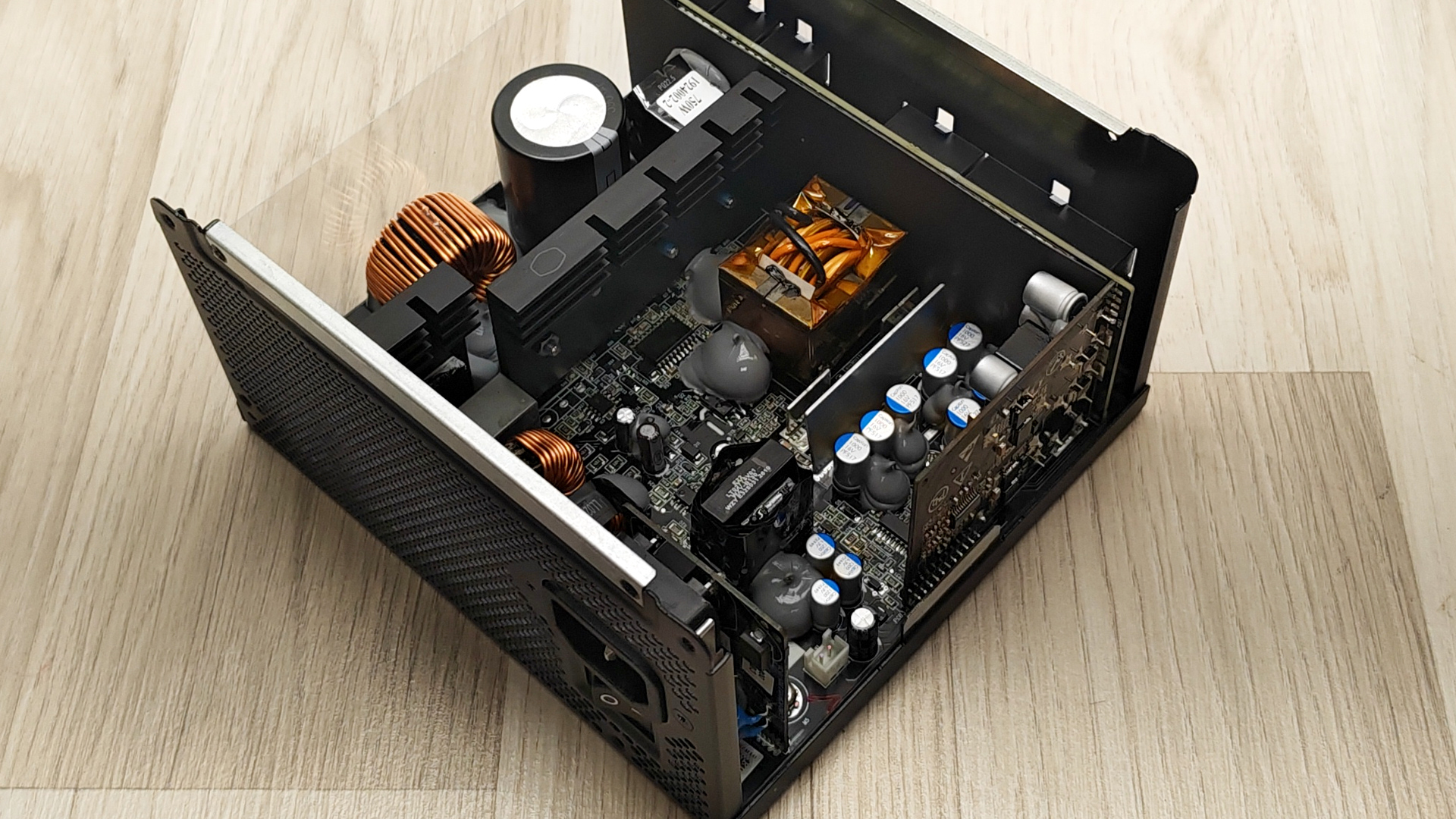
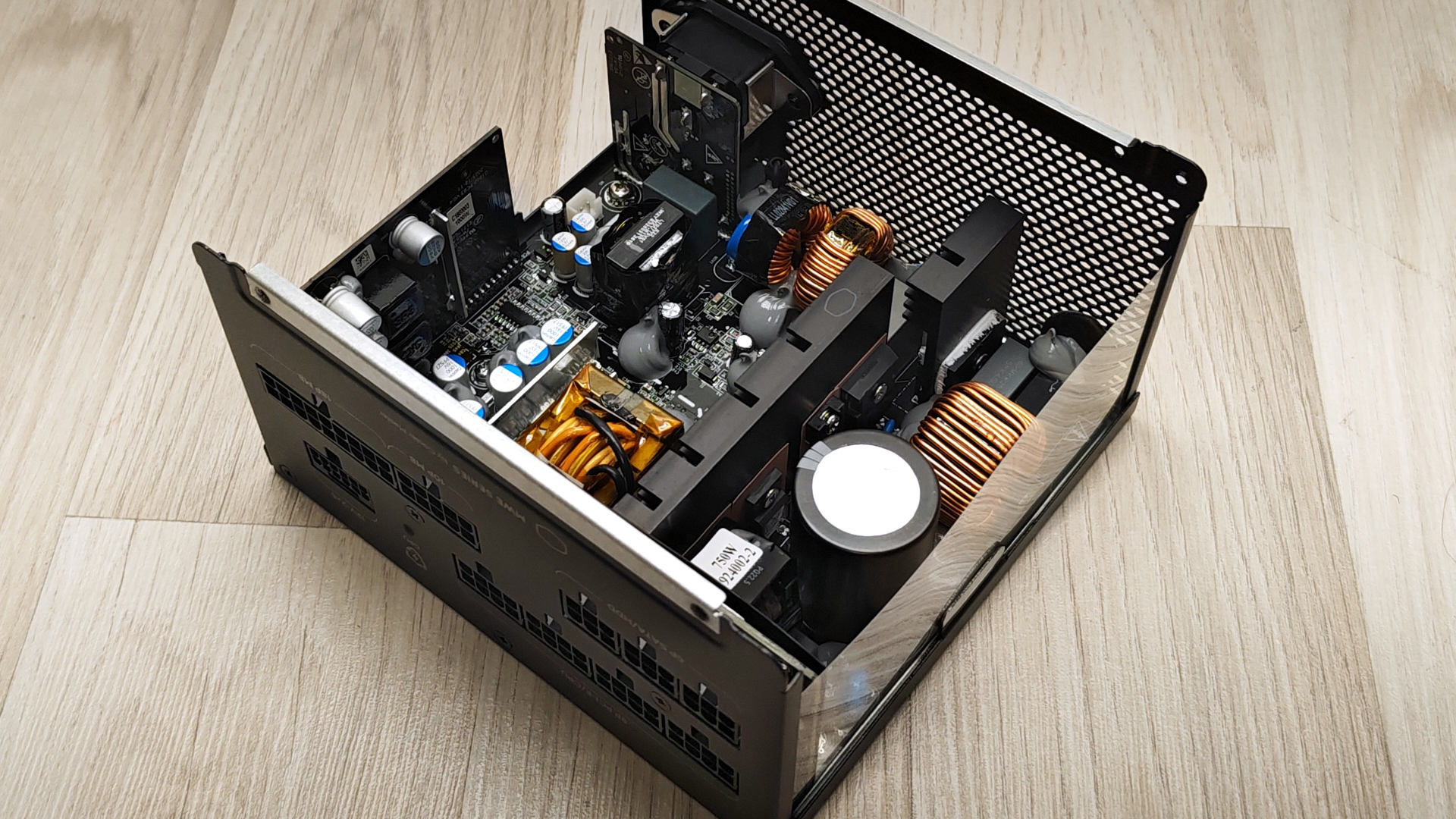
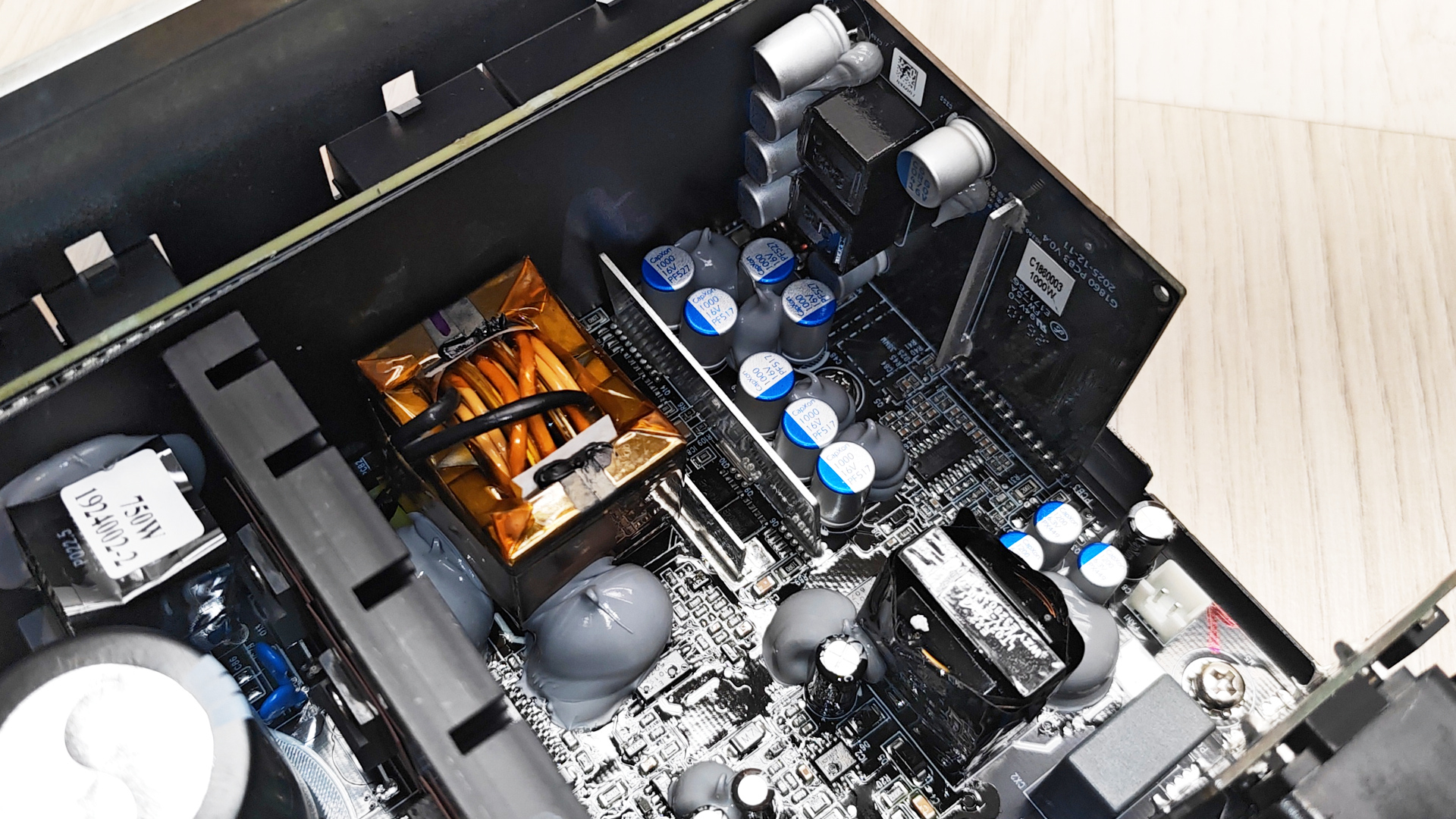
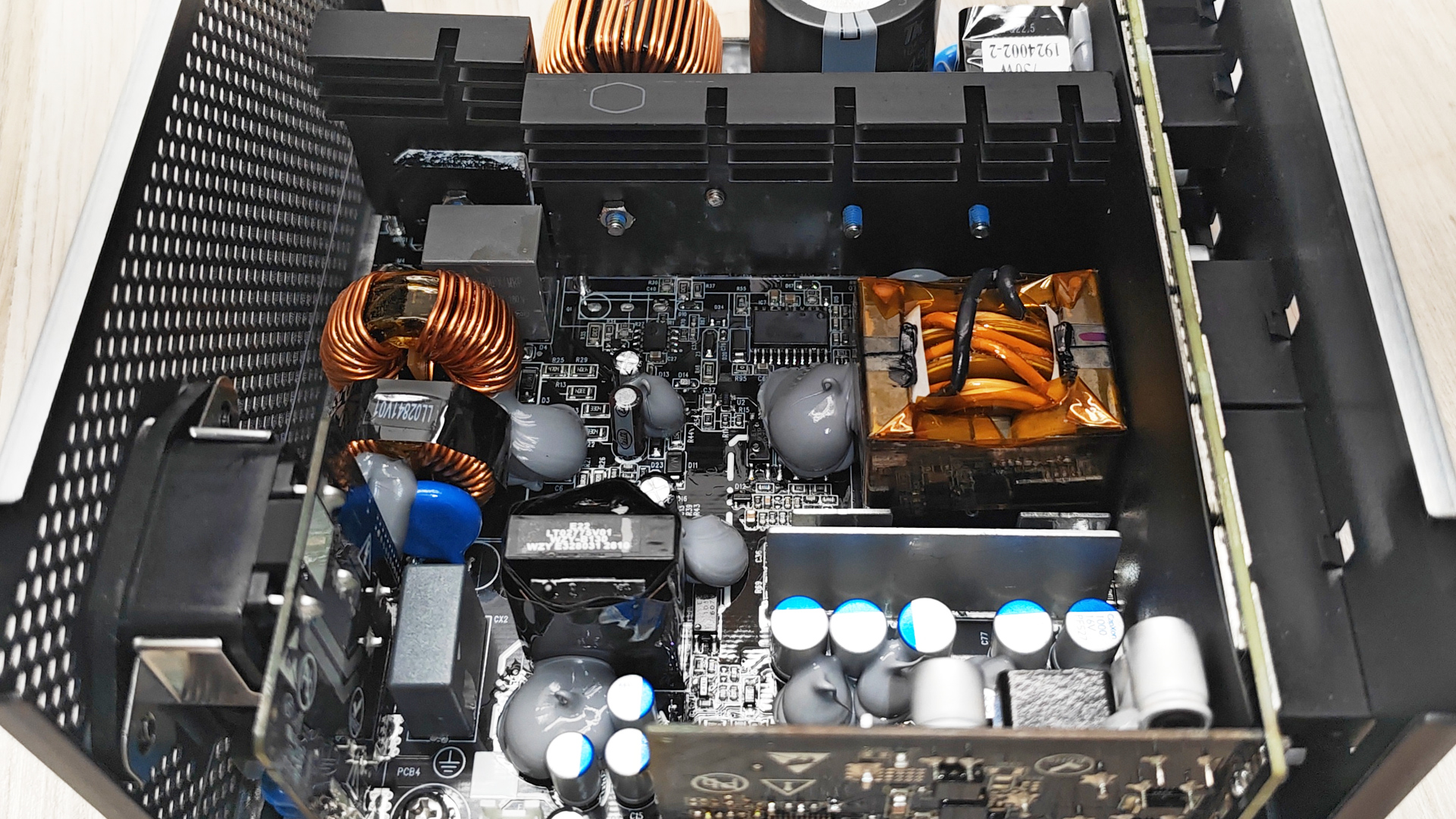
As noted in the introduction, the platform is a Gospower design produced in collaboration with Cooler Master and currently exclusive to them, so there is a clear answer to the perennial 'who really makes it' question. The layout is clean and modern, with sizable heatsinks for the power output, vertical daughterboards for the minor rails, and generous helpings of grey silicone glue securing the components.
Tom's HardwareTom's Hardware
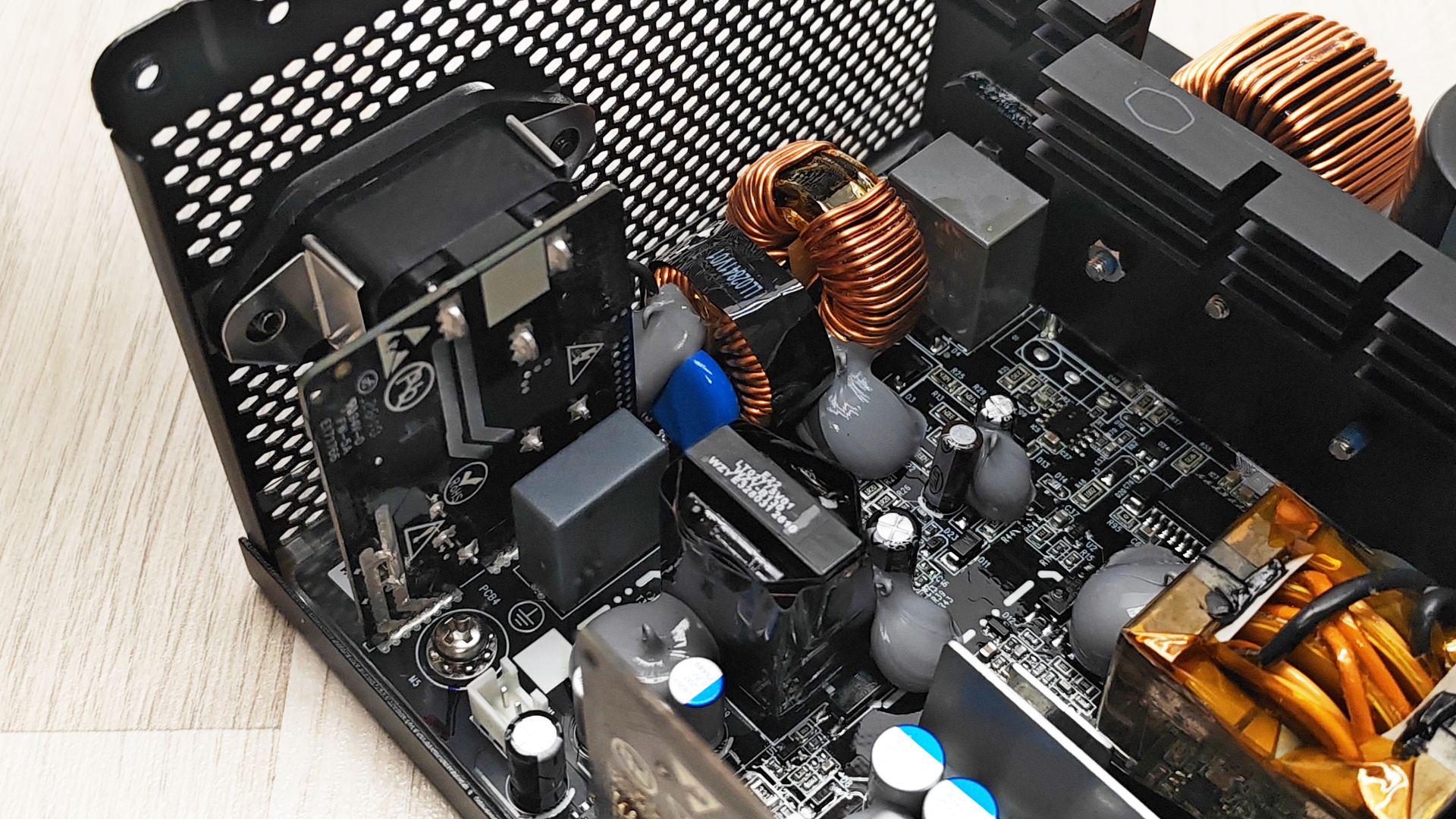
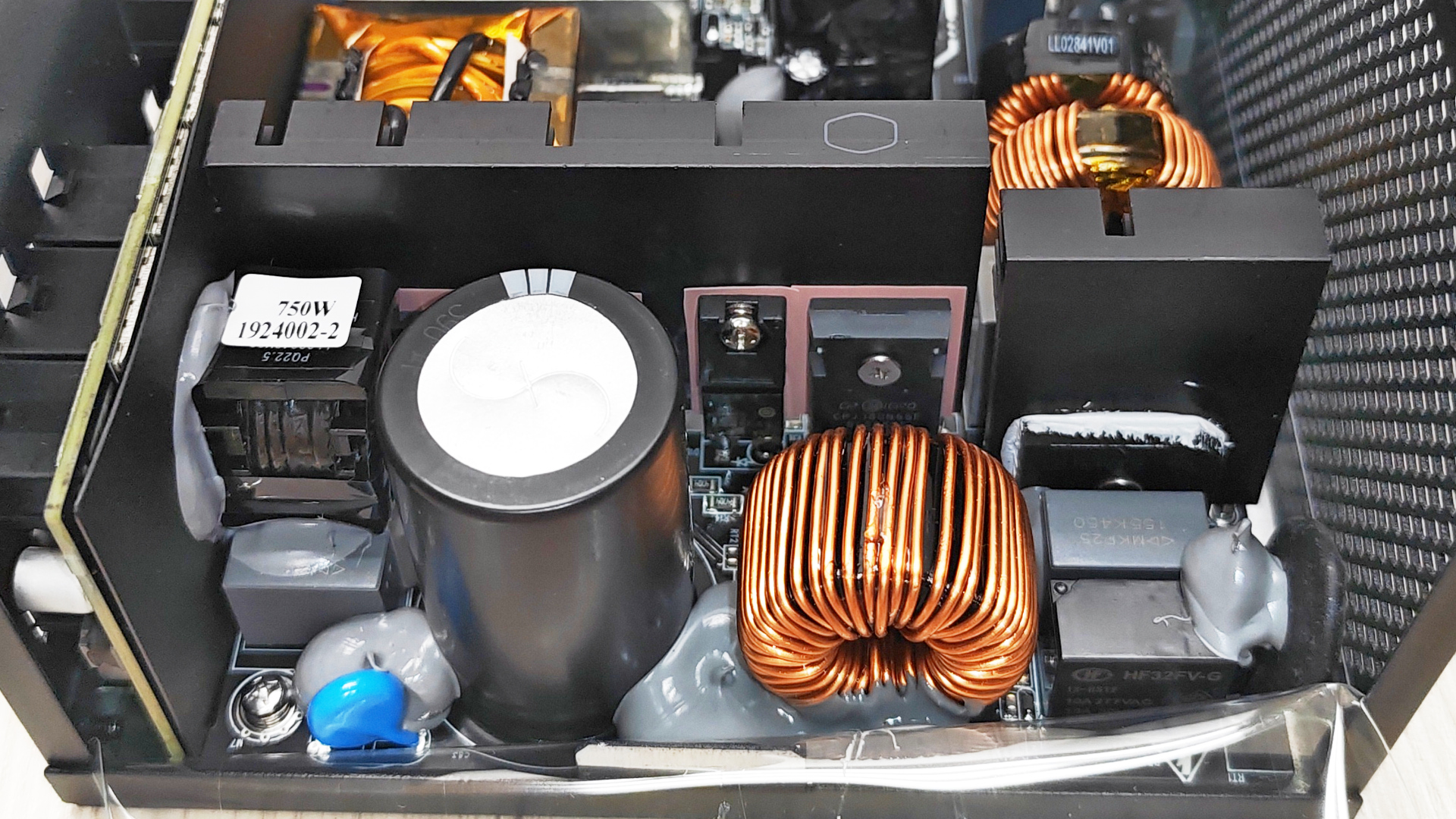
The transient filtering stage begins on a small PCB behind the AC receptacle and continues on the main board, with two Y capacitors, two X capacitors, two filtering inductors, and a MOV - a basic but complete filter without omissions. A relay handles inrush current bypass duty alongside the usual NTC thermistor. Two bridge rectifiers are mounted on their own heatsink, feeding the APFC stage, whose boost components share the long heatsink with the primary inversion stage MOSFETs. A single 590 μF capacitor from TK (Toshin Kogyo), a renowned Japanese manufacturer.
Tom's HardwareTom's Hardware
The primary inversion stage uses a half-bridge LLC resonant topology, the mature and cost-effective arrangement that dominates this class, with Cooler Master claiming the digital tuning of the PFC and LLC stages is worth roughly three points of efficiency over the previous MWE generation - a dubious claim as the unit still lands on Gold-level efficiency class. On the secondary side, the 12V rail is generated by four MOSFETs arranged in synchronous rectification on the main PCB, while the 3.3V and 5V rails are derived from DC-to-DC converters on a vertical daughterboard. Secondary filtering leans heavily on CapXon capacitors.
(Image credit: Tom's Hardware)
Cold Test Results (25°C Ambient)
Cold Test Results (25°C Ambient)
For the testing of PSUs, we are using high precision electronic loads with a maximum power draw of 2700 Watts, a Rigol DS5042M 40 MHz oscilloscope, an Extech 380803 power analyzer, two high precision UNI-T UT-325 digital thermometers, an Extech HD600 SPL meter, a self-designed hotbox and various other bits and parts.
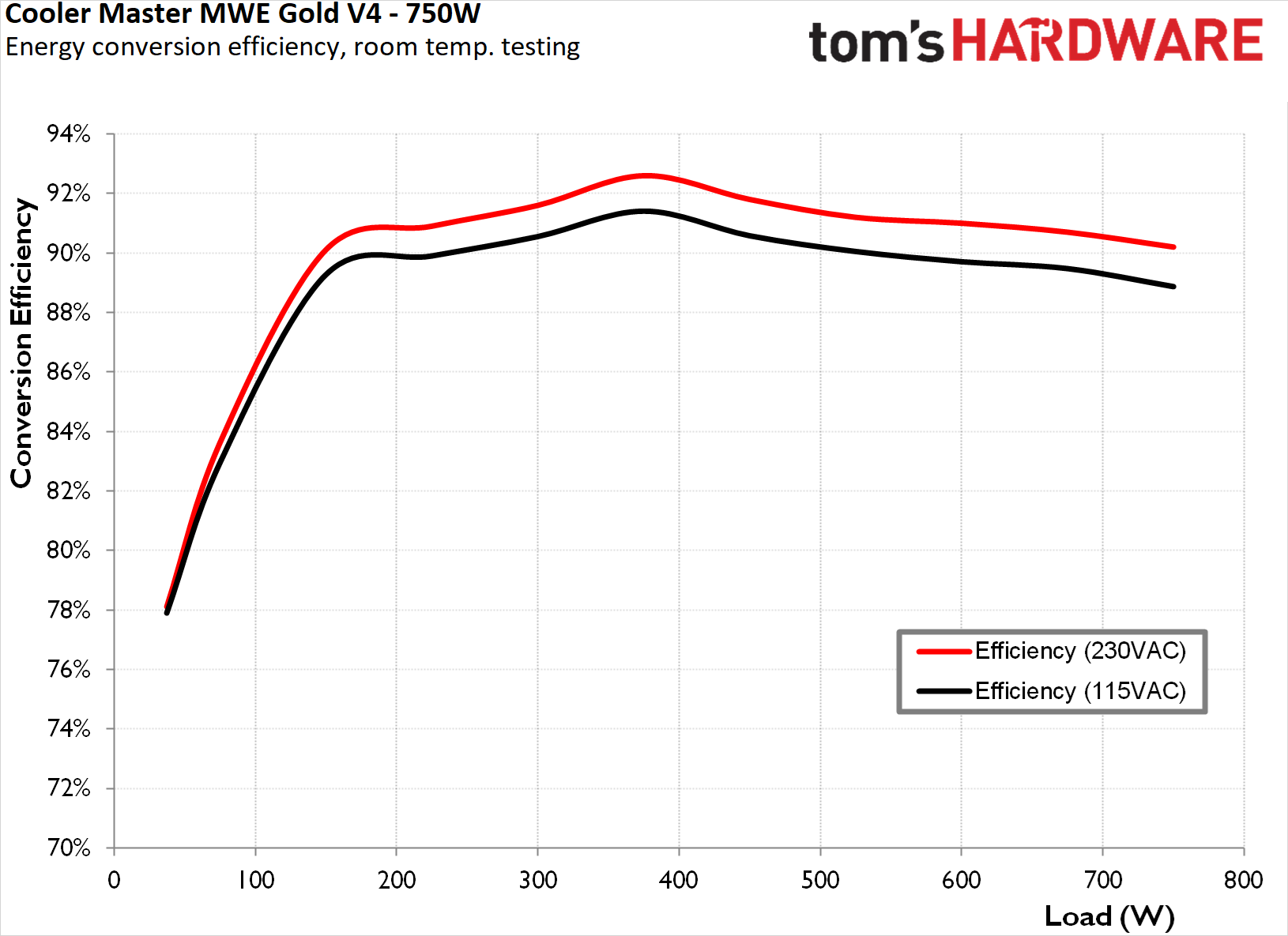
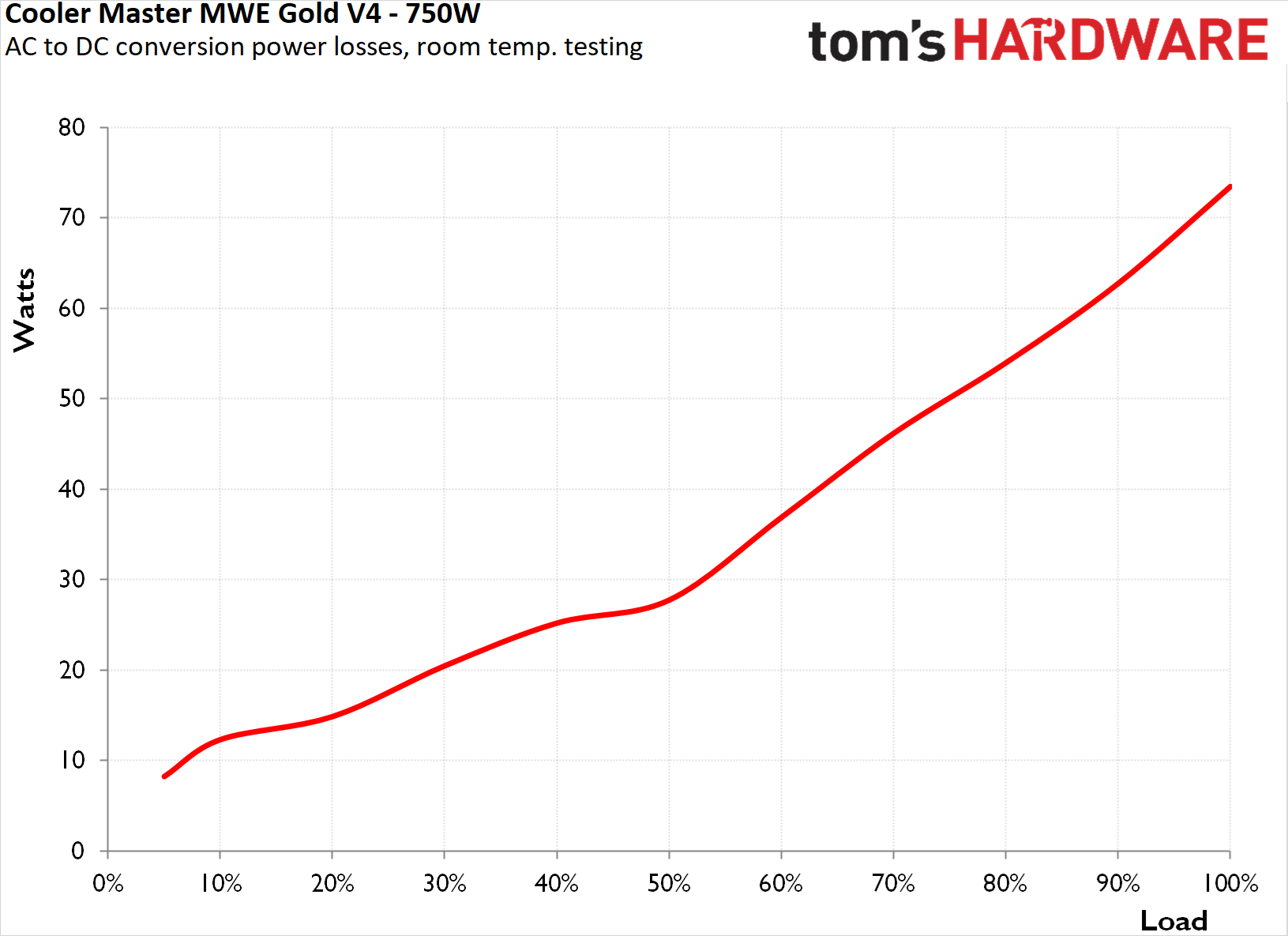
At 25°C ambient, the MWE Gold 750 V4 delivers exactly the efficiency profile its badge promises. It averaged 90.4% at 230 VAC and 89.3% at 115 VAC across the nominal load range, peaking at 92.6% (230 VAC) near 50% load and holding 90.2% even at a sustained 750W. The curve is not exactly flat, but there is no dramatic full-load sag. The figures sit comfortably within 80Plus Gold territory. What the unit does not yet have is a Cybenetics certification: at the time of writing, there is no entry for the MPM-75F4-AFG in the Cybenetics database.
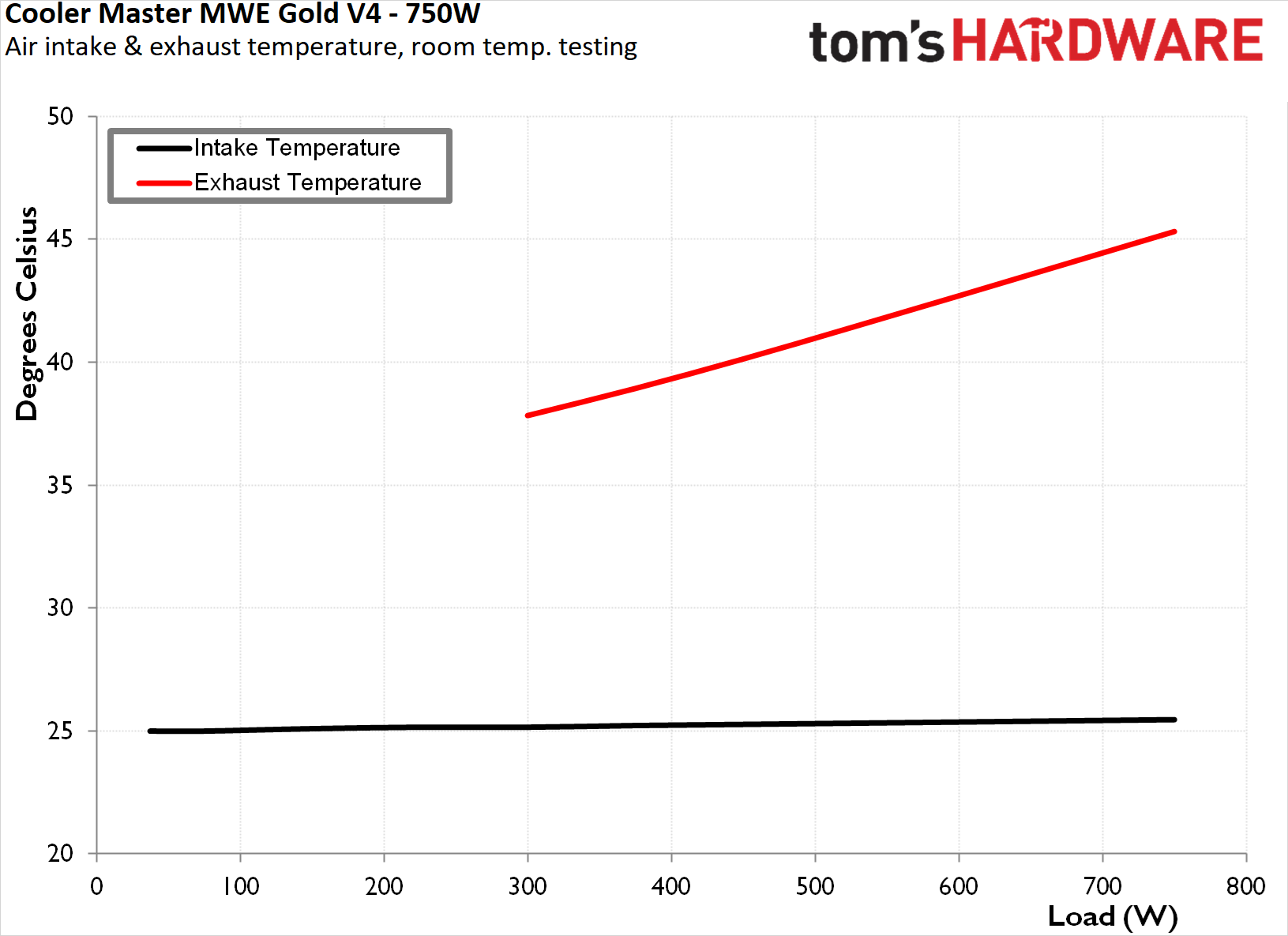
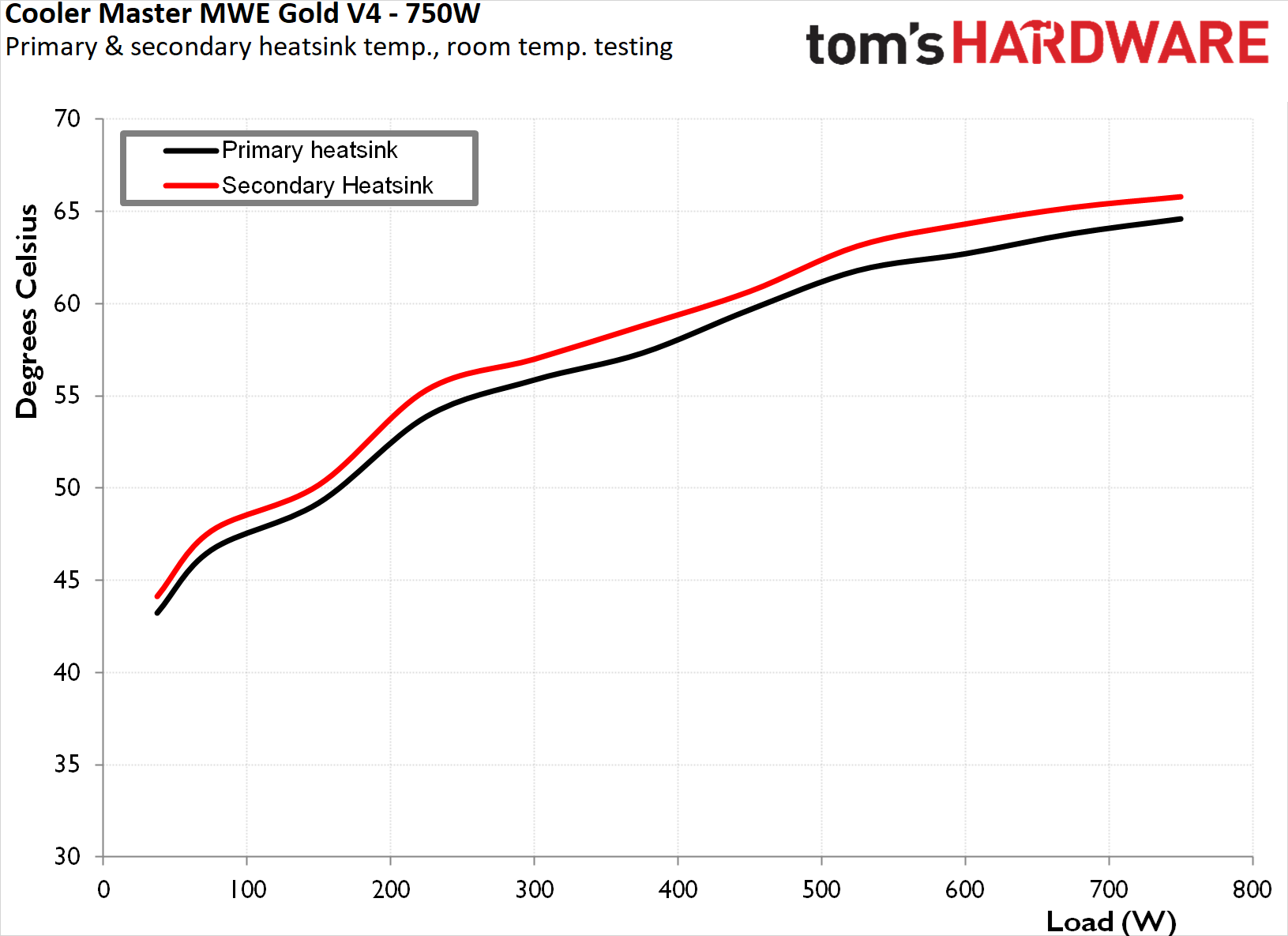
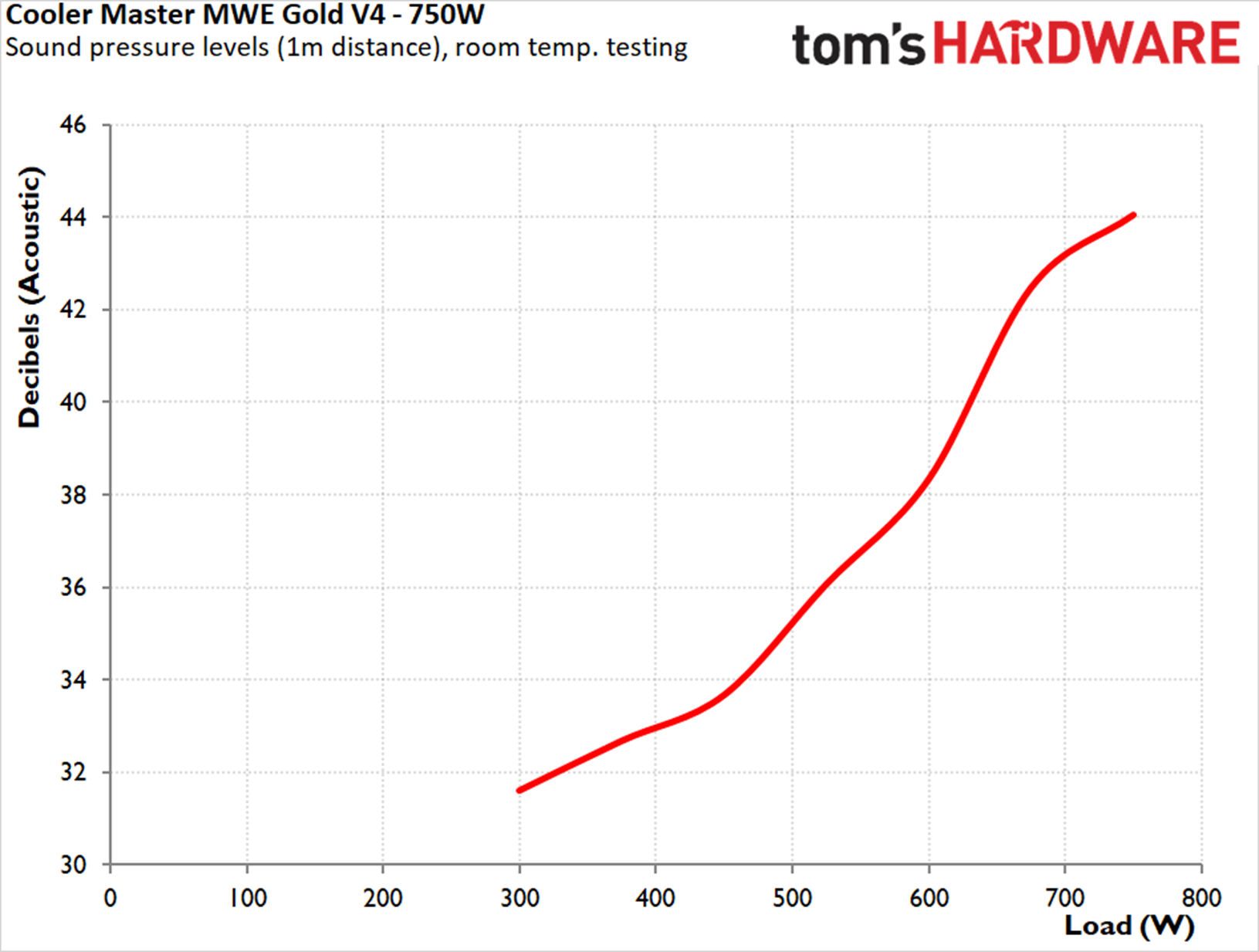
Acoustically, the cold run is very good news. The Zero RPM mode keeps the fan completely stopped up to almost 40% load (roughly up to 300W), which covers desktop work and light gaming outright. The fan spins up at about 40% load, registering a whisper-quiet 31.6 dB(A), and ramps gently from there, crossing 39 dB(A) only past 80% load and topping out at 44.2 dB(A) at a sustained 750W. Thermal performance gives no cause for concern, with the primary and secondary heatsinks reaching just 64°C and 66°C, respectively, at full load.
Hot Test Results (~45°C Ambient)
Hot Test Results (~45°C Ambient)
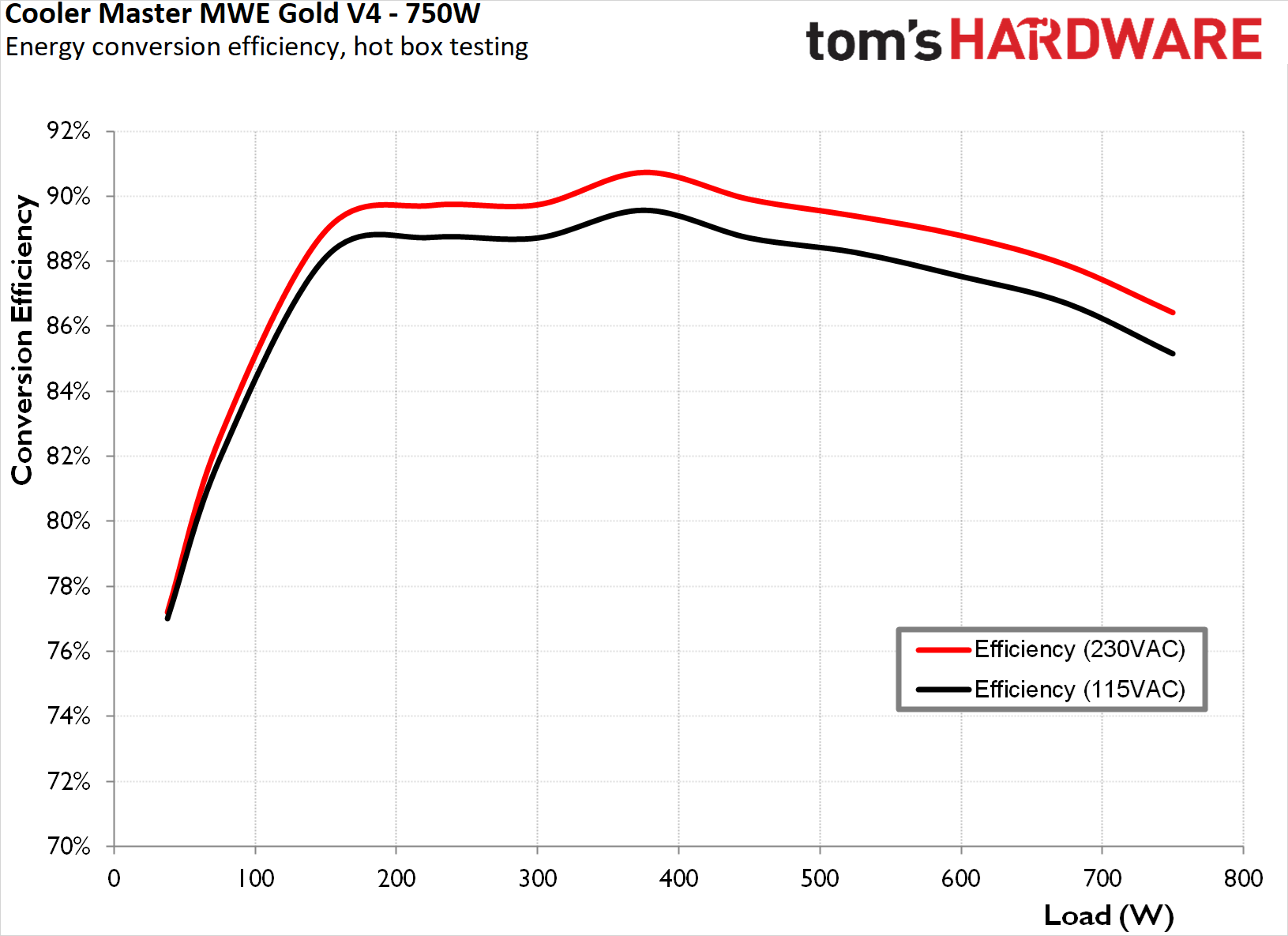
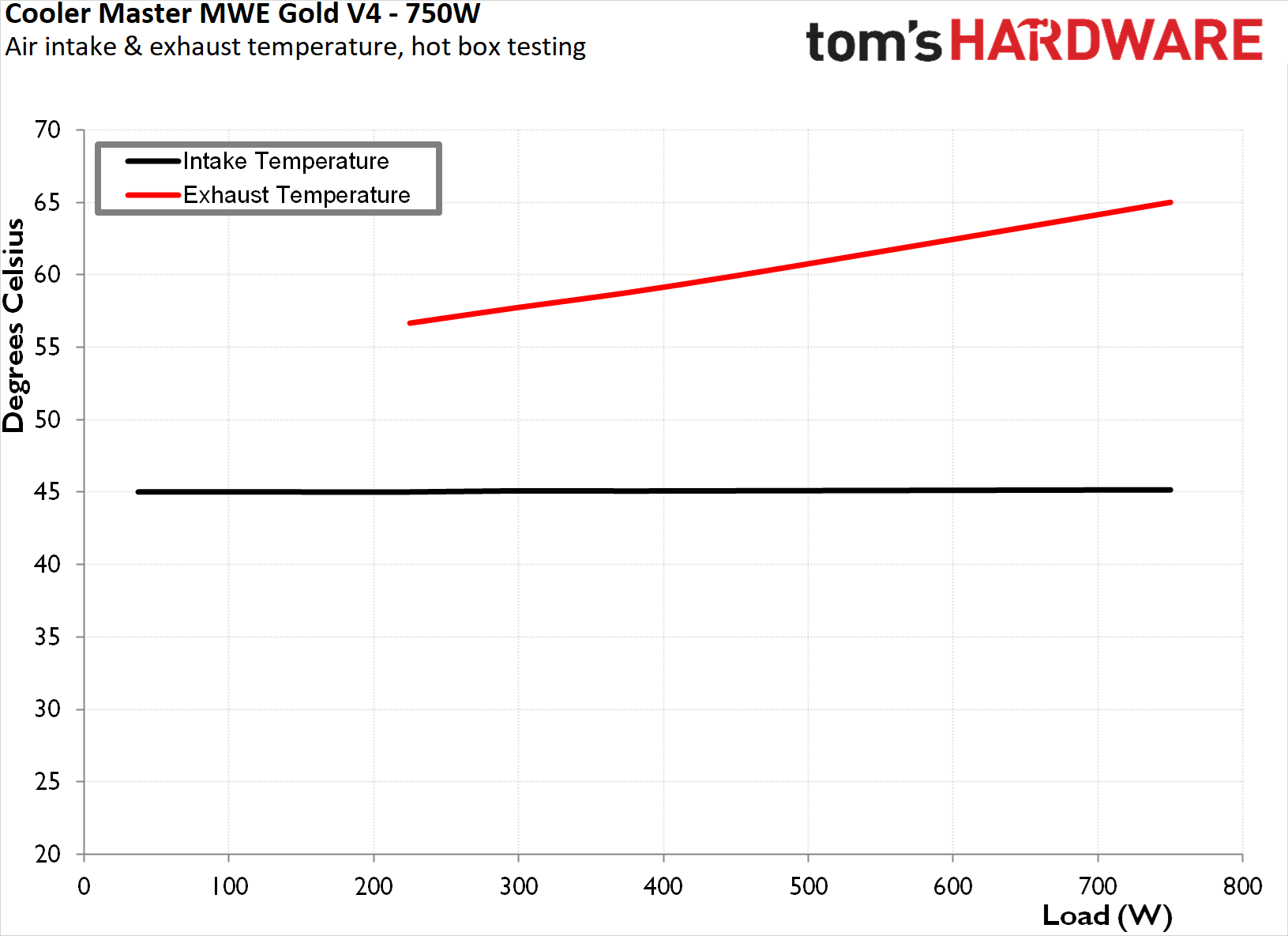
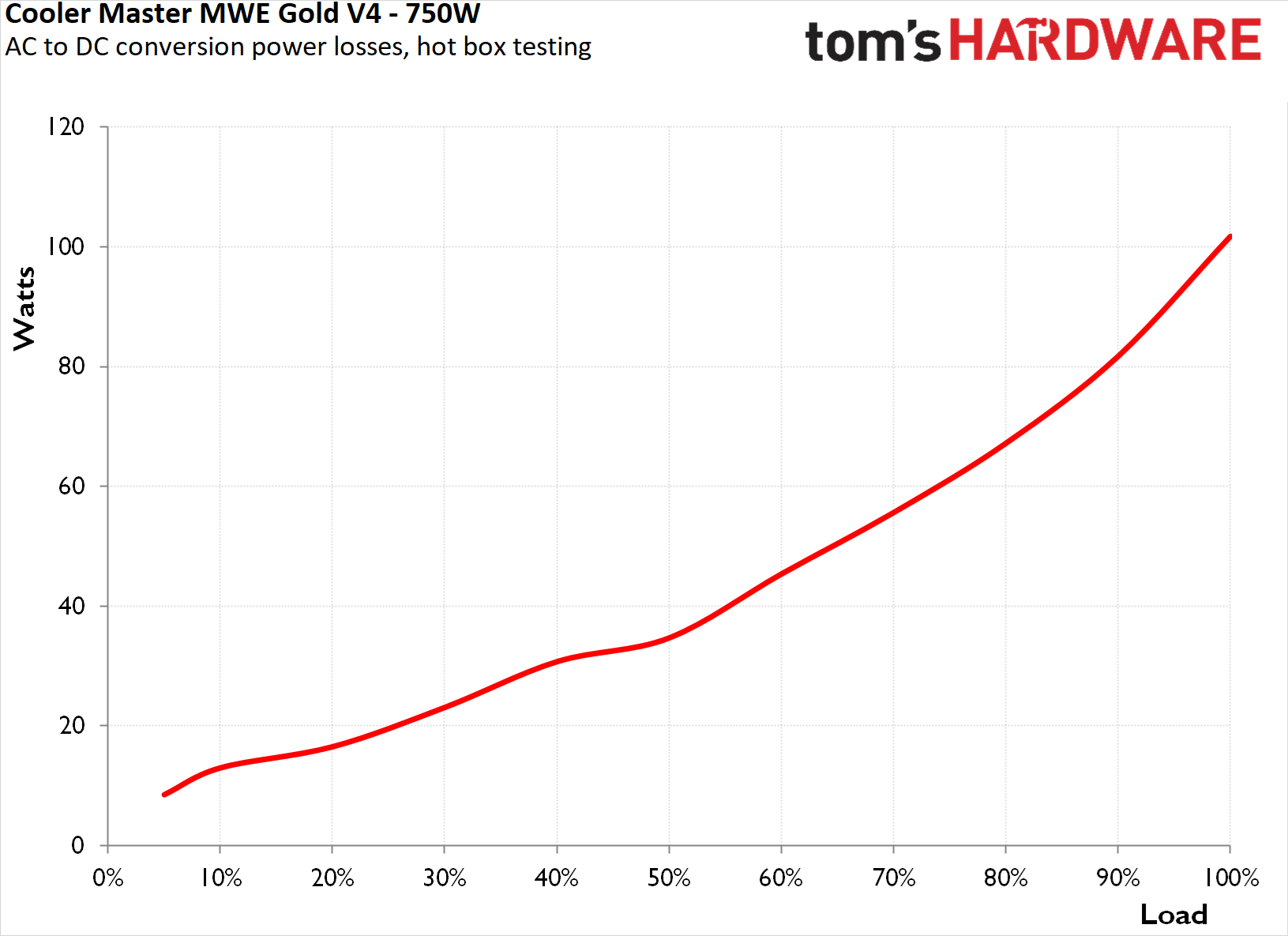
Inside the hotbox at roughly 45°C ambient - slightly above the unit's own 40°C rating - efficiency drops by about two percentage points, averaging 88.4% at 230 VAC and 87.4% at 115 VAC, with full-load figures of 86.5% and 85.2% respectively. That degradation is significant but entirely ordinary for the temperature delta, especially considering a unit that is now operating beyond its rated envelope.
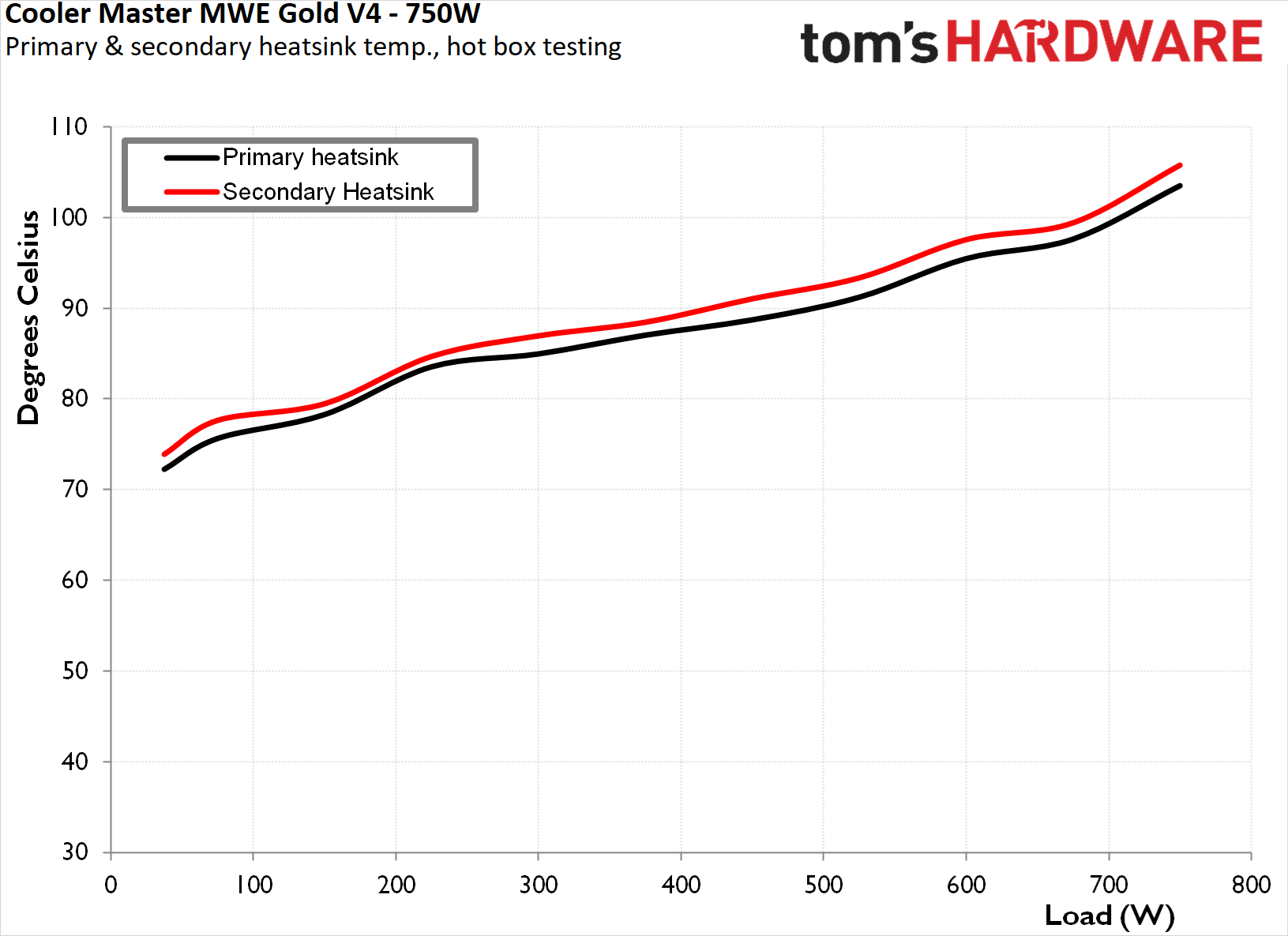
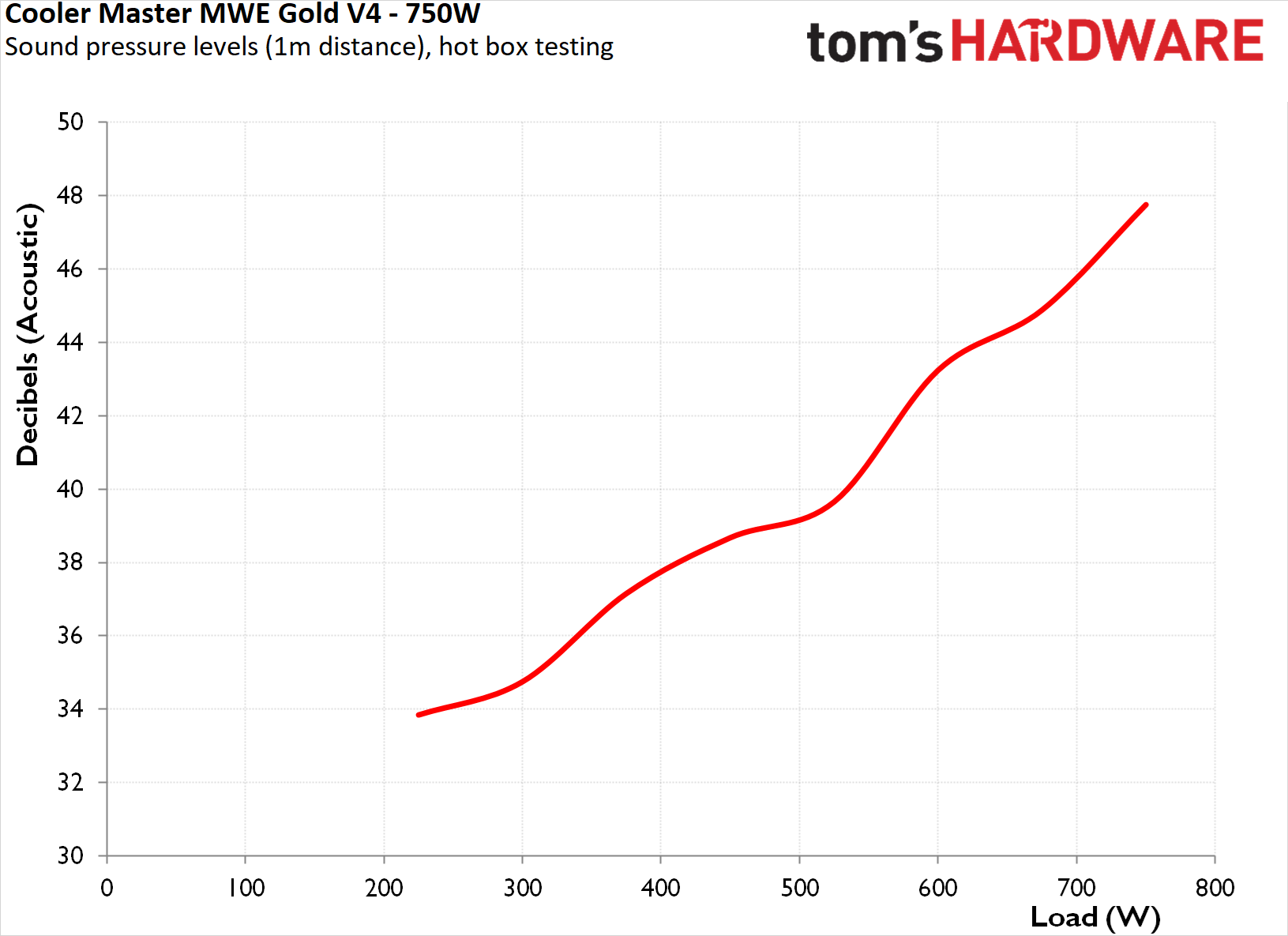
Noise is where the heat reshapes the unit's character. The fan abandons its passive mode sooner and climbs steadily to 47.8 dB(A) at full output - a level you will definitely hear, though short of the wind-tunnel territory some compact Gold units reach under the same conditions. Internal temperatures are the figures to watch: the primary heatsink reached about 104°C and the secondary about 105°C at full load. The platform held composure, and component ratings give some reassurance, but sustained full-load operation in a 45°C environment is clearly not this unit's design brief, nor should it be for any mainstream 750W supply.
PSU Quality and Bottom Line
Power Supply Quality
Voltage regulation is relatively solid for the class. Across the 20% to 100% load span, the 12V rail moved by 0.9%, the 3.3V rail by 1.1%, and the 5V rail by 1.4%. Nothing here approaches the sub-1% figures of premium digital platforms, but every rail stays comfortably tight, and the 12V line - the only one modern systems seriously stress - is well controlled at under 1% regulation.
Ripple suppression follows the same pattern of honest adequacy. The 12V rail peaked at 54 mV under full load and 50 mV under the 12V-focused cross-load test, while the 5V and 3.3V rails topped out at 32 mV and 30 mV. Against the 120 mV and 50 mV ATX design limits, these are comfortable passes with roughly 55% headroom on the critical rail, though enthusiast-class platforms routinely halve these numbers. For the components a 750W Gold unit will realistically feed, the filtering is more than sufficient.
During our thorough assessment, we evaluate the essential protection features of every power supply unit we review, including Over Current Protection (OCP), Over Voltage Protection (OVP), Over Power Protection (OPP), and Short Circuit Protection (SCP).
All protection mechanisms were verified and triggered correctly during testing. With the unit hot, OCP tripped at 134% on the 3.3V rail, 136% on the 5V rail, and 128% (80A) on the 12V rail, with OPP shutting the unit down at roughly 130% of rated output, or about 975W. These thresholds are on the generous side for a mainstream unit but not unexpectedly so.
Main Output
Load (Watts)
151.48 W
378.52 W
564.3 W
748.7 W
Load (Percent)
20.22%
50.47%
75.24%
99.83%
Amperes
Volts
Amperes
Volts
Amperes
Volts
Amperes
Volts
3.3 V
1.8
3.37
4.5
3.36
6.75
3.34
9
3.33
5 V
1.8
5.1
4.5
5.09
6.75
5.05
9
5.02
12 V
11.25
12.11
28.14
12.1
42.2
12.03
56.27
11.97
Line
Regulation
Voltage Ripple (mV)
(20% to 100% load)
20% Load
50% Load
75% Load
100% Load
CL1 12V
CL2 3.3V + 5V
3.3V
1.3%
26
18
26
30
22
30
5V
1.5%
26
22
28
32
22
30
12V
1.2%
18
24
36
54
50
24
Bottom Line
The MWE Gold 750 V4 is a well-judged mainstream power supply that knows exactly what it is trying to be. The Gospower-built platform - developed jointly with Cooler Master and currently dedicated to them - is modern where it matters: ATX 3.1 compliance with a native 12V-2x6 connector, digital control of the PFC and LLC stages, and the GPU Shield monitoring feature as a genuinely novel extra at this price. The engineering fundamentals are in noticeably better shape than the MWE badge historically implied, and the 12V-2x6 connector protection can bring sales from worried consumers.
(Image credit: Tom's Hardware)
The measurements back the badge without embarrassing it. Efficiency lands squarely and honestly in Gold territory with a predictable curve, and its 80Plus listing is real and verifiable. Regulation and ripple are comfortably within specification on every rail, with the 12V line particularly steady, even if neither metric threatens the enthusiast tier. Acoustics at normal ambient temperatures are a quiet strength, with a true fanless window covering 300W of load and restrained ramping beyond it.
The compromises are easy to enumerate and, mostly, easy to live with. The capacitor selection is almost entirely Taiwanese, leaning on CapXon polymers - fine parts, but the ten-year warranty is doing some load-bearing work there. The unit gets audible under sustained heavy load in hot environments, where the internal temperatures also climb higher than we would like. None of these is a genuine weakness at this price point - they are simply the fingerprints a $119 budget inevitably leaves somewhere.
(Image credit: Tom's Hardware)
At an MSRP of $119 and with retail pricing typically drifting below that figure, the value calculus is straightforward. There are quieter units, better-built units, and units with prestigious component sheets - all of them costing meaningfully more. For a mainstream ATX 3.1 build around a mid-range or upper-mid-range graphics card, the MWE Gold 750 V4 delivers verified Gold efficiency, current-generation connectivity, unusual protective touches, and a decade of warranty coverage at a price that undercuts most of the units it competes with. That is an easy recommendation, delivered with only minor reservations.
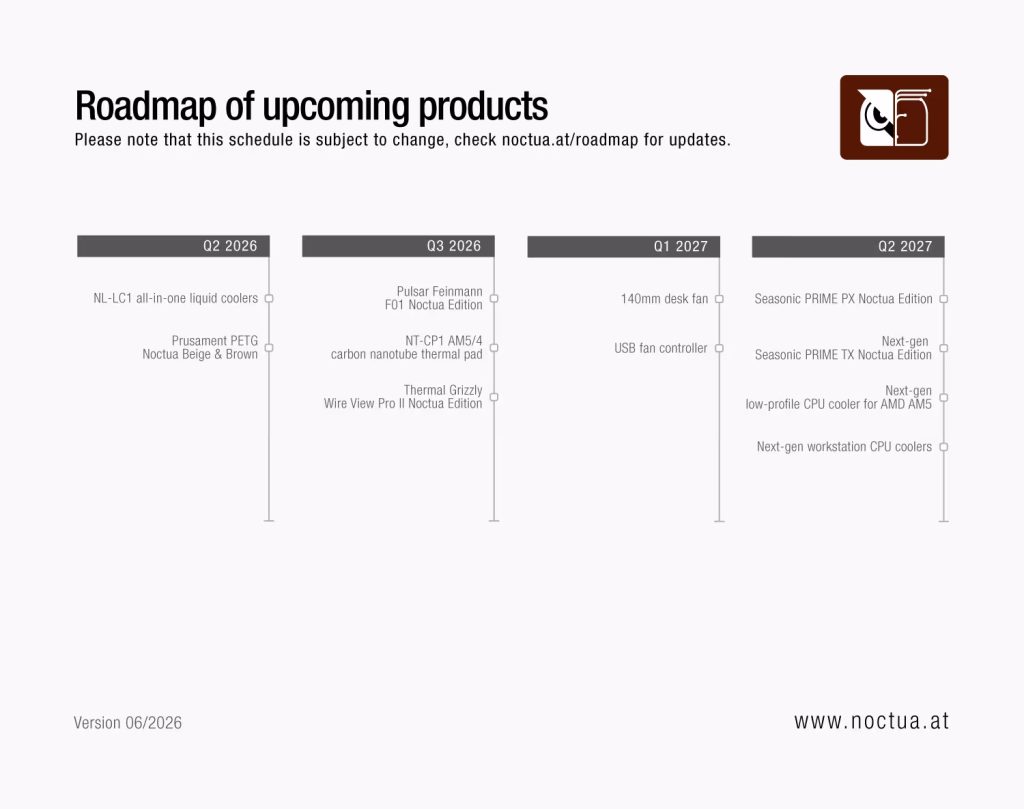
Noctua has released an updated product roadmap outlining launch windows for hardware teased at Computex 2026. The updated roadmap shows that Noctua's new low-profile AM5 CPU cooler will be arriving next year, alongside new ‘Noctua Edition' power supplies from Seasonic.
According to VideoCardz, the upcoming low-profile AM5 cooler features a 70mm height design based on the NH-L12 series. Noctua utilises six 6mm copper heat pipes, dense aluminium fins, and a 120mm NF-A12x25 G2 fan to dissipate heat. Additionally, the configuration preserves 35mm of RAM height clearance for Mini-ITX motherboard compatibility. According to the company, this cooler is officially slated for a Q2 2027 release window.
Closer releases based on the roadmap include the NT-CP1 carbon nanotube thermal pad for AM4 and AM5 sockets, launching in Q3 of this year alongside the Pulsar Feinmann F01 Noctua Edition mouse. A Noctua Edition of Thermal Grizzly's WireView Pro II monitoring tool is also scheduled for Q3 2026.
Lastly, the roadmap shows a 140mm desk fan and a USB fan controller for Q1 2027 and slots the Seasonic Prime PX Noctua Edition and the next-generation Seasonic Prime TX Noctua Edition power supplies into Q2 2027. Next-generation workstation CPU coolers share the same Q2 2027 timeline.
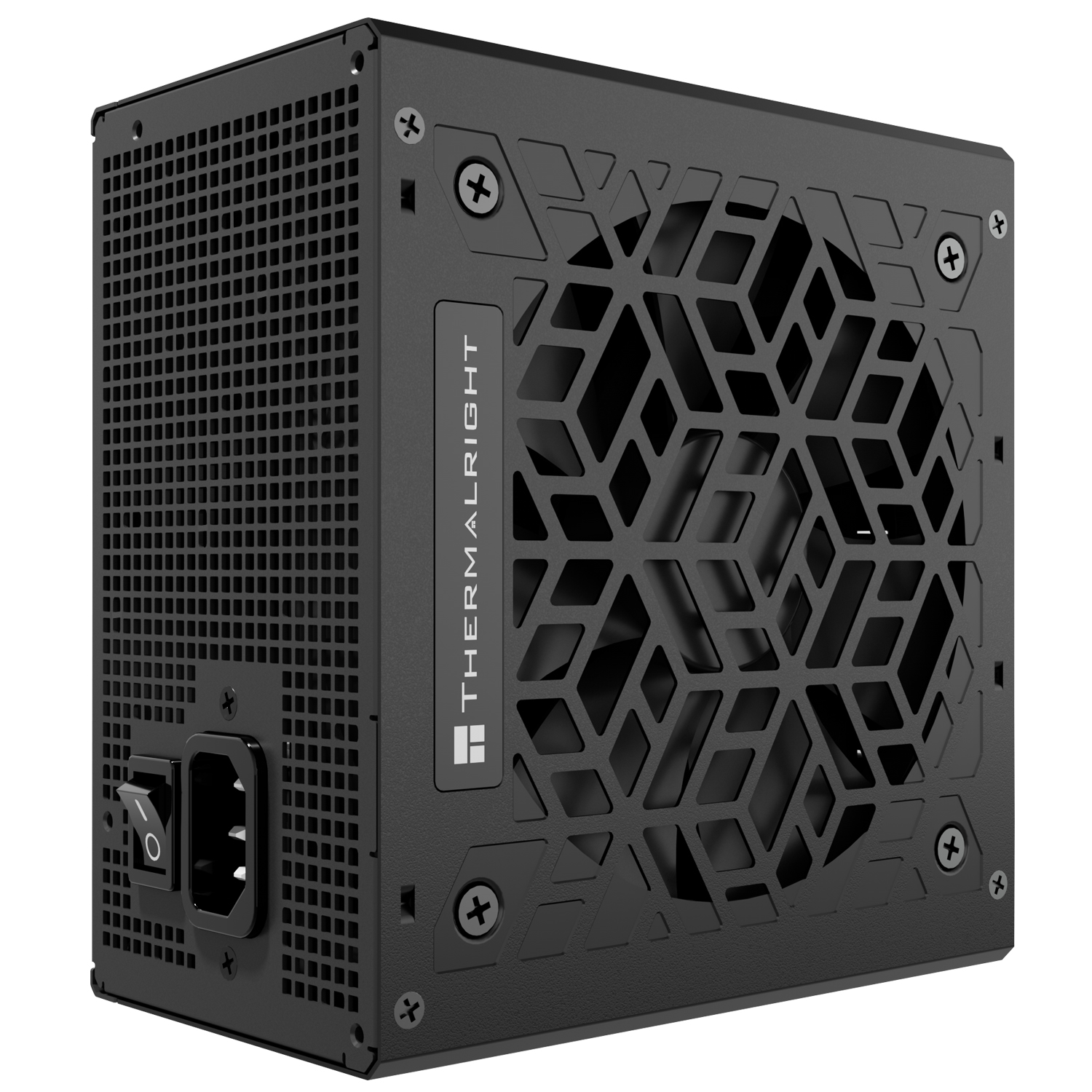
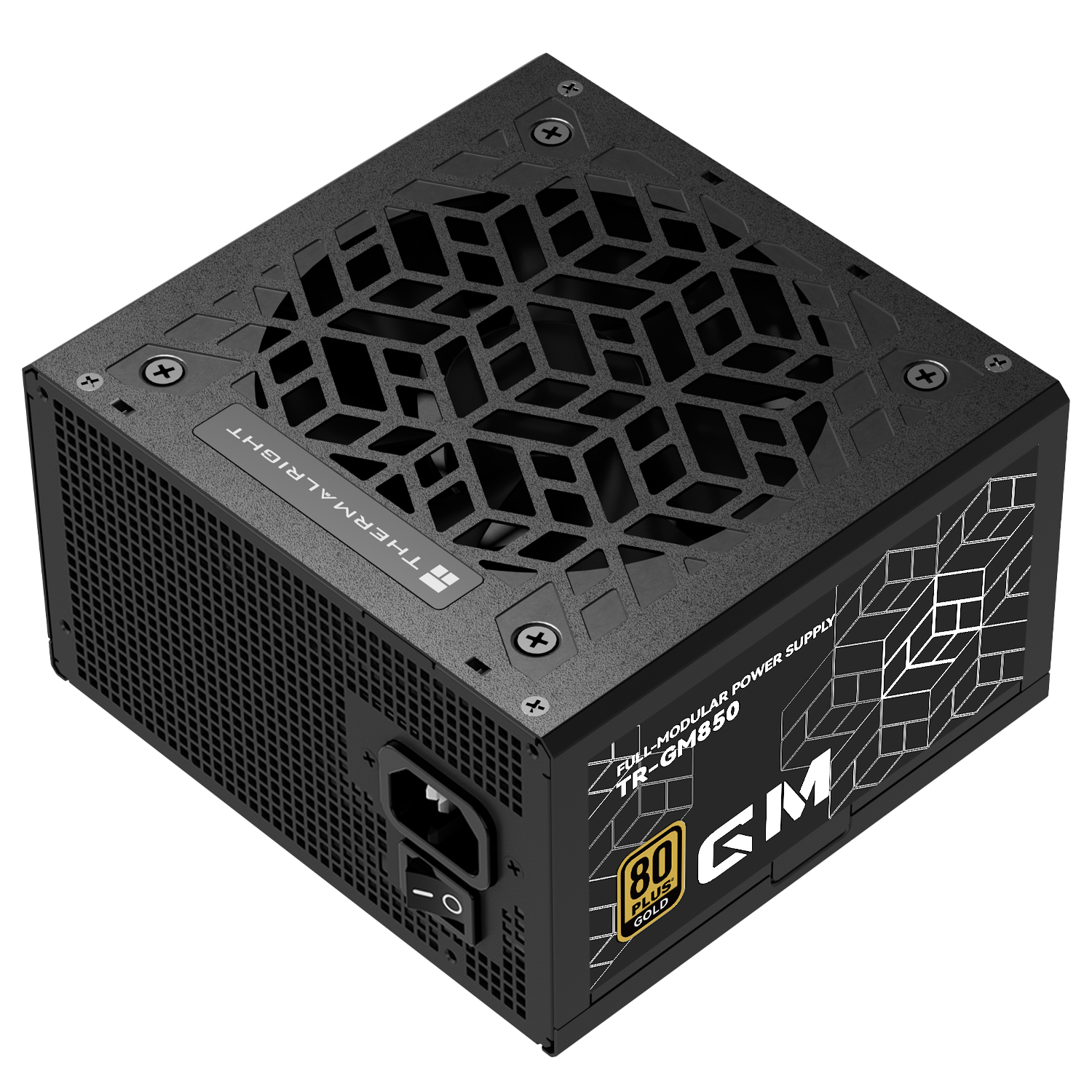
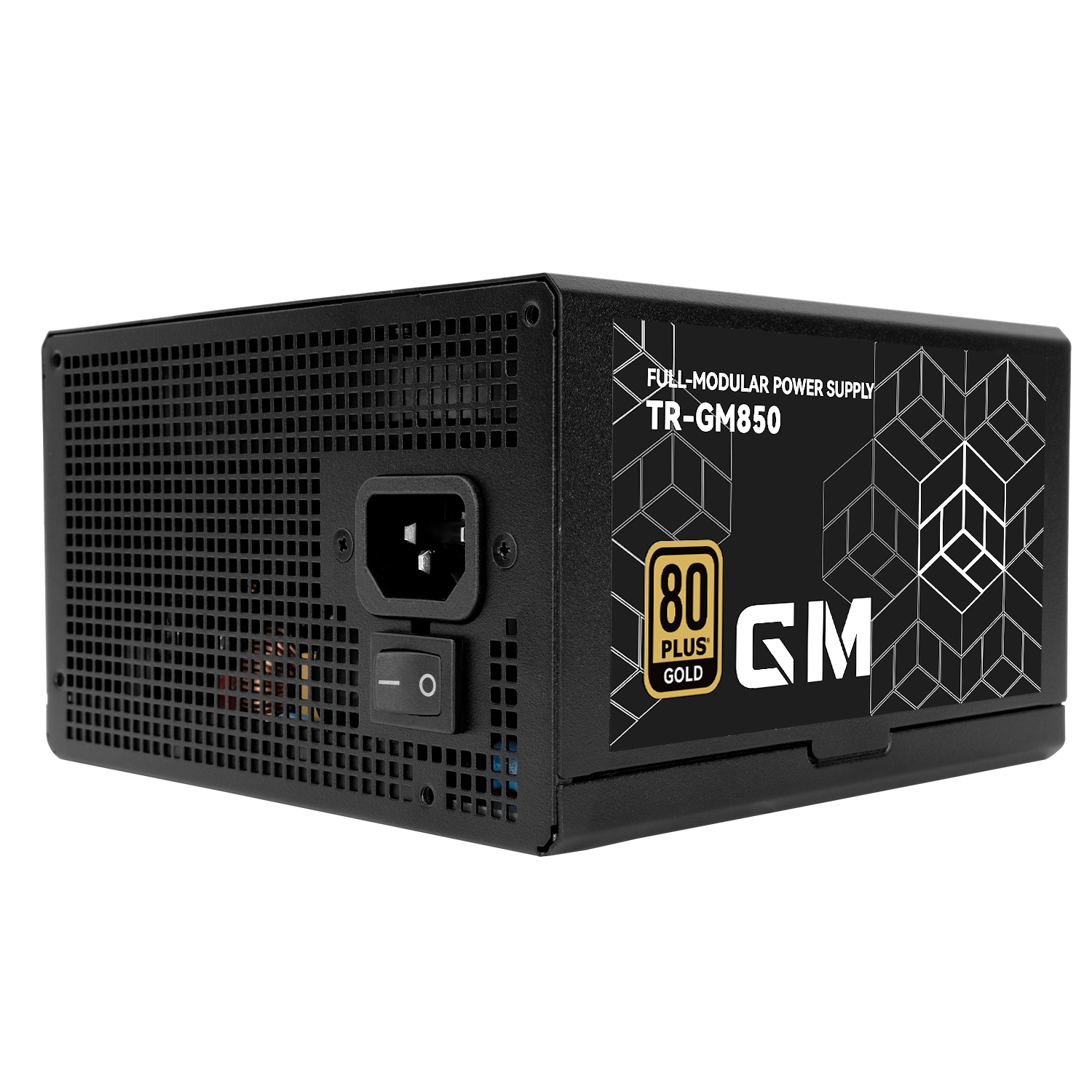
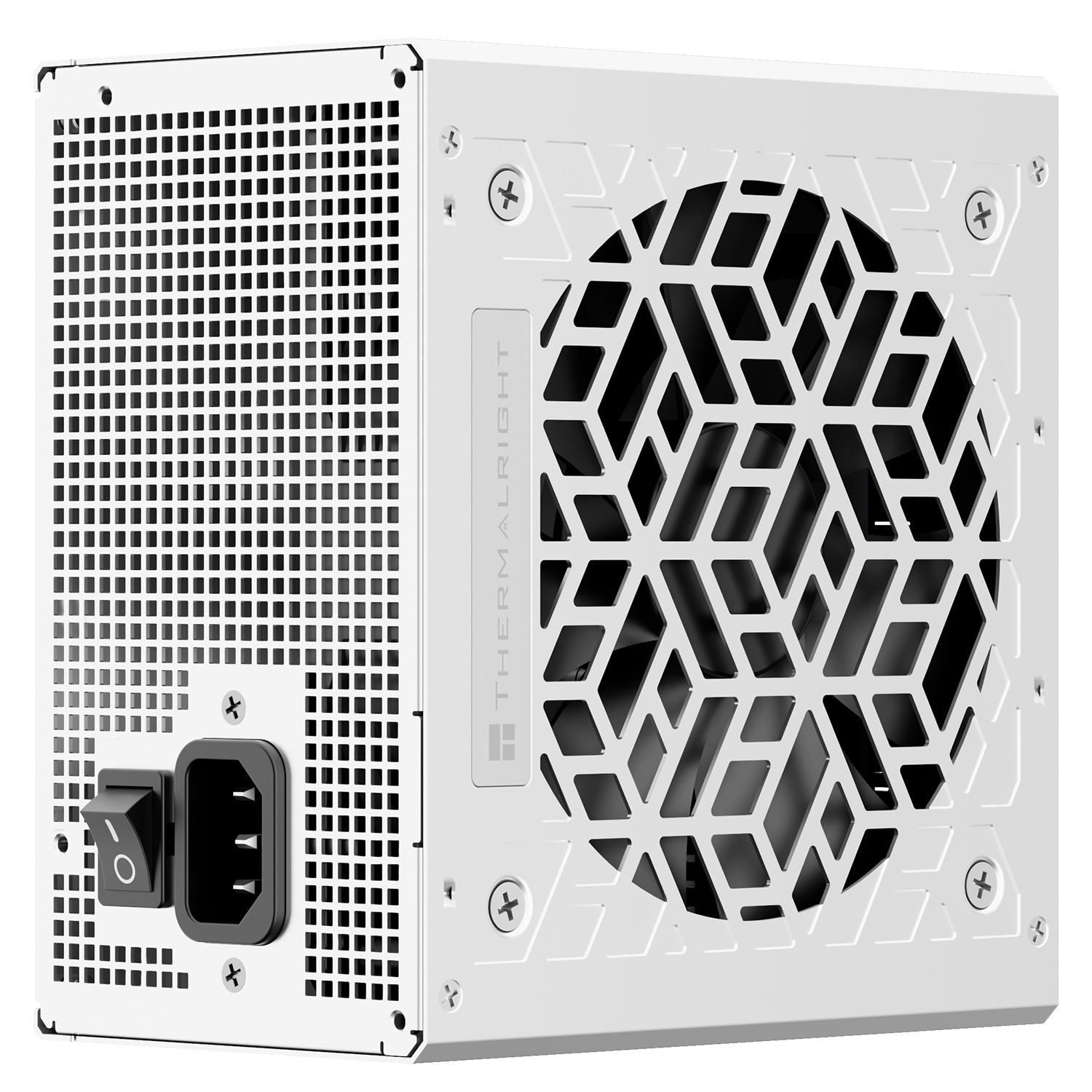
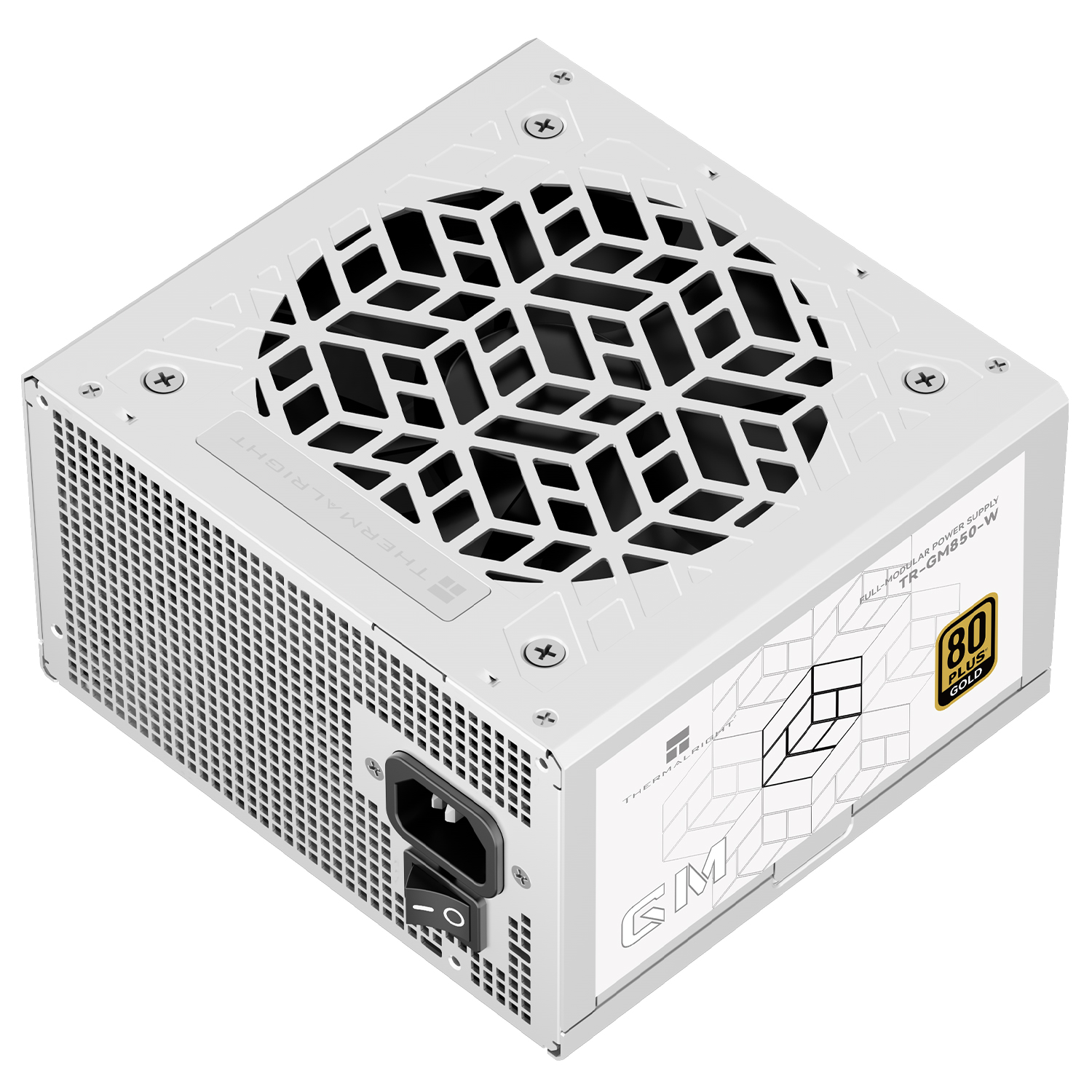
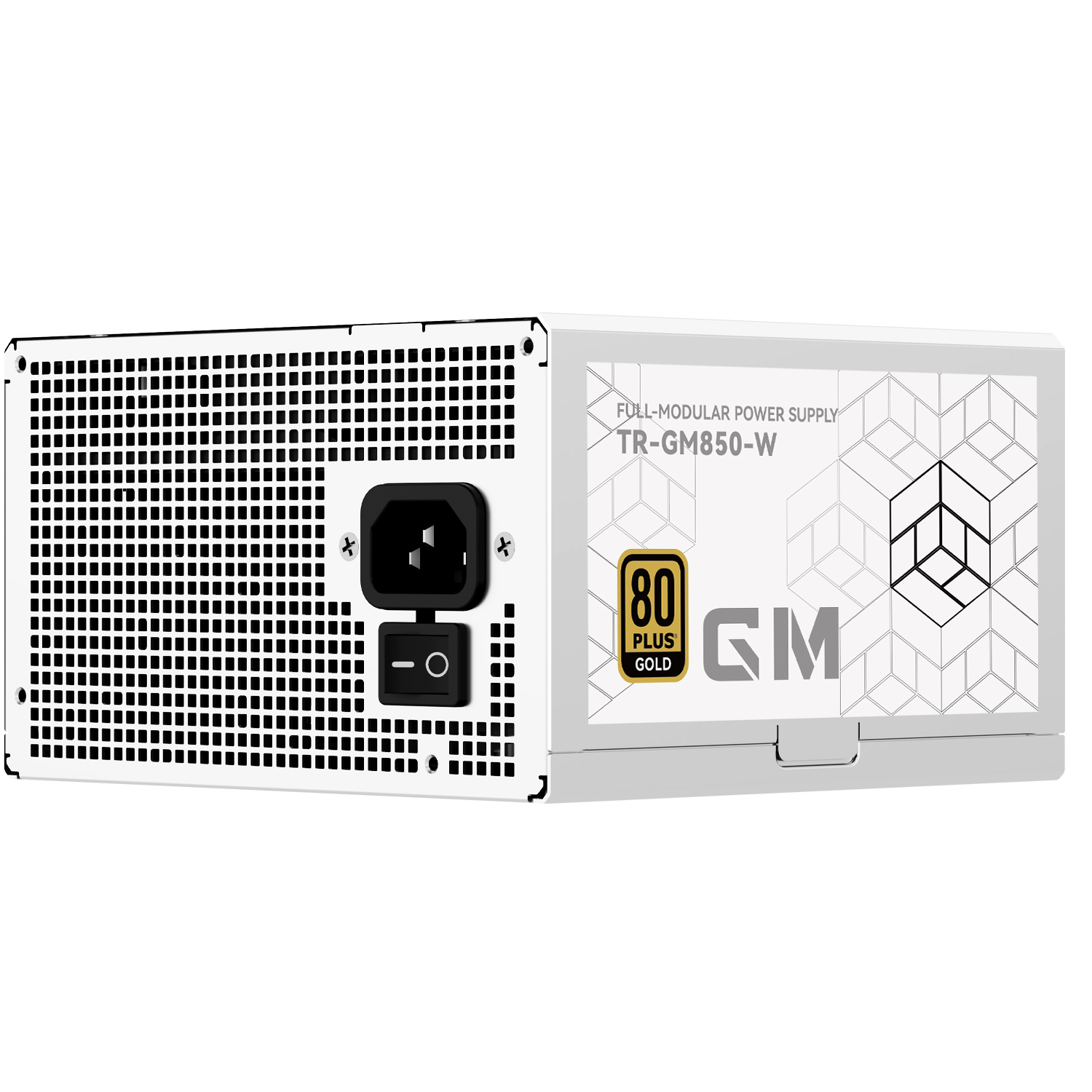
Thermalright has expanded its power supply lineup with the introduction of the GM Series, featuring fully modular, 80 PLUS Gold-certified units. Available in 650W, 750W, and 850W capacities, the new series targets modern gaming and enthusiast configurations by adopting compact ATX form factors alongside updated hardware compatibility standards.
According to the company, the GM series models (via Vortez) comply with Intel's ATX 3.1 specification, enabling them to handle up to 200% power excursions. The two higher-capacity units also include a native 12V-2×6 connector to support PCIe 5.1 graphics cards. In contrast, the GM-650 comes with conventional PCIe power connectors instead. Colour options vary by model: the GM-750 and GM-850 are available in black and white, while the GM-650 is available only in black.
Thermalright builds the entire GM Series using a 150mm form factor equipped with a 120mm cooling fan. Internal components include a 105°C-rated Japanese primary capacitor, an LLC resonant circuit, and a DC-to-DC circuit design. Universal 100-240V AC input support is standard across the family. Safety features include a comprehensive suite of protection circuits, specifically OPP, OVP, OTP, OCP, SCP, and UVP. Thermalright backs the new GM power supplies with a five-year warranty.
KitGuru says: Thermalright continues to expand its component ecosystem, offering an accessible entry point into the ATX 3.1 standard with its new GM series.
Modern high‑performance systems place unprecedented demands on their power supplies, especially as GPUs and CPUs continue to push higher transient loads and sharper power excursions. This has shifted the PSU from a background component to a critical part of system stability, where electrical behavior under dynamic conditions matters just as much as raw wattage. ATX 3.1 and PCIe 5.1 have become the new baseline for next‑generation builds, defining stricter transient‑response requirements and introducing the 12V‑2x6 connector for safer, higher‑capacity GPU power delivery. The FV‑1200PM represents Formula V Line’s entry into the Platinum‑class ATX 3.1 and PCIe 5.1 space and that's obviously also what today's review is all about.
Formula V Line is a Taiwanese company founded by a group of professionals in 2012. Our main product lines include various computer cases, power supplies and air-cooling systems for computers. Our research and development team can bring your best ideas to life. Formula V Line's mission is to create reliable products with the best price-quality ratio. For more information, visit http://formulav-line.com/
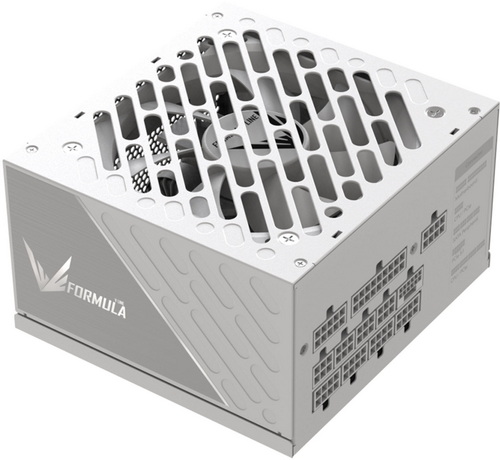
The FV PM line of power supply units currently includes three output variants (850/1000/1200W) available in both black and white colors. The 1200W output model which I have here with me today is ATX 3.1 & PCIe 5.1 compliant and 80 PLUS Platinum certified (up to 92% efficiency) and features a single 12V-2x6 power connector, four 6+2 pin PCIe power connectors, single +12V rail (100A) capable of delivering 100% of the units’ power output (1200W) and has a total power output of no less than 1348W (peak should be up to 2700W for up to 100ms - once again however this is not something I can test). The FV-1200PM also features a half-bridge & LLC Resonant Converter with DC to DC design, active PFC, zero fan mode for its 120mm fan (starts spinning after 40% load), high-quality Japanese capacitors certified for use up to 105 degrees Celsius and a full array of electrical protections including over-current (OCP), over-voltage (OVP), under-voltage (UVP), short-circuit (SCP), over-temperature (OTP), surge and in-rush (SIP), no-load operation (NLO) and over-power (OPP). As for warranty Formula V Line covers the entire FV PM line of PSUs with a 10-year limited one.
SPECIFICATIONS AND FEATURES
PACKAGING AND CONTENTS
A partial product picture is placed at the front of the box along with the company logo and the main product features.
The electrical tables of all three available models are printed at the rear.
Typically, the unit is wrapped inside a synthetic cover and placed between two pieces of foam.
Along with the FV-1200PM, its power cord and modular cables inside the box you'll also find 4 zip ties, 4 mounting screws and the user manual.
THE FV-1200PM EXTERIOR
All modular cables feature individually sleeved cables, including the 12V-2x6 cable.
Measuring just 140mm in width, 150mm in length and 86mm in height the FV-1200PM is a compact model.
Formula V Line has chosen to use an 120mm fan with this model.
The company logo is printed on both sides.
As usual the electrical table is printed on a sticker located at the base of the enclosure.
All 12 modular power ports are tagged.
At the rear of the unit, we find the on/off and hybrid fan switches and the power port.
THE FV-1200PM INTERIOR
Formula V Line has removed the name of the fan manufacturer so I don't know its specifications.
The OEM behind the FV-1200PM is Dongguan Sanren (SANR).
Primary capacitors are manufactured by Rubycon and are certified for use up to 105 degrees Celsius.
Secondary capacitors are manufactured by Nippon Chemi-Con and Rubycon and are again certified for use up to 105 degrees Celsius.
TEST BED
TESTING METHODOLOGY
Using a dedicated measurement instrument such as a Chroma or a SunMoon to test power supply units is without doubt the most ideal and accurate way (not to mention the fastest) to do that currently. However, it's certainly not the only way there is and so pretty much anyone can test a power supply unit just by using a test rig. Certainly, limitations do apply and so you can't really push a 1000W power supply to its limits if your system only uses 500W at peak loads and that's why over the years we saved certain hardware components for the purpose of building a dedicated PSU test rig. True it may not be as accurate as the above-mentioned solutions, but it comes really close and is in fact much closer to real world usage. So as always, we ran several games with maximum graphic options enabled at a resolution of 2560x1600 in order to stress every hardware component and increase the overall power demands of the system. The Passmark BurnIn Test was also used to overstress the components in an effort to provide the most accurate results possible. As a final test we also used the latest OCCT software and its dedicated PSU testing suite since it can really bring a power supply to its knees after inside a few minutes.
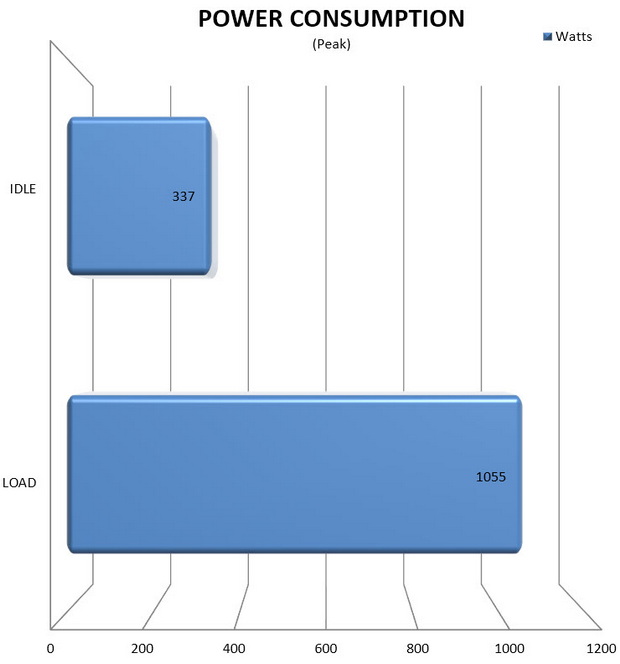
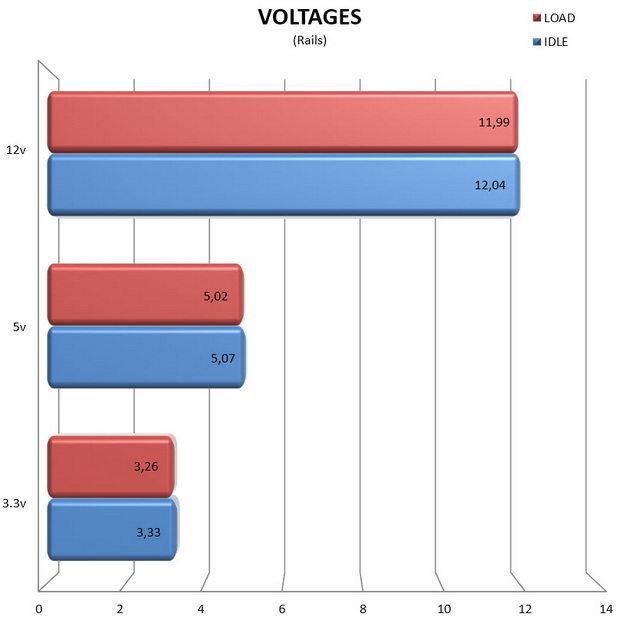
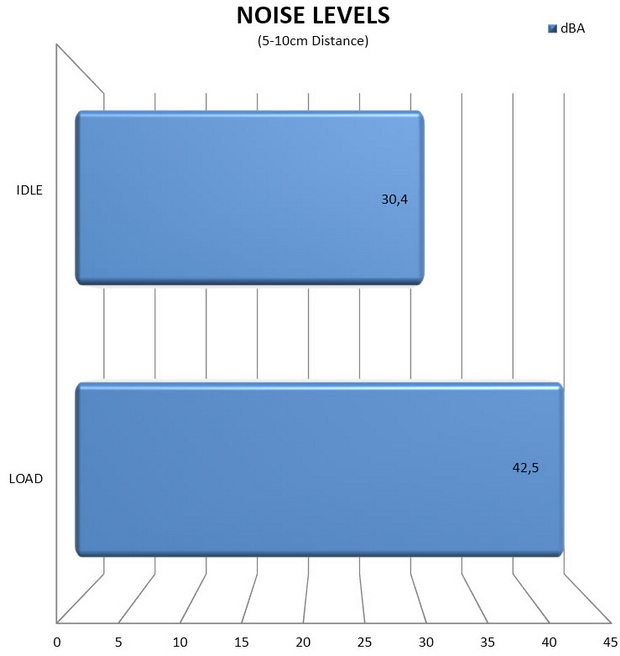
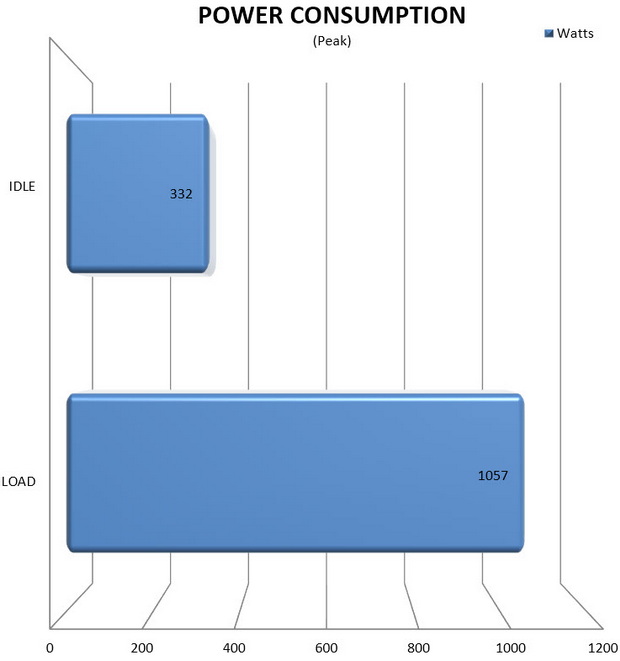
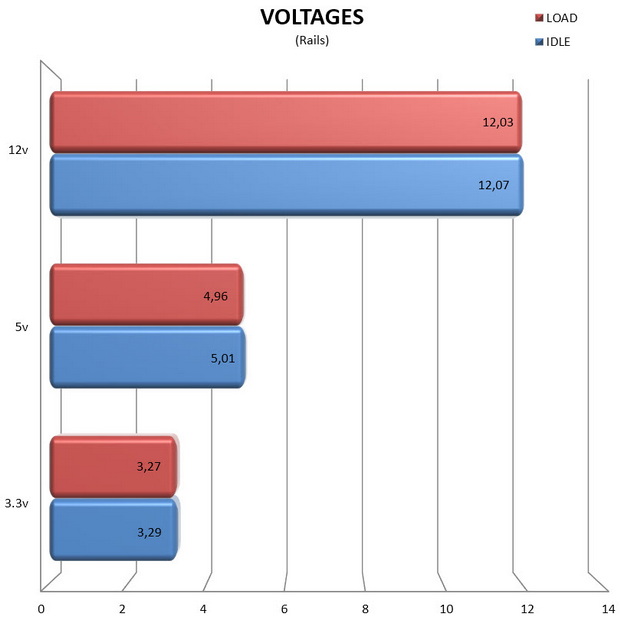
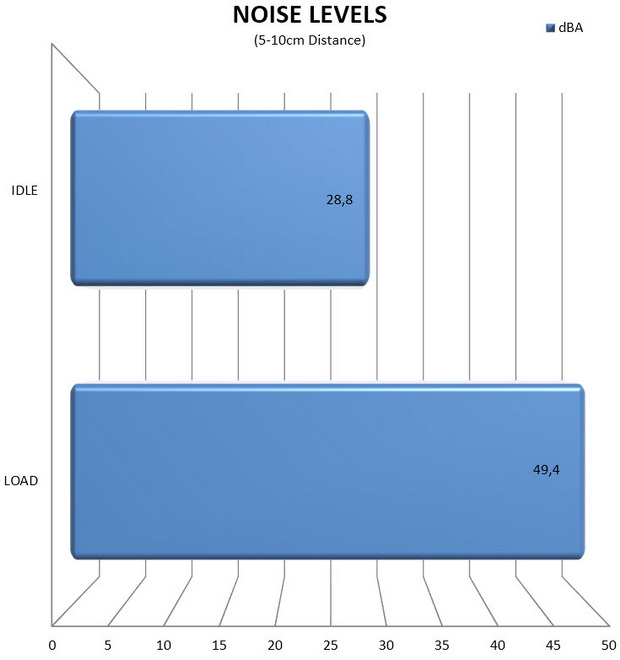
Rail stability was checked/measured with the CPUID Hardware monitor and a Metex multimeter which also recorded the system load in idle and in load. As always try to remember that the power consumption numbers listed in the graph are the highest (Peak) ones recorded during the entire duration of the tests and not the average ones. Noise levels coming from the fan were recorded using the high precision HD600 ExTech Sound dBA Meter from the rear of the unit and at a range of no more than 5-10cm. Readings under load are recorded the exact moment we manually switch the fans of all graphics cards from full speed to almost zero, that way the fan of the power supply does not have enough time to slow its RPM and so by doing this we get very accurate noise level readings. Needless to say, in order to get 100% accurate readings, you need to have a noise isolated room for that exact purpose, something which is quite impossible unless you are working inside a real lab (some people use very small noise insulated boxes but due to their size both heat and noise exceed normal levels and so the results can't really be considered to be 100% accurate, nor realistic for that matter). Also do take into account that since all noise measurements take place from just 5-10cm away the final noise levels to reach your ears will be considerably less.
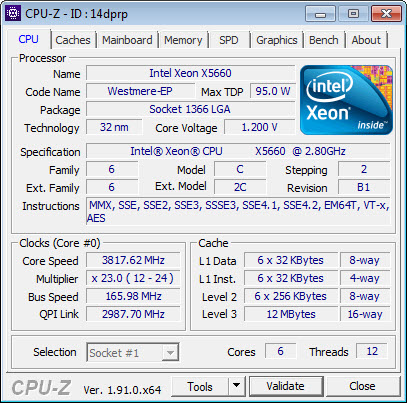
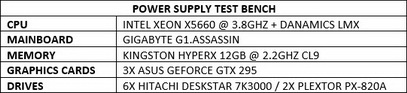
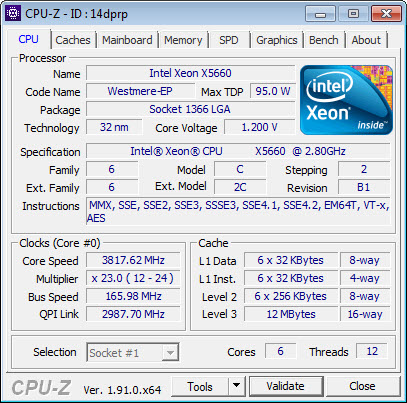
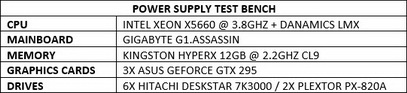
* After well over 10 years of testing PSUs the Intel Core i7-920 CPU of this rig failed and so we replaced it with a Xeon X5660 (we also swapped the GA-X58A-UD7 for the G1. Assassin).
TEST RESULTS
CONCLUSION
As the review comes to a close, the Formula V Line FV‑1200PM proves itself to be a well‑rounded Platinum‑class option with clear strengths. It delivers very good rail stability, relatively low noise levels, and a compact footprint that makes installation easier than many competing 1200W units. Its 80 PLUS Platinum efficiency keeps thermals and power waste low, reinforcing the PSU’s overall refinement. The drawbacks are modest but worth noting, SANR isn’t the most established OEM (somewhat popular lately however), the single 12V‑2x6 connector limits flexibility for future GPU configurations, and the model’s very low availability makes it harder to source. Even so, the FV‑1200PM stands as a capable, efficient, and quiet ATX 3.1 & PCIe 5.1 unit.
Even though like many other models by Formula V Line the FV-1200PM 80 PLUS Platinum power supply unit is not widely available it does retail around the world for around USD160/160Euros and so it’s priced well, more or less. Availability and cost aside the FV-1200PM performs very well, does so without its 120mm fan becoming annoying and is covered by a 10-year limited warranty so the Golden Award is in order.
PROS
- Build Quality (100% Japanese Capacitors) - Good Rail Stability - ATX 3.1 & PCIe 5.1 Compliant - 80 PLUS Platinum Certified - 1200W Output - Electrical Protections (OCP/OVP/SSP/OPP/UVP/SPD/OTP/SIP/NLO) - Available In Black And White Colors - 10 Year Limited Warranty
Modern high‑performance systems place unprecedented demands on their power supplies, especially as GPUs and CPUs continue to push higher transient loads and sharper power excursions. This has shifted the PSU from a background component to a critical part of system stability, where electrical behavior under dynamic conditions matters just as much as raw wattage. ATX 3.1 and PCIe 5.1 have become the new baseline for next‑generation builds, defining stricter transient‑response requirements and introducing the 12V‑2x6 connector for safer, higher‑capacity GPU power delivery. The FV‑1200PM represents Formula V Line’s entry into the Platinum‑class ATX 3.1 and PCIe 5.1 space and that's obviously also what today's review is all about.
Formula V Line is a Taiwanese company founded by a group of professionals in 2012. Our main product lines include various computer cases, power supplies and air-cooling systems for computers. Our research and development team can bring your best ideas to life. Formula V Line's mission is to create reliable products with the best price-quality ratio. For more information, visit http://formulav-line.com/
The FV PM line of power supply units currently includes three output variants (850/1000/1200W) available in both black and white colors. The 1200W output model which I have here with me today is ATX 3.1 & PCIe 5.1 compliant and 80 PLUS Platinum certified (up to 92% efficiency) and features a single 12V-2x6 power connector, four 6+2 pin PCIe power connectors, single +12V rail (100A) capable of delivering 100% of the units’ power output (1200W) and has a total power output of no less than 1348W (peak should be up to 2700W for up to 100ms - once again however this is not something I can test). The FV-1200PM also features a half-bridge & LLC Resonant Converter with DC to DC design, active PFC, zero fan mode for its 120mm fan (starts spinning after 40% load), high-quality Japanese capacitors certified for use up to 105 degrees Celsius and a full array of electrical protections including over-current (OCP), over-voltage (OVP), under-voltage (UVP), short-circuit (SCP), over-temperature (OTP), surge and in-rush (SIP), no-load operation (NLO) and over-power (OPP). As for warranty Formula V Line covers the entire FV PM line of PSUs with a 10-year limited one.
SPECIFICATIONS AND FEATURES
PACKAGING AND CONTENTS
A partial product picture is placed at the front of the box along with the company logo and the main product features.
The electrical tables of all three available models are printed at the rear.
Typically, the unit is wrapped inside a synthetic cover and placed between two pieces of foam.
Along with the FV-1200PM, its power cord and modular cables inside the box you'll also find 4 zip ties, 4 mounting screws and the user manual.
THE FV-1200PM EXTERIOR
All modular cables feature individually sleeved cables, including the 12V-2x6 cable.
Measuring just 140mm in width, 150mm in length and 86mm in height the FV-1200PM is a compact model.
Formula V Line has chosen to use an 120mm fan with this model.
The company logo is printed on both sides.
As usual the electrical table is printed on a sticker located at the base of the enclosure.
All 12 modular power ports are tagged.
At the rear of the unit, we find the on/off and hybrid fan switches and the power port.
THE FV-1200PM INTERIOR
Formula V Line has removed the name of the fan manufacturer so I don't know its specifications.
The OEM behind the FV-1200PM is Dongguan Sanren (SANR).
Primary capacitors are manufactured by Rubycon and are certified for use up to 105 degrees Celsius.
Secondary capacitors are manufactured by Nippon Chemi-Con and Rubycon and are again certified for use up to 105 degrees Celsius.
TEST BED
TESTING METHODOLOGY
Using a dedicated measurement instrument such as a Chroma or a SunMoon to test power supply units is without doubt the most ideal and accurate way (not to mention the fastest) to do that currently. However, it's certainly not the only way there is and so pretty much anyone can test a power supply unit just by using a test rig. Certainly, limitations do apply and so you can't really push a 1000W power supply to its limits if your system only uses 500W at peak loads and that's why over the years we saved certain hardware components for the purpose of building a dedicated PSU test rig. True it may not be as accurate as the above-mentioned solutions, but it comes really close and is in fact much closer to real world usage. So as always, we ran several games with maximum graphic options enabled at a resolution of 2560x1600 in order to stress every hardware component and increase the overall power demands of the system. The Passmark BurnIn Test was also used to overstress the components in an effort to provide the most accurate results possible. As a final test we also used the latest OCCT software and its dedicated PSU testing suite since it can really bring a power supply to its knees after inside a few minutes.
Rail stability was checked/measured with the CPUID Hardware monitor and a Metex multimeter which also recorded the system load in idle and in load. As always try to remember that the power consumption numbers listed in the graph are the highest (Peak) ones recorded during the entire duration of the tests and not the average ones. Noise levels coming from the fan were recorded using the high precision HD600 ExTech Sound dBA Meter from the rear of the unit and at a range of no more than 5-10cm. Readings under load are recorded the exact moment we manually switch the fans of all graphics cards from full speed to almost zero, that way the fan of the power supply does not have enough time to slow its RPM and so by doing this we get very accurate noise level readings. Needless to say, in order to get 100% accurate readings, you need to have a noise isolated room for that exact purpose, something which is quite impossible unless you are working inside a real lab (some people use very small noise insulated boxes but due to their size both heat and noise exceed normal levels and so the results can't really be considered to be 100% accurate, nor realistic for that matter). Also do take into account that since all noise measurements take place from just 5-10cm away the final noise levels to reach your ears will be considerably less.
* After well over 10 years of testing PSUs the Intel Core i7-920 CPU of this rig failed and so we replaced it with a Xeon X5660 (we also swapped the GA-X58A-UD7 for the G1. Assassin).
TEST RESULTS
CONCLUSION
As the review comes to a close, the Formula V Line FV‑1200PM proves itself to be a well‑rounded Platinum‑class option with clear strengths. It delivers very good rail stability, relatively low noise levels, and a compact footprint that makes installation easier than many competing 1200W units. Its 80 PLUS Platinum efficiency keeps thermals and power waste low, reinforcing the PSU’s overall refinement. The drawbacks are modest but worth noting, SANR isn’t the most established OEM (somewhat popular lately however), the single 12V‑2x6 connector limits flexibility for future GPU configurations, and the model’s very low availability makes it harder to source. Even so, the FV‑1200PM stands as a capable, efficient, and quiet ATX 3.1 & PCIe 5.1 unit.
Even though like many other models by Formula V Line the FV-1200PM 80 PLUS Platinum power supply unit is not widely available it does retail around the world for around USD160/160Euros and so it’s priced well, more or less. Availability and cost aside the FV-1200PM performs very well, does so without its 120mm fan becoming annoying and is covered by a 10-year limited warranty so the Golden Award is in order.
PROS
- Build Quality (100% Japanese Capacitors) - Good Rail Stability - ATX 3.1 & PCIe 5.1 Compliant - 80 PLUS Platinum Certified - 1200W Output - Electrical Protections (OCP/OVP/SSP/OPP/UVP/SPD/OTP/SIP/NLO) - Available In Black And White Colors - 10 Year Limited Warranty
Modern high‑performance systems place unprecedented demands on their power supplies, especially as GPUs and CPUs continue to push higher transient loads and sharper power excursions. This has shifted the PSU from a background component to a critical part of system stability, where electrical behavior under dynamic conditions matters just as much as raw wattage. ATX 3.1 and PCIe 5.1 have become the new baseline for next‑generation builds, defining stricter transient‑response requirements and introducing the 12V‑2x6 connector for safer, higher‑capacity GPU power delivery. The FV‑1200PM represents Formula V Line’s entry into the Platinum‑class ATX 3.1 and PCIe 5.1 space and that's obviously also what today's review is all about.
Formula V Line is a Taiwanese company founded by a group of professionals in 2012. Our main product lines include various computer cases, power supplies and air-cooling systems for computers. Our research and development team can bring your best ideas to life. Formula V Line's mission is to create reliable products with the best price-quality ratio. For more information, visit http://formulav-line.com/
The FV PM line of power supply units currently includes three output variants (850/1000/1200W) available in both black and white colors. The 1200W output model which I have here with me today is ATX 3.1 & PCIe 5.1 compliant and 80 PLUS Platinum certified (up to 92% efficiency) and features a single 12V-2x6 power connector, four 6+2 pin PCIe power connectors, single +12V rail (100A) capable of delivering 100% of the units’ power output (1200W) and has a total power output of no less than 1348W (peak should be up to 2700W for up to 100ms - once again however this is not something I can test). The FV-1200PM also features a half-bridge & LLC Resonant Converter with DC to DC design, active PFC, zero fan mode for its 120mm fan (starts spinning after 40% load), high-quality Japanese capacitors certified for use up to 105 degrees Celsius and a full array of electrical protections including over-current (OCP), over-voltage (OVP), under-voltage (UVP), short-circuit (SCP), over-temperature (OTP), surge and in-rush (SIP), no-load operation (NLO) and over-power (OPP). As for warranty Formula V Line covers the entire FV PM line of PSUs with a 10-year limited one.
SPECIFICATIONS AND FEATURES
PACKAGING AND CONTENTS
A partial product picture is placed at the front of the box along with the company logo and the main product features.
The electrical tables of all three available models are printed at the rear.
Typically, the unit is wrapped inside a synthetic cover and placed between two pieces of foam.
Along with the FV-1200PM, its power cord and modular cables inside the box you'll also find 4 zip ties, 4 mounting screws and the user manual.
THE FV-1200PM EXTERIOR
All modular cables feature individually sleeved cables, including the 12V-2x6 cable.
Measuring just 140mm in width, 150mm in length and 86mm in height the FV-1200PM is a compact model.
Formula V Line has chosen to use an 120mm fan with this model.
The company logo is printed on both sides.
As usual the electrical table is printed on a sticker located at the base of the enclosure.
All 12 modular power ports are tagged.
At the rear of the unit, we find the on/off and hybrid fan switches and the power port.
THE FV-1200PM INTERIOR
Formula V Line has removed the name of the fan manufacturer so I don't know its specifications.
The OEM behind the FV-1200PM is Dongguan Sanren (SANR).
Primary capacitors are manufactured by Rubycon and are certified for use up to 105 degrees Celsius.
Secondary capacitors are manufactured by Nippon Chemi-Con and Rubycon and are again certified for use up to 105 degrees Celsius.
TEST BED
TESTING METHODOLOGY
Using a dedicated measurement instrument such as a Chroma or a SunMoon to test power supply units is without doubt the most ideal and accurate way (not to mention the fastest) to do that currently. However, it's certainly not the only way there is and so pretty much anyone can test a power supply unit just by using a test rig. Certainly, limitations do apply and so you can't really push a 1000W power supply to its limits if your system only uses 500W at peak loads and that's why over the years we saved certain hardware components for the purpose of building a dedicated PSU test rig. True it may not be as accurate as the above-mentioned solutions, but it comes really close and is in fact much closer to real world usage. So as always, we ran several games with maximum graphic options enabled at a resolution of 2560x1600 in order to stress every hardware component and increase the overall power demands of the system. The Passmark BurnIn Test was also used to overstress the components in an effort to provide the most accurate results possible. As a final test we also used the latest OCCT software and its dedicated PSU testing suite since it can really bring a power supply to its knees after inside a few minutes.
Rail stability was checked/measured with the CPUID Hardware monitor and a Metex multimeter which also recorded the system load in idle and in load. As always try to remember that the power consumption numbers listed in the graph are the highest (Peak) ones recorded during the entire duration of the tests and not the average ones. Noise levels coming from the fan were recorded using the high precision HD600 ExTech Sound dBA Meter from the rear of the unit and at a range of no more than 5-10cm. Readings under load are recorded the exact moment we manually switch the fans of all graphics cards from full speed to almost zero, that way the fan of the power supply does not have enough time to slow its RPM and so by doing this we get very accurate noise level readings. Needless to say, in order to get 100% accurate readings, you need to have a noise isolated room for that exact purpose, something which is quite impossible unless you are working inside a real lab (some people use very small noise insulated boxes but due to their size both heat and noise exceed normal levels and so the results can't really be considered to be 100% accurate, nor realistic for that matter). Also do take into account that since all noise measurements take place from just 5-10cm away the final noise levels to reach your ears will be considerably less.
* After well over 10 years of testing PSUs the Intel Core i7-920 CPU of this rig failed and so we replaced it with a Xeon X5660 (we also swapped the GA-X58A-UD7 for the G1. Assassin).
TEST RESULTS
CONCLUSION
As the review comes to a close, the Formula V Line FV‑1200PM proves itself to be a well‑rounded Platinum‑class option with clear strengths. It delivers very good rail stability, relatively low noise levels, and a compact footprint that makes installation easier than many competing 1200W units. Its 80 PLUS Platinum efficiency keeps thermals and power waste low, reinforcing the PSU’s overall refinement. The drawbacks are modest but worth noting, SANR isn’t the most established OEM (somewhat popular lately however), the single 12V‑2x6 connector limits flexibility for future GPU configurations, and the model’s very low availability makes it harder to source. Even so, the FV‑1200PM stands as a capable, efficient, and quiet ATX 3.1 & PCIe 5.1 unit.
Even though like many other models by Formula V Line the FV-1200PM 80 PLUS Platinum power supply unit is not widely available it does retail around the world for around USD160/160Euros and so it’s priced well, more or less. Availability and cost aside the FV-1200PM performs very well, does so without its 120mm fan becoming annoying and is covered by a 10-year limited warranty so the Golden Award is in order.
PROS
- Build Quality (100% Japanese Capacitors) - Good Rail Stability - ATX 3.1 & PCIe 5.1 Compliant - 80 PLUS Platinum Certified - 1200W Output - Electrical Protections (OCP/OVP/SSP/OPP/UVP/SPD/OTP/SIP/NLO) - Available In Black And White Colors - 10 Year Limited Warranty
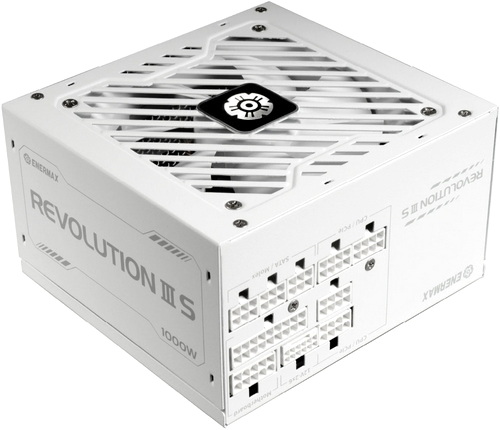
As PC hardware continues to scale in complexity, the role of the power supply has expanded from a passive provider to an active guardian of system health. Clean rails, fast transient handling, and efficient conversion are now essential traits rather than luxuries. Builders looking for a PSU that can keep pace with today’s power‑hungry components will likely turn their attention to the Revolution III S 1000W by ENERMAX, a model crafted to meet these modern expectations.
ENERMAX was founded in Taiwan in 1990 and is a world-renowned PC Power Supply manufacturer and maker of award-winning PC components such as chassis, coolers, fans, and peripherals, with recognition from consumers around the world. Our farsighted R&D capability is our key strength, and we stick to our spirit of “Technical Innovation” and “Quality First” to create products that unleash the full potential of the system for every PC enthusiast. For more information, please visit us at www.ENERMAX.com
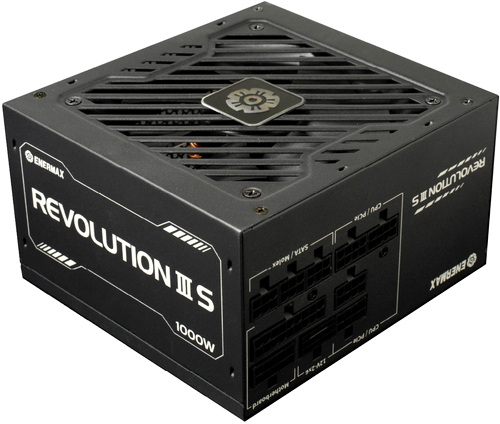
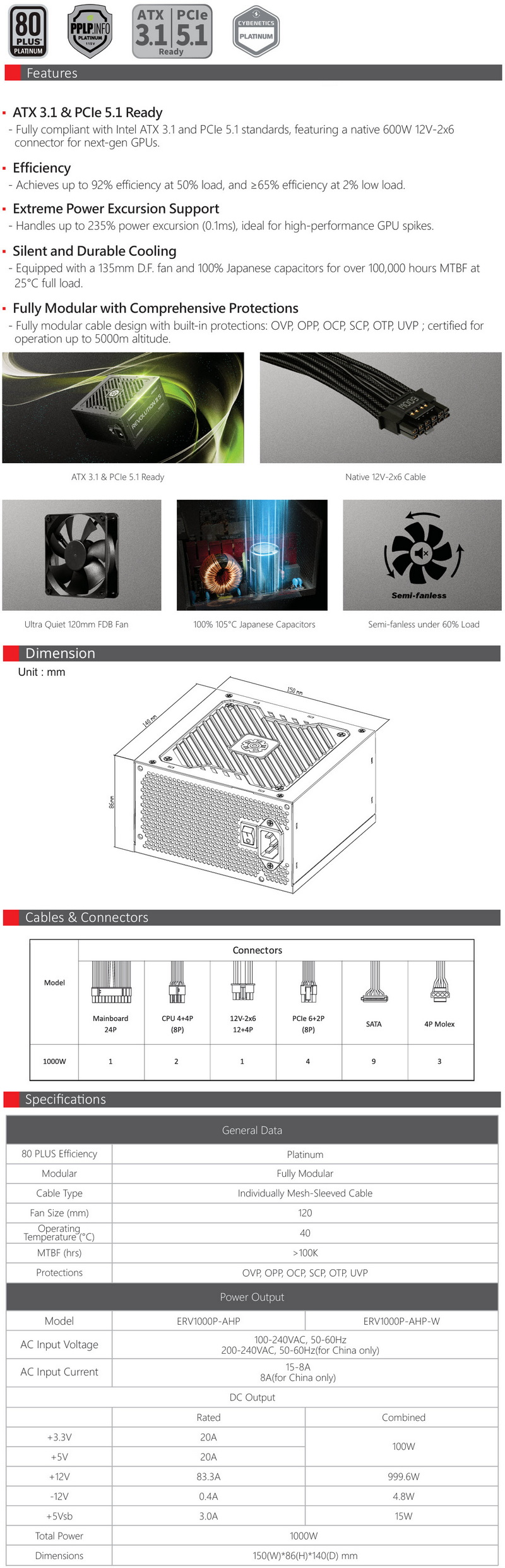
The Revolution III S line of power supply units currently includes only a 1000W output variant available in both black and white colors. This is an ATX 3.1 & PCIe 5.1 compliant and 80 PLUS Platinum certified (up to 92% efficiency) model that features a single 12V-2x6 power connector, four 6+2 pin PCIe power connectors, single +12V rail (83.3A) capable of delivering 99.9% of the units’ power output (999.6W) and has a total power output of no less than 1119W (peak should be up to 2240W for up to 100ms - once again however this is not something I can test). Other features and specifications include Full-Bridge & LLC Resonant Converter paired with synchronous rectification and DC‑to‑DC regulation (thus allowing the unit to sustain stable voltage output even under rapid load shifts), active PFC, smart semi-fanless mode for the 120mm fan (starts spinning after a specific load), and a full array of electrical protections including over-current (OCP), over-voltage (OVP), under-voltage (UVP), short-circuit (SCP), over-temperature (OTP), and over-power (OPP). Just like with their other premium Lines ENERMAX covers the Revolution III S 1000W with a very generous 13-year limited warranty.
SPECIFICATIONS AND FEATURES
PACKAGING AND CONTENTS
The Revolution III S is packed inside a brown and black box that has a drawing of the product at the front along with its output and main features.
The color selection is located on the left side of the box.
At the rear of the box ENERMAX has placed the features table, electrical table and the cables and connectors table.
Typically, the unit is placed between two pieces of foam.
Along with the Revolution III S 1000W and its power cord inside the box you'll find the modular cables, 4 cable ties, 4 mounting screws and the user manual.
THE REVOLUTION III S 1000W EXTERIOR
All of the cables are individually braided, including the 12V-2X6 600W connector.
Just like many other compact PSUs currently the Revolution III S 1000W measures only 150mm in width, 140mm in length and 86mm in height.
The 120mm FDB fan sits beneath a grille with the company logo at its center.
Printed on both sides is the company logo, model name and output.
The electrical table is located on a sticker placed on the belly of the enclosure.
All 10 modular ports at the front of the unit are tagged.
Moving at the rear we just find the power port and the on/off switch.
THE REVOLUTION III S 1000W INTERIOR
The 120mm fluid dynamic bearing fan is made by GLOBE FAN.
The OEM behind the Revolution III S 1000W is Shenzhen RSY (we keep seeing a lot platforms by them lately).
Primary capacitor is manufactured by the Japanese Rubycon and is rated for use up to 105 degrees Celsius.
Secondary capacitors are also manufactured by Rubycon and are also rated for use 105 degrees Celsius.
TEST BED
TESTING METHODOLOGY
Using a dedicated measurement instrument such as a Chroma or a SunMoon to test power supply units is without doubt the most ideal and accurate way (not to mention the fastest) to do that currently. However, it's certainly not the only way there is and so pretty much anyone can test a power supply unit just by using a test rig. Certainly, limitations do apply and so you can't really push a 1000W power supply to its limits if your system only uses 500W at peak loads and that's why over the years we saved certain hardware components for the purpose of building a dedicated PSU test rig. True it may not be as accurate as the above-mentioned solutions, but it comes really close and is in fact much closer to real world usage. So as always, we ran several games with maximum graphic options enabled at a resolution of 2560x1600 in order to stress every hardware component and increase the overall power demands of the system. The Passmark BurnIn Test was also used to overstress the components in an effort to provide the most accurate results possible. As a final test we also used the latest OCCT software and its dedicated PSU testing suite since it can really bring a power supply to its knees after inside a few minutes.
Rail stability was checked/measured with the CPUID Hardware monitor and a Metex multimeter which also recorded the system load in idle and in load. As always try to remember that the power consumption numbers listed in the graph are the highest (Peak) ones recorded during the entire duration of the tests and not the average ones. Noise levels coming from the fan were recorded using the high precision HD600 ExTech Sound dBA Meter from the rear of the unit and at a range of no more than 5-10cm. Readings under load are recorded the exact moment we manually switch the fans of all graphics cards from full speed to almost zero, that way the fan of the power supply does not have enough time to slow its RPM and so by doing this we get very accurate noise level readings. Needless to say, in order to get 100% accurate readings, you need to have a noise isolated room for that exact purpose, something which is quite impossible unless you are working inside a real lab (some people use very small noise insulated boxes but due to their size both heat and noise exceed normal levels and so the results can't really be considered to be 100% accurate, nor realistic for that matter). Also do take into account that since all noise measurements take place from just 5-10cm away the final noise levels to reach your ears will be considerably less.
* After well over 10 years of testing PSUs the Intel Core i7-920 CPU of this rig failed and so we replaced it with a Xeon X5660 (we also swapped the GA-X58A-UD7 for the G1. Assassin).
TEST RESULTS
CONCLUSION
The Enermax Revolution III S 1000W brings a few meaningful strengths to the table, starting with its 80 PLUS Platinum certification. The high efficiency rating helps reduce wasted energy and keeps thermal output under control, which is especially useful in systems that spend long hours under mixed workloads. Its rail stability is also generally very good, providing clean power during gaming, rendering, and everyday use. Add the full ATX 3.1 and PCIe 5.1 support, and the unit is well‑equipped for modern GPUs that demand fast transient response and native high‑power connectors. There are, however, a few areas where the platform shows its limits. Noise levels rise faster than expected once the fan curve reaches the upper end, making the PSU noticeably louder during full‑load stress testing or synthetic benchmarks. And while Shenzhen RSY isn’t considered a top‑tier OEM, it’s worth noting that they’ve been producing a growing number of platforms lately, showing clear signs of refinement and broader industry presence. Their designs still sit a step below the most established manufacturers, but the trajectory is upward rather than stagnant, which softens the concern for users who simply want a capable, modern unit rather than absolute flagship pedigree. Taken together, the Revolution III S 1000W by ENERMAX offers solid efficiency, modern standards, and generally stable performance, but its acoustic profile and mid‑tier platform heritage keep it from competing with the very best options in the high‑end PSU space.
Retailing for around USD179 inside the USA and for 148.53Euros inside the EU (Amazon.de) the ENERMAX Revolution III S 1000W is priced just right. Overall the Revolution III S 1000W may not be the best model in the current lineup by ENERMAX but it delivers where it counts and for that it gets the Golden Award.
PROS
- Overall Quality (Japanese Capacitors) - Very Good Rail Stability - 80 PLUS Platinum Certified (Up To 92% Electrical Efficiency) - Electrical Protections (OCP, OVP, UVP, SCP, OTP, OPP) - 12V-2x6 Connector (600W) - Smart Semi Fanless Mode - Available In Black & White - 13 Year Limited Warranty
As PC hardware continues to scale in complexity, the role of the power supply has expanded from a passive provider to an active guardian of system health. Clean rails, fast transient handling, and efficient conversion are now essential traits rather than luxuries. Builders looking for a PSU that can keep pace with today’s power‑hungry components will likely turn their attention to the Revolution III S 1000W by ENERMAX, a model crafted to meet these modern expectations.
ENERMAX was founded in Taiwan in 1990 and is a world-renowned PC Power Supply manufacturer and maker of award-winning PC components such as chassis, coolers, fans, and peripherals, with recognition from consumers around the world. Our farsighted R&D capability is our key strength, and we stick to our spirit of “Technical Innovation” and “Quality First” to create products that unleash the full potential of the system for every PC enthusiast. For more information, please visit us at www.ENERMAX.com
The Revolution III S line of power supply units currently includes only a 1000W output variant available in both black and white colors. This is an ATX 3.1 & PCIe 5.1 compliant and 80 PLUS Platinum certified (up to 92% efficiency) model that features a single 12V-2x6 power connector, four 6+2 pin PCIe power connectors, single +12V rail (83.3A) capable of delivering 99.9% of the units’ power output (999.6W) and has a total power output of no less than 1119W (peak should be up to 2240W for up to 100ms - once again however this is not something I can test). Other features and specifications include Full-Bridge & LLC Resonant Converter paired with synchronous rectification and DC‑to‑DC regulation (thus allowing the unit to sustain stable voltage output even under rapid load shifts), active PFC, smart semi-fanless mode for the 120mm fan (starts spinning after a specific load), and a full array of electrical protections including over-current (OCP), over-voltage (OVP), under-voltage (UVP), short-circuit (SCP), over-temperature (OTP), and over-power (OPP). Just like with their other premium Lines ENERMAX covers the Revolution III S 1000W with a very generous 13-year limited warranty.
SPECIFICATIONS AND FEATURES
PACKAGING AND CONTENTS
The Revolution III S is packed inside a brown and black box that has a drawing of the product at the front along with its output and main features.
The color selection is located on the left side of the box.
At the rear of the box ENERMAX has placed the features table, electrical table and the cables and connectors table.
Typically, the unit is placed between two pieces of foam.
Along with the Revolution III S 1000W and its power cord inside the box you'll find the modular cables, 4 cable ties, 4 mounting screws and the user manual.
THE REVOLUTION III S 1000W EXTERIOR
All of the cables are individually braided, including the 12V-2X6 600W connector.
Just like many other compact PSUs currently the Revolution III S 1000W measures only 150mm in width, 140mm in length and 86mm in height.
The 120mm FDB fan sits beneath a grille with the company logo at its center.
Printed on both sides is the company logo, model name and output.
The electrical table is located on a sticker placed on the belly of the enclosure.
All 10 modular ports at the front of the unit are tagged.
Moving at the rear we just find the power port and the on/off switch.
THE REVOLUTION III S 1000W INTERIOR
The 120mm fluid dynamic bearing fan is made by GLOBE FAN.
The OEM behind the Revolution III S 1000W is Shenzhen RSY (we keep seeing a lot platforms by them lately).
Primary capacitor is manufactured by the Japanese Rubycon and is rated for use up to 105 degrees Celsius.
Secondary capacitors are also manufactured by Rubycon and are also rated for use 105 degrees Celsius.
TEST BED
TESTING METHODOLOGY
Using a dedicated measurement instrument such as a Chroma or a SunMoon to test power supply units is without doubt the most ideal and accurate way (not to mention the fastest) to do that currently. However, it's certainly not the only way there is and so pretty much anyone can test a power supply unit just by using a test rig. Certainly, limitations do apply and so you can't really push a 1000W power supply to its limits if your system only uses 500W at peak loads and that's why over the years we saved certain hardware components for the purpose of building a dedicated PSU test rig. True it may not be as accurate as the above-mentioned solutions, but it comes really close and is in fact much closer to real world usage. So as always, we ran several games with maximum graphic options enabled at a resolution of 2560x1600 in order to stress every hardware component and increase the overall power demands of the system. The Passmark BurnIn Test was also used to overstress the components in an effort to provide the most accurate results possible. As a final test we also used the latest OCCT software and its dedicated PSU testing suite since it can really bring a power supply to its knees after inside a few minutes.
Rail stability was checked/measured with the CPUID Hardware monitor and a Metex multimeter which also recorded the system load in idle and in load. As always try to remember that the power consumption numbers listed in the graph are the highest (Peak) ones recorded during the entire duration of the tests and not the average ones. Noise levels coming from the fan were recorded using the high precision HD600 ExTech Sound dBA Meter from the rear of the unit and at a range of no more than 5-10cm. Readings under load are recorded the exact moment we manually switch the fans of all graphics cards from full speed to almost zero, that way the fan of the power supply does not have enough time to slow its RPM and so by doing this we get very accurate noise level readings. Needless to say, in order to get 100% accurate readings, you need to have a noise isolated room for that exact purpose, something which is quite impossible unless you are working inside a real lab (some people use very small noise insulated boxes but due to their size both heat and noise exceed normal levels and so the results can't really be considered to be 100% accurate, nor realistic for that matter). Also do take into account that since all noise measurements take place from just 5-10cm away the final noise levels to reach your ears will be considerably less.
* After well over 10 years of testing PSUs the Intel Core i7-920 CPU of this rig failed and so we replaced it with a Xeon X5660 (we also swapped the GA-X58A-UD7 for the G1. Assassin).
TEST RESULTS
CONCLUSION
The Enermax Revolution III S 1000W brings a few meaningful strengths to the table, starting with its 80 PLUS Platinum certification. The high efficiency rating helps reduce wasted energy and keeps thermal output under control, which is especially useful in systems that spend long hours under mixed workloads. Its rail stability is also generally very good, providing clean power during gaming, rendering, and everyday use. Add the full ATX 3.1 and PCIe 5.1 support, and the unit is well‑equipped for modern GPUs that demand fast transient response and native high‑power connectors. There are, however, a few areas where the platform shows its limits. Noise levels rise faster than expected once the fan curve reaches the upper end, making the PSU noticeably louder during full‑load stress testing or synthetic benchmarks. And while Shenzhen RSY isn’t considered a top‑tier OEM, it’s worth noting that they’ve been producing a growing number of platforms lately, showing clear signs of refinement and broader industry presence. Their designs still sit a step below the most established manufacturers, but the trajectory is upward rather than stagnant, which softens the concern for users who simply want a capable, modern unit rather than absolute flagship pedigree. Taken together, the Revolution III S 1000W by ENERMAX offers solid efficiency, modern standards, and generally stable performance, but its acoustic profile and mid‑tier platform heritage keep it from competing with the very best options in the high‑end PSU space.
Retailing for around USD179 inside the USA and for 148.53Euros inside the EU (Amazon.de) the ENERMAX Revolution III S 1000W is priced just right. Overall the Revolution III S 1000W may not be the best model in the current lineup by ENERMAX but it delivers where it counts and for that it gets the Golden Award.
PROS
- Overall Quality (Japanese Capacitors) - Very Good Rail Stability - 80 PLUS Platinum Certified (Up To 92% Electrical Efficiency) - Electrical Protections (OCP, OVP, UVP, SCP, OTP, OPP) - 12V-2x6 Connector (600W) - Smart Semi Fanless Mode - Available In Black & White - 13 Year Limited Warranty
As PC hardware continues to scale in complexity, the role of the power supply has expanded from a passive provider to an active guardian of system health. Clean rails, fast transient handling, and efficient conversion are now essential traits rather than luxuries. Builders looking for a PSU that can keep pace with today’s power‑hungry components will likely turn their attention to the Revolution III S 1000W by ENERMAX, a model crafted to meet these modern expectations.
ENERMAX was founded in Taiwan in 1990 and is a world-renowned PC Power Supply manufacturer and maker of award-winning PC components such as chassis, coolers, fans, and peripherals, with recognition from consumers around the world. Our farsighted R&D capability is our key strength, and we stick to our spirit of “Technical Innovation” and “Quality First” to create products that unleash the full potential of the system for every PC enthusiast. For more information, please visit us at www.ENERMAX.com
The Revolution III S line of power supply units currently includes only a 1000W output variant available in both black and white colors. This is an ATX 3.1 & PCIe 5.1 compliant and 80 PLUS Platinum certified (up to 92% efficiency) model that features a single 12V-2x6 power connector, four 6+2 pin PCIe power connectors, single +12V rail (83.3A) capable of delivering 99.9% of the units’ power output (999.6W) and has a total power output of no less than 1119W (peak should be up to 2240W for up to 100ms - once again however this is not something I can test). Other features and specifications include Full-Bridge & LLC Resonant Converter paired with synchronous rectification and DC‑to‑DC regulation (thus allowing the unit to sustain stable voltage output even under rapid load shifts), active PFC, smart semi-fanless mode for the 120mm fan (starts spinning after a specific load), and a full array of electrical protections including over-current (OCP), over-voltage (OVP), under-voltage (UVP), short-circuit (SCP), over-temperature (OTP), and over-power (OPP). Just like with their other premium Lines ENERMAX covers the Revolution III S 1000W with a very generous 13-year limited warranty.
SPECIFICATIONS AND FEATURES
PACKAGING AND CONTENTS
The Revolution III S is packed inside a brown and black box that has a drawing of the product at the front along with its output and main features.
The color selection is located on the left side of the box.
At the rear of the box ENERMAX has placed the features table, electrical table and the cables and connectors table.
Typically, the unit is placed between two pieces of foam.
Along with the Revolution III S 1000W and its power cord inside the box you'll find the modular cables, 4 cable ties, 4 mounting screws and the user manual.
THE REVOLUTION III S 1000W EXTERIOR
All of the cables are individually braided, including the 12V-2X6 600W connector.
Just like many other compact PSUs currently the Revolution III S 1000W measures only 150mm in width, 140mm in length and 86mm in height.
The 120mm FDB fan sits beneath a grille with the company logo at its center.
Printed on both sides is the company logo, model name and output.
The electrical table is located on a sticker placed on the belly of the enclosure.
All 10 modular ports at the front of the unit are tagged.
Moving at the rear we just find the power port and the on/off switch.
THE REVOLUTION III S 1000W INTERIOR
The 120mm fluid dynamic bearing fan is made by GLOBE FAN.
The OEM behind the Revolution III S 1000W is Shenzhen RSY (we keep seeing a lot platforms by them lately).
Primary capacitor is manufactured by the Japanese Rubycon and is rated for use up to 105 degrees Celsius.
Secondary capacitors are also manufactured by Rubycon and are also rated for use 105 degrees Celsius.
TEST BED
TESTING METHODOLOGY
Using a dedicated measurement instrument such as a Chroma or a SunMoon to test power supply units is without doubt the most ideal and accurate way (not to mention the fastest) to do that currently. However, it's certainly not the only way there is and so pretty much anyone can test a power supply unit just by using a test rig. Certainly, limitations do apply and so you can't really push a 1000W power supply to its limits if your system only uses 500W at peak loads and that's why over the years we saved certain hardware components for the purpose of building a dedicated PSU test rig. True it may not be as accurate as the above-mentioned solutions, but it comes really close and is in fact much closer to real world usage. So as always, we ran several games with maximum graphic options enabled at a resolution of 2560x1600 in order to stress every hardware component and increase the overall power demands of the system. The Passmark BurnIn Test was also used to overstress the components in an effort to provide the most accurate results possible. As a final test we also used the latest OCCT software and its dedicated PSU testing suite since it can really bring a power supply to its knees after inside a few minutes.
Rail stability was checked/measured with the CPUID Hardware monitor and a Metex multimeter which also recorded the system load in idle and in load. As always try to remember that the power consumption numbers listed in the graph are the highest (Peak) ones recorded during the entire duration of the tests and not the average ones. Noise levels coming from the fan were recorded using the high precision HD600 ExTech Sound dBA Meter from the rear of the unit and at a range of no more than 5-10cm. Readings under load are recorded the exact moment we manually switch the fans of all graphics cards from full speed to almost zero, that way the fan of the power supply does not have enough time to slow its RPM and so by doing this we get very accurate noise level readings. Needless to say, in order to get 100% accurate readings, you need to have a noise isolated room for that exact purpose, something which is quite impossible unless you are working inside a real lab (some people use very small noise insulated boxes but due to their size both heat and noise exceed normal levels and so the results can't really be considered to be 100% accurate, nor realistic for that matter). Also do take into account that since all noise measurements take place from just 5-10cm away the final noise levels to reach your ears will be considerably less.
* After well over 10 years of testing PSUs the Intel Core i7-920 CPU of this rig failed and so we replaced it with a Xeon X5660 (we also swapped the GA-X58A-UD7 for the G1. Assassin).
TEST RESULTS
CONCLUSION
The Enermax Revolution III S 1000W brings a few meaningful strengths to the table, starting with its 80 PLUS Platinum certification. The high efficiency rating helps reduce wasted energy and keeps thermal output under control, which is especially useful in systems that spend long hours under mixed workloads. Its rail stability is also generally very good, providing clean power during gaming, rendering, and everyday use. Add the full ATX 3.1 and PCIe 5.1 support, and the unit is well‑equipped for modern GPUs that demand fast transient response and native high‑power connectors. There are, however, a few areas where the platform shows its limits. Noise levels rise faster than expected once the fan curve reaches the upper end, making the PSU noticeably louder during full‑load stress testing or synthetic benchmarks. And while Shenzhen RSY isn’t considered a top‑tier OEM, it’s worth noting that they’ve been producing a growing number of platforms lately, showing clear signs of refinement and broader industry presence. Their designs still sit a step below the most established manufacturers, but the trajectory is upward rather than stagnant, which softens the concern for users who simply want a capable, modern unit rather than absolute flagship pedigree. Taken together, the Revolution III S 1000W by ENERMAX offers solid efficiency, modern standards, and generally stable performance, but its acoustic profile and mid‑tier platform heritage keep it from competing with the very best options in the high‑end PSU space.
Retailing for around USD179 inside the USA and for 148.53Euros inside the EU (Amazon.de) the ENERMAX Revolution III S 1000W is priced just right. Overall the Revolution III S 1000W may not be the best model in the current lineup by ENERMAX but it delivers where it counts and for that it gets the Golden Award.
PROS
- Overall Quality (Japanese Capacitors) - Very Good Rail Stability - 80 PLUS Platinum Certified (Up To 92% Electrical Efficiency) - Electrical Protections (OCP, OVP, UVP, SCP, OTP, OPP) - 12V-2x6 Connector (600W) - Smart Semi Fanless Mode - Available In Black & White - 13 Year Limited Warranty
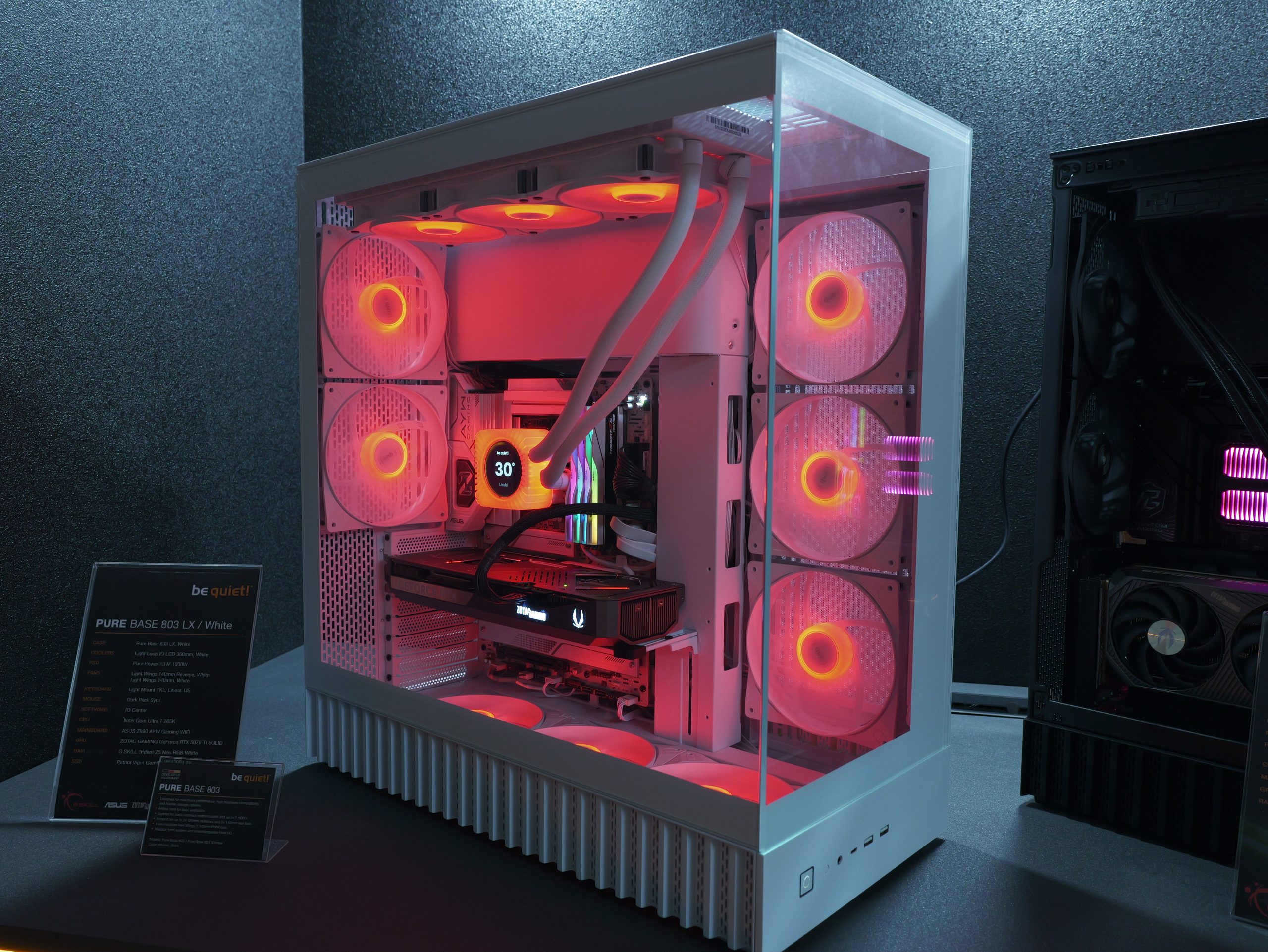
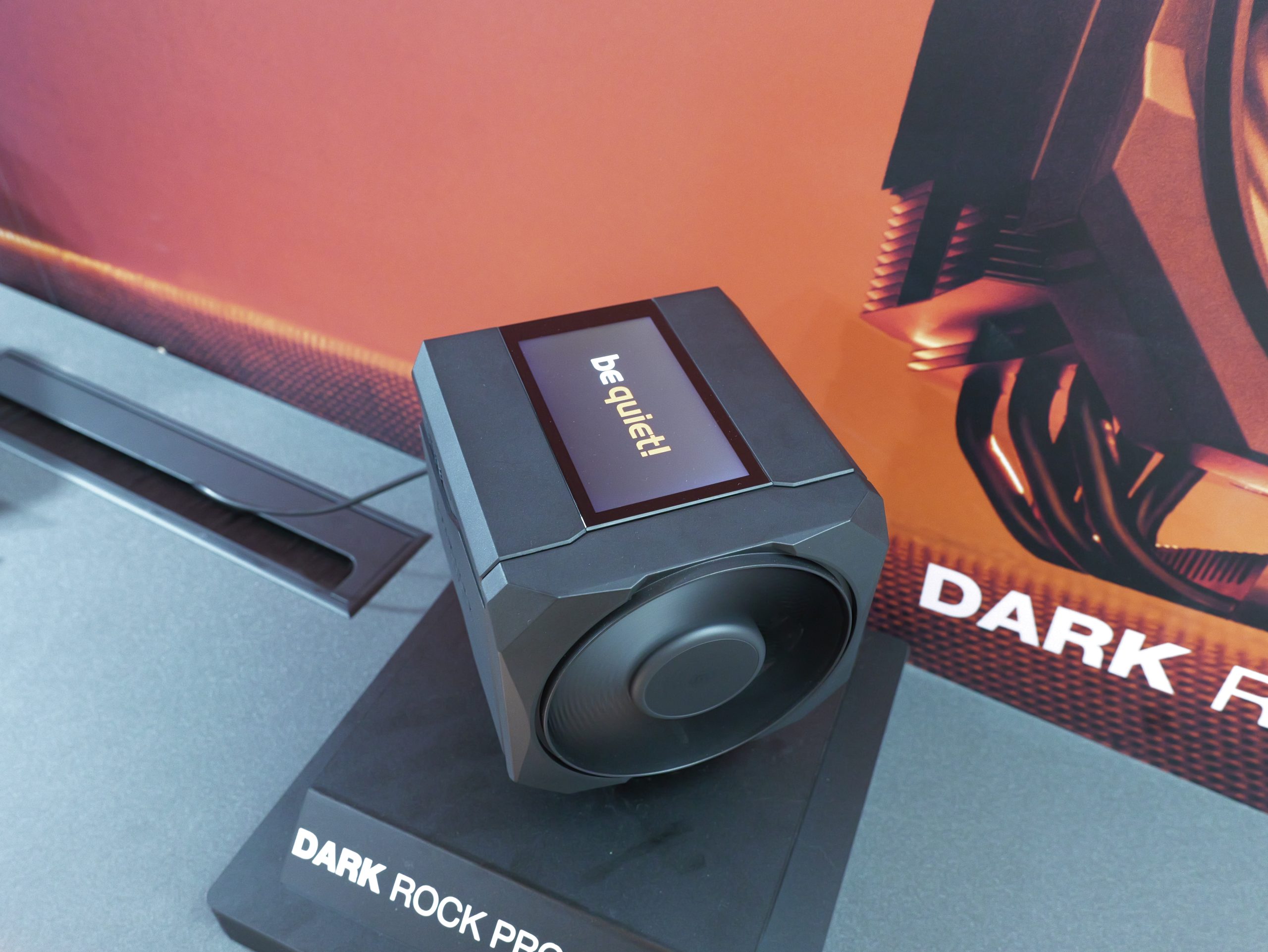
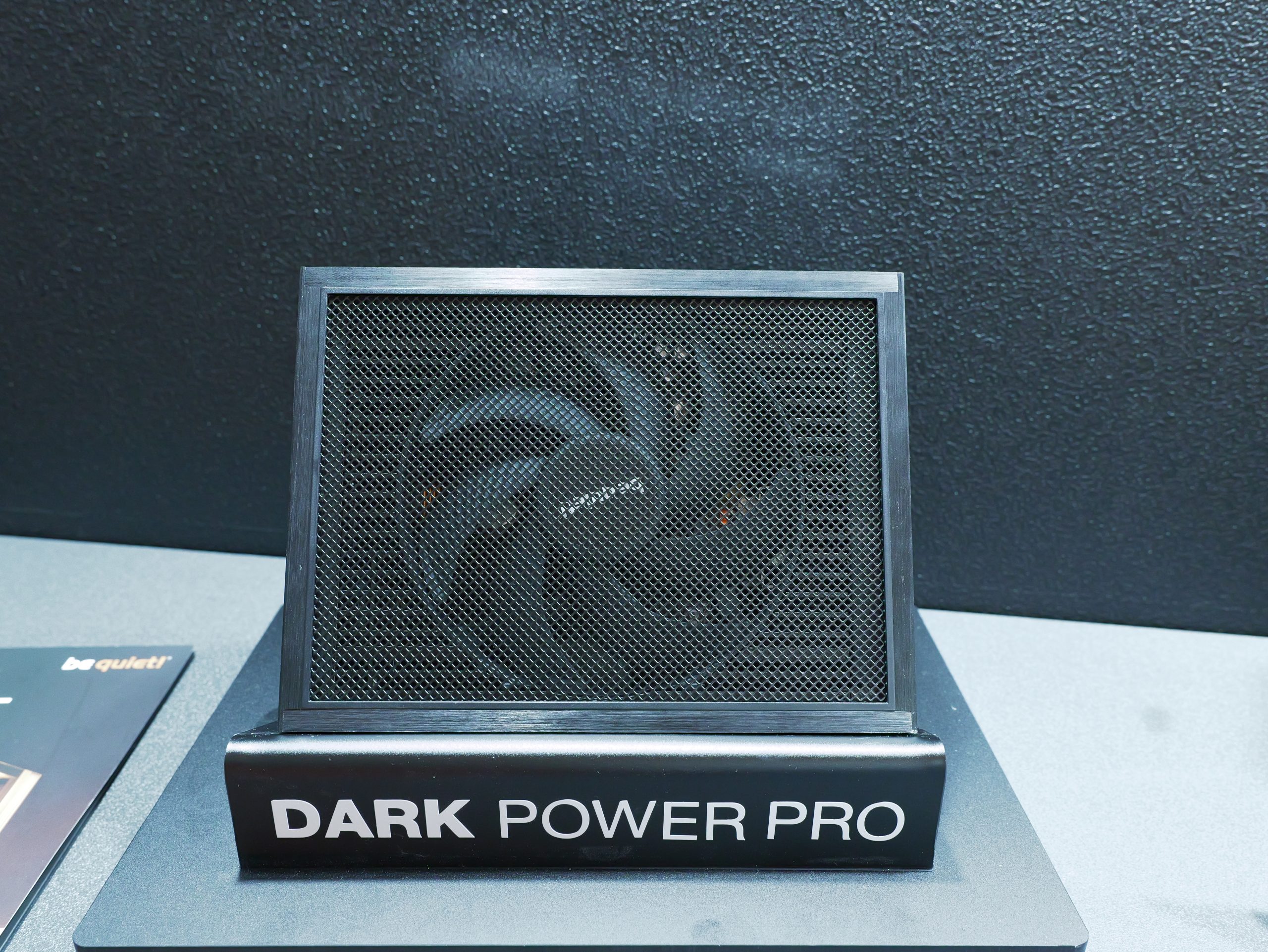
Our Computex 2026 coverage continues with be quiet! Here, we break down the full line-up of new products, including new Dark Power power supplies, a new Light Loop AIO liquid cooler, a new screen-equipped version of the Dark Rock 6, alongside new gaming peripherals and case fans.
Watch via YouTube below:
Timestamps:
00:06 New Dark Power Pro 14 IO
01:36 Dark Rock Pro 6 IO LCD
02:22 New daisy-chainable fans
03:39 Light Loop IO LCD coolers
04:28 Prototype cases
06:25 IO Centre software
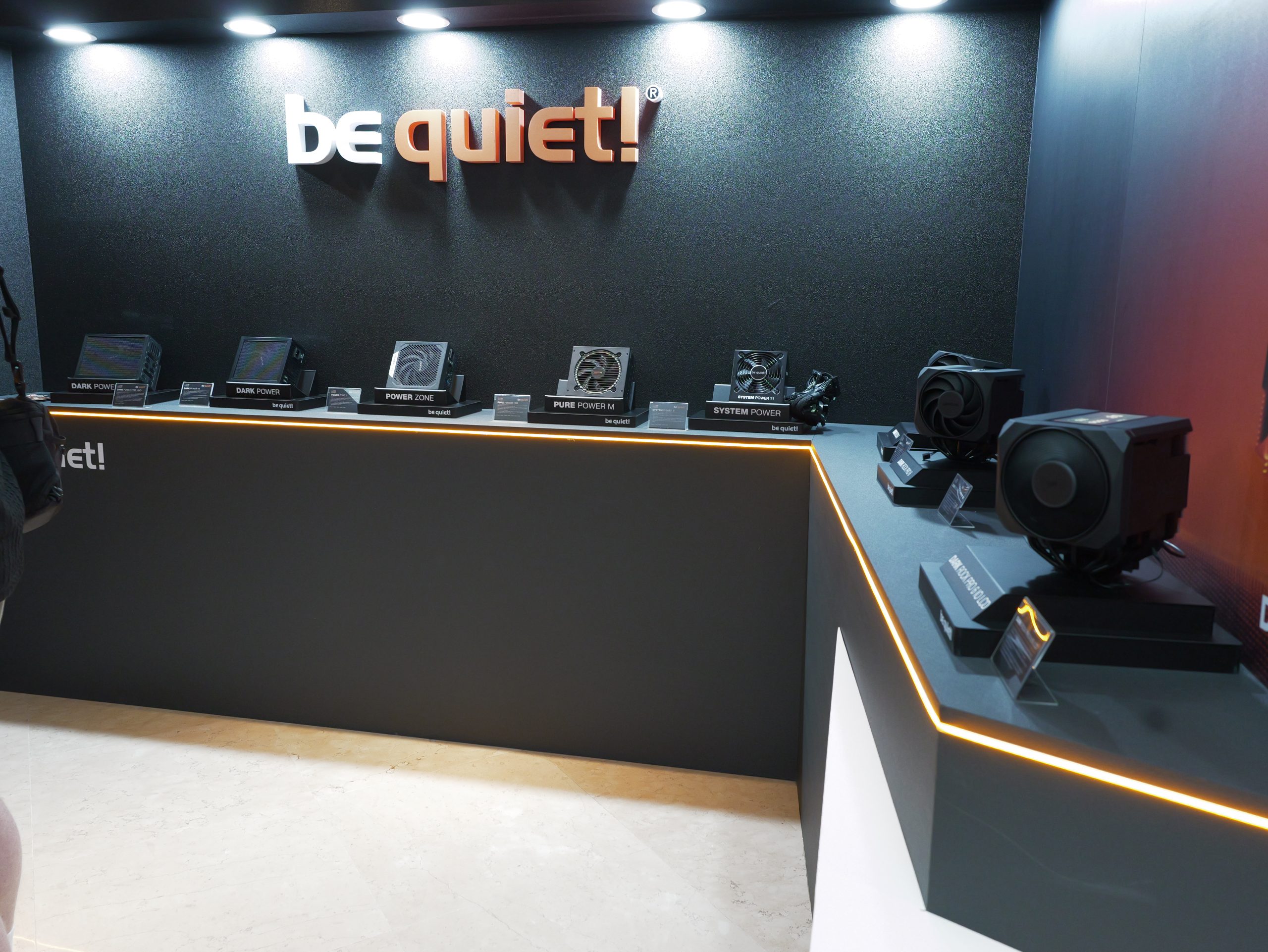
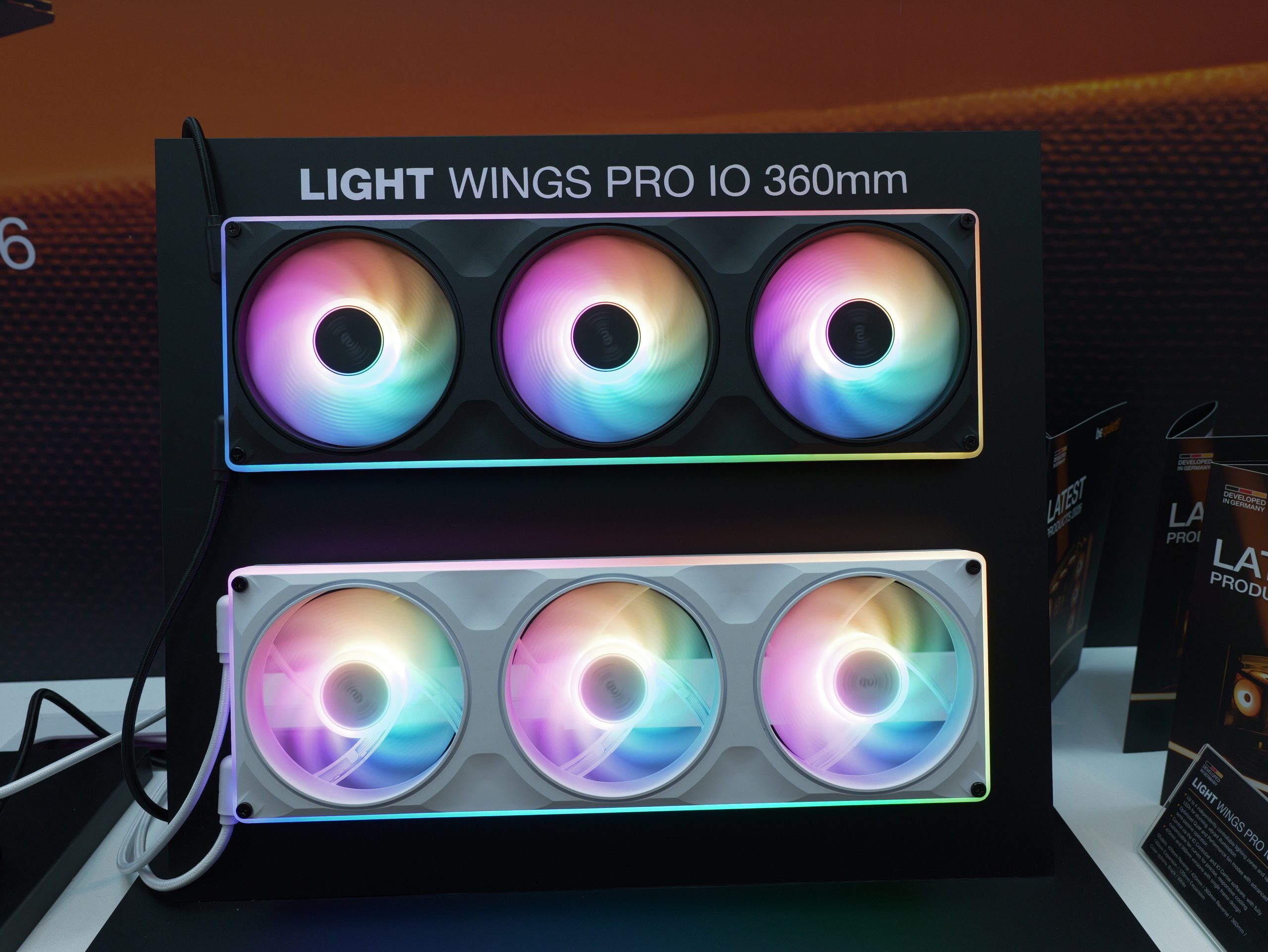
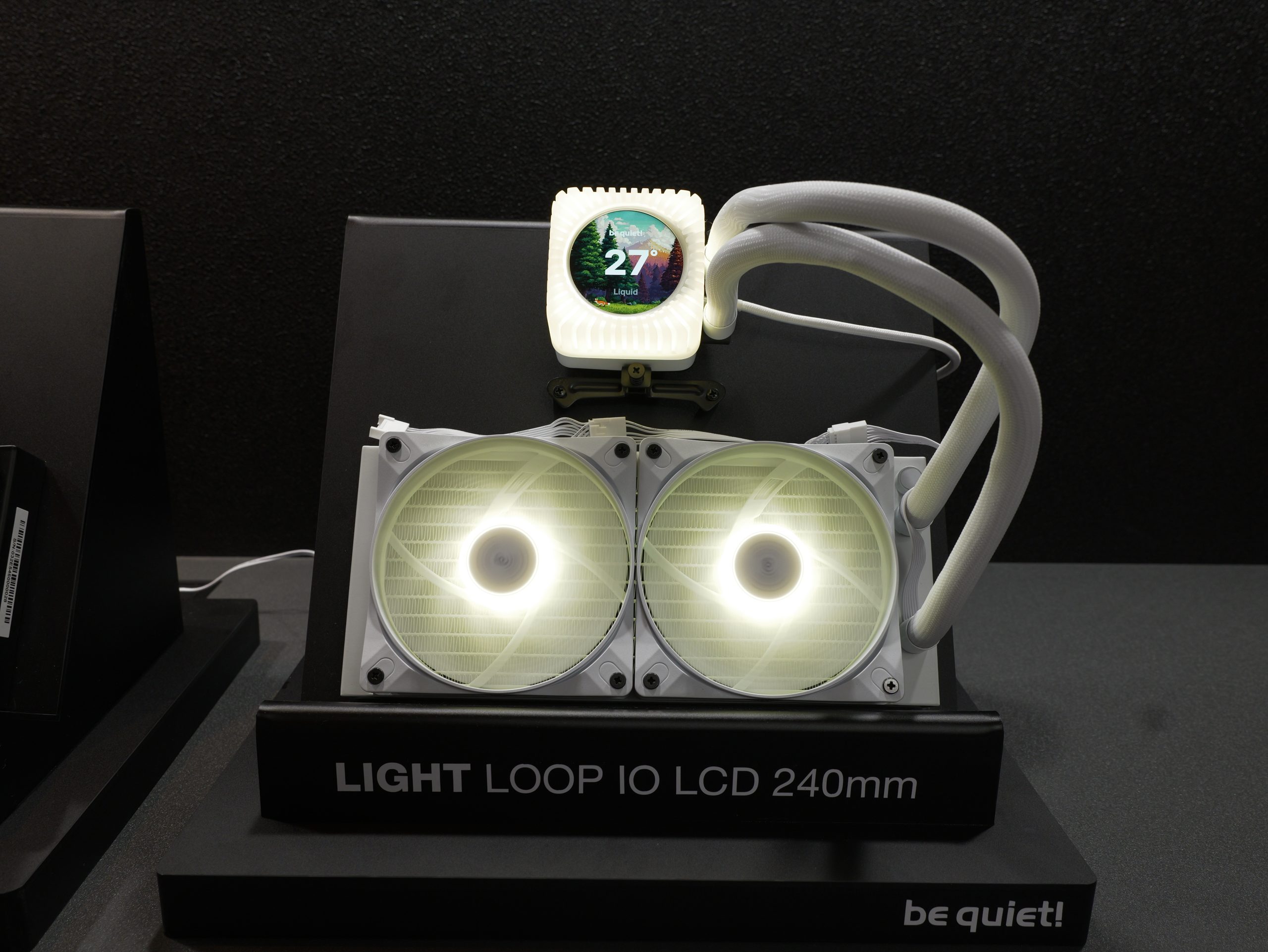
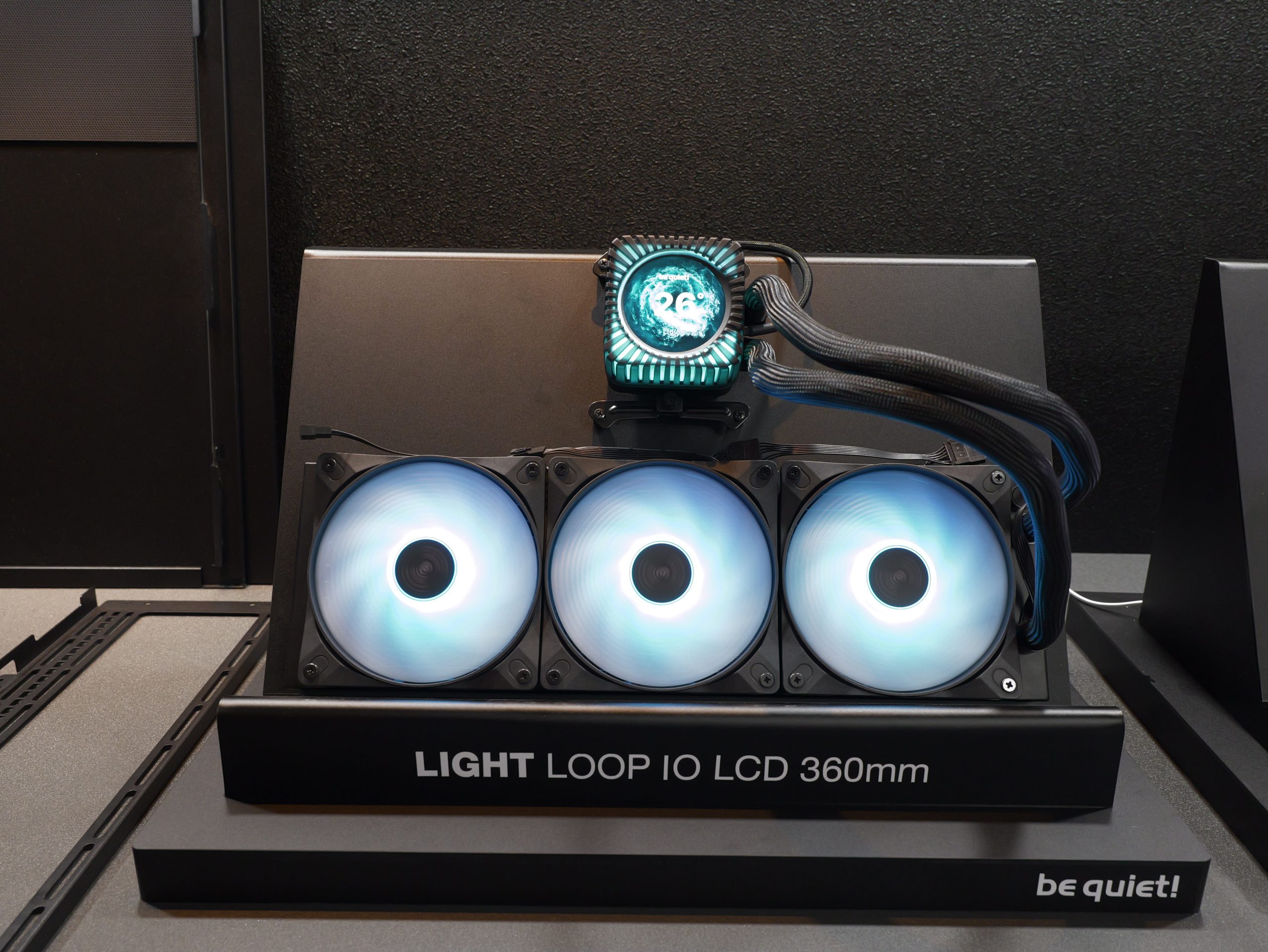
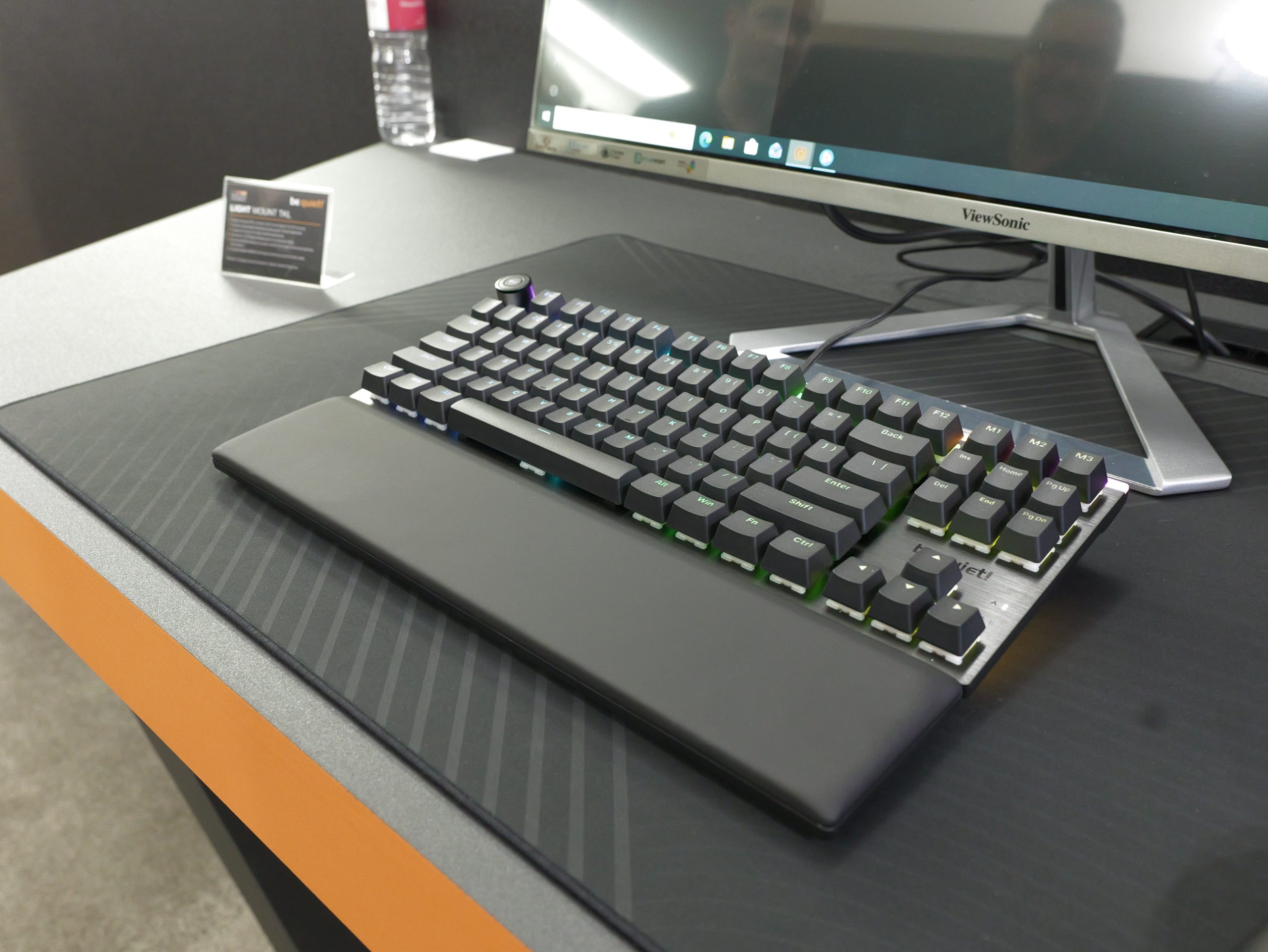
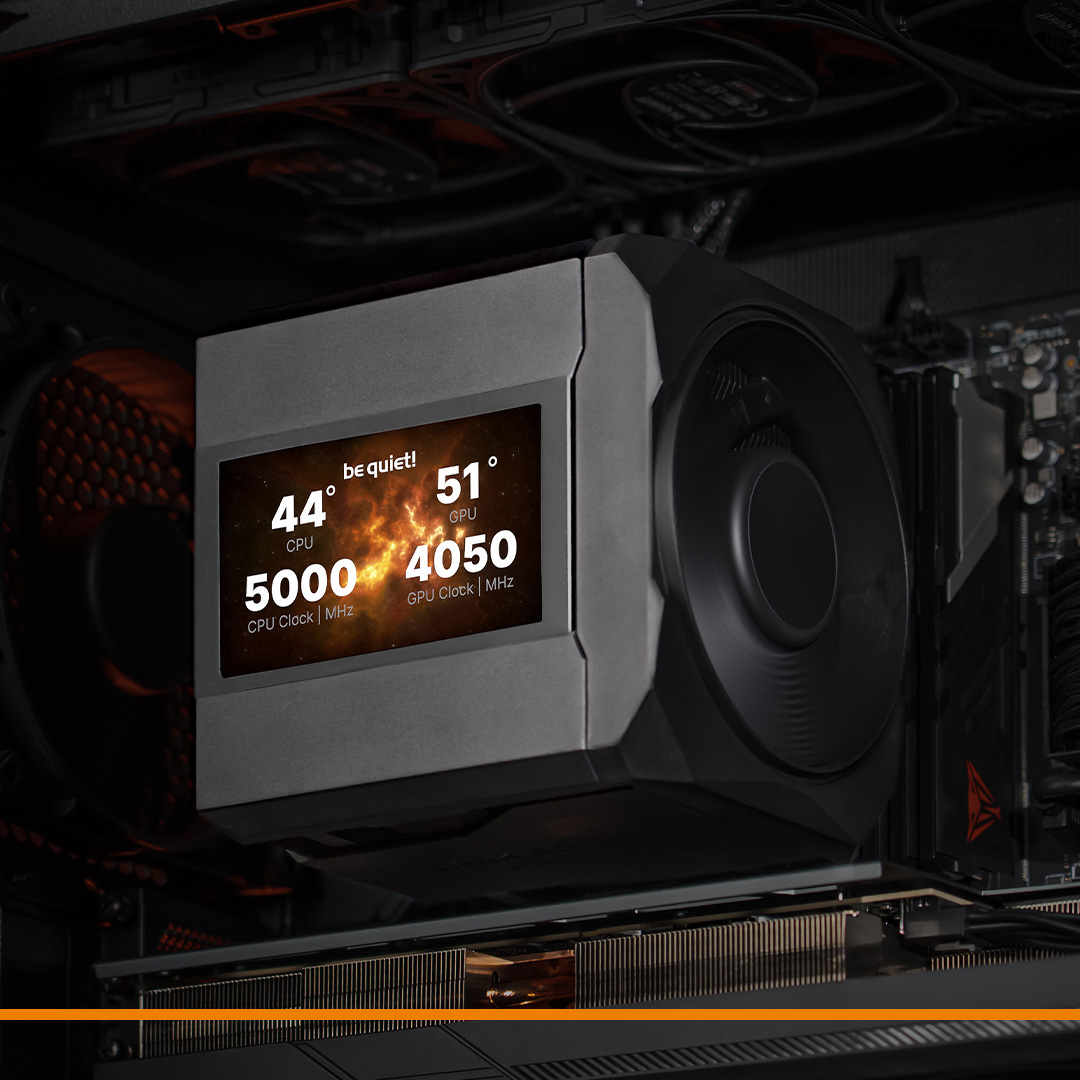
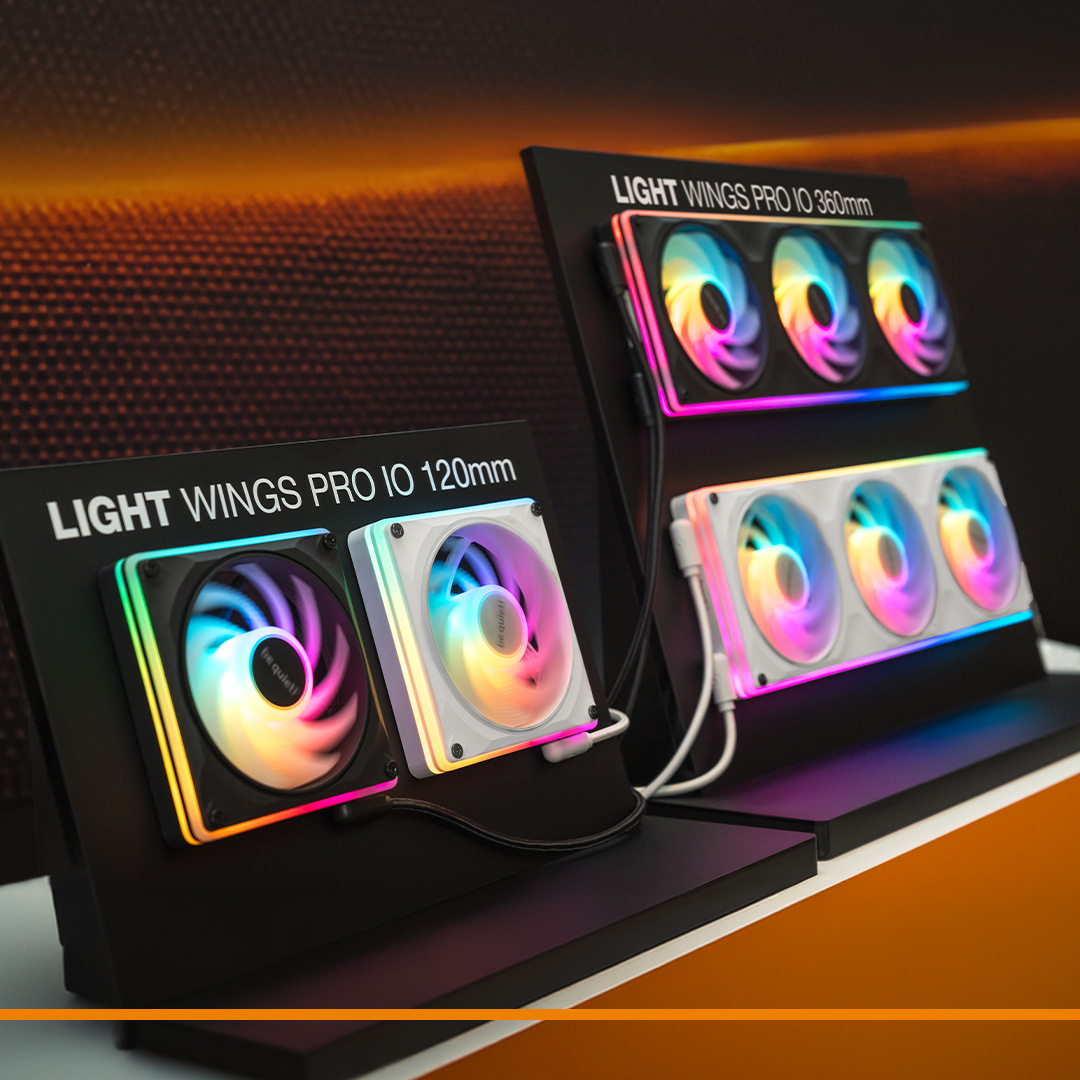
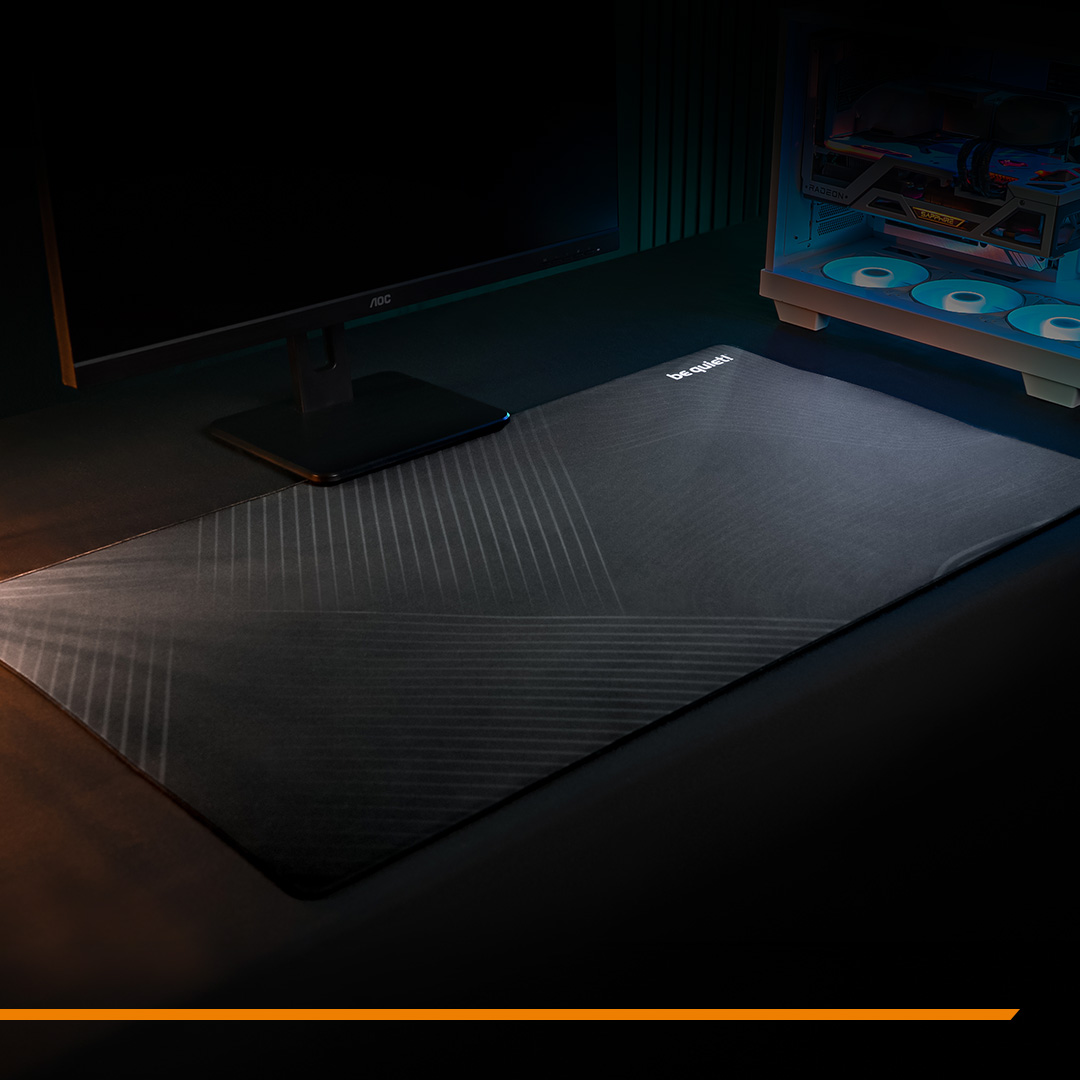
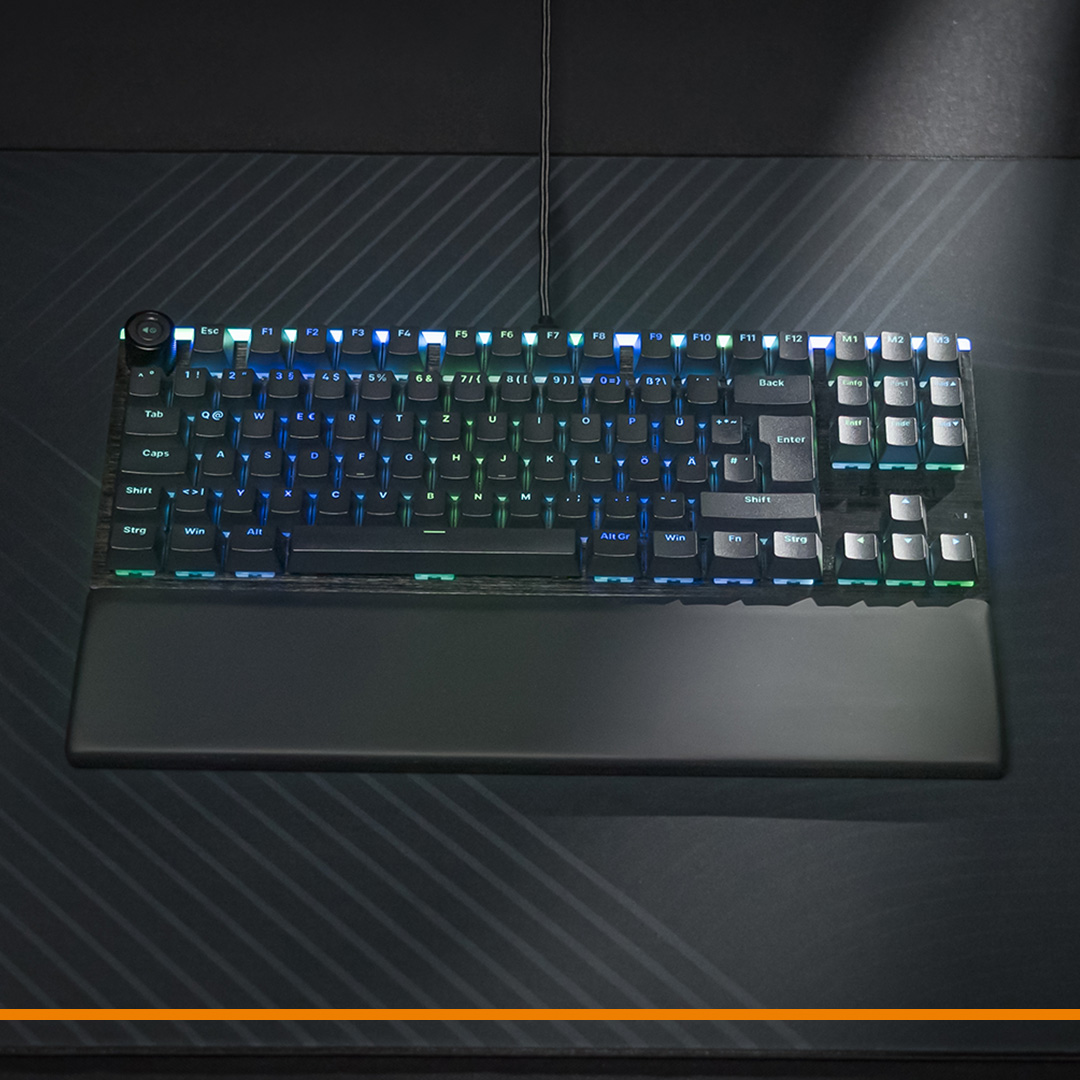
be quiet! is showcasing a wide range of new hardware at Computex 2026. The company’s suite includes first looks at the Dark Power Pro 14 IO flagship PSU, the Light Loop IO LCD liquid cooler, the Dark Rock Pro 6 IO LCD air cooler, the Light Wings Pro IO fan series, the new Pure Base 803 case and the Light Mount TKL keyboard, alongside the company’s first accessory, the Mousepad XL.
First up is the Dark Power Pro 14 IO, available in 1300W and 1600W models with 80 PLUS Titanium and Cybenetics Titanium efficiency. The IO in the name here refers to be quiet!'s new IO Center software, allowing you to switch cooling modes, switch between multi-rail and single-rail operation or see real-time stats for power usage in just a few clicks. The IO theme will continue throughout the rest of the be quiet! products highlighted here.
The Dark Rock Pro 6 IO LCD adds a 4.5‑inch IPS display to the top cover of the heatsink, while keeping other design aspects in line with the previous Dark Rock Pro 6. This one is also controllable through IO Center, including settings for cooling modes, fan curves and display settings.
The Light Loop IO LCD AIO brings similar upgrades. There is a 2.1-inch IPS display on the CPU block, and it ships with daisy-chained Light Wings LX PWM fans, along with a redesigned jet plate and a new pump to improve performance compared to previous Light Loop versions, and a refill port so you can top up or replace the coolant. Like the Dark Rock Pro 6 IO, this one will link into IO Center for easy access to settings.
As you might expect, there are some Light Wings Pro IO case fans on the way as well. These ones are built with ARGB enthusiasts in mind though, with up to 124 LEDs per fan, which is a significant number of extra LEDs over many other ARGB fans on the market.
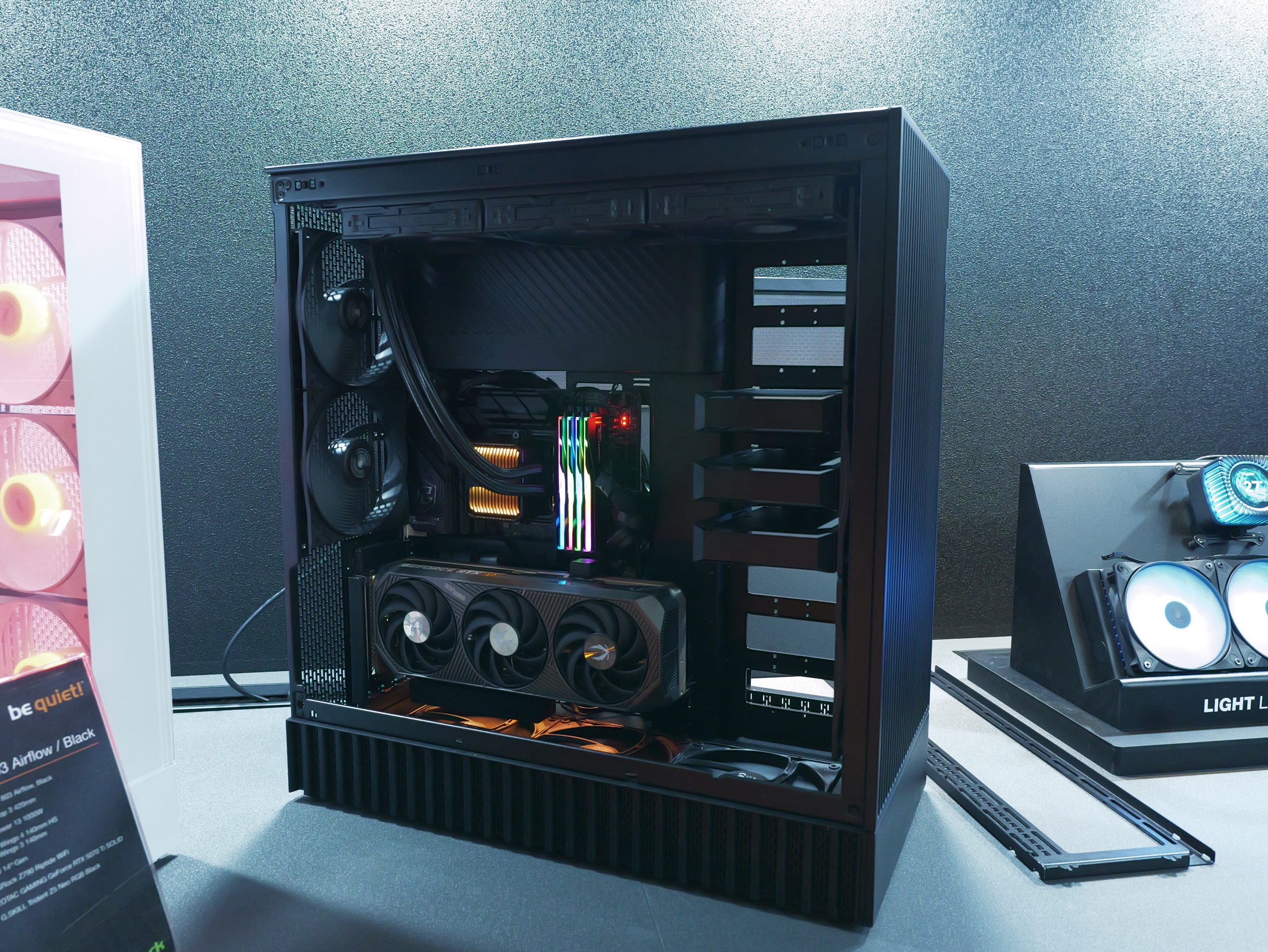
be quiet! is also gearing up to launch its new Pure Base 803 line of cases, available in standard, Workstation and LX versions. The series supports multiple 420mm radiators, back-connect motherboards and plenty of fans for airflow. However, the LX variant replaces the front fan mounts with side intakes and adds an extra glass panel to the front for a fishtank style build.
For peripherals, be quiet! has the Light Mount TKL mechanical keyboard with sound‑damped construction and per‑key ARGB, and the Mousepad XL, a 900×500mm cloth surface with a 3mm rubber base and stitched edges for those who like their mouse mat to cover most of the desk.
KitGuru Says: Be quiet! is going all in on its new software integration. Will you be looking to pick up any of their new gear for a new PC build?
Enermax has announced the launch of its MaxTytan II 1650W ATX 3.1 Titanium PSU. This new flagship unit builds on the series' focus on efficiency and stability while introducing modern industry standards, dual native 12V-2×6 connectors, and an industry-leading 13-year warranty.
The power supply features 80 Plus Titanium certification and full compliance with Intel's latest ATX 3.1 specification. Enermax states that the unit includes dual native 12V-2×6 connectors, each capable of delivering up to 600W directly to next-generation graphics cards. Reliability is reinforced by 100% Japanese capacitors, which enable the PSU to handle power excursions up to 235% and protect against transient spikes.
As you would expect from a flagship power supply, this unit is fully modular and it does have a Zero-RPM mode to keep noise levels to a minimum at low to moderate workloads.
With 1650W of capacity, the new MaxTytan II is well suited towards ultra high-end gaming builds, as well as powerful workstations. It is all backed by a lengthy 13-year warranty too.
KitGuru says: Typically in the tech world, we see painfully short warranty windows. That is not the case with Enermax and this new power supply.
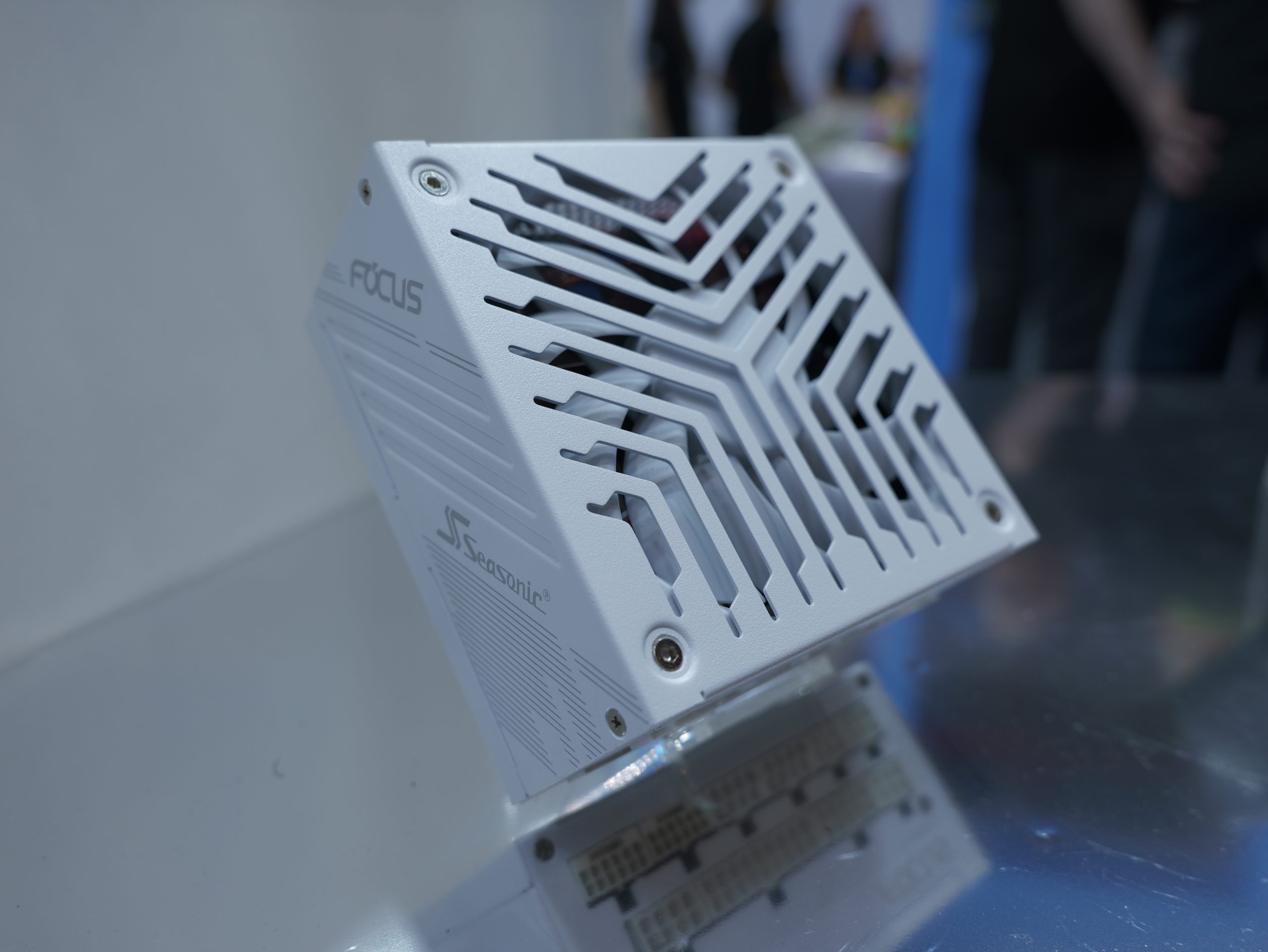
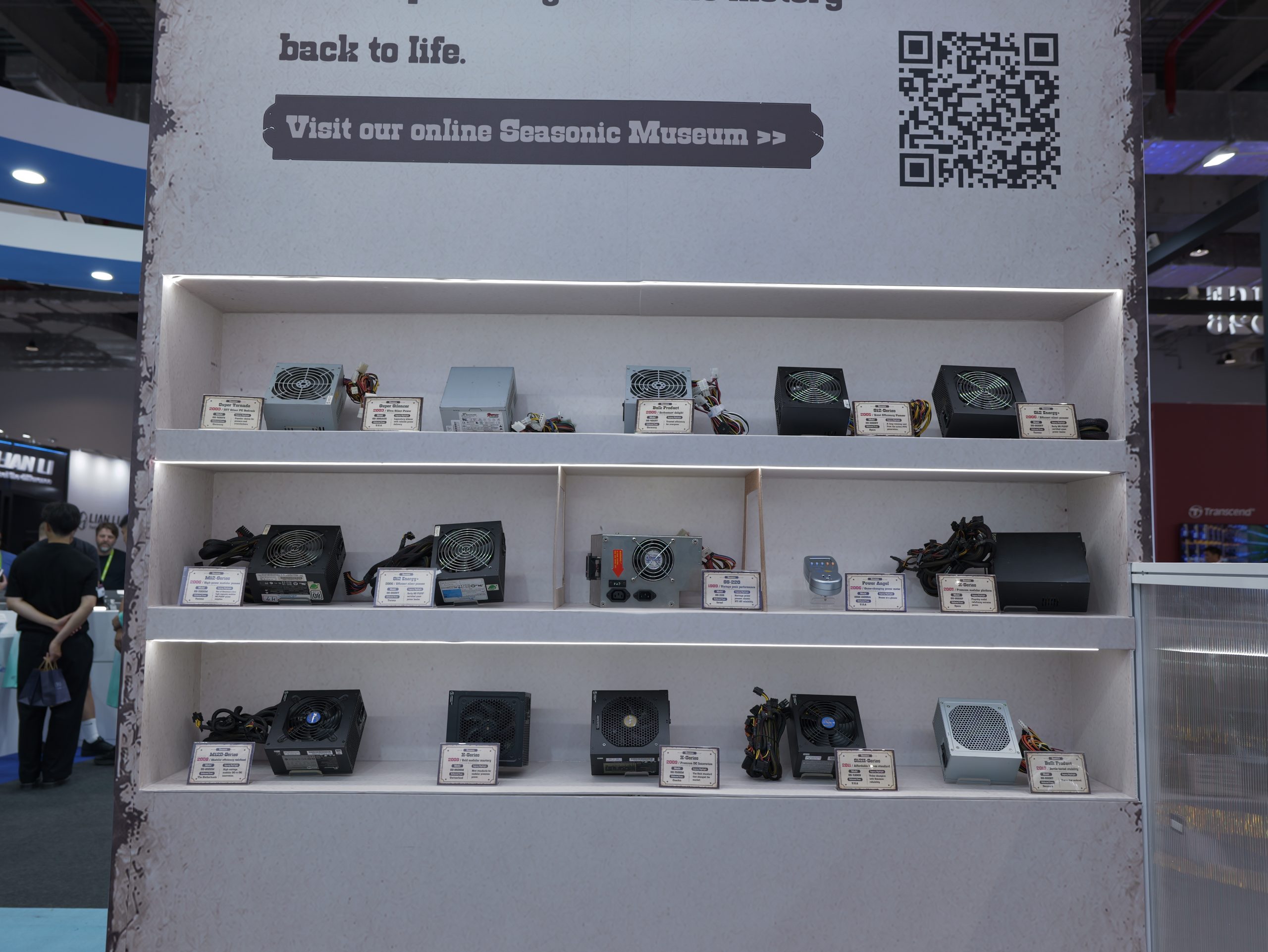
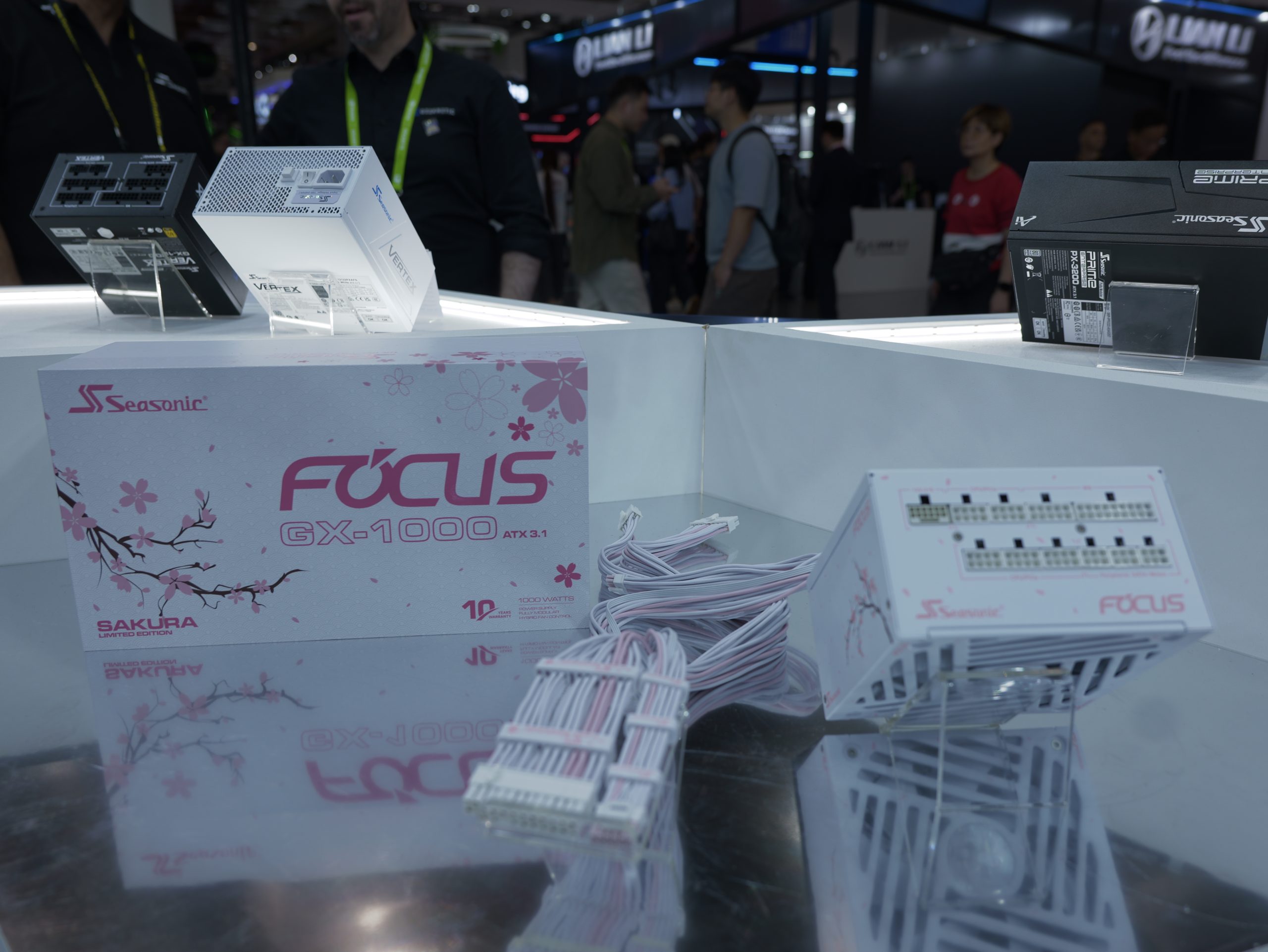
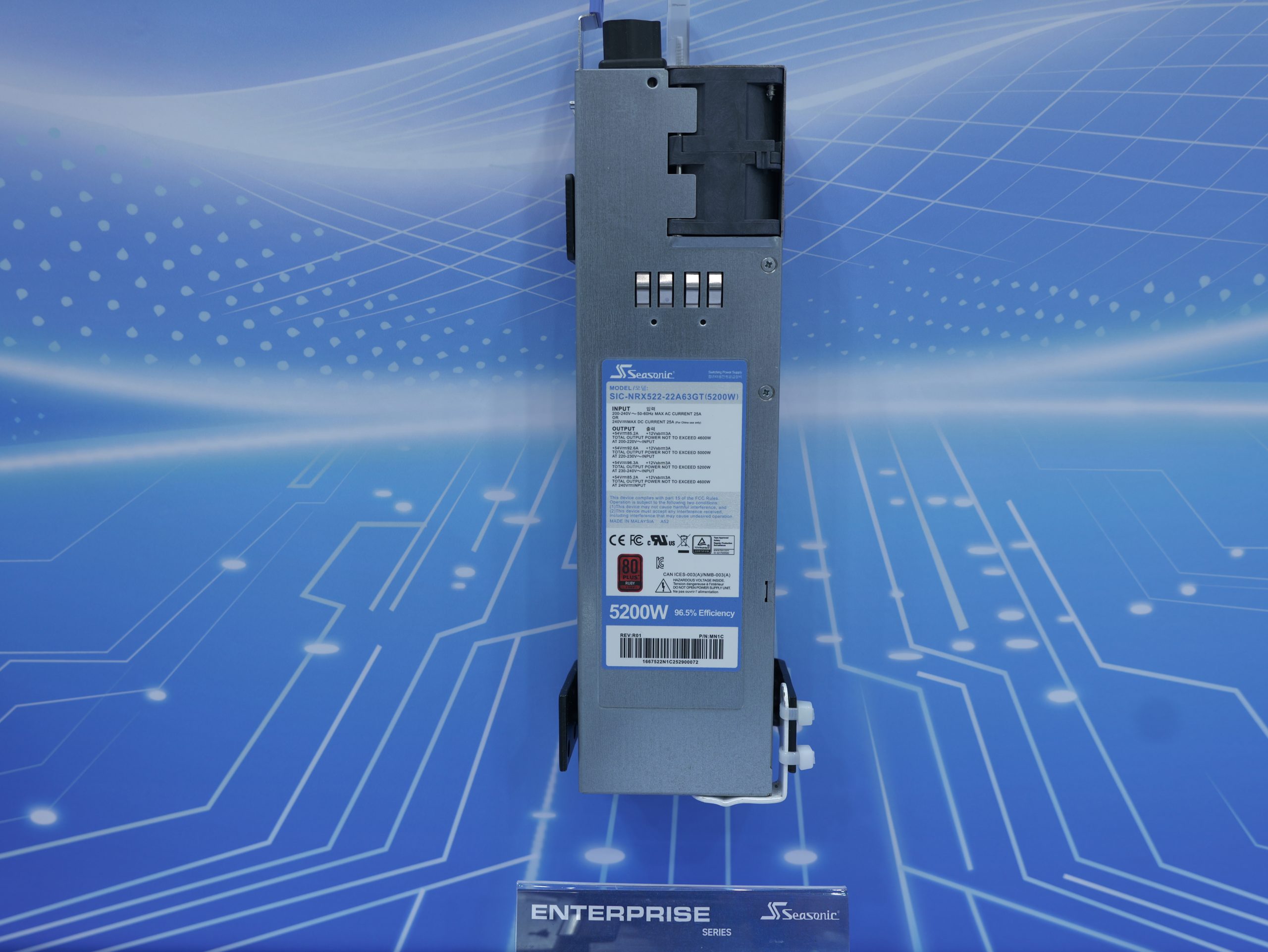
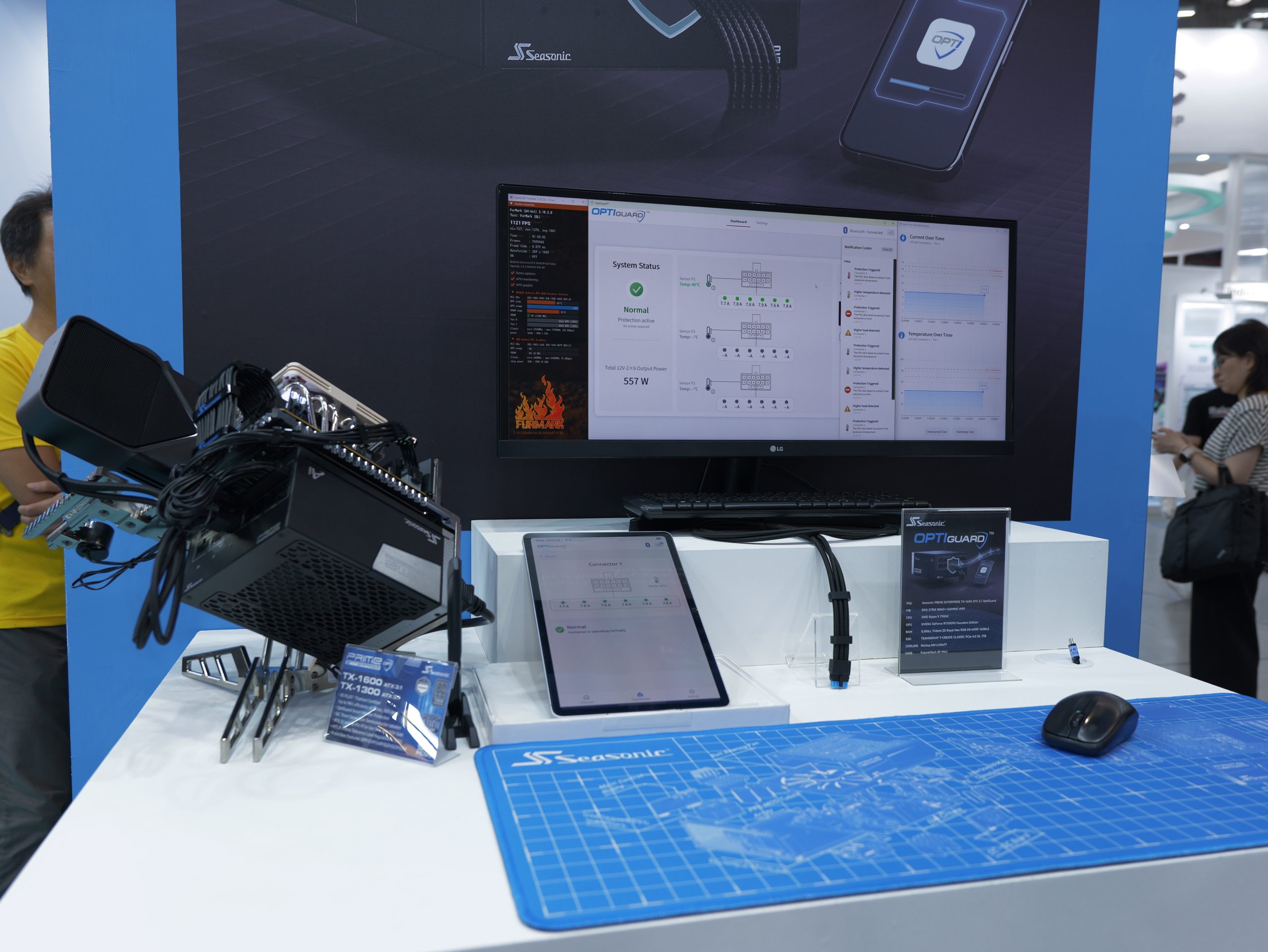
At Computex this year, Seasonic is showcasing a new wave of developments, giving us an idea of where power delivery is heading next. In our video, Leo breaks it all down, from the traditional Focus series, all the way up to massive new 5200W units.
Watch via YouTube below:
Timestamps:
00:00 Concept power supplies
00:42 Seasonic Museum
01:23 New Power Supplies / EDPP
03:25 Prime Enterprise 3200
03:54 Focus GX1000 (Limited Edition)
04:07 5200W and Enterprise Power Supplies
04:55 Seasonic Optiguard
On the consumer front, Seasonic has new Focus SFX-L power supplies, offering modular cables, up to 1300W capacity and 80Plus Gold efficiency, along with ATX 3.1 and PCIe 5.1 compliancy. There are also full-sized ATX versions of the Focus power supply, offering capacities up to 1000W with 80Plus Platinum efficiency.
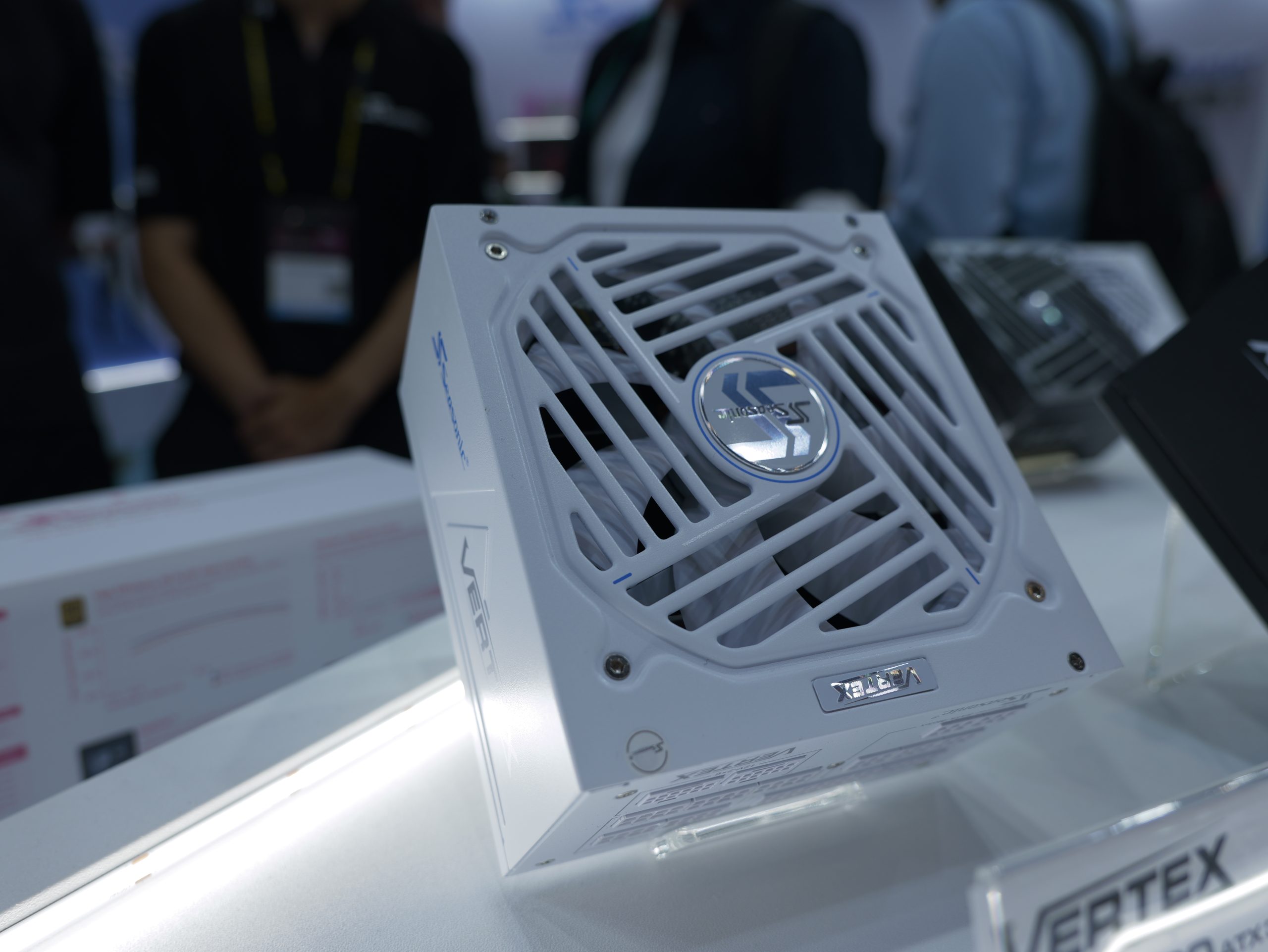
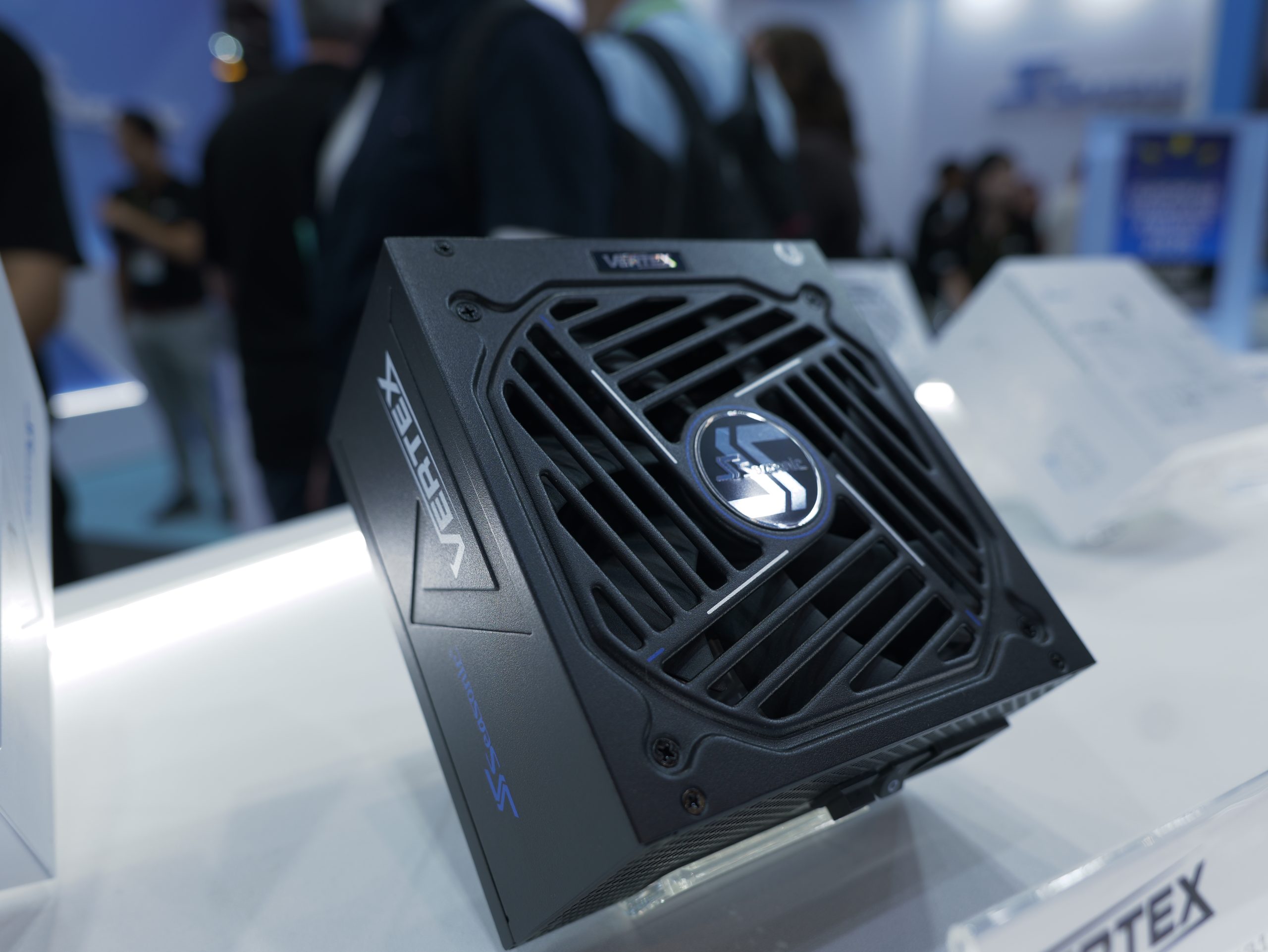
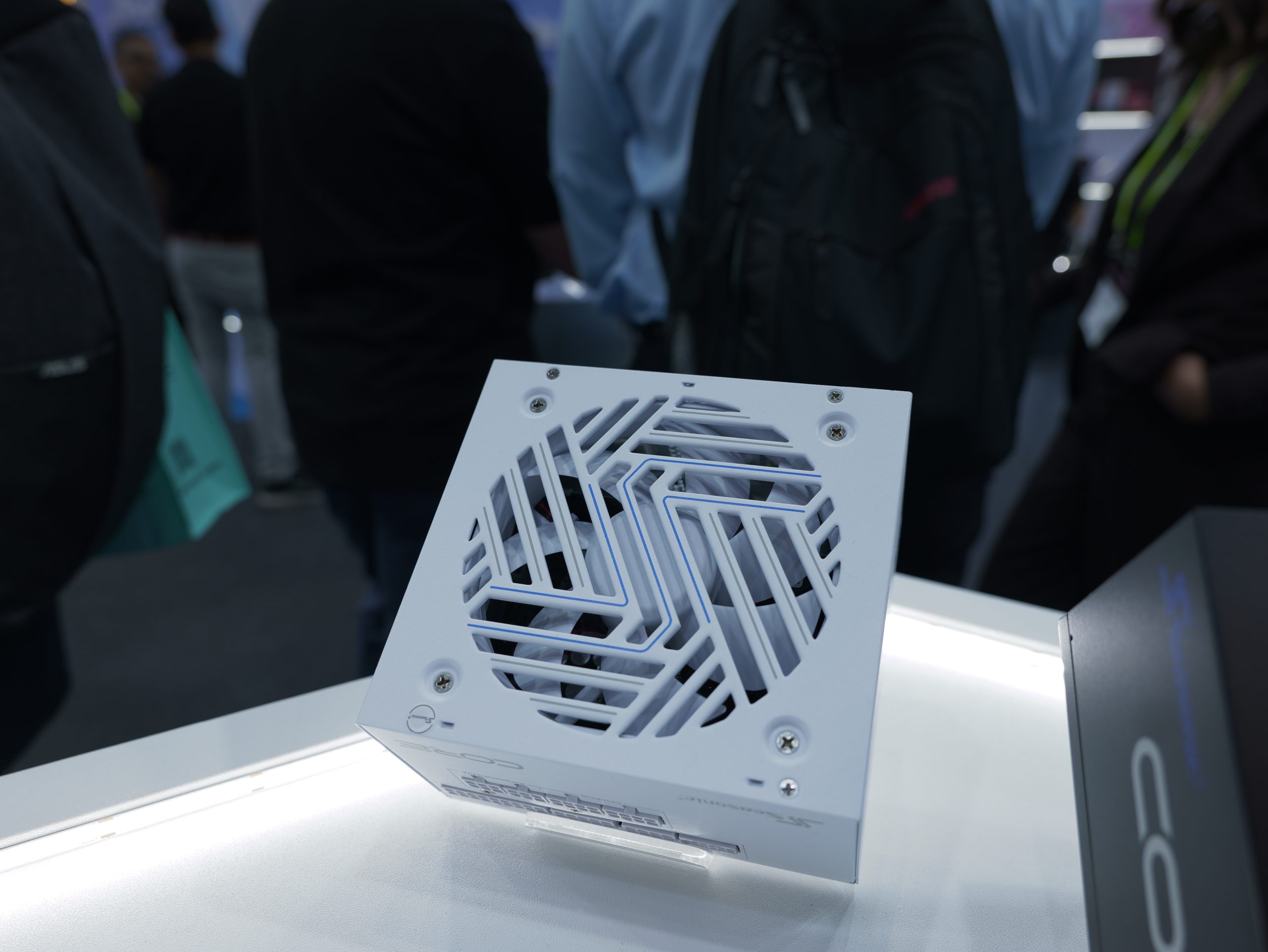
The Seasonic Core series is where gamers will go for a cheaper full-sized option while keeping 80Plus Gold efficiency. If you need a bit more power than that, then a Seasonic Vertex is your point of call, offering the same efficiency rating, but bumping capacities up to 1200W.
If you want something that looks a bit different, there is a limited edition ‘Sakura' version of the Focus GX-1000, although we don't know exactly how globally available these units will be.
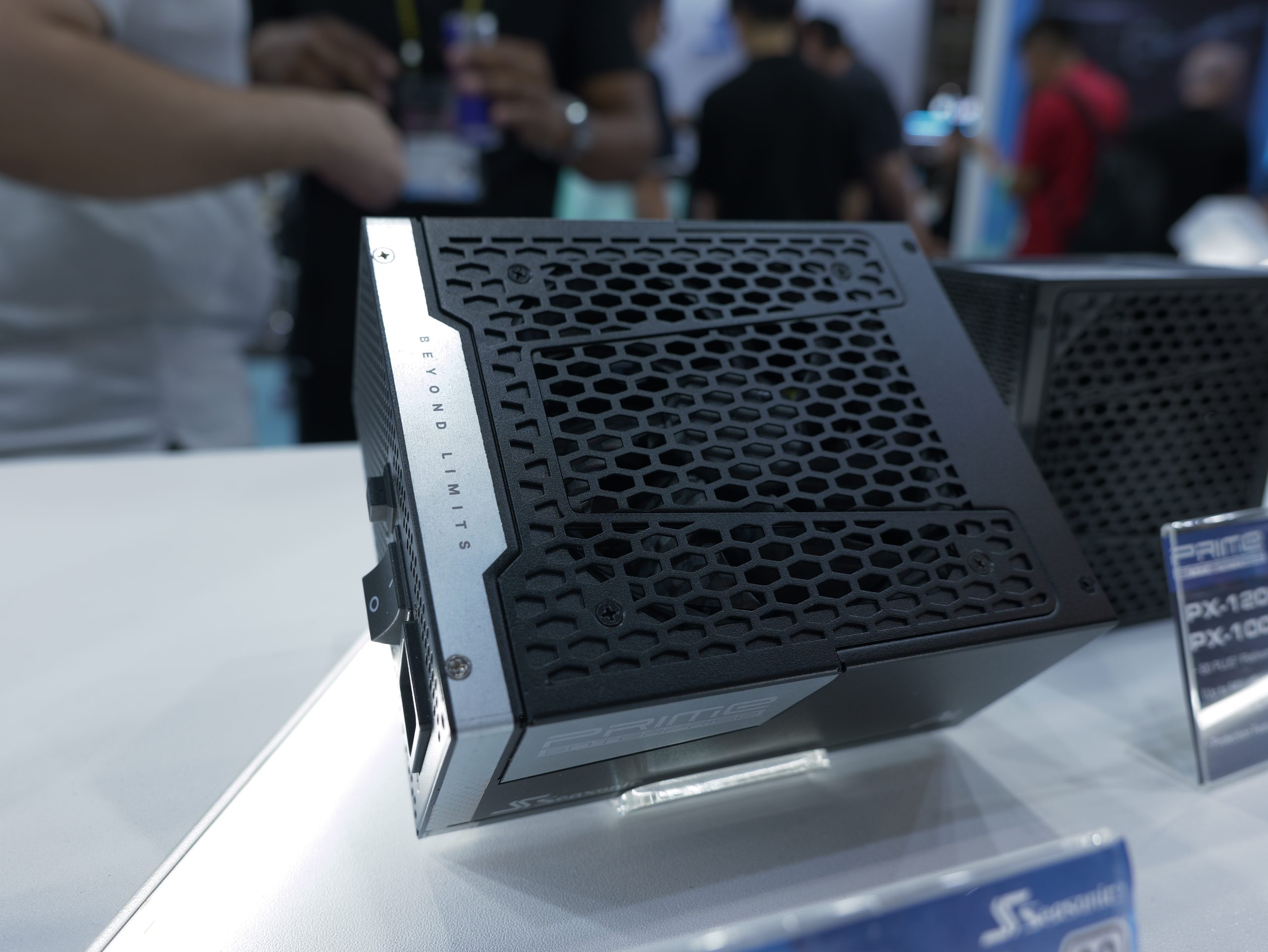
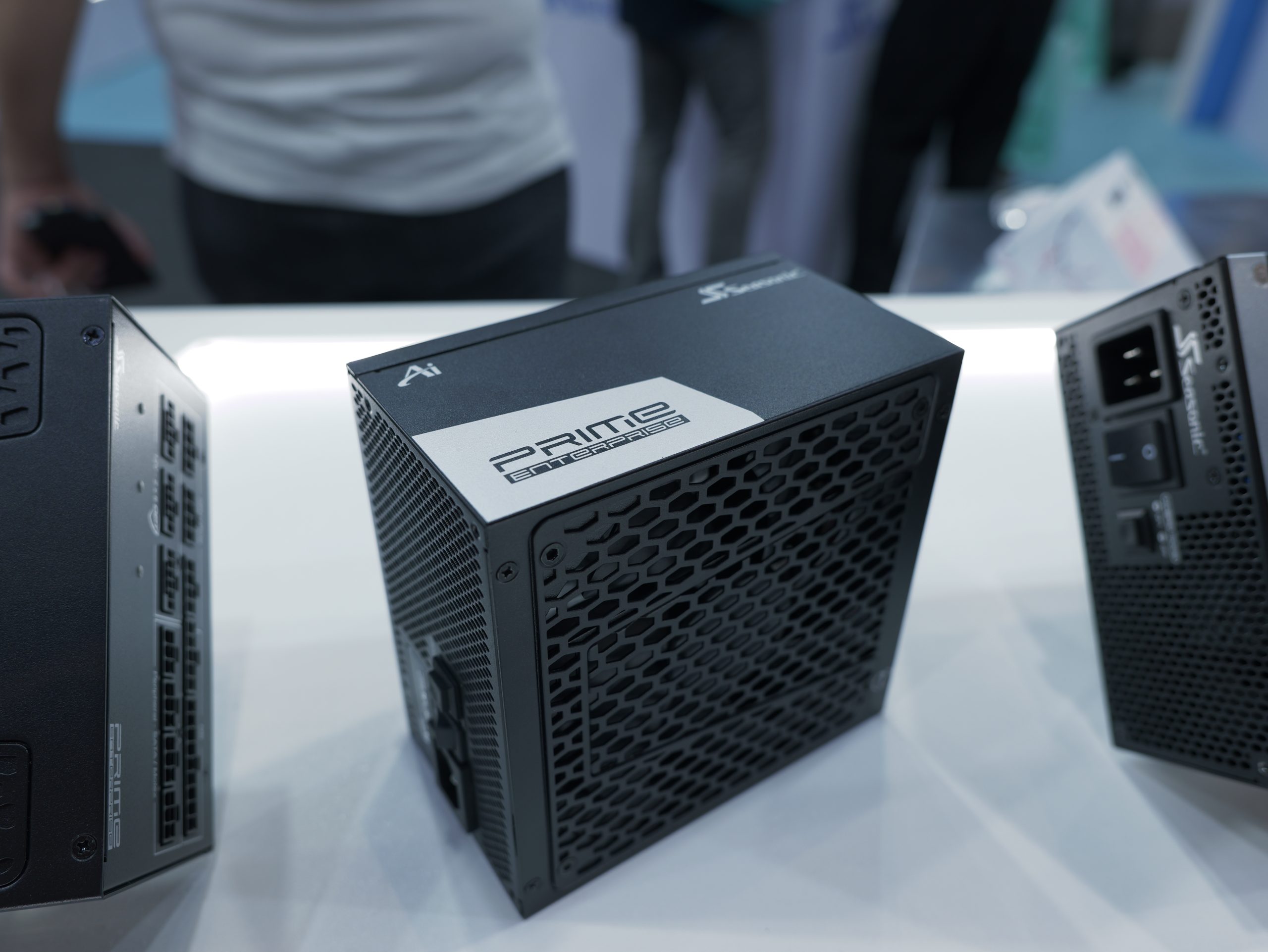
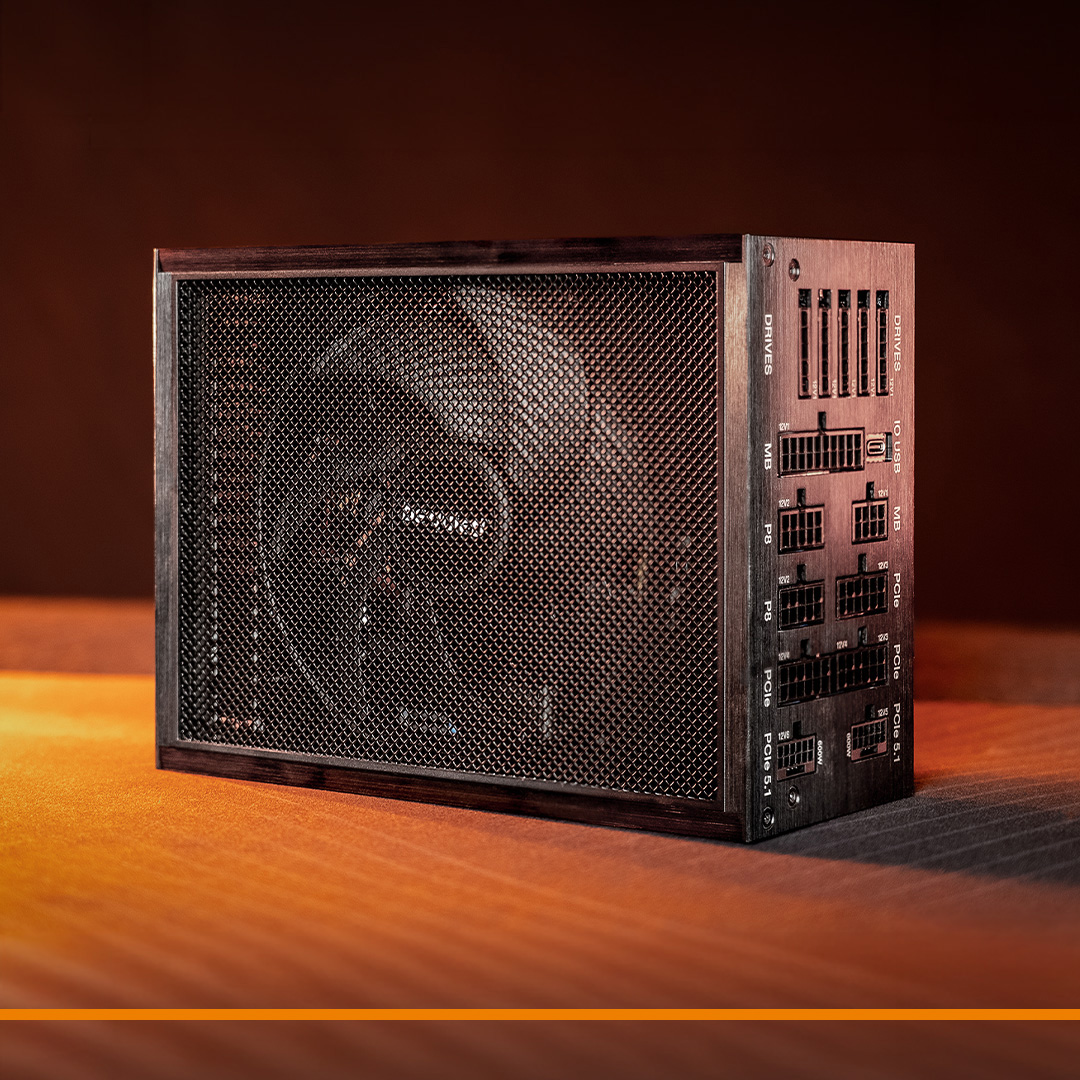
Seasonic Prime has always been the flagship and that continues to be true today. The new Prime Enterprise models promise capacities all the way up to 3200W, intended to power high-end workstations and AI systems, although you will have to deal with only having two native 12V-2×6 connectors on most models.
The Seasonic Prime Enterprise series also stands out for its EDPP protection features. Essentially, in AI-ready multi-GPU systems, there can be sudden and repeated power changes. EDPP creates stricter dynamic load validation to ensure power delivery remains stable during scenarios like this.
Moving further into the enterprise segment, Seasonic also has a 5200W PSU here for AI systems, including an extremely rare 80Plus Ruby efficiency rating.
Following on from a preview last year, Seasonic has also showed the latest improvements to its new OptiGuard technology. These are new ‘smart' cables for 12V-2×6 equipped graphics cards, allowing per-pin monitoring for load and giving warnings if there is an issue, so you can power down the system safely and check that the connector is seated properly to avoid disaster.
KitGuru Says: What did you make of Seasonic's Computex showing this year?
At Computex this week, be quiet! is launching new products across the board, including new AIO liquid coolers, new fans, new power supplies and even new gaming peripherals.
The Dark Power Pro 14 IO flagship power supply arrives in 1300W and 1600W variants, offering 80 Plus Titanium efficiency, ATX 3.1 compliance, and native PCIe 5.1 support. For PC builders, the new Pure Base 803 case series supports back-connect motherboards and up to three 420mm radiators, available in standard, LX and Workstation variants.
A newly refreshed Light Loop IO LCD AIO liquid cooler is also on the way this year with a 2.1-inch IPS screen. For those who prefer air cooling but don't want to give up the display, there is the new Dark Rock Pro 6 IO LCD air cooler featuring a 4.5-inch display on the top cover. Both integrate with the company's IO Center software for real-time monitoring and custom visuals. If you just need some new case fans rather than a whole new cooler, then be quiet! has the new Light Wings Pro IO, featuring up to 124 LEDs per fan for even better visuals.
Moving on to peripherals, the company revealed the Light Mount TKL, a mechanical gaming keyboard with factory-lubricated linear or tactile switches and hot-swappable 5-pin switch support, as well as a new extra-large mouse mat.
KitGuru says: What did you think of be quiet!'s new announcements?
Lian Li's Edge V2 PSUs add a dust-detecting LED indicator, a removable filter, and a snap-on hub for fans and USB devices. They should arrive in September, at up to 1350 watts.

 Login
Login