Reading view

There are new articles available, click to refresh the page.

Minecraft system requirements raised for the first time in 17 years — Microsoft now recommends 16GB of RAM and a 2020s or newer CPU to run the Java Edition

Microsoft announced that it’s increasing Minecraft’s minimum and recommended system requirements for the first time in 17 years. According to the company’s blog post, Minecraft: Java Edition will get a spec bump to ensure that the game runs smoothly today and in the future. While it’s understandable that the game’s developers would want to increase the performance of the hardware that the title runs on to implement more advanced features, the new requirements are significantly higher than the previous minimum specification. This could negatively affect players on older hardware that barely hits the minimum requirements, who would have no choice but to upgrade their PCs at a time when RAM prices are at a record high.

Java Edition Minimum (Old)

Java Edition Minimum (New)

Bedrock Edition Minimum

Java Edition Recommended (Old)

Java Edition Recommended (New)

Bedrock Edition Recommended

OS

Windows 7, macOS 10.14.5 Mojave, or later

Windows 10 64-Bit, Windows on ARM, macOS 12+, or Linux 64-bit

Windows 10 19041.0 or higher

Windows 10, macOS 10.14.5 Mojave, or later

Windows 11 64-bit, macOS 14+, or Linux 64-bit

Windows 10 19041.0 or higher

CPU

Intel Core i3-3210 / AMD A8-8600 / Apple M1

Intel Core i3-10100 / AMD Ryzen 3 3100 / Qualcomm Snapdragon X / Apple M1

Intel Celeron J4105 / AMD FX-4100

Intel Core i5-4690 / AMD A10-7800 / Apple M1

Intel Core i5-12400 / AMD Ryzen 5 5600 / Apple M2 Pro

Intel i7-6500U / AMD A8-6800K

GPU

Intel HD Graphics 4000 / AMD Radeon R5

Nvidia GeForce GTX 950 / AMD Radeon RX 460 / Intel Arc A310 / Intel i5-6400 (iGPU)

Intel HD Graphics 4000 / AMD Radeon R5

Nvidia GeForce 700 series / AMD Radeon RX 200 series

Nvidia GeForce RTX 2060 / AMD Radeon RX 5600 XT / Intel Arc A580

Nvidia GeForce 940M / Radeon HD 8570D

Memory

2GB

8GB (discrete GPU) / 12GB (iGPU)

4GB

4GB

16GB

8GB

The new minimum specifications are quite reasonable, with the recommended specs falling squarely within the performance of the most common hardware in June’s Steam Hardware Survey (which also indicates that AMD now has more than 45% market share compared to Intel). If your system used to be at or higher than Minecraft: Java Edition’s previously recommended specifications, but no longer hits the current minimum requirements, you can switch over to the Bedrock Edition to continue gaming, although you might have to forgo some of your favorite mods.

If you’re running the bare minimum hardware to play Minecraft, Microsoft said that you could still possibly launch the game, although it warned that you might run into some issues. “These updated recommended system requirements won’t stop you from playing Minecraft: Java Edition today. If your computer falls below the new minimum requirements, Java Edition should still launch,” the company said in the Minecraft blog. “However, its performance and visual quality are no longer guaranteed on below-spec hardware, and it may struggle or fail to launch Java Edition in the future – especially as we transition away from OpenGL and towards Vulkan. We will keep players informed of these changes, especially changes that will sunset hardware that previously supported Minecraft: Java Edition.”

This means that you’ll have to spend some money to upgrade your system to just to continue playing your favorite game. You don’t have to spend thousands of dollars to get a new PC or join a giveaway to be able to play, though. If you know what you’re looking for, you can plausibly buy a used gaming laptop or desktop PC for around $350 to $500 — that should give you about a decade or more to enjoy the game if Microsoft keeps its spec upgrade cadence of 17 years for future versions of Minecraft.
Grand Theft Auto Multiverse with real-time portals created by ambitious modder — San Andreas, Vice City and GTA III all run simultaneously, with cross-game interactions

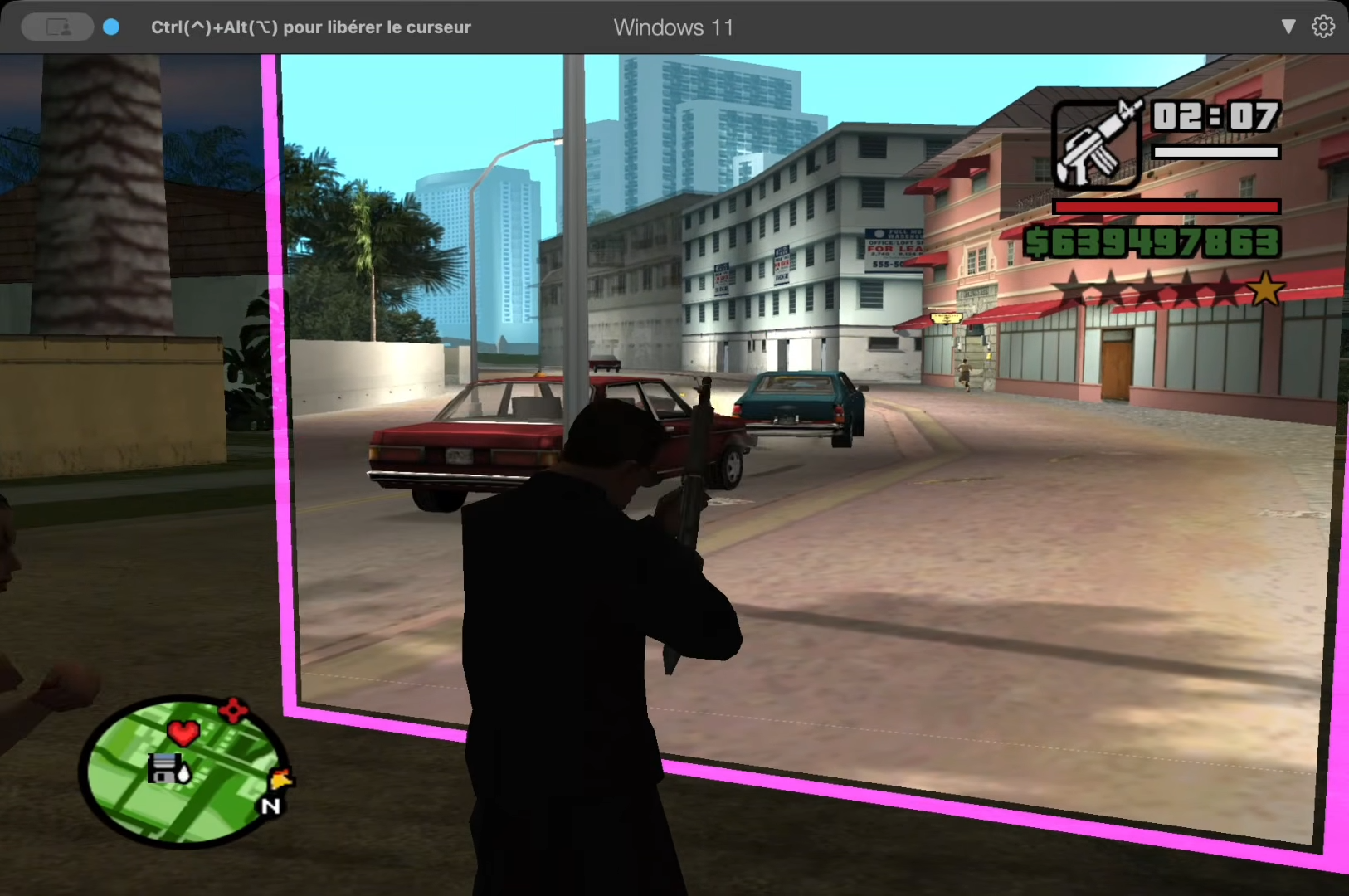
The Grand Theft Auto franchise has a rich history when it comes to modding and tinkering, but we're pretty confident the community has never seen anything like this. Created by Dryxio, this new mod combines GTA Vice City, GTA San Andreas, and GTA III into one multiversal entity interconnected through real-time, fully functional portals that let you travel between the three different games as if it were just a regular window.

The video above showcases just how insane this mod really is. It starts with CJ on Grove Street in San Andreas shooting at NPCs in different parts of the game (The Strip). Then, he moves toward the pink portal, shoots at NPCs once again, and just casually goes through it to end up in GTA Vice City as Tommy Vercetti. He wreaks havoc, walks back to the portal, and crosses through to Vice City as CJ, only to go to GTA III and repeat the same thing there.

The craziest part is how these portals genuinely act as windows to another world where you can stand in one game and shoot inside the other one. It's unclear whether there's a limit to the level of interaction, like if you can't drive cars through them, but it's impressive, nonetheless. The video also shows how you can place these portals anywhere in the world in any of the three games yourself.

All of this begs the question: how? The modder explains that all three games are running simultaneously inside one process, sharing one Direct3D device. Each portal is a live GPU texture; there's no video capture to fake the realism, and the transition to each game happens in real-time via an engine swap. When you walk through a portal, it simply switches to that game's engine while the others keep running in the background.

Shooting at GTA Vice City from inside GTA San Andreas
Dryxio on YouTube
Shooting at GTA Vice City from inside GTA San Andreas
Dryxio on YouTube

Each game and its world retain full native functionality such as its own AI, traffic, physics, saves, missions, and even settings. There's no loading screen when you use the portals either; you enter the world on the other side instantly, just the way you saw it before going through. This is largely possible because the source code of each game has been reverse-engineered and recompiled using an open-source engine.

Dryxio modified re3 and reVC — community projects that decompile the original source code of GTA III and Vice City into clean, readable C++ code — and used plugin-sdk to interface with San Andreas. Since these games used the proprietary RenderWare engine that can't render multiple spatial scenes together, an open-source reimplementation of it called librw was used to compile all three games into a single unified process.

The mod isn't publicly available at the moment, but you can bet everyone in the community now has their eyes on it. It's by far the most technically complex GTA mod ever, one that doesn't even require any understanding of software to grasp its ambition. There's also the elephant in the room known as Rockstar Games that could see this as copyright infringement and order it to be taken down, but for now, it lives as proof of human ingenuity (and vibe-coding).

Microsoft announces Xbox Backward Compatibility for PC — will let gamers play classic console games on PCs and handhelds

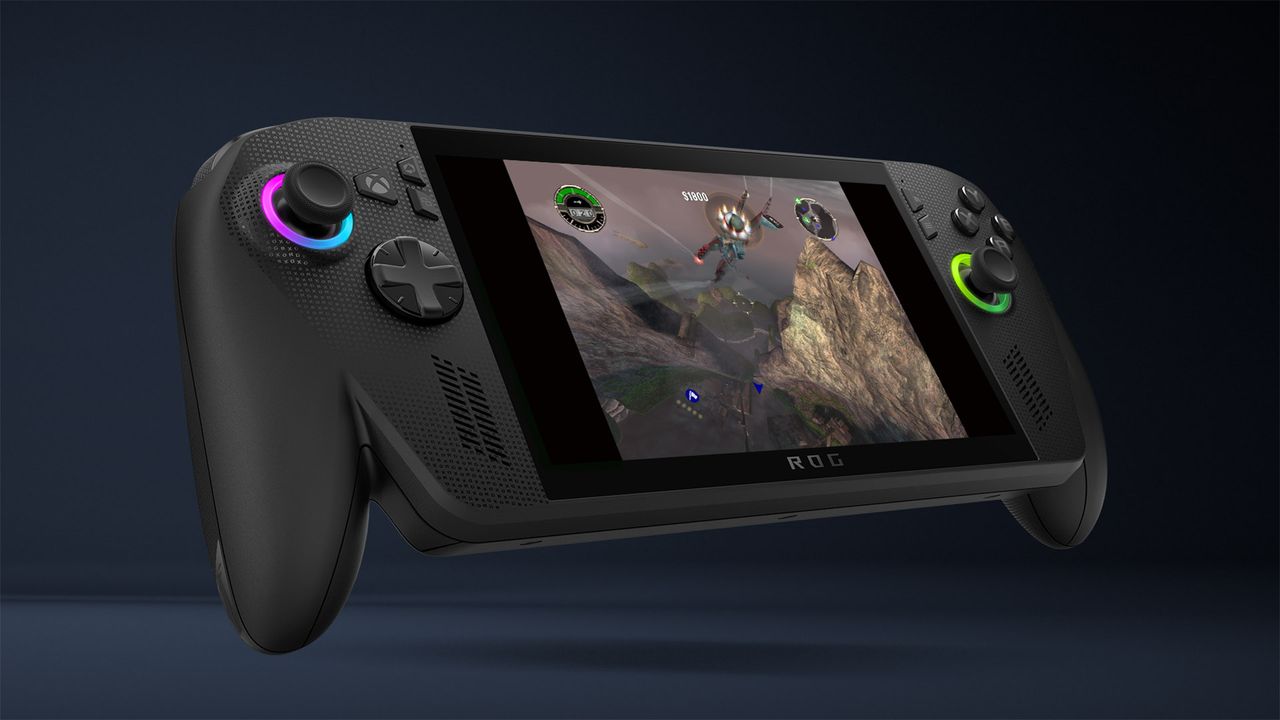
Xbox has announced a new Xbox Backward Compatibility for PC program, which will let gamers play a selection of classic Xbox titles on PCs and handhelds, a move the company says marks the beginning of a bigger push into Xbox game preservation. The announcement begins with four titles that can now be played on PCs and handhelds, including the ROG Xbox Ally and Ally X.

"This marks the beginning of a broader effort to preserve XBOX games from the past and bring them to PC over time," the company said in a blog post authored by Xbox "VP next generation" Jason Ronald. Alongside backward compatibility, the company says games will also include new features. The four titles in the announcement are:

You can now buy all of these games on PC, and they're also included in all Xbox Game Pass plans. Anyone who already owns these titles digitally on console can also now play them on PC or handheld, with support for Xbox Play Anywhere and Xbox Cloud Gaming. Crucially, this appears to be a digital-only preservation effort, so it won't help anyone who only owns physical copies of these games. Xbox has reportedly been testing a way to digitize physical games as far back as Xbox One, but that hasn't yet materialized yet.

Alongside the preserved original gameplay, Xbox claims these games will let users customize graphics settings, with up to 4x resolution scaling, VSync support, Fullscreen and Windowed modes, anisotropic filtering, and enhanced anti-aliasing, with more features to come in the future. Notably, Xbox will add achievements to select original Xbox games on console and PC.

Users who want to play these titles will need to meet the following system requirements:

Spec:

Minimum requirements

Recommended specs

GPU

Nvidia GTX 950 or AMD Radeon RX 550 or Intel UHD 770 or Intel Arc A310  

Radeon RX 68005 or Nvidia GTX 1070 Ti or Intel Arc A770 

CPU

Min 4 Cores Intel Core i3-8100 or AMD Ryzen 3 1200 or AMD Ryzen Z2 A Processor  

6 cores and 12 threads Intel Core i5-10400 or AMD Ryzen 5 3600 or AMD Ryzen AI Z2 Extreme 

RAM

8GB

8GB

DirectX

N/A

DirectX12 API, Hardware Feature Level 11 

OS

Windows 11   

Windows 11

Drivers

Latest Version as of January 2026 

Latest Version as of January 2026 

Microsoft's emphasis on preserving older games is particularly noteworthy given recent backlash against Sony over its decision to end physical games with its next console generation, and the shuttering of some of its online stores. While Xbox's digital emphasis on game preservation still can't match the solidarity of physical media preservation, the timing of this announcement seems like more than just a coincidence.

Assassin’s Creed Black Flag Resynced hits 3 million sales in first week

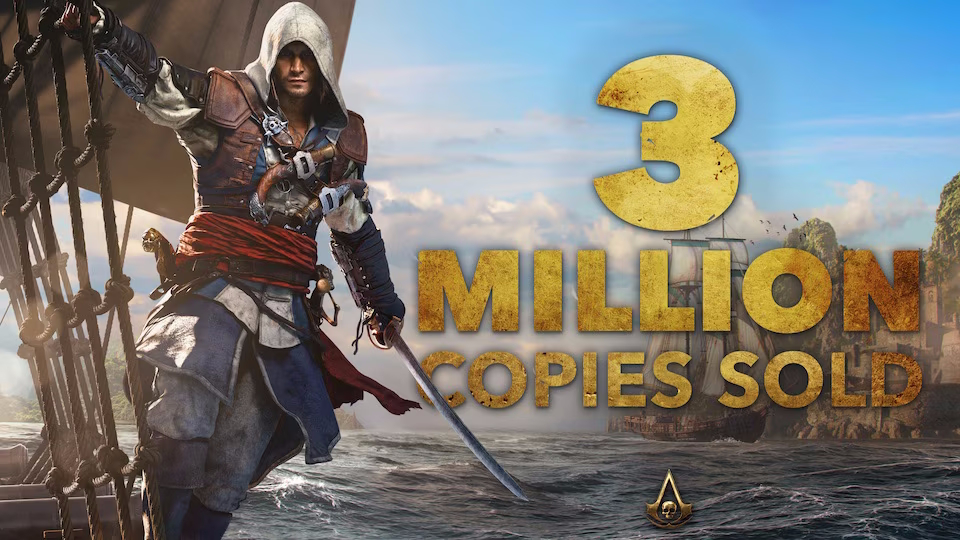
Ubisoft has announced that Assassin’s Creed Black Flag Resynced has surpassed 3 million copies sold during its first week of release. This follows a strong launch day that brought in 2 million sales for the remake, which arrived on July 9th.

According to the publisher, player reception has steadily improved following a series of post-launch updates. Steam user reviews now sit at a Very Positive rating, driven by ongoing quality-of-life improvements and bug fixes informed by player feedback. Ubisoft also confirmed that a highly requested New Game+ mode is currently in development for the title.

Rebuilt from the ground up by Ubisoft Singapore, the title is a complete remake of the 2013 original, using the latest version of the Anvil engine. Visuals have been completely overhauled alongside core gameplay systems. The update introduces parry-focused combat, upgraded stealth and parkour mechanics, expanded naval gameplay, and brand-new story content. Players step into the shoes of pirate captain Edward Kenway during the Golden Age of Piracy, navigating the historical conflict between the Assassins and Templars alongside real figures like Blackbeard, Anne Bonny, and Calico Jack.

The game is currently available on PlayStation 5, Xbox Series X|S, and PC via the Ubisoft Store, Epic Games Store, and Steam, where it is officially Steam Deck Verified. It is also accessible through the Ubisoft+ subscription service.

KitGuru Says: Overhauling a beloved classic like Black Flag seems to have paid off for Ubisoft, and the upcoming addition of a New Game+ mode should keep that player momentum going.

The post Assassin’s Creed Black Flag Resynced hits 3 million sales in first week first appeared on KitGuru.

GTA 3 and Vice City are now playable inside San Andreas — a mod lets you revisit Liberty City and Vice City without leaving San Andreas

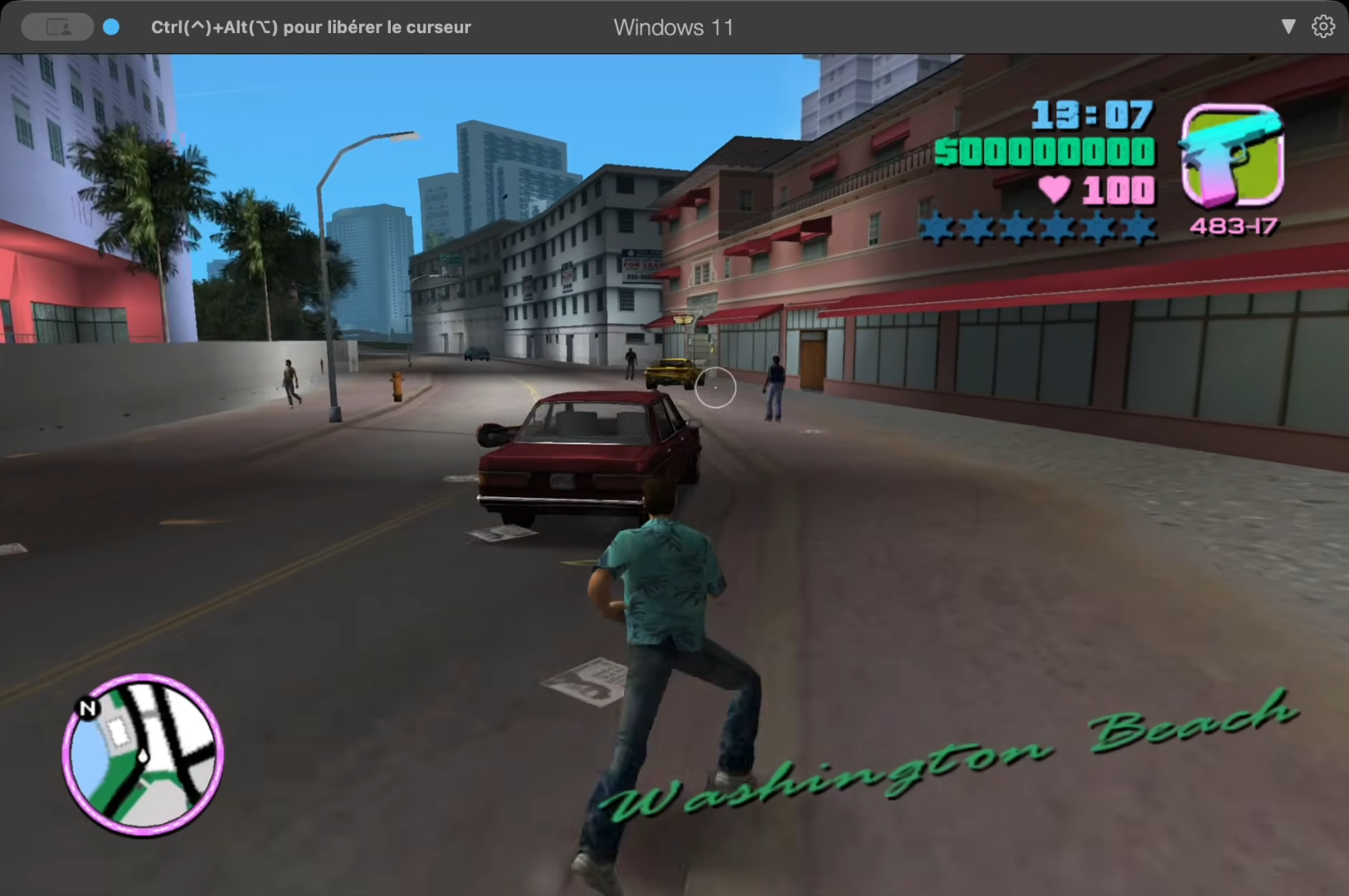
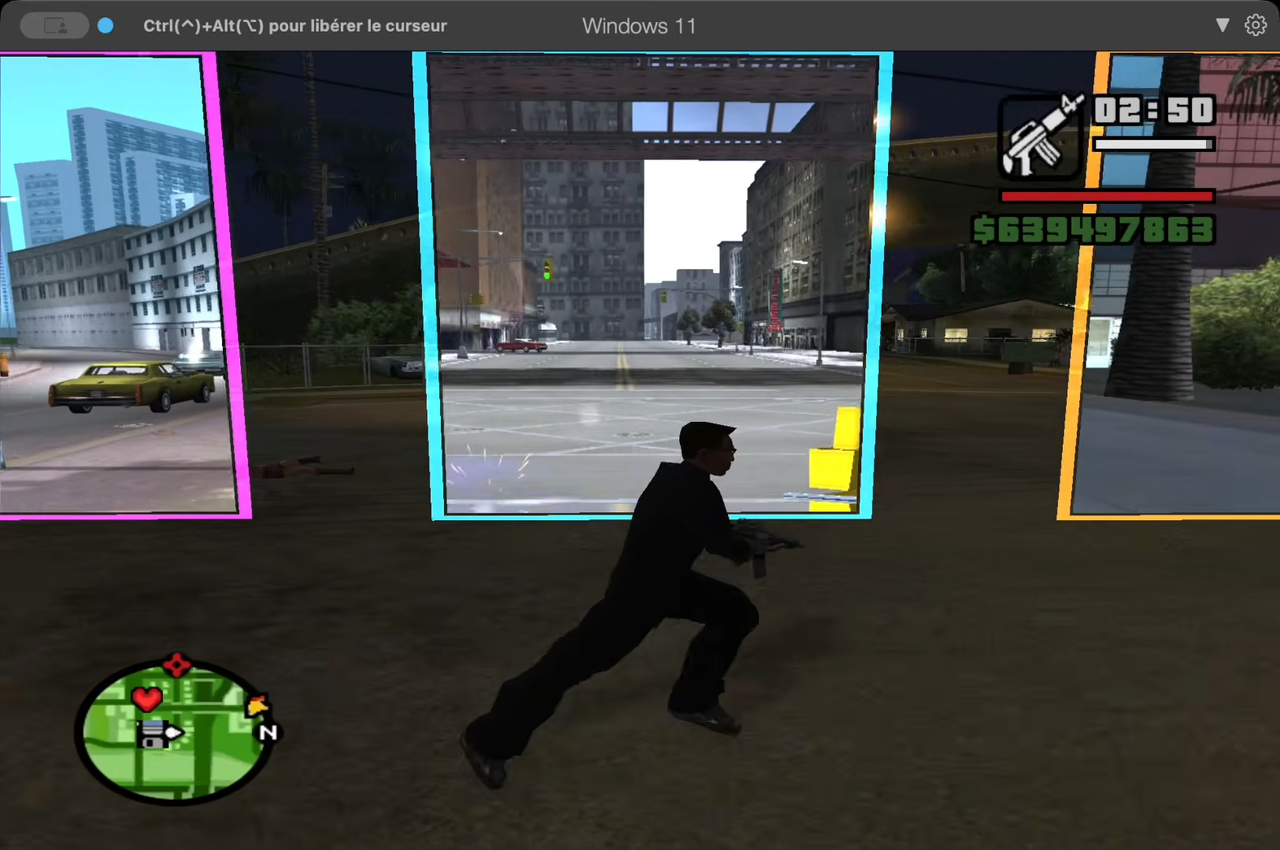
A Grand Theft Auto (GTA) modder has developed a mod that lets you run Grand Theft Auto III (GTA 3) and Grand Theft Auto: Vice City (GTA VC) as mini games right inside Grand Theft Auto: San Andreas (GTA SA). The modder, DryxioGTA, demonstrated the feat in a video posted on YouTube on Thursday, running the game on a Windows virtual machine on macOS.

In the video, GTA SA’s main character, CJ, can be seen stepping up to a TV, apparently inserted into the game by the mod. Once in front of the TV, the option to start either GTA VC or GTA 3 appears. The selected mini-game immediately starts running on the TV.

Gamers can switch between controlling the main GTA SA game or the mini game, using the F10 key. When controlling the mini-game — say, GTA 3, as in the video — players can play it as normal while the rest of the outer SA game continues to run, with characters roaming about. Similarly, switching control back to the outer SA game leaves the mini-game running on the TV.

Just a few hours after uploading a brief gameplay video, the modder released another video demonstrating an even more mind-blowing mod, this time running GTA Vice City inside GTA 3, inside GTA San Andreas!

As shown in the clip, the game starts with GTA SA, where players can walk up to a large screen to activate and start running GTA 3. Within GTA 3 — now running on the large screen inside San Andreas — gamers can drive to another specific screen and launch GTA VC. So you can be playing GTA SA, switch to a fully functional GTA 3 within SA, and then switch again to play Vice City right inside the GTA 3 sandbox, all while the other games are simultaneously running.

The remarkable mods are just one of thousands that developers have created since the game was first released on PC over 20 years ago in 2005. There are also several Mods for other GTA titles. Older GTA games have seen renewed interest as anticipation builds for GTA 6, which is scheduled to be released on consoles on November 19 after several postponements.

PC gamer turns Steam games into cartridges with ingenious 2.5-inch SSD system — games are stored on 128GB drives alongside a script to auto-start the title once plugged in

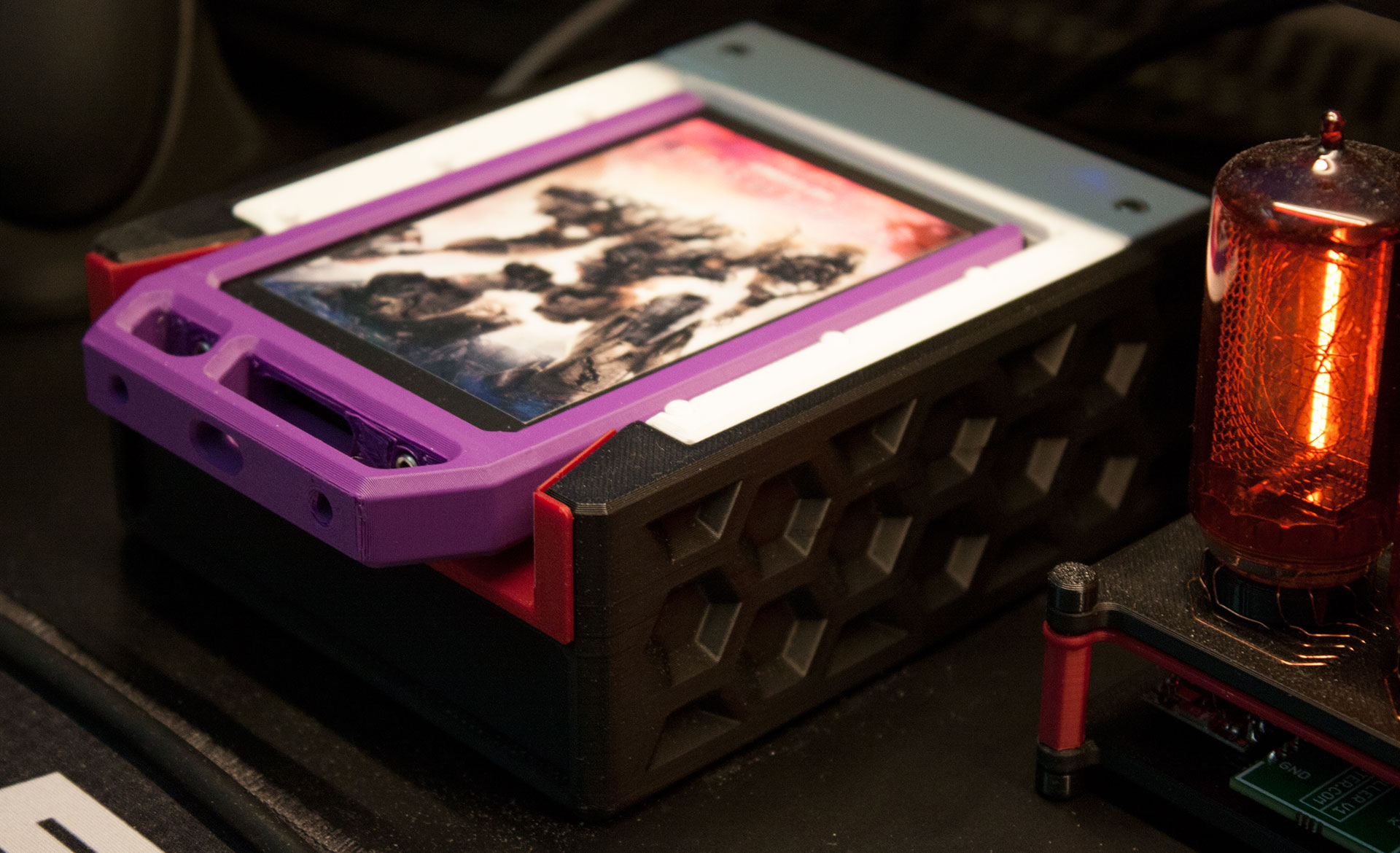
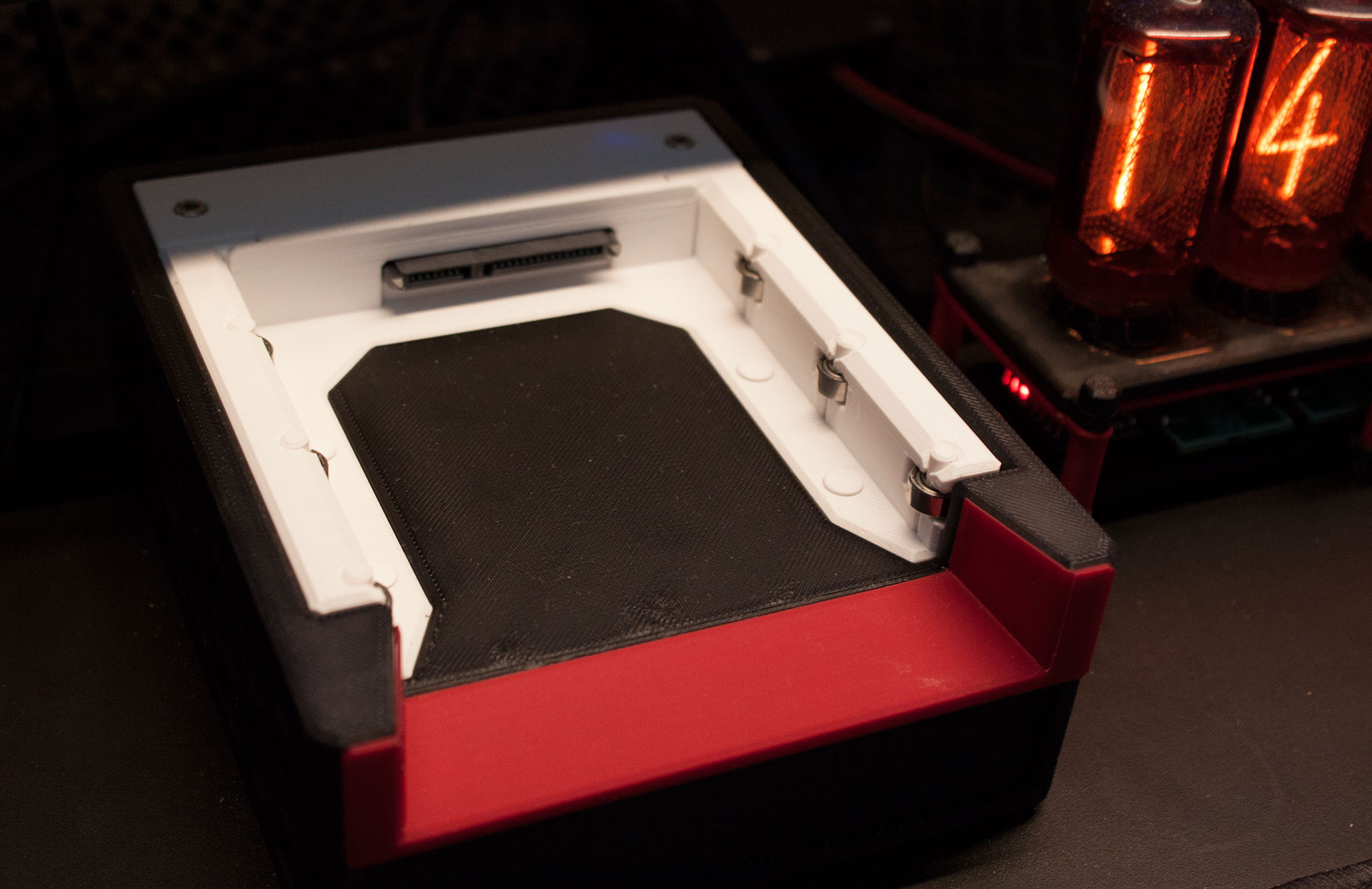
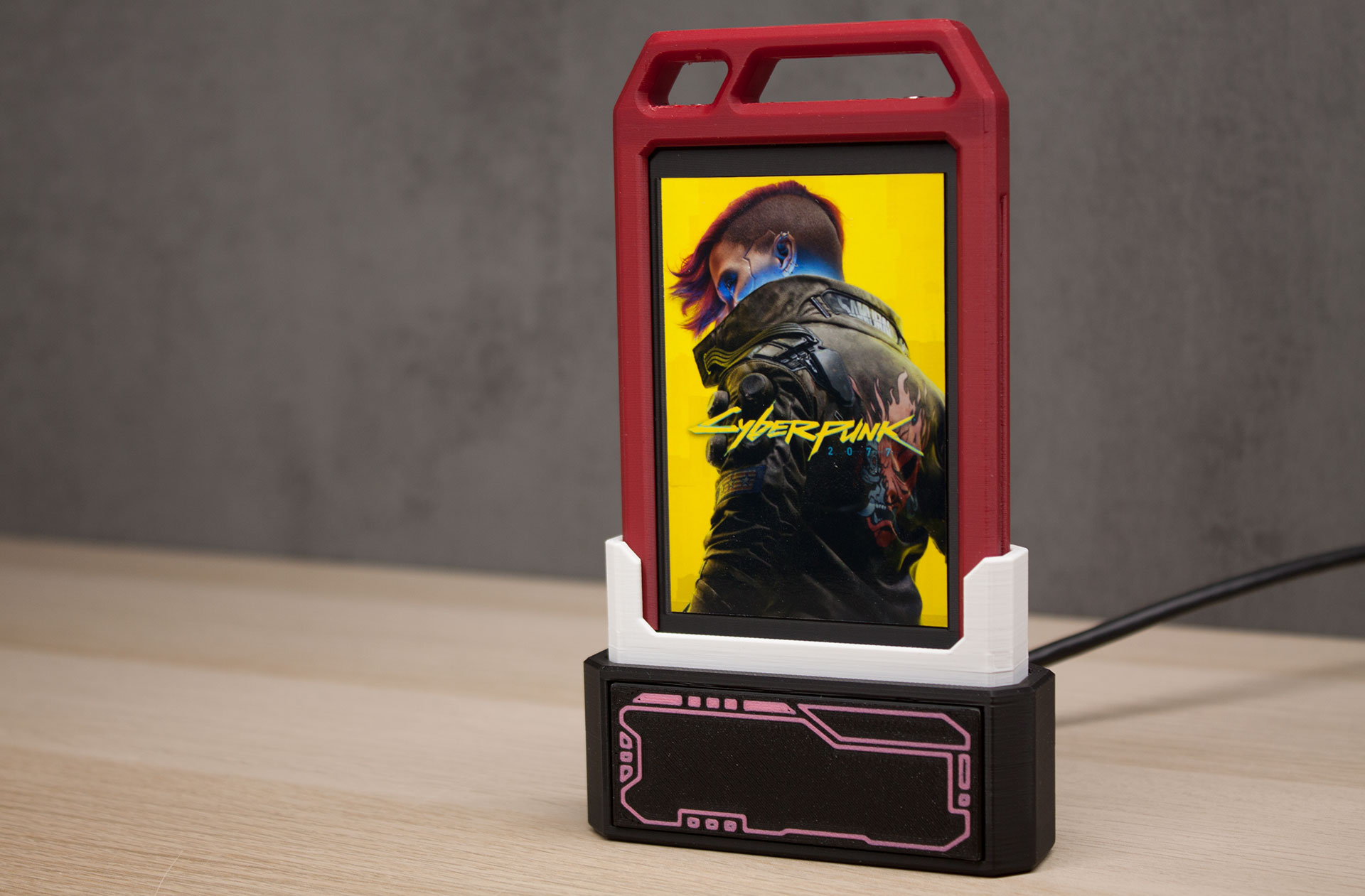
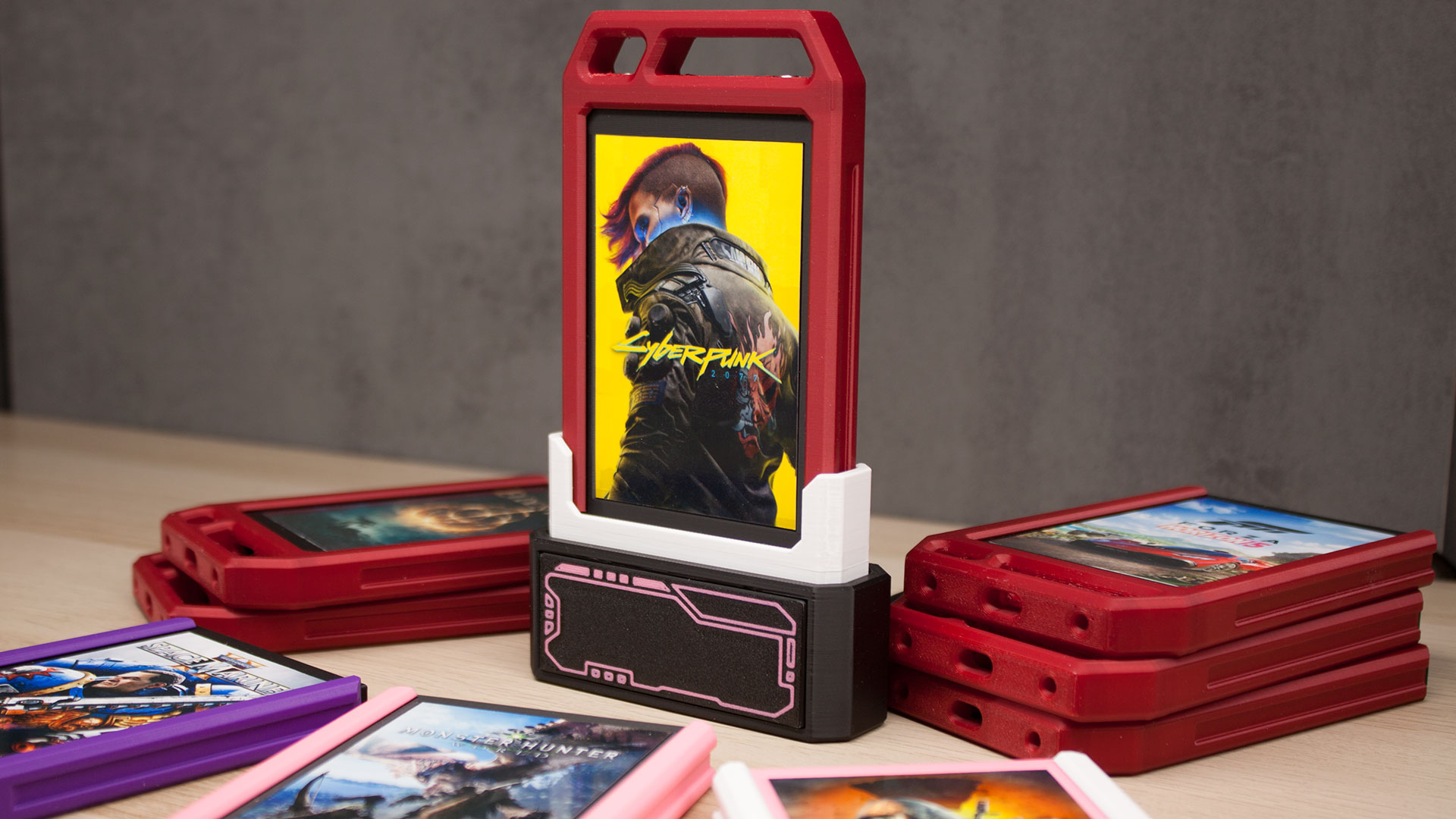
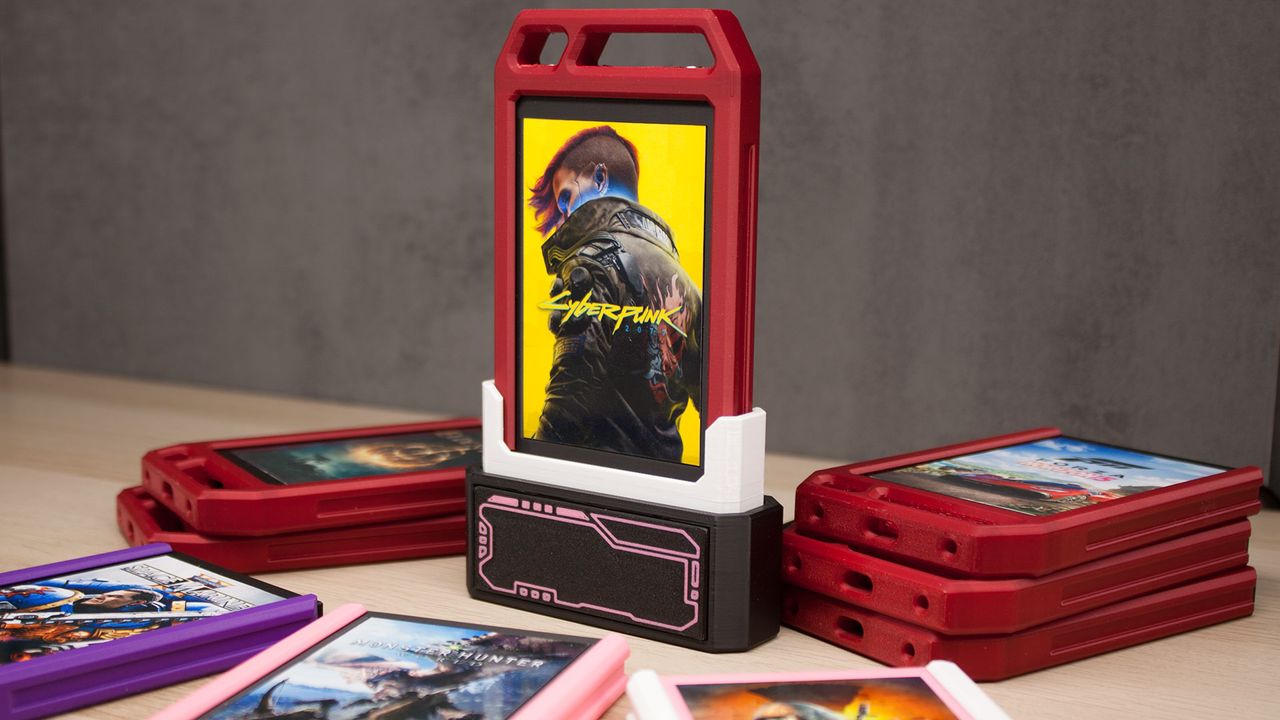
A PC gamer has created and demonstrated a handy Steam Game Cartridge system. Over on PCMR, Jibril-sama introduced the system, which blends the old-school console convenience of cartridges with Steam’s awesome and agreeably flexible games library. Ingeniously, it upcycles a bundle of old SATA SSDs into Steam-ready game cartridges using a disk mount detect and execute script on the software side and a SATA dock on the hardware side. Icing on this already tasty cake is provided by Jibril-sama’s colorfully encased and custom-labeled Steam Game Cartridges. Nice.

Steam Game Cartridges from r/pcmasterrace

“Got a couple of used 2.5" SSDs for cheap so I decided to make a Game Cartridge system,” the Redditor casually informs the PCMR masses in the post embedded above. “Games are actually on those SSDs with a script to auto-navigate Steam to the game's page. Auto-starting the game right away is also possible.”

Further comments by the OP explain that all the drives bought for this project were 128GB in capacity, and €7 a piece ($8). That’s not bad in the current RAM and NAND crunch, and keeps these files off your built-in primary storage. As many readers will know, PC game libraries can easily grow to hog a lot of storage.

We reached out to Jibril-sama for some more background info about how the Steam Game Cartridge system is designed to work with as little user friction as possible. They informed us that the system in the video runs Linux and Valve’s Steam URL Protocol is leveraged to navigate to the game's page or launch the game.

“All it needs is a systemd template to check for a script on the SSD and launch it. And a udev rule to trigger the system,” Jibril-sama told Tom’s Hardware. “So basically: Plug in SSD -> udev rule sees the event -> triggers the systemd daemon -> systemd daemon looks into the SSD and finds the script -> execute the script.”

Steam Cartridge Games system
PrincessMidori
Steam Cartridge Games system
cakehonolulu
Steam Cartridge Games system
cakehonolulu
Steam Cartridge Games system
cakehonolulu

Commenters on PCMR have overwhelmingly welcomed the Steam Game Cartridge future teased by this system. Some want to see the system extended to include GOG game libraries. Others query how the system handles the inevitable hefty multi-gigabyte updates that are pushed (even to older games) from time to time. Jibril-sama told Tom’s Hardware that they didn’t plan to deal with updates often, as they didn’t use cartridges for ‘live service’ titles, and they are mostly used for the “games that I want to replay once in a while.” If and when updates have been flagged, “I just let Steam handle the updates and wait a bit before I can play,” they added.

I’ve had repeated firsthand experience with Steam Games libraries being fussy when moving across different PCs, so stretching the library system this way could reveal cracks and wrinkles as more games are tested. We shall see.

Hopefully, fuller implementation guides, scripts, and resources to help others purchase or 3D print their own Steam Game Cartridge shells will be shared in due course.

Nvidia and Sega team up to deliver RTX Spark support for future games — partnership kicks off next year with upcoming Virtua Fighter Crossroads

Nvidia's RTX Spark platform arrives later this year, and the company is hard at work building the partner ecosystem around the GB10 Superchip to ensure that Windows and applications are ready for its agentic AI PC vision. As part of that groundwork, the two companies announced today that Sega will support the RTX Spark platform with its upcoming Virtua Fighter Crossroads, coming in 2027.

The two companies also committed to RTX Spark support for "future Sega titles,” meaning that we might see official support for other evergreen franchises like the Yakuza series, the Persona games, and the upcoming Alien: Isolation 2 and Total War: Warhammer.

Although the companies didn’t go into detail about exactly what full support for the RTX Spark means for Sega games, one would expect that the developer’s titles will be natively compiled for Windows on Arm instead of relying on the Prism x86 emulator for compatibility.

It also seems safe to expect that future Sega titles will incorporate DLSS technologies like upscaling and Multi Frame Generation in order to deliver the best possible experience on RTX Spark systems. Despite having GPU compute capabilities similar to those of a desktop RTX 5070 on paper, the unified memory architecture and relatively limited memory bandwidth of the GB10 Superchip behind the RTX Spark platform present challenges for gaming performance that are likely to make the incorporation of DLSS tech important for the best experience.

The relationship between Nvidia and Sega spans over 30 years, tracing its roots to the ultimately abandoned development of the GPU for the Dreamcast console. Despite its eventual decision to use an NEC-produced PowerVR GPU for that system, Sega offered Nvidia a $5 million lifeline that gave the company the runway that it needed to develop and deliver the Riva 128, its first DirectX-compatible GPU.

That investment proved to be historic, as Nvidia now has a market cap of over $5 trillion and is in the process of shifting the very foundations of computing through its Grace Blackwell and upcoming Vera Rubin AI platforms for the data center.

Whether the RTX Spark platform reshapes the PC when it arrives in the fall of this year remains to be seen. But if you’re a fan of Sega’s IP, this partnership means that you can at least look forward to a first-class experience with its games on RTX Spark systems.

League of Legends Classic launches for free on July 29th

Riot Games has fully unveiled League of Legends Classic, confirming it will launch for free on July 29th as part of Patch 26.15. The studio shared the details during the MSI 2026 Finals tournament, revealing that the throwback mode will be integrated directly into the existing Riot Client.

According to an official FAQ, the mode is a melting pot of classic features rather than a direct reset to version 1.0. Executive Producer Paul Bellezza explained that the concept originated during an internal “Thunderdome” hackathon where developers prototyped a setup based on Season 3 from 2012-2013. It's designed to serve as a “greatest hits” collection representing that specific era.

The experience will debut with the original 40 champions, along with 20 additional classic characters. Players can look forward to the return of old-school champion and rune selection, as well as the classic mastery system with its offense, defense, and utility skill trees.

This release follows a broader industry trend of throwback versions, seen in titles like World of Warcraft Classic and Fortnite OG. You'll be able to access League of Legends Classic inside the standard game client starting on July 29th.

KitGuru says: Throwback modes are proving incredibly popular for long-running live-service games. What other game do you think deserves a similar throwback mode?

The post League of Legends Classic launches for free on July 29th first appeared on KitGuru.

Valve rolls out SteamOS and Steam Machine verification system

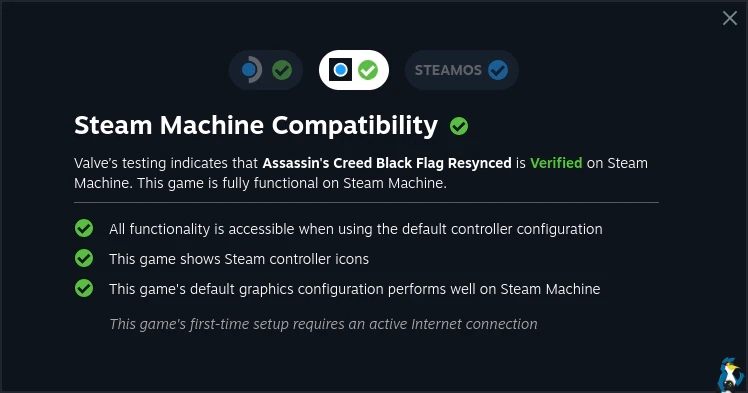
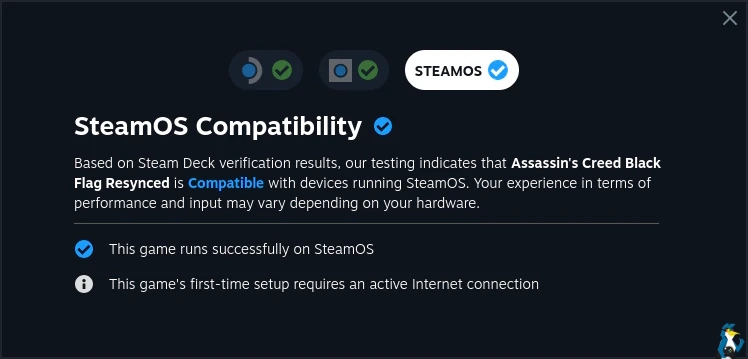
Valve has rolled out its official compatibility rating system for the Steam Machine and SteamOS, introducing a new user interface element within the Steam store.

Spotted by GamingOnLinux, this update is currently viewable on the Steam store and mobile app. Users can find the new ratings by visiting a game's Steam page, scrolling down to the “Steam Deck Compatibility” section, and clicking the “Learn more” button.

Image credit: GamingOnLinux

After pressing the button, an interface will pop up with three distinct tabs outlining specific requirements for the Steam Deck, Steam Machine, and SteamOS. The Steam Machine tab handles metrics for the Steam Machine Verified program, tracking performance and controller compatibility with default settings. Furthermore, the general SteamOS section indicates whether a game functions through the Proton compatibility layer or requires an active internet connection for initial setup and gameplay.

Hints of an upcoming “Steam Frame Verified” rating system have also appeared for certain titles, though Valve has not yet deployed a final store UI for it.

KItGuru says: Expanding the verification ecosystem to cover the Steam Machine ensures players know exactly how a game will perform before launching it.

The post Valve rolls out SteamOS and Steam Machine verification system first appeared on KitGuru.

Nvidia is joining the trading card trend with the Trading Cards Series 1 collection

Nvidia has announced its first series of GeForce Trading Cards, a free collection featuring 14 distinct designs celebrating major milestones in the company's PC gaming and graphics hardware history.

The Series 1 lineup features 14 card designs that highlight iconic GPUs, classic software tech demos, and notable games. Hardware milestones represented in the collection include the 1995 NV1 multimedia processor, the 1999 GeForce 256, and the programmable shader-capable GeForce 3. Later hardware generations, such as the GeForce 7800 GTX and the Pascal-based GeForce GTX 1080, also received dedicated cards alongside the limited-edition GeForce RTX 2080 Ti Cyberpunk 2077 Edition.

Nvidia is also highlighting its software history through cards featuring the classic Bubble, Chameleon, and Medusa tech demos. Long-running software partnerships from the “The Way It's Meant To Be Played” era are represented by Unreal Tournament 2004 and Borderlands. A checklist card completes the 14-piece set, helping collectors track their acquisitions.

Distribution of the physical cards will be handled through both digital and in-person channels. Fans can secure cards through Summer of RTX giveaways hosted on official GeForce social media channels. The company confirms it will also distribute the cards at its booths and partner booths during upcoming summer events, including Bilibili World 2026, QuakeCon 2026, and Gamescom 2026.

KitGuru says: It's a neat piece of nostalgia for long-time hardware collectors, though you'll have to be lucky to complete the collection.

The post Nvidia is joining the trading card trend with the Trading Cards Series 1 collection first appeared on KitGuru.

Steam sales reportedly topped $11 billion during H1 2026 due to shifting trends — staggering growth driven by influx of Chinese players and booming legacy catalogues

According to new research published by Alinea Analytics, Valve has grossed an estimated 11.1 billion dollars throughout the first half of 2026. If correct, the estimates would make it Valve's most profitable half-year on record, as digital storefronts become the norm throughout the games industry. Earlier this month, Sony announced that it would stop making new physical PlayStation discs by 2028, instead turning its efforts digital.

According to a Substack post from research firm Alinea Analytics, games sold on the platform accumulated $11.1 billion in revenue in the first six months of this year, which is a 14.5% jump compared to the first six months of 2025. Even more impressively, though, Steam's H1 2026 has posted 8% higher numbers than H2 2025, which includes the lucrative holiday season where most of the biggest sales happen. The store generated "only" $10.3 billion in revenue during the latter half of 2025.

Steam has been on a consistent incline for 10 years, boasting record revenue numbers almost every successive year. Even if it hits a slump, the data shows Valve has never had two bad years in a row; a recession is always followed by a boom. Alinea says five main factors contribute to the storefront's growth: a surge in Chinese players, higher prices, viral co-op hits, and smarter back-catalogue categories from big publishers.

The last one is rather ironic, as it involves third-party publishers quietly returning to Steam after their own launchers faltered. Some companies like Activision still inject their proprietary launchers between Steam and the game itself for titles like Call of Duty, but the situation has generally improved.

What display resolution do you use on your primary monitor?

Almost 10 years ago, in the first half of 2017, the platform made a little less than $2.5 billion, which means the H1 2026 revenue is 4.7 times higher, almost quintupling in a decade. Moreover, it's remarkable to believe that Steam also made more in the first six months of this year than it did in the entirety of 2020, when most of us were confined to our homes, free from responsibilities, and with a lot of time on our hands.

Alinea lists Forza Horizon 6, Resident Evil Requiem, and Crimson Desert as the top three games for Steam's explosive H1 2026 numbers — all of them made almost $200 million. Games from prior years also played a bigger role this time since 2026 releases only accounted for 21% of the $11.1 billion, while 27% of H1 2025's revenue came from 2025 launches; 29% of H1 2024's revenue was accumulated from 2024 releases.

Amidst all the data, a clear trend is forming. People are looking back in their libraries and appreciating older games more than ever before, while new releases still make an impact if they're universally acclaimed. With the highly anticipated GTA VI coming soon (with no current PC release date), it'll be interesting to see how these numbers change. Now, if only Valve could make more Steam Machines to play all those older games everyone seems to be playing.

Cracked version of Assassin’s Creed Black Flag Resynced leaked days prior to official release despite Denuvo DRM protection — Denuvo unable to stop crackers, with some finding ways to completely remove it from other titles

Game anti-tamper app Denuvo has been completely bypassed in pre-release versions of Assassin’s Creed Black Flag Resynced, allowing pirates to distribute copies of the game days before its official release. A cracked version of the remake has been circulating since June 7 — more than a month before its July 9, 2026, release date. While the game is a remake of the original Assassin’s Creed Black Flag, which launched way back in 2013, it’s still expected to offer new content and enhanced graphics brought by newer, more capable hardware.

This isn’t the first major title to be hit by a leak before its official release day this year. Forza Horizon 6 leaked four days before early access and more than a week before its general launch date of May 19. LEGO Batman: Legacy of the Dark Knight and Subnautica 2 also suffered similar leaks, with playable versions of the games circulating online even before early access was opened to players. While Forza Horizon 6 and Subnautica 2 aren’t protected by Denuvo, LEGO Batman: Legacy of the Dark Knight and Assassin’s Creed Black Flag Resynced use the controversial anti-tamper DRM tool.

Denuvo has been in hot water among gamers, especially as it was blamed for performance issues plaguing games that used it. Aside from that, many consider its mandatory 14-day online checks as intrusive, especially for story-driven single-player games where cheating won’t affect the gaming experience of other players. While a few users might’ve understood the studios’ need to protect their titles and reduce piracy, the fact that Denuvo has been cracked in all single-player games that had it felt like its addition to games is pointless.

This is especially true now that we’re seeing pirated pre-release versions of games that are supposedly protected by Denuvo. While it’s unclear how Assassin’s Creed Black Flag Resynced leaked, the fact that the app that reduces performance and reminds gamers that they don’t own the games they buy has seemingly failed at its one job is making users think that it’s unnecessary.

Game studios need to protect their intellectual property, which is why it’s understandable that they’d want to deploy tools like Denuvo. However, they shouldn't do so at the expense of gaming performance and the user experience, which are some of the primary reasons why gamers are pushing back against Denuvo. If these anti-piracy measures don’t punish legitimate players with reduced FPS and always-online requirements, among other negative side effects, then most gamers will have zero problems with using apps that protect the makers of their favorite titles.

Modding tool 'DLSS Swapper' might infect your PC with malware if you download the wrong files — App creator warns against using random, user-submitted DLLs

DLSS Swapper is an open-source app that does exactly what it sounds like — it swaps out the appropriate DLSS files for any game, helping downgrade or upgrade its native DLSS version. While the tool itself is safe, along with the verified files it hosts, users can also upload their own DLLs to the app's GitHub repo. Unfortunately, it seems like some of these files can contain malware, disguised as helpful solutions.

WARNING: There are people uploading DLLs into the DLSS Swapper / Manifest Builder repositories with comments like "this fixed it for me".DO NOT download these files, they are likely malware.July 8, 2026

To understand how this can even happen, we need to look at the way DLSS Swapper is set up. The app uses a manifest file to dig out DLLs from verified DLSS, FSR, and XeSS libraries. The verification process is thorough, and you won't see any file pop up in-app until its security hashes match official sources. However, it can also detect unknown files from new game releases installed on a user's computer.

These files are automatically uploaded to the repository as "issues," and the app also includes an option to upload your own DLL to help out fellow gamers. As you can probably guess by now, this is where the problem lies. These files are not vetted and remain in a grey area. DLL files are basically executable code, so if any of them were modified to include malware, you wouldn't even be able to detect it before it's too late.

The file would've already executed malicious code and installed a crypto-miner, for instance, in the background that hogs your PC's resources until you finally notice something's off. As such, the creator issues a clear warning to not download random files that show up on the GitHub repo, especially if they include comments that claim some sort of miracle cure. Stick to only the sources you trust if you must go outside of the officially supported libraries.

Previously, the developer already warned against the fake DLSS Swapper website posing as the real thing. Let this serve as your reminder that the app's GitHub page is the only place you should download DLSS Swapper from. Moreover, keep in mind that hardware support is just as important as software support, so if you have an older GPU that doesn't support the latest upscaling tech, a DLL swap cannot magically fix that.

You can now use your Sony headphones as a free real-time head tracker for race and flight simulators on PC, several hundred games already supported — enthusiast creates open-source app that translates live sensor data into in-game camera controls

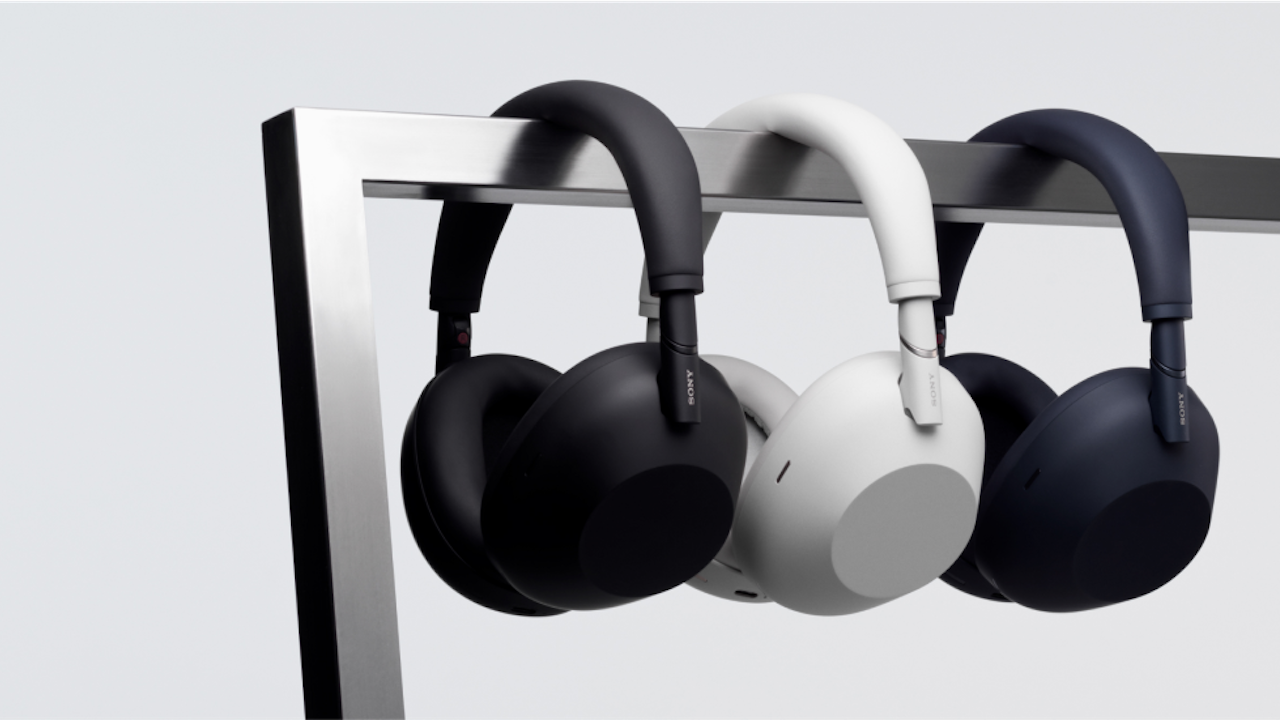
Sony makes some of the best headphones on the market, and some of their recent models even include a myriad of sensors for spatial audio. These are standard gyroscopes and accelerometers capable of precise tracking, so why keep them limited to just audio features? That's exactly what developer Nicholas Slattery has done with his new project called "Sony Head Tracker" — it's an app that turns your Sony headphones and earbuds into a real-time head tracker for PC games.

I made Sony headphones work as a free head tracker for 200+ PC games from r/pcmasterrace

The app essentially acts as a bridge between the hardware and the software, which is OpenTrack. Sony baked the Android Head Tracker protocol into its headphones' firmware, which is what enabled spatial audio to expand the soundstage on supported devices. This data is ignored by Windows, but Slattery figured out a way to tap into the protocol and read everything it's capturing.

That includes rotation vectors, gyroscope fields, and Euler Angles (live calculation of yaw, pitch, and roll). The raw data packets are then packaged into a UDP stream that the OpenTrack software can read and understand. OpenTrack supports over 200 PC games and usually works with phones, webcams, and specialized eye or IR trackers, but Slattery's app opens it to an entirely new and ingenious set of devices.

Currently, Sony's WH/WF-1000XM6, WH/WF-1000XM5, and Sony ULT WEAR (WH-ULT900N) are officially compatible. Older models like the WH-1000XM4 or XM3 won't work because they lack the hardware (sensors) required for the head tracking. Apple's AirPods, which popularized Spatial Audio, use the company's proprietary protocol that doesn't open itself up on any device, as you'd expect, so they're also ruled out.

Once everything is set up, you just wear your Sony headphones and the in-camera will respond to your head movements, turning around with you. If you look to the side or glance up, the camera will peep there as well, as if you were wearing a VR headset. But keep in mind that this is not a VR replacement as the screen in front of you is still stationary. Regardless, this unlocks another level of immersion for race and flight sims.

The creator has tested the app to work flawlessly with Microsoft Flight Simulator, Elite Dangerous, and Assetto Corsa already. For those of us not rocking elaborate multi-monitor configs, something like this can serve as a middle ground between a true 6DoF setup and a simple helmet cam in-game, all for free. Sony Head Tracker is also open-source, so we only expect it to improve over time and expand its compatibility.

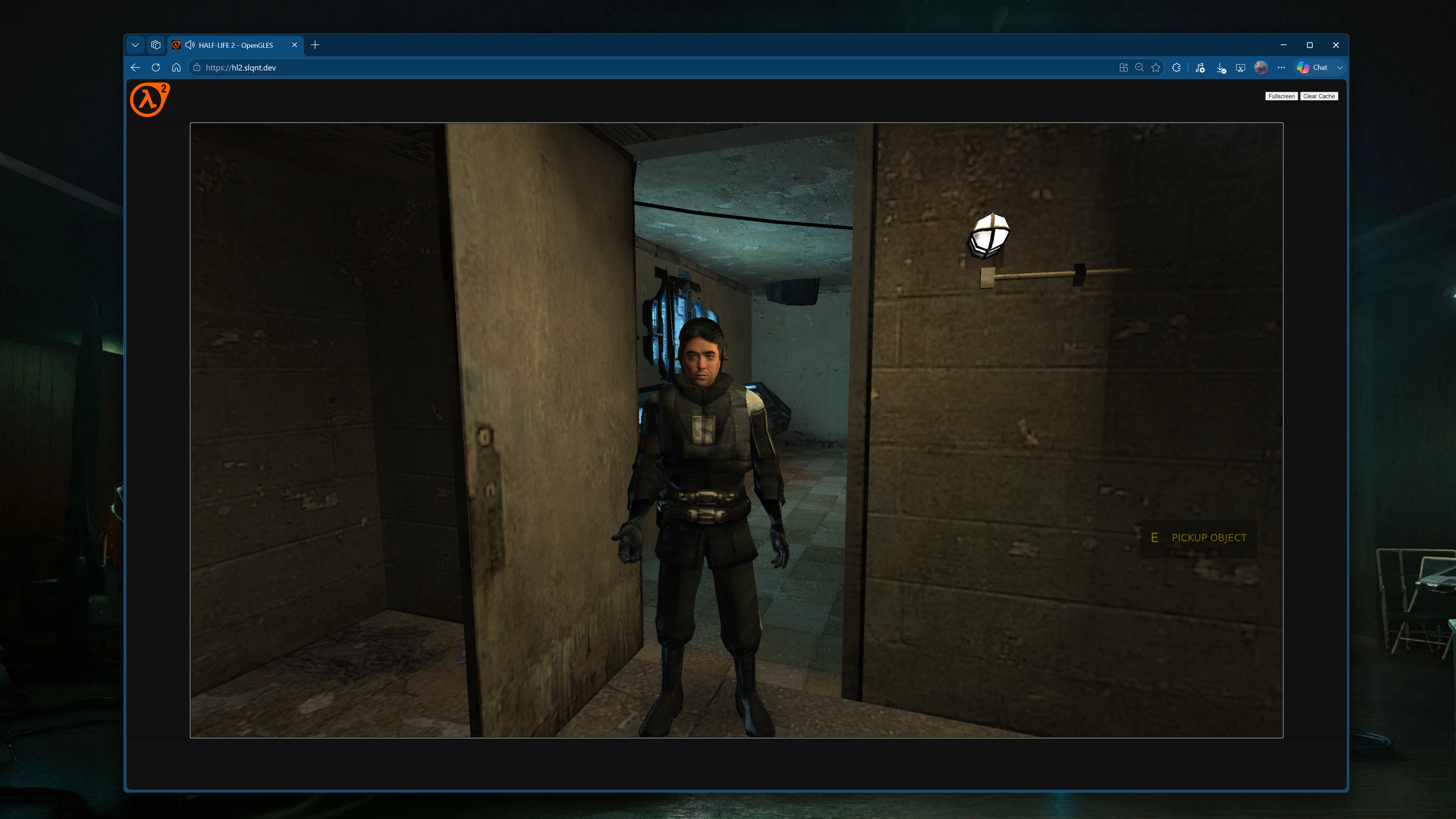
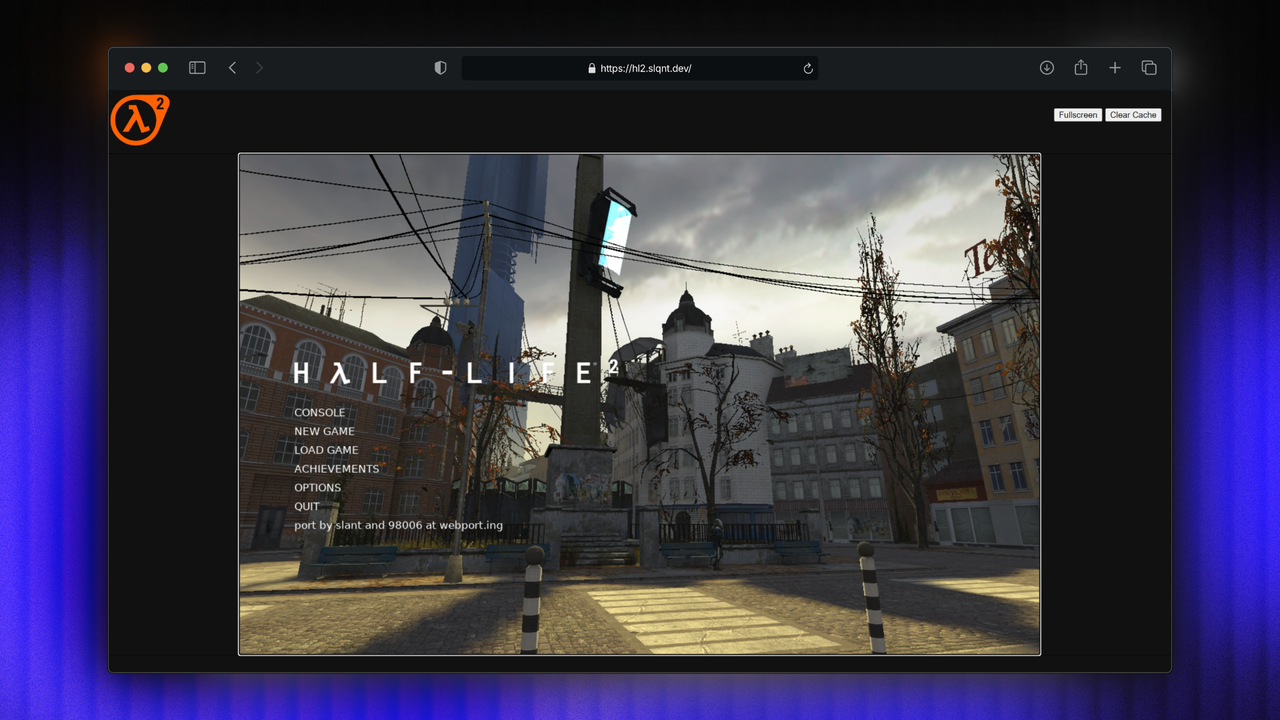
You can now play Half-Life 2 right inside your browser at over 100 FPS with save states & console support — Ingenious port recreates the entire game campaign using WebGL 2

Over the years, our internet-surfing machines have evolved to the point that it's now possible to run entire full-length PC games right inside a browser. The latest milestone in this impressive trajectory is a new, unofficial port of Half-Life 2 developed by Slqnt and 98006. It's the complete main campaign of the game, including the two episodic DLCs, accompanied by a host of features that you find on the official release.

A fully playable browser version of Half-Life 2 has just been released to the public. You don't need to download anything, just open the site and play! The webport was created by Slqnt and 98006 in just three months! pic.twitter.com/x88rMgWhxdJune 25, 2026

The game is, in fact, running natively on your computer; there's no cloud streaming involved. Under the hood, the port is powered by WebGL 2, a JavaScript API that bypasses the browser's typical layout engine and talks directly to your GPU to execute graphics-intensive tasks. Then, WebAssembly helps translate C++ code from the Source Engine into JavaScript that the browser can natively understand.

For storage, the port relies on a virtual file system that calls compressed assets via high-speed web requests. You just need to let the cache build up upon first boot for a few minutes, then you're off to the races. The same method creates .sav files directly in the browser's cache or IndexedDB, which allows you to pick up where you left off, just as if you had actually installed the game on your computer natively.

This port also features the Source console integration, enabling you to pull up a fully functioning developer terminal that can accept classic commands. You can type in cheats to give yourself a gameplay boost or tweak the engine variables as per your liking. While you don't get Steam achievements here (understandably), the game's built-in achievements are still present and accessible through the menus.

We tried the game on three different devices: a Windows PC with a Ryzen 7 7700X and RX 6700 XT, a OnePlus 12 smartphone, and a modded Nintendo Switch running Android. As you'd expect, the computer ran it the best and without any hiccups. Since this is a very old, non-demanding game, we were able to max out all the settings and play in full screen while achieving over 100 FPS. Frankly, it looked beautiful.

Half-Life 2 unofficial browser port

(Image credit: Future)

The mobile experience didn't work for us, but other users have reported it performing well, so your mileage may vary. Some bugs, however, remain persistent on the ideal desktop experience as well, with many users pointing out a rather hilarious "zombie" glitch where characters' heads render improperly, leaving their eye sockets vacant like a zombie. Certain complex animations also fail to trigger during intense cutscenes.

Overall, this is one impressive project, but it remains unofficial, and that means it's subject to a DMCA takedown from Valve. The port is basically at the company's mercy at this point, but Valve is generally community-friendly when it comes to stuff like this. It took Slqnt and 98006 just three months to develop, and the fact that it has survived roughly two weeks on the internet means it might have precedent to stay.

It's also not the only port of its stature, you can play thousands of old games for free on DOS Zone, including GTA Vice City, and Quake III is also available as a standalone browser project. Copyrighted IP is the only hurdle for retro revivals like these since the talent from the developers, and the grunt from the hardware, is otherwise abundant. If Valve doesn't make Half-Life 3, the fans might as well milk the original games as much as possible

Fill your Steam library without spending a single dime — scratch your shopping itch with the Steam Summer Sale Simulator

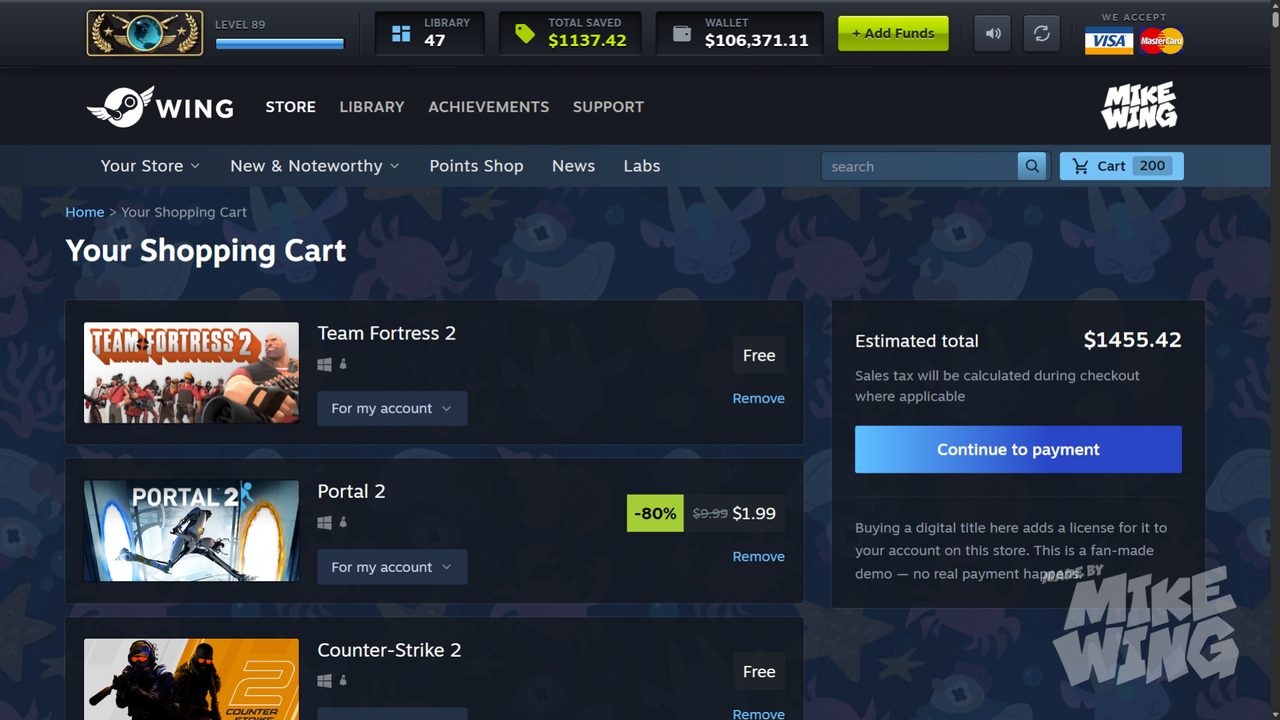
Buying and collecting games on your Steam account can be quite fun, and some people have taken this to the extreme, with the most expensive Steam library worth nearly $750,000 at current prices. Unfortunately, most of us do not have that kind of money to burn on digital games, which is why programmer and web developer Mike Wang built the Steam Summer Sale simulator. This website looks just like the Steam website, and you even have to “log in” with whatever Steam account name you want to make up. Once inside the page, you’ll find $100 in your wallet, and you can just add any game to the cart and check it out.

If you run out of cash, the wallet will automatically refill to $500, meaning you essentially have an unlimited amount of money to splurge on games. You can also click the + Add Funds button as many times as you want to see your wallet grow to millions of dollars. The website makes cute sounds every time you click the Add to Cart button, making it more inviting to keep adding games. And once you’re satisfied (or tired) from all the clicking, head on to the cart and click Continue to payment to see all the games get magically added to your library one by one with matching sound effects that make it feel like you won the jackpot.

im addicted to buying digital games on steamand the summer sale is not helpingso i made a website that gives me the same dopamine of buying games without spending actual money pic.twitter.com/PHxT75VpusJuly 3, 2026

Aside from getting the dopamine hit of adding games to your library, there’s also a list of 30 achievements you can hit. You may think these are easy, especially since you’re just essentially adding games to the cart and checking them out, but a couple of them require some dedication. One is the Exact Change achievement, which requires you to zero out your wallet. Since it automatically refills if a game’s “cost” is more than your balance, you have to crunch some numbers to make sure that your cart has the same amount as your wallet. The other one requires you to buy every game on the simulator website, which means a lot of clicking.

While the website might look convincing and have a ton of listed titles, it unfortunately does not have every game available on the Steam store. For example, it’s missing the $999 Steam Game that lasts for just 10 minutes.

The Steam Summer Sale simulator may feel like a nonsensical project, similar to the fake food delivery apps that are growing in popularity in South Korea. However, its creator said that they built it to get the dopamine hit of “buying” games on Steam without actually spending money. It’s also quite entertaining, especially with its sound effects and achievements, and I found myself spending several minutes on the website just trying to hit that Exact Change achievement, which is actually quite hard!

50-feet-long fiber optic HDMI cable and Steam Controller 2 is enthusiasts' answer to the Steam Machine — dismisses Valve's new console for a DIY Bazzite setup with a controller

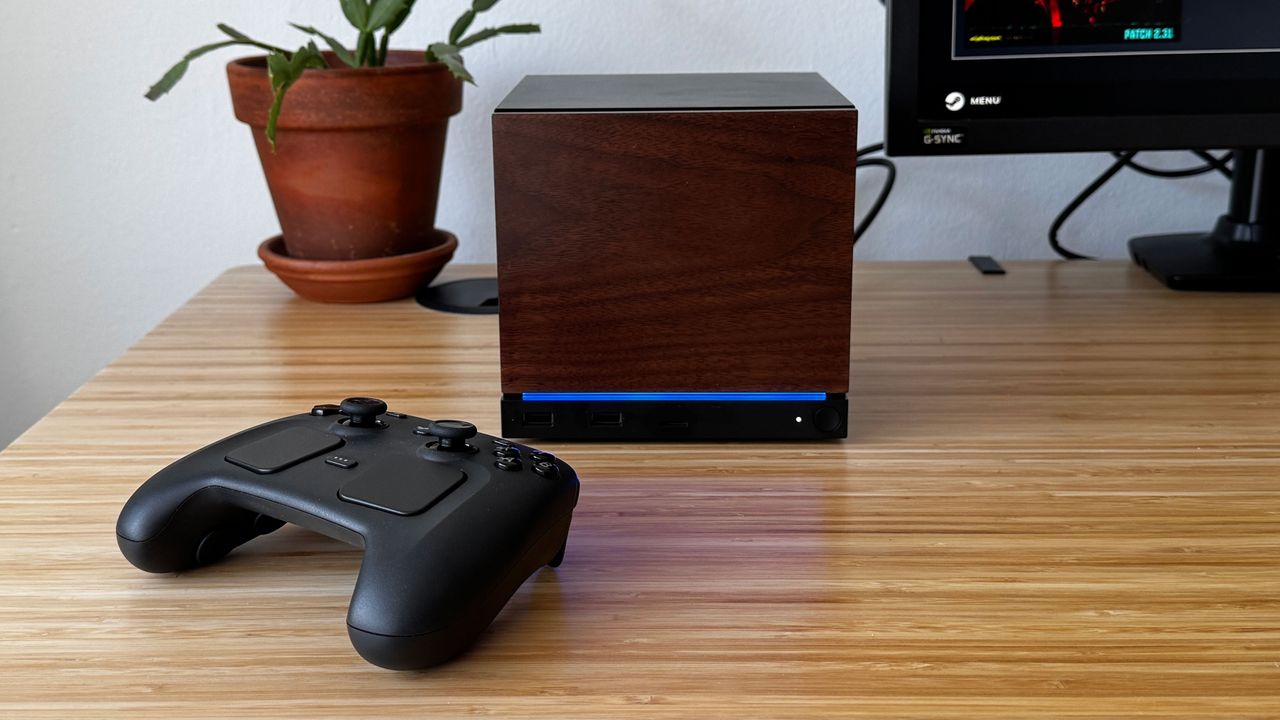
Perhaps the real Steam Machine was the friends we made along the way... is what enthusiast Matthew Brunelle might've said after realizing he already had one at home. Instead of buying Valve's new console for a frictionless experience, Matthew decided to turn his existing PC into the perfect couch-gaming setup, made possible by a really long HDMI cable, a Steam Controller 2, and, of course, Bazzite.

For the expectedly tech-savvy audience reading this, you might already be making fun of this dude for discovering cables, but hold on a second. Matthew's computer sits in his own room, where it serves as a desktop for work, while his TV sits in the living room. The easiest way to bridge that gap is actually wirelessly, streaming the games over Moonlight or Sunshine, or even Steam's native remote play functionality.

There will be a noticeable latency penalty with this setup that may or may not bother you depending on what you're playing. Moreover, you're just mirroring your PC's screen this way; it's not actually a console-like experience where the device wakes up and goes to sleep seamlessly. Not to mention, Matthew is running NixOS, so he has to manually hook up the cable and change the sound and display outputs each time.

In comes Bazzite — Matthew installed the Linux-based OS on a third SSD and plopped it into his computer. Inside, in Steam's "Big Picture" mode, Bazzite automatically handles outputs upon rebooting, switching to the correct display, which is his TV, and remembers to use the HDMI out for sound. This still wasn't enough, however, until two more things came along.

First is the 50-foot-long fiber-optic HDMI 2.1 cable that can carry the signal over long distances without degradation or latency. It costs $75 and sits there, running along the molding of the house. On the other end, it plugs into a TCL Roku TV that's limited to 60 Hz, but Matthew plans to upgrade to an LG C5 OLED really soon, which should help saturate that cable's bandwidth, especially now that HDMI 2.1 officially supports AMD GPUs on Linux.

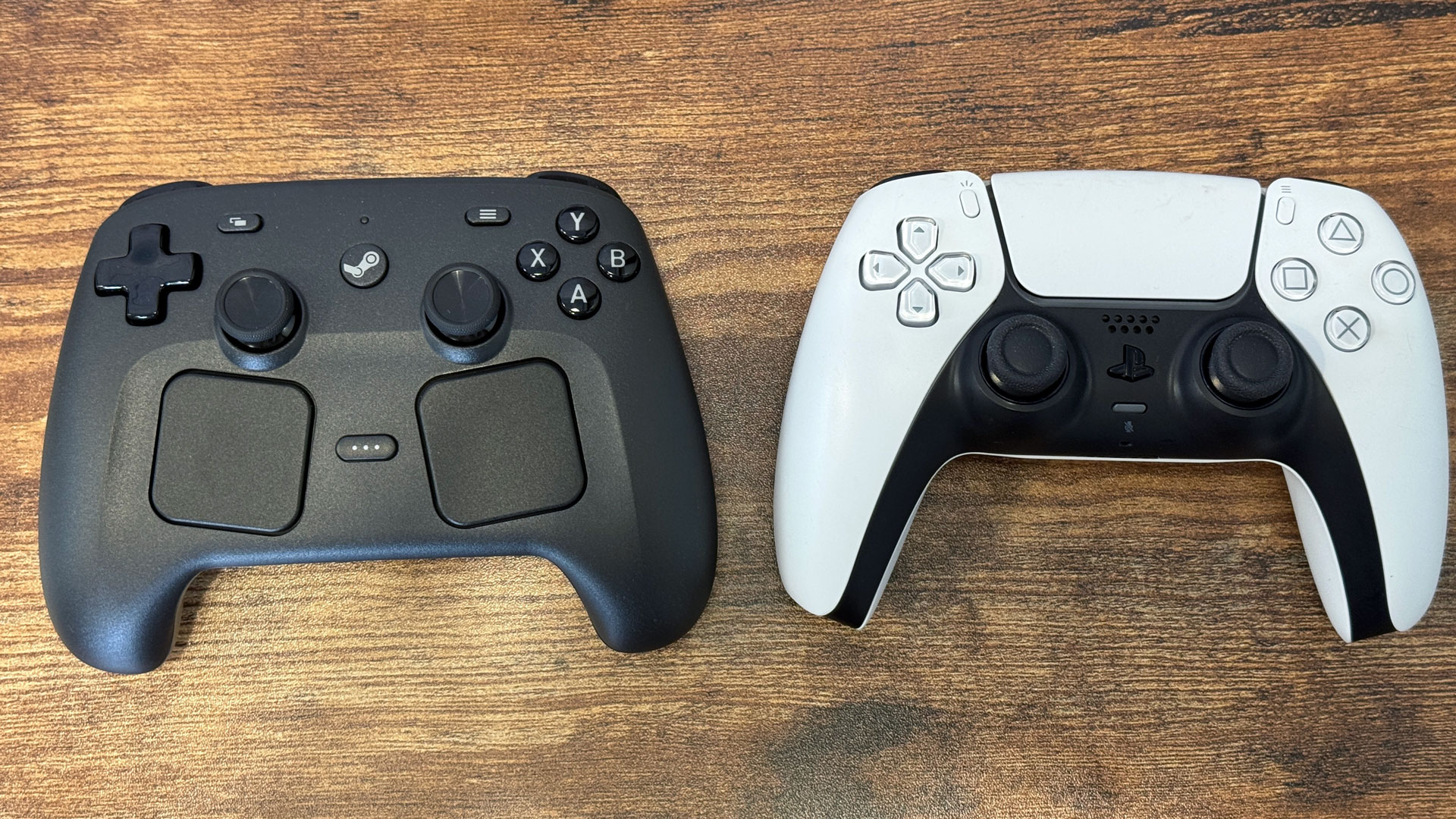
The last piece of the puzzle is the new Steam Controller, which ticks all the boxes for our resident MacGyver. It features symmetrical sticks, large touchpads, back buttons, and excellent compatibility with Steam and Linux. Matthew even mentioned that the DualSense was already good enough for him in this regard, but the Steam Controller 2 is even more comfortable and more reliable, since it doesn't drop the connection at all.

Valve Steam Controller

(Image credit: Tom's Hardware)

With everything in place, here's how the setup works. Matthew still has to boot his PC and select Bazzite in the boot menu. From that point, Bazzite automatically outputs to his TV in the living room and uses the living room speakers for sound. When Matthew is done with a session, he puts the system to sleep, and it wakes back up right where he left it. Sleep states on Linux-based gaming distros feel just like a console.

When it's time for work, he restarts his PC and boots back into NixOS, but Matthew finds himself leaving his computer in Bazzite more and more since it's so seamless. He even suggests switching to Bazzite's built-in desktop mode for work if he can't find a convenient solution to the dual-boot dilemma. Speaking of which, the blog post mentions that he is trying to set up hibernate-to-disk on Bazzite.

If he gets that working, Matthew could save his exact game state, reboot into NixOS to do desktop work, and then reboot back into Bazzite later right where he left off. There's still a manual element, but the transition becomes much more seamless as everything within Bazzite no longer needs to be shut down. Matthew still recommends the Steam Machine for an out-of-the-box experience similar to his, but for him, "a 50ft HDMI cable will do."

Open-source ZLUDA v6 brings PhysX performance boost to AMD Radeon GPUs

The open-source ZLUDA v6 library has introduced support for Nvidia's 32-bit PhysX CUDA ecosystem on non-Nvidia hardware, delivering a significant performance increase for AMD Radeon GPUs running legacy PhysX titles.

According to the project's latest blog post (via Wccftech), the update allows graphics cards without built-in PhysX functionality to process 32-bit PhysX effects natively. Testing ZLUDA v6 in Mafia II on an AMD Radeon platform showed a performance increase from 26.2FPS to 80.2FPS when using the library. This integration also restores complex visual effects, such as debris and flames, on unsupported hardware. Those who want to try it out can check the project's GitHub and the Quickstart guide.

The developer notes that the tool is currently experiencing a halt in commercial support, meaning future development will proceed at a slower pace as a weekend project. Current optimisation limits mean users may encounter glitches in fluid simulation and difficulty loading the software into Steam games. However, the roadmap shows developers aim to fine-tune Windows support, improve ROCm library error reporting, and deliver better machine learning capabilities alongside newly added texture support.

For those who weren't in the PC gaming space at the time, PhysX was Nvidia's old solution to bringing better physics to games, including more detailed debris, cloth, particles and more. Nowadays, PhysX has been largely replaced in new games by updated game engine tools, like Chaos in Unreal Engine, or the widely used Havok physics engine.

KitGuru says: Seeing community projects like ZLUDA breathe new life into legacy proprietary features on competing hardware is impressive, even if development is slowing down.

The post Open-source ZLUDA v6 brings PhysX performance boost to AMD Radeon GPUs first appeared on KitGuru.

Private and community servers for Minecraft and COD are illegal and amount to piracy, ESA tells California Senate — Stop Killing Games-backed bill fails to pass committee

The Entertainment Software Association has told a California Senate committee that private and community servers are illegal and amount to piracy, which would be news to anyone who has downloaded Minecraft's server files from the official website. The ESA gave its opinion while opposing AB 1921, the state’s “Stop Killing Games”-backed preservation bill, with ESA vice president of state government affairs Jennifer Gibbons making the claim about software that publishers provide themselves, since Mojang offers a Minecraft server for free download on its own site. The bill then failed the committee by four votes to three with four abstentions, though it was granted reconsideration.

AB 1921, the Protect Our Games Act, would require publishers of server-dependent games to give players 60 days’ notice before shutting one down, then provide a playable version, a patch, or a refund. Assemblymember Chris Ward, who authored the bill, raised community servers during the hearing as one way to keep games running after support ends. The California Assembly passed it 43 to 16 in May before it moved to the Senate. Gibbons said the ESA considers such servers “piracy,” and argued that community servers are not affiliated with the publisher and don’t uphold the same trust and safety standards.

Mojang publishes a dedicated Minecraft server as a Java file and documents how to run it, while Valve distributes SteamCMD and dedicated-server tools for hundreds of titles, letting players run their own match servers on their own systems. Running a server for a game you’ve bought obviously sits inside what those publishers permit, and for Minecraft, it’s Mojang’s own recommended setup for free multiplayer.

Minecraft isn't the exception here. Palworld, Valheim, ARK: Survival Ascended, and Counter-Strike 2 all ship official dedicated-server software that runs on a spare PC or a rented VPS. The line the ESA steps over is a technical one, since running a publisher's own server binary is a licensed activity, not the unauthorized copy its piracy comparison implies.

Gibbons cited the U.S. Trade Representative’s Notorious Markets reports as precedent for the piracy claim, which have named private servers as infringement hubs. Those entries, such as Warmane and Firestorm in the 2018 report, were World of Warcraft servers that let players skirt past Blizzard's subscription, which is an entirely different scenario from running a free-to-play multiplayer server on a game that’s already been paid for.

Those WoW servers exist only because Blizzard never released its own, leaving operators to rebuild the backend from scratch through reverse engineering, which is what drew those copyright claims. AB 1921 compels nothing of the sort; its remedies let a publisher comply by releasing official server tools — exactly what Mojang already does with Minecraft — and a company distributing its own server software obviously can't be infringing its own IP.

Responding to comments made by Ward that private servers help to keep games alive, Gibbons said, “They’re illegal. They are not in any way affiliated with Microsoft. Microsoft, for Minecraft, has gotten a lot of criticism because of those community servers not employing the same safety standards that Microsoft does on their Minecraft servers.”

Gibbons also referenced two pending lawsuits against private servers, but didn’t name them, nor did the ESA identify the cases in its written statement, which said private servers infringe publishers’ IP rights and that they reserve the right to act against them.

AB 1921 builds on California's earlier AB 2426, which requires sellers to disclose that digital purchases are licenses rather than owned copies. Back in April, a brief 30-day DRM check-in left some PlayStation buyers facing lost access to games that they had paid for due to this.

❌