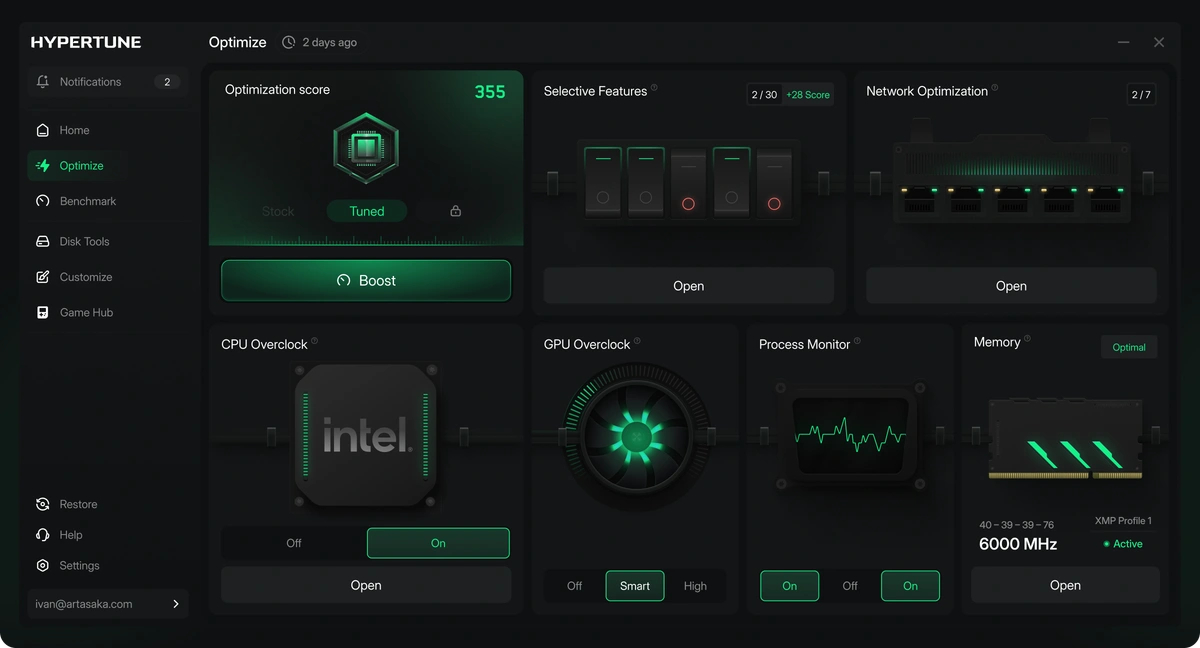
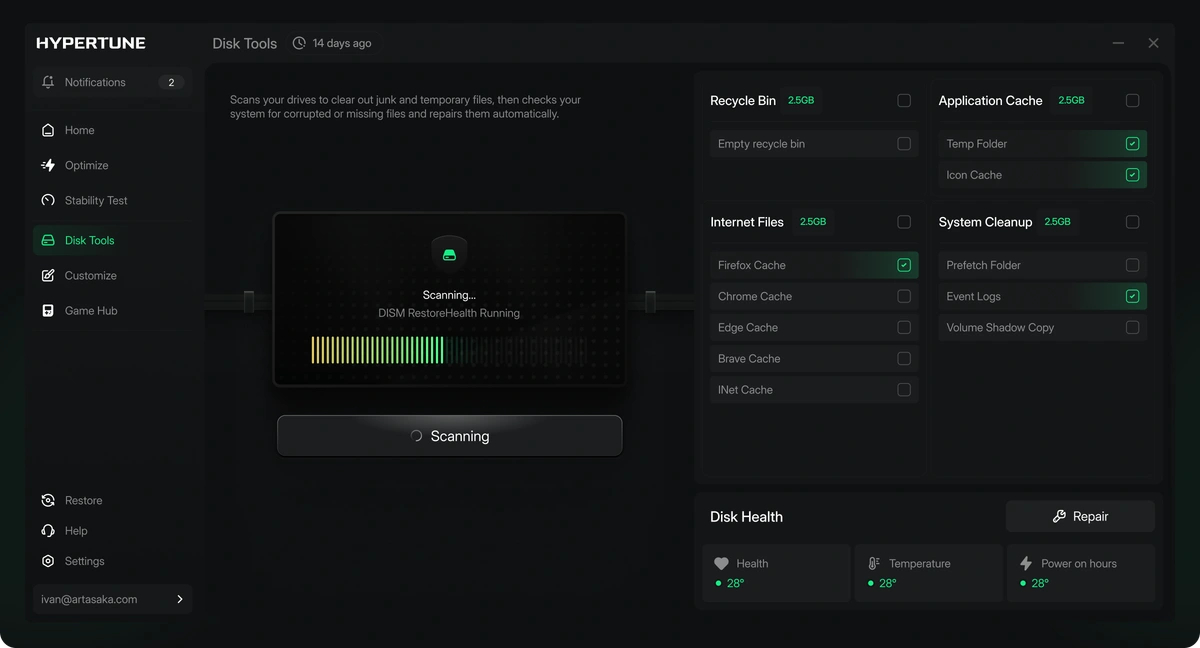
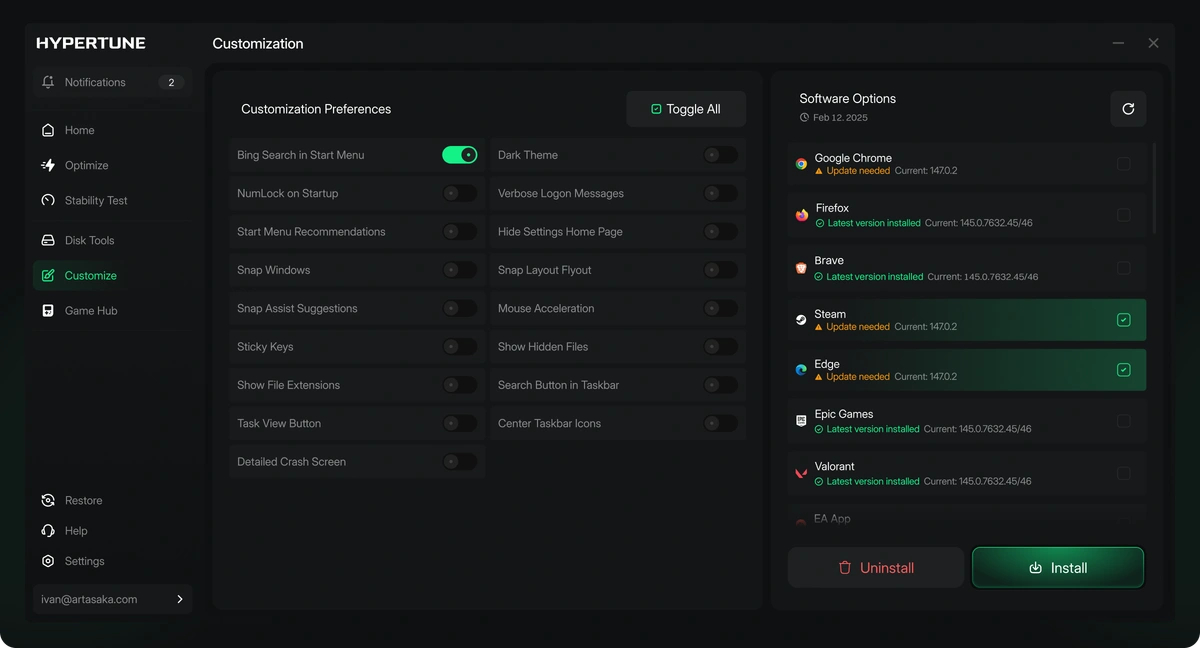
Hypertune, a new automated overclocking tool built on Intel’s Extreme Tuning Utility (XTU) SDK, has now launched publicly following an extended eight‑month beta with more than 60,000 participants. Developed by Compready’s Gaming Performance Engineering team, the software aims to make system‑level optimisation more accessible by automating CPU, GPU and memory tuning for Intel‑based gaming PCs.
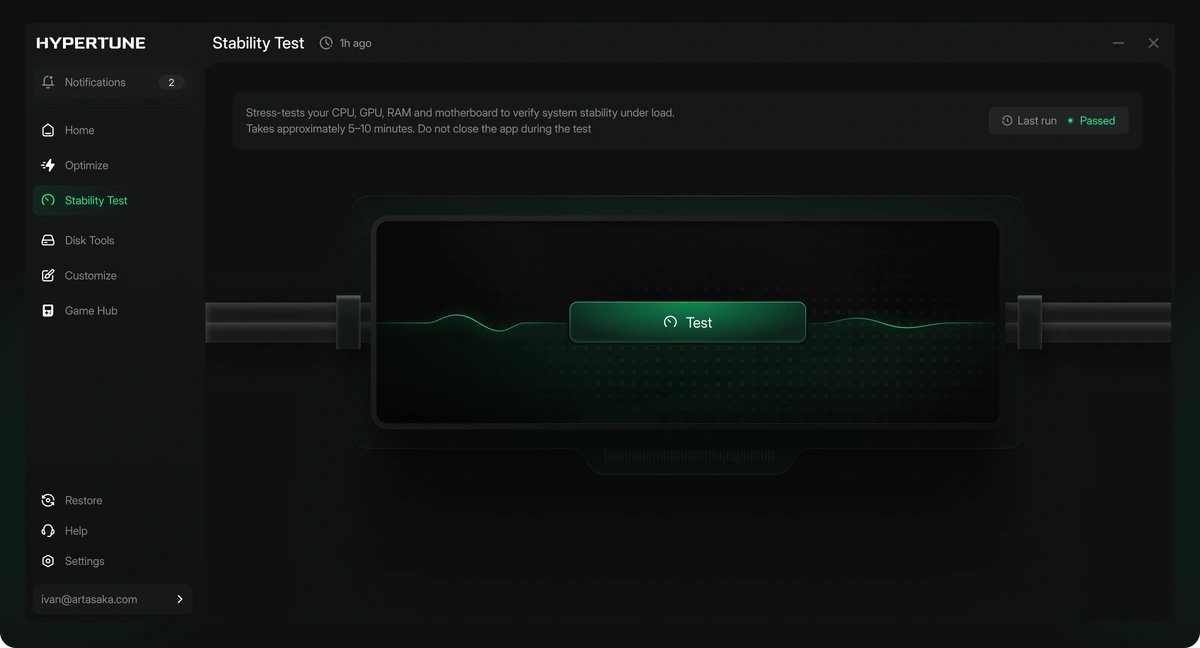
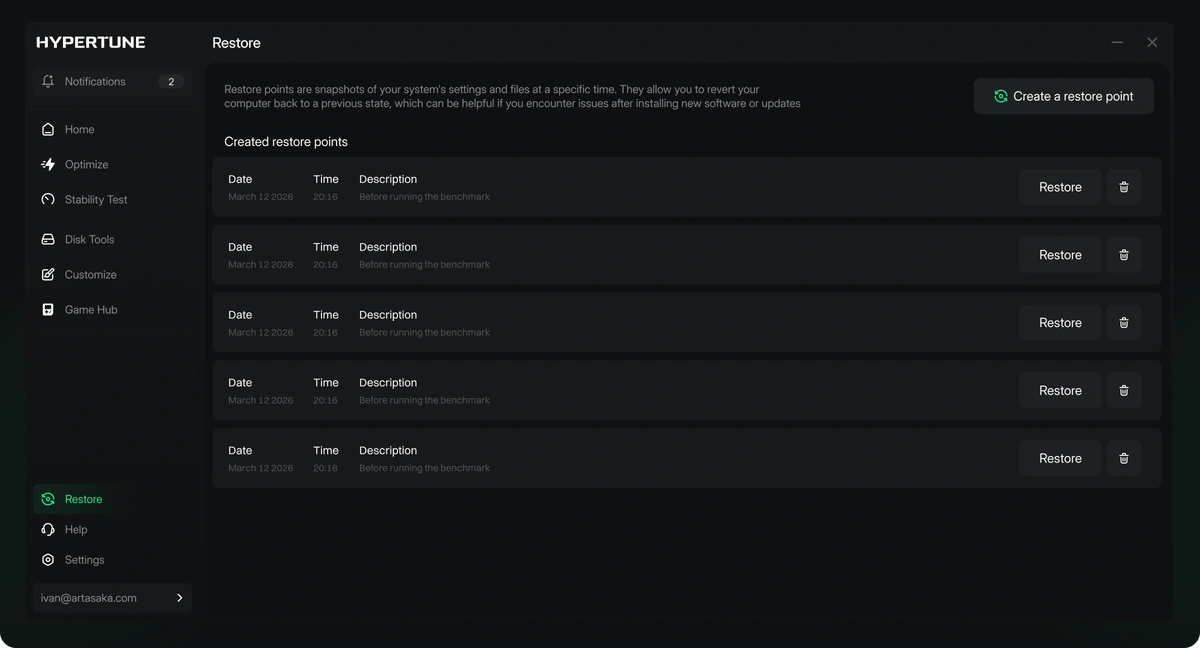
Hypertune is designed to replace the hours of manual BIOS tweaking, stability testing and per‑game adjustments typically required for performance tuning. The platform evaluates each supported system individually before applying any optimisation, using a validation‑first approach rather than generic profiles. If a system cannot safely support a proposed change, Hypertune simply flags it as unsupported. All adjustments are reversible and operate entirely through Intel’s sanctioned controls.
Founder Austin Copeland previously worked on performance optimisation within TSM’s VALORANT programme, where tuning large numbers of systems showed just how inconsistent real‑world configurations can be. That experience shaped Hypertune’s goal of delivering system‑specific optimisation in minutes rather than relying on traditional overclocking expertise.
To refine its methodology, Hypertune collaborated with world‑record overclocker Pieter “SkatterBencher” Plaisier, who contributed his experience in extracting performance without compromising stability or longevity. Internal testing across supported hardware configurations has shown FPS improvements of up to 60%, though actual gains vary significantly depending on CPU generation, GPU pairing, memory behaviour and overall system configuration.
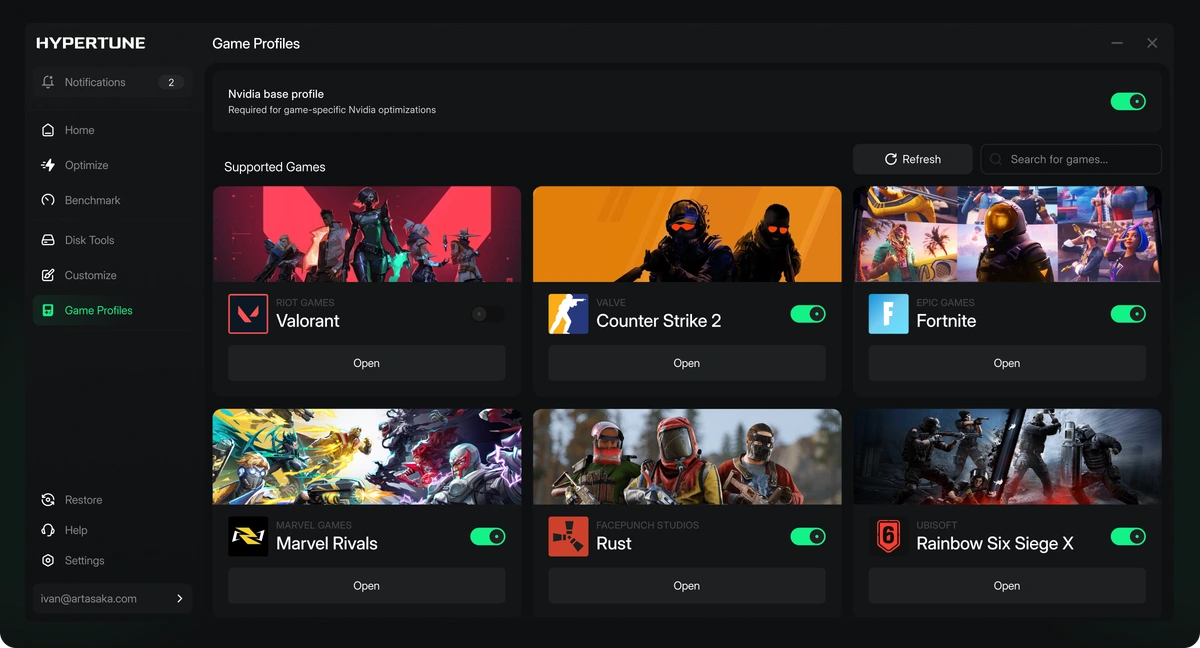
Beyond tuning, Hypertune also includes per‑game performance profiles, system‑health optimisation tools and PC cleaning utilities for reclaiming storage space. Access is subscription‑based, priced at £10 per month or $60 per year at launch, with the annual plan set to rise to $120 once the introductory discount ends.
KitGuru Says: Subscription‑based tuning software is a tough pitch, but if Hypertune consistently delivers measurable gains, some players may find the convenience worth it. Have you tried it yet, and did you see any improvements?
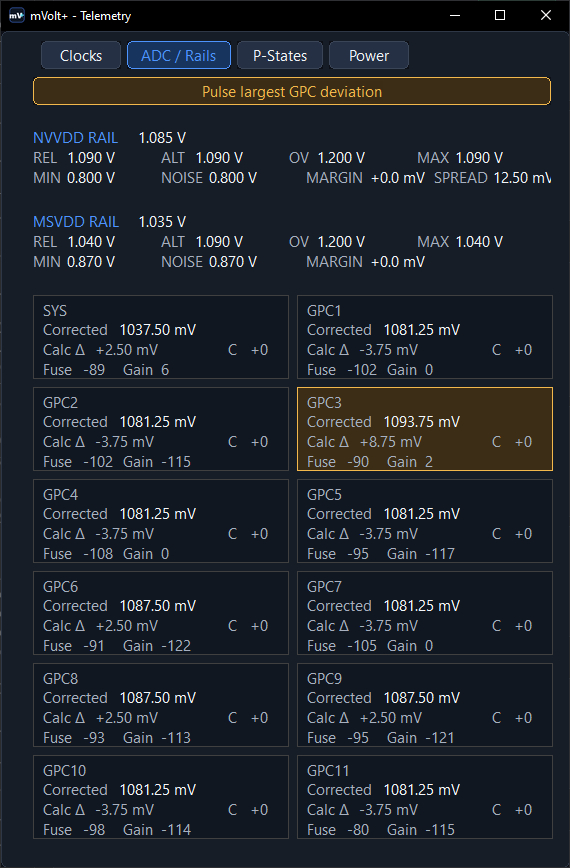
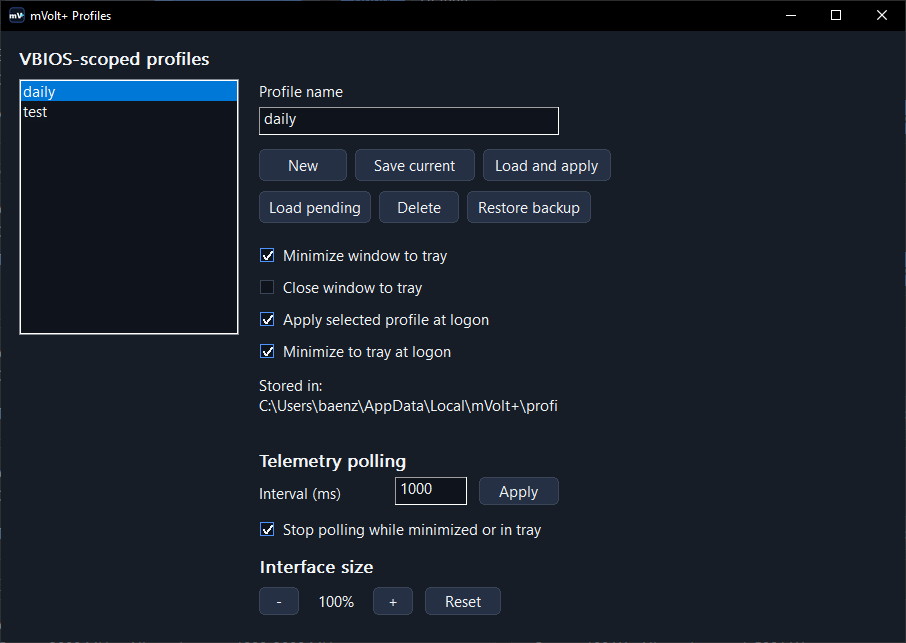
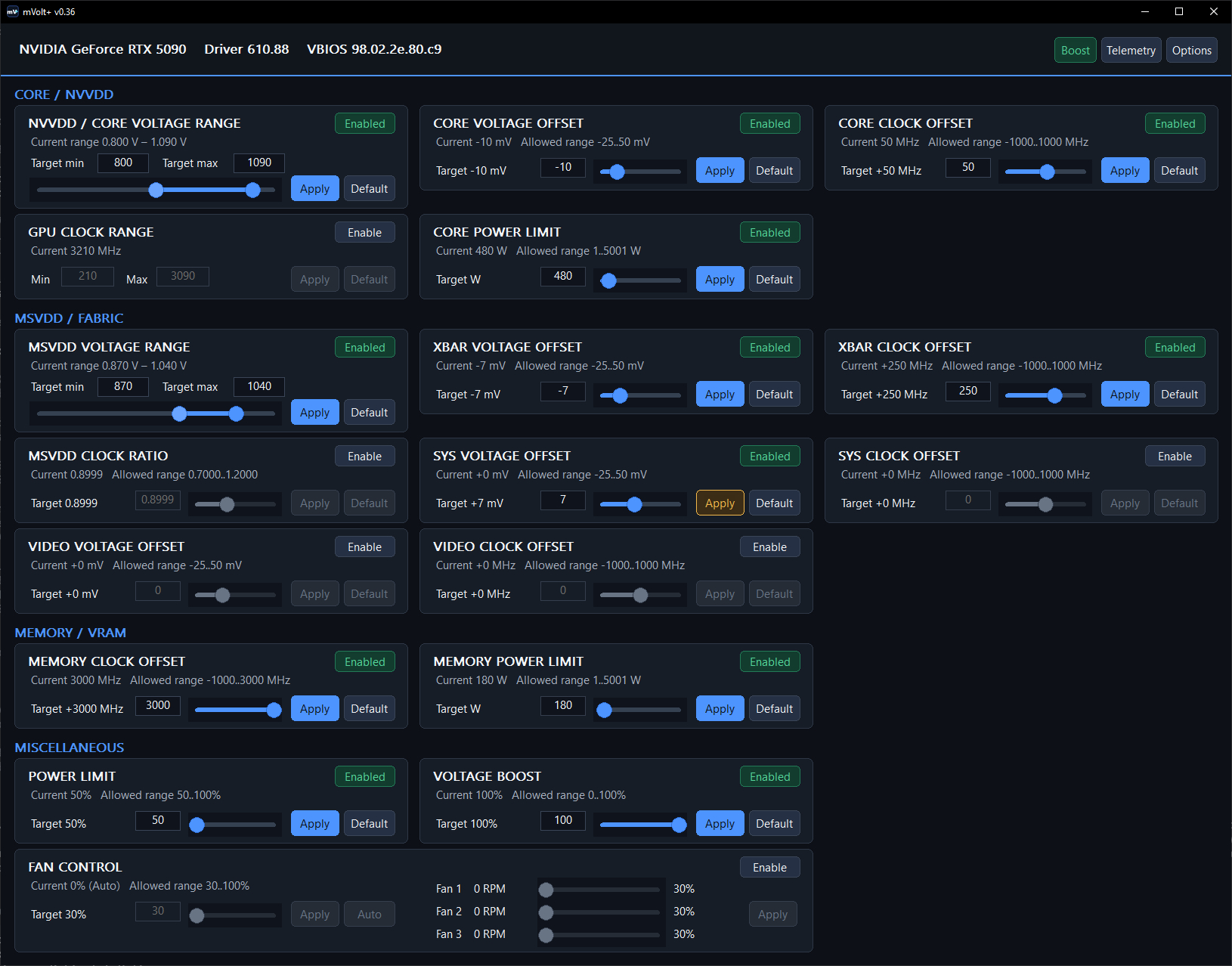
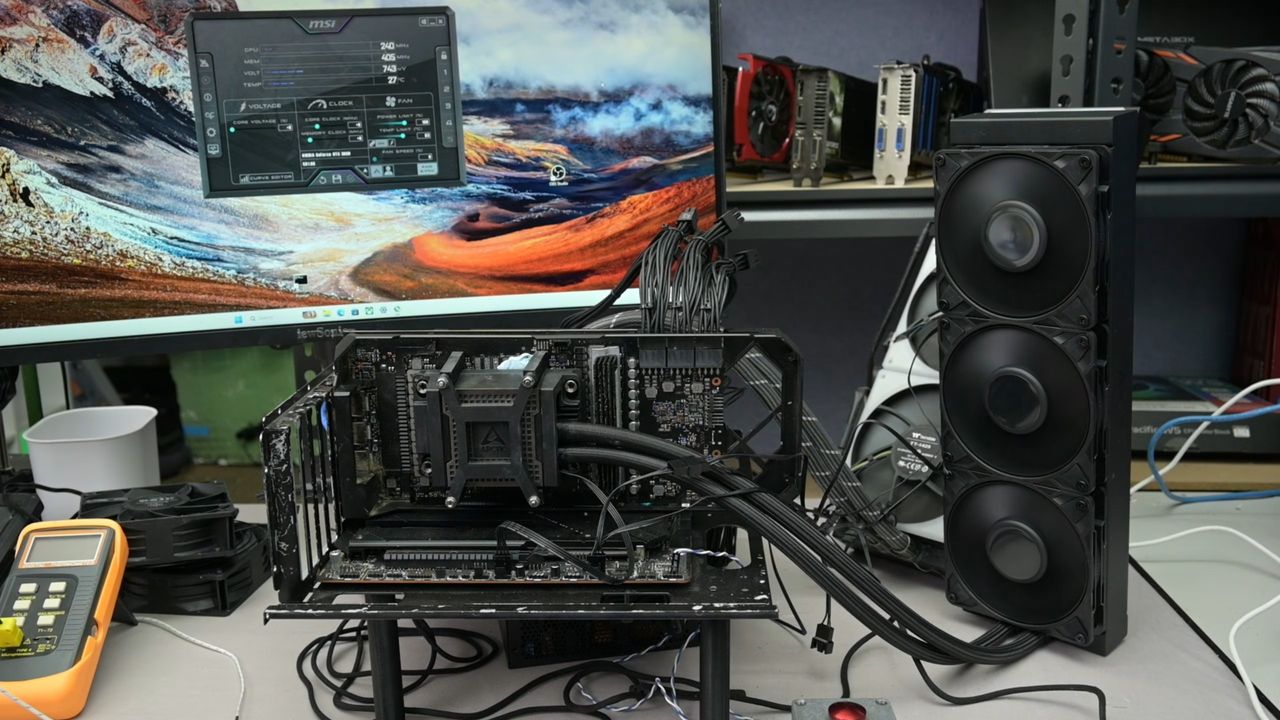
mVolt+ is a relatively new overclocking utility that has been receiving rapid updates since launch, with the latest version adding advanced power‑channel and voltage controls for Nvidia GeForce RTX 50 series GPUs – options not currently available in tools like MSI Afterburner.
As spotted by Videocardz, mVolt+ Release v0.36 introduces separate power‑channel limits for the core and memory, alongside voltage controls across the Core, XBAR, SYS and Video domains. These additions allow certain GPUs to exceed total power limits defined in their VBIOS, enabling behaviour previously restricted to XOC BIOS or shunt‑mod configurations.
Over on Reddit, users have already begun sharing results. One RTX 5090 owner posted a 3DMark Steel Nomad run showing the card pulling close to 700W under load. Another reported core clocks between 3.15GHz and 3.20GHz, with an XBAR frequency around 2.8GHz.
Despite the expanded controls, mVolt+ cannot bypass physical hardware limits. The developer warns that extreme voltage tuning may cause instability and void warranties.
KitGuru says: While mVolt+ unlocks impressive benchmark scores, the massive increase in power draw makes it a bit too risky to run permanently.
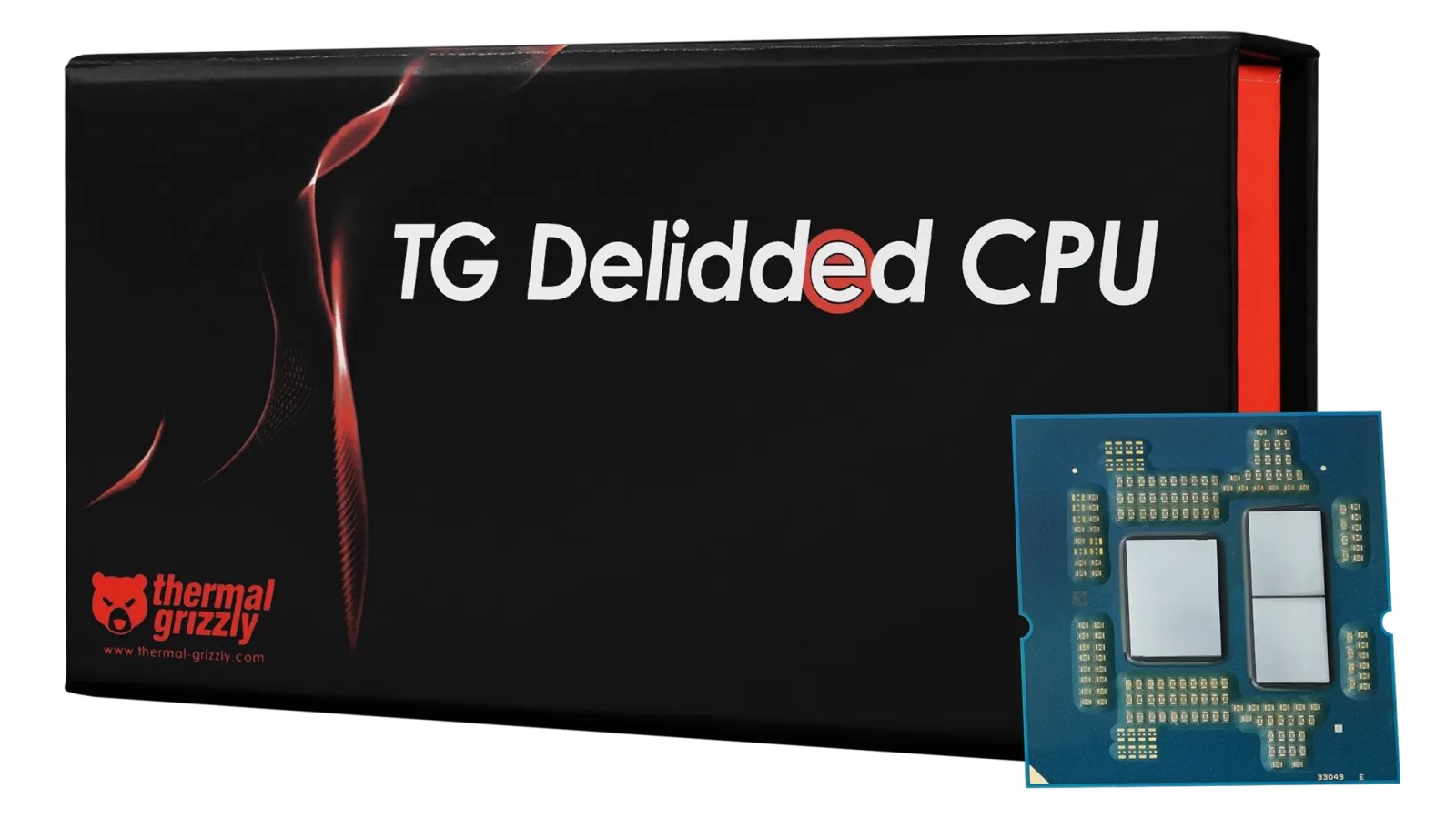
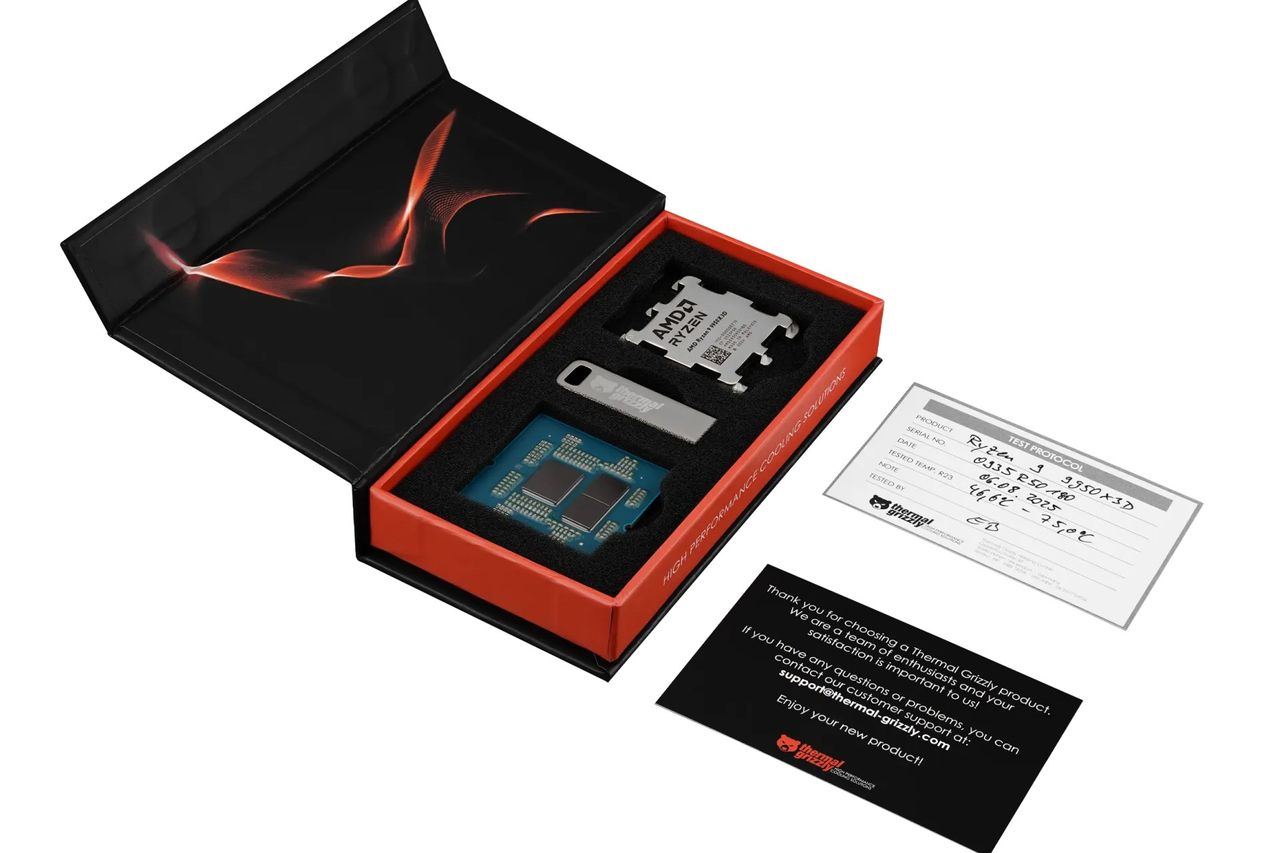
Thermal Grizzly has started selling its delidded version of AMD's already-excessive Ryzen 9 9950X3D2 Dual Edition, and here's the hard part up front: it will set you back a cool $1,402.83. That price is, obviously, rather difficult to justify on the face of it, but Thermal Grizzly does at least provide considerably more than a CPU with the heatspreader yanked off.
The company thoroughly cleans and tests each processor after delidding, records its measured operating temperature, and includes a USB stick containing the test results and a microscope image of the exposed processor. More importantly, Thermal Grizzly provides a 24-month worldwide warranty; that's welcome in light of the fact that delidding the processor naturally voids AMD's own warranty.
The firm even goes a step further than you might expect on the warranty front. Under German law, the burden of proof normally shifts after the first 12 months of a purchase, but the company's warranty explicitly states that this reversal does not apply to its TG Delid CPUs. In other words, Thermal Grizzly continues to take responsibility for the product throughout the full 24-month warranty period rather than automatically putting the burden on the customer after the first year. That's a meaningful bit of insurance when you've just spent more than $1,400 on a processor that AMD won't touch with a ten-foot pole.
Paying more than $500 over MSRP could never really make any sense on a lower-end processor, and indeed we've reported on the high price of Thermal Grizzly's delidded CPUs before. But the Ryzen 9 9950X3D2 Dual Edition is AMD's halo desktop processor, with 16 Zen 5 cores, 32 threads, and a whopping 192MB of L3 cache thanks to its unusual dual-CCD 3D V-Cache configuration. It also carries a 200W TDP and can consume considerably more power under heavy workloads; AMD itself recommends liquid cooling for optimal performance.
(Image credit: Thermal Grizzly)
For someone who insists on having the biggest, baddest AM5 processor possible, a factory-tested direct-die version with a warranty is certainly a more attractive proposition than buying a retail chip and breaking out the delidding tools yourself. Delidding a CPU and cooling the silicon directly can reduce the thermal resistance between the processor and cooler, which is all but guaranteed to help the CPU sustain its normal boost behavior with less aggressive fan speeds, making an extremely powerful system somewhat quieter. What it won't help with (at least, not much) is performance.
That's because Thermal Grizzly's warranty is surprisingly restrictive about what you're actually allowed to do with all that newfound thermal headroom. The warranty covers normal operation as well as "overclocking according to manufacturer specifications," but excludes operation outside AMD's specified values. Thermal Grizzly specifically warns that CPU and memory clock speeds beyond those specifications aren't covered. So, in practical terms, you're probably looking at AMD-sanctioned tuning such as PBO and EXPO rather than taking your naked Ryzen 9 9950X3D2 and seeing how far you can push it before the magic blue smoke comes out.
Which is a little ironic given that overclocking is one of the main reasons an enthusiast might be interested in going to the trouble of delidding a processor in the first place. What Thermal Grizzly is essentially selling you is a much better thermal envelope while telling you that the warranty doesn't cover you if you use that envelope to operate the CPU outside AMD's specifications. As we've just explained, it's not completely pointless, but if you're looking to do some serious overclocking, DIY might be a more attractive route (warranty details notwithstanding).
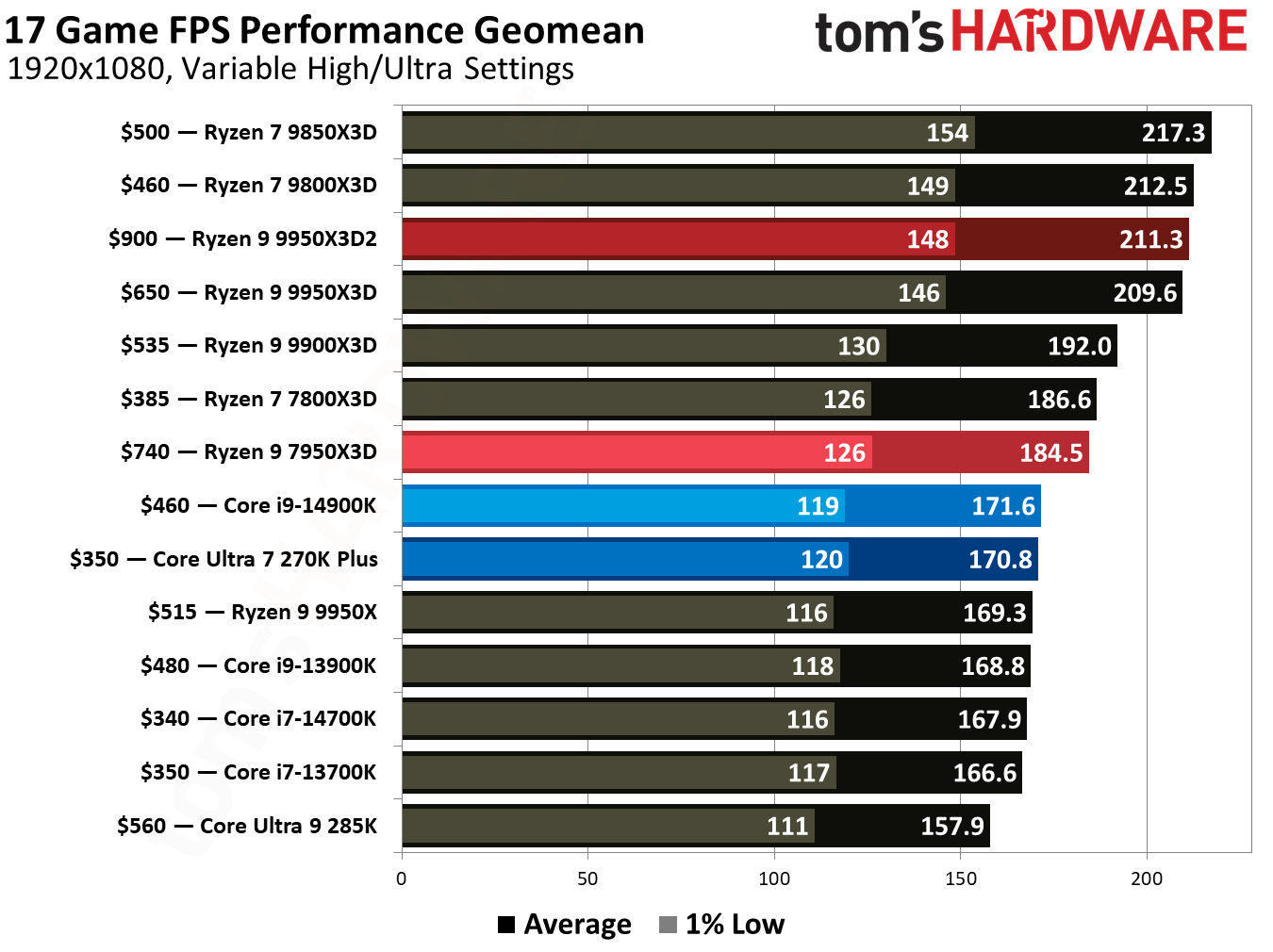
This benchmark chart from our review of the Ryzen 9 9950X3D2 tells the story: don't buy this to play games on it. Or do, I'm not your mom. (Image credit: Tom's Hardware)
Of course, before you decide if the extra $500 over MSRP for a delidded Dual Edition is worth it, you need to figure out why you'd want a Ryzen 9 9950X3D2 in the first place. Our own coverage of AMD's dual-CCD X3D processor found that it is by and large a halo product. The extra 3D V-Cache can provide meaningful benefits in certain workloads that can take advantage of the enormous amount of cache across both CCDs, but the gains aren't remotely proportional to the price premium over a Ryzen 9 9950X3D. Gaming performance, in particular, is generally exactly in line with the cheaper chip, and both typically run behind the Ryzen 9 9850X3D.
That's not to say the 9950X3D2 is a bad processor. Quite the opposite; rather, it's an extremely impressive stack of silicon, and AMD's decision to put 3D V-Cache on both CCDs makes it arguably the most exotic desktop processor the company has ever produced. It's just also very much a "because we can" product for people who want the best and don't particularly care what it costs. If you're one of the relatively small number of people whose workload genuinely benefits from having that much cache across 16 cores, there's a good chance you're doing that work on a workstation or EPYC system rather than spending your days trying to justify a $1,400 delidded AM5 CPU.
Still, if you've got the money to build a machine around the Ryzen 9 9950X3D2 Dual Edition, the extra $500 might not be a deal-breaker. For the price, you get a cooler-running, quieter system, and as long as you don't go ham on the overclocking, Thermal Grizzly has your back for 2 years. Just make sure you also buy your cooling equipment from Thermal Grizzly, because regular Socket AM5 cooling hardware may not mount up correctly to a delidded CPU.
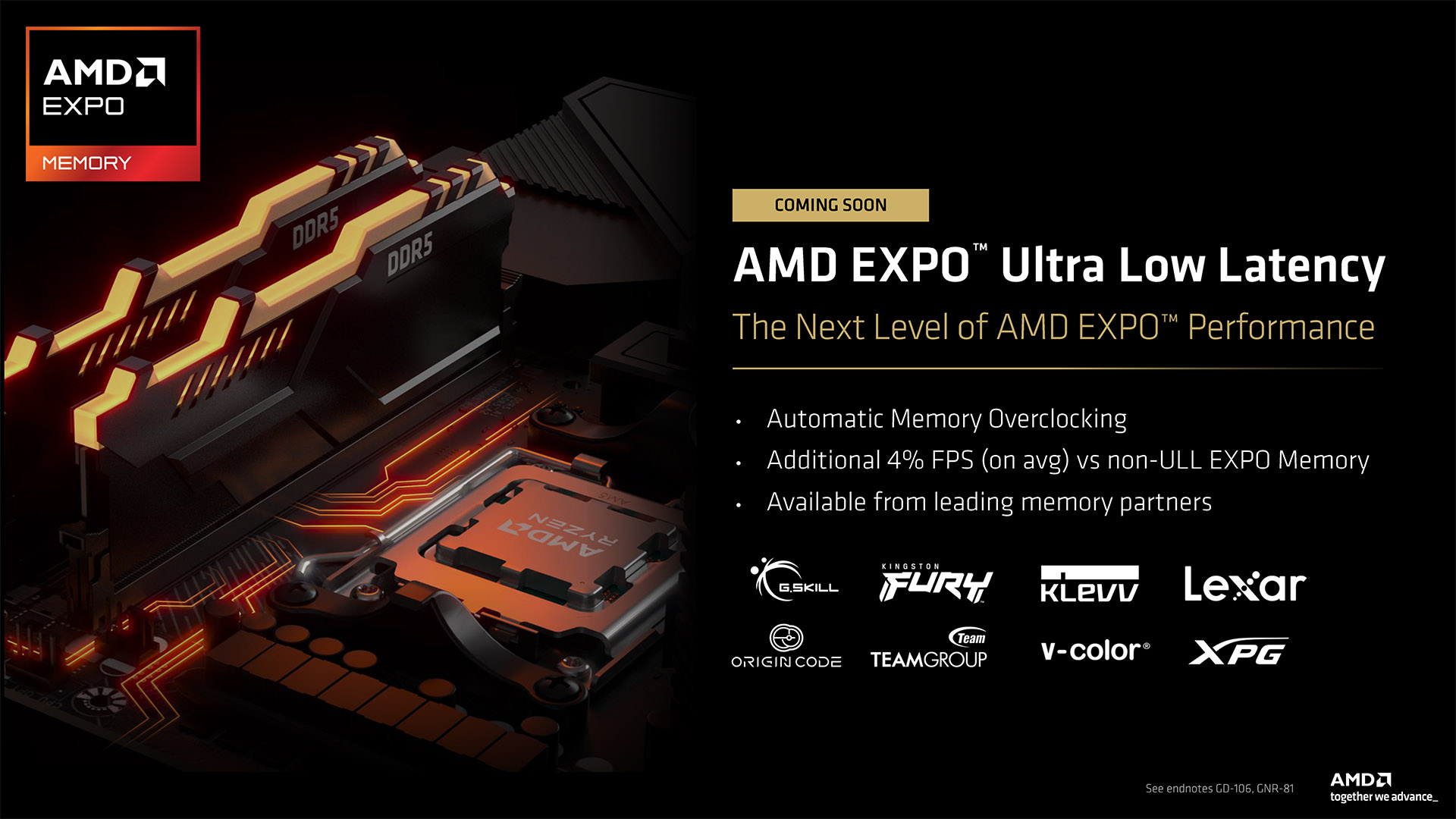
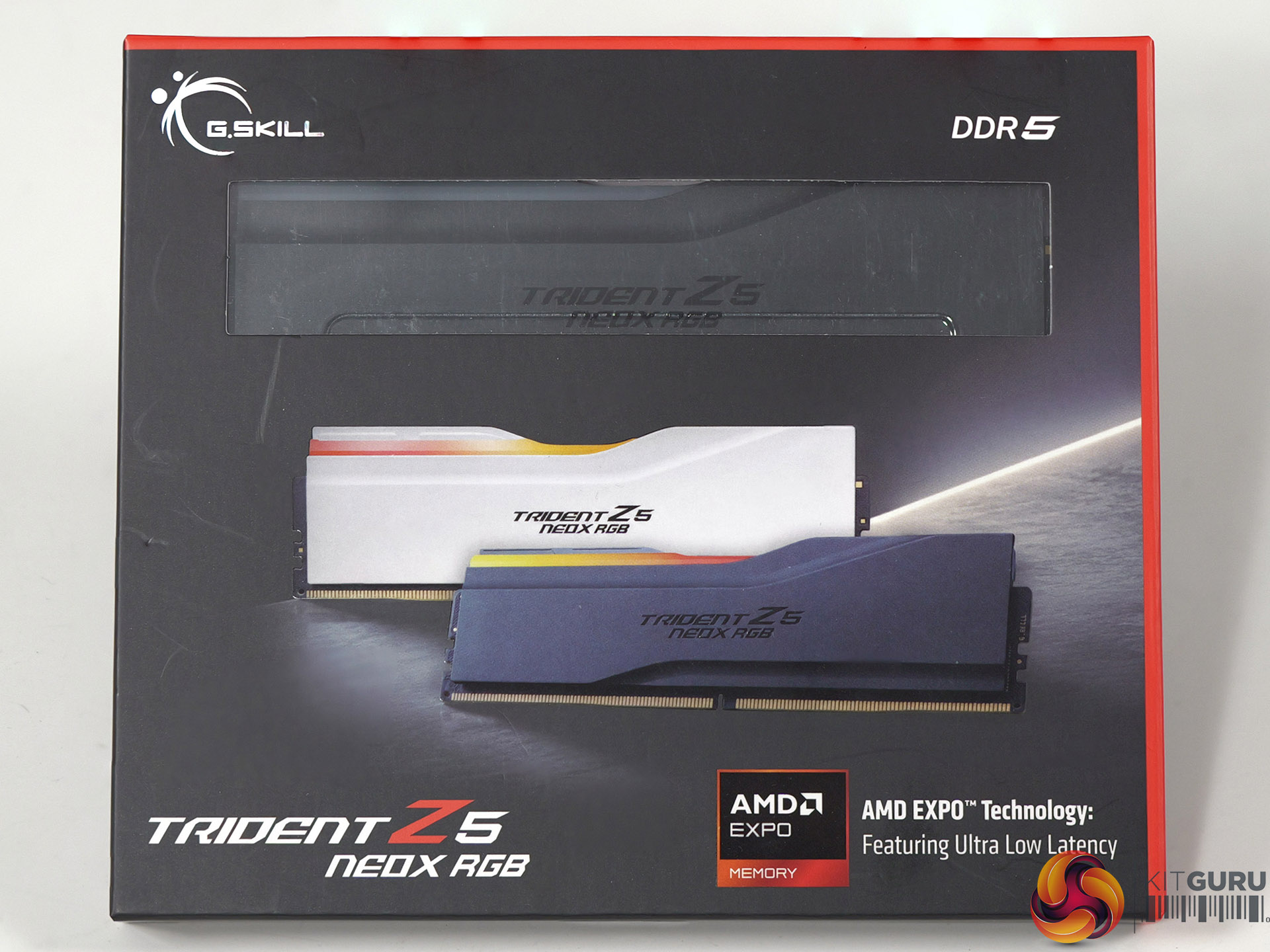
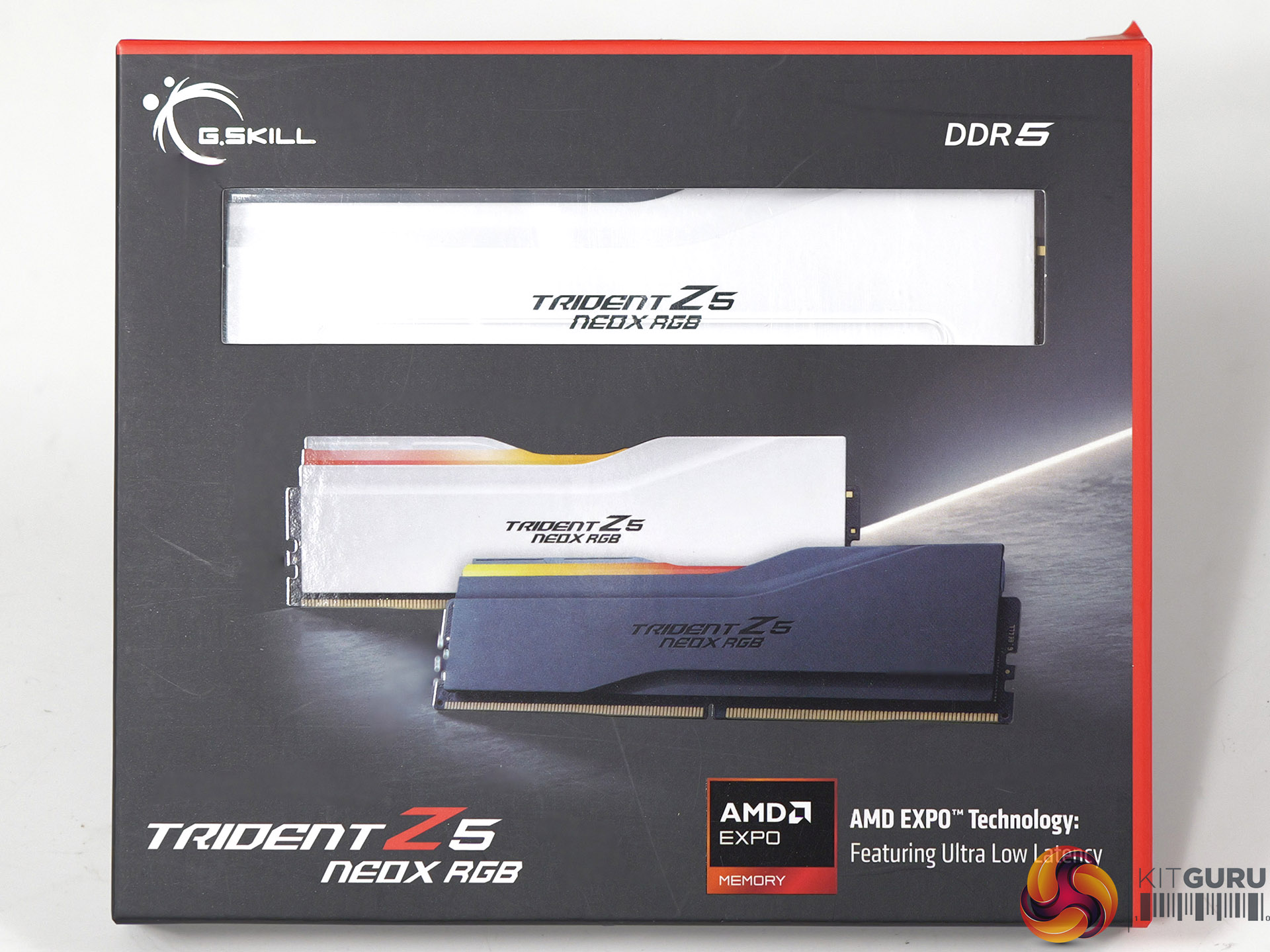
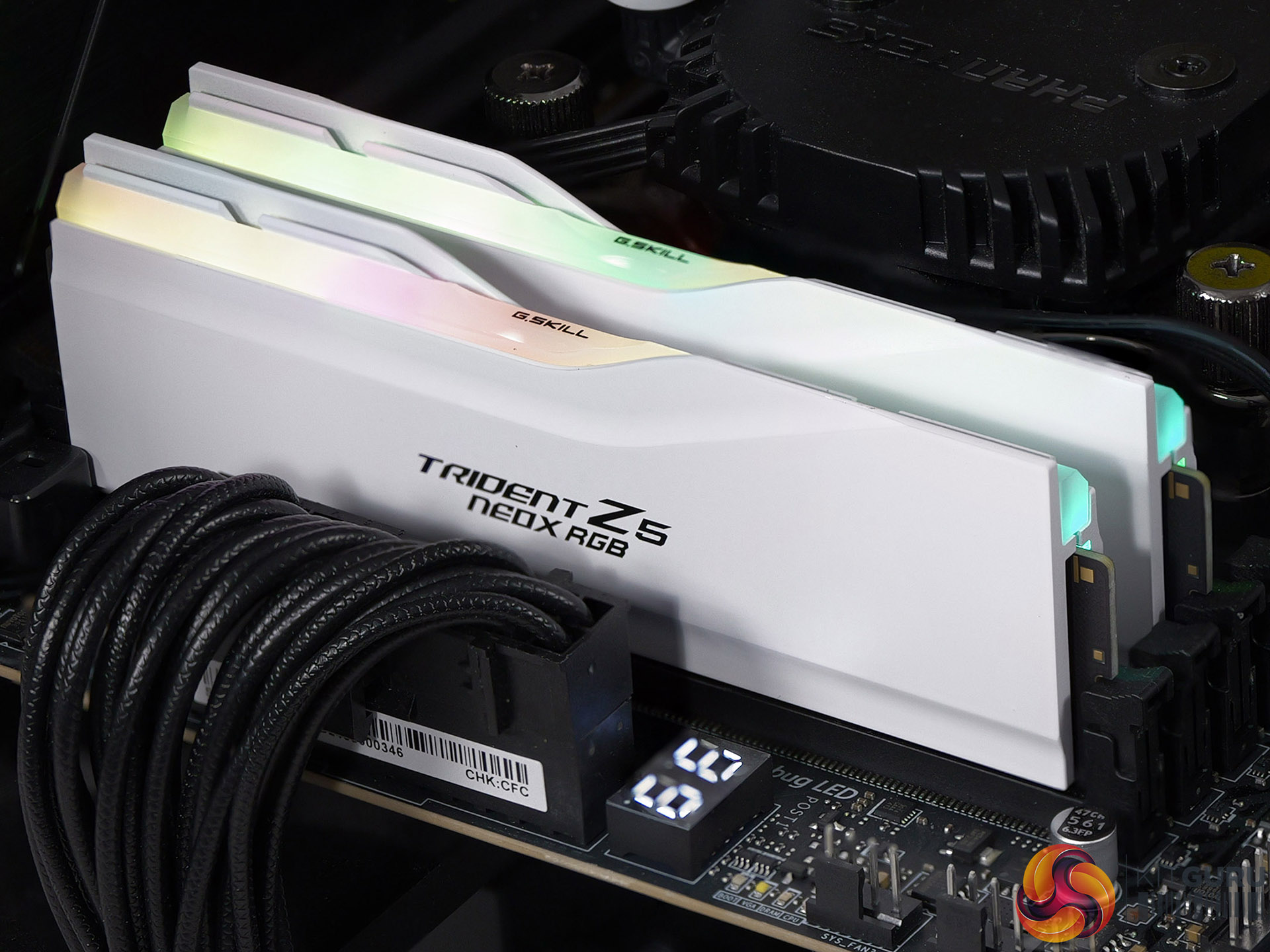
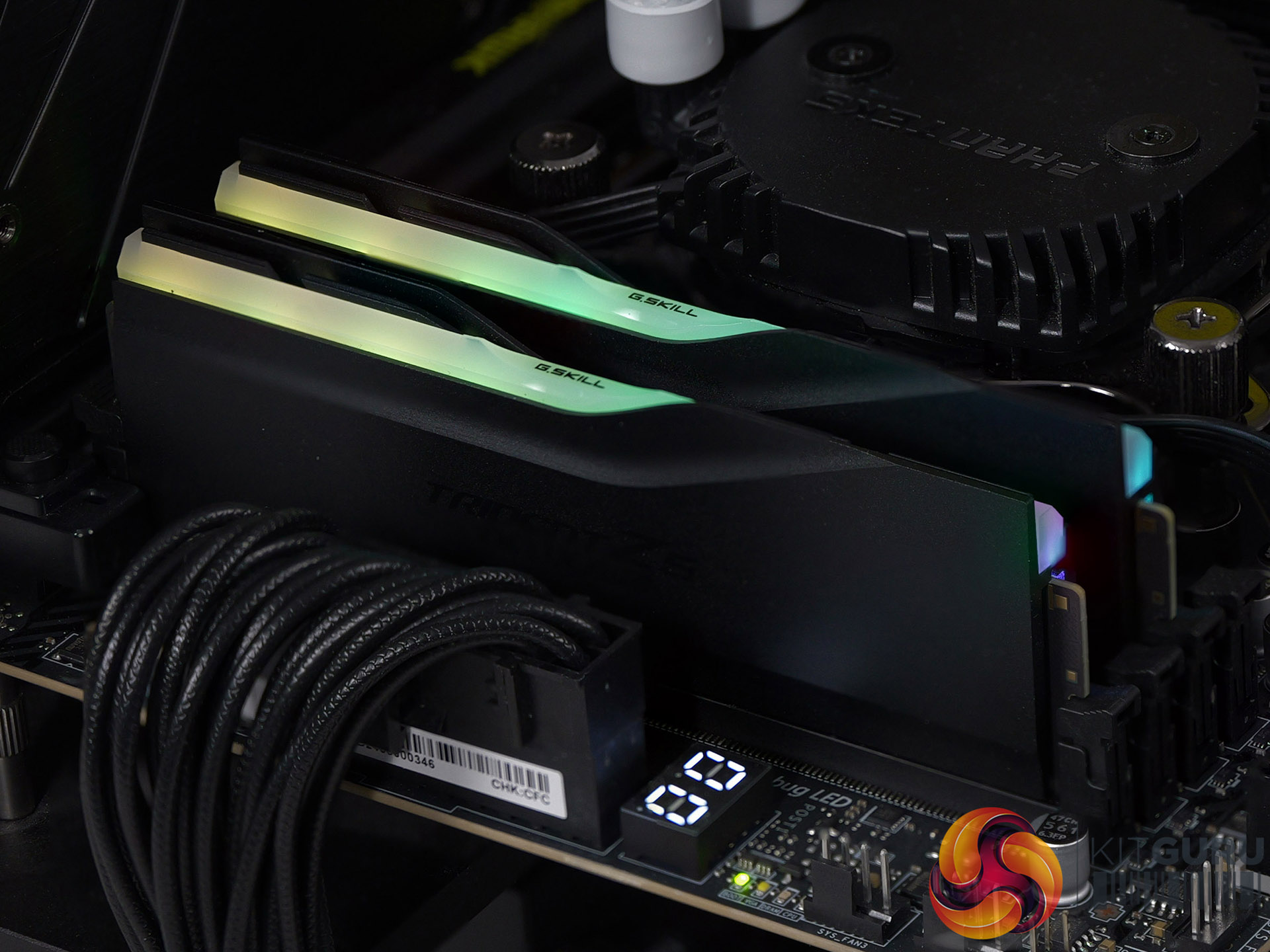
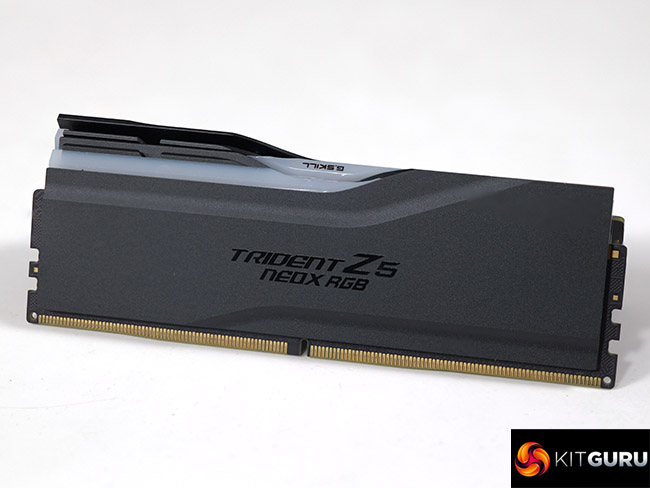
G.Skill has sent us two kits of their new Trident Z5 NeoX RGB DDR5 memory that features AMD EXPO Ultra Low Latency technology. The claim is that we will see 4% improvement in performance with absolutely no work required. Naturally those were claims we simply had to check.
Timestamps
00:00 Intro
00:50 Setting the scene for EXPO
04:47 So what’s EXPO ULL?
06:58 Testing ULL…
09:04 Benchmark data
13:08 Gaming results
15:32 Pricing discussion
16:27 Closing thoughts
Key features
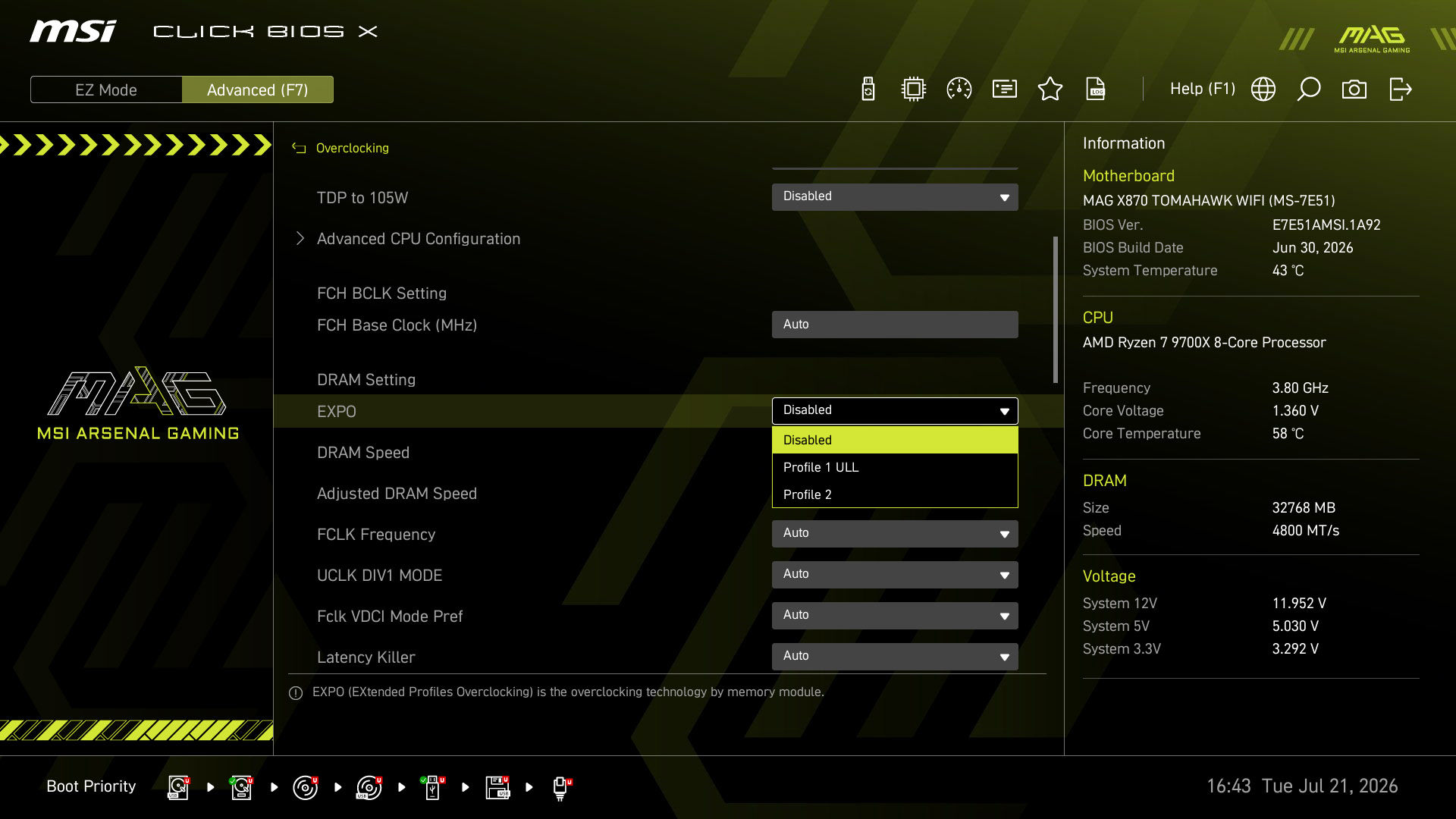
Designed for AMD Ryzen desktop processors and the AMD AM5 platform, the Trident Z5 NeoX RGB series memory kits are engineered to achieve up to their rated speeds when the “AMD EXPO Technology: Featuring Ultra Low Latency” memory overclock profile is enabled in BIOS. The AMD EXPO ULL memory overclock profile includes G.Skill tuned sub-timings that deliver greater performance on supported hardware and BIOS. It is the ideal memory solution for PC enthusiasts to build a high performance AM5 platform for PC gaming or content creation.
Extra Tuned Sub-Timings for Extra Performance Potential
Going beyond memory frequency and primary latency timings, the Trident Z5 NeoX RGB series is engineered with optimised memory sub-timings to further improve latency and memory performance when AMD EXPO ULL profile is enabled. Enabled by “AMD EXPO Technology: Featuring Ultra Low Latency”, G.SKILL is able to fine-tune a broader range of memory parameters than before, unlocking additional performance potential for gaming, content creation, and memory performance demanding computing workloads.
Engineered for Performance and Quality
Built with carefully screened DDR5 memory ICs, the Trident Z5 NeoX RGB memory kit is rigorously validated to ensure exceptional performance, quality, and stability on supported hardware configurations for PC gamers, enthusiasts, and performance-focused PC users.
Experience Extreme Performance of AM5 Systems
The Trident Z5 NeoX RGB is optimised to complement modern AMD Ryzen desktop processors. Combined with optimised overclock timings in the AMD EXPO ULL memory overclock profile, this memory kit is designed to extract extreme performance from AMD AM5 platforms.
Watch our video on YouTube at 2160p HERE
Specification:
Heat Sink Colour: Black, White
SPD Speed: 4800MT/s
SPD CAS Latencies: 40-40-40-77
SPD Voltage: 1.1V
Test Speed: 6000MT/s
Test CAS Latencies: 30-38-38-32
Module size: 16GB
Packaging: 16GBx2
Operating voltage: 1.35V
Warranty: Limited Lifetime Warranty
Performance and Overclocking
Test system
CPU: AMD Ryzen 7 9700X and 9850X3D
Motherboard: MSI MAG X870 Tomahawk WiFi
Memory:
32GB G.Skill Trident Z5 Neo RGB DDR5-6000 CL28
32GB G.Skill Trident Z5 NeoX RGB DDR5-6000 CL30
32GB G.Skill Trident Z5 NeoX RGB DDR5-6000 CL36
32GB G.Skill Trident Z5 Royal Neo RGB DDR5-8000 CL38
Graphics card: PowerColor RX 9070 XT Red Devil 16GB
CPU cooler: Phanteks Glacier One 360D30
SSD: 1TB Crucial T700 Gen 5 M.2 NVMe
Power Supply: Antec Signature 2200
OS: Windows 11 25 H2
Geekbench 6.7 Multi Core
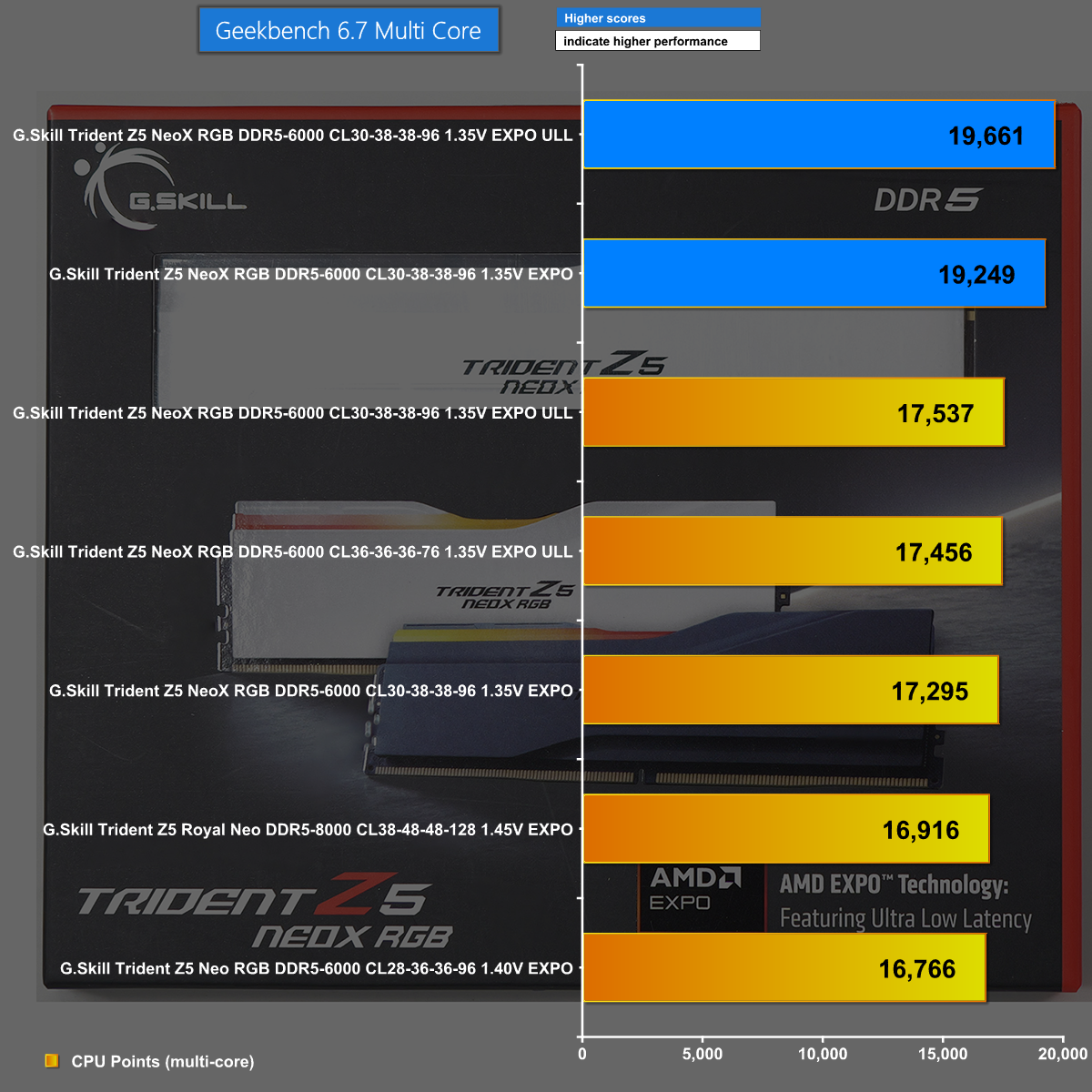
In Geekbench 6.7 Multi Core the two blue bars are for Ryzen 7 9850X3D and the five yellow bars are Ryzen 7 9700X. We can clearly see that EXPO ULL gives a small advantage over regular EXPO settings.
AIDA64 Memory Copy
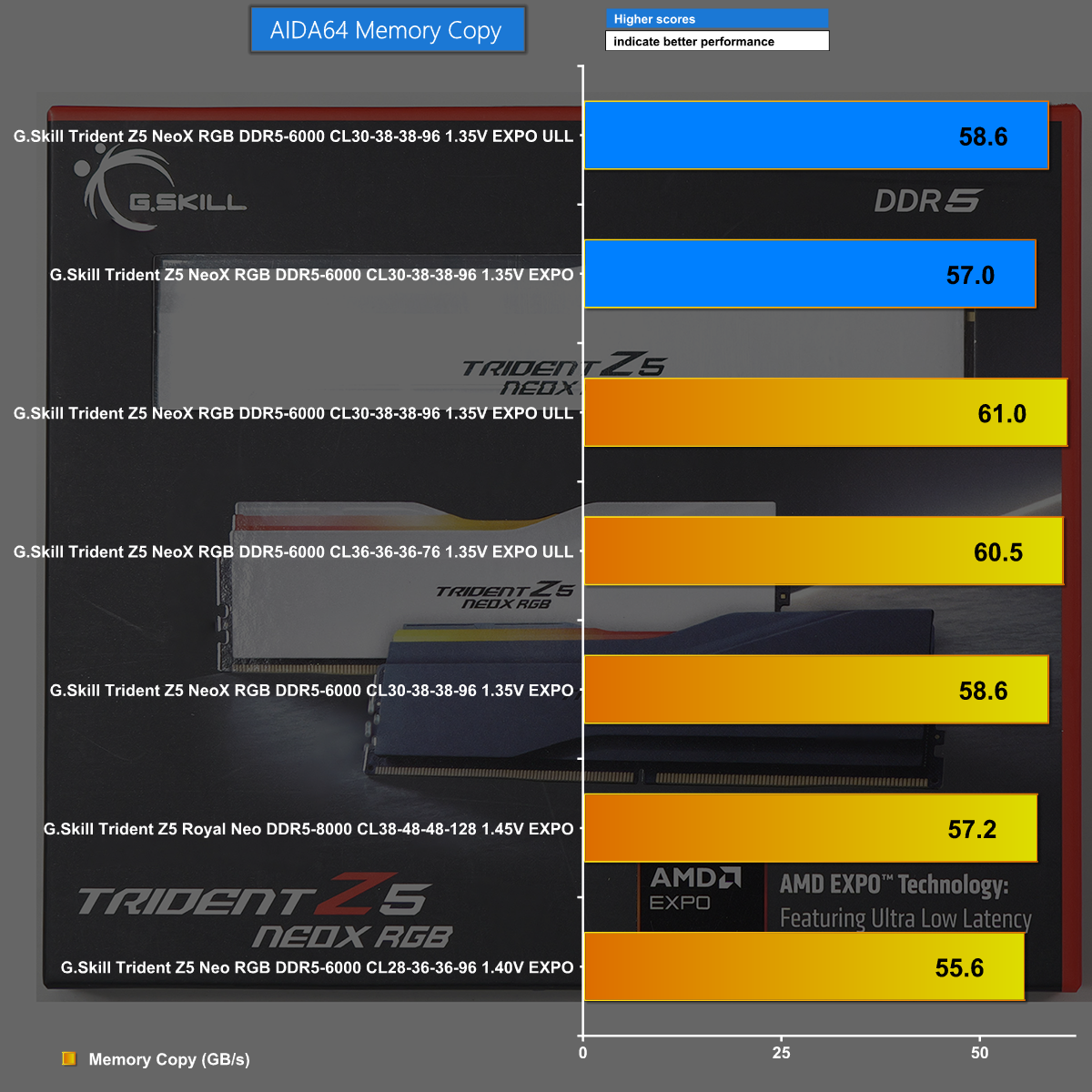
The AIDA64 Memory Copy shows EXPO ULL running well on the G.Skill Trident Z5 NeoX RGB kits.
Assassin's Creed Mirage at 1440p
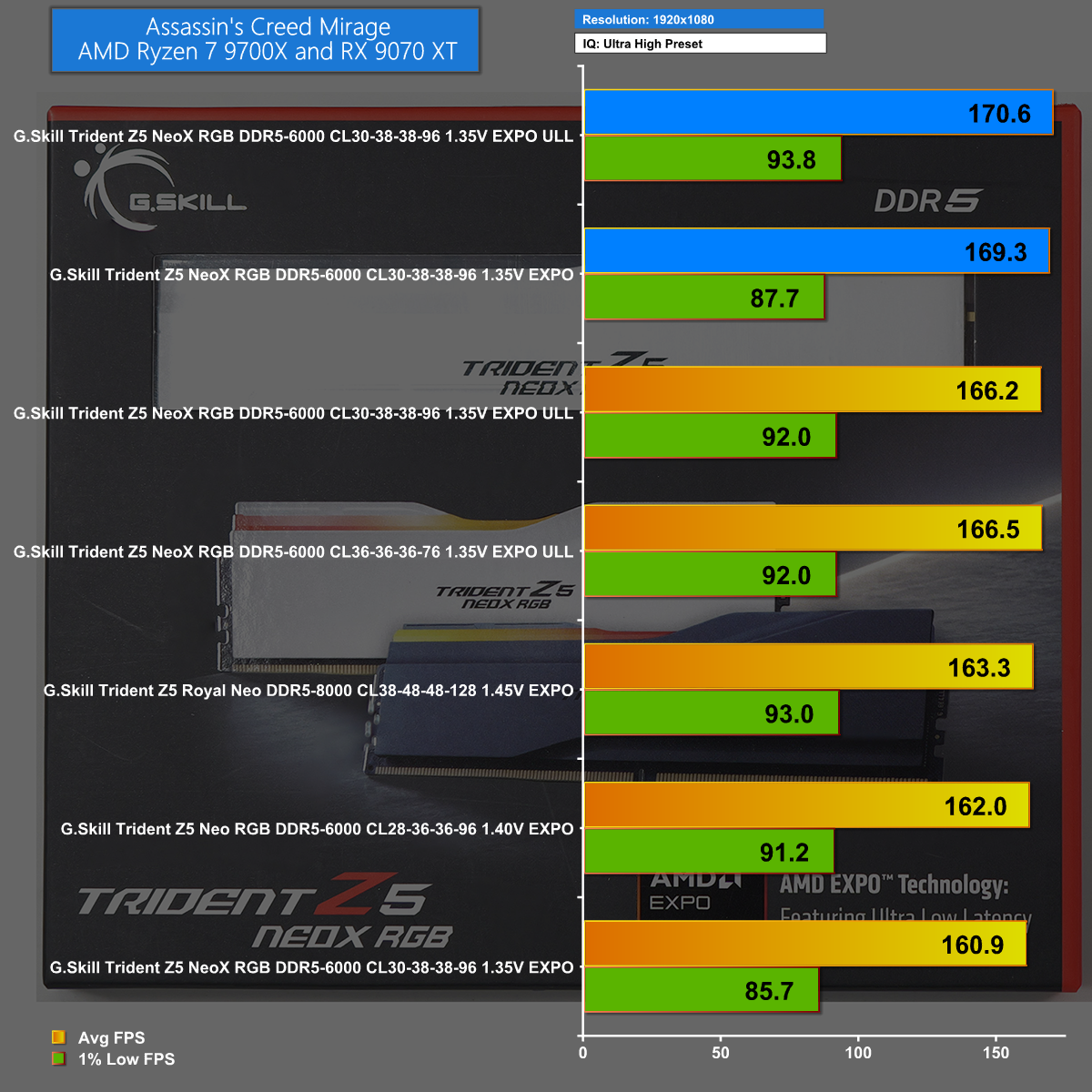
In Assassin's Creed Mirage at 1440p we can plainly see that EXPO ULL has minimal benefit for a Ryzen 3D CPU and delivers around 3% boost for a regular Ryzen 7 CPU.
Closing Thoughts
AMD claims that EXPO Ultra Low Latency will deliver small benefits over regular EXPO, and that lines up perfectly with our own findings. The inner workings of EXPO ULL are completely invisible to the end user and place the burden on the motherboard companies who have to carry out more research while they are developing their BIOS files, which we consider to be excellent news for the customer.
The snag, obviously, is the current outrageous cost of DDR5 memory. There is very little chance you are considering a memory upgrade for your PC on your existing set-up. This means you are only likely to encounter EXPO ULL when you either build a new PC or carry out an extensive upgrade, perhaps when AMD launches Zen 6 early in 2027.
Pros:
EXPO ULL gives a useful boost over regular EXPO
One click to enable – the BIOS does all the work
Rock solid stability
Cons:
Buying any DDR5 memory at present is a grim experience
3D Ryzen CPUs have less to gain than regular CPUs
KitGuru says: G.Skill Trident Z5 NeoX RGB gives us a clear and welcome view of AMD EXPO ULL technology.
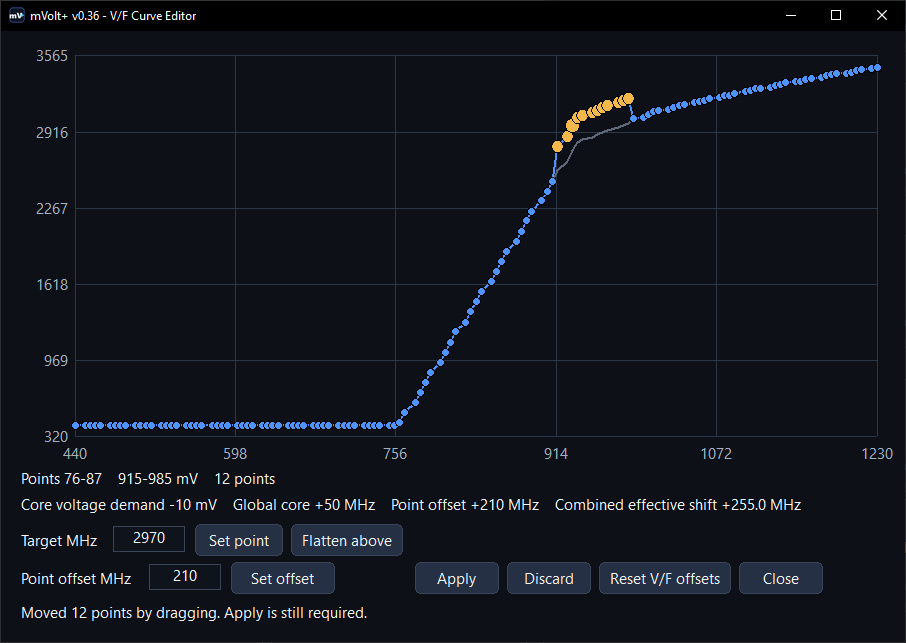
MSI Afterburner developer “Unwinder” has revealed an upcoming beta release featuring a voltage and frequency curve editor heat map. This new tool allows users to record and visualize how Nvidia GeForce RTX graphics cards scale their clock speeds and voltage levels in real time.
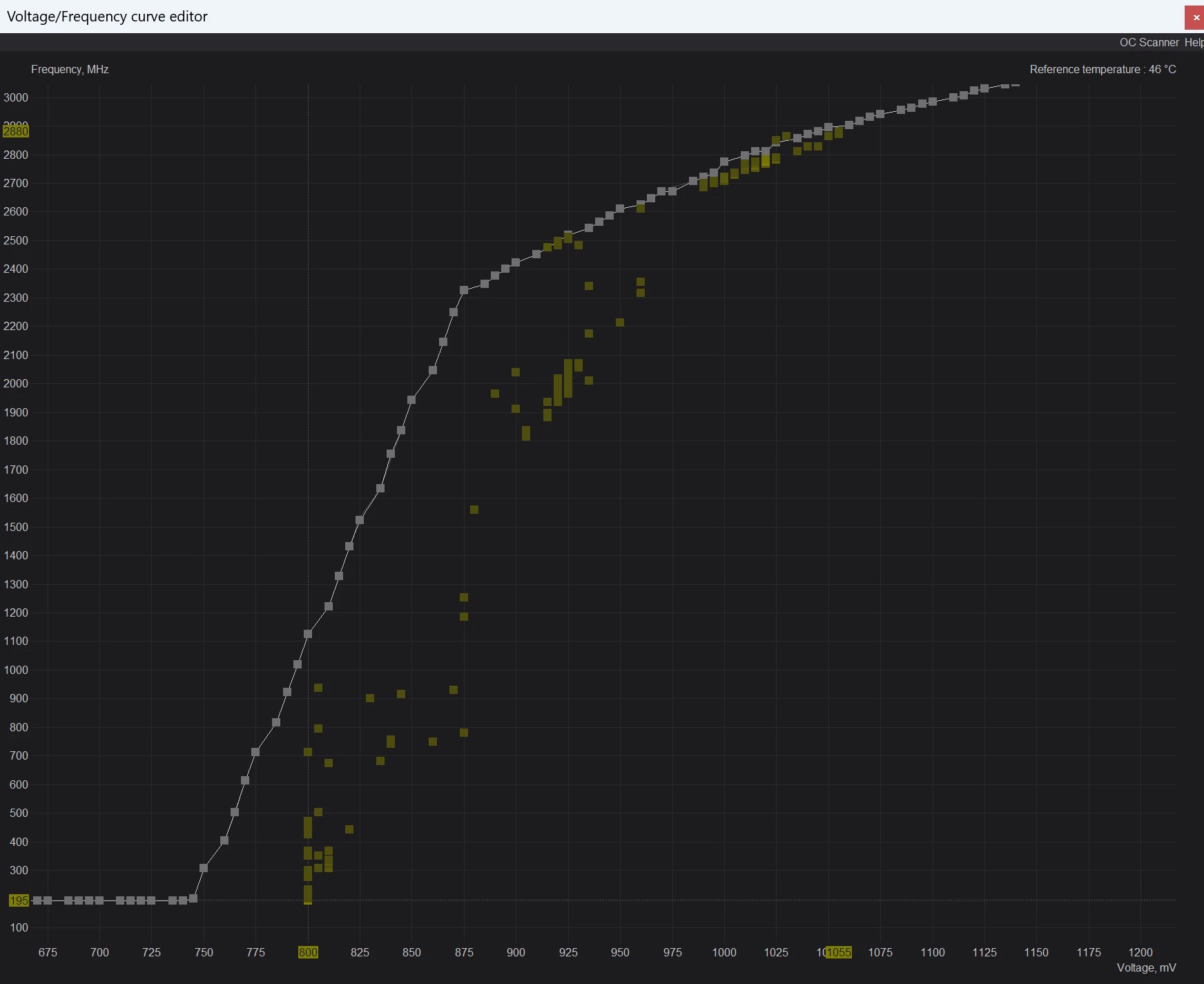
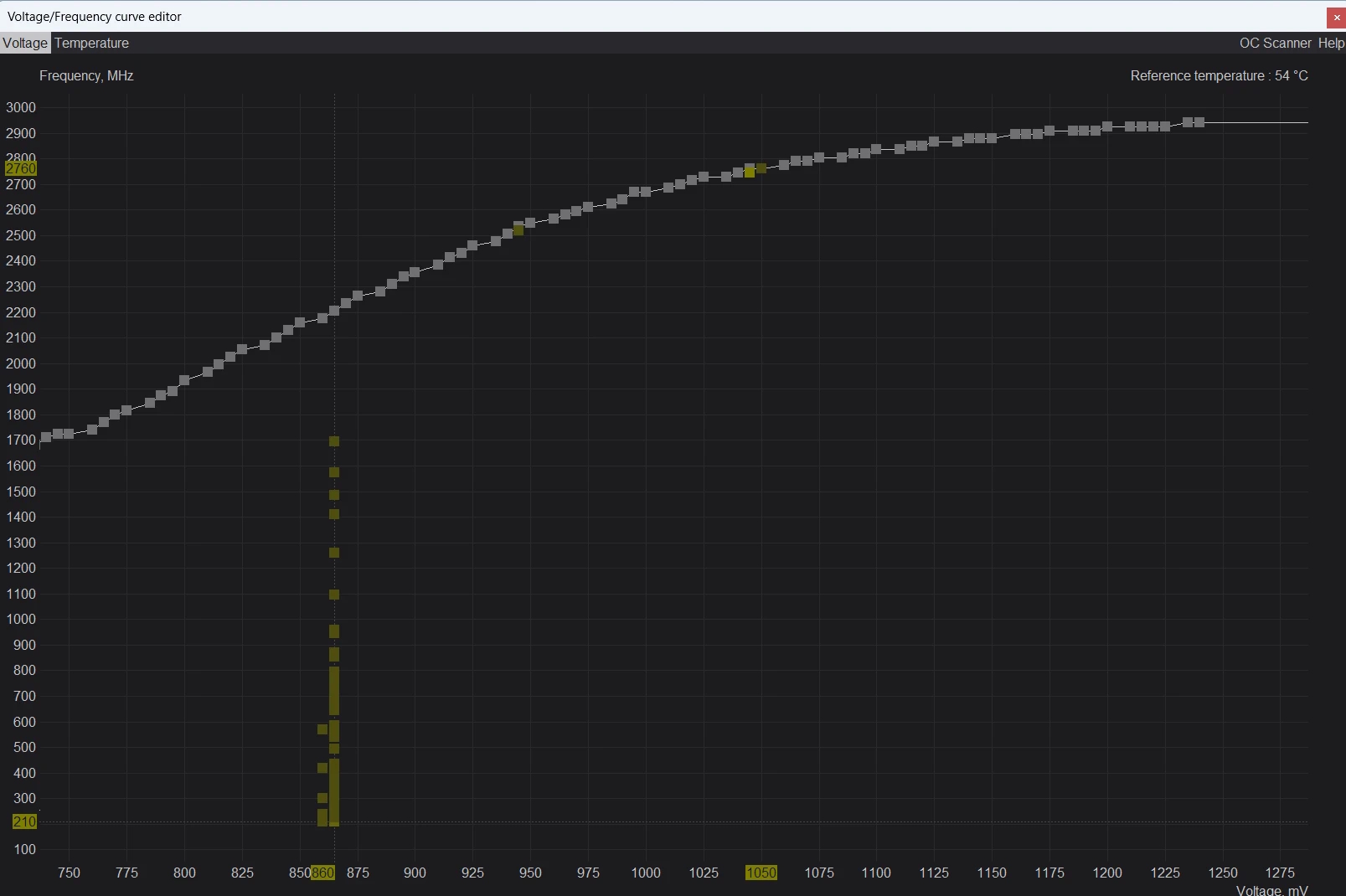
Brought to our attention by Uniko's Hardware and VideoCardz, the developer of MSI Afterburner launched beta 4 of v4.6.7 of its overclocking tool. To access the heat map, users must press “M” within the editor to show the Nvidia GPU Boost algorithm navigating its predefined frequency-scaling points. The utility uses yellow gradients to highlight the most frequently hit voltage and frequency targets. Below, you can see the data captured for both the GeForce RTX 5090 and GeForce RTX 4090, highlighting clear generational differences in V/F scaling:
Unwinder noted that Nvidia introduced significant changes to dynamic voltage and frequency scaling (DVFS) starting with its Blackwell architecture. While older architectures jumped directly between target V/F points without using intermediate values, Blackwell handles transitions along a more gradual curve, switching its V/F targets considerably faster.
KitGuru says: This update should provide overclockers with much finer insights into how different GPU architectures behave. Will you download the new beta version of Afterburner, or wait for the new feature to reach the stable branch?
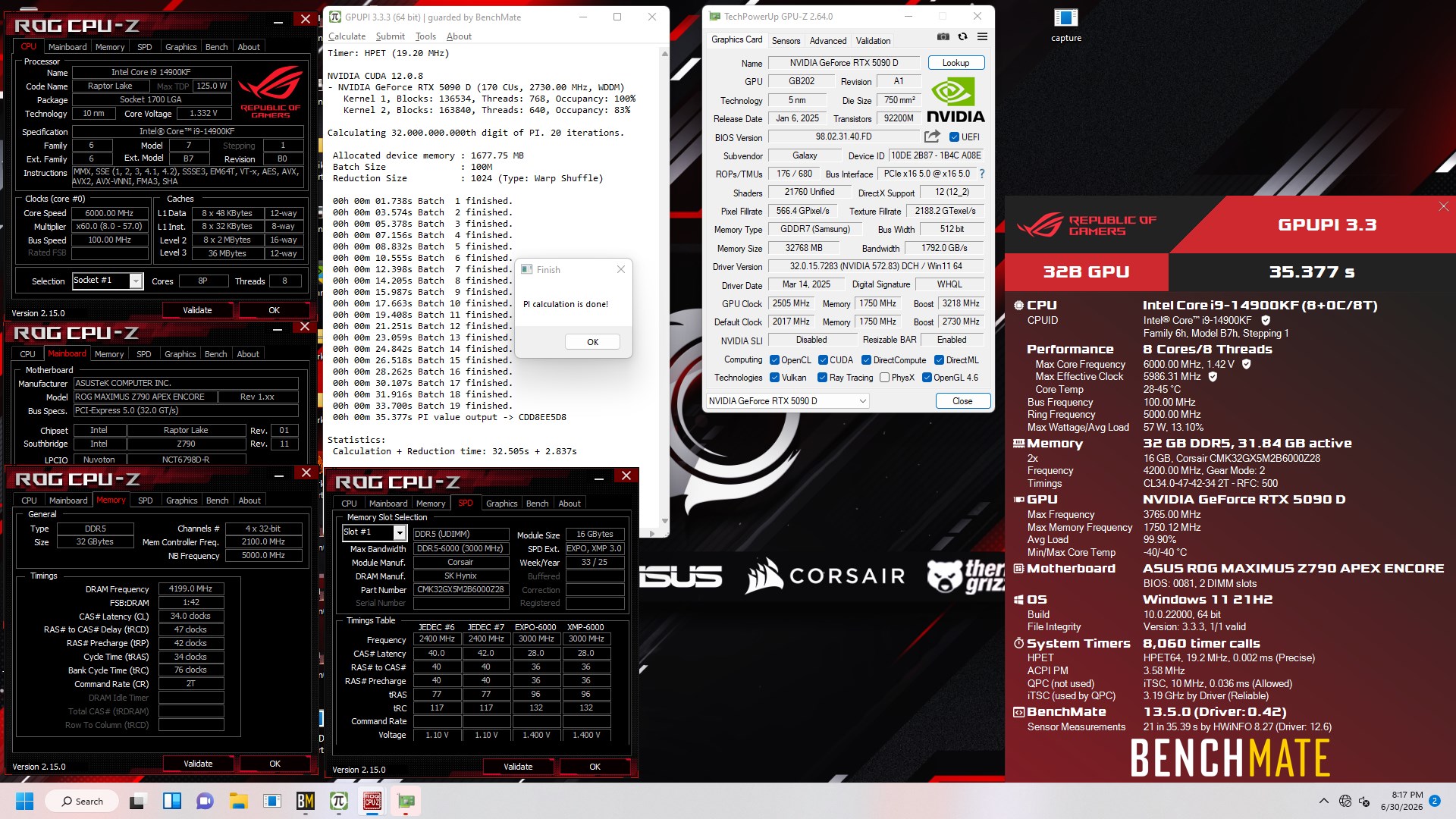
Team OGS has submitted a new HWBOT entry showcasing a Galax GeForce RTX 5090D HOF OC Lab Edition running at 4002MHz. This represents the first validated 4GHz core frequency milestone for an Nvidia Blackwell graphics card under extreme overclocking conditions.
Validation (via Wccftech) was achieved through the GPUPI v3.3 32B benchmark, with the run completing in 35 seconds and 377 milliseconds. According to the HWBOT submission, the graphics card used a GB202-based GPU core paired with 1860MHz memory clocks. This lightweight compute workload does not tax the GPU as much as modern 3D titles, allowing for extreme clocks.
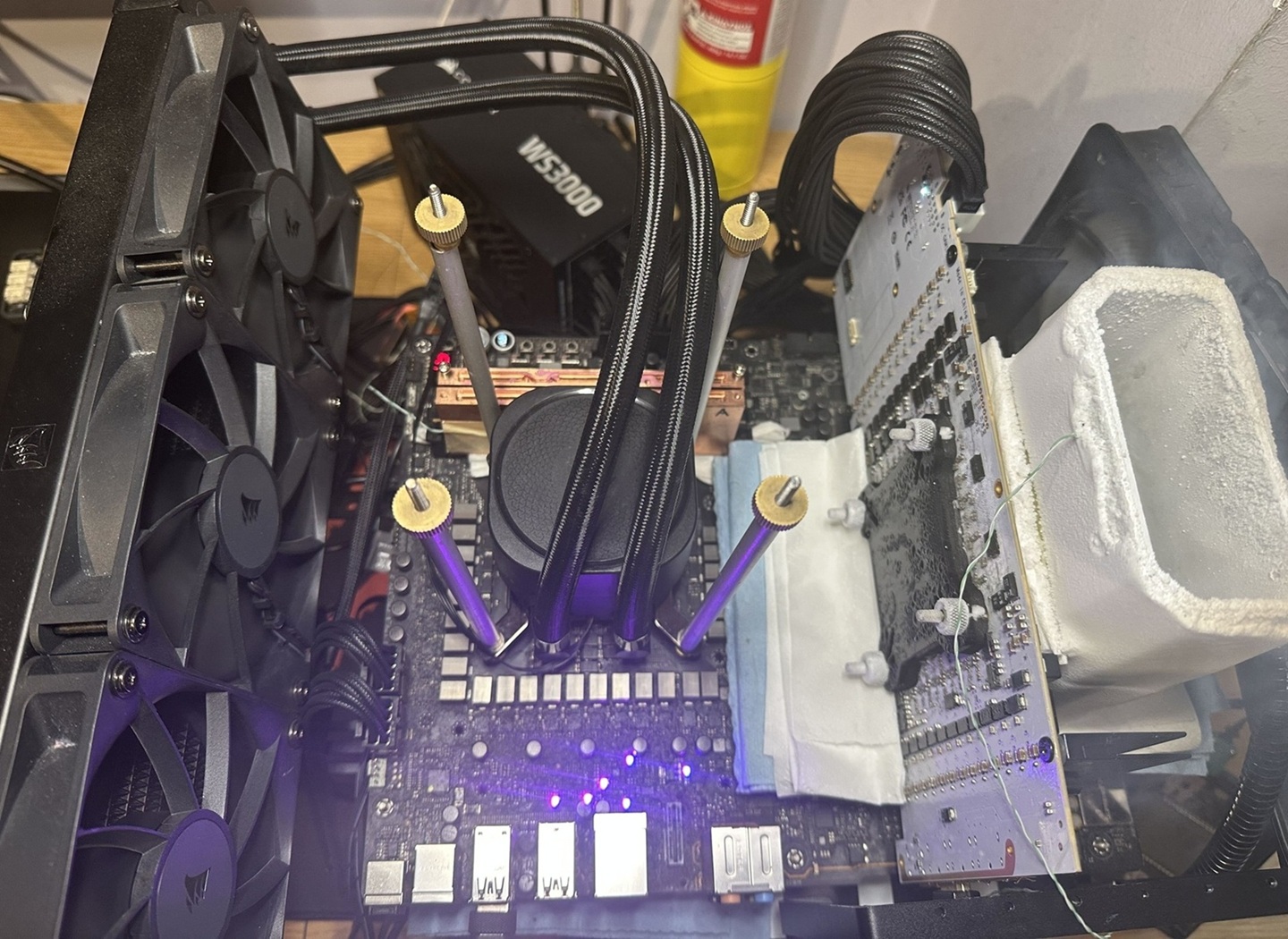
The overclocking setup relied on an Elmor External Clock Board set to 28.7MHz, overriding the standard internal reference clock. Liquid nitrogen cooling managed the thermal load, utilising a Bitspower Strata LN2 GPU Pot and Thermal Grizzly Kryonaut Extreme thermal paste. Other hardware consisted of an Intel Core i9-14900KF running at 6.0GHz, an Asus ROG Maximus Z790 Apex Encore motherboard, 32GB of Corsair Vengeance DDR5 memory, and a Corsair WS3000 power supply.
This submission specifically utilised the original Galax RTX 5090D HOF OC Lab Edition variant. The model maintains the original layout, distinguishing it from the newer V2 version, which has a cut-down 24GB configuration and a narrower 384-bit bus.
KitGuru says: Do you think overclockers will be able to push the Blackwell architecture much further than this?
OCCT v17 has officially launched as a stable release, introducing a completely redesigned modular Memory Test alongside a new launcher, reduced memory consumption, and QoL improvements.
This launch follows an initial beta testing phase in April. The developers previously stated that while the overhaul draws inspiration from established testing methodologies such as TestMem5 and MemTest86, the entire implementation was built from the ground up. The updated Memory Test replaces the older framework with a modular architecture featuring 16 individual testing blocks. According to OCCT (via Videocardz), these blocks allow users to create customised memory stress tests by tweaking how data is written, moved, looped, and verified during system validation.
This update also includes six distinct configuration presets, highlighted by a community-contributed option named AM5 Margin Probe, designed by ‘srshanks'. Further entries are planned for future updates.
System performance also gets a notable bump through a brand-new launcher that reduces application startup times by up to 30%. Furthermore, overall software memory consumption has decreased by 15-30%, as OCCT now streams monitoring data directly to disk. The release notes also highlight improved support for portable installation paths, a new automatic update delivery engine, and hardened crash recovery procedures.
KitGuru says: The overhaul to the memory testing suite on OCCT should give overclockers and system builders far more granular control when tracking down memory instability.
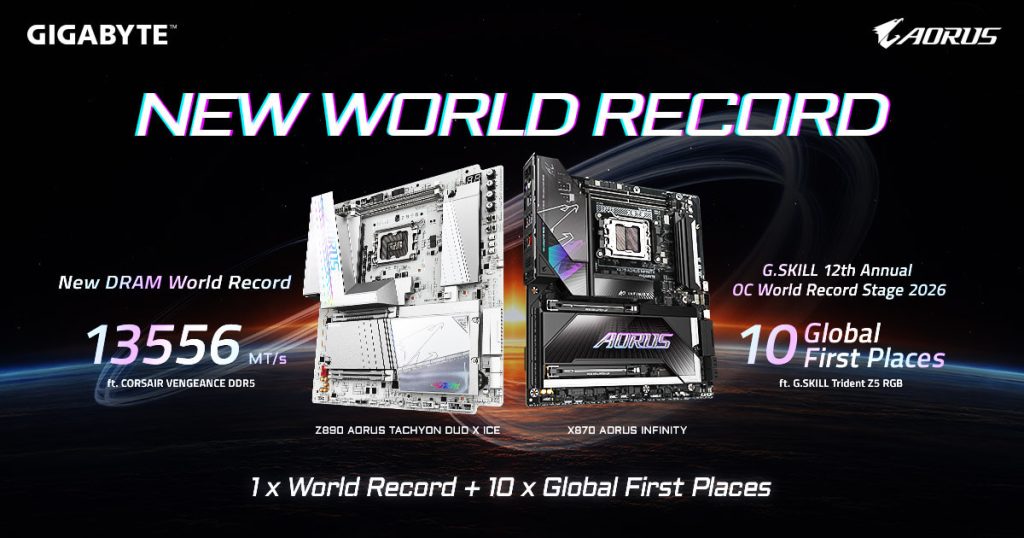
At the 12th Annual G.Skill OC World Cup at Computex, Gigabyte's professional overclocker, Hicookie, set a new record for DDR5 memory speed using multiple Aorus motherboards.
Team Gigabyte members Sergmann, Saltycroissant, Madness777, and Exaberries, led by Hicookie, pushed the hardware to set the new world record. The record-breaking DDR5-13556MT/s entry was achieved using 24GB Corsair Vengeance LP DDR5 memory. For this particular record, the team used the Z890 Aorus Tachyon Duo X Ice motherboard paired with an Intel Core Ultra 7 270K Plus CPU running at a mere 2.118GHz across all cores (only 2+2 enabled).
During the event, the same overclocking team took 10 global first places in CPU frequency and various benchmarks. Unlike the memory frequency record, these were achieved using the newly launched X870 Aorus Infinity motherboard, AMD Ryzen 9 9950X3D2 processors, and G.Skill Trident Z5 RGB memory.
KitGuru says: Hitting 13556MT/s on DDR5 is an incredible milestone and there may still be room to reach new heights before the DDR6 generation lands.
Techsperts were curious just how much power is in the A18 processor at the heart of the MacBook Neo and set about ensuring that heat was not a problem. They did…
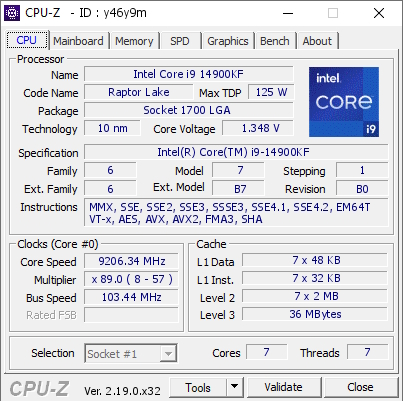
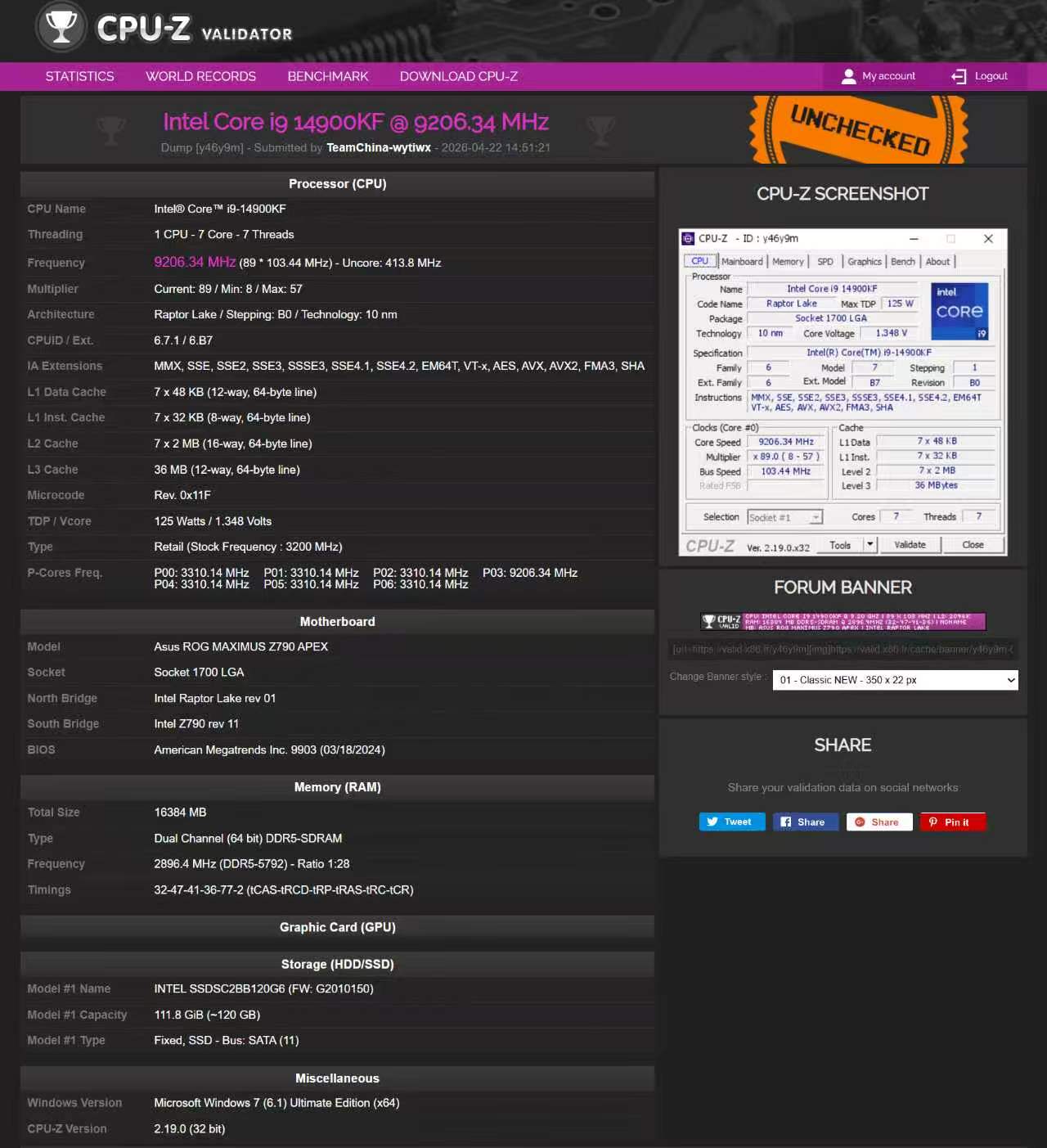
The Intel Core i9-14900KF has become the first processor to break past the 9.2GHz clock frequency barrier, setting a new world record. Achieved by Chinese overclocker wytiwx, the processor reached 9,206MHz, surpassing the previous record in the HWBOT database.
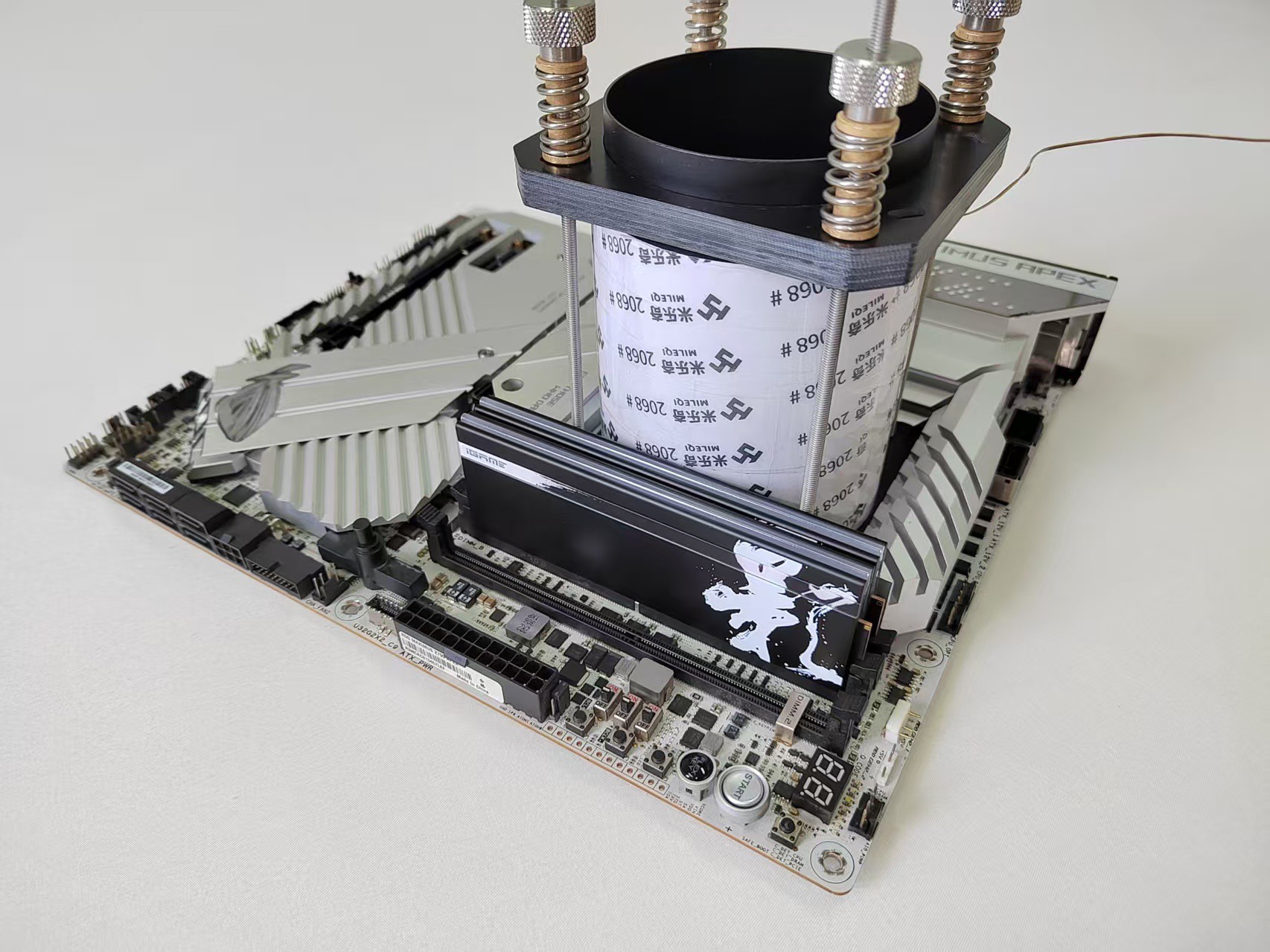
As noted by Wccftech, the record-breaking entry was achieved using liquid nitrogen (LN2) cooling. To maintain stability during the validation, the processor was configured with only seven cores and seven threads enabled. Validation data shows the Core i9-14900KF was running at a core voltage of 1.348V. The test platform used an Asus ROG Maximus Z790 Apex motherboard alongside 16GB of DDR5 memory operating at 5792MHz with CL32 timings.
Out of the box, the Intel Core i9-14900KF features a 24-core, 32-thread configuration with eight P-cores and 16 E-cores. It includes 36MB of L3 cache, 32MB of L2 cache, a base TDP of 125W, a maximum turbo power of 253W, and a stock maximum turbo frequency of 6.00GHz.
The HWBOT database shows that only two CPU submissions have broken the 9GHz threshold. The new 9,206MHz submission holds the top spot, followed by a 9,117MHz achievement on an Intel Core i9-14900KS by Elmor. The highest-ranking AMD entry currently sits in seventh place, achieved with an FX-8370 pushed to 8722MHz.
KitGuru says: How long do you think it will take for overlockers to break the 10GHz barrier?
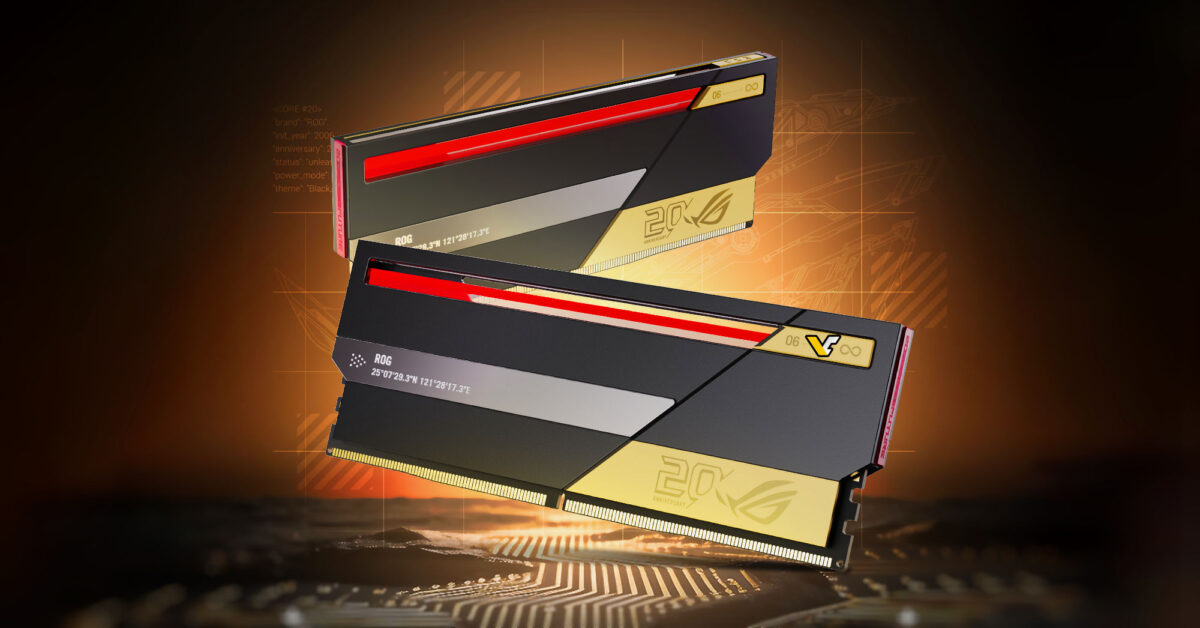
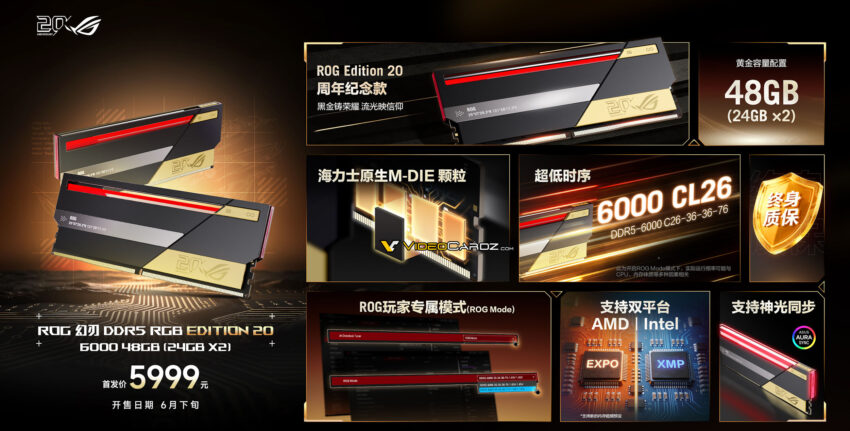
Asus has entered the enthusiast computer memory market with the launch of its first ROG-branded RAM modules, the ROG DDR5 RGB Edition 20. Developed in partnership with Biwin, the special-edition memory kits feature a black-and-red aesthetic with gold accents to mark the 20th anniversary of the ROG brand.
According to VideoCardz, the kit is sold in a 48GB configuration, consisting of two 24GB DIMMs, each using SK Hynix M-Die integrated circuits. Out of the box, the memory operates at a base speed of DDR5-6000 with tight primary timings of CL26-36-36-76 at 1.45V. For universal hardware compatibility across current AMD Ryzen and Intel Core desktop platforms, the modules support both AMD EXPO and Intel XMP memory profiles.
A defining feature of this kit is the “ROG Mode” dual-profile configuration extension that unlocks advanced performance metrics when paired with Asus ROG Crosshair, ROG Maximus, or ROG Strix motherboards. Through this BIOS-level implementation, users can alternate between the low-latency 6000 MT/s gaming configuration and a high-bandwidth 8000 MT/s profile running at CL36-48-48-110 at 1.40V. Also, the modules have a top-edge addressable RGB light bar that can be integrated with Asus Aura Sync profiles.
Alongside the launch, the company formalised the “ROG Certified Memory Program”. Under this initiative, 14 major third-party memory vendors, including Corsair, G.Skill, Kingston, and TeamGroup, can manufacture and badge their own consumer kits with official ROG certification. These approved modules will natively support Aura Sync RGB lighting and gain access to custom ROG Mode sub-timing profiles.
The ROG DDR5 RGB Edition 20 is launching first in China, priced at 5,999 yuan, which converts to roughly £661, and carries a lifetime product warranty.
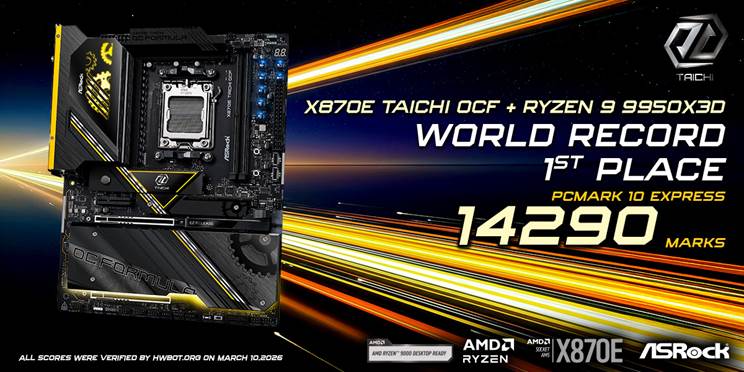
ASRock has put its mark on the record books. This week, a new overclocking world record was achieved using an ASRock X870E Taichi OCF motherboard, along with an AMD Ryzen 9 9950X3D processor.
The ASRock X870E Taichi OCF motherboard was designed with overclocking in mind, with the board including an advanced power delivery system, premium components and an optimised PCB layout to achieve stability under extreme workloads. As you may expect, they are pleased with the world record result.
KitGuru Says: Another impressive world record. We will no doubt see some more records set in the months ahead as we get closer to the OC World Cup at Computex.
A new GPU overclocking world record has been set by AMD, using its budget Radeon RX 9060 XT GPU. Splave and AMD Collaborate to Break GPU Frequency World Record at AMD's Office; Overclock Radeon RX 9060 XT to 4.769 GHz There is only a single official 4.0+ GHz dGPU overclocking record ever registered, and that's by Splave on the GeForce RTX 4090. SkatterBencher also previously pushed the GPU frequency to 4.25 GHz, but it was on the integrated graphics on the Arrow Lake processor. These are the only two GPU OC world records to have ever crossed the 4.0 GHz […]

 Login
Login